Home Blog Page 2434

Safeguarding human rights and GSP plus

0

Freedom of speech and expression is a constitutionally protected right.  The Foreign Ministry statement contradicting the views expressed by the Chairperson of the Neelan Tiruchelvam Trust, Ambika Satkunanathan, brings up issues of the limits of legitimate public criticism of government policies and actions.  We do not agree with its content and tone or with the personal targeting of Ms Sathkunananthan.

In a submission to the European Parliament’s subcommittee on human rights on January 27, Ms Satkunanathan made a critical assessment of the human rights situation in the country and provided recommendations in that regard.  Much of what she said is also contained in statements made by the political parties representing the people of the North and East, and by civil society members including the National Peace Council. 

The National Peace Council believes that as a representative of civil society, Ms Satkunanathan has the same rights and freedoms with regard to speech and expression even if her views are not in line with government thinking and priorities. We particularly regret the paragraph in the ministry statement that draws a parallel to LTTE propaganda as a method of discrediting or silencing a critic. 

The National Peace Council appreciates the Foreign Ministry and government’s willingness to engage in dialogue with different sectors in civil society which has led to positive outcomes and can be further built upon and expanded.  We also wish to reiterate that just as much as the government, we in civil society want the best for our country, including retaining the GSP Plus by upholding the 27 international human rights covenants that successive governments, including our present government, have pledged to live by. 

National Peace Council of Sri Lanka

Civil Society Statement on Proposed Amendments to the Prevention of Terrorism Act

0

On 27 January 2022 the government of Sri Lanka gazetted the Prevention of Terrorism (Temporary Provisions) (Amendment) Bill. We the undersigned express our deep disappointment that the proposed amendments do not address any of the shortcomings in the Prevention of Terrorism Act (PTA) that enable grave human rights violations. We highlight that the PTA has been historically used against the Tamils, later Muslims after the Easter Sunday attacks and now dissenters as well.

We restate our call for repeal of the PTA and in the interim an immediate moratorium on the use of the law. This is in line with the requests of persons and communities adversely affected by the law. We call upon the government to release all persons on bail, except those that would not qualify under the Bail Act, and halt prosecutions where the confession is the primary or only evidence.

The proposed amendments do not adhere to human rights standards enshrined in
international conventions, such as the International Covenant on Civil and Political
Rights (ICCPR), which the government of Sri Lanka has ratified and hence has an
obligation to respect and protect. Nor do they adhere to many provisions in the
Constitution of Sri Lanka. We set out the main shortcomings of the amendments below:

1. The proposed amendments do not contain a definition of terrorism. In this
regard, we urge the government to take note of the letter dated 9 December
2021 sent by seven UN Special Procedure mandate holders to the government
that clearly set out the elements the definition of terrorism must include. In the
current law the decision as to whether the PTA would apply in a certain instance
is a subjective decision that can be shaped by personal prejudice and bias, rather
than objective standards. We highlight arrests in the past for spurious reasons
such as possessing books in Arabic and decorative swords, and for
memorializing those who were killed during the war.

2. Administrative detention has been reduced from 18 to 12 months, which does
not address the core problems with administrative detention. There is still a lack
of basic due process safeguards which enables arbitrary arrest and detention.

3. We note with dismay that Section 16, which allows the admissibility of
confessions made to an Assistant Superintendent of Police (ASP) or above as
evidence, and which for decades has enabled torture to extract confessions, has
been retained. We point to Supreme Court decisions and the Human Rights
Commission’s (HRCSL) reports, which illustrate that, this provision has resulted
in gross violations of human rights. Even if the confession is ruled inadmissible
during trial, the existence of the provision creates room for persons to be subject
to torture.

This violates basic due process and fair trial rights of a person accused of an
offence, because the onus is placed on the accused to prove the confession was
obtained under duress. It also calls into question the competence of the criminal justice system that has to rely on confessions to prosecute persons. Such a provision, which is a deviation from the norm, has no place in law.

4. Section 7(3), which allows a person to be taken out of judicial custody to any
other place for investigation, and Section 15A which empowers the Secretary,
Ministry of Defence, to determine a person’s place of detention even after the
person is remanded also remain. We restate our concern that this removes a
person from the protection of judicial custody. The order of the Secretary
thereby takes precedence over a judicial order. As the Human Rights
Commission’s national study of prisons documented, persons remanded under
the PTA were subjected to severe torture when taken out of judicial custody or
held in other places upon the instructions of the Secretary, Ministry of Defence.

5. Section 11, which empowers the Minister of Defence to issue restriction orders
that impinge upon a wide range of civil liberties, has been retained. The
proposed amendment to this section requiring the person to be produced before
a Judicial Medical Officer and a Magistrate prior to the issuance of the order does
not prevent or address the infringement of civil liberties.

6. The proposed amendment on the granting of bail is cosmetic and does nothing to address prolonged periods of time in pretrial detention. The proposed new
provision states bail can be given only if the trial against a person has not
commenced 12 months after the arrest of the person who has been detained or
remanded, or if the trial has not begun 12 months after the indictment has been
filed the High Court. If the trial has begun the person can be remanded in judicial
custody until the conclusion of the trial. Therefore, in practice, this does not
bring substantive change in the situation of a detained person.

7. The provision in the proposed amendment that requires magistrates to visit
places of detention at least once a month is inadequate to prevent torture.
According to the section, if the magistrate thinks the person may have been
subject to torture the magistrate “may” refer the person to a Judicial Medical
officer. Referral to the JMO is therefore discretionary and not mandatory. It also
gives the magistrate the discretion to decide whether or not to refer the incident
of torture to the IGP for investigation.

8. The proposed amendments include the right to challenge administrative
detention in the Supreme Court and by way of Writ. We point out that the right
to challenge arbitrary detention, including under the PTA, is enshrined in the
Constitution of Sri Lanka and is not a new right the proposed amendment
bestows on detained persons. In practice, given the paucity of legal aid, most
persons detained under the PTA face challenges accessing competent legal
representation due to lack of financial means to pursue these remedies. Even in
instances when they do pursue them, long delays in the judicial process prevent
them from obtaining redress for months and even years.

9. Similarly, the Human Rights Commission of Sri Lanka Act already mandates the
Commission to monitor the welfare of persons deprived of liberty and empowers
it to access any place of detention unannounced. However, following the 20 thAmendment to the Constitution in 2020, the HRCSL is no longer a legally independent body as appointment of the members of the Commission is at the discretion of the President. The proposed amendment to the PTA in no away addresses the adverse impacts of the 20 th amendment to the Constitution on the Commission.

10. During the last couple of years in particular, the PTA has been used to intimidate and harass civil society, human rights defenders and journalists, especially those in the North and East, through visits to their offices by the TID to gather information about their activities, summoning them to TID offices for inquiry about their finances and even arrest and detain them. They are yet to provide evidence of any illegal financial activity by civil society organisations linked to the perpetration of terror offences.

Way forward

The proposed amendments fail to address the fundamental shortcomings of the PTA. Instead, they propose changes that already exist but are often observed in the breach, or cosmetic changes that do not substantively or meaningfully change the status quo. The actions of the government, such as the issuance of the regulations on the Deradicalisation From Holding Violent Extremist Religious Ideology, call into question the government’s reform claims.

We note with deep concern that despite our repeated calls for transparency in the
drafting process and consultation with key stakeholders, our appeal was ignored.
We reiterate that national security cannot be achieved by creating insecurity for already discriminated against and marginalized communities, and once again call for the repeal of the PTA. The repeal of the PTA must also be considered in light of the anti-terrorism and public security legal framework that Sri Lanka has in place, and the historical abuse of power by state entities.

The way forward must give due recognition to the protection of physical liberty.
Deprivation of physical liberty by the executive must be used only as last resort and strictly require sufficient basis that is determined on objective factors, judicial
supervision of such basis, legal aid and prompt trials or release. Furthermore, any
process which seeks to tackle issues related to the PTA must ensure those adversely affected by the law will receive justice, and include an enforceable right to compensation for arbitrary detention. The prohibition of arbitrary deprivation of liberty has acquired customary international law status and constitutes a jus cogens norm which Sri Lanka is duty bound to secure for its citizens.

The balance the government wishes to achieve between personal liberties and national security can only be achieved through addressing the root causes of conflict and violence. Attempts to further curtail civil liberties in the guise of national security will only exacerbate the insecurity of all communities and undermine the rule of law and democracy in Sri Lanka.

Signatories
1. Jayani Abeysekera
2. Lucille Abeykoon
3. K. Nihal Ahamed
4. K. Aingkaran- Attorney-at-law
5. Anushani Alagarajah
6. Sanjyaya. S. Ariyadasa- Attorney-at-law
7. Dulan Dasanayaka- Attorney-at-law
8. Sunanda Deshapriya
9. Marisa De Silva
10. Philip Dissanayake
11. S.C.C. Elankovan
12. Sarala Emmanuel
13. Ameer Faiz
14. Brito Fernando
15. Nimalka Fernando
16. Ruki Fernando
17. Yardsan Figurado
18. Aneesa Firthous
19. Nilshan Fonseka
20. S.T. Ganeshalingam, Convenor, Movement for Plantation Peoples’ Land Rights
21. Shammas Ghouse- Attorney-at-law
22. Dr. Mario Gomez
23. B. Gowthaman
24. Rushdie Habeeb- Attorney-at-law
25. Victor Ivan
26. Chanaka Jayasinghe
27. Tharindu Jayawardena- Journalist
28. Jehan Jegatheesan
29. Yogitha John, Vice President, Up Country Civil Society Collective
30. Dr. Sakuntala Kadirgamar
31. S. Kamalakanthan, Social activist; Coordinator, Forum for a Plural Democracy
32. Dr. Chulani Kodikara
33. Upul Kumarapperuma- Attorney-at-law
34. Mahaluxmy Kurushanthan
35. Dharmasiri Lankapeli
36. K. Lavakusarasa- Coordinator, Aham Humanitarian Response Centre
37. Buhary Mohammed
38. P. Muthulingham, ISD, Kandy
39. Pala Nagenthiran, Coordinator, Forum For Returning Refugees
40. Rev Fr. Nandana Manatunga
41. Malar Nathan, Social activist; Coordinator, Forum for a Plural Democracy
42. Nagulan Nesiah
43. D. Niroshkumar- Journalist
44. Saroj Pathirana- Journalist
45. Nadishani Perera- Executive Director, Transparency International, Sri Lanka
46. Suren. D. Perera- Attorney-at-law
47. P. Pushpalatha, Secretary, Social Institute for Development of Plantation Sector
48. Kasun Pussawela- Journalist
49. Mirak Raheem
50. Maithreyi Rajasingham- Executive Director, Viluthu
51. Prabodha Rathnayaka- Attorney-at-law
52. Yamini Ravindran- Attorney-at- law; Campaign Director, Minor Matters
53. Sampath Samarakoon- Editor, Vikalpa
54. Kumudini Samuel
55. Dr. Paikiasothy Saravanamuttu
56. Shreen Saroor
57. Ambika Satkunanathan
58. Anurangi Singh – Lawyer; Journalist
59. P. N. Singham
60. Ermiza Tegal
61. Sandun Thudugala
62. Tharindu Uduweragedara- Journalist
63. Indunil Usgodaarachchi- Journalist
64. Mass Usuf- Attorney-at-law
65. Anithra Varia
66. Antony Vinoth
67. Muqqadasa Wahid
68. Dr. Tush Wickremanayake
69. Shalika Wimalasena- Journalist
70. Sabra Zahid

Organisations
1. Adayalam Centre for Policy Research
2. All Employees Union of Information and Telecommunication
3. Amparai District Women’s Network
4. Centre for Policy Alternatives
5. Centre for Society and Religion
6. Civil and Political Rights Amayam, Batticaloa
7. Committee for Protecting Rights of Prisoners
8. Eastern Social Development Foundation
9. Families of the Disappeared
10. Federation of Media Employees Trade Union
11. Forum for Affected Families Mannar
12. Forum for Plural Democracy
13. Human Elevation Organisation
14. Human Rights Office, Kandy
15. International Centre for Ethnic Studies
16. Journalists for Rights
17. Law and Society Trust
18. Mannar Social and Economic Development Organisation
19. Mannar Women’s Development Federation
20. Media PRO Tech Sri Lanka
21. Movement for Plantation Peoples Land Rights
22. People’s Collective for Climate Change, Batticaloa
23. Protect Union
24. Right to Life
25. Sri Lanka Young Journalists Association
26. Tamil Civil Society Forum
27. Telecommunications Engineering Diplomates Association
28. United Threewheeler Association
29. United Unemployed Graduates Association
30. Viluthu
31. Women’s Action Network
32. Women and Media Collective
Gammanpila requests permission to make special statement in Parliament tomorrow

0

Energy Minister Udaya Gammanpila has reportedly requested the Secretary General of Parliament in writing to grant him permission to deliver a special statement in Parliament tomorrow.

The backbenchers of the Ruling Party have expressed their utmost objection to Gammanpila at the meeting held in Temple Trees under the patronage of the President today (07), over a comment the Minister had produced to media.

Last week the Energy Minister had claimed that the Covid-19 pandemic was not the cause of the ongoing dollar deficit in the country and that the continuous borrowing of foreign debt over the years and even after the subsidence of the pandemic has contributed to this crisis. Gammanpila had claimed that the people should be made aware of the real problem and the real reasons behind it.

His comment has been repeatedly questioned by government MPs at today’s meeting and Gammanpila has also responded to them. Both the President and the Prime Minister have denied the Energy Minister’s claim and elaborated on what they proposed as the real reason behind the dollar deficit, media reports revealed.

Correspondents added that Gammanpila has risen to his feet at the end of the meeting and left the scene in frustration. It is in this backdrop has the Energy Minister requested the Parliament Secretary General grant him approval to deliver a special statement tomorrow.

MIAP

Toddlers to be administered with Covid vaccine

0

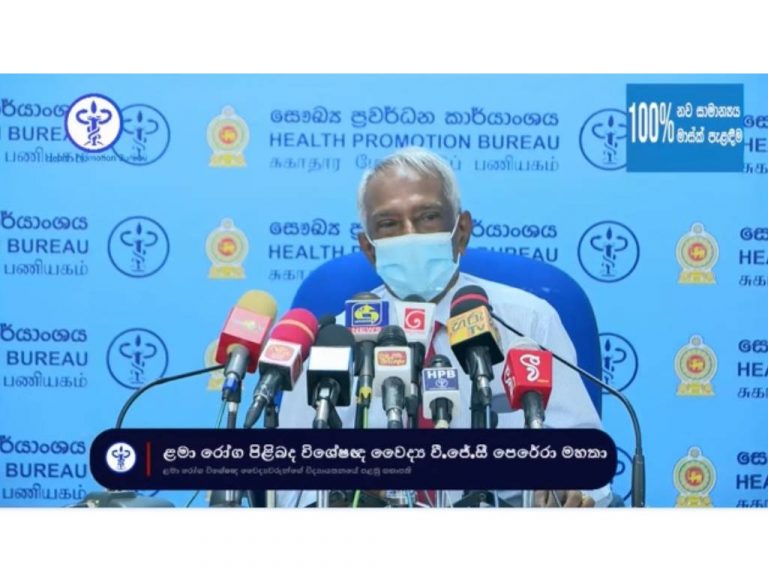
Children below age 05 may be administered with the vaccine against Covid-19 in keeping with the global standards, revealed Paediatrician Dr. B.J.C. Perera, speaking to a briefing held in Colombo today (07).

Revealing that research is being conducted on the possibility of vaccinating children under age 05 and above 06 months, Dr. Perera pointed out that the age limit for vaccination, therefore, may change in the future.

Children infected with Covid should be vaccinated, despite any absence of symptoms, in the event that the virus can spread through them too, he noted.

The Paediatrician urged the public to collect their booster dose as soon as possible without being misled by the various misconceptions about the vaccine.

MIAP

Sri Lanka: Grave Abuses Under Discredited Law – European Union Should Press for Repeal of Prevention of Terrorism Act

0

(Brussels, February 7, 2022) – The Sri Lankan government is using the discredited Prevention of Terrorism Act (PTA) to commit prolonged arbitrary detention and torture, Human Rights Watch said in a report released today. The European Union, other trading partners, and donors, should press for time-bound action to repeal the abusive law and reject the government’s vague pledges of reform.

The 59-page report, ‘“In a Legal Black Hole’: Sri Lanka’s Failure to Reform the Prevention of Terrorism Act,” documents the Gotabaya Rajapaksa administration’s misuse of the PTA against the minority Tamil and Muslim communities, and to suppress civil society groups. The administration rejected pledges by the previous government to repeal the law after it was readmitted to the EU’s Generalized Scheme of Preferences plus (GSP+), which grants Sri Lanka special tariff-free access to EU markets.

“Sri Lankan authorities continue to use the Prevention of Terrorism Act to sweep away targeted people’s basic rights, reneging on past government promises to repeal the law,” said Meenakshi Ganguly, South Asia director at Human Rights Watch. “EU members and other countries should reject the Rajapaksa administration’s unconvincing promises to reform the PTA and press for the law’s prompt repeal.”

This report is based on Human Rights Watch research on the Prevention of Terrorism Act carried out since 2018, interviews conducted between January and December 2021, and a review of newly available court documents. Human Rights Watch wrote to the attorney general of Sri Lanka and to the Human Rights Commission of Sri Lanka, and received a response from the commission which is included in the report.

The PTA allows the authorities to arrest people without warrants for unspecified “unlawful activities,” and to detain suspects for up to 18 months without producing them before a court. This denies suspects’ basic due process rights and removes safeguards that would help protect them from abuse, effectively creating a legal black hole, Human Rights Watch said.

Between 1983 and 2009, during the civil war between the government and the separatist Liberation Tigers of Tamil Eelam (LTTE), the authorities used the law primarily against suspected members or supporters of the LTTE or other armed groups. Since the deadly 2019 Easter Sunday bombings by a little-known Islamist militant group that targeted churches and hotels, the authorities have used the law to arbitrarily detain hundreds of Muslims. In the past three years the authorities have arrested over 600 people under the PTA, according to Human Rights Commission of Sri Lanka data.

Many suspects have been held for years awaiting trial. Statistics indicate that most are tortured in custody, and convictions frequently rely on confessions obtained under torture.

Hejaaz Hizbullah, a prominent Muslim lawyer, was arrested under the act in April 2020, accused of aiding the Easter Sunday suicide bombers. While the initial allegations were dropped, the police made new allegations under the act of causing “communal disharmony.” Students alleged that police coerced them to testify that Hizbullah incited violence at a school. He remained in custody at the time of writing.

Ahnaf Jazeem, a 26-year-old Muslim poet, was arrested under the act on May 26, 2020, and accused of promoting “religious extremism” in a 2017 book of Tamil verse. Jazeem testified in a July 2021 Supreme Court affidavit that police interrogators threatened “to hang him from the roof and beat him, or threaten[ed] to subject him to similar treatment as the other detainees whom [he] was forced to witness being tortured.” After 18 months in PTA custody, Jazeem was released on bail in December.

The Rajapaksa administration has used the PTA to detain or intimidate the families of victims of past abuses, human rights activists and lawyers, and journalists. “When we talk to the families of the disappeared, they say they can be arrested at any time,” said an activist working with the Tamil community. “Police are arresting people for posting pictures on Facebook. They can arrest you for anything.”

The EU had removed Sri Lanka from GSP+ in 2010 amid rights violations at the end of the civil war, but readmitted the country in 2017 after the then-government renewed commitments to adopt and implement 27 human rights and other international conventions, and in particular to repeal the PTA. This followed a consensus resolution of the United Nations Human Rights Council in 2015, in which Sri Lanka agreed to ensure accountability and reparations for war crimes, to investigate enforced disappearances, and to repeal this law. Most of these pledges have yet to be fulfilled.

In June 2021, the European Parliament adopted a resolution calling on the European Commission to “push for advancement on Sri Lanka’s human rights obligations and demand the repeal or replacement of the PTA” when assessing Sri Lanka’s eligibility for GSP+ status. A review is currently underway, and is expected to be completed later this year.

The Rajapaksa government has since early 2021 renewed pledges to review provisions of the act, but no substantive proposals have been put forward. Instead, the government introduced an ordinance in 2021 that would make the law even more abusive. Any proposed changes to the Code of Criminal Procedure would further undermine human rights protections.

Before enacting any counterterrorism law, the Sri Lankan government should conduct meaningful and inclusive consultations with civil society groups and adopt the “necessary prerequisites” set out in December 2021 by seven United Nations human rights experts for meeting Sri Lanka’s international human rights obligations, Human Rights Watch said.

The UN experts noted that the PTA contradicts Sri Lanka’s obligations under several international human rights conventions. Sri Lanka’s participation in GSP+ includes a commitment to implement these conventions.

“The Rajapaksa administration’s abusive actions have proved louder than its vague promises of reform,” Ganguly said. “The EU, United States, and United Kingdom should hold the Sri Lankan government to its international obligations and push for meaningful action to protect human rights.”

‘“In a Legal Black Hole’: Sri Lanka’s Failure to Reform the Prevention of Terrorism Act is available at”:
https://www.hrw.org/node/381029/

For more on Abuses under Sri Lanka’s Prevention of Terrorism Act, please visit:
https://www.hrw.org/report/2018/01/29/locked-without-evidence/abuses-under-sri-lankas-prevention-terrorism-act

For more Human Rights Watch reporting on Sri Lanka, please visit:
https://www.hrw.org/asia/sri-lanka

Bust of Nobel Laureate Gurudev Rabindranath unveiled at Sri Palee Campus of the University of Colombo

0

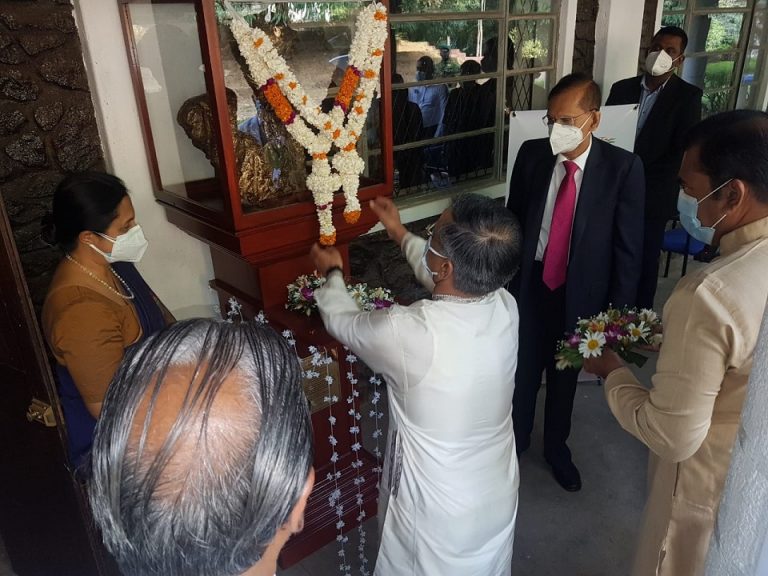
         To commemorate the 100th year of arrival of Nobel Laureate Gurudev Rabindranath Tagore to Sri Lanka, the University of Colombo in collaboration with the High Commission of India, Colombo, organized a special ceremony to unveil the bust of Gurudev Rabindranath Tagore at the Sri Palee Campus of the University on 03rd February 2022. The Chief Guest, Hon. Prof. G. L. Peiris, Minister of Foreign Affairs of Sri Lanka, along with the Guests of Honour Shri Gopal Baglay, High Commissioner of India to Sri Lanka and Hon. Vidura Wickremanayaka, State Minister of National Heritage, Performing Arts, and Rural Promotions, unveiled and garlanded the bust of Gurudev Rabindranath Tagore in the presence of Prof. Chandrika N. Wijeyaratne, Vice-Chancellor, University of Colombo, and distinguished officers, staff and students of the university. This bronze bust of Tagore has been gifted by Indian Council for Cultural Relations (ICCR), Ministry of External Affairs, Government of India.

2.       During the unveiling ceremony, Hon. Prof. G. L. Peiris highlighted that Sri Lanka had a special place in the heart of Gurudev Rabindranath Tagore, who visited Sri Lanka three times in 1922, 1928, and 1934. The third visit of Gurudev Rabindranath Tagore is remembered for the foundation of “Sri Palee.” He recalled that the invitation for this visit was extended to Tagore by his granduncle, Mr. Wlimot A. Perera, who was a leading entrepreneur and social reformer. Mr. Wlimot A. Perera had earlier visited Visva Bharati at Santiniketan in West Bengal, India and was so impressed by the works and thoughts of Gurudev as well as the values of the institution that he resolved to establish a similar institution in Sri Lanka. On his invitation, the Gurudev visited Sri Lanka and laid the foundation of the new institution on 20th May, 1934. He proposed that the new institution should be named as “Sri Palee.”

3.       The High Commissioner of India, Gopal Baglay recalled Tagore’s love for Sri Lanka, which inspired him in many ways. High Commissioner quoted one of Tagore’s speeches in 1934 during his visit to Sri Lanka, wherein he said: “The spirit of India once visited Lanka…As a poet, it is my mission to restore that ancient association of mind through my efforts that speak through a direct language of art.” High Commissioner expressed his appreciation to the University of Colombo for honouring the legacy of Tagore by accepting the gift of the statue of Gurudev Rabindranath Tagore and installing it at the very same institution whose foundation stone was laid by him.

4.       Prof. Chandrika N. Wijeyaratne, Vice-Chancellor, University of Colombo and Dr. Prathibha Mahanamahewa, Rector of the Sri Palee Campus of the University of Colombo also highlighted the close cultural ties between “twins” India and Sri Lanka and thanked the Government of India and the High Commission of India in Sri Lanka for extending their support to the University as well as to students of Sri Lanka by offering them scholarships for higher studies in India.

5.       During the event, the students of the University of Colombo presented special cultural performances, which were based on Rabindra Sangeet, Hindi music, as well as select dance forms of India and Sri Lanka, showcasing the strong and deep cultural bonds between the two countries. The performances were deeply appreciated and were also webcast via social media.

6.       It may be recalled that Gurudev Rabindranath Tagore founded Visva Bharati in 1921 as a great seat of learning and centre of art. Pioneers of Sinhala ballet, Premakumara Epitawala and Deshamanya Chitrasena, studied at Santiniketan in the early 1940’s. Similarly, many Sri Lankan musicians, such as Edwin Samaradiwakara, Surya Shankar Molligoda, Ananda Samarakoon, Sunil Shanta, Lionel Edirisinghe and W.B. Makuloluwa, and painters, such as Somabandhu and Ananada Samarakoon (who was also a musician) studied at Santiniketan. Even today, a large number of artists and scholars all over the world, including in Sri Lanka, take inspiration from the legacy of Gurudev. Tagore’s Gitanjali has been also translated many times into Sinhala. This highlights the deep respect that people of Sri Lanka have for Gurudev Tagore. To rekindle this bond, this year, special events are being organized to commemorate the 100th year of arrival of Nobel Laureate Gurudev Rabindranath Tagore to Sri Lanka. The High Commission of India has recently institutionalised a Gold Medal in the name of Gurudev Rabindranath Tagore to recognise the highest academic record holder at the University of Colombo’s Sri Palee Campus.

*****
Colombo
6th February, 2022

Mattala Airport operational and filled with tourists signing economic revival

0

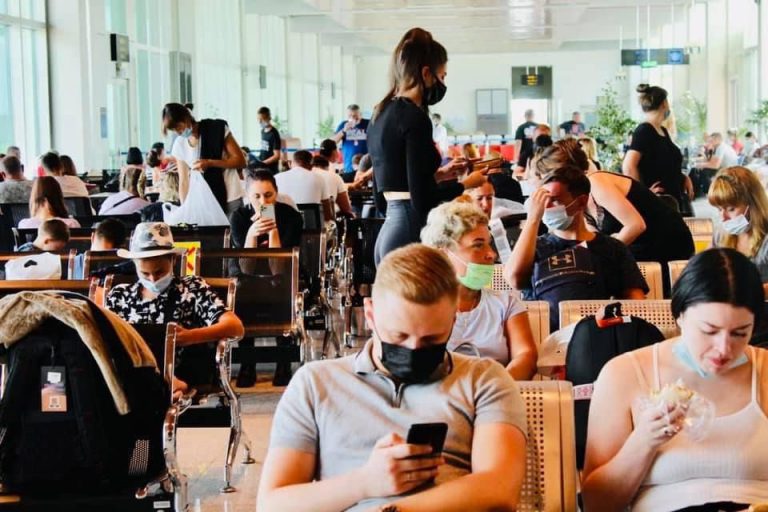
Tourist arrivals in Sri Lanka have grown since the Covid restrictions and indicate possible revival in tourism industry.

Tourist numbers are becoming more and more steady and the airports are seen with arrivals on a daily basis.

The Mattala Rajapaksa International Airport, Hambantota revealed growing numbers of tourists arriving in the island, in captions recently taken.

Commenting, Governor of the Central Bank of Sri Lanka (CBSL) Ajith Nivard Cabraal stated that Sri Lanka should strive to reach at least 125,000 tourists a month, and expressed his pleasure to see the once defunct-airport operational.

MIAP

President instructs to prioritise renewable energy

0

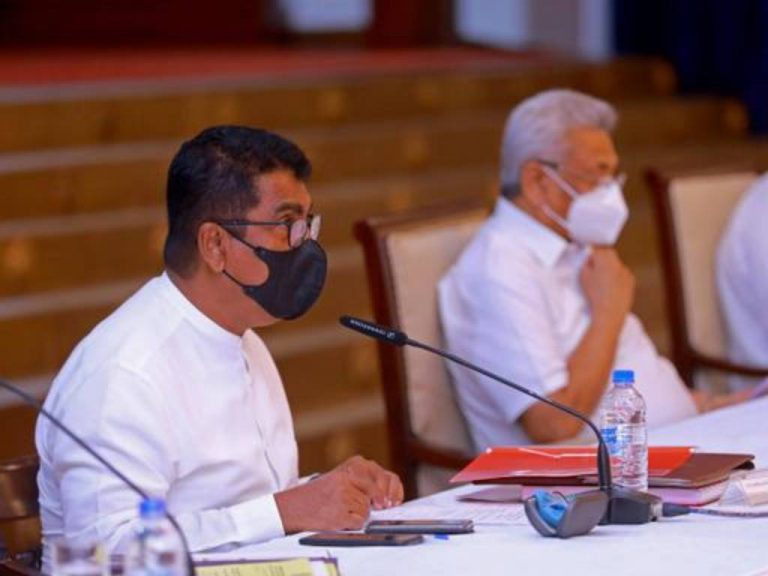
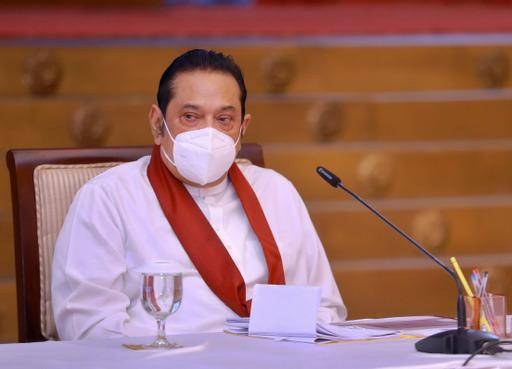
The Parliamentary Group of the Ruling Party has held a meeting at Temple Trees under the patronage of President Gotabaya Rajapaksa this (07) morning.

The discussion focused on the current situation in the country as well as the manner in which Parliament will convene next week.

The President has instructed the group to pay more attention on the renewable energy sources of the country as a solution to the power crisis.

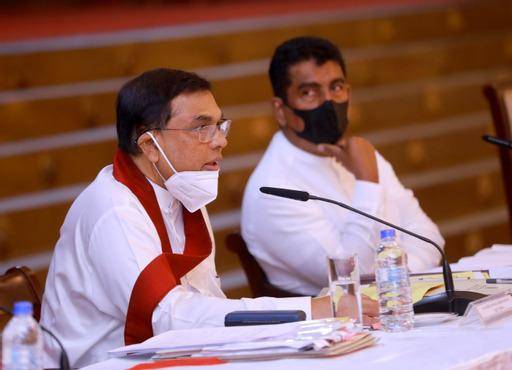
Finance Minister Basil Rajapaksa has briefed the group at length on the measures that should be taken to soar export earnings.

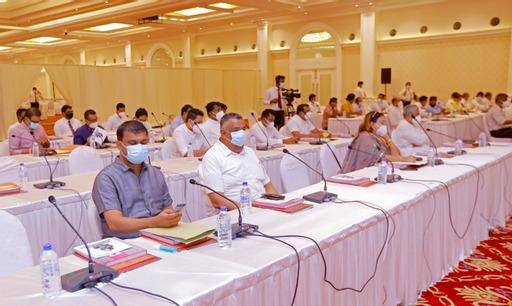
The meeting was participated by Prime Minister Mahinda Rajapaksa, Finance Minister Basi Rajapaksa, Cabinet Ministers, State Ministers, Ruling Party MPs and government officials.

MIAP

Assault at Ragama Medical Faculty: 09 suspects granted bail

0

Nine suspects arrested in alleged connection with the assault at the Dormitory of the Faculty of Medicine, Ragama have been granted bail today (07), as per the order of the Wattala Magistrate Court.

Among the suspects was the son of Ruling Party MP Arundika Fernando.

MIAP

SJB MP confesses Good Governance Regime sheltered offenders (VIDEO)

0

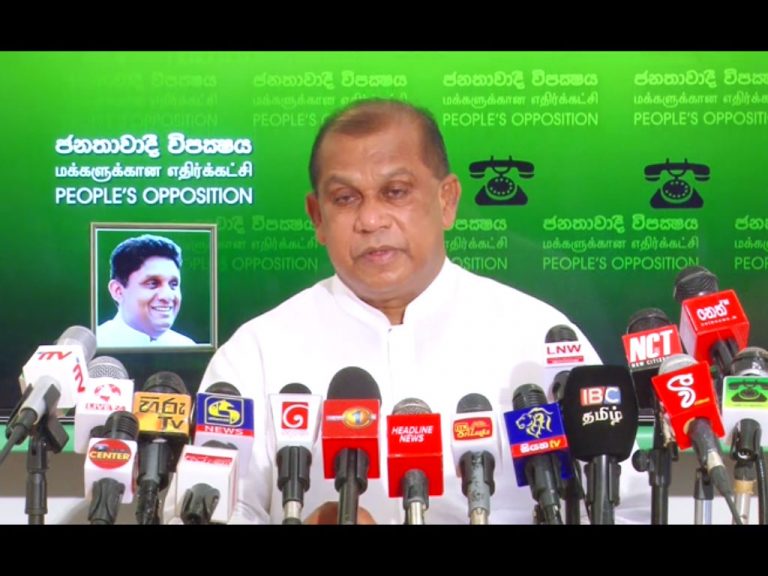
Samagi Jana Balawegaya (SJB) Secretary General MP Ranjith Madduma Bandara speaking to a briefing held in the Opposition Leader’s Office today (07) confessed that the Good Governance Regime that came to power on the pledge of penalising offenders had given ‘licences’ to them instead, and that as a result they continue to commit offenses.

Revealing that there was a minister in the Good Governance Regime who had pledged that the Rajapaksas will never be prosecuted as long as he lived, the SJB MP noted that the same person, who is a Ruling Party MP today, is disappointed with the government and lays low.

Under the circumstances, the Good Governance Regime failed to penalise those offenders, he added.