Home Blog Page 2466

The silent protest organized at Kohuwala Junction continues for the 16th day

0

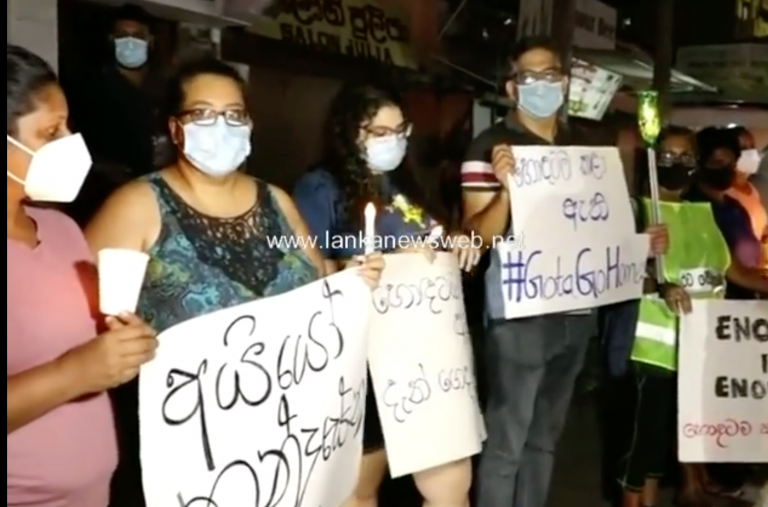
A silent protest was held at Kohuwala Junction for the 16th day last night (16) against the current government.

The protest was organized with the participation of the people of the area without any political affiliation and was carried out by lighting candles and displaying placards.

Presidential Secretariat states that payments have been made for the 02 gas ships

0

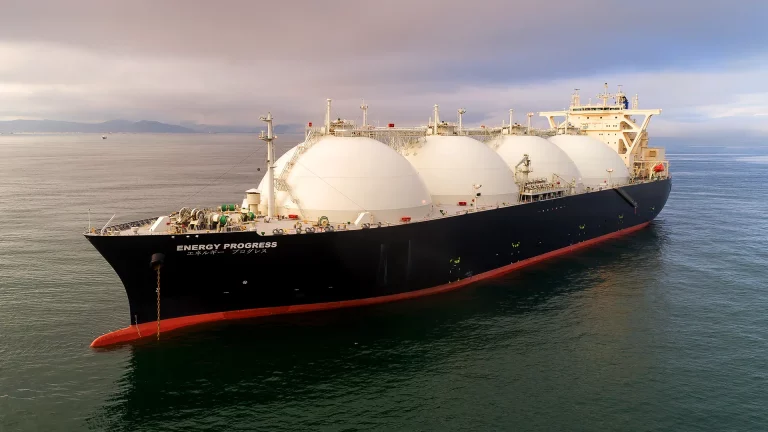
The Presidential Secretariat states that payments have been made for the two gas ships that have been anchored in the sea near the Port of Colombo for more than a week. Accordingly, the stocks of gas stored in the relevant vessels will be unloaded expeditiously.

The Presidential Secretariat says that the unloading of gas will begin today.

The two ships were anchored in Sri Lankan waters for 11 days due to non-issuance of dollars required for payment.

Litro announced yesterday that it had run out of gas. As a result, gas filling and distribution operations have been suspended, the company said.

Sri Lanka’s construction sector collapsed due to building material shortage 

0

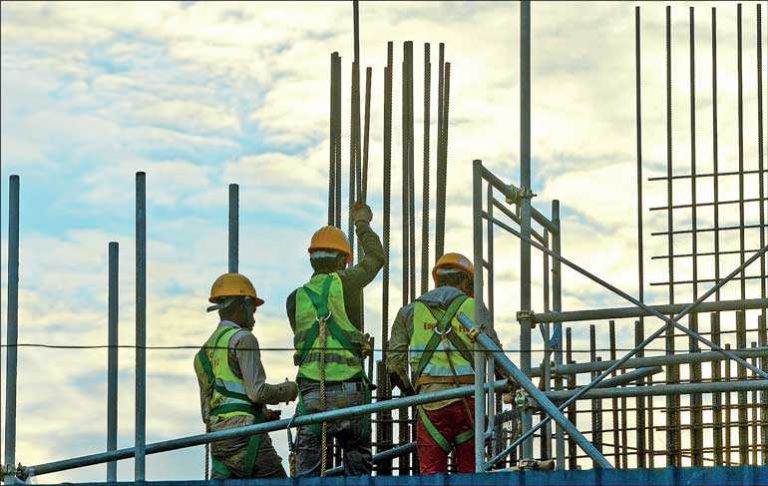
Sri Lanka’s construction sector has collapsed as a result of  the sky rocketing of prices s of building materials, including cement and steel, in recent months has compelled the government to pay 20 percent extra to contractors who have undertaken its mega projects.

The National Construction Association of Sri Lanka (NCASL) disclosed that more than 600,000 workers have lost their livelihoods due to the collapse of the construction industry caused by the rise in prices of cement and other raw materials.

NCASL Chairman Susantha Liyanaarachchi said: “More than 1.2 million workers belonging to the lowest economic strata of society are employed in the construction industry. However, with the collapse of the construction industry by 50% due to the crisis situation, more than 600,000 of them have lost their livelihoods.”

He noted that the construction work of small and medium scale building contractors and workers will come to a standstill  by next week  due to shortage of building material an dat present 50 percent of their work has already beeen halted.  

The construction sector is also facing a severe crisis due to the rising prices of construction material including cement.

 “A tonne of steel which was Rs. 288,000 has now risen to Rs. 300,000. Even the steel that had previously been paid for has to be bought at new prices now. 

In addition, cement prices rose by Rs. 100 in January, Rs. 125 in February, and Rs. 350 this month. Accordingly, the new price of a bag of cement is Rs. 1,900. When the raw material prices are going up in this manner, how can we afford to buy them?” he asked. .

He also said that despite a huge publicity given to open a new cement factory in Hambantota, not a single bag of cement has been released to the market from the said factory so far. 

Liyanaarachchi further claimed that the main reason for the collapse of the construction industry at a time of great economic crisis in the country was the lack of management by the relevant authorities.

The Chairman of All Ceylon Masonry Association, Nuwan Sumeda stated that currently, the country is facing a very serious breakdown in the field, because the price of cement is increasing daily along with the prices of other material.

He said that in his company almost 15-20 employees used to work, but now there are less than 5 masons employed, adding that similar situations are experienced across the country.

However, currently, a bag of cement has gone up to Rs.1900/-, he alleged, noting that the current market operates like a mafia.

Projects awarded by the government during the three months before December 6, 2021 will qualify for a 20% increase or the compensation due to price variations of materials.

In terms of the procurement guidelines under the Construction Industry Development Act, the Finance Ministry has sent out a letter to ministries, instruction them to grant the compensation due to price adjustments

However, industry sources expressed dissatisfaction over the concession, saying that the relief had come too little too late.

They said that the industry was overburdened with price volatility of materials, especially cement.    The steep hike in cement prices and the scarcity of cement and other material has made the concession meaningless.

The industry has been crippled by the non-availability of cement in the market and the curbs on imports due to the deepening foreign exchange crisis.

The Association’s President, Susantha Liyanarchchi, said that although the government had added 17 more importers to its list of importers as a mitigatory measure to address the problem, the shortage of cement continues.

With less than 50 percent of the country’s requirement available in the market the price of a 50 kg bag of cement, which was about Rs. 1000 in October last year is now sold at Rs. 1375. In the black market, the bag of cement is sold at prices varying from Rs. 1750 to Rs. 2000.

    The country needs around 7 million metric tonnes of cement a year. About 70 percent of the demand is met by imports.   .

An estimated 8000 hardware shops depend on the construction industry and without cement, no other building material sells, an industry source said.
I could no longer be in government if they seek the assistance of the IMF – Vasu (VIDEO)

0

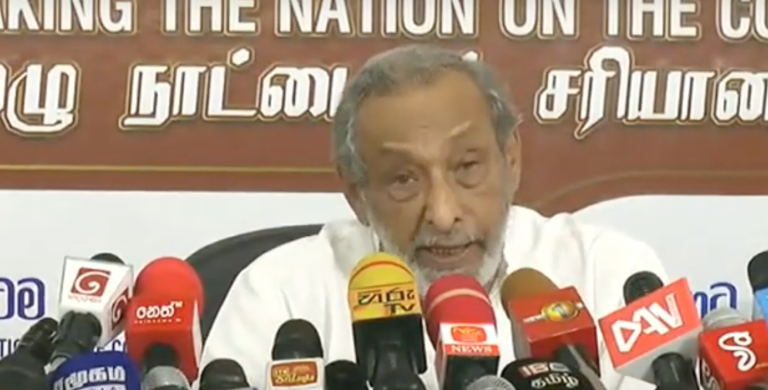
Minister Vasudeva Nanayakkara has stated that the government has decided to seek the assistance of the International Monetary Fund and that he will no longer be able to work with the government.

The Minister said that the decision to seek the assistance of the International Monetary Fund would be subject to their terms.

Accordingly, the welfare of the country will be curtailed and the ownership of state institutions will be betrayed by the private sector and expenditure on services such as health and education will be limited, said Vasudeva Nanayakkara.

The Minister said that he could not stay in the government due to this situation and would inform his decision in the future.

Foreign Minister conveys Sri Lanka’s concerns over UK Travel Advisory

0

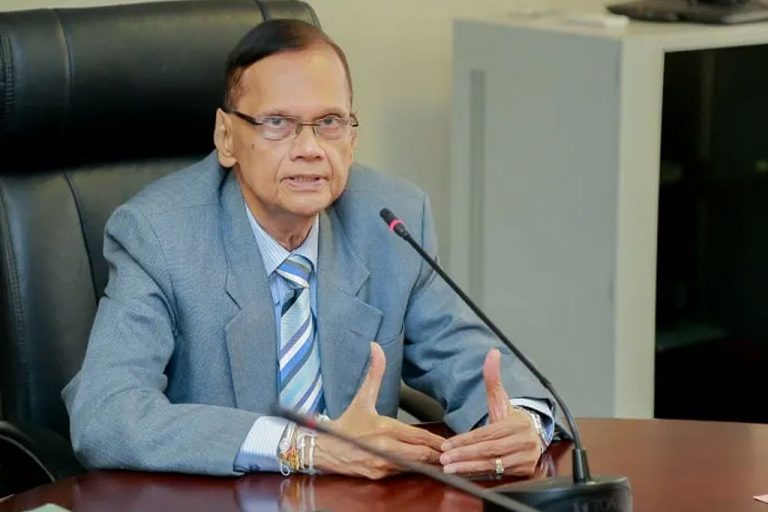
The Minister of Foreign Affairs Prof. G.L. Peiris has pointed to inaccuracies contained in the UK Travel Advisory on Sri Lanka in its successive revisions, resulting in the projection of a negative image of the country.  He has conveyed the above to the UK authorities at a high level on Tuesday 15 March 2022.

In this regard, the Foreign Minister has observed that the reference in the Travel Advisory to the likelihood of terrorist attacks in Sri Lanka and their indiscriminate nature, is contrary to the ground reality, when the country remains vibrant, secure and peaceful, welcoming visitors from all over the world.

The Minister cautioned that such inaccuracies in the Travel Advisory could exacerbate the prevailing economic vulnerabilities at a time when the country’s tourism industry has just begun to revive itself consequent to the global pandemic and when the country is most in need of foreign remittances to reinvigorate its economy.

At the same time, the Minister welcomed the increase in tourist arrivals to Sri Lanka in the first two months of this year, with the UK being the third largest source of tourist traffic to the country.

The Foreign Minister also called upon the UK authorities to positively revise the UK Travel Advisory on Sri Lanka to better reflect the practical realities in the country.

Ministry of Foreign Affairs

Colombo

16 March, 2022

President urges people to support the country by reducing fuel and electricity consumption

0

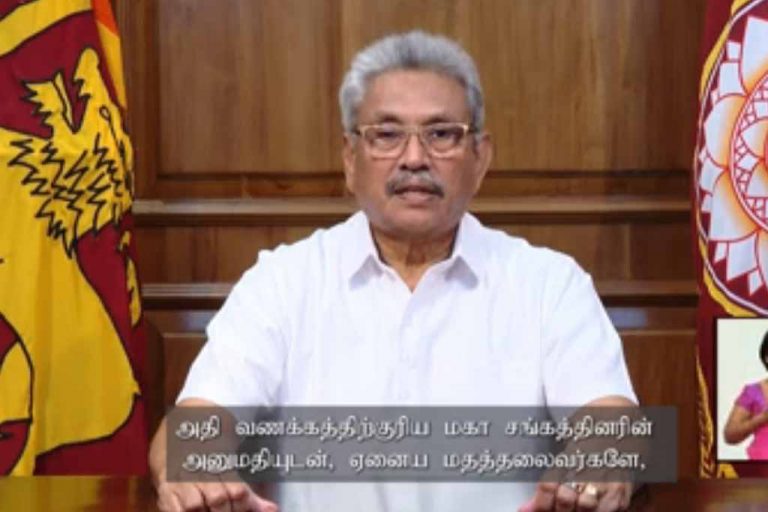
President Gotabhaya Rajapaksa has called on the people to reduce fuel and electricity consumption as much as possible and to support the country at this difficult time.

“Some of the decisions I have taken in the recent past have helped me to control the cost of imports to a great extent. We stopped importing vehicles two years ago because we saw this problem in advance. In addition, we encouraged industries that meet our needs locally. We also stopped the importation of many non-essential food items and planted those crops in our own country. We now see the successful results of them.

The most serious problem we face in controlling the cost of imports is the rapidly rising oil prices in the world market. On average, more than 20 percent of our import bill is spent on oil. In the last few months alone, world oil prices have more than doubled. This is the reason why the increase in fuel prices in our country was inevitable.

This is why I continued to discuss and encourage relevant agencies to use renewable energy sources as much as possible.

Therefore, by restricting the use of oil and electricity as much as possible, the people too can support the country at this time. I hope you understand that responsibility in this difficult time. ”

The President said this in a special address to the nation last night (16).

We have to admit that there was a mistake in the fiscal management – Minister Bandula (VIDEO)

0

Trade Minister Bandula Gunawardena says that the amendment of the Fiscal Management Responsibility Act to suit various political needs has led to the current economic crisis and that he and the government should take responsibility for it.

“What needs to be done in the future is to reactivate the Fiscal Management Responsibility Act and to unite without any political party affiliation. If I mention that, this mistake is always made by politicians and Parliament in Sri Lanka. It is not good to do that. Because Article 148 of the Constitution of Sri Lanka gives Parliament the power over public finances. As Parliament manages this public finances according to various political needs, a separate law was passed to change it. That is the 2003 Fiscal Management Responsibility Act. There are three points. The first is to reduce Sri Lanka’s budget deficit to less than 5% of GDP. Second, reducing the nation’s debt to 60% by 2013. Third, the government will reduce the loan guarantee limit to 4.5%.

What did we do about it? If that had been done this crisis would not have arisen today. There is no simple answer to this, there is a theoretical answer to this in the world. That is the answer that Parliament has passed as a law.

But since then we have increased the guarantee from 4.5% to 15% from time to time. Then we amended the 60% debt reduction to 80%. It has been amended that 80% will be done by 2030. So no matter how much we talk about it, it comes back. This was the condition when I went to the IMF last year. But that law has changed, they are never talking about this fact. Ordinary people do not understand this. A bill has been brought for this and the responsibility has been handed over to Parliament. The bill has been amended to suit officials and other political interests. Therefore, we need to correct that mistake. We have to admit in Parliament that something went wrong ”

Minister Bandula Gunawardena stated this while participating in a political discussion held on Derana TV yesterday (16).

Gunawardena later admitted that three amendments had been made to the Fiscal Management Responsibility Act and that all three amendments had been brought by PB Jayasundera under their government.

Will Vasu resign from his ministry and the government today…?

0

Water Supply and Drainage Minister Vasudeva Nanayakkara has publicly stated on several occasions over the past few months that he would not stay in the current government for a single moment if they decide to work with the International Monetary Fund (IMF).

However, President Gotabhaya Rajapaksa in his special address to the nation yesterday (16) officially announced that he had decided to work with the IMF.

Accordingly, Vasudeva Nanayakkara should resign not only from the ministry but also from the government this morning if he is acting on his word.

Even when his two closest political colleagues, Wimal Weerawansa and Udaya Gammanpila, were removed from the ministry, Vasudeva Nanayakkara retained the ministry and handed over only his official residence and vehicle. Therefore, if he leaves the government today, the question arises as to whether Wimal Weerawansa and Udaya Gammanpila will join him to leave the government or not.

S L Finance Minister briefs the Indian Premier on the country’s economic crisis

0

Sri Lanka and India held talks on the current economic situation in the island nation and ways and means to tackle the foreign exchange as well as further strengthening bilateral relations between the two countries.

Finance Minister Basil Rajapaksa briefed Indian Prime Minister Narendra Modi on the economic crisis in Sri Lanka during their discussions on Wednesday16.

Minister Rajapaksa, who is currently in India on an urgent visit, met the Indian Prime Minister for talks.The Finance Minister is in India to secure financial assistance worth $1 Billion.

Meanwhile, Sri Lanka’s High Commissioner to India, Milinda Moragoda sought ways and means of further enhancing cooperation with India in the power and renewable energy sector, when he met the Minister of Power and New and Renewable Energy of India Shri Raj Kumar Singh in New Delhi yesterday.

Minister Singh, recalling the age-old close relations between India and Sri Lanka, extended a warm welcome to High Commissioner Moragoda. The Minister of Power and New & Renewable Energy of India and the High Commissioner of Sri Lanka discussed a range of issues pertaining to bilateral cooperation in the power and renewable energy sector.

The discussion focused on the ways and means to deepen and broaden the long-term strategic cooperation in the sector as well as short and medium- term projects to enhance interactions between the two nations.

In this context, the progress of the projects under the Line of Credit of USD 100 million extended by India in June 2021 was reviewed.

This Line of Credit, extended through the Exim Bank of India, finances various projects in the solar energy sector in Sri Lanka including those announced during the founding conference of the International Solar Alliance (ISA) held in March 2018, such as rooftop solar photovoltaic systems for households and government buildings.

Further, the proposed Sampur solar power plant, for which the agreement was inked just last week between the National Thermal Power Corporation (NTPC) of India and the Ceylon Electricity Board (CEB), was also discussed by the Minister of Power and the High Commissioner.

They also welcomed the recent MoU regarding Indian private sector investments in a wind energy project in Mannar, Sri Lanka.

High Commissioner Moragoda presented a copy of his policy road map “Integrated Country Strategy for Sri Lanka Diplomatic Missions in India 2021/2023” to Minister Singh. The Strategy envisages establishing close cooperation between Sri Lanka and India in the power sector, allowing greater space for renewables such as wind and solar power.

Minister Raj Kumar Singh was a senior officer of the Indian Administrative Service before joining politics, and served as the Home Secretary of India from 2011 to 2013. He has served as a Member of Parliament since 2014.

SJB urges CB to formulate short-term crisis management plan

0

Sri Lanka’s need of the hour is to work out a comprehensive short-term plan to avert the US dollar crisis and economic setback along with the upcoming debt repayments without looking at it as a short-term liquidity issue.

The present serious fiscal situation has been brought to the notice of the Central Bank Governor Ajith Nivard Cabraal when the opposition firebrand economists and MPs trio Dr. Harsha de Silva, Kabir Hashim and Eran Wickremaratne met him on Wednesday.

It was a rare meeting between the Governor and opposition legislators, often Mr. Cabraal’s detractors on the way the foreign exchange crisis has been managed.

The Central Bank is keeping faith on getting swaps here and there with the Indian assurance of postponing the Asian Clearing Union (ACU) payments for two months etc, Dr de Silva said.

The two-month deferral for US$900 million in payments due this week to the ACU was a blessing in disguise for the Central Bank as its foreign exchange reserves now stands at $400-500 million, he said.

The SJB MP noted that he has told the CB Governor that the liquidity and solvency issue requires analysis of the sustainability of the foreign debt and a restructure.

He disclosed that they discussed the ability to pay for imports and foreign debt in a situation of floating exchange rates, soaring inflation and financial system stability.

The repercussions after the unwinding of moratorium given by banks to COVID-19 affected borrowers and how banks and businesses deal with it were the other major matters discussed at the meeting.

He said that bank officials informed them they were planning to introduce a systematic unwinding process of moratorium loan grace periods.

It has been brought to the notice of the Governor that the failure to extend the moratorium grace periods will create another crisis in the country.

Dr. de Silva revealed that the three SJB MPs, especially parliamentarian Eran Wickremaratne emphasised the need of providing some relief to the poorest of the poor and low income earners due to skyrocketing cost of living.