Home Blog Page 2482

Sri Lanka: Death Sentence for Prison Official: Anti-Death Penalty Group Condemns Sentence, Seeks Action on Prison Conditions

0


Anti-Death Penalty Group Condemns Sentence, Seeks Action on Prison Conditions

(New York, January 18, 2022) – Human Rights Watch on January 18, 2022 joined other organizations in condemning Sri Lanka’s ongoing use of the death penalty after a prison official was sentenced to death on January 12. The groups said that the conviction appeared to be an attempt to avoid addressing the events and dire prison conditions that led to the 2012 incident in which 27 prisoners were killed and about 50 injured at Welikada Prison in Colombo.

The following is their statement:

STATEMENT ON SENTENCING OF SRI LANKAN PRISON SUPERINTENDENT TO THE DEATH PENALTY

On 12 January 2022, the Colombo High Court Special Trial-at-Bar sentenced former Welikada Magazine Prison Superintendent Emil Ranjan Lamahewage to death. Mr. Lamahewage was sentenced in relation to the 2012 Welikada Prison incident in which 27 prisoners were killed and approximately 50 were injured. In 2015 a Committee of Inquiry recommended charging a number of senior officials. Ultimately, only two prison officials were charged and only Mr. Lamahewage was convicted.

The undersigned strongly condemn the ongoing use of the death penalty in Sri Lanka. Whilst Sri Lanka has observed a de facto moratorium on executions since 1976, 1,284 people remained on death row as of September 2020. Despite the long-standing moratorium, the courts continue to impose the death sentence in relation to 22 capital offences. 

Prison conditions for prisoners on death row in Sri Lanka are particularly harsh; the 2020 Prison Study by the Human Rights Commission of Sri Lanka describes the living conditions as “appalling and poor”, detailing testimony of those living on death row in conditions with severe overcrowding, poor sanitation, very limited access to health care, and being locked in cells for 23 hours a day. These conditions contravene the United Nations’ Standard Minimum Rules for the Treatment of Prisoners (the Nelson Mandela Rules).

Whilst on the surface, the conviction and sentencing of Mr. Lamahewage appears to be holding one prison official to account, scapegoating by sentencing one individual to death does nothing to address the very real concerns regarding the events that led to the 2012 Welikada Prison incident. Holding those responsible to account is an important step towards justice for victims and survivors of the Welikada Prison incident. That said, the imposition of the death penalty does not achieve this and is never an appropriate way to administer justice.

Using the death penalty, a form of state-sanctioned killing, as a punishment for someone convicted of state-enabled killing, highlights the absurdity of the state being empowered to take the lives of individuals. Activists within Sri Lanka have highlighted the need for urgent, fundamental reform of the criminal justice system with a focus on rehabilitation and reintegration to meaningfully address the severe overcrowding and poor prison conditions.

The signatories call for the Government of Sri Lanka to formalise its de facto moratorium and abolish the death penalty. In the interim, all options should be explored for those sentenced to death, including individualized resentencing, taking into consideration each incarcerated person’s mitigating circumstances, the weight of the evidence presented at trial, and the lengthy sentences of imprisonment many have already served, in very difficult conditions.

Consideration should be given to early release options including commutation of sentences, based on the circumstances of each case, including injustices they may have experienced due to structural and systemic factors. Additionally, the issues outlined in relation to the current conditions on death row must be urgently remedied with adequate resourcing and facilities.

Signed:

Anti-Death Penalty Asia Network (ADPAN)
Capital Punishment Justice Project
FIDH (International Federation for Human Rights)
Eleos Justice, Monash University
Human Rights Watch

Rulers who ask people to make sacrifices enjoy luxuries (VIDEO)

0

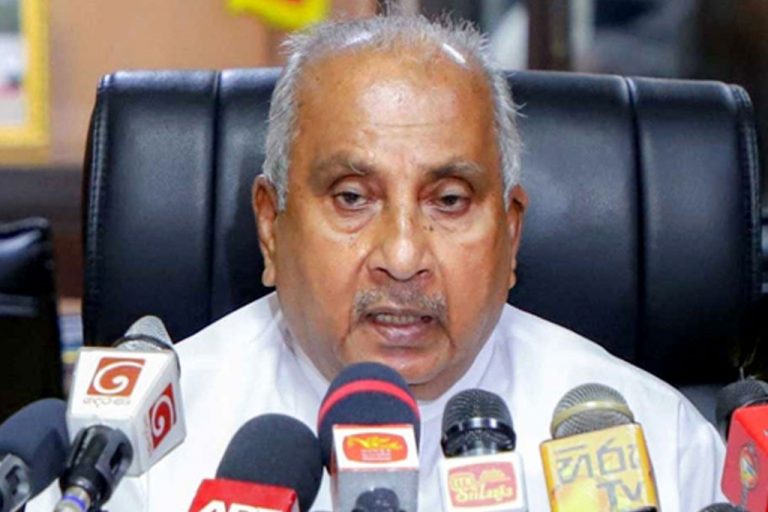
Rulers who urge the people to make sacrifices by limiting their meals are enjoying luxuries, said Leader of the Opposition Sajith Premadasa, attending the unveiling of the tower of the Sri Sambudu Maha Se Radhun built at the request of the Chief Incumbent of the Sri Nagarukkaramaya Temple, Ella Gotuwala, Bandarawela, Badulla and the Deputy Head of the Ampara Dharmasoka Dharmayatana Pirivena Venerable Rilpola Wimalakiththi Thero and the placement of the Tooth Relic at the blessings of the Maha Sangha, under the “Sasunata Aruna – Vewai Dagebai Gamai Pansalai” islandwide program undertaken by the Samagi Jana Balawegaya (SJB) yesterday (17).

Those who came to power in a heroic manner champion to their words are destroying the country today and their two-year curse was the reason for the country to be driven into a serious crisis without dollars, the Opposition Leader added.

India offers US$ 500 million debt to purchase fuel

0

India has offered a debt of US$ 500 million to Sri Lanka to purchase the required amounts of fuel to solve the ongoing power crisis in the country.

This has been informed by Indian Foreign Minister S. Jaishankar to his Sri Lankan counterpart G.L. Peiris in writing.

The said debt will be offered to Sri Lanka as a result of the discussions held between Finance Minister Basil Rajapaksa and India’s Foreign Minister recently, according to the Indian High Commission in Sri Lanka.

Sri Lanka is currently suffering from a severe fuel crisis and as a result the supply of uninterrupted power is at risk.

MIAP

Power Minister Lokuge says a timetable for controlled power cuts will be issued (VIDEO)

0

In the events that the discussion to obtain fuel from the Indian Oil Corporation (IOC) today (18) met a dead end and the fuel oil stocks possessed by the Ceylon Electricity Board (CEB) ran out, any necessity to cut power from tomorrow will be administered via a time table, revealed Power Minister Gamini Lokuge, speaking to media today (18).

Nevertheless, a ship carrying fuel imported by the Ceylon Petroleum Corporation (CPC) is in the Colombo Port and the Governor of the Central Bank of Sri Lanka (CBSL) has asked for it to be released by this evening, Lokuge revealed.

Will the oil stock be released from the Port, the power can be supplied without any interruption, the Power Minister went on, reiterating the necessity to cut power via a time table, which, according to Lokuge, will be informed to the public in advance.

MIAP

IOC confesses it too suffers from fuel crisis

0

Lanka Indian Oil stated that the company itself is facing a serious fuel crisis, same as the Ceylon Petroleum Corporation, due to the letters of credit (LCs) not being opened amidst the dollar deficit. As a result, the issuance of fuel to the companies operating under the IOC has also gone into crisis, it added.

The company made this observation in response to the statement made by the Power Minister that the Ceylon Electricity Board (CEB), which is suffering from a fuel crisis, was hoping to obtain fuel for power generation through the IOC.

The IOC further noted that the company’s priority at the moment is to supply oil stocks for gas stations operating under it and that it has no capacity at present to supply oil for power generation.

We have to accept the fact that the government has failed: Amaraweera

0

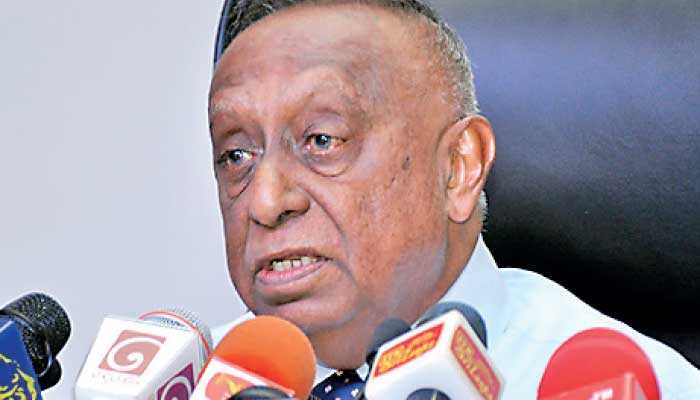
The Sri Lankan Rupee is continuously being depreciated against the US Dollar and the government has failed to control the situation, said Environment Minister Mahinda Amaraweera.

Pointing out that many ongoing crises in the country are due to the Rupee’s depreciation and the dollar deficit, Amaraweera added that the government, despite any defensive speech, has failed to solve the matter. This fact alone should be embraced, he said in a controversial statement.

There are approximately Rs. 17,200 billion in foreign debt, Amaraweera went on, adding that the amount of debts obtained in the past and the debts due to be obtained will contribute to a soaring figure in the future.

Accordingly, the per capita debt of the people of this country could be close to over Rs. 800,000, he warned.

The Environment Minister further added that all the leaders who were in power since 1977 should be responsible for this debt crisis, for they continued to mortgage the people and obtain debts instead of strengthening the country’s economy.

MIAP

CEB Electrical Engineers stage protest against GM (PHOTOS)

0

The Electrical Engineers Association of the Ceylon Electricity Board (CEB) who were on sick leave today (18) staged a protest in objection to the newly appointed General Manager and the Chairman.

The protesters demanded the immediate dismissal of the two CEB heads and urged that the dismissal of the General Manager shall be performed today itself.

Failure to meet the demand, a work-to-rule action will be carried out from tomorrow, they added.

Photos: Ajith Senevirathne

Click Here to view full photos.

Those attended vacation during long weekend should be cautious, says DDGHS

0

Deputy Director General of Health Services Dr. Hemantha Herath urged everyone who had attended trips during the long weekend to be extra careful.

The Deputy Director General of Health Services advised that if any member of the family who has been on vacation develops respiratory problems or symptoms similar to those of Covid-19, they should immediately appear for tests.

During the long weekend, there were many gatherings as well as large-scale excursions, Dr. Herath revealed, warning that in the backdrop, the infection’s prevalence could mount. Anyone suspicious of possible infection, therefore, should test, he added.

MIAP

US$ 500 million sovereign bond settled

0

The US$500 million sovereign bond that matured today (18) has been paid, revealed Governor of the Central Bank of Sri Lanka (CBSL) Ajith Nivard Cabraal, in a Social Media remark.

MIAP

Kumudesh divulges corporate violations involving PCR Laboratory backed by ADB-debt

0

President of the Academy of Health Professionals Ravi Kumudesh divulged a number of irregularities and corporate violations surrounding the PCR Laboratory established in Mulleriyawa by the debts obtained from the Asian Development Bank (ADB) in a statement today (18).

Laying down the discoveries the Academy of Health Professionals urged the government to conduct an immediate probe into the matter and penalise everyone responsible for destabilising the country.

A. Nearly Rs. 100 million out of Rs. 250 million the expressed funds has been spent for the building of the Mulleriyawa Laboratory itself, in contradiction to the standards, whereas less than Rs. 10 million is required to such a construction. Up to Rs. 140 million thus has been spent on the supply of equipment and reagents, while Rs. 90 million has been spent on PCR kits, with an equipment cost of about Rs. 50 million. 

B. Beijing Genomic Institute, the Parent Company that supplied the equipment, is a global leader in molecular genetics. Following much deliberation by a local agent, appointed by HSEP upon the completion of direct purchases and selected upon the Ministry of Health’s failure to deliver engineers from the Parent Company to set up the HSEP laboratory, the price of PCR kits has been slashed by more than 50 per cent. By doing so, the ADB Agent and the Director HSEP have lost the ability to receive commissions. 

C. The Local Agent has emphasised the need to meet the requirements of the laboratory building infrastructure as per the recommendations of the Parent Company, as well as the poor sanitary and rest facilities provided to the laboratory staff who had been put under intense pressure to handle a large number of ‘high-risk’ samples. It should be specifically noted that these staff members have been performing an extremely difficult task by handling such high-risk samples wearing full personal protective equipment (PPE) for lengthy periods.

D. HSEP has left a substandard building in the hands of the Director and staff of the Mulleriyawa PCR Laboratory, forcing them to perform 4,000 tests in a laboratory originally designed for only 500 tests (noteworthy that the contract is signed for a 500 test capacity only) as if a miracle could be performed with limited resources.

E. The Director HSEP has invited top ADB officials from Japan to visit the laboratory and take smiling photos with the ‘threatened’ staff, forcing them not to spit a word about how they were being treated to the visiting delegation, in what can only be defined as rather a malicious and criminal act.

F. These events indicate how cunningly and blindly even the professionals, who pretend to be ADB’s so-called transparent activists, are working, disgracing the name of the ADB, which advocates so much for human rights and social well-being.

G. In the event that the Local Agent pointed out all the above shortcomings and anomalies to the HSEP, the angered Director HSEP, in collaboration with the ADB designated engineer in charge of the laboratory building infrastructure, has created faulty circuits and furniture and sabotaged the process, making the Local Agent vulnerable to perform any smooth action and leaving him no option but to bow to the HSEP’s bidding

H. Through the actions of the Director HSEP, it is clear that his intention was that they pay all the dues to the main supplier at the time of the initial purchase and reduce the price of the PCR kit by more than half the original price, punishing the Local Agent for failing to meet their required commissions and saving the national wealth by not paying their freight costs.

I. In the event that the HSEP failed to meet its commission, the Director HSEP who signed the “Negotiation Minute” and appointed the Local Agent has threatened to forcibly remove the Local Agent by the HSEP itself.

J. The Local Agent Company, which is a leading consulting firm registered in Sri Lanka, has completed a number of projects with other countries despite its limited experience in Sri Lanka.

The local agency, which is primarily a consulting firm registered in Sri Lanka, has completed a number of projects with other countries despite its limited experience in Sri Lanka. The Parent Company had fully supported the work in Mulleriyawa, along with the poor laboratory infrastructure provided by and the valuable training sessions (offered by the Parent Company) discarded by the HSEP.

The Director HSEP’s selfish and vengeful conduct against the local agent and the Health Secretary’s failure to avert such corporate violations have driven the laboratory professionals and their affiliations in Sri Lanka to lose many opportunities in the field.

MIAP