Home Blog Page 2488

Government perturbed after S&P downgrades Sri Lanka

0

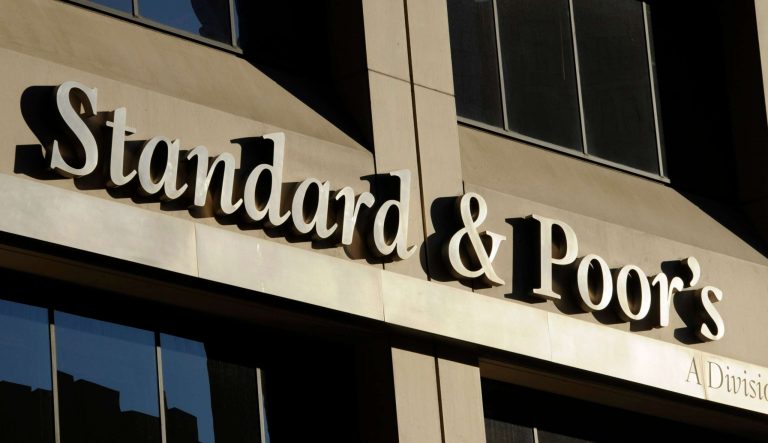
The Government of Sri Lanka (GOSL) said it was perturbed after S&P Global Ratings downgraded Sri Lanka to ‘CCC’ from an earlier ‘CCC+’ with a negative outlook.

The Central Bank of Sri Lanka said that the downgrade has been done at a  time when the GOSL has diligently lined up adequate funds to repay its maturing foreign debt liabilities and its repeated assurances over the strong commitment to oblige its debt service payments, including the International Sovereign Bond (ISB) maturing on 18 January 2022.

“This move demonstrates repetitive nature in which S&P and other rating agencies acted to initiate rating actions just prior to the settlement of ISB obligations. S&P’s action also fails to recognise the positive developments taking place in Sri Lanka, in an environment in which the entire world is grappling with repeated waves of the COVID-19 pandemic. 

The sense of urgency on the part of an internationally recognised rating agency is inconceivable, particularly since S&P was being constantly updated by the Sri Lankan authorities on the latest developments in all sectors of the economy and many measures to shore-up foreign exchange inflows,” the Central Bank said.

The Central Bank said that these repeated rating actions, which have undermined and delayed the efforts of authorities’ to augment foreign exchange inflows, have negatively affected investor confidence, potential investment inflows and the gradual build-up of official reserves of the country.

“Recent rating actions also negated momentum of reserve-build-up and adversely affected investors who acted over such announcements,” the Central Bank said in a statement.

The bank further noted that as against the S&P’s claim on unforeseen positive developments, major economic and financial indicators are aligned in line with the measures and plans unveiled in the recent Budget announcement of the GOSL and the Six-Month Road Map announcement by the Central Bank of Sri Lanka (CBSL).

The near-term funding arrangements are being finalised by the GOSL and the CBSL with various bilateral sources, which are due to be materialised. Following several headwinds faced by the Sri Lankan economy in view of the COVID-19 pandemic, there are strong signs that economic activities are now returning to normalcy with all leading indicators signalling positive momentum. 

Tourism is on the rise and exports are continuously increasing. A number of measures introduced to enhance workers’ remittances are also yielding anticipated results. Government to Government financing initiatives, including liquidity facilitations and trade financing, and central bank swap arrangements are negotiated with neighbouring countries through high-level engagements. 

These facilities are expected to strengthen and fast track the recovery of the Sri Lankan economy.

With the expected inflows materialising as envisaged in the Six-Month Road Map, at the end of 2021 the reserve position amounted to over US dollars 3 billion level and such level is expected to be maintained in the near-term with gradual build-up with both non-debt and financing inflows.

 In addition, during the recent past, foreign currency debt exposure has been reduced due to various measures taken by the GOSL and the CBSL.  Thus, taking the absolute value of reserve levels only into consideration against the overall exposure of the country’s debt portfolio is inappropriate.

Hence, the Central Bank said that S&P’s assessment to downgrade the rating has clearly failed to recognise the recent progress made by the Government and the CBSL in securing foreign exchange inflows to meet the government’s forthcoming debt obligations.

Against this backdrop, the Government re-assured all stakeholders, including the international investor community, that Sri Lanka remains committed to honouring all forthcoming obligations in the period ahead and maintain its unblemished record of debt servicing. 

The Sri Lankan authorities also welcome direct engagement with investors and invite investors for regular one-on-one discussions without being distracted by such unfounded announcements by external agencies.
ECT Development work at the Colombo Port gets underway

0

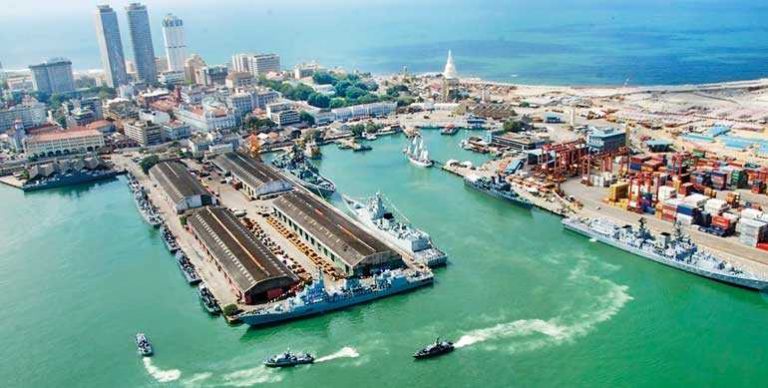
The Eastern Container Terminal (ECT) Development work has been launched at the Colombo Port today under the patronage of President Gotabaya Rajapaksa and Prime Minister Mahinda Rajapaksa.

The Sri Lanka Ports Authority said that work on the terminal is expected to be completed by 2024.

India had earlier offered to develop the strategic ECT with Japan but the current Government had instead decided to offer the West Terminal to India.

Cabinet approval was later granted to develop the Eastern Container Terminal in stages as a terminal totally operated by the Sri Lanka Ports Authority.

Accordingly, international competitive bids had been invited for Phase II of the Eastern Container Terminal at the Colombo Port.

China Harbour Engineering Company Ltd (CHEC) was picked to develop Phase II of the Colombo Port Eastern Container Terminal.

With the planned construction beginning today, the length of the Eastern Terminal will increase to 1,320 meters and has been scheduled to be completed in July 2024.

Secretary to the Ministry of Ports, U. D. C. Jayalal said the project costs US$ 500 million.

The first phase of the terminal is scheduled to be completed on the 4th of July next year and the terminal will span over 600 meters.

In the first phase, 6 ship-to-shore cranes and 20 rail-mounted gantry (RMG) cranes will be installed at the Eastern Terminal.

Once completed, the terminal will consist of 12 giant cranes and 40 normal cranes.

Speaking at the event Sri Lanka’s Minister of Ports and Shipping Rohitha Abeygunawardena said, construction of the West Terminal will begin in February 2022 as a joint venture with the private sector and the operational capacity is expected to increase drastically.

The minister noted that President Gotabaya Rajapaksa will have the honour of uplifting the Port of Colombo to world number 13 from its current position of 23.

Prime Minister Mahinda Rajapaksa responding to concerns surrounding such development projects said that most governments in the past back-peddled at times of economic crisis and the next 3 years are vital for the current government..

Premier Mahinda Rajapaksa noted that this Government never thought of making itself feel comfortable and a Government that thinks of its own benefit will not give the public concessions worth US$ 650 million.

With a 420 metre quay wall built with US$ 100 million investment, SLPA is currently operating the ECT using the cranes ordered for Jaya Container Terminal (JCT)-5. 

However, SLPA Chairman Capt. Nihal Keppetipola noted that these cranes will be replaced with cranes ordered for the ECT. 

 Last November, Shanghai Zhenhua Heavy Industries Co. Ltd, a unit of China Communications Construction Company (CCCC) won the international tender to supply 12 ship-to-shore cranes and 40 automated rail mounted gantry cranes for 
the ECT. 

 According to Capt. Keppetipola, the cost of the required equipment for the terminal is estimated at US$ 300 million.

The civil construction work of the ECT was awarded to a joint venture between Access Engineering PLC (AEL) and China Harbour Engineering, another unit of CCC. 

The cost of civil construction is estimated at US$ 200 million, which is to be directly financed with SLPA funds. In addition, US$ 20 million will be invested in a terminal operation system.

Once the ECT becomes fully operational in 2024, Minister Abeygunawardena highlighted that Port of Colombo’s capacity will be increased to handle 10.5 million TEUs from the current seven million TEUs, becoming the 13th busiest container port in the world.

Commenting on potential competition arising from China Merchant Group-managed Hambantota Port, Capt. Keppetipola dismissed such claims as unrealistic. 

The authority  also has  plans to develop container terminal at a later stage, but they will never compete with the Port of Colombo as it doesn’t make sense to have two competing hubs in the close vicinity,” he stressed.


Meanwhile, Minister Abeygunawardena announced that the construction of West Container Terminal (WCT) is scheduled to commence in February this year.  India’s Adani Ports and Special Economic Zone Ltd (APSEZ) last year signed the build-operate-transfer (BOT) agreement to develop and operate WCT with its local partner John Keells Holdings (JKH) and SLPA, with an investment of US$ 700 million.


With the WCT coming into operation as the third deep-water terminal, the Port of Colombo’s capacity is set to increase by another 3.5 million TEUs. 

In addition, the SLPA also plans to develop Colombo North Port, to the north of Port of Colombo, spreading from the Kelani River in the Modara area, up to the existing northern breakwater of the Colombo Port. The SLPA in 2020 sign an agreement with AECOM Infrastructure & Environment UK Limited to conduct a feasibility study for this.

Minister Abeygunawardena noted that the government plans to complete the construction of Colombo North Port by end of 2035 adding another three terminals and increasing the capacity of Port of Colombo to 30-35 million TEUs and possibly placing the Port of Colombo among top five ports in the world.  

“Sri Lanka is in an ideal place to become the hub of South-East Asia, being the feeder nerve centre for South East Asia. 

No shipping line will deviate from the East-West route due to various operational costs and shipping costs. We are now getting on to the correct track,” Capt. Keppetipola added.

SriLankan Airlines flies profitably in the month of December

0

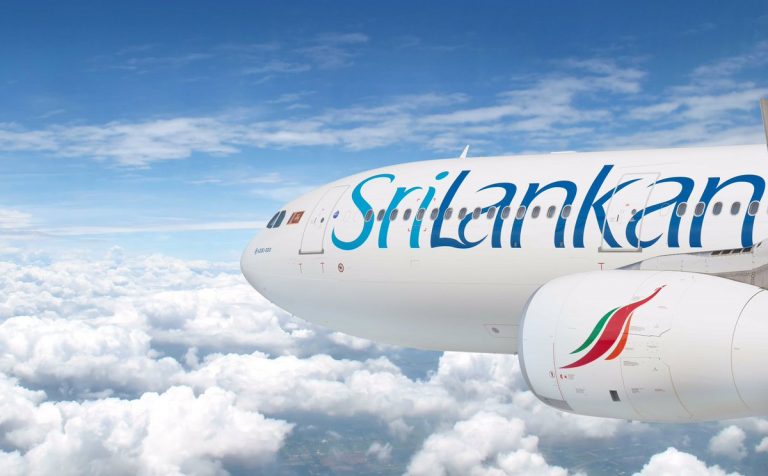
SriLankan Airlines has posted a company profit of US$ 9.25 million and a group profit of $ 10.66 million for December 2021, which is the first profitable month for the Airline since the onset of the Pandemic in early 2020, airline sources said. 

The revenues are up by almost 200 percent compared with the same period last year and have reached over 80 percent of the pre-pandemic level. 

Further, the Airline reports a profit of$ 11.43 million for December 2021 at Air Transportation level, which is the highest recorded profit from Air Transportation in over 20 years.

“The sacrifices made by all staff members have paved the way for a positive start for the New Year. 

During the past two years, the national carrier implemented multifaceted initiatives to reduce operational costs, for which each and every employee of the SriLankan family contributed, and the airline reaping the benefits of these efforts today. 

The future, however, remains extremely challenging with the spread of the new variant of the virus and we will continue to monitor the situation closely and take necessary action to ensure that the momentum achieved in December continues,” Ashok Pathirage, Chairman of SriLankan Airlines said.

SriLankan operated close to 800 flights during the month and carried a total of 228,203 passengers – in excess of 13 times the number of passengers carried in December 2020. Moreover, SriLankan uplifted a total of 7,877 metric tons of cargo, which is a 147 percent  increase from December 2020.

SriLankan Airlines has been fraught with challenges over the past three years starting with the Easter Sunday attacks in April 2019 that led to a decline in tourist arrivals in the immediate aftermath, followed by the onset of the pandemic in the first quarter of 2020, which is now entering into its third year.

However, as the national carrier, SriLankan Airlines rose to the occasion, by deploying resources to fly stranded Sri Lankans home from various parts of the world, including pilgrims from India and students stranded in various parts of the world including from COVID-19 stricken Wuhan in China.  

Since then, the Airline has not only engaged in ferrying Sri Lankans, but also stepped up to assist citizens of other countries return home. 

SriLankan also adapted its strategy with a renewed focus on cargo operations which was a boost for exports and air transportation of vital medical supplies, vaccinations and other commercial cargo across borders as global passenger air travel came to a virtual halt. 

Thus, the Airline managed to keep its fleet in operation while many other airlines grounded most of their aircraft.

Despite the difficulties of the pandemic, SriLankan has also maintained its commitment to support the national economy, bringing tourism, connecting business, carrying freight and earning foreign exchange. 

In the past year, SriLankan launched operations to several new destinations including to Seoul; Nairobi; Moscow; Paris; and Kathmandu as the pandemic showed signs of slowing and borders gradually opened.

The new destinations were promoted through marketing initiatives in the respective markets, including by participating in international tourism trade fairs such as IFTM Top Resa in Paris and OTDYKH LEISURE in Moscow.  

SriLankan also became the first airline to conduct Familiarization Tours (FAM) for travel trade journalists based in Russia, France and India last year. 

The country’s tourist arrivals remarkably topped 44,000 in November 2021 as a result of these initiatives.

As these positive numbers ring in the New Year for SriLankan, the Airline hopes to continue the momentum by pressing forward with a renewed energy and focus

SRI LANKA: Fake constitutions create irrational societies

0

By Basil Fernando

A fake Constitution alters the rules of logic that are the basic foundations of a good constitution. The change of logic leads to irrationality. The spread of irrationality into public institutions creates rotten systems within such public institutions. Where the public institutions go rotten, every aspect of social life comes into severe problems.

Gradually, all systems break down. Then unmanageable crises develop within the society. These crises in turn create so much demoralisation within the people who become the sufferers and victims of these institutions that they withdraw their co-operation from these public institutions. With that, not only these public institutions but even the society becomes unable to function. The dysfunctionality of public institutions which are unable to create public co-operation leads to failed states. Such is the situation of Sri Lanka today.

It is quite relevant to discuss the impact of fake constitutions at the present moment because the discussions about adopting a Government-sponsored draft of a Constitution has provoked a debate within the society about the very purpose and the meaning of the making of a Constitution.

Can an already existing fake Constitution provide the basis within which a genuine and rational Constitution can be created? That is the core of the whole issue about Constitution-making in Sri Lanka.

The 1978 Constitution is a fake Constitution. It talks about the Constitution of a republic. However, it violates the most basic principle of a republic. Thomas Paine, the great American philosopher and writer whose writings played an enormously influential role during the time of the making of the American Constitution, summed up the basic idea of a republic: In England, the king is the law whereas in the US, the law is the king. What makes a republic is the supremacy given to the law above the ruler. If the ruler is not subjected to the law, then there cannot be a republic.

Thus, calling Sri Lanka a republic is a misnomer because in Sri Lanka, it is not the law that is the king but it is the Executive President that is the law. When the head of the state, whether it be an Executive President or a Prime Minister, dictates the law, then it cannot be a republic at all. When such a place is called a republic while basically operating on the principles on which a monarchy is based, it may provide some kind of a title to the head of the state which sounds modern. However, there is nothing modern about the Sri Lankan Constitution. It is based on a primitive principle of dictating the terms under which the society should live by a single person called the ruler.

The basis of irrationality that is inherent in the 1978 Constitution is based on this contradiction of calling itself a republic while operating on the principles which are opposed to a republic. This change in the major premise of a system of governance changes all the other premises and the conclusions to be like that. Thus, from a rational point of view, the whole of the public system within which Sri Lanka operates is within an illogical framework. Such an illogical framework creates all the consequences which are mentioned earlier in this article.

However, this logic lives not only as an abstraction. Real institutions begin to malfunction to an extent that the country’s system of the regulatory framework of finance breaks down. The nerve system of any economy is the system by which financial institutions are managed in a country. When the normal principles that govern such managements are abandoned in favour of irrational interferences, violative of the law, then, the very financial structure breaks down.

This exposes the narrowness of some who claim that Sri Lanka’s problems are only economic problems and that the questions of the Constitution are not relevant problems at the moment. That is an irrational understanding of how an economy works. An economy, like any other feat of human activity, operates on logical frameworks. When the basic premises of a logical framework are removed, then irrationality enters into the entire system. The consequences of that irrationality can now be seen in the country. The prediction is that in the coming months, these will become even worse and that life in the country may become a nightmare. The possibilities of even food shortages have been predicted. Already, the spread of malnutrition in a significant portion of the population is a fact.

Putting a Humpty Dumpty back together again is considered usually an impossible task. That is the way that people have begun to perceive the Sri Lankan situation. However, there is a way to put the Humpty Dumpty back together again and to get the public institutions of the nation to function. That is why it should be a return to reason. Returning to reason is a primary requirement of returning to a law based society that is a republic.

Today’s task is to recreate a republic. By following the 1978 Constitution, a republic which rejects the basic notion of a republic, it is not possible to return to a republic.

The first step needs to be the undoing of this fake Constitution and to replace it with a Constitution within the democratic framework which could operate under the principles of the rule of law.
However, it is impossible to think that the Parliament in its present form will want to or is capable of producing anything other than a Constitution that is based on the same principles as the fake Constitution of 1978.

That is the reason why there is a demand today for the Constitution making to be done by a constitutional convention that is a convention consisting of persons who are selected mainly for the purpose of the making of the constitution. The selectors are the people. What a constitutional convention would do is to bring back the people’s participation into constitution making so that the basic principles of a rational Government could be restored. That will pave the way to make a beginning in order to change the ground realities that exist in the country.

However, the next question is how to bring about that constitutional convention. This could be done by way of a referendum at which the people vote for the manner in which the Constitution should be made and who should constitute the constitutional convention. Naturally, people would want the constitutional convention to be represented by persons who will faithfully contribute to create a kind of law based system within which the people themselves are protected. By people, it means everyone in Sri Lanka belonging to various sectors of the society, the workers, peasants, entrepreneurs, professionals and all. They need to have a direct say in the making of a Constitution.


To continue with the fake Constitution that exists now, is to look for a future within which everything will be much worse than the way they exist even now. A constitutional convention brought about by a referendum is necessary for the survival of Sri Lanka as a law based and rational society.

Celebration of 159th Birth Anniversary of Swami Vivekananda in Sri Lanka

0

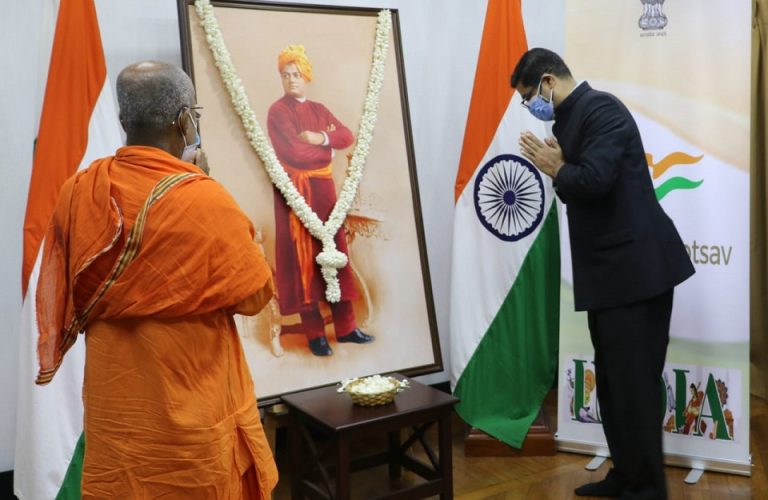
Acting High Commissioner of India, Shri Vinod K. Jacob, together with the Chief Priest of Ramakrishna Mission in Colombo, Swami Aksharatmananda and other officials of the High Commission of India, paid floral tributes to Swami Vivekananda on his 159th Birth Anniversary, in a special event organized at the High Commission of India today (January 12, 2022). Earlier in the day, a special prayer ceremony was held at the Ramakrishna Mission which was attended by Dr. Rewant Vikram Singh, Director, Swami Vivekananda Cultural Centre (SVCC), the cultural arm of the High Commission of India. SVCC has also organized online film and documentary screenings to commemorate the Swami Vivekananda Jayanti.

2.      Swamiji’s teachings and philosophy have inspired people, particularly the youth, to contribute towards nation building and his birthday is, therefore, also celebrated as the ‘National Youth Day’ in India. To commemorate this day, the Ministry of Youth Affairs & Sports of India has organized the 25th National Youth Festival in a virtual mode from 12th-13th January 2022, which has been inaugurated by the Prime Minister of India.

3.       Swami Vivekananda was greatly influenced by the teachings of Lord Buddha. Soon after being initiated into Sannyas, Swami Vivekananda visited the holy city of Bodh Gaya to offer his prayers to the Bodhi tree, under which Lord Buddha had attained Enlightenment. Swami Vivekananda, along with Shrimad Anagarika Dharmapala, attended the World’s Parliament of Religions at Chicago in 1893, where both of them gave historic speeches.

4.       Sri Lanka had a special place in Swami Vivekananda’s heart. Swami Vivekananda visited Sri Lanka in January, 1897 and during his 11-day stay travelled to different parts of the country including Colombo, Kandy, Matale, Dambulla, Anuradhapura, Vavuniya, Chavakachcheri, Jaffna, and gave multiple spiritual discourses. This year, commemorating the 125th anniversary of Swami Vivekananda’s arrival in Sri Lanka, a number of events are being organized by the High Commission of India in collaboration with Ramakrishna Mission and other spiritual organizations and leaders.

*****

Colombo
12th January, 2022

Why afraid of polls if right? Sajith questions government

0

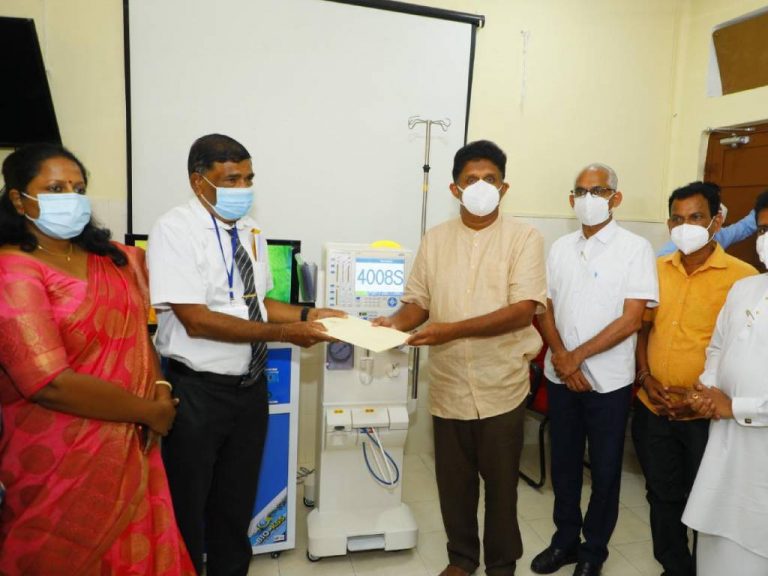
The present government has transformed the country into a land full of darkness, said Leader of the Opposition Sajith Premadasa, addressing the occasion of providing medical equipment to the Point Pedro Hospital under the ‘Samagi Jana Balawegayen Husmak’ initiative undertaken by the Samagi Jana Balawegaya yesterday (11).

In the occurrence of poor governance and poor economic management, the era of queues has reemerged, the Opposition Leader pointed out.

“The government is afraid of reaching out to the people. The postponement of the local government election by one year proves it. If there is proper governance, the rulers should not be afraid of reaching out to the people. We as a country cannot move forward this way,” Premadasa noted.

He added: “Change should occur in a manner in which the country is served well, with people-oriented and people-friendly treatment. We the Samagi Jana Balawegaya promise to give a fresh solution to the burning issues of this country, to rebuild this country. We have set aside tradition and proven by action. We are ready to build, sharpen, develop and take responsibility for the country.”

A Dialysis Machine with Portable RO System worth Rs. 2,457,000.00 was donated to the Point Pedro Hospital under the 39th phase of the ‘Jana Suwaya’ project undertaken to build a healthy country as part of the Samagi Jana Balawegayen Husmak initiative.

The Jana Suwaya Project together with the Samagi Jana Balawegayen Husmak initiative is undertaken by the Parliamentary group of the SJB, party organisers, members and local and foreign branches of the SJB and funded by local and foreign donors.

Earlier, essential hospital equipment worth Rs. 110,339,500.00 were donated to the national hospital scheme in Sri Lanka at 38 phases.

Deltacron: Health specialists urge not to be afraid of new Covid variant

0

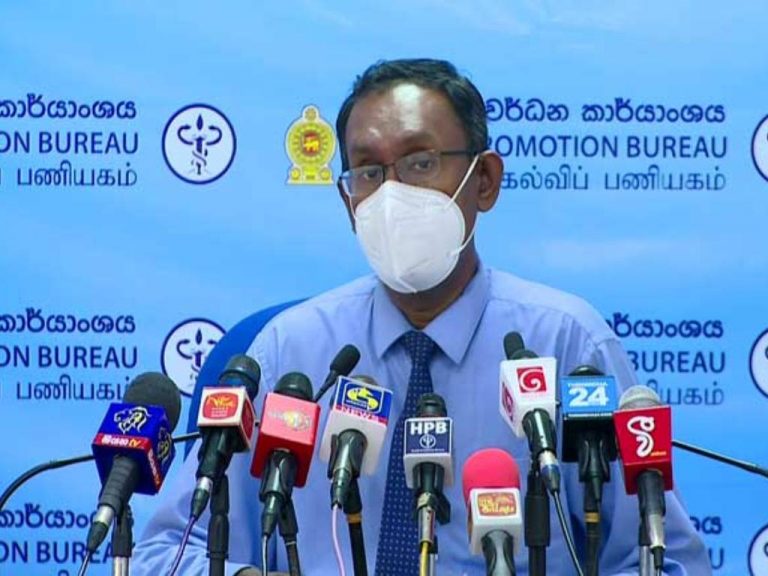
There is no need to be unduly apprehensive about the newly identified ‘deltacron’ variant of Covid-19, said Dr. Jude Jayamaha, a medical specialist at the Borella Medical Research Institute.

He noted that many of the reports about the new Covid variant, which was first discovered in Cyprus, were unscientific and speculative, adding that there is no data to substantiate that the variant is a hybrid of delta and omicron.

Revealing that there is no risk of infection to proceed for a lockdown, Dr. Jayamaha added that it is not possible to make predictions at this stage as to whether the country will have to be locked down again.

MIAP

Welikada Prison Riot: Lamahewa sentenced to death, Rangajeewa acquitted

0

Former Prisons Commissioner Emil Ranjan Lamahewa was convicted guilty and sentenced to death over the massacre in Welikada Prison in 2012.

The verdict was made by the Colombo Permanent High Court Trial-at-Bar.

Lamahewa was found guilty of one charge and released from four charges.

Former Inspector Neomal Rangajeewa who was also charged in the case was acquitted.

This was when the case was taken up before a Special Three-member Bench comprising Justices Gihan Kulatunga, Pradeep Hettiarachchi and Manjula Thilakarathna today.

SL will be able sell oil to Maldives, if oil tanks repaired (VIDEO)

0

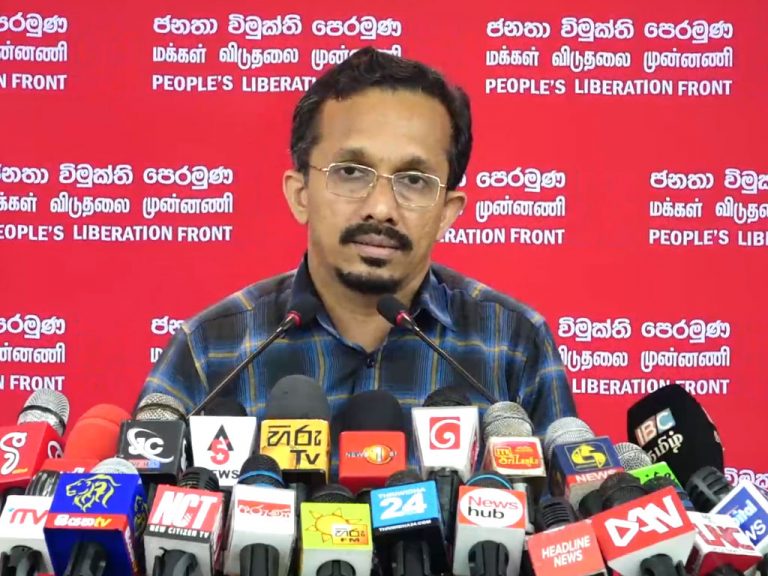
Janatha Vimukthi Peramuna (JVP) Political Bureau member former MP Sunil Handunnetti speaking to the press conference held in the Party Head Office today (12) revealed that Sri Lanka will be able to sell oil to Maldives, were the claims made by engineers of the Ceylon Petroleum Corporation (CPC) on repairing oil tanks in Trincomalee in their reports true.

Such a repairing process costs about US$45 million, for which debts should be obtained, Handunnetti pointed out.

He added that Sri Lanka could be made into a lending country instead of a borrowing one, depending on the resources available, so that the people should not have to wait in oil and gas queues.

However, should the resources be sold via agreements, the citizens of Sri Lanka will have to wait in queues in 2072 as well, the former MP warned.

Reminding that fertiliser, electricity and gas are not available in the country due to the ongoing dollar deficit, Handunnetti alleged that the country has not fallen into such a situation but was driven into.

MIAP

Easter Sunday Massacre: Case against Naufer Moulavi dragged in till March

0

The case filed against 25 suspects including Naufer Moulavi for allegedly aiding the Easter Sunday Genocide was taken up before the Colombo Three-member Special High Court today (12).

One of the suspects to the case had requested that his charge sheet be produced in Tamil, while another in English. However, the charge sheets were not produced today.

Accordingly, the Court concluded that the case be adjourned till March 03, 2022.

MIAP