The Attorney General has informed the Supreme Court that the Employees’ Provident Fund (EPF) and the Employeees’ Trust Fund (ETF) are not applicable to the proposed Surcharge Tax Bill.
In addition, 11 more funds will be removed from the draft bill, the Attorney General has informed.
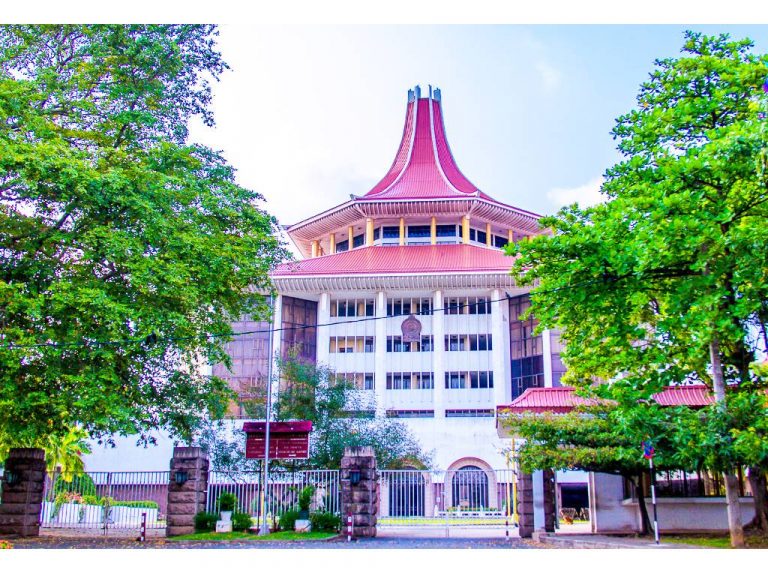
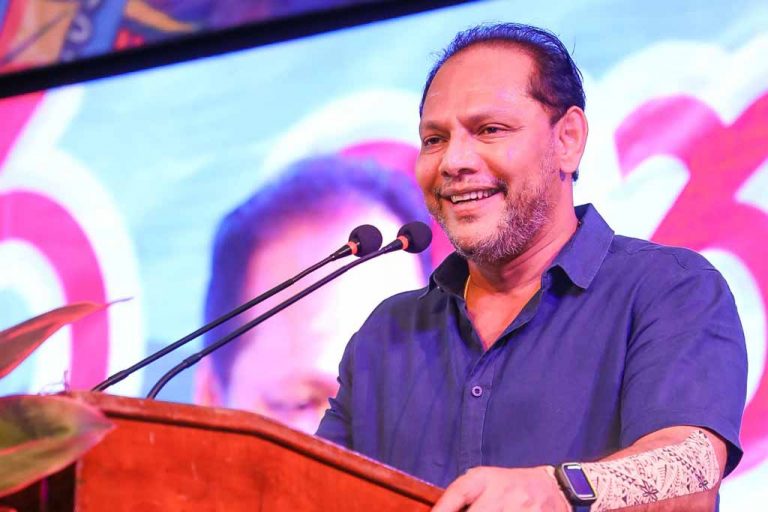
The petition filed before the Supreme Court by Secretary General of the Samagi Jana Balawegaya (SJB) MP Ranjith Madduma Bandara against the controversial Surcharge Tax Bill tabled in Parliament was called before the Bench today (02).
The petition, citing the Attorney General as the respondent, seeks an order being made declaring that the proposed bill shall be passed via a referendum in the event that it violates the Constitution.
Speaking to media, petitioner MP Ranjith Madduma Bandara emphasised that they do not wish to pursue the petition given that the relief sought via the petition has already been received.
The Surcharge Tax Bill proposes to impose a one time 25 per cent tax on companies whose annual taxable income exceeds Rs. 02 billion.
The country is in the midst of one of the worst financial crises in decades, exacerbated by a tourism collapse in the wake of Covid
In recent weeks, Shamla Laxman, 54, has been rising at dawn or staying out late at night. She is on the prowl for an item that has become rarer than gold dust in Sri Lanka’s commercial capital of Colombo in recent weeks: sachets of milk powder.
“These days it’s become impossible to find, and when you do find it in a shop, the prices are so expensive, double or triple what it was before, that I can’t afford it for my family,” said Laxman, who feeds a family of seven in her small house.
Chicken, which used to be a staple, is now a luxury item after it more than doubled in price. “All our basic items have become almost unaffordable now,” said Laxman. “Every day I am fearful of not being able to feed my family tomorrow.”
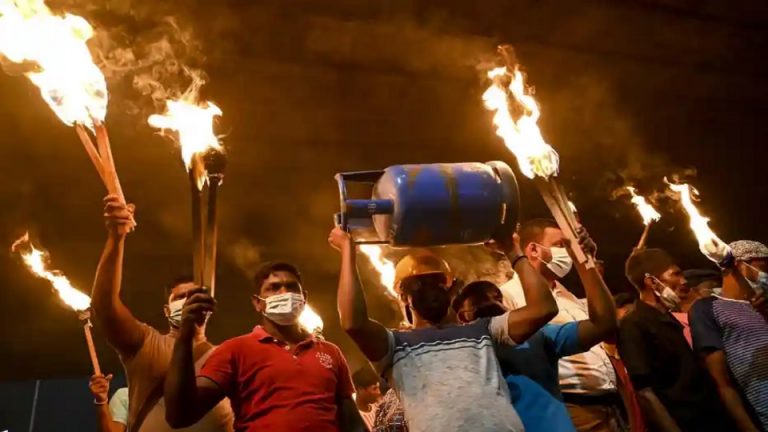
Sri Lanka, an island off the southern tip of India, is in the midst of one of the worst financial crises to hit the country since it became independent in 1948. In recent month, food prices have skyrocketed, there has been a continued dearth of essential goods, fruit and vegetables, and long queues have formed outside petrol stations due to a shortage of fuel. This week, daily power cuts of over five hours began to be imposed across the island and warnings were issued that water supplies might also soon be disrupted.
Last week two ships carrying diesel and a tanker of fuel oil sat in the port but their essential cargo could not be brought in as the government didn’t have the dollars to pay for it. Over the weekend, Gemunu Wijeratne, President of the Lanka Private Bus Owners’ Association, warned that buses were not being given enough petrol to continue functioning and that journeys were already being shortened.
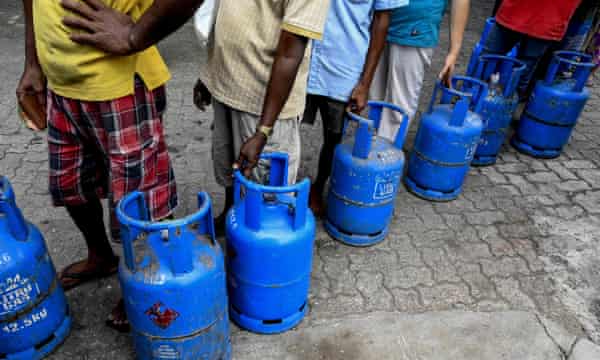
People queue to buy Liquefied Petroleum Gas cylinders in Colombo as shortages of essentials gripped the island Photograph: Ishara S Kodikara/AFP/Getty Images
“If this continues, public transport will collapse and the economy will come to a standstill,” said Wijeratne.
It is a crisis many say has been over a decade in the making but was exacerbated by the pandemic and economic policies of the current government, led by president Gotabaya Rajapaksa who came to power in late 2019.
Consecutive governments have borrowed high-interest sovereign bonds, which coupled with billions in loans from countries including China and Japan have left Sri Lanka with cripplingly high foreign debt repayments. It has been operating with a $6bn trade deficit, importing far more than it exports, and invested billions in expensive, large-scale infrastructure projects.
“We have been spending beyond our means for years,” said Ahilan Kadirgamar, a sociology professor at the university of Jaffna.
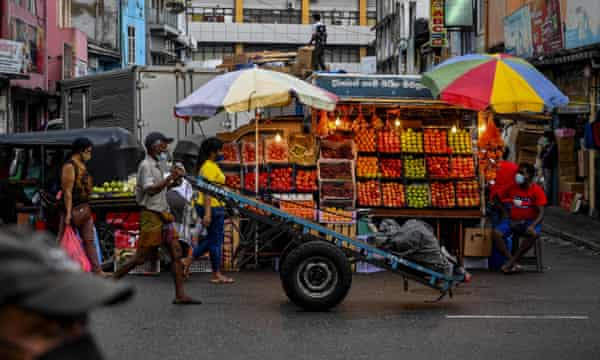
A fruit vendor waits for customers in Colombo Photograph: Ishara S Kodikara/AFP/Getty Images
As the pandemic hit, Sri Lanka lost crucial foreign income from tourism, and tax cuts by the Rajapaksa government meant that the flow of federal income was severely reduced. Over the past two years, inflation has surged, foreign reserves fell by 70% and an ill-advised outright ban on fertilisers crippled the farming industry, leading to an ongoing shortage of fruit and vegetables.
Sri Lanka now owes $15bn in foreign bond repayments, with $7bn owed this year and a $1bn repayment required as soon as June, all to be paid in dollars. But with Sri Lanka’s foreign reserves at their lowest levels in years, and the country’s economic rating in the gutter, there are barely any dollars left and many fear the country is headed for a default. “The situation here is very bleak,” said Kadirgamar.
The impact on the daily lives of people, from lowest income up to the country’s wealthiest, is palpable. Nishan Shanaka 40, is a civil engineer in Colombo but he now drives an auto-rickshaw in the evenings and on the weekends because his salary won’t cover the cost of food and his children’s education. He described his family’s struggle to afford flour and bread and said they now existed on cheap vegetables.
“The cost of everything is far too high now, even if I go to buy a toffee it’s unaffordable,” said Shanaka. “The high fuel prices are impacting everything, my daughters can’t even get the school bus because they can’t afford to run them any more.”
Thangarasa Vathani, 48, owner of a fabric and tailoring shop, said she had already had to close one of her tailoring factories, and let go several members of her staff. The few left now worked from her home, but she was concerned she wouldn’t be able to keep them on for much longer. “People here are so disturbed, we don’t know what will happen tomorrow. Those who can afford it are sending their children abroad but not all of us have the money to do that,” said Vathani.
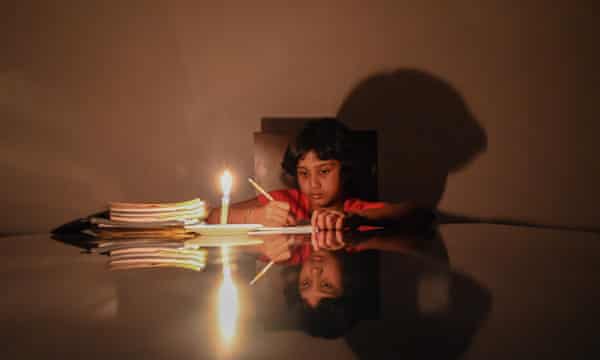
A child studies besides a lit candle at her residence during a power cut in Biyagama, a suburb of the capital Colombo Photograph: Ishara S Kodikara/AFP/Getty Images
The crisis is already affecting industry. Lawrence Wilson runs a lucrative noodle-making factory but has had to cut back production to alternative weeks because the necessary supplies have stopped coming in. “The situation here is dire and it’s only getting worse,” said Wilson, who said he spent his nights trying to find petrol for the car. “Groceries that used to cost 2000 Sri Lankan rupees are now costing 5,000 rupees. I don’t know how people on lower incomes are surviving.”
There are many signs that the economic crisis is turning Rajapaksa’s core voting base, the Buddhist Singhalese majority, against him. An editorial in the daily newspaper Daily Mirror last week ran with the headline “Empty treasury, power cuts, fuel shortages and nonsense”.
His government’s failure to restructure their foreign loans and refusal to turn to the International Monetary Fund (IMF) for an emergency loan as Sri Lanka has done in the past – likely over fears they would impose stringent cost-cutting conditions which would be politically unpopular – has angered many, who now see it as too late. The government is still placing its hopes on the return of foreign tourism and a rise in exports, but experts say it’s unlikely to solve the crisis.
“I blame this government,” said Shanaka, who voted for Rajapaksa. “I work hard at a garment factory supplying foreign brands like Nike and Victoria’s Secret and Lulu Lemon. We bring good foreign income into Sri Lanka, but the government has wasted it all away with bad policies. It is a terrible time for this country.”
President Gotabaya Rajapaksa has promised the Public Utilities Commission of Sri Lanka (PUCSL) that immediate actions will be taken to solve the power crisis in the country.
Janaka Ratnayake, Chairman of the PUCSL, stated that the Central Bank of Sri Lanka (CBSL) and the General Treasury are set to take immediate steps to import fuel for power generation.
Two more ships carrying diesel are scheduled to arrive in Sri Lanka today and tomorrow. Secretary of the Ministry of Energy K.D.R. Olga said that one of the ships has 33,000 metric tons of auto diesel and 7,000 metric tons of super diesel.
The other ship will carry 28,000 metric tons of diesel and 9,000 metric tons of jet fuel, the secretary said. She said work is underway to open letters of credit for the ships in question.
The Ministry of Energy stated that the country currently has a sufficient reserve of petrol. Two more ships carrying fuel are scheduled to arrive on the 6th and 7th, Energy Ministry Secretary stated.
According to media reports, 17 health unions will go on a token strike today and tomorrow. Protesting against the failure to address several of the demands, including the elimination of pay anomalies.
Convener of the Health Trade Union Alliance Ravi Kumudesh stated that the strike will be active island wide from 8 this morning.
However, children’s hospitals, cancer hospitals, maternity hospitals, the Central Blood Bank and the Colombo National Institute of Infectious Diseases will not join the strike, he said.
Government MP Prof. Charitha Herath says that Sri Lanka is facing a serious economic crisis.
The professor, who is also the chairman of the parliamentary ‘COPE’ committee, said this in an interview with Advocata Plus’ Dhananath Fernando.
“Whatever we say from the outside about the economic crisis, policy makers must make the final decision. They are the ones who need to initiate economic reforms.
These conversations with political elites are not about their politics. Find out what decisions they hope to make to overcome this economic crisis.” He said.
Secretary-General of the Sri Lanka Freedom Party, Minister of State Dayasiri Jayasekara states that he is ready to leave the government at any time if the Central Committee of the party gives its approval.
He has stated this while expressing his views to the media in Colombo yesterday.
A special meeting of 11 government partners is being held today and the Sri Lanka Freedom Party is also scheduled to participate in this meeting. Mr. Dayasiri Jayasekara says that these discussions are being held under the leadership of the Chairman of the SLFP Maithripala Sirisena.
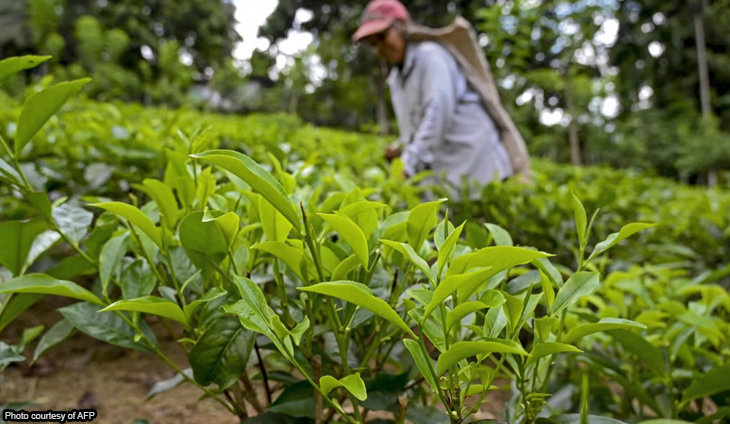
A million farmers whose crops failed under a botched scheme to establish the world’s first 100-percent organic farming nation will be compensated.
Sri Lanka has announced compensation for more than a million rice farmers whose crops failed under a failed scheme to establish the world’s first 100-percent organic farming nation.
Sri Lanka’s Cabinet of Ministers has decided to award Rs. 50,000/- per hectare for all cultivation that were damaged during the 2021 Maha Season. Minister of Agriculture, Mahindananda Aluthgamage elaborated on the decision, stating that the Government will pay 50,000 Rupees each for 1.1 Million farmers who cultivated in 800,000 hectares during the Maha cultivation season.
Moreover, he said that the Government also took steps to purchase a kilogram of rice for Rs. 90, 92 and 95, thereby giving it a good price. The island nation is currently reeling from a severe economic crisis that has triggered food shortages and rolling blackouts as the COVID pandemic sent the tourism-dependent economy into a tailspin Agricultural chemicals such as fertiliser were among the imports banned last year as authorities tried to save dwindling foreign currency reserves. The restrictions were lifted months later after farmer protests and crop failures.
The Cabinet of Ministers had previously granted approval to prepare an appropriate scheme of compensation in consultation with the General Treasury to pay a compensation of rupees 25/- per one kilogram of paddy in order to secure the income level of farmers who affect due to declining of paddy harvest during the Maha season 2021 / 2022. Accordingly, a methodology has been prepared to pay the compensation that is calculated based on the relevant criteria as an evaluation incentive limited to an extent of the agricultural area of 05 acres to the maximum so that small – scale farmers, as well as small and medium level farmers, would be able to obtain the relevant incentive allowance.
The Cabinet of Ministers approved the resolution furnished by the Minister of Agriculture for implementing the said methodology and for remitting the required funds to the Department of Agrarian Development by the State Minister of Organic Fertilizer Production.
Sri Lanka is to embark on an ambitious project of producing Green Hydrogen which is considered as an environment friendly energy source in collaboration with a Norwegian Company Greenstat Hydrogen Ltd based in India.
Energy Minister Udya Gammanpila disclosed that Petroleum Development Authority of Sri Lanka (PDASL) signed an MOU with Greenstat Hydrogen on Monday 28 to launch a pilot project for generating green hydrogen in Sri Lanka.
He noted that Green Hydrogen is produced by using renewable energy such as solar and wind power and this will be a long term solution to the country’s energy crisis.
The Government has taken a policy decision towards the goal of decarbonisation by the year 2050.
To achuve this objective, Sri Lanka will have to convert from fossil fuel to green energy roduction supply slowly but surely, he added.
Greenstat Hydrogen India Ltd., which is an affiliated body of Greenstat AS of Norway, will conduct a feasibility study on a pilot project for generating green hydrogen using a combination of floating solar and wind, he revealed.
The Cabinet of Ministers granted approval for the proposal submitted by the Energy Minister Udaya Gammanpila to enter into an agreement between PDASL and Greenstat Hydrogen India Ltd. to conduct the feasibility study. There will be no cost for the Government in the implementation of this pilot project
The Government has taken a policy decision towards the goal of decarbonisation by the year 2050. To realise this goal, the country needs to gradually convert from fossil fuel to green energy production and consumption by changing energy supply
networks. Accordingly, steps should be taken to minimise gas emissions in the industries where there is electricity, transport, and thermal power utilisation. In these circumstances Greenstat Hydrogen India Ltd., which is an affiliated body of Greenstat AS of Norway, has agreed to conduct a feasibility study on a pilot project for generating green hydrogen utilising a combination of floating solar and wind.
Norwegian Ambassador to Sri Lanka Trine Jøranli Eskedal said: “I am pleased to see Norwegian companies showing an interest in key sectors in Sri Lanka, and I hope this study will contribute to highlighting Sri Lanka’s potential for transitioning towards renewable energy and renewable fuel sources.”
“We are thrilled to become a close partner with the authorities of Sri Lanka, and we believe the country has a great potential to not only to serve its own needs of green hydrogen (emission free energy carrier), but also become a net exporter in the future.
“It is with great pleasure and excitement Greenstat Hydrogen India today signed the agreement with the Sri Lanka Petroleum Development Authority, on this ground-breaking collaboration,” Greenstat Hydrogen India Chairman Sturle H. Pedersen said on the collaboration.
He said Greenstat has great expectations of the project becoming a crucial instrument for Sri Lanka to establish a green hydrogen roadmap as well as gaining experience with green hydrogen technologies.
On 1 February, the Cabinet of Ministers granted approval for the proposal submitted by the Energy Minister Udaya Gammanpila to enter into an agreement between PDASL and Greenstat Hydrogen India Ltd. to conduct the feasibility study. The project would not involve funding from the Government of Sri Lanka.
Government will be taking stern action against persons who are harassing tourists visiting the island.
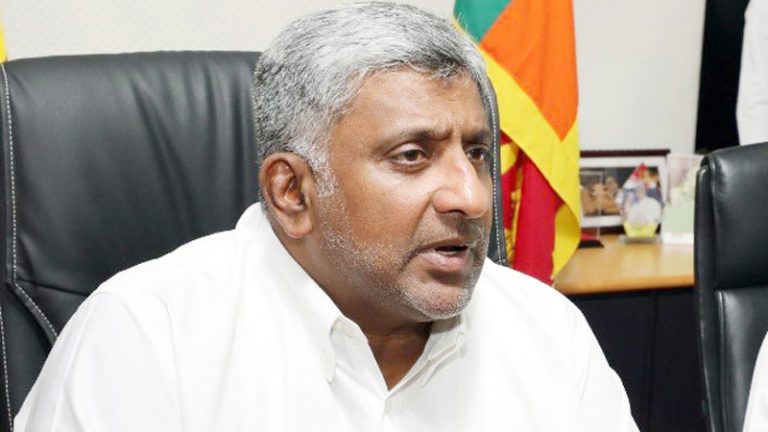
Tourism Minister Prasanna Ranatunga has written to Inspector General of Police (IGP) Chandana D. Wickramaratne calling for the law to be strictly enforced on those found to be harassing tourists in Sri Lanka.
A number of incidents where tourists were harassed were reported on social media.The Minister noted that such incidents could affect the tourism industry which is gradually recovering following the Covid pandemic.
He also said that such incidents could harm the image of Sri Lanka and so legal action must be taken against the perpetrators.
The Tourism Minister requested the IGP to pay close attention to the situation and take appropriate action.
Earlier this month,the police launched investigations into similar incidents where two German women were sexually abused by locals in two separate incidents in Kollupitiya, Tangalle.
Minister Ranatunga requested the IGP to pay special attention to this matter as the damage caused to the country’s image and the tourism industry due to such incidents could be rectified only by enforcing the law against those involved in these incidents.
Meanwhile, the Tourism Development Authority said that a total of 175,909 tourists have arrived in the country from January 1 to February 27 this year.
Among them, 28,392 tourists have arrived in the country from Russia while 24,141 tourists from India, 17,749 from the UK, 13,039 from Ukraine and 12,779 from Germany.
According to Tourism Ministry statistics, a 14% growth in tourist arrivals was reported from Januarydue easing of travel restrictions along with tourism promotion campaigns , continued service from more airlines, successful vaccination program and growing traveller confidence.
February arrivals also recorded new high surpassing the previous high of 89,506 posted in December 2021 since the onset of the pandemic in March 2020. In February, an average of 3,466 tourists arrived in the country on a daily basis.
Despite a surge in its COVID cases and declaring war, Russia continues to dominate as the top tourist source market for Sri Lanka with 28,392 tourists so far, followed by India with 24,141, UK 17,749, Ukraine 13,039 and Germany 12,779.
In addition, tourists also visited the island from countries such as France, Poland, Australia, Kazakhstan and Maldives in February.
The first week of February recorded 22,411 tourist arrivals and it was increased in the second and third weeks to 24,871 and 25,766 respectively.
However, the fourth week showed a sharp drop with 20,534 just yesterday’s data pending, which could be attributed to the Russian invasion of Ukraine. In February, a total of 14,914 Russian travellers and 5,267 Ukrainian tourists were received.
Sri Lanka revised down the tourist arrivals forecast for 2022 to 1.1 million from an earlier ambitious goal of luring 2.3 million, a move influenced by the surge in ‘Omicron’ variant in major source markets.
However, Tourism Minister Prasanna Ranatunga expressed the belief of attracting 150,000 travellers monthly in the next six months.