(This article vindicates logical arguments, political theory, common sense, and history in brief)
By S. V. Kirubaharan, France
Language academies associated with linguistic purism, protectionism and prestige, accept that the Tamil language is the oldest in the world, dating back to pre-history – the second millennia BCE – Before Common Era.
Until the arrival of Prince Vijaya from India in 543 BCE, there was no archaeological evidence either concerning Buddhism or the Sinhala language, in the island of Sri Lanka. Of course, just like what happens presently in Sri Lanka, even in the good old days, Buddhism and the Sinhala language used force, laying down various foundations through their dictatorial path.
Buddhism and the Sinhala language have their roots in North India. Buddha was a Hindu from India – the Sinhala language is a compilation from Pali and Sanskrit. The Tamil language dates back to pre-history.
There is no doubt that Lord Buddha was born in 623 BC in Lumbini located in southern Nepal on the Indian border. So how can Buddhism and the Sinhala language have been in Sri Lanka long before the Tamils and their native religion Saivaism (Hinduism)?
This is the reason why one of the Buddhist orders in Sri Lanka started an international lobby, saying that that Lord Buddha was born in Sri Lanka! They met various diplomats and lobbied in the last session of the UN Human Rights Council in Geneva.
Buddhists in Sri Lanka follow Theravada Buddhism, practised in Thailand, Myanmar (Burma), Cambodia, and Laos. In Sri Lanka, there are many Buddhist orders – Malwatte, Asgiriya, Amarapura, the Ramanjana, Amarapura Maha Nikaya, Ramanjana Nikaya and a few others led by Buddhist hierarchies.
Before the first colonisers arrived from Portugal in the present Sri Lanka, there were three Kingdoms – Jaffna Kingdom, North and East (Then North), Kotte South (South West) and Kandy in the Central highlands.
However, until the third coloniser, the British, amalgamated the three Kingdoms in 1833, all three colonisers ruled the three Kingdoms separately. The Portuguese ruled from 1505 to 1658; the Dutch from 1658 to 1796, and the British from 1796 to 4 February 1948.
During the British period in 1862, Tamils from Southern India were brought as indentured labourers to work on the tea plantations in the hill country. The native/indigenous Tamils in their homeland in the North and East are different in identity and origin to the Tamils in the hill country. I say this, because Sinhala Buddhists disseminate exaggerated propaganda saying that the Tamils in the island of Sri Lanka came to the island only during the British period.
The British, as they were leaving the island in 1948, handed power to the numerical majority, the Sinhala, with minor safe-guards for the Tamils in the “Soulbury Constitution” which remained until 1972.
Soon after the British left the island, a massive Sinhala colonisation scheme started, initially in the Eastern province. Gal Oya in Batticaloa, Allai and Kathalai in Trincomalee were colonised under the pretext of development.
On 15 November 1948, the Tamils who worked for many decades in the Tea plantations were deprived of casting their votes and selecting their own representatives to Parliament. More than a million plantation workers were rendered stateless. In 1964, under a pact with India, the Tamils in the hill country whose citizenship was denied were repatriated to India.
Communal riots
The first communal riot carried out by Sinhala Buddhists was against Muslims in June 1915. This caused heavy casualties among the Muslims. According to available records, 36 Muslims were killed, 205 injured, and raped. Nearly 85 mosques were damaged and more than 4,075 Muslim-owned shops were looted by the Sinhala rioters.
In 1956, 1958, 1977, 1980, 1981 and, in July 1983 anti-Tamil pogroms broke out in the island. Many Tamils were massacred, properties worth millions of rupees belonging to Tamils were looted and destroyed by the Sinhala Buddhist rioters. Some of those riots had the support of the governments in power.
On 10 January 1974, Sinhalese Police unleashed unprovoked attacks against those attending the prestigious “4th World Tamil Research Conference” in Jaffna, leaving nine innocent civilians dead.
In June 1981, an anti -Tamil pogrom was unleashed in Jaffna, in the North. The Jaffna Public Library was burnt down by the Sri Lankan armed forces, allegedly under the direction of two senior government ministers, Gamini Dissanayake and Cyril Matthew. 95,000 volumes of books including numerous culturally important and irreplaceable manuscripts, and the buildings were destroyed by arson. The Jaffna city market, the office of the Tamil daily newspaper “Eelanadu”, the office of the political party Tamil United Liberation Front – TULF, etc were burnt down by the Sri Lankan security forces.
In July 1983, a major anti-Tamil pogrom took place all over the island. The then government in power accused the JVP, the present NPP responsible for those riots. The JVP was banned, and its members went into hiding.
During four days of riots, more than 6,000 Tamils were killed, and over 250,000 were rendered refugees. Thousands of Tamils fled the country and went to India and to Western countries. Tamils’ properties worth billions of rupees were looted and destroyed by the rioters.
During the same period, 27-28 July 1983, fifty-three (53) Tamil political prisoners were massacred inside the walls of a high-security Welikadai prison in Colombo by Sinhala inmates.
During the same period, hundreds of youths from the North and East joined the Tamil militant movements, and the TULF Members of the Parliament sought asylum in India.
The JVP/NPP government has now been in power for a year. They were able to arrest and jail a former President. If they had no involvement in the July 1983 riots, why are they reluctant to prove their innocence? Either they were the culprits or they were in favour of what happened to the Tamils.
The world has seen the motives and the policies of the JVP/NPP government towards the Tamils, in their actions of demerging the North and East in 2006 and making the P-TOMS (Post-Tsunami Operational Management Structure) null and void in July 2005. Locally and internationally, some are dreaming that this government will bring a political solution to the bloody ethnic conflict.
Political moves since 1957
On 14 June 1956, then Prime Minister S. W. R. D. Bandaranayke – SWRD, proclaimed the “Sinhala Only Act” making the Sinhala language the only official language of the island.
On 26 July 1957, SWRD signed an agreement known as “Banda Chelva” pact with a Tamil leader S.J.V. Chevanayagam – SJV. It was based on a federal system devolving certain powers to the Tamils in the North East provinces.
Within a week of signing the ‘Banda-Chelva’ pact, it was unilaterally abrogated by the Prime Minister due to vehement protests staged by the opposition United National Party – UNP, Buddhist clergy and government back-benchers. The UNP undertook a march to Kandy in protest against this pact.
On 25 September 1959, the Prime Minister SWRD, who signed the agreement with the Tamil leader SJV was assassinated by a Buddhist monk – Talduwe Somarama Thero.
When Somarama Thero was sentenced to death by the Court, he converted to Christianity. He was baptised in his cell by an Anglican priest before he was hanged in the gallows at Welikada Prison.
On 24 March 1965, an agreement known as “Dudley-Chelva” Pact was signed between Dudley Senanayake and Tamil leader S. J. V.
This agreement was also abandoned without being implemented due to opposition from the SLFP, the Buddhist clergy, and UNP backbenchers, mainly motivated by J.R. Jeyawardena.
In 1972, Sri Lanka became a Republic. In the new republican constitution, even the minor safe-guards for the Tamils in the ‘Soulbury constitution’ were removed and Buddhism was given foremost place in the constitution.
During the same period, the government introduced “standardisation” in Education, to prevent studious Tamil students from entering the Universities.
On 14 May 1976, the TULF was formed by the Tamil leaders. The TULF contested the Parliamentary elections of July 1977, on a mandate of establishing the ‘right to Self-determination’ of the Tamils in the Tamil homeland, the North and East. The TULF won overwhelmingly in the 1977 elections.
In 1979, the draconian Prevention of Terrorism Act (PTA) was initially passed in Sri Lanka as a temporary measure to counter the growing Tamil militancy in the North and East. Then in 1982, it was made a permanent law. This authorises the security forces to arbitrarily arrest and detain people without warrants for up to eighteen months. It violates fair trial rights, and puts detainees at risk of torture or other ill-treatment, amongst other violations. Many men and women disappeared. This PTA is still in use.
On 8 August 1983, the government enacted the 6th amendment to the constitution, rejecting the right to self-determination of the Tamil people. It outlawed the mandate voted by the people in the North and East.
In 1984, the government gave free hand to the security forces to arrest, torture and kill anyone in the North and East. Many men and women disappeared. Also, severe losses and damage to the people and to their properties were caused by artillery shell fire and aerial bombing.
From 1984 onwards, many negotiations took place under the mediation of India and Norway. Nothing brought a productive outcome for the people of the North and East.
Talks were held with Presidents – J.R.Jeyawardena, R. Premadasa, Chandrika Kumaratunga, Ranil Wickremasinge and Mahinda Rajapaksa. More than seven decades of negotiation have found no political solution to the people of the North and East. So what is lacking in the governmental negotiations?
Meanwhile, between 1984 and 2009 May, Tamils had, by an armed struggle, established a de-facto government with all infrastructures – welfare institutions, banks, judiciary including appeal court, police, etc. covering seventy percent of the territory in the North and East. The only things lacking were their own currency and UDI – a Unilateral Declaration of Independence.
In 2015, President Maithiripala Sirisena said that he became the President with the vote of the people of the North and East, and that he would find a political solution. But he did nothing, like the other leaders.
Realities to be considered
If one analyses more than seventy years of negotiations, failures, processions to Kandy against written pacts, unilateral abrogation of pacts, one sees the proof that Buddhist hierarchies in Sri Lanka are not in favour of any political settlement to the bloody ethnic conflict.
Buddha’s preaching taught Buddhist monks not to have attachment to material things. But in Sri Lanka, the Buddhist leadership and clergy manipulate politics behind the scenes, advising governments in power on ethnic issues.
Now it is time for the International community to realise indisputable adamant facts and take action. Even though there are many other reasons, the Sinhala Buddhist hegemony and their opposition to a pluralistic society are the main reason for the lack of a political solution.
Unlike the Dalai Lama of Tibet or Buddhist leaders in other countries, Sri Lankan Buddhist monks/leaders support violence. Whoever rules Sri Lanka, regarding ethnic issues, they must listen to Buddhist leaders. Otherwise, their days in power are numbered. There is ample evidence of this.
In 1956 the 3rd Prime Minister, Sir John Kotelawala said in a public meeting that he would ‘remove the yellow robes from the Buddhist monks and paint tar on their back side’. This statement brought an end to Kottalawala politics.
In 1959, SWRD was shot by a Buddhist monk. In hospital SWRD described his assailant as a ‘foolish man in robes’.
Before the 1977 election, J R Jayewardene said that the Buddhist clergy should keep away from politics.
So far, how many communal riots, how many massacres and killings have taken place in various parts of Sri Lanka? Have any members of the Buddhist hierarchy or Buddhist orders condemned any of those incidents?
Way forward
Some of the Buddhist Monks misbehave in Sri Lanka, against Lord Buddha’s teachings and preaching. They are highly involved in politics, establishing political parties, contesting in elections, participating in political rallies and voicing the worst hate speech to fuel the lay Buddhist people. Also, they booze, smoke, chew beetle, become intoxicated, drive vehicle, steal, lie, behave with sexual misconduct and kill.
The facts above, clearly indicate that any political solution for the Tamils in their homeland, the North and East, is in the hands of the Buddhist hierarchies. It’s sad to note that, so far, not a single Tamil leader has spoken of this practical reality.
Firstly, whoever wants a peaceful political settlement in Sri Lanka should approach all three colonisers. The Tamil diaspora in the United Kingdom should reach the UK government, and the Tamils in Europe should reach Portugal and the Netherlands. This is to motivate them to come out with a statement that during their period in the present Sri Lanka, there were three Kingdoms in existence separately. The UK should also say it was they who amalgamated all three Kingdoms in 1883.
Secondly, Tamils in Norway, should ask Norway to issue a statement that when the ceasefire agreement was signed between the government of Sri Lanka and the Liberation Tigers of Tamil Eelam – LTTE in 2002, there was a de-facto government with all infrastructures, and it covered more than two-thirds of the North and East.
With all this evidence and with the help of other Buddhists in Theravara countries – Thailand, Myanmar (Burma), Cambodia, Laos – those who are for a peaceful political settlement in Sri Lanka should approach the Buddhist orders in Sri Lanka.
Any meaningful negotiation should take place with them, because they are the stumbling block to every peaceful solution to the Tamils in the North and East.
If bad comes to worse, Tamils will be forced to seek solutions through the United Nations – either through ‘Non-Self-Governing Territories’, or the ‘Permanent Forum on Indigenous Issues’. There are reasons why the Tamils haven’t made any attempts through these paths in the past.
For a political solution in Sri Lanka, negotiate with Buddhist Hierarchies!

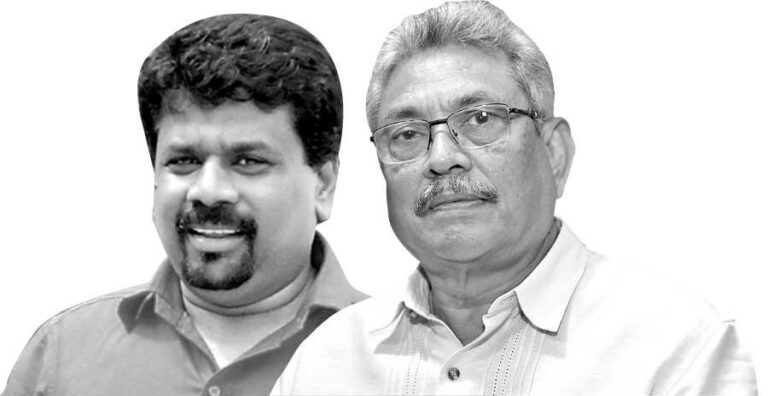
AKD Government heading the Gota Way?
By Adolf
The recent incident involving former Speaker Asoka Ranwala — beginning with questions over his claimed PhD credentials and culminating in a widely reported drunk-driving episode — has taken on an almost comic quality. Yet behind the public amusement lies a far more serious concern. The manner in which the episode appears to have been quietly managed, if not fully addressed, raises troubling questions about accountability under the current administration. This episode is not an isolated lapse. It points to a broader pattern in governance: an eagerness to pursue alleged wrongdoings of past administrations for political effect, while showing reluctance to confront issues emerging within the present government. Allegations relating to asset declarations, documentation irregularities and procedural lapses are frequently deflected or ignored. Such selectivity risks eroding the very principles of transparency and integrity that this administration claimed as its moral foundation.
Confrontations
At the same time, the President’s leadership style has become increasingly confrontational. He appears to thrive on conflict with the opposition, projecting an image of toughness and political bravado. Critics have likened him to an “Asian Trump,” a comparison that is more rhetorical than real. Donald Trump, controversial as he was, entered office as a billionaire with a substantial electoral base and later secured a second presidential term. AKD, by contrast, did not secure an outright majority of the popular vote. His victory was largely a by-product of a deeply divided opposition. The failure of Sajith Premadasa and Ranil Wickremesinghe to unite or manage their political differences created a pathway for AKD’s ascent to the Presidency. However, subsequent electoral outcomes suggest that this initial advantage has not translated into sustained public endorsement. The momentum seen at the general election was significantly diluted at the local government polls, where voter sentiment told a more sobering story. Even at the level of cooperative society elections — often a reliable barometer of grassroots opinion — the ruling coalition has repeatedly underperformed.
Cyclone Disaster
The government’s handling of the recent cyclone disaster may prove to be a defining moment. With estimates suggesting losses of nearly Rs. 300 billion and close to a thousand lives affected or lost, the response was widely seen as delayed and poorly coordinated. Natural disasters are the ultimate test of state capacity and leadership. In this instance, gaps in preparedness, communication and execution were evident, and public frustration was palpable.
Rather than acknowledging shortcomings and recalibrating, the administration appears increasingly defensive. Criticism is frequently dismissed as politically motivated, while dissent is met with hostility rather than engagement. This aversion to critique evokes the early warning signs of the previous administration, where insularity and an unwillingness to listen led to policy missteps and, ultimately, national crisis.
Sajith Premadasa
Effective political leadership demands restraint, perspective, and the maturity to rise above personal or political insecurity. Sri Lanka’s challenges require sustained focus on economic stabilisation, institutional credibility, disaster resilience, and social cohesion — not performative confrontation or selective accountability. If the current trajectory continues, the AKD government risks repeating the very errors that brought down its predecessor. The signals from the electorate are already evident. Whether the leadership chooses to heed them will shape not only its own political future, but the country’s direction in the years ahead. At the same time, this moment presents a critical test for the opposition. Sajith Premadasa, having contested and lost two presidential elections, must now decide whether he can credibly lead a renewed challenge. Electoral politics is as much about renewal as persistence. He cannot indefinitely shelter behind past controversies, including questions surrounding cultural funds or anxieties about prior business dealings, real or perceived. If concerns over potential action by the current administration inhibit his ability to lead decisively, then it may be time to step aside and allow a fresh, unencumbered leadership to emerge. Sri Lanka needs an opposition that inspires confidence, offers clarity of purpose, and presents a credible alternative ( there is Harsha de Silva, Sujewa Senansinghe, Dayasiri Jayasekara and Champaka Ranawake) — not one constrained by hesitation or defensive politics
Prime Minister Calls for Child-Centred Approach as Schools Prepare to Reopen After Disaster
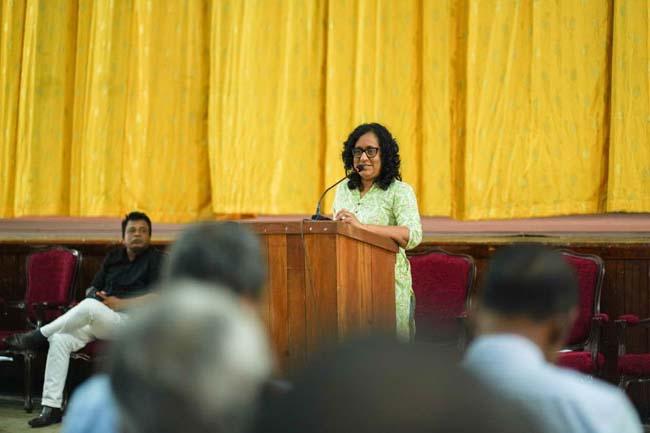
December 14, Colombo (LNW): Prime Minister Dr Harini Amarasuriya has stressed that, in the aftermath of the recent disaster, education should not become an added burden on children and that their emotional and psychological well-being must take precedence.
According to a statement from the Prime Minister’s Office, she said this approach is essential to creating a caring and supportive school environment during periods of recovery.
Her remarks were made during a meeting with education officials from the Nuwara Eliya District, focused on restoring learning activities and facilitating the safe reopening of schools.
While the Ministry of Education has announced that schools across the country are scheduled to resume on December 16, the Prime Minister noted that provincial and district authorities have been given the discretion to decide on reopening in areas directly affected by the disaster, based on local conditions.
She emphasised that schools situated in high-risk zones should only reopen after obtaining clearance from the National Building Research Organisation, with particular attention paid to the safety of access roads and surrounding infrastructure.
She also encouraged flexibility for both teachers and students who have faced hardships, including allowing the use of comfortable clothing where appropriate.
During the discussion, district education officials reported that, despite significant challenges, progress in education reforms has continued, with more than half of planned teacher training programmes in the Nuwara Eliya District already completed.
Addressing participants, the Prime Minister highlighted the need for collective effort to overcome current difficulties and rebuild the education system in a way that is stronger and more resilient than before.
The meeting was attended by Deputy Minister of Education and Higher Education Dr Madhura Senevirathna, Members of Parliament representing the district, senior provincial administrators, and other government officials.
‘Rebuilding Sri Lanka’ Fund Attracts Contributions Exceeding Rs. 3.4 Bn
December 14, Colombo (LNW): The Government’s ‘Rebuilding Sri Lanka’ Fund, set up to assist communities affected by Cyclone Ditwah, has so far attracted contributions exceeding Rs. 3.4 billion.
The above figure has been disclosed by Dr. Harshana Suriyapperuma, Secretary to the Ministry of Finance, Planning and Economic Development.
He said the fund has received widespread backing from within the country as well as from overseas, with donations coming from prominent business figures, Sri Lankans living abroad and a range of international organisations.
In monetary terms, the total contributions amount to more than Rs. 3,421 million, equivalent to over USD 11 million. Of this, foreign currency inflows account for approximately USD 4.1 million, reflecting strong international engagement.
Dr Suriyapperuma noted that assistance has been received from around 40 countries, with the United States emerging as the single largest contributor. Substantial support has also come from the Sri Lankan diaspora in Australia, alongside donations from countries including the United Kingdom, Germany, Italy, the Maldives, Saudi Arabia, France, South Korea and the United Arab Emirates.
He added that several domestic companies have each pledged more than Rs. 100 million, while a further four sizeable contributions ranging between Rs. 20 million and Rs. 100 million have been made by members of the business community and the public, highlighting broad-based support for national recovery efforts.
Ditwah Catastrophe: National Death Toll Climbs to 643
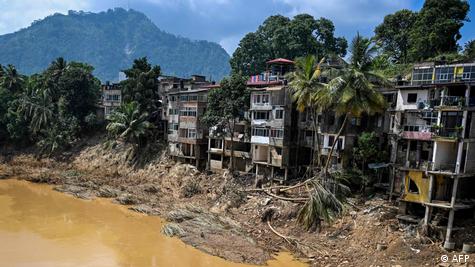
December 14, Colombo (LNW): The number of fatalities linked to the recent spell of extreme weather has risen to 643, according to the latest update from the Disaster Management Centre.
Authorities also report that 184 people are still unaccounted for, as search and relief operations continue across affected regions.
Unusually intense rain, flooding and related hazards have impacted every one of the country’s 25 districts, disrupting lives on an unprecedented scale. The DMC estimates that more than 1.36 million people, representing over 391,000 families, have been directly affected by the crisis.
Emergency services and relief agencies remain engaged in rescue, recovery and assistance efforts, while officials warn that further challenges may arise as damaged infrastructure and displaced communities continue to be assessed.
Oshini Gunawardena Crowned World’s Top Under-13 Girl Chess Player
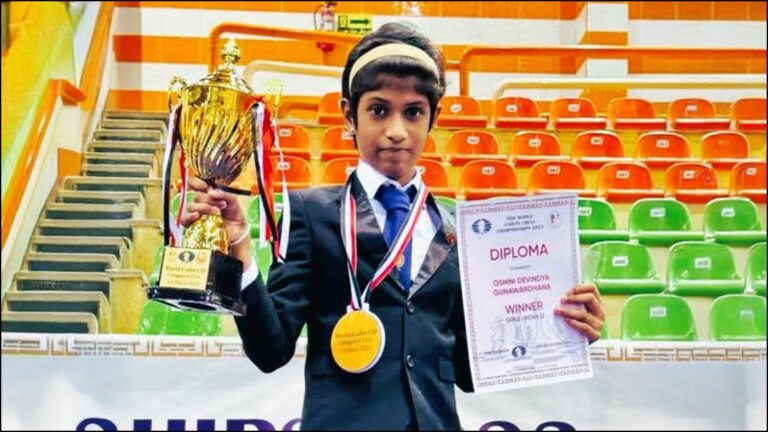
December 14, Colombo (LNW): Sri Lanka’s young chess sensation Oshini Gunawardena has climbed to the pinnacle of the global rankings, securing the number one position among Under-13 girls in the latest World Chess Federation (FIDE) listings.
The milestone reflects her consistent performances at international and regional tournaments recorded up to December 01, 2025. With an impressive rating of 2272, Oshini has edged ahead of a strong field of young competitors from leading chess nations.
An Indian player currently occupies the second spot in the category, followed by a rising talent from Kazakhstan in third place. FIDE revises its rankings each month, taking into account recent results and rating changes across youth and senior divisions worldwide.
Oshini’s achievement underscores the steady rise of Sri Lanka on the international chess stage and stands as a testament to her discipline, talent and commitment to excellence at a remarkably young age.
US Ambassadorial Nominee Signals Strong Focus on Maritime Security and Economic Reform in Sri Lanka
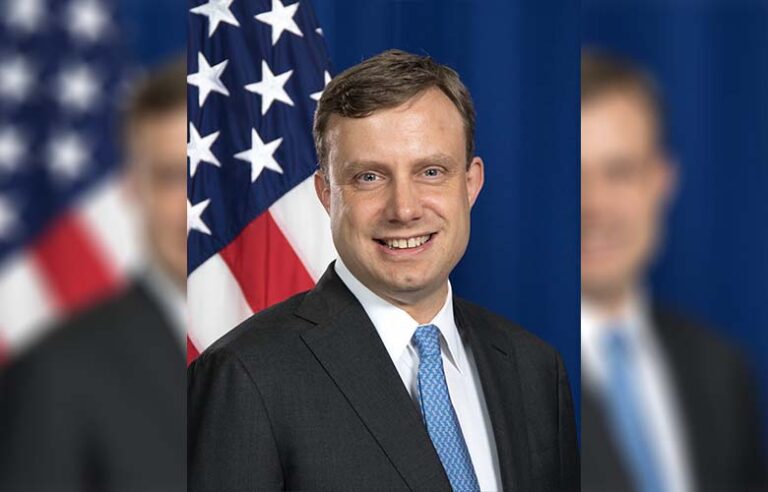
December 14, Colombo (LNW): The United States’ nominee to serve as ambassador to Sri Lanka has outlined Washington’s intention to deepen engagement with Colombo through maritime cooperation, economic reform and strategic balance in the Indian Ocean, as the island nation continues to rebuild after years of economic turmoil and recent natural disasters.
Appearing before the US Senate Foreign Relations Committee, nominee Eric Meyer told lawmakers that Sri Lanka’s location along major global sea routes places it at the centre of American strategic interests in the Indo-Pacific.
He said the United States views the country as a key partner in safeguarding freedom of navigation and maintaining regional stability, while also addressing the expanding footprint of rival powers, particularly China.
Meyer highlighted that some of the world’s busiest shipping corridors pass close to Sri Lanka, with a large share of global energy shipments and frequent US naval movements transiting nearby waters. This, he said, gives Sri Lanka heightened importance in efforts to promote open, rules-based maritime access.
If confirmed, Meyer said his immediate priority would be the safety and welfare of American citizens in Sri Lanka. He also pointed to the US response following Cyclone Ditwah earlier this year, noting that Washington had provided emergency funding and logistical support, including military airlift capabilities, to assist relief operations. He described the assistance as a reflection of a durable partnership between the two countries.
Turning to the economy, Meyer said Sri Lanka had demonstrated resilience following its 2022 financial collapse and had the potential to emerge as a regional economic hub. He drew attention to planned expansions at the Port of Colombo, suggesting that increased capacity could significantly boost the country’s role in global trade.
He also stressed the importance of continuing reforms under Sri Lanka’s International Monetary Fund programme, arguing that long-term economic stability strengthens national independence. Sustained reform, he said, would also create conditions for greater American investment and closer commercial ties.
During the hearing, committee chairman Senator Jim Risch referred to China’s involvement in Sri Lanka’s port infrastructure as a cautionary example for other countries. Meyer responded by saying the United States supports transparent and balanced partnerships and would encourage Sri Lanka to assert control over its strategic assets, including ports.
Meyer added that defence and law enforcement collaboration would remain central to bilateral relations, particularly in areas such as disaster response, combating transnational crime, improving maritime surveillance and enhancing port security. He said the US aims to work with Sri Lanka to protect sea lanes, expand trade opportunities and support the country’s growing role in regional security.
Sri Lanka plunged into its worst economic crisis in decades in 2022, marked by debt default, severe shortages and political unrest. Since then, the government has pursued IMF-backed reforms to stabilise the economy, while navigating competing interests from major powers amid rising strategic rivalry in the Indian Ocean.
Essential Services Rebound Post-Ditwah: Utilities and Transport Networks Recover Nationwide
December 14, Colombo (LNW): Authorities say the country’s water supply has now been completely normalised following widespread disruption caused by the recent disasters.
National Water Supply and Drainage Board Chairman Chandana Bandara confirmed that households with damaged water connections will have them repaired at no cost, as part of the Board’s recovery programme. He added that overall losses to the water sector are estimated at around Rs. 5.6 billion.
Progress has also been reported in the power sector. The Ceylon Electricity Board says electricity has been restored to nearly all affected areas, with about 99 per cent of supply now back online. Deputy General Manager Noel Priyantha noted that work is continuing to reconnect roughly 26,000 remaining consumers in parts of the Central and Uva provinces.
All damaged transmission infrastructure has already been fully repaired, he added. At the height of the crisis, an estimated 4.1 million electricity users were left without power.
Transport and health services have likewise seen significant improvements. Commissioner General of Essential Services Prabath Chandrakeerthi said that 292 of the 293 highways damaged during the disaster have been reopened to the public, easing movement across the country. Restoration work has also been completed on 15 of the 42 major bridges affected.
In the health sector, around 90 per cent of the 236 hospitals impacted by the disasters have returned to normal operations, providing much-needed relief to communities as overall recovery efforts continue.
CEB Counts Heavy Losses as Power Supply Largely Restored After Disaster

December 14, Colombo (LNW): The Ceylon Electricity Board (CEB) has reported financial losses close to Rs. 20 billion in the aftermath of the recent disaster, which caused widespread disruption to the national power network.
Deputy General Manager Noel Priyantha said that restoration work had progressed rapidly, with electricity supply now reinstated to about 99 per cent of affected areas. He added that the recovery effort had been carried out under difficult conditions, as many electricity consumers had also lost their homes during the disaster.
Priyantha confirmed that all damaged transmission lines and related infrastructure have now been repaired and brought back into operation, allowing the grid to function normally once again.
The CEB estimates that the disaster triggered roughly 4.1 million power interruptions across the island, highlighting the scale of the impact on both the utility provider and the public.
Despite the significant financial setback, the Board said it remains focused on stabilising the system and supporting communities as recovery efforts continue nationwide.
Authorities Warn Against Sharing Details of Disaster-Affected Children
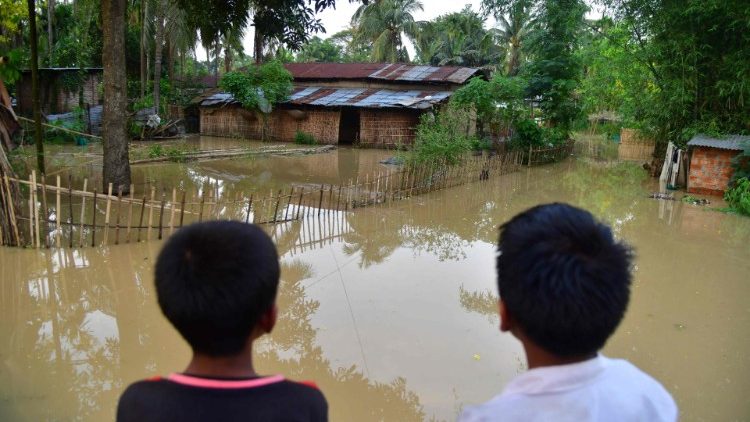
December 14, Colombo (LNW): The Ministry of Women and Child Affairs has appealed to the public, media organisations and online users to avoid circulating any information relating to children made vulnerable by the recent disaster.
In an official statement, the Ministry cautioned that publishing photographs, video footage or identifying details of affected children on social media platforms or through mainstream media can seriously compromise their privacy, safety and personal dignity.
Officials warned that the release of such sensitive information could place children at heightened risk of abuse, including exploitation and human trafficking, particularly if it reaches criminal networks seeking to prey on vulnerable families.
The Ministry stressed that the protection of children is a legal obligation and confirmed that action will be taken against anyone found to be disclosing or spreading information about at-risk children in violation of child protection laws.
Members of the public were also encouraged to remain vigilant and to promptly report cases involving vulnerable children or any suspected trafficking activities. Reports can be made via the national child helpline on 1929 or through Child Rights Promotion Officers and Child Protection Officers at the nearest Divisional Secretariat.
The Ministry reiterated that safeguarding children during times of crisis requires collective responsibility and careful, ethical conduct from all sectors of society.