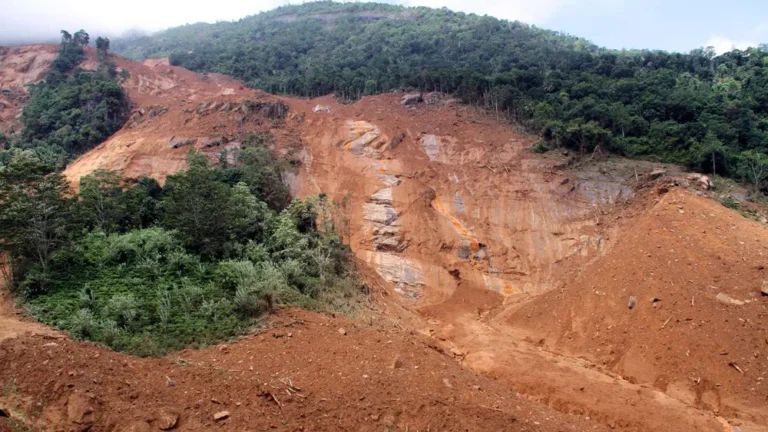
November 27, Colombo (LNW): The number of people confirmed dead following a series of landslides across Sri Lanka’s Badulla District has climbed to eleven, as relentless rains continue to batter the hill country.
Local officials report that seven residents are still unaccounted for, with emergency responders intensifying search efforts despite challenging conditions.
Badulla District Secretary Panduka Abeywardena said that yesterday’s severe weather had destabilised slopes in several areas, resulting in numerous earthslips. He added that the situation remains unpredictable, with further incidents possible if the rain persists.
Rescue teams, supported by community volunteers, have been working through the day to locate the missing and provide assistance to families displaced by the shifting ground.
In a separate development, the National Building and Research Organisation has issued its highest-level landslide alert—Level 3—in parts of Badulla, Kandy, Matale, and Nuwara Eliya. Residents in vulnerable zones have been urged to move to safer ground immediately. The warning is scheduled to remain active until 8:30 p.m. local time.
Rising Fatalities as Heavy Rains Trigger Multiple Landslides in Sri Lanka’s Hill Country
Low-pressure area intensifies into depression: Very heavy falls above 200 mm expected (Nov 27)

November 27, Colombo (LNW): The low-pressure area southeast of Sri Lanka has intensified into a depression and is centred near latitude 5.9°N and longitude 82.6°E, about 210km southeast of Batticaloa, the Department of Meteorology said in its daily weather forecast today (27).
It is very likely to move nearly north-northwestwards and intensify further into a Deep Depression during the next 12 hours.
Due to the influence of this system, prevailing heavy showers and strong winds over the island are expected to continue further. The general public is kindly requested to be attentive about future advisories issued by the Department of Meteorology in this regard.
Cloudy skies can be expected over most parts of the island and showers or thundershowers will occur at times.
Very heavy falls above 200 mm are likely at some places in North-central, North-western provinces and in Trincomalee district and above 150mm are likely at some places in North, Central, Sabaragamuwa, Uva, Western provinces and in Galle, Matara and Batticaloa districts.
Heavy falls above 100 mm are likely at some places in the other areas of the island.
Very strong winds of about (60-70) kmph can be expected at times over the most parts of the island.
The general public is kindly requested to take adequate precautions to minimise damages caused by heavy showers and strong winds.
Marine Weather:
Naval and fishing communities are advised not to venture to the sea areas around the island, until further notice. Navel and fishing communities are requested to pay attention in to further advisories issued by the Meteorological Department in this regard.
Condition of Rain:
Showers or thundershowers will occur at times in the sea areas around the island. Very heavy showers are likely at some places.
Winds:
Winds will be north-easterly to northerly in the sea areas around the island. Wind speed will be (40-50) kmph in the sea areas around the island and wind speed can increase up to (60-70) kmph at times.
State of Sea:
The sea areas around the island will be rough to very rough at times.
The swell waves (about 2.5 – 4.0 m) height (this is not for land area) may increase in the sea areas off the coast extending from Puttalam to Kankasanthurai via Colombo, Galle, Hambantota, Batticaloa and Trincomalee.
Temporarily strong gusty winds and very rough seas can be expected during thundershowers.
Sri Lanka–US Defence Pact Unveiled After Transparency Concerns Rise

The long-awaited Sri Lanka–United States Defence Memorandum of Understanding (MoU), previously criticised for being withheld from the public, has now been officially released, offering clarity on the nature and objectives of the agreement signed earlier this month. The disclosure comes after several civil society groups and political commentators questioned the lack of transparency surrounding the pact, prompting the government to publish the complete document.
Signed on 14 November 2025, the MoU formalises enhanced defence cooperation under the US State Partnership Program (SPP), linking Sri Lanka’s Armed Forces with the Montana National Guard and the U.S. Coast Guard District 13. The agreement was executed at the Ministry of Defence, with US Ambassador Julie Chung and Brigadier General Trenton Gibson signing on behalf of Washington, while Defence Secretary Air Vice Marshal (Retd) Sampath Thuyacontha represented Sri Lanka.
With the MoU now in the public domain, its provisions outline a wide-ranging framework for collaboration. These include joint military training, maritime security operations, cyber defence, disaster preparedness, military–civil coordination, and professional military education. The MoU emphasises building interoperability between the two countries’ armed forces and boosting Sri Lanka’s operational readiness at a time of evolving security challenges in the Indo-Pacific region.
One of the key areas highlighted is maritime domain awareness, a priority for both nations given the island’s strategic location along vital sea lanes. The agreement calls for cooperation to strengthen surveillance and response capabilities related to illegal trafficking, irregular migration, and narcotics interdiction. This is expected to support Sri Lanka’s ongoing efforts to curb maritime crimes, often exacerbated by regional instability.
The pact also places significant weight on disaster response and humanitarian assistance, recognising Sri Lanka’s vulnerability to climate-related disasters. Joint drills and capacity-building programmes are planned to improve coordination between Sri Lankan forces and U.S. emergency teams during natural catastrophes such as floods, landslides, and cyclones.
US Ambassador Julie Chung described the MoU as a “historic milestone” in Sri Lanka–US relations. She noted that the agreement deepens strategic cooperation while reinforcing mutual trust, long-term security collaboration, and shared interests in safeguarding peace and stability in the wider region.
Defence Secretary Sampath Thuyacontha echoed similar sentiments, stating that the MoU is a “forward-looking” defence partnership that strengthens Sri Lanka’s capabilities and opens new avenues for technical expertise, training, and capacity building. He emphasised that the partnership complements Sri Lanka’s national security priorities without compromising sovereignty.
By entering the pact, Sri Lanka joins a global network of over 115 countries partnered with the United States under the SPP. The first joint activities are scheduled to begin in mid-2026, prioritising disaster management exercises and maritime security operations.
The public release of the MoU is expected to ease earlier concerns and contribute to a more informed national dialogue on Sri Lanka’s evolving defence engagements with international partners.
Sri Lanka’s Service Exports Edge Up as ICT Surge Drives Growth

Sri Lanka’s services exports recorded a modest but significant rise in October 2025, supported largely by the continued expansion of the ICT/BPM industry and strong performance in financial services, the Export Development Board (EDB) announced this week. Total services export earnings increased 0.67 percent year-on-year to 316.14 million US dollars, reflecting the increasing importance of knowledge-based sectors in the island’s external trade portfolio.
According to the EDB, the standout performer was the ICT and Business Process Management (BPM) sector, which posted a 26.71 percent surge, generating 154.50 million US dollars during the month. This sector now accounts for nearly half of Sri Lanka’s monthly services export earnings, reinforcing its status as one of the country’s most resilient, high-growth export pillars.
Industry analysts attribute the expansion to increased global demand for software development, fintech solutions, cloud support services, and remote back-office operations, areas in which Sri Lankan firms have developed competitive strengths. Many companies have broadened their offerings in digital engineering, AI-enabled services, and cybersecurity, helping attract new clients from Europe, North America, and Asia.
Financial services also contributed positively, marking a 47.60 percent increase to 3.81 million US dollars in October. Although still a relatively small share of total services exports, the sector is benefiting from growing regional demand for financial analytics, compliance services, and outsourced credit processing operations undertaken by Sri Lankan firms.
However, the overall performance was dampened by contractions in several traditional service categories. Transport and logistics, historically a major contributor, fell 13.44 percent to 144.50 million US dollars, reflecting reduced transshipment volumes, weaker regional freight movements, and lingering disruptions in shipping routes affecting the Indian Ocean region. The slowdown has raised concerns among port and logistics operators who are already grappling with increased competition from regional hubs.
The construction services segment recorded the steepest decline, plunging 40.98 percent to 13.33 million US dollars. Export-linked construction projects overseas have slowed amid global financing constraints and geopolitical uncertainty affecting foreign investment flows.
Despite these setbacks, Sri Lanka’s cumulative export earnings from goods and services reached 14.43 billion US dollars for the January–October period, an increase of 5.99 percent compared to last year. This marks the strongest performance recorded for the first ten months of any year in the country’s export history.
EDB Chairman Mangala Wijesinghe described the achievement as a milestone, noting that the resilience of service-sector exports demonstrates the country’s shifting economic landscape. “This is the highest-ever export figure recorded for the January–October period in Sri Lanka’s history,” Wijesinghe stated, emphasizing that future growth will increasingly depend on innovation-driven sectors such as ICT/BPM, professional services, and digital trade.
Economists note that while traditional service segments linked to physical trade remain vulnerable to global volatility, Sri Lanka’s digital-driven industries continue to provide stability and long-term growth potential. Strengthening talent development, expanding digital infrastructure, and improving export facilitation are now seen as key priorities to sustain momentum in the services sector.
SriLankan Airlines Faces Massive Losses From Faulty Airbus Fleet Deal

SriLankan Airlines has suffered a staggering USD 60 million loss after a fleet of new Airbus A320-family aircraft purchased in 2018 was grounded due to defects in their CFM LEAP engines, Minister of Ports and Civil Aviation Anura Karunathilaka told Parliament. The disclosure sheds new light on a costly procurement decision that continues to burden the national carrier—and ultimately the public.
According to the Minister, SriLankan began negotiations to acquire the A321neo variant in 2017, finalising the deal in 2018. However, soon after induction, the aircraft began experiencing technical failures linked to design issues in their CFM LEAP engines. As a result, six aircraft were progressively grounded, severely disrupting operations.
“By 31 October, these aircraft had accumulated 131 months of grounding time,” Karunathilaka said. “One aircraft is still not flying. With no revenue coming in, the airline has already paid USD 60 million for them.”
The losses were compounded by the absence of a robust long-term maintenance agreement at the time of leasing. “As a result, USD 71 million had to be spent on maintenance, and projections show the airline will need to allocate another USD 171 million in the coming years. This burden ultimately falls on the nation,” the Minister warned.
In 2025, SriLankan’s current maintenance bill stood at USD 23 million, nearly matching the airline’s USD 29 million revenue for the year highlighting the severe financial strain created by the engine failures.
The Minister explained that in 2018, airline management opted for CFM LEAP engines for six new A320neo aircraft, even though SriLankan traditionally acquired aircraft powered by Rolls-Royce engines. However, global industry conditions at the time limited options. Rolls-Royce had withdrawn from the narrow-body engine market during Airbus A321neo development, leaving CFM and Pratt & Whitney as the primary choices.
Sri Lanka was not alone in facing difficulties with the A320neo engines. Airlines operating the Pratt & Whitney PW1000G Geared Turbofan (GTF) engines have encountered even more severe setbacks.
Industry estimates indicate that around half of the 1,200 aircraft equipped with PW1000G engines were grounded globally as of November 2025, largely due to durability and repair-time issues. Repair backlogs, long lead times, and component shortages have worsened the crisis, leading some airlines to strip nearly new A320neos for parts—a more profitable option than operating them.
Reports suggest that functional PW engines are now being leased for exceptionally high monthly rates, reportedly around USD 200,000, reflecting acute global shortages.
Aviation analysts argue that persistent high oil prices and industry pressure for greater fuel efficiency may have pushed engine manufacturers to prioritise innovation over long-term durability, contributing to the widespread technical issues now seen across fleets.
SriLankan Airlines, already facing deep financial challenges, must now navigate the long-term fallout of an engine crisis affecting carriers worldwide one that underscores the risks of rapid technological leaps in commercial aviation.
AI-Driven Hate Networks Exposed in UK–Sri Lanka Misinformation Probe
A fast-unfolding investigation into UK-based Sri Lankan content creator Geeth Sooriyapura has uncovered a sophisticated cross-border ecosystem that uses Artificial Intelligence (AI) to manufacture hate speech, monetise rage-bait content, and manipulate political discourse. What initially appeared to be routine online provocation now points to a coordinated digital operation capable of fuelling ethnic and religious tensions in both Sri Lanka and immigrant communities abroad.
At the centre of the controversy is the deliberate use of generative AI to create anti-immigrant, Islamophobic, and inflammatory narratives designed to provoke maximum outrage. Media and Entertainment Lawyer Chanakya Jayadeva stressed that despite misconceptions, AI does not absolve its operators of legal responsibility. “AI only works when commanded. If it spreads hate, it is because a person instructed it,” he said.
Jayadeva noted that Sri Lanka’s ICCPR Act provides clear legal grounds to prosecute individuals promoting racial or religious hatred, even when operating overseas. Section 3(1) explicitly prohibits advocacy of hatred that incites discrimination or violence. Although Sri Lanka cannot extradite offenders without formal agreements, he said individuals can still be charged in absentia and prosecuted if they enter the country.
The Online Safety Act (OSA) widens accountability further, criminalising false statements that threaten public order or promote hostility. Its provisions apply regardless of whether offenders reside inside or outside Sri Lanka, while sections on bot-driven misinformation and harmful digital manipulation offer additional avenues for prosecution. The Computer Crime Act adds penalties for unauthorised digital interference linked to national security.Cybersecurity expert Asela Waidyalankara explained that ideology alone is not driving this phenomenon profit is. He said Sooriyapura was effectively “teaching people to create rage-bait content,” such as fabricated claims about Muslim communities “taking over London,” which go viral and trigger algorithm-based monetisation. In Sri Lanka, influencers with large followings often operate in a grey market where political clients pay them to amplify narratives
The unpriced pillar of governance Recognising the invaluable social discipline rendered by Sri Lanka’s religious leaders
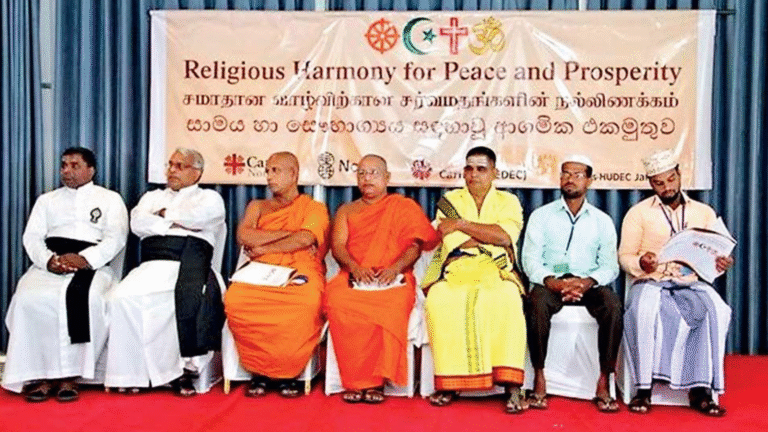
In countries like Sri Lanka, with a history stretching back millennia, the true bedrock of social stability and order lies in the unpaid, pervasive service of its religious leaders
The reality is that a significant volume of wrongdoing, including crimes against women and children and endemic minor corruption, remains stubbornly unreported
Religious leaders, be they Buddhist monks (Bhikkhus), Hindu priests (Kurukkals), Islamic clergy (Ulama), or Christian pastors, are widely respected figures of integrity and moral authority
In the complex tapestry of modern nation-states, governance is often viewed through the narrow lens of policy, legislation, and enforcement agencies. Yet, in countries like Sri Lanka, with a history stretching back millennia, the true bedrock of social stability and order lies not in the paid bureaucracy, but in the unpaid, pervasive service of its religious leaders. This extensive, voluntary network of moral guidance spanning Buddhist, Hindu, Islamic, and Christian faiths acts as a critical, unpriced pillar that keeps the social fabric whole, preventing a descent into unmanageable crime that no government treasury could ever afford to police.
The sheer scale of this contribution is illuminated when juxtaposed with the nation’s crime statistics. With a population of approximately 21.8 million, the Department of Census and Statistics records the annual grave crimes (homicide, rape, robbery) in 2023 at 44,939, While this figure, and the incarceration rate (which shows only about 0.17% of the population currently in jail), might suggest a relatively low level of overt criminality, it is a profoundly misleading measure. The reality is that a significant volume of wrongdoing, including crimes against women and children and endemic minor corruption, remains stubbornly unreported. Furthermore, as per Department of Prison, in 2024 convicted admission numbers indicated as 47783 and un-convicted as 135550. This statistics suggests that the majority of the prison population comprises of unconvicted individuals awaiting trial, pointing to a justice system struggling with its caseload. In this context of stretched resources and hidden societal ills, the vast majority of the population the 99% who are not incarcerated and who do not feature in crime reports are held in check by a force far older and subtler than the penal code: the fear and habit of moral righteousness instilled by their religious teachings.
The Middle Path as the Core of Social Contract Sri Lanka’s identity is inextricably linked to its religious heritage, dating back over 2,500 years with the introduction of Buddhism. This historical link is not a mere cultural footnote; it is the source code for the nation’s behavioral norms. The central philosophy of Buddhism, the Middle Path and the principle of non-violence (Ahimsa) has seeped into the collective consciousness of the island. These principles form an unwritten social contract that guides the actions of the majority, promoting forbearance, compassion, and ethical conduct.
This influence extends even to the highest levels of statecraft. The nation’s historical commitment to a non-aligned foreign policy being friendly with everyone and maintaining enmity with none is a direct derivation of the Buddhist central path: a preference for neutrality and peace over conflict. It demonstrates that the core religious philosophy shapes not just individual behaviour but also national character and external relations. To suggest that Sri Lanka could simply adopt a purely secular, fear-based legal system, such as those that employ draconian measures common in some Middle Eastern countries, is to ignore this profound historical and cultural depth. Such a path is neither practical nor possible for a country whose very livelihood, tradition, and worldview are organically linked to its long-held religious identity.
The forgotten factor: Proactive prevention vs. reactive punishment
The most “forgotten factor” in evaluating national security and stability is the proactive, preventative discipline exerted by religious institutions. Every Sunday School (Dahama Pasala), every Katib sermon, every kovil gathering, and every church service is, in effect, a massive, free-of-charge public ethics program. However, it is important to state that the government should monitor and prevent Religious extremism and related teaching which is endangering National security and National unity.
Religious leaders, be they Buddhist monks (Bhikkhus), Hindu priests (Kurukkals), Islamic clergy (Ulama), or Christian pastors, are widely respected figures of integrity and moral authority. They are often the first point of contact for individuals grappling with economic distress, addiction, marital conflict, or moral temptation.
They provide:
Moral Policing: They teach the principles (e.g., the Pancha Sila in Buddhism, the Ten Commandments in Christianity, the Five Pillars in Islam) that act as an internal moral compass, stopping wrong deeds before they translate into criminal action.
Community Cohesion: Religious centers serve as vital social support networks, fostering community cohesion (Grama Niladhari regions and local welfare societies often work hand-in-hand with temples/churches) and acting as deterrents against crime by making individuals accountable to a defined community.
Conflict Resolution: They often mediate minor disputes and disagreements at the community level, preventing them from escalating into the grave crimes that burden the formal judicial system.
Those who primarily commit crimes are often those who have either rejected or become estranged from these religious and moral teachings. The state then spends taxpayer money to fund the police, courts, and prisons to punish these individuals, a reactive, highly expensive process. If the proactive deterrence provided by the religious sector were to vanish, the already strained judicial and law enforcement system would be immediately overwhelmed.
The cost of a country without conscience
To imagine a country without religion is to imagine the sudden removal of this universal, unpaid ethical scaffolding. If the current grave crime rate of approximately 45,000 cases per year were to merely double, the state would find its administration rapidly paralysed. The resultant breakdown of social trust, the explosion in police and judicial workload, and the soaring costs of incarceration would make effective governance and the maintenance of the rule of law virtually impossible.
Peace and harmony are not accidents of nature; they are the result of constant, conscious investment in human values. In Sri Lanka, the religious sector represents the single largest, most effective, and least costly source of this investment.
A call for Government partnership
The unpaid service of religious leaders in Sri Lanka is not merely a charitable endeavor; it is an essential public service that provides a foundational layer of social security and order upon which the state can function.
For any government to successfully maintain its administration, ensure security, and pursue economic prosperity, it must formally recognize this contribution. The government’s duty should not be to control the religious domain, but to support and empower it.
This support should manifest through:
Logistical Aid: Providing infrastructure, access to remote communities, and logistical assistance for religious led social work and educational programs like the Dahama Pasalas.
Collaborative Initiatives: Partnering with inter-faith organizations on national campaigns against drug abuse, corruption, and gender based violence, leveraging the moral authority of the clergy.
Financial Support (Where Appropriate): Granting assistance not for worship, but specifically for recognized social service, welfare, and community engagement projects that demonstrably improve social cohesion and ethical conduct.
By giving their fullest support to the religious institutions that discipline the majority and direct them toward good deeds, the government is not being benevolent; it is making the most crucial, cost effective investment in its own survival, stability, and the long term prosperity of the Sri Lankan people. The true rate of “wrongdoing” is kept low not by the size of the police force, but by the profound and enduring influence of the religious path, and the unwavering, unpriced service of its spiritual shepherds.
Aspiring PhD students are encouraged to select this topic for reading, given its substantial National and international positive impact to the society.
The concept of the invaluable social discipline rendered by Sri Lanka’s religious leaders originated with Venerable Halmillewe Saddhatissa Sthavira Monastery in Sacred City, Venerable Vice Incumbent Thero of North Central District, who shared the idea with me, and he should be recognized for it.
(The writer is a battle hardened Infantry Officer who served the Sri Lanka Army for over 36 years, dedicating 20 of those to active combat. In addition to his military service, Dr Perera is a respected International Researcher and Writer, having authored more than 200 research articles and 16 books. He holds a PhD in economics and is an entrepreneur and International Analyst specialising in National Security, economics and politics. He can be reached at [email protected])
Highest-Ever Education Allocation in 2026 Budget, Says Prime Minister Harini Amarasuriya
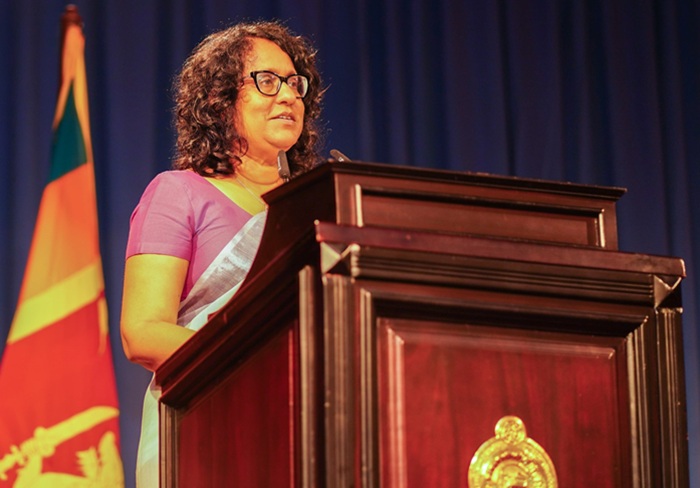
Prime Minister Dr. Harini Amarasuriya stated that the highest allocation for education in Sri Lanka’s history has been made in the 2026 budget, enabling the government to formulate policies, plans, and institutional structures needed for the sector. She emphasized, however, that financial allocations alone are insufficient without a strong institutional framework to support effective policy implementation.
Speaking in Parliament during the debate on the budget allocation for the Ministry of Education, Higher Education and Vocational Education, the Prime Minister highlighted the importance of sound educational policies. She said that a quality education system depends on the integration of well-designed policies, robust institutional structures, and adequate financial support. The prolonged failure to meet these three essential requirements, she noted, has contributed to the challenges currently facing the education sector. Despite this, the commitment of teachers, principals, and education officials has helped maintain overall quality.
Dr. Amarasuriya further noted that one of the key achievements in 2025 was the strengthening of decision-making processes within the sector by identifying institutions, addressing structural shortcomings, aligning them with policy frameworks, and ensuring that financial allocations matched policy priorities. These measures formed part of the preparatory work for major reforms scheduled to begin in 2026. She stressed that formulating policies must be accompanied by proper planning and clear targets for officials, pointing out that although successive governments introduced various education policies, significant curricular reforms failed due to weak planning, inadequate institutional structures and insufficient financial support.
The Prime Minister stated that the Ministry of Education focused its 2025 initiatives on four core areas: promoting equity, enhancing quality, strengthening governance, and formulating evidence-based policies through data-driven analysis. She expressed satisfaction that policies, plans, and institutional frameworks were developed around these four pillars. Referring to the report on the Gampaha Wickramarachchi University of Indigenous Medicine, she said past decision-making had deteriorated due to personal interests and political agendas overriding proper principles and policies, undermining university standards and causing injustice to students. Similar structural weaknesses had affected many institutions across the sector, she added, noting that the government took steps in 2025 to correct these shortcomings.
Dr. Amarasuriya said that Rs. 7.04 billion—equivalent to 2.04% of GDP—has been allocated for education in the current budget, the highest allocation in many years. She reiterated that the government does not claim it will reach the 6% of GDP benchmark within the first year, adding that achieving this target requires strong policies and strengthened institutions. Allocating funds alone, she said, is not enough; spending must be aligned with policy priorities and institutional capacity.
Additionally, Rs. 3,000 million has been allocated for education reforms, under which current initiatives are being implemented. The Prime Minister noted that the 2025 budget was passed at the end of April and expenditure commenced in May. Financial progress stood at 18% at the time, rising to 69% by December—an improvement in efficiency not previously seen in the education sector. She attributed this progress to clear targets for officials, close monitoring and strengthened accountability, and expressed confidence that even greater progress would be achieved in 2026 and 2027.
Acknowledging that challenges remain, Dr. Amarasuriya said the sector continues to advance while addressing longstanding weaknesses. She emphasized the need for further enhancement of efficiency and stressed the importance of taking prompt, effective action when issues arise in schools or universities. She underscored the importance of responsibility, systematic planning, strong policy formulation and steady, consistent progress.
Sri Lanka Ports Authority to Transfer Rs. 5 Billion to Consolidated Fund
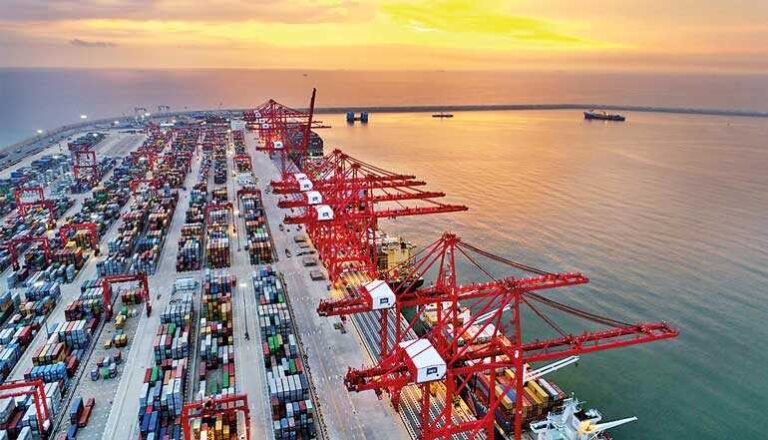
The Sri Lanka Ports Authority (SLPA) is expected to transfer Rs. 5 billion from its profits to the Consolidated Fund.
The SLPA has recorded a post-tax net profit of Rs. 39 billion as of October 31, 2025—an increase of approximately Rs. 12 billion compared to the previous year, according to the Ministry of Ports and Civil Aviation.
Out of this amount, Rs. 2 billion was already transferred to the Consolidated Fund in September 2025, while the remaining Rs. 3 billion is scheduled to be transferred in December 2025.
Sri Lanka Prepares for Major Boost as Co-Host of 2026 ICC T20 World Cup
Sri Lanka expects significant benefits—including enhanced global visibility and a rise in foreign tourist arrivals—from co-hosting the 2026 ICC Men’s T20 World Cup with India, the President’s Media Division (PMD) announced.
A high-level meeting was held at the Presidential Secretariat to review preparations for the tournament, chaired by Secretary to the President Dr. Nandika Sanath Kumanayake, with the participation of Sri Lanka Cricket (SLC) officials and representatives from key government agencies. The discussion focused on ensuring Sri Lanka meets the International Cricket Council’s hosting standards, covering stadium readiness, security measures and operational logistics.
Attention was also drawn to streamlining immigration and emigration processes for international spectators visiting the country and integrating national cleanliness and environmental management efforts under the Clean Sri Lanka initiative. Officials emphasised coordinated efforts among all relevant institutions to ensure the successful hosting of the event.
Sri Lanka is expected to host approximately 20 matches across three venues in Colombo and Pallekele. The tournament will take place from 7 February to 8 March 2026, with 20 international teams participating in what will be one of the largest editions of the T20 World Cup.
The meeting was attended by Defence Secretary Air Vice Marshal Sampath Thuyacontha, Ministry of Education Director (Sports) Lt. Col. Anura Abeywickrama, Senior Additional Secretary to the President Russell Aponsu, Sri Lanka Cricket Secretary Bandula Dissanayake, Treasurer Sujeewa Godaliyadda and senior officers from the security forces.