December 13, Colombo (LNW): Several spells of showers will occur in Northern, North-Central, Eastern, Uva, Central and North-Western provinces, the Department of Meteorology said in its daily weather forecast today (13).
Showers or thundershowers may occur at several places in the other areas of the island after 1.00 p.m. Fairly heavy falls above 50 mm are likely at some places in these areas.
Fairly strong winds of about (30-40) kmph can be expected at times over Eastern slopes of the central hills, Northern, North-central and North-western provinces and in Trincomalee, Hambantota and Monaragala districts.
Misty conditions can be expected at some places in Sabaragamuwa, Central and Southern provinces during the early hours of the morning.
The general public is kindly requested to take adequate precautions to minimise damages caused by temporary localised strong winds and lightning during thundershowers.
Marine Weather:
Condition of Rain:
Showers will occur at several places in the sea areas off the coast extending from Puttalam to Pottuvil via Mannar, Kankasanthurai and Trincomalee. Showers or thundershowers may occur at a few places in the other sea areas around the island during the evening or night.
Winds:
Winds will be north-easterly. Wind speed will be (30-40) kmph. Wind speed can increase up to (50-55) kmph at times in the sea areas off the coast extending from Colombo to Trincomalee via Puttalam and Kankasanthurai and from Hambantota to Pottuvil.
State of Sea:
The sea areas off the coast extending from Colombo to Trincomalee via Puttalam and Kankasanthurai and from Hambantota to Pottuvil will be rough at times. The other sea areas around the island will be moderate.
Temporarily strong gusty winds and very rough seas can be expected during thundershowers.
Afternoon showers, thundershowers to continue: Fairly heavy falls above 50 mm expected (Dec 13)

Vehicle Plan Reflects Deep Structural Gaps in Public Health
By: Staff Writer
December 12, Colombo (LNW): Sri Lanka’s decision to use US$150 million in World Bank IDA financing to purchase a large fleet of vehicles for health-sector workers has stirred debate not only about financial priorities but also about the deeper systemic weaknesses in the country’s public health infrastructure.
While the funds fall under the Primary Health Care System Improvement Project (2024–2028 a programme aimed at strengthening non-communicable disease prevention, elderly and palliative care, and climate-resilient health services the government’s use of this money for an extensive transport procurement plan reveals how the health system has been operating under severe logistical strain for years.
Across Sri Lanka’s districts, midwives, public health inspectors, community nurses and field-monitoring officers often work with minimal or outdated transport.
Many rely on personal motorbikes, hired three-wheelers or irregular public transport to reach remote households, conduct maternal and child health visits, carry out screenings, investigate disease outbreaks or transport medical samples.
The lack of mobility not only slows service delivery but can also compromise patient care, particularly in rural and estate communities where distance and terrain are major obstacles.
The government’s request to purchase more than 4,000 vehicles, including scooters, motorbikes, clinical-waste lorries, freezer trucks, double cabs, vans, buses, forklifts and an ambulance boat, therefore reflects far more than a procurement choice.
It exposes the hidden operational backbone required for primary health care to function at all.
Officials argue that without adequate transportation, the World Bank-mandated goals of early detection of non-communicable diseases, home-based care, community outreach, screening programmes and emergency preparedness would remain on paper rather than translate into actual impact.
Supporters of the plan say that the transport deficit is a structural problem decades in the making.
Sri Lanka’s public health system, often praised internationally for its maternal and child health achievements, has silently accumulated logistical debt meaning that for many years, core frontline services have been expected to perform without corresponding investment in vehicles, equipment, IT systems or cold-chain capacity.
The new vehicle procurement, they argue, is not a deviation but a necessary precondition for delivering the outcomes the World Bank expects.
However, this interpretation has not silenced concerns. Critics point out that the scale of the procurement including thousands of two-wheelers and dozens of heavy vehiclesrisks overshadowing other essential components of primary health care reform.
They warn that relying heavily on capital purchases may dilute attention from systemic needs such as training, chronic-disease management protocols, diagnostic capacity, digital health records and community-level health education.
Others question whether the use of IDA financing for large-scale imports complies strictly with the World Bank’s results framework, noting that any major reallocation of funds typically requires explicit justification and approval.
Still, the controversy highlights an uncomfortable reality: Sri Lanka’s primary health care network cannot deliver modern, community-based services without fixing the most basic element of all mobility.
Whether the vehicle procurement proves transformative or merely a temporary patch will depend on how effectively it is integrated into broader reforms, accountability mechanisms and measurable improvements in public health outcomes.
Decades of Missteps Leave Sri Lanka Blind to Extreme Weather
By: Staff Writer
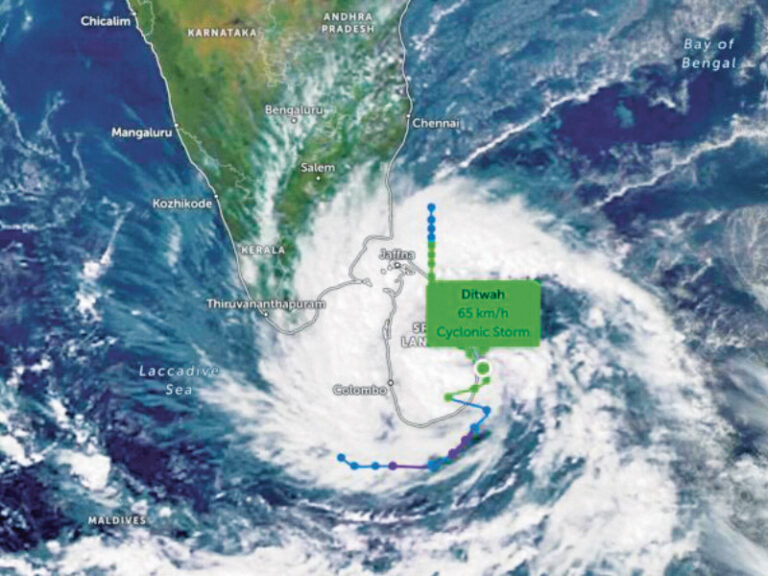
December 12, Colombo (LNW): Sri Lanka’s inability to forecast the recent cyclone with accuracy has sparked renewed scrutiny of the Meteorological Department’s long-running failures rooted not only in delayed technology but also in institutional neglect spanning nearly 20 years.
The centrepiece of this controversy is the Doppler radar: a tool used worldwide to track storm movements, wind speeds and rainfall intensity with extraordinary detail. It is standard equipment in modern weather services.
Yet Sri Lanka, an island acutely vulnerable to cyclones and monsoon floods, still does not have one functioning Doppler radar.
The government first attempted to acquire a unit in 2006 using a Rs 400 million allocation under a WMO-administered trust fund. That project ended in embarrassment. The radar, purchased from Enterprise
Electronics Corporation, was erected on a tower in Deniyaya, only for the supplier to later reveal it could not provide the necessary electronic connectivity.
The equipment fell into disuse, and to this day, its whereabouts remain unclear a failure the National Audit Office characterised as a serious lapse in procurement planning and technical evaluation.
A second opportunity emerged when JICA offered funding for two Doppler radars in 2017. Subsequent revisions reduced the proposal to a single installation at Puttalam. Despite this, the project stalled repeatedly. Officials cite pandemics, supply shortages and the economic crisis, but insiders point to deeper issues: chronic underinvestment, weak project oversight and an absence of urgency despite rising climate threats.
Contracts with Japanese firms were finally signed in mid-2024, setting a new completion target of 2027. For many meteorologists, this timeline is far too slow for a country already suffering the effects of climate volatility. Without Doppler data, forecasters rely on satellite imagery and outdated models that cannot predict sudden shifts—such as the rapid intensification that made recent storms so devastating.
The fallout from the misfired forecast has been intense. Residents in hardest-hit districts reported receiving late or conflicting warnings, leaving little time to evacuate. Public trust in the Met Department has plunged, and in a rare move, the Director General has been barred from engaging with media.
Climate experts warn that Sri Lanka cannot continue operating in “blind-spot mode.” As global weather systems become more erratic, Doppler radars are not luxury equipment but essential national security tools. Yet nearly two decades after the first attempt, Sri Lanka’s skies remain unmonitored.
The need for transparent investigation and urgent reform is now unmistakable. Unless the country ends its cycle of failed procurement and delayed implementation, future disasters will remain not just unavoidable but unpredictable.
Widening Tax Exemptions Undermine Sri Lanka’s Economic Recovery

By: Staff Writer
December 12, Colombo (LNW): Sri Lanka’s efforts to stabilize the economy are being undermined by the persistent growth of tax exemptions, which continue to erode government revenue and weaken fiscal discipline.
The Ministry of Finance’s Tax Expenditure Statement for November 2025 reveals that exemptions reached Rs. 285.7 billion in the first half of the year, a figure that represents more than half of all tax reliefs granted since April 2023.
These concessions, totaling Rs. 787.1 billion over the past two years, cover income taxes, VAT, excise duties, customs, and other indirect levies.
While designed to stimulate investment and protect essential sectors, their scale raises questions about efficiency and equity.
Income tax exemptions for 2023/24 alone accounted for Rs. 131.5 billion, including corporate concessions under legacy frameworks. Consumption and trade tax exemptions in 2024 totaled Rs. 369.9 billion, largely driven by VAT reliefs for essential goods and priority sectors.
Experts argue that the ongoing reliance on exemptions has unintended consequences. Although these reliefs aim to shield consumers from high prices and encourage investment, they have contributed to widening fiscal deficits,
Limiting the government’s capacity to fund public services. VAT remains the largest component of exemptions, signaling that structural reforms to broaden the tax base have yet to achieve meaningful results.
Social Security Contribution Levy exemptions, amounting to Rs. 61.7 billion in the first half of 2025, primarily target electricity, water, fuel, and healthcare sectors, reflecting a policy choice to maintain affordability.
Customs and excise duty reliefs, meanwhile, support strategic sectors such as agriculture, energy, and construction, but the aggregate fiscal cost remains substantial. Recovery actions for luxury vehicle tax exemptions may partially offset losses, though the overall burden persists.
The continuation of high exemptions poses risks to Sri Lanka’s IMF-backed medium-term revenue strategy, which relies on higher VAT, improved income tax collections, and better administration of the Social Security levy.
Analysts caution that unless exemptions are carefully scrutinized and aligned with fiscal objectives, the country could face growing deficits and reduced public investment capacity.
The Finance Ministry plans to integrate tax expenditure reporting into the budget cycle, providing clearer benchmarks, regular reviews of high-cost concessions, and sector-specific impact analysis.
By distinguishing between policy-driven reliefs for essential sectors and legacy exemptions from outdated regimes, policymakers hope to optimize revenue without stifling economic growth. Still, with exemptions already at record levels, reforming the system will require decisive measures to balance fiscal stability and public benefits.
Former Speaker Asoka Ranwala Arrested!

December 12, Colombo (LNW): Police have detained former Speaker and National People’s Power MP Asoka Ranwala following a late-night road incident in which his vehicle struck another car, leaving several people injured.
Officers said Ranwala was arrested on suspicion of reckless driving and failing to avert a collision. He is currently being treated at the Colombo National Hospital for injuries sustained in the crash and is under constant police watch while receiving medical care.
The accident occurred on the evening of the 11th in the Denimulla area of Sapugaskanda, when the jeep carrying the ex-Speaker reportedly veered into the path of an oncoming car.
Early indications suggest that visibility on the road may have been poor at the time, though investigators say they are still examining whether speed or mechanical issues played a role.
Three passengers in the car — a 25-year-old woman, her six-month-old baby, and her 55-year-old mother — were injured and taken to hospital for treatment. The infant, who suffered more serious complications, has since been transferred to the Lady Ridgeway Hospital for Children for specialised care.
Cyclone Exposes Vulnerabilities in Sri Lanka’s Tea Supply Chain

By: Staff Writer
December 12, Colombo (LNW): While Sri Lanka’s tea industry has weathered Cyclone Ditwah with minimal reported losses, the recent disruption highlights the fragile nature of the nation’s tea supply chain and the heavy reliance on well-coordinated but vulnerable logistics.
The Colombo Tea Traders’ Association (CTTA) reported that harvesting, transportation, and auction activities are returning to normal, yet the cyclone temporarily paralyzed roads, disrupted deliveries, and damaged machinery in a limited number of warehouses.
Although the CTTA assured no losses in manufacturing capacity, the incident exposed critical weaknesses in infrastructure connecting plantations to Colombo. Road closures forced the construction of temporary access routes to ensure green leaf transport, while floods in Kelani River areas damaged tea bagging equipment, illustrating how quickly natural events can disrupt production and export schedules.
Sri Lanka produces over 220 million kilograms of tea annually, yet this high output depends on the smooth functioning of a complex supply chain involving smallholders, exporters, and brokers. Any disruption even short-term—threatens financial flows, export commitments, and the reputation of Ceylon Tea abroad. Critics argue that reliance on temporary solutions, rather than permanent infrastructure investment, leaves the industry perpetually exposed to natural disasters.
While the industry has historically demonstrated resilience transitioning to digital tea auctions during COVID-19 and maintaining exports during economic crises experts warn that the recurrence of climate-related events like Cyclone Ditwah underscores the need for proactive risk management, climate-resilient infrastructure, and contingency planning.
The CTTA’s network of stakeholders, from planters to smallholders, has repeatedly stepped in to resolve crises. Yet the cyclone serves as a stark reminder that the industry’s growth and global reputation remain heavily dependent on reactive measures rather than systemic preparedness. Analyst’s caution that without sustained investment in roads, storage facilities, and flood-proof equipment, even minor cyclones could trigger far more serious disruptions in the future.
The recent events emphasize the urgent need for a strategic overhaul of the tea supply chain, balancing short-term recovery with long-term resilience, to protect both domestic livelihoods and international markets.
UNDP Warns Sri Lanka Cannot Survive Recovery without Debt Relief

By: Staff Writer
December 12, Colombo (LNW): Sri Lanka’s struggle to rebuild after Cyclone Ditwah has taken a decisive turn, with the United Nations Development Program (UNDP) issuing an unprecedented call for urgent, affordable international financing to prevent the country from slipping back into economic instability. The UN agency warns that the scale of the disaster flooding 1.1 million hectares and exposing 2.3 million people is far beyond what Sri Lanka can manage without plunging deeper into unaffordable debt.
UNDP Resident Representative Azusa Kubota cautioned that recovery is now “inseparable from the country’s financial fragility,” arguing that Sri Lanka cannot shoulder additional debt after weathering one of its most severe economic crises. “International partners must step up with affordable financing and innovative instruments that enable rapid recovery without pushing the country off the debt cliff,” she said.
UNDP assessments indicate that the worst-affected regions—Puttalam, Kilinochchi, Mullaitivu, and the central highlands—are areas where disaster impacts collide with long-standing vulnerabilities. Many families lived with high debt, informal incomes, and weak access to public services even before the cyclone. More than half of the exposed population was already debt-burdened, raising fears that recovery without assistance would drive households into deeper hardship.
The devastation is extensive. Nearly 720,000 buildings, including 243 hospitals and hundreds of schools, were affected. Over 16,000 km of roads, 480 bridges, and 278 km of rail lines were exposed to floodwaters, severely disrupting mobility and delaying relief operations. In Colombo and Gampaha districts alone, the concentration of exposure has strained essential public services and highlighted the urgent need for long-term relocation solutions for residents living in high-risk zones.
Agriculture has suffered catastrophic losses. More than 530,000 hectares of paddy land were submerged, with Dimbulagala recording the highest inundation. These losses directly threaten food security, as 20–30% of households in affected areas report having less than one week of dry food stocks.
UNDP’s recovery framework prioritises debris clearance, repair of community infrastructure, MSME support, and replacement of essential personal documentation to reconnect families to social services and the banking system. The agency also stressed the need for temporary reinforcement of local governance systems to manage registries, outreach, and targeted assistance.
UNDP’s Crisis Readiness Chief Devanand Ramiah said the cyclone demonstrated how “compounding risks can materialise overnight,” adding that stabilising essential services and rebuilding transport networks must be supported by international donors to ensure a recovery that does not deepen Sri Lanka’s debt burden.
With the nation still reeling from its worst economic collapse in decades, UNDP’s warning is stark: Sri Lanka cannot rebuild unless the world steps forward with concessional financing and innovative recovery tools.
Rising Post-2028 Debt Burden Threatens Sri Lanka’s Economic Recovery

By: Staff Writer
December 12, Colombo (LNW): Sri Lanka may be heading toward another debt-pressure cycle as external repayment obligations are set to accelerate sharply from 2028 onward, despite significant progress in restructuring arrangements with its major creditors.
The latest Quarterly Debt Bulletin issued by the Public Debt Management Office highlights the scale of the challenge: Sri Lanka’s external debt stock rose to USD 37.24 billion by end-September 2025, an increase of USD 100 million.
Although the country remains shut out of international capital markets, it continues to access and service loans from multilateral partners, which now dominate the portfolio alongside restructured commercial and bilateral exposures.
Multilateral lenders account for 37% of the debt stock, commercial creditors 34%, and bilateral partners 29%. Notably, ISBs account for roughly 81% of commercial liabilities, reflecting the weight of past borrowing choices.
Sri Lanka has already repaid USD 1.36 billion in the first half of 2025 over half of the USD 2.45 billion due for the year. But Central Bank Governor Dr. Nandalal Weerasinghe warned that the real stress point lies beyond 2027.
Under current commitments, annual servicing will average USD 2.75 billion until then. From 2028 onward, however, repayments will surge to between USD 3.2–3.5 billion, peaking at nearly USD 4 billion in certain years.
This shift reflects the maturity structure of pre-crisis borrowings, the phased-in repayments from restructuring agreements, and debt taken after the 2022 collapse to stabilise the economy. Analysts argue that without robust export-led growth, stronger fiscal consolidation, and improved governance, Sri Lanka will struggle to meet post-2028 obligations without courting new financial stress.
Restructuring progress has been substantial. Agreements concluded in June 2024 with the Official Creditor Committee and China’s EXIM Bank, alongside amendment arrangements, paved the way for debt treatment implementation. The China Development Bank restructuring was finalised in December 2024.
Commercial debt restructuring has also advanced, with an agreement in principle reached with ISB holders in September 2024 and a bond exchange completed in December with 98% participation. Bilateral restructuring continued through 2025, with Sri Lanka signing agreements with Japan, India, France, Hungary, and the UK, pushing total completion to 94%.
Even SriLankan Airlines, long considered a fiscal risk, has reached an agreement in principle with external bondholders holding USD 175 million in instruments.
Despite these achievements, the reality remains sobering. Restructuring may have eased debt service pressures temporarily, but the medium-term outlook suggests rising risk. Without stronger revenue mobilisation, disciplined spending, and export expansion, Sri Lanka may once again face a sustainability crisis precisely when repayments begin to spike after 2028.
Revenue Officials Struggle to Meet Targets amid Imports Slump

By: Staff Writer
December 12, Colombo (LNW): Sri Lanka’s Inland Revenue Department (IRD) is confronting one of its most difficult enforcement years as officials warn that revenue targets may be increasingly unrealistic in the face of collapsing vehicle imports, stagnant taxpayer expansion, and widespread disruptions caused by the recent cyclone and floods.
A high-level meeting chaired by Deputy Minister of Economic Development Nishantha Jayaweera has now placed urgent pressure on the IRD to produce a “practical and achievable programme” to meet the government’s ambitious annual revenue goals.
The meeting brought together senior Finance Ministry leadership and Commissioner General Rukdevi Fernando, who acknowledged the need to widen the tax net while also reducing procedural burdens that discourage compliance.
According to the Finance Ministry statement, the discussion focused heavily on simplifying tax-return filing, accelerating public awareness programmes, and encouraging voluntary compliance to reduce enforcement costs.
However, senior officials privately admit that the environment has become far more challenging. The near-total halt in vehicle imports once a reliable source of indirect taxes—has severely weakened collections under goods and services levies. Compounding this, the cyclone that inundated large swathes of the country has disrupted livelihoods, destroyed business assets, and delayed the reopening of thousands of micro and small enterprises that make up a significant segment of VAT and income-tax contributors.
For 2025, the government revised its tax revenue target upward by 2.9%, raising it from Rs. 4,590 billion to Rs. 4,725 billion, banking on stronger income-tax performance and increased levies on goods and services. The income-tax target alone has been raised 3.7% to Rs. 1,210 billion, while goods-and-services levies were pushed up 6.5% to Rs. 2,953 billion.
Yet these expectations clash with field realities. Officials on the ground report that audit teams are operating with limited mobility due to flood-damaged roads, while taxpayers in the worst-affected districts have sought extensions, citing loss of records, damaged premises, and disrupted business activity
. Many provincial IRD offices are functioning with reduced staff due to displacement and transport challenges.
The push to expand the tax net long seen as the country’s most urgent revenue reform faces further constraints. Informal-sector workers and small traders, who should form a large share of new taxpayers, have been hit hardest by weather-related losses.
For many, tax registration has become a lower priority than rebuilding livelihoods. Officials warn that without targeted relief or phased filing arrangements, enforcement may be counterproductive and further erode compliance.
Deputy Minister Jayaweera has instructed the IRD to urgently outline a roadmap that considers these economic setbacks while ensuring the state does not fall short of its fiscal commitments under the IMF programme.
But revenue experts caution that without restoring trade flows especially vehicle imports and deploying stronger digital systems to widen the tax base, this year’s targets risk becoming mathematically unattainable.
Jetstar Expansion Drives Tourism Boom with Direct Colombo Flights

By: Staff Writer
December 12, Colombo (LNW): Jetstar’s newly announced direct service between Melbourne and Colombo is expected to significantly strengthen travel demand, tourism flows and aviation competition between Australia and Sri Lanka, as the carrier prepares to operate the only low-cost non-stop link between the two countries starting 25 August 2026.
The move comes at a time when Sri Lanka’s tourism sector is rebuilding momentum and Australia has emerged as one of its fastest-growing long-haul visitor markets. Jetstar CEO Stephanie Tully said the decision reflects both rising customer interest and the airline’s wider international expansion drive.
“This new route is a major step in our growth strategy. It creates an affordable pathway for Australians to experience Sri Lanka’s beaches, culture and heritage while supporting two-way tourism,” she said.
Industry analysts say the route could deliver a significant economic boost, with more than 100,000 budget-friendly seats annually expected to stimulate both leisure and diaspora travel.
They note that the lack of direct flights from Australian carriers has long been a gap in the market, often forcing travellers onto longer, costlier connections through Southeast Asian hubs.
Melbourne Airport CEO Lorie Argus hailed the launch as a milestone that strengthens Victoria’s link to South Asia. She highlighted that Sri Lanka is among the region’s fastest-emerging destinations and said the new flights would support both tourism and family travel.
“Jetstar’s long-standing partnership with Terminal 4 has grown dramatically over the past decade. This new Colombo route reinforces Melbourne’s position as the airline’s main international base,” she said.
Jetstar’s Boeing 787 Dreamliners, which will operate the year-round service, are in the midst of a major overhaul. Beginning early next year, the airline will more than double its business-class capacity, improve economy seating, install Wi-Fi connectivity and modernise cabin interiors.
Additionally, the addition of a lie-flat crew rest module allows flights of up to 16 hours, enabling the airline to unlock more long-haul destinations beyond Colombo.
The airline has been on an aggressive expansion path, unveiling 14 new routes in 2025, nine of which are international. Over two years, Jetstar has added 13 aircraft, allowing the carrier to scale operations rapidly. The Colombo launch forms part of this broader aviation rebound.
Jetstar is also preparing for an unprecedented Christmas travel period, forecasting nearly six million passengers over December and January. Melbourne alone is expected to handle 1.7 million travellers during the summer peak.
The Colombo flights will run thrice weekly, with departures from Melbourne at 12:00, arriving in Colombo at 17:50, and returning from Colombo at 19:50, landing in Melbourne at 10:00 the next morning.