Home Blog Page 2537

Murutthettuwe Thera’s Nurses’ Association joins the strike!

0

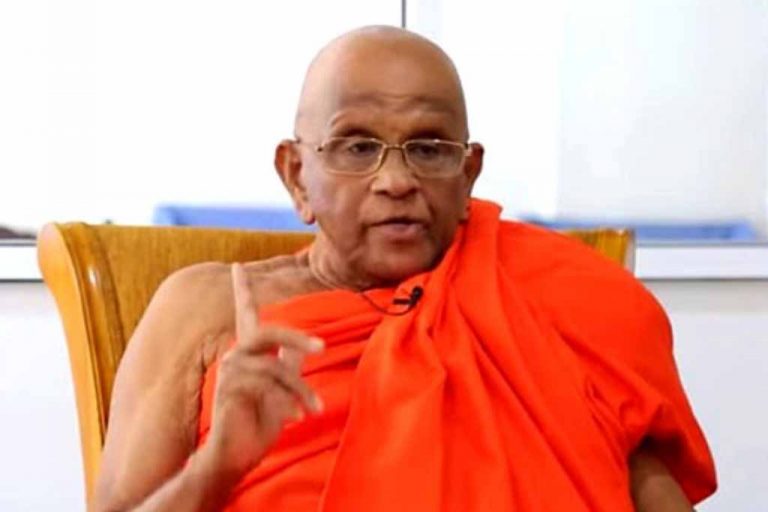
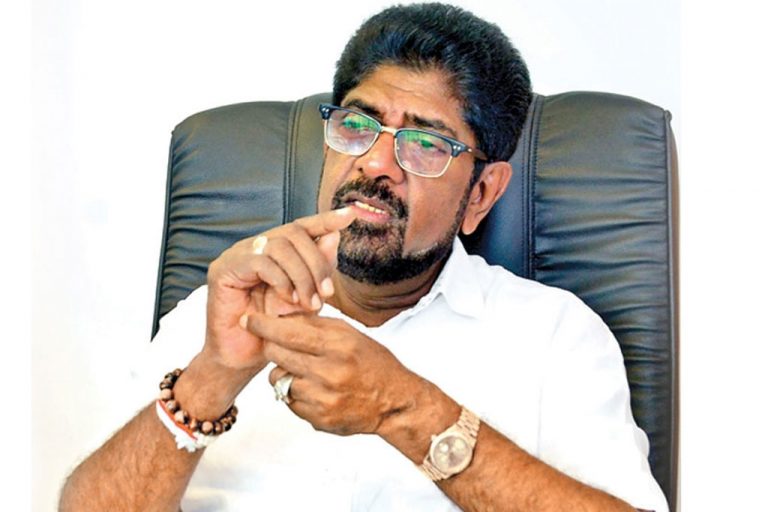
At present members of the Public Service United Nurses Association are also joining the active health workers’ strike. The president of the association is Ven. Murutthettuwe Ananda Thera.

Despite the president opinion, a group of union members is currently supporting the strike.

They say Murutthettu Thera is joining the government and gaining privileges, but not advocating for the professional rights of nurses.

We trust the ruler at this moment – Murutthettuwe Thero (VIDEO)

0

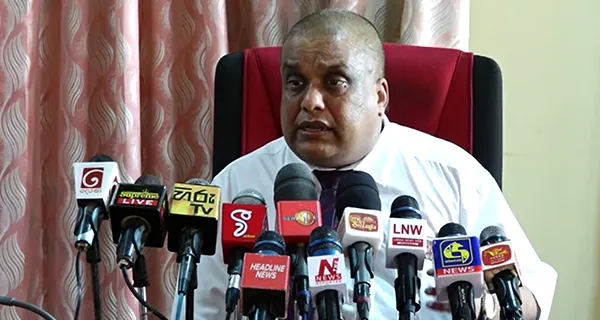
The President of the Public Service United Nurses’ Union Ven. Murutthettuwe Ananda Thero said that the Union could not be accused of not supporting the active strike at the moment as it had intervened to find solutions to seven burning issues that had been discussed with the President.

This was stated at a media briefing held in Colombo today (11).

He said that the Public Service United Nurses’ Association had not taken any action to prevent a struggle for fair service rights anywhere.

Thero said the only hope was to resolve the issues through dialogue, thinking about the lives of the people as much as possible during a period of epidemic and economic hardship, and that he would take steps forward with confidence in the ruler.

Lata Mangeshkar was the soundtrack of newly independent India

0

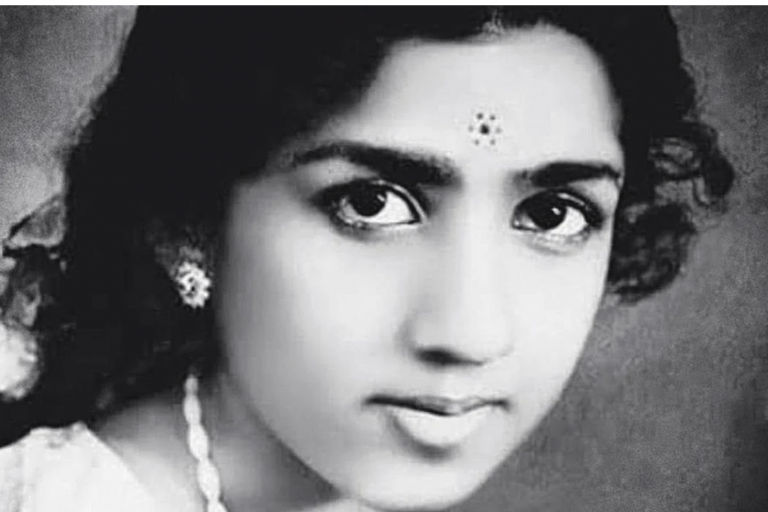
The scene is the garden of a palace in Allahabad where a young woman, ghostly in the twilight, is singing on a swing. Inside, in the grand ballroom, the owner of the palace sees a chandelier swaying in time to the song. The haunting beauty of this voice draws him out into the garden, but as he approaches the young woman disappears. All that is left is the empty swing and the song, “Aayega Aanewala”, “He will come, he who is to come”:

The world is at rest, but lovers are restless
In the stillness, footsteps are approaching,
As if someone is passing through my soul.
Or is it only my heart beating?

The young woman in “Mahal” (The Palace), made in 1949, was the great actress Madhubala, then still a teenager. But she was not the one singing. In trademark Bollywood fashion she lip-synched the words to a song recorded by a short, slightly dumpy, barefoot girl in a sweltering studio with the fans turned off, because they made too much noise. For “Aayega Aanewala” she crept towards the microphone from 20 feet away, mimicking the echoes of the song. The combination of her passionate voice with the elegant beauty of Madhubala was a peak of Bollywood’s art.

Her name, mentioned only as the song drew wide acclaim, was Lata Mangeshkar. She came from Indore in central India, the daughter of a touring theatre producer. From “Mahal” on, over seven decades of playback singing, her fame grew exponentially. She performed for every Indian prime minister, sang for actresses from Madhubala to Kajol, did duets with all the famous actors and built a catalogue of more than 5,000 songs, half of them solos. Directors fought to have her in their films, and she sang in more than a thousand. Inevitably, her voice also became the soundtrack of newly independent India. Through pa systems in malls and factories, from radios in chai stalls and barbers’ stands, out of the windows of idling, hooting cars, at funerals and weddings, her songs wove India together. She seemed to be always there, describing love’s joy and pain, famously as the defiant courtesan Anarkali in “Pyar Kiya to Darna Kya” (“Why Fear to be in Love?”) from the film “Mughal e Azam”, “The Emperor of the Moghuls”:

Why fear to be in love?
I’ve loved, not stolen anything.
Why hide and sigh?

She could never have imagined fame on such a scale. It meant that she could support her mother and her siblings and, later, get a second-hand Mercedes, indulge her love of Test cricket, buy diamonds and take holidays in Las Vegas, where she played the slots all night. But when, at five, she had begun to sing in her father’s productions, she feigned headaches to avoid his stern teaching. And when he died and she, at 13, took up acting to support the family, she could not bear to be in front of the camera. It did not love her, with her plumpness and her eyebrows, which one director told her were “too broad”. Nor could she bear to be directed what to say. By contrast to be an unseen playback singer, freely adding high emotions to the drama, felt exactly right.

Not that it was always easy. Her voice at first struck many as too high and thin, when the vogue was for a gutsier sound. With practice she made it fuller, improved the vital coloratura and developed her own honeyed way of singing, which others quickly copied. Languages other than Hindi or her native Marathi (she sang in dozens), were tricky, but she worked hard to perfect them. Practise, practise, was her mantra; and then get tough. She fought doggedly for playback singers to share in the royalties given to composers, as well as for higher fees for herself. There were frosty spells in that dispute when she refused to work with Mohammed Rafi, the playback partner with whom she sang 450 duets, and the director Raj Kapoor, whom she usually counted as a friend.

Nor did she stay behind the scenes for long. By the 1970s she was touring the world, bringing Bollywood’s music to the West and to proper concert halls. In 1974 she sang at the Royal Albert Hall, the first Indian to do so. Her early training had been classical, including playing sitar and composing, but she was confident that Bollywood’s music could stand beside the older kind. Her father would never have agreed, but now both she and her sister Asha Bhosle were playback superstars.

She also featured in most concerts the song she had sung in 1963 in front of Jawaharlal Nehru, then prime minister. India had just lost a border war with China, and her song, “Aye Mere Watan ke Logon” (“Ye People of my Land”) was for the martyrs.

When the great Himalayas were wounded and our freedom in danger,
They fought until their last breath and fell to the ground…
Some were Sikh, Jaat or Marathi; some Gurkha or Madrasi,
But each man who died there was an Indian….

As she sang Nehru cried, and afterwards he thanked her.

Her ardent, simple patriotism made some think that she belonged in politics, and in 1999 she was appointed to the Rajya Sabha, the upper house of parliament. She did not go much and did not take any mp’s perks, which included a free phone and cooking-gas connection. What did she know about politics? Her world was music, and it was wide enough to contain Mozart, Beethoven, Chopin, the Beatles and Nat King Cole. Music was her god and her husband too, for she never married.

In a way (though Pakistan embraced her, too) she was also married to her country. She was everyone’s “Didi”, sister, and divya, divine. When she died, of covid, people wept in the streets. Flags flew at half-mast, and there were two days of national mourning. At her funeral Narendra Modi himself laid flowers on her coffin. Her last song had been a tribute to him and to the Indian army.

All that was left was the empty swing. The swing, and the songs; the pain and the joy. ■

This article appeared in the Obituary section of the print edition under the headline “India’s nightingale”

THE ECONOMIST

Dr. Bellana stands by the request made by the paramedics to set a separate salary scale for graduates

0

Dr. Rukshan Bellana, Chairman of the Government Medical Officers’ Forum (GMOF) says that he too will stand by the request made by the paramedics to set a separate salary scale for graduates, which is a reasonable request.

Dr. Bellana states that this is a reasonable request.

He says such demands should be met without delay.

However, Bellana says that there are no trade unions that take the side of the people in this country.

Easter attack: CID resumes the interrogation of Hadiya from tomorrow

0

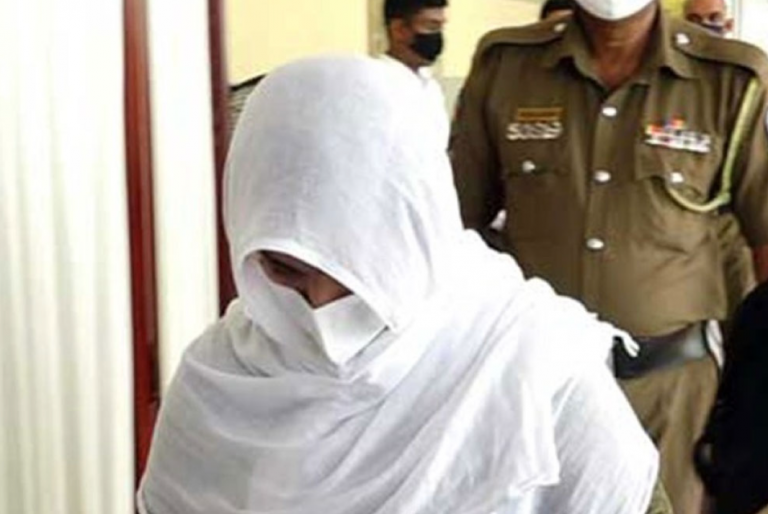
The Special Investigation Unit of the Criminal Investigation Department (CID), which is investigating the Easter Sunday terror attack, is due to start questioning the wife of Abdul Cader Fatima Hadiya, the wife of the deceased Saharan Hashim, who is currently in remand custody over the incident, tomorrow.

She is being questioned following a request made by the CID to the Kuliyapitiya Magistrate’s Court.

Accordingly, the relevant request was granted and the court issued an order to the Superintendent of Welikada Prisons to provide the necessary facilities to the CID.

This was according to a request made by the department before Kuliyapitiya Magistrate Janani Shashikala Wijetunga. The CID has decided to record further statements to confirm the findings of the series of attacks and the persons who carried out the series of attacks, the persons associated with Saharan Hashim.

Accordingly, the CID is scheduled to visit the Welikada Prison from tomorrow (12) to the 25th of February for 14 days to record her statement.

Mohamed Saharan’s wife has given statements to the CID on several occasions and she was remanded in custody after being detained and interrogated under the Prevention of Terrorism Act.

I think Saman Ratnapriya will respect the judiciary – Keheliya

0

Health Minister Keheliya Rambukwella says he believes the Government Nurses Association, chaired by Saman Ratnapriya, conducts respecting the judiciary.

Accordingly, inconveniences that the people come across during these few days will stop, the Minister said.

The Minister was commenting on the enjoining order issued by the Colombo District Court against the Government Nurses Association. The Minister pointed out that the Attorney General’s Department has submitted facts to the court within the legal framework considering the legal situation prevailing in the country and the court has issued this enjoining order after inquiring into the matter.

The no. of seats to be elected for each district in the general election revised!

0

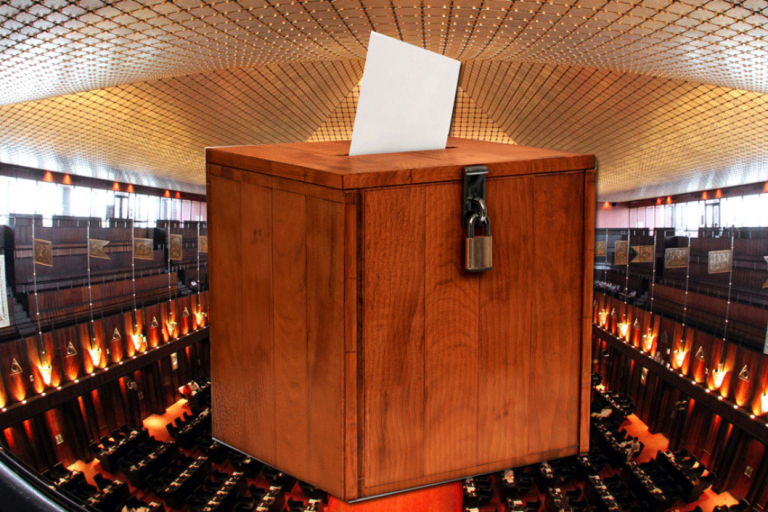
The number of seats to be elected for each district in the general election has been revised. That is according to the 2021 Electoral Roll.

Accordingly, the number of seats in the Gampaha District will be reduced by one and that number will be included in the Jaffna District. So far 19 members have been elected from the Gampaha district and this will be reduced to 18 members. The number of seats in the Jaffna District will increase from 06 to 07.

India’s democracy is not as healthy as this month’s elections make it seem

0

The phrase “state election” does not do it justice. Over 150m people have registered to take part. They will throng to 174,351 polling stations in the course of seven rounds of voting spread over a month. There will be thousands of candidates and hundreds of parties. There are even 39,598 voters aged 100 or more, for whom special provision will be made. And all this is just in the biggest state—Uttar Pradesh—of the five that are holding elections in India in the coming weeks (see Briefing).

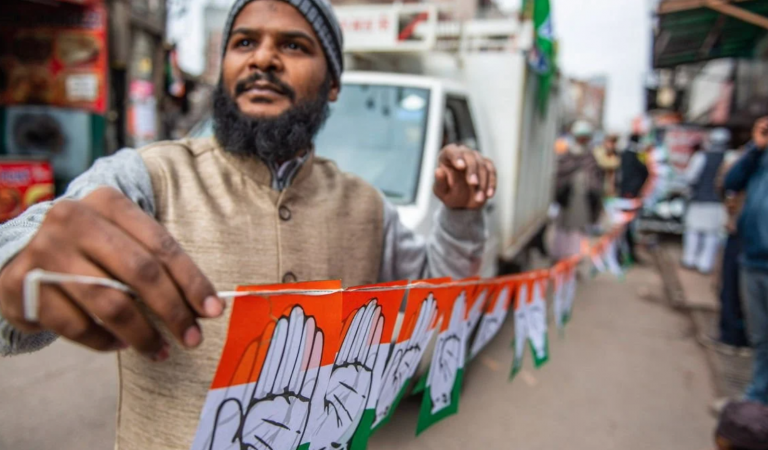
There will be lots of talk of a “festival of democracy”—and so it will be. Every caste, every sect, every view will be catered for. The candidates include film stars, holy men, feminists and entre preneurs. Three different sorts of communists are competing: Marxist, Marxist-Leninist and the garden variety. And although the Bharatiya Janata Party (bjp), which runs both the national government and those of many states, is favoured to win in Uttar Pradesh and elsewhere, its victory is by no means guaranteed. Uttar Pradesh may be as poor as Mali, and deeply divided by caste and religion, but it is also a genuine democracy. Its voters have a meaningful choice, and often confound the pundits.

Just because Indian democracy is full of life, however, does not mean that it is healthy. Its most commonly lamented ailment is growing sectarianism, stoked by the Hindu nationalists of the bjp. In Uttar Pradesh the party chose as chief minister Yogi Adityanath, a Hindu cleric who casts politics as a struggle to overturn the legacy of 1,000 years of Muslim invasions and return power and pride to the Hindu majority. Such talk leads to frequent discrimination and violence against Muslims and could one day fuel a conflagration.

But Hindu chauvinism is far from India’s only political malaise, and the bjp is not the only party tainted by it. In fact, the bjp’s anti-Muslim rhetoric has been such a hit with voters that other parties, too, have become ever less willing to speak up for minorities. Few are fielding many Muslim candidates in Uttar Pradesh, for example, although 19% of the voters are Muslim.

Other vices are shared by all the big parties. Take another worrying aspect of the selection of candidates: many of them are criminals. A shocking 43% of those who won seats in the national parliament at the most recent general election, in 2019, had been charged with crimes of some sort. For 29% the charges involved grave offences such as rape or murder.

Perhaps unsurprisingly, when these lawmakers arrive in office, they do not devote themselves diligently to the minutiae of drafting laws. Uttar Pradesh’s legislature used to meet for about three months a year back in the 1950s. Last year it managed only 17 days. The assembly in another state holding elections this month, Punjab, clocked up only 11 days in 2021. It is run by the Congress party, the main nationwide opposition to the bjp. Despite the infrequency of sessions in all these assemblies, attendance is low. And the process of legislating is becoming ever more perfunctory. Fewer and fewer bills are debated in committee; many are approved by voice votes.

Campaign finance is another worry. The bjp has introduced what it calls electoral bonds, which allow individuals and businesses to donate unlimited sums to political parties in secret, in effect. The bjp hoovers up three-quarters of the money donated in this way, but other parties are also happy to accept the scraps. It is impossible to allay suspicions that India’s industrialists are buying favours from the government, since no one knows who is making donations, much less whether there might be any quid pro quo involved.

These mechanical failings are not as glaring as the rise of Hindu nationalism, but they could be highly damaging, since all parties suffer from them. Even if voters in Uttar Pradesh spurn the divisive rhetoric and discriminatory policies of the bjp, as they should, the steady corrosion of the internal workings of democracy means that they are unlikely to secure a thoughtful, effective and responsive government.

Naturally, that matters very much for ordinary Indians. It also matters for the world. India is the planet’s most populous democracy. By upholding political freedoms for 75 years, bar a two-year hiatus under Congress in the 1970s, it has set a heartening precedent for the developing world. But these days it is looking less and less like a model. In a world where authoritarian China seems to grow stronger by the day, it has never been more important for India not just to hold elections, but to repair the underpinnings of its democracy, too. ■

This article appeared in the Leaders section of the print edition under the headline “Festive but fraying”

THE ECONOMIST

Drug trafficker ‘Abba’ killed in shootout with STF

0

An underworld suspect named Dulan Sameera Sampath alias Abba has been killed in a shootout with the STF, police said.

According to information received, the STF had launched an operation in the Egoda Uyana – Modara area last night (10) to arrest the suspect.

Police say the suspect was hiding in a room in a house when he had a shootout with the STF.

The injured suspect was rushed to the hospital where he succumbed to his injuries.

The deceased has been identified as a 26-year-old disciple of Salidu, a drug dealer in Panadura.

A STF soldier was also injured in the incident, police said.

Sri Lanka’s security forces have long been widely accused by the international community of killing suspects in various crimes without bringing them to justice. The assassination also joins the list in the run-up to the Geneva Human Rights Conference.

Dhammika Perera’s next solution for the dollar crisis – ‘The Golden Paradise Programme’

0

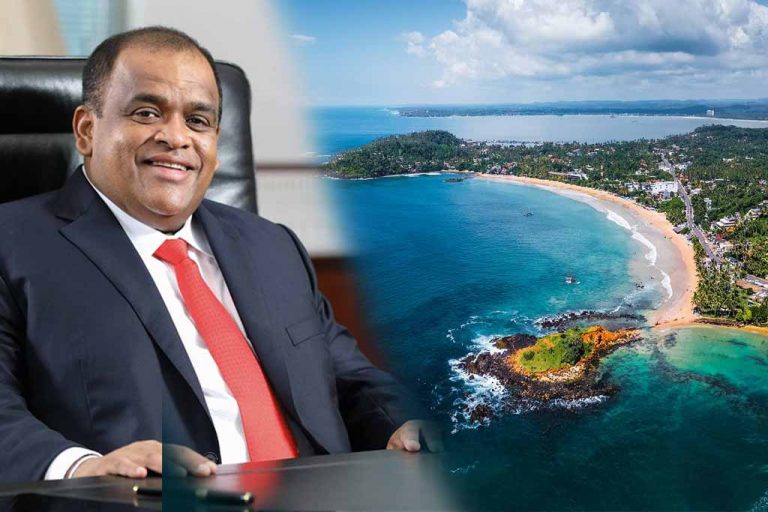
Dhammika Perera – a well-known businessman, has come up with another practical solution for Sri Lanka to overcome the current foreign exchange crisis.

This proposal has been formulated to provide foreigners residence permits in Sri Lanka and it has been named the ‘Golden Paradise Programme’.

Dhammika Perera has suggested in his program that if a foreigner who wishes to obtain residency through this program, he/she must first open a bank account in Sri Lanka and deposit US $ 100,000 in it. After one year, the person can withdraw up to US $ 50,000 from that amount. And from the second year onwards he/she must maintain a balance of at least US $ 50,000 in the account for the entire duration of their stay in the country.

If 50,000 foreigners can be brought to Sri Lanka through the ‘Golden Paradise Program’, it will be possible to bring $ 5 billion through deposits of $ 100,000 per person which is a huge amount. Bringing in 50,000 foreigners for residency is not a difficult goal either.

He also proposes to issue 10-year visas to foreigners over a monthly income of more than US $ 2,000 and over 60 years of age.

Many foreigners who have been residing in Sri Lanka for a long time can still be seen, and this programme can be regarded as one of the most effective approaches to resolving the foreign exchange crisis in Sri Lanka while facilitating the obtaining of residence permits for foreigners who are attracted to the country due to various factors such as the climate of the country.