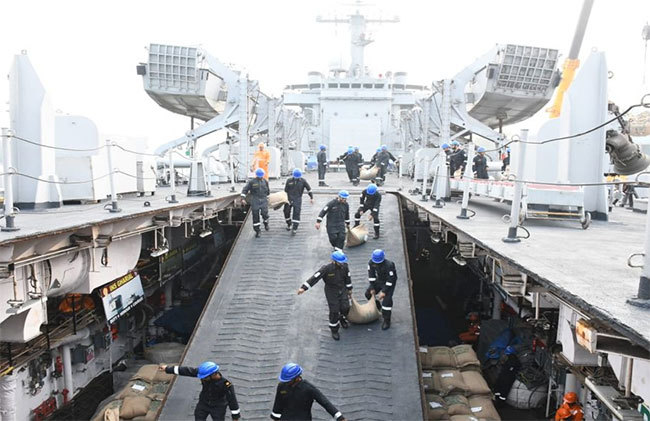
As part of the government’s ‘Clean Sri Lanka’ initiative, the Colombo Central Bus Stand is set to undergo a major upgrade within the next year, alongside the renovation of 50 major bus terminals across the country.
The large-scale refurbishment plan—aimed at enhancing cleanliness, efficiency, and commuter experience—will be carried out with support from the Sri Lanka Air Force. The Colombo Central Bus Stand, established in 1964 and spread across 1.42 hectares, currently facilitates 1,500 to 2,000 buses daily.
Renovation work at the Colombo terminal will include the modernization of several key facilities, including the canteen, rest areas, ticket counters, administrative unit, operations room, and driver quarters.
The announcement was made during a high-level discussion on the ‘Clean Sri Lanka’ programme held at the Presidential Secretariat on Monday (June 23).
The meeting was attended by Transport, Highways, Ports and Civil Aviation Minister Bimal Rathnayake, President’s Secretary Dr. Nandika Sanath Kumanayake, Defence Secretary Air Vice Marshal (Retired) Sampath Thuyacontha, senior Sri Lanka Air Force officers, and other government officials.
This move reflects the government’s broader commitment to infrastructure improvement and public service delivery under its national cleanliness and modernization agenda.
United Nations High Commissioner for Human Rights Volker Turk met with Prime Minister Dr. Harini Amarasuriya at the Prime Minister’s Office for high-level discussions on strengthening cooperation in human rights, governance, and reconciliation.
Welcoming the High Commissioner, Prime Minister Amarasuriya reaffirmed Sri Lanka’s commitment to engaging constructively with the Office of the High Commissioner for Human Rights (OHCHR). She highlighted that the recent political transition represents a major shift in Sri Lanka’s political culture, stemming from a historic, broad-based public mandate received across all communities.
During the meeting, the Prime Minister outlined the Government’s priorities under three central pillars:
Alleviating rural poverty,
Accelerating digital transformation, and
Advancing legal, political, and institutional reforms necessary for lasting social change.
Dr. Amarasuriya emphasized the Government’s dedication to upholding the full range of human rights, including social, educational, health, and economic rights, and reiterated that reconciliation remains a core priority. She noted the strengthening of domestic mechanisms such as the Office for Missing Persons (OMP), Office for Reparations (OR), and the Office for National Unity and Reconciliation (ONUR) as key to achieving sustainable peace and justice.
High Commissioner Volker Turk commended Sri Lanka’s continued engagement with the UN and stressed the importance of sustained collaboration in advancing human rights, democratic values, and national reconciliation efforts.
Also present at the meeting were UN Resident Coordinator in Sri Lanka Marc-André Franche and other UN officials. The Sri Lankan delegation included Secretary to the Prime Minister Pradeep Saputhanthri, Foreign Affairs, Foreign Employment and Tourism Ministry Secretary Aruni Ranaraja, and senior officials from both the Prime Minister’s Office and the Ministry of Foreign Affairs.
The government’s flagship initiative, the ‘Praja Shakthi’ National Programme, aimed at empowering communities and ensuring equitable economic development, is set to officially launch on July 4 at Temple Trees under the patronage of President Anura Kumara Dissanayake.
In preparation for the launch, the inaugural meeting of the Praja Shakthi National Operations Committee was held this afternoon (June 24) at the Presidential Secretariat. The discussion was chaired by Minister of Rural Development, Social Security and Community Empowerment Upali Pannilage, alongside Secretary to the President Dr. Nandika Sanath Kumanayake.
The Operations Committee comprises nine Ministry Secretaries and Chief Secretaries of Provincial Councils, and is coordinated by the Senior Additional Secretary (Development Administration) to the President, who also serves as the Secretary and Convener of the Committee.
Praja Shakthi is envisioned as a multi-dimensional framework for community empowerment, aligning with the government’s national policy priorities. As one of three major development programmes currently being implemented, it focuses on ensuring the fair distribution of economic outcomes and fostering inclusive development, particularly in rural and underserved regions.
The initiative seeks to restructure and align existing empowerment efforts under a unified, policy-driven approach. It introduces a new structural framework that supports comprehensive development planning—from identifying local needs to policy formulation, implementation, and monitoring.
Key topics discussed during the meeting included the role of provincial and local government bodies, strategies for capacity building, and the planned establishment of “Praja Shakthi Councils” to drive grassroots participation and oversight.
Currently, one in six Sri Lankans lives in multidimensional poverty, with 95.3% of this population located in rural and estate sectors. This persistent condition hampers national productivity and economic growth. Praja Shakthi aims to tackle these challenges by reinforcing social protection mechanisms and targeting vulnerable populationsthrough an inclusive and structured welfare system.
Among those present at the meeting were Senior Additional Secretary to the President Kapila Janaka Bandara, Public Administration Ministry Secretary S. Aloka Bandara, as well as other ministry secretaries, district secretaries, and senior government officials.
Showers will occur at times in the Western and Sabaragamuwa provinces and in Nuwara-Eliya, Kandy, Galle and Matara districts. Several spells of showers may occur in the North-western province.
Showers or thundershowers may occur at a few places in the Uva province and in Ampara and Batticaloa districts during the afternoon or night.
Fairly strong winds of about (30-40) kmph can be expected at times over Western slopes of the central hills and in Northern, North-central and North-western provinces and in Trincomalee and Hambantota districts.
The general public is kindly requested to take adequate precautions to minimize damages caused by temporary localized strong winds and lightning during thundershowers.
June 24, Colombo (LNW): The International Chamber of Commerce (ICC), which represents over 45 million businesses in more than 170 countries, has issued a warning against rising global tariff retaliation, urging nations to support an open and stable trading environment. As Sri Lanka moves from economic recovery towards sustainable development in the 2025–2030 period, this global backdrop presents both pressing challenges and rare opportunities for the island nation.
Sri Lanka, emerging from a crippling economic crisis, finds itself at a strategic juncture. The evolving global order—particularly the G7 and G20’s push for “de-risking” from China and developing resilient supply chains—is encouraging the formation of new regional economic blocs. This shift, according to Dinesh Weerakkody, immediate past Chairman of the ICC Sri Lanka, opens doors for Sri Lankan firms to become globally relevant and profitable multinationals.
Sri Lanka’s geographic location in the Indian Ocean, coupled with its deep-sea ports in Colombo and the potential of Trincomalee, enhances its appeal as a regional logistics and manufacturing hub. With trade agreements already in place with India, Singapore, and Thailand—and ongoing negotiations with China and Vietnam—Sri Lanka is well-placed to capitalise on rising investment in high-value industries such as apparel, electronics assembly, pharmaceuticals, shipping, tourism, logistics, and business process outsourcing (BPO).
However, this potential hinges on crucial reforms. The government must ensure consistent policies, upgrade energy and port infrastructure, and maintain a stable, transparent business environment. Additionally, Sri Lanka could benefit significantly from participation in the India–Middle East–Europe Economic Corridor, boosting its strategic importance.
A key sector requiring attention is critical minerals. Developing a transparent, ESG-compliant regulatory framework will help attract investment and position Sri Lanka as a responsible source for minerals vital to global manufacturing. Encouraging in-country value addition, such as local processing, will further strengthen this proposition.
With approximately 60,000 vessels traversing the East–West maritime route annually, Sri Lanka’s ports are a strategic asset. Enhancing Hambantota’s operations, expanding the West Container Terminal through the Adani–John Keells partnership, and exploring development in Trincomalee with Indian collaboration are seen as positive investment models. But all port development must adhere to principles of financial sustainability, sovereignty, and transparency to attract strategic foreign partnerships.
Recent visits by IMF Deputy Managing Director Dr. Gita Gopinath and World Bank President Ajay Banga underline the global importance of Sri Lanka’s reform agenda. Completing the IMF Extended Fund Facility and enacting reforms in state enterprises, trade, labour, and governance are vital for restoring investor confidence and achieving long-term economic stability.
Renewal of the EU’s GSP+ trade concessions is another top priority. As a major support for Sri Lanka’s apparel industry, meeting EU expectations on labour, human rights, and environmental standards is essential—not only to retain GSP+ but to unlock broader trade deals.
Moreover, Sri Lanka has a unique opportunity to lead the region in green finance and climate-resilient initiatives. Developing viable projects in offshore wind, solar energy, and climate adaptation—backed by banks, regulators, and global funding partners—can position the country as a hub for sustainable innovation and clean energy exports.
If Sri Lanka can maintain reform momentum, it stands to reposition itself as a resilient and competitive player in the new global economic order.
June 24, Colombo (LNW): Sri Lanka has achieved financial system stability despite the unprecedented economic and sovereign debt crisis that peaked in 2022, but full economic recovery to pre-crisis 2018 levels may be at least three more years, according to the Central Bank.
Addressing the Financial Stability Conference in Colombo recently , Central Bank Governor Dr. Nandalal Weerasinghe highlighted that the country had managed to avert a total collapse of the financial system during the crisis, a rare achievement in similar global debt meltdowns.
“This success was made possible through timely policy decisions, effective regulatory measures, adequate financial buffers, and the collective effort of all financial sector stakeholders,” he noted.
The Central Bank implemented tight monetary policy, fiscal consolidation, and structural reforms to stabilise macroeconomic fundamentals. These moves helped reduce inflation from a peak of 70% in September 2022 to single digits within a year, setting the stage for a tentative economic recovery. The country exited six consecutive quarters of economic contraction by the latter half of 2023, prompting a shift to an accommodative monetary policy to support growth.
Inflation is expected to remain below the 5% target through early 2025, with stability anticipated thereafter, the Governor said. This positive outlook has helped rebuild confidence in the financial system and opened the door for renewed growth momentum.
However, the broader economy still lags behind. At a separate discussion on the “2024 Annual Economic Review” this week, Central Bank Assistant Governor Dr. Chandranath Amarasekara revealed that it would take until at least 2027 for the Sri Lankan economy to recover to the real GDP levels recorded in 2018.
“The real GDP in 2018 was Rs. 13.2 trillion. Due to the combined impact of the COVID-19 pandemic and the economic crisis, it declined to Rs. 12.2 trillion in 2022 and further to Rs. 11.9 trillion in 2023,” Dr. Amarasekara said. However, the economy is projected to expand by 5% in 2024, reaching a GDP of Rs. 12.5 trillion.
He emphasized that while the positive growth projection is a sign of recovery, the path to full restoration of lost economic output remains long and uncertain. Sri Lanka recorded only one year of growth—from 2019 to 2023—highlighting the severity of the setbacks it endured.
Analysts point out that while macroeconomic indicators have turned favorable, structural weaknesses, external debt restructuring, political instability, and investment inertia remain key risks to the outlook. The Central Bank’s cautious optimism underlines the need for continued reforms and sustainable fiscal policies to ensure a robust and inclusive recovery.
June 24, Colombo (LNW): Haskoning DHV Nederland B.V, a consulting engineering firm, has been appointed to draft the master plan for the expansion project of the Bandaranaike International Airport (BIA).
This master plan will concentrate on planning the future of the airport, taking into account capacity, efficiency, and passenger experience to ensure that it is able to accommodate more passenger traffic and meet Sri Lanka’s tourism objectives.
It will make the airport ready to cater to the expected increase in tourist movement, with a goal of welcoming 5 to 7 million rich-spending tourists by 2030.
This Dutch Company selected by an international tender will assess the effectiveness of existing infrastructure and technologies, as well as processes, human resources, and the regulatory framework, finance ministry sources revealed.
The Airport and Aviation Services (Sri Lanka) (Private) Ltd had cancelled the contract awarded previous company some times back for not following the contract’, and resumed the procurement process, Cabinet Spokesman Nalinda Jayatissa said.
However the on going BIA Phase II Stage 2- Package A1 project does not affect by this new development in the the Japan-funded expansion project.
This project, including the new terminal (Package A), is funded by JICA and aims to boost Sri Lanka’s aviation capacity. The Dutch company will be responsible for completing the construction of the new terminal building, piers, and associated works as part of the BIA Phase II project.
In a stunning turn of events, the Cabinet Appointed Negotiating Committee (CANC) has taken a monumental stand by disqualifying the Sojitz-L&T consortium, citing an invalid Power of Attorney – a move that has electrified public sentiment and revived hope in the integrity of Sri Lankan public service.
The catalyst for CANC’s decision is the bid submission’s Power of Attorney, which was revealed to be not attested by the local registrar, directly violating Sri Lankan procurement law – an offense considered so serious that technical disqualification is mandatory, as past precedents have shown
.Sources close to the CANC confirm: “they have correctly disqualified Sojitz, despite intense political pressure and last‑minute unethical efforts by vested interests.” This bold and lawful move is being hailed as a defining moment in Sri Lanka’s anti-corruption journey.
The technical evaluation committee extended tender deadlines to accommodate Sojitz-L&T-a clear sign of preferential treatment.
A damning letter surfaced from Welcome Hotels (ITC Group), which accused L&T of irresponsibly abandoning a major project mid-stream.
Sojiz previously withheld crucial legal history, including international arbitration against the Government of Sri Lanka and a disqualification from an Egyptian airport bid .
We reliably learn that the CANC has acted decisively, fully aware of the immense political and business pressure to bend the rules. Their refusal to cave has rekindled hope among the “right-thinking people” who yearn for officials who prioritize law and the public interest over influence and profit.
The tender for the construction of Phase 11 of the BIA project in 2025 was marred by controversy
The the BIA Phase II Stage 2 expansion project was,planned as a state-of-the-art terminal covering 180,000 square meters, a 210,000-square-meter apron, improved road networks, viaducts, and modern passenger facilities. But behind the impressive figures lies growing concern over irregularities in previous consultancy practices.
The initiative aimed to boost the capacity of the country’s sole international gateway in line with the surge in tourism and economic activity following the civil war.
Yet, amid yen loan agreements and final inspection procedures, the vision of streamlined global connectivity has been overshadowed by rising costs, alleged mismanagement, and mounting bureaucratic hurdles.
June 24, Colombo (LNW): The Committee on Public Finance (COPF) has approved the importation of casino machines into Sri Lanka, lifting restrictions imposed during the country’s economic crisis. However, the committee has directed the creation of a special monitoring mechanism to oversee all such imports, according to COPF Chairman Dr. Harsha de Silva.
, Dr. de Silva revealed that casino equipment was among the items listed for import clearance. “With the concurrence of the committee, I instructed that a special system be introduced to monitor each casino machine brought into the country,” he stated.
The move comes in the wake of the recent presentation of the Gambling Regulatory Authority Bill, 2025 in Parliament, which seeks to establish a framework to oversee all gambling activities, both physical and online.
Dr. de Silva raised concerns about gaps in the existing regulatory landscape. “The law only establishes the regulator, but does not include regulations to govern operations. For example, Singapore has separate laws for the regulator and casino operations. Here, the government seems intent on legalising junket operations without proper oversight,” he said, adding that online gambling remains untaxed and unregulated.
COPF member and former finance minister Ravi Karunanayake echoed a pragmatic approach. “The government wanted to explore how this could generate revenue. Our role was to evaluate its financial benefits, not its social implications. That’s why we approved it,” he noted.
Import restrictions on casino machines were initially introduced under the Casino Business Regulation Act No. 17 of 2010 during the economic crisis. The recent decision reverses that ban, aiming to facilitate investment in licensed tourist establishments and boost revenue.
The government views gambling as a strategic tool to revitalize the tourism and entertainment sectors. Currently, the industry operates under outdated laws such as the Betting and Gaming Levy Act No. 40 of 1988 and the 2010 Casino Business Act. However, regulatory loopholes have hindered effective licensing and enforcement.
The new Gambling Regulatory Authority Bill seeks to rectify this. It proposes the establishment of a central authority responsible for issuing licences, enforcing compliance, and implementing anti-money laundering (AML) and Know Your Customer (KYC) guidelines. The authority will include officials from the Finance Ministry, Inland Revenue, the Financial Intelligence Unit, and the police, along with independent experts.
Meanwhile, Sri Lanka’s casino sector continues to attract international investment. A landmark project is the City of Dreams Sri Lanka, a $1 billion integrated resort in Colombo by Melco Resorts & Entertainment and John Keells Holdings. The resort, South Asia’s first of its scale, opened its first phase in October 2024. Its second phase, due later this year, will include casino operations under a 20-year licence held by Melco’s local subsidiary, Bluehaven Services.
To further boost revenue, the government has proposed doubling casino entrance fees from $50 to $100 and increasing the gambling turnover tax from 15% to 18%.
Authorities believe that these reforms will not only attract foreign investors and tourists but also establish a transparent and accountable gambling environment that contributes meaningfully to the national economy.
Tensions escalate: Smoke rises from the IRIB Building in Tehran, the country’s state broadcaster (source: Reuters)
President Trump confirmed the precision strikes had “completely and fully obliterated” the facilities, since they aim to dismantle Iran’s nuclear enrichment capacity
Sri Lanka, having just emerged from its worst economic crisis in decades, would be further immediately imperilled, resulting in negative impacts on its energy sector, trade, tourism, and overall financial stability
Recommendations for GOSL to be resilient and anti-fragile against external disruptions include: Stockpiling on Oil as a cushioning mechanism against price spikes plus supply disruptions, Expediting adoption of Renewable energy, stopping relying on primary import channels for fuel needs and exploring alternatives and ensuring the safety of Sri Lankans who are abroad
As of June 22, 2025, Sunday morning hours, the United States has launched strikes against three Iranian nuclear sites: Fordow, Natanz, and Isfahan. President Trump confirmed the “massive precision strikes,” stating they “completely and fully obliterated” the facilities, aiming to dismantle Iran’s nuclear enrichment capacity. This decisive action inserts the U.S. directly into the ongoing conflict between Israel and Iran. While Iranian authorities have acknowledged the attacks, they insist their nuclear programme will continue and reported no immediate radioactive contamination. The strikes, utilising advanced “bunker-buster” bombs, mark a significant escalation in regional tensions, with global reactions closely monitoring potential retaliatory measures from Tehran.
However, Iran declared US attacks on its nuclear sites “empty,” stating enriched uranium and personnel were removed beforehand. Tehran asserted no contamination, warning of “everlasting consequences” for the “savage aggression.”
The spectre of direct US involvement in the escalating conflict between Israel and Iran looms large, threatening to transform a regional dispute into a global conflagration. While the immediate focus remains on the Middle East, the ripple effects of such an intervention would be felt across continents, with particularly dire consequences for small, import-dependent economies such as Sri Lanka. Having just emerged from its worst economic crisis in decades, Sri Lanka’s fragile recovery would be immediately imperilled, leading to a cascade of negative impacts on its energy sector, trade, tourism, and overall financial stability. The island nation, highly susceptible to external shocks, would face an existential threat to its hard-won stability, potentially plunging it back into the depths of economic despair.
Vulnerability Amplified in the Energy Sector
Sri Lanka’s Achilles’ heel lies in its overwhelming dependence on imported energy, particularly oil. As an island nation without indigenous oil or natural gas reserves, it relies entirely on foreign sources to fuel its economy. The Middle East, especially the Persian Gulf, is a primary supplier, providing over half of Sri Lanka’s oil needs. A direct US intervention in the Israel-Iran conflict would inevitably target Iran’s energy infrastructure and, more critically, threaten the Strait of Hormuz – a choke point through which nearly a third of the world’s seaborne oil trade passes.
The immediate consequence would be a dramatic surge in global oil prices. Experts predict that prices could easily hit $120 per barrel, and potentially much higher, even surpassing the 2008 record of nearly $150 per barrel, if disruptions persist. For Sri Lanka, which spent approximately $4.4 billion on fuel imports annually even before the current escalation, a 10% increase in global fuel prices could add an additional $404 million burden to its annual import bill. This would drain its already precarious foreign exchange reserves, which are still being painstakingly rebuilt under an IMF programme.
Beyond crude oil, the impact would extend to refined petroleum products, liquefied petroleum gas (LPG), and diesel, all of which Sri Lanka imports. Higher fuel costs would permeate every aspect of the economy, increasing transportation expenses for goods and people, raising manufacturing costs, and burdening households with exorbitant energy bills. This surge in input costs would fuel inflation, eroding the purchasing power of ordinary citizens and making essential goods unaffordable. The Ceylon Electricity Board (CEB), heavily reliant on thermal power generation using imported fossil fuels, would face immense pressure, potentially leading to increased electricity tariffs and even power outages, further crippling economic activity. The country’s efforts to transition towards renewable energy, while crucial in the long run, are not yet mature enough to provide immediate relief from such a severe fossil fuel shock.
Disruptions to Trade and Supply Chains
The Strait of Hormuz is not just vital for oil; it’s a critical artery for global trade. Any significant disruption or closure of this waterway would lead to massive rerouting of shipping, primarily via the longer and more expensive Cape of Good Hope route around Africa. This rerouting, already being experienced due to Red Sea attacks, adds approximately 10 days and 3,500 nautical miles to journeys, increasing fuel costs by about 40% and pushing up insurance premiums.
For Sri Lanka, an import-dependent nation, this means a significant increase in the cost of all imported goods, from raw materials for its apparel industry to food staples and medicines. Increased freight charges and longer transit times would translate to higher consumer prices and further inflationary pressures. On the export front, Sri Lankan goods, particularly its vital tea exports and apparel, would become less competitive in international markets due to higher shipping costs. The Middle East accounts for a substantial 25% of Sri Lanka’s total tea exports, and any disruption to trade routes or economic instability in the region would directly impact demand for Sri Lankan tea, leading to a potential loss of millions of dollars in export revenue. This double whammy of more expensive imports and less competitive exports would severely worsen Sri Lanka’s balance of payments and external financial position, undermining its economic recovery efforts.
Pillars of Tourism and Remittances under Threat
Two other critical foreign exchange earners for Sri Lanka are tourism and worker remittances, both of which are highly vulnerable to instability in the Middle East. Sri Lanka’s tourism sector, which had been showing promising signs of recovery, would face an immediate downturn. Heightened geopolitical tensions and the perception of a volatile Middle East would deter tourists, particularly from key European markets, who often transit through Middle Eastern hubs like Dubai and Doha. Rerouted flights due to airspace closures, longer travel times, and increased airfares would make Sri Lanka a less attractive destination. A general climate of global uncertainty and security concerns would also dampen travel confidence, hitting arrivals and revenues hard.
Even more critically, worker remittances are a lifeline for the Sri Lankan economy, with approximately 42% of the country’s remittances originating from the Middle East. Over 1.3 million Sri Lankans are employed in Gulf countries, sending home billions of dollars annually. A prolonged conflict, economic instability in the Middle East, or even a perceived threat to the safety of migrant workers could lead to a significant decline in remittances. Middle Eastern economies might reduce their demand for foreign labour during periods of instability, or workers themselves might return home, further depleting a crucial source of foreign exchange. A 10% drop in private remittances, for instance, could reduce foreign exchange reserves by hundreds of millions of dollars, placing immense pressure on the rupee and the country’s ability to finance its imports and service its external debt.
Macroeconomic Instability and Debt Vulnerability
Sri Lanka is currently under an Extended Fund Facility (EFF) programme with the International Monetary Fund (IMF), a critical lifeline for its debt restructuring and economic reform agenda. The programme aims to rebuild external buffers, strengthen public finances, and restore macroeconomic stability. However, a major external shock like a full-blown US-Iran war would severely derail these efforts. The surge in import costs, decline in export revenues, and reduction in remittances would rapidly deplete foreign exchange reserves, making it challenging to meet import needs and service external debt commitments.
The government’s hard-won fiscal reforms and revenue mobilisation efforts would be undermined by the need to potentially subsidise essential goods, manage inflationary pressures, and support a struggling populace. The Central Bank of Sri Lanka would face immense pressure to raise interest rates to combat inflation and defend the currency, which could stifle economic activity and investment in an already fragile economy. The increased borrowing costs for businesses and the government would further exacerbate debt vulnerabilities. While the IMF programme aims to build resilience against shocks, the magnitude of a US-Iran war’s impact would likely overwhelm existing buffers and necessitate renegotiations or additional financial assistance, pushing Sri Lanka further into debt.
Social and Political Ramifications
The economic fallout would inevitably spill over into social and political instability. Rising cost of living, job losses in export-oriented industries and the tourism sector, and a potential reduction in remittances would lead to widespread hardship. Public discontent could escalate, reminiscent of the protests that characterised the 2022 economic crisis. The government, already navigating a delicate political landscape, would face immense pressure to mitigate the impact on its citizens, potentially resorting to measures that could undermine long-term economic stability. The safety and well-being of the large Sri Lankan diaspora in the Middle East would also be a significant concern, adding a humanitarian dimension to the crisis.
Recommended Action Steps
The escalating conflict between Iran and Israel presents significant challenges for Sri Lanka, a small island nation heavily reliant on imports, remittances, and tourism. While completely avoiding the consequences is impossible, the Sri Lankan government can take proactive measures to mitigate the impact.
Strengthen Energy Security and Diversify Sources: The most immediate and devastating impact of a Middle East conflict is on global energy markets. Sri Lanka, which imports nearly all its fuel, will face soaring crude oil prices, straining its already fragile foreign exchange reserves and crippling various sectors.
Strategic Stockpiling: The government should prioritise increasing its strategic oil reserves to cushion against price spikes and supply disruptions. Accelerate Renewable Energy Adoption: Double down on efforts to transition to renewable energy sources like solar, wind, and hydro power. This aligns with existing national energy policies and reduces dependence on volatile fossil fuel imports in the long run.
Explore Alternative Import Channels: Investigate and establish alternative, reliable sources and shipping routes for fuel imports to reduce vulnerability to disruptions in the Strait of Hormuz.
Protect Foreign Remittances and Explore New Employment Markets: The Middle East is a significant source of foreign remittances for Sri Lanka, with a large number of Sri Lankans employed in countries like Israel. An escalating conflict could lead to job losses and a significant drop in these vital inflows.
Ensure Safety of Expatriates: Prioritise the safety and well-being of Sri Lankan nationals in affected areas, providing emergency hotlines, consular assistance, and evacuation plans if necessary.
Diversify Foreign Employment Destinations: Actively explore and negotiate new avenues for foreign employment in stable regions and sectors, reducing over-reliance on the Middle East.
Incentivise Remittances through Official Channels: Implement policies that encourage Sri Lankan migrant workers to send remittances through official banking channels to bolster foreign exchange reserves.
Bolster Economic Resilience and Diversify Trade: The conflict threatens to disrupt crucial shipping routes, leading to increased freight costs and impacting key exports like tea, especially to Middle Eastern markets.
Explore New Export Markets: Actively seek and cultivate new markets for Sri Lankan exports, particularly tea and apparel, beyond the Middle East to reduce market concentration risks.
Support Local Production: Implement policies that boost domestic food production and other essential goods to reduce import dependence and mitigate the impact of supply chain disruptions and import price inflation.
Engage in Diplomatic Efforts: While a small nation, Sri Lanka should continue to advocate for de-escalation and peaceful resolution through multilateral forums, emphasising the humanitarian and economic consequences of prolonged conflict on non-aligned nations.
By taking these comprehensive and proactive measures, Sri Lanka can better prepare for and mitigate the adverse impacts of the Iran-Israel conflict, safeguarding its economic stability and the well-being of its citizens.
Conclusion
Direct US involvement in the Israel-Iran conflict would unleash a torrent of economic devastation on Sri Lanka. The island nation, still reeling from its recent economic collapse, is acutely vulnerable to external shocks, particularly those impacting global energy markets, trade routes, and worker migration patterns. The inevitable surge in oil prices, disruptions to shipping, decline in tourism, and reduction in remittances would rapidly erode Sri Lanka’s hard-won economic stability, deplete its foreign exchange reserves, exacerbate inflation, and jeopardise its IMF-backed recovery. The consequences would be a severe setback to its development trajectory, plunging millions back into poverty and potentially reigniting social and political unrest. For Sri Lanka, the escalating tensions in the Middle East are not just distant geopolitical events; they are an imminent threat to its very survival and the well-being of its people. The world must recognise that the ripples of conflict in one region can create tidal waves of crisis in others, demanding a concerted effort to de-escalate tensions and protect the most vulnerable economies.
The writer is an Infantry officer who served the Sri Lanka Army for over 36 years, a former Security Forces Commander of the Wanni Region and Eastern Province, and he holds a PhD in economics. He can be reached at: [email protected]
June 24, Colombo (LNW): The People’s Struggle Alliance (PSA) has issued a strongly worded statement denouncing what it describes as an unfolding genocide in Gaza and a wider US-sponsored imperialist agenda across the Middle East.
The group sharply criticised both the recent American strikes on Iran and Israel’s ongoing assaults, warning that such actions may be pushing the region — and the world — toward a catastrophic conflict.
In the wake of fresh US attacks allegedly targeting Iranian nuclear facilities, the PSA described these acts as a continuation of the United States’ long-standing strategy to dominate the Middle East. It accused the US of fabricating nuclear threats as a pretext for military aggression, drawing parallels to earlier interventions in Iraq, Libya, and Syria.
The alliance also took aim at Israeli Prime Minister Benjamin Netanyahu, saying he had been “crying wolf” about Iran’s nuclear capacity for two decades.
The PSA cautioned that the volatile regional situation — marked by fragile ceasefires and persistent Israeli airstrikes — could spiral into a global war. With nuclear powers such as China, Russia and North Korea potentially aligning with Iran, the group stressed the urgency for international leftist movements to adopt a unified anti-war stance.
They argued that, historically, it is the working class that suffers most in any armed conflict.
The alliance also took issue with Western hypocrisy on nuclear weapons, noting that whilst the US leads calls to disarm nations in the Middle East, it itself possesses over 5,000 nuclear warheads and remains the only country to have used atomic bombs in warfare.
The group drew a grim comparison between the death toll in Gaza since October 2023 — now exceeding 55,000, including more than 18,000 children — and the casualties caused by the Hiroshima and Nagasaki bombings.
The PSA condemned US President Donald Trump’s triumphalist rhetoric following the Iran strikes, describing his statements as grotesquely out of touch with the scale of suffering. They reiterated that no nation should possess nuclear weapons and rejected the idea that the US should act as the world’s moral arbiter.
Firmly aligning itself with the Palestinian people, the alliance renewed calls to end the Israeli occupation and dismantle what it described as a siege and genocide in Gaza.
It called out several Western powers — including the UK, EU, Germany, France and Canada — for their direct complicity in funding, arming and enabling Israel’s military campaign.
In a pointed message to the Sri Lankan Government, the PSA criticised the current administration, including members from the National People’s Power (NPP), for adopting an ambiguous stance. They urged the government to cease what they perceive as fence-sitting and take a firm anti-imperialist, pro-Palestinian position.
The PSA laid out a detailed list of demands aimed at severing Sri Lanka’s complicity in Israeli actions. These include halting the recruitment of Sri Lankan workers to Israel, removing Israeli-owned businesses and chabad houses operating in popular tourist regions, and ending police protection for such establishments.
They further called for tighter visa regulations on Israeli visitors, a ban on employment for Israeli Defence Forces (IDF) soldiers in Sri Lanka, and action against the spread of Zionist propaganda in public spaces.
The statement also demanded accountability for instances of aggressive or racist behaviour by Israeli tourists and soldiers, especially in the island’s surf communities.
On the international front, the PSA urged all countries to recognise the State of Palestine, end military support to Israel, and advocate for global nuclear disarmament. In a nuanced position, the group also expressed solidarity with the Iranian people resisting authoritarianism at home, even as they oppose US aggression against Iran.
The statement has been formally sent to multiple diplomatic missions and ministries, including the US Embassy, the Israeli and Iranian Embassies, and the Foreign Affairs Ministry of Sri Lanka.
The PSA’s message adds to growing global dissent against the escalating crisis in the Middle East and challenges both regional and global actors to take meaningful steps toward peace and justice.