December 02, Colombo (LNW): The Sri Lankan Government has introduced an expedited mechanism to ensure that relief supplies sent from abroad reach communities affected by recent flooding without delay. Under the new arrangement, consignments of essential items donated by international organisations, private benefactors and Sri Lankans living overseas will be cleared through customs under a simplified procedure and released free of all import taxes and related charges.
Officials noted that the initiative was developed in response to a surge of enquiries from foreign partners keen to contribute to humanitarian efforts following the devastation caused by Cyclone Ditwah. Many donors had requested a clearer, quicker and less bureaucratic process so that relief goods—ranging from medical supplies to sanitation equipment and emergency food items—could be dispatched and distributed without hindrance.
The revised procedure aims to streamline documentation, reduce processing times and prioritise aid consignments at ports. Authorities have stated that this approach will help ensure that urgently needed supplies reach families in temporary shelters and flood-damaged settlements far more rapidly than under normal import protocols.
Guidance for donors, including details on the types of goods most urgently required, is available through the Sri Lanka Customs website, while further information on approved categories of aid and packing instructions can be accessed via the government’s official donations portal.
In a related development, the Cabinet has endorsed the creation of a new national fund titled Rebuilding Sri Lanka, intended to support long-term recovery efforts following the extensive destruction left in the cyclone’s wake. The fund, to operate under the authority of the Presidential Secretariat, will draw on both state and private-sector expertise to oversee reconstruction projects, strengthen disaster resilience and assist affected families in restarting their livelihoods.
The committee guiding the fund will be chaired by the Minister of Labour and Deputy Minister of Finance and Planning, Dr Anil Jayantha Fernando, with Senior Additional Secretary to the President, G. M. R. D. Aponso, serving as its convener. Officials expressed confidence that the fund will help coordinate and sustain national rebuilding efforts over the months ahead.
Government Unveils Fast-Track System for Clearing Overseas Aid for Flood Victims

Police Urge Better Coordination as Relief Traffic Hampers Road Recovery Work
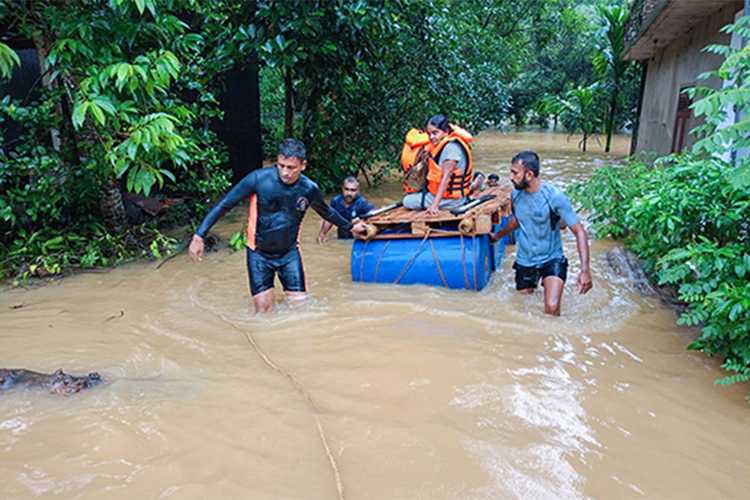
December 02, Colombo (LNW): Sri Lanka Police have appealed for tighter coordination among relief groups after reporting that the sheer volume of teams entering disaster-affected districts is slowing down essential road restoration efforts.
Police Media Spokesman, ASP F. U. Wootler, acknowledged the unwavering commitment shown by volunteers and organised aid groups, praising their role in supporting communities still reeling from the recent extreme weather. He emphasised that their presence is greatly valued, particularly as many families remain dependent on outside assistance.
Nonetheless, he cautioned that the growing flow of vehicles—ranging from lorries carrying supplies to convoys of volunteer groups—has begun to obstruct the heavy machinery and crews working to clear damaged routes. In some areas, engineers have had to pause repairs simply because the roads are too congested to move equipment safely or efficiently.
Wootler also highlighted an emerging safety concern: curious motorcyclists who pause to film flooded zones or landslide sites, inadvertently blocking narrow access points and distracting emergency personnel. Such behaviour, he warned, not only hampers operations but puts individuals at risk, as many of these locations remain unstable and dangerous.
To ease the pressure on affected districts, the Police Media Spokesman urged all relief organisations to liaise directly with the Officers-in-Charge of their respective police divisions. Proper coordination, he noted, will help ensure that aid reaches the intended communities without disrupting rehabilitation work on critical roadways.
Members of the public wishing to send assistance have been encouraged to contact the Police Disaster Operations Centre to organise deliveries in an orderly and safe manner.
Police Special Operations Centre contact numbers:
071-8595884
071-8595883
071-8595882
071-8595881
071-8595880
Maldivian Telethon Raises Millions to Aid Sri Lanka’s Cyclone-Hit Communities

December 02, Colombo (LNW): A nationwide fundraising drive in the Maldives has generated an impressive surge of goodwill, with more than MVR 11.4 million collected so far to support Sri Lanka as the country struggles to recover from the severe flooding and destruction brought on by Cyclone Ditwah.
The telethon, launched on Sunday morning at 9.00 a.m., has seen a steady stream of contributions from individuals, organisations and public institutions alike.
By this afternoon, donations had climbed to MVR 11,415,915, comprising MVR 10,743,125 in local currency and USD 43,631 credited to the dedicated foreign-currency account. Organisers remarked that the response had far exceeded expectations, reflecting the strong sense of regional solidarity and the deep historical ties between the two nations.
The campaign, involving 37 media outlets across the Maldives, was originally due to conclude early Sunday morning. However, following continued public interest and requests from donors, the organisers opted to extend the telethon into the night, allowing more Maldivians the opportunity to contribute.
Donation points have been set up at the TVM Building and across Malé City, with QR codes and Bank of Maldives transfer options available for those preferring digital payments.
Several major institutions have also pledged substantial support. Public Service Media contributed MVR 113,646.83, the Maldives National Defence Force donated MVR 1 million, and the Maldives Police Service added MVR 2.45 million to the relief effort. According to organisers, additional pledges are expected to come in from private businesses and community groups before the campaign concludes.
Sri Lanka, which declared a state of emergency after Cyclone Ditwah made landfall on 26 November, continues to face severe challenges, including widespread displacement, damaged infrastructure and urgent humanitarian needs.
Maldivian officials noted that the contribution drive reflects not only compassion but also the close bonds between the two nations, with Sri Lanka serving as a key partner in areas such as education, healthcare and employment, and home to a significant Maldivian diaspora.
Major River Levels Begin Gradual Decline, Though Serious Flooding Persists

December 02, Colombo (LNW): The Department of Irrigation has reported a modest but welcome reduction in water levels along several major rivers, offering a slight easing of the flood conditions that have inundated low-lying communities in recent days.
Officials noted that the Kelani River, which has been running dangerously high, is now showing signs of retreat, bringing some relief to residents living along its floodplain.
According to early-morning observations today (02), the gauge at Nagalagam Street registered a fall from 8.00 feet at 2.00 a.m. to 7.90 feet by 3.00 a.m. Although this decline is encouraging, authorities stressed that the area remains under a major flood warning, with ground saturation and continuing rainfall posing ongoing risks.
A similar pattern was recorded at Hanwella, where the level dipped from 8.00 feet to 7.93 feet within the same hour, yet still stands firmly within the flood threshold.
The Department also confirmed that other key waterways are beginning to subside. At Elgama on the Kalu River, water levels fell from 10.40 to 10.30 feet overnight, though the river remains above danger level and continues to threaten nearby settlements.
Meanwhile, at Thanthirimale on the Malwathu Oya, the gauge showed a minor reduction—from 8.98 feet at 2.00 a.m. to 8.95 feet at 3.00 a.m.—but the situation remains severe, with widespread flooding still affecting villages downstream.
Several spells of showers to occur: Misty conditions expected (Dec 02)

December 02, Colombo (LNW): Several spells of showers will occur in Northern and Southern provinces.
Showers or thundershowers may occur at a few places in Uva, North-Central and Eastern provinces after 2.00 p.m.
Misty conditions can be expected at some places in Western, Central, Sabaragamuwa, Uva, North-western and Southern provinces and in Ampara district during the early hours of the morning.
The general public is kindly requested to take adequate precautions to minimise damages caused by temporary localised strong winds and lightning during thundershowers.
Marine Weather:
Condition of Rain:
Showers will occur at a few places in the sea areas off the coast extending from Trincomalee to Mannar via Kankasanthurai and from Kalutara to Pottuvil via Galle and Matara.
Winds:
Winds will be South-westerly and speed will be (25-35) kmph.
State of Sea:
The sea areas around the island may be slight to moderate. Temporarily strong gusty winds and very rough seas can be expected during thundershowers.
RDA Reports Widespread Damage to Road Network Following Torrential Rains
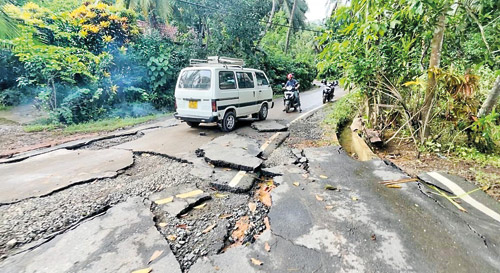
December 01, Colombo (LNW): The Road Development Authority has announced that extensive rainfall in recent days has caused severe disruption across the national road network.
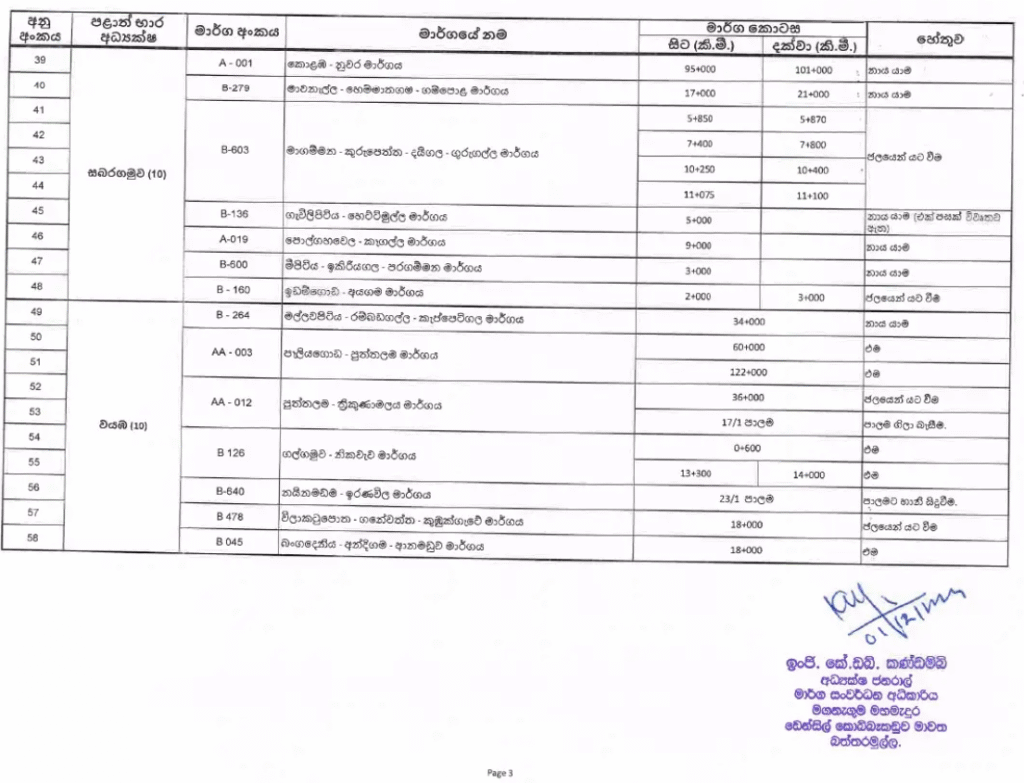
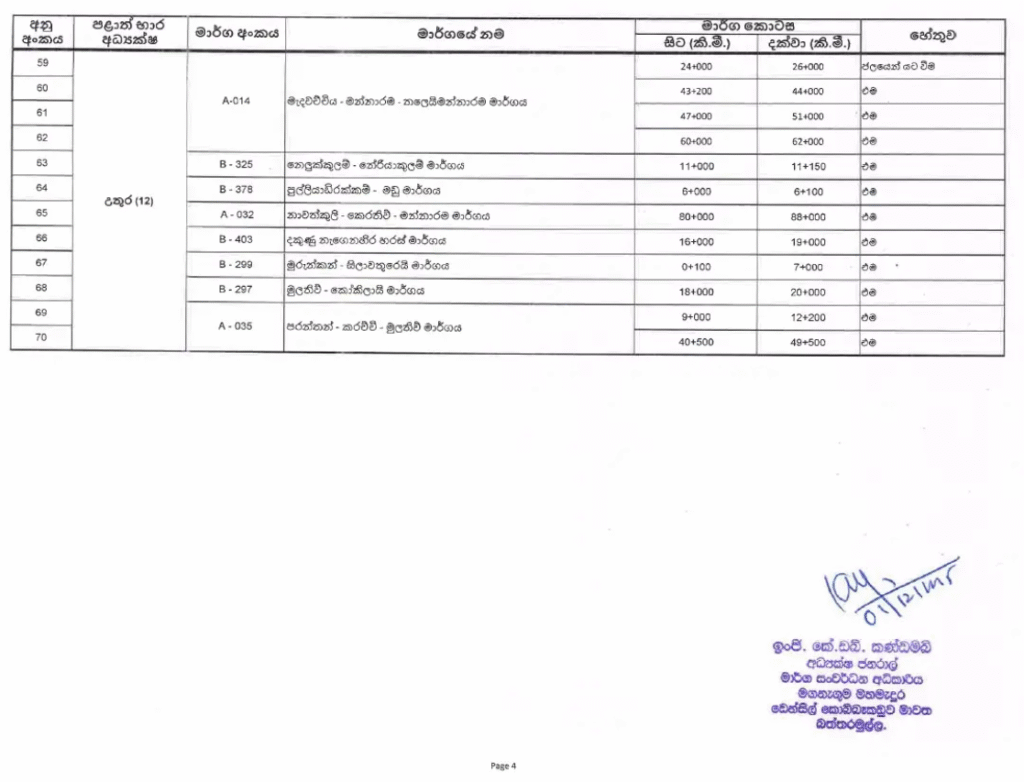
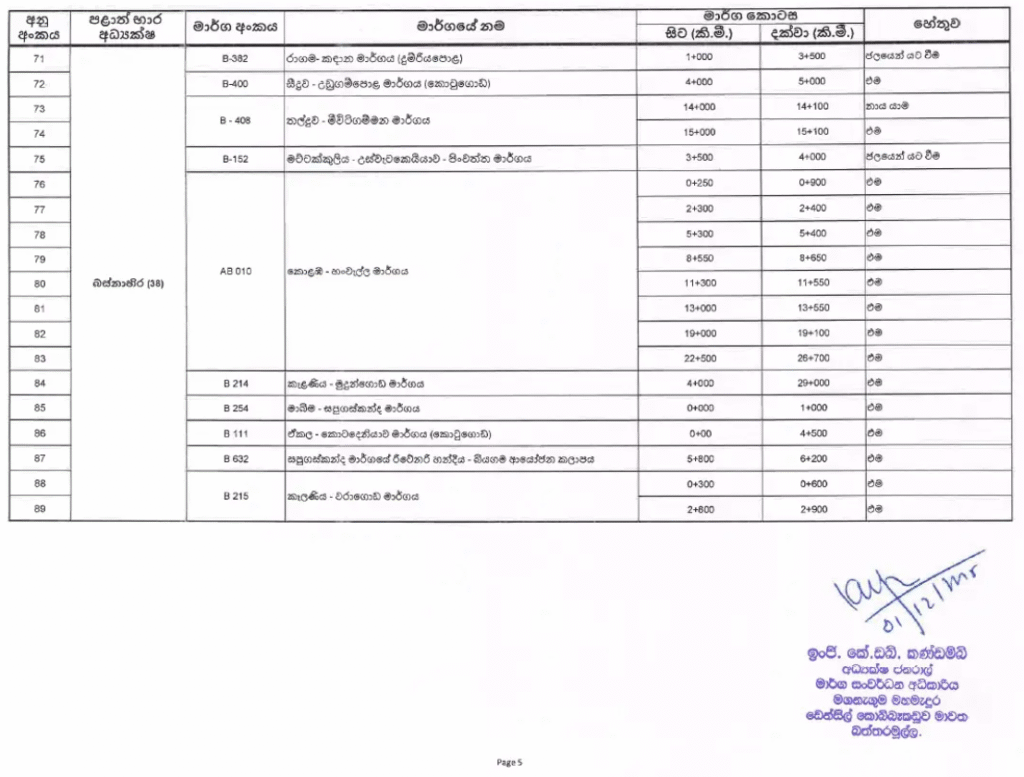
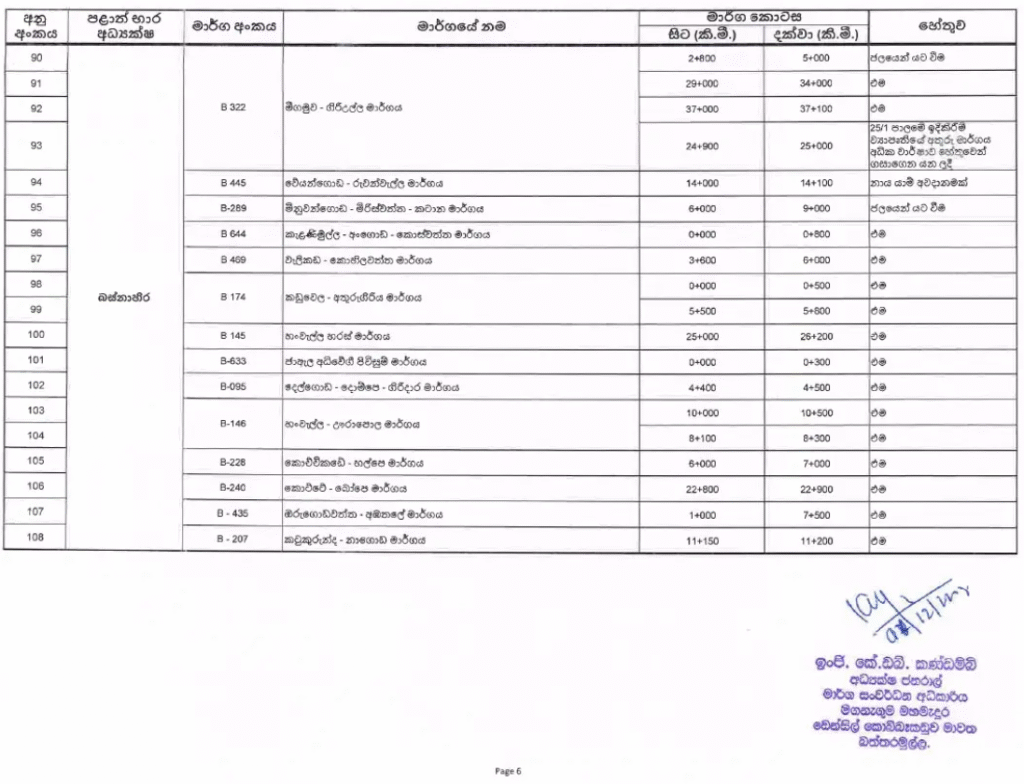
According to the Authority, flooding, earth slips and unstable ground conditions have affected at least 108 roads, leaving several key routes either partially blocked or entirely inaccessible.
In its latest update issued today (01), the RDA noted that transport services in multiple districts remain hampered, with some areas experiencing repeated inundation as water levels rise and recede.
Emergency crews are currently deployed to assess the stability of slopes, clear fallen debris and restore safe passage where possible, though officials cautioned that continuing adverse weather may delay full reopening of certain stretches.
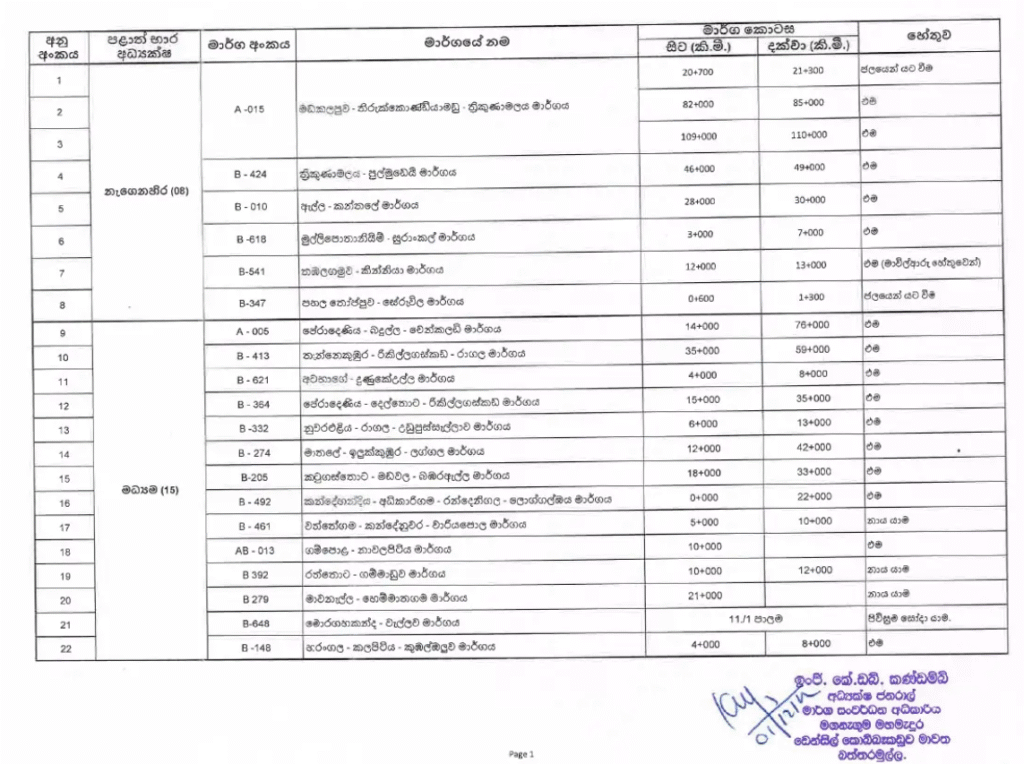
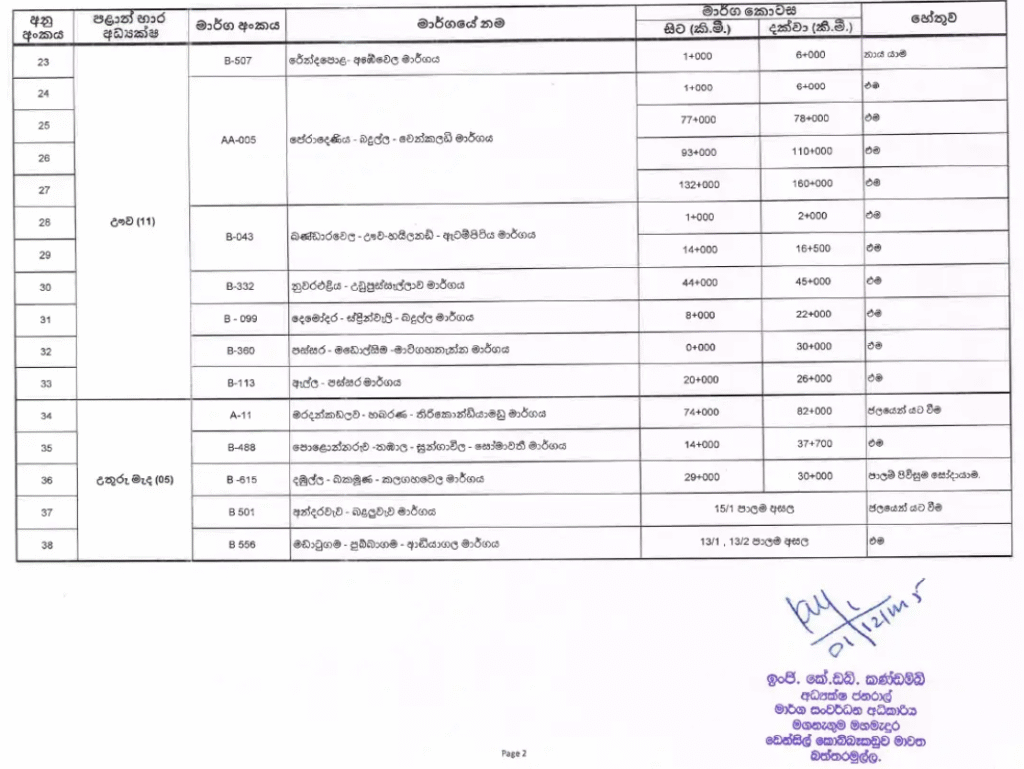
The Authority confirmed that a detailed list of roads impacted by the disaster has been made available through its official communiqué.
Sharp Downturn Hits CSE as Key Indices Slide

December 01, Colombo (LNW): The Colombo Stock Exchange endured a turbulent trading session today, with both of its benchmark indices suffering steep declines amid heightened investor caution.
By the end of the day’s dealings, the All Share Price Index had retreated by nearly 700 points, settling at 22,022.06 — a drop of just over three per cent. Market analysts described the fall as one of the more pronounced single-day dips in recent weeks, reflecting a blend of global uncertainty and local profit-taking.
The S&P SL20, which tracks some of the largest and most liquid companies on the exchange, also recorded a substantial setback. It shed 181.16 points to conclude at 6,085.87, signalling widespread weakness across heavyweight counters.
Brokers noted that selling pressure intensified in the latter half of the session as institutional investors trimmed positions in key sectors including banking, diversified holdings and manufacturing.
Despite the downturn, trading activity remained brisk, with total turnover surpassing Rs. 5.23 billion. Several market watchers suggested that the high turnover indicates not only exits from certain stocks but also strategic repositioning by investors seeking bargains in the midst of the volatility.
Authorities Warn of Disease Threat as Flood-Stricken Communities Receive Expanded Emergency Support
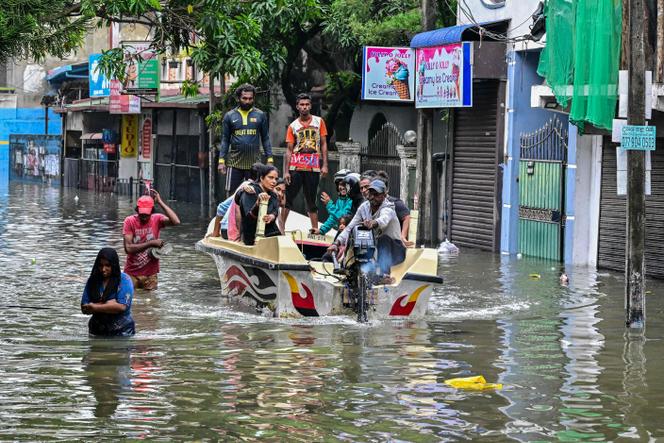
December 01, Colombo (LNW): Authorities have urged residents in flood-hit regions to remain alert to the heightened danger of water-borne and mosquito-related illnesses, as stagnant pools and contaminated surfaces continue to spread across affected districts.
Health officials emphasise that the combination of standing water, disrupted sanitation and overcrowded shelters could accelerate the transmission of infections unless people take extra precautions.
Speaking at a press briefing in Colombo today (1), Assistant Secretary of the National Disaster Relief Services Centre, Jayatissa Munasinghe, outlined a series of measures activated to support communities in distress. He confirmed that each Divisional Secretariat has been granted an advance allocation of Rs. 50 million, enabling them to deal swiftly with urgent needs without being hampered by lengthy administrative procedures.
According to Munasinghe, these funds have already begun to flow to the grassroots level, covering emergency food provisions, temporary shelter needs and essential supplies. Alongside the established system for distributing dry rations, Divisional Secretaries have been given the authority to approve additional food deliveries depending on conditions in their respective areas. Local committees will assess requirements daily as floodwaters shift and more households become isolated.
The dry-ration packages are intended to sustain families for a week, with extensions available if conditions worsen. The current scale of assistance provides Rs. 2,100 for an individual, Rs. 4,200 for couples, Rs. 6,300 for families of three, Rs. 8,400 for those with four members, and Rs. 10,500 for larger households. Officials noted that these allocations aim to prevent shortages while transport routes remain disrupted.
Munasinghe also stressed the importance of restoring homes to safe living conditions. Many dwellings, he said, are inundated with mud, silt and debris that must be cleared promptly to prevent disease outbreaks. To support this effort, an amendment to Section 5(2) of Circular 1(2025) now permits a Rs. 10,000 grant for every affected home, regardless of ownership status, to fund essential cleaning and basic repairs. The revised directive was issued yesterday by the Secretary of Defence, Air Vice Marshal Sampath Thuyacontha (Retired).
In areas where road access and communications have been severely disrupted, restoration work is progressing, though conditions remain challenging. Munasinghe appealed to the public to cooperate fully with relief officers, who he noted are working long hours in difficult circumstances to reach all those who require assistance.
Air Force Calls for Strict Limits on Drones amid Ongoing Disaster Response

December 01, Colombo (LNW): The Sri Lanka Air Force has appealed to the public to refrain from sending drones into areas currently grappling with natural disasters, stressing that such devices can disrupt crucial airborne relief missions.
According to officials, unauthorised drone activity has the potential to interfere with low-flying rescue aircraft, complicating efforts to deliver aid, evacuate victims and assess damage.
To ensure that emergency operations proceed without additional hazards, the Air Force has asked drone operators to provide prior notice before launching or landing their equipment.
Individuals wishing to fly drones are encouraged to make contact through the dedicated telephone lines—011-2343970, 011-2343971—or the general 115 emergency hotline.
Authorities added that, while drones can be useful for surveying conditions, coordination is essential during a crisis. Maintaining clear airspace, they noted, helps rescue teams move swiftly and safely, particularly when weather conditions or terrain make operations more challenging.
GovPay Launches Easy Donation Platform for Flood Relief in Sri Lanka

December 01, Colombo (LNW): A new digital facility has been introduced via GovPay to support Sri Lankans affected by the ongoing severe weather. The initiative is designed to make contributions to the Disaster Relief Fund, managed by the Ministry of Finance, both simpler and fully transparent.
The Ministry of Digital Economy confirmed that donors can now make instant contributions through the state payment portal at any time, with funds credited to the Disaster Relief Fund in real time. This allows individuals to provide support conveniently from home or on the go.
The platform is connected to a network of commercial banks and authorised FinTech applications, giving the public multiple options to contribute. The Ministry emphasised that all transactions are tracked transparently, ensuring that donations directly aid communities impacted by the floods and landslides.
For a complete list of supported banks and FinTech services, donors can visit: https://govpay.lk/si/supported-banks-fintech