December 02, Colombo (LNW): Sri Lanka is facing an increasingly grim aftermath of Cyclone Ditwah, with the Disaster Management Centre confirming that the nationwide death toll has surged to 465.
Rescue teams, stretched thin across multiple districts, are still searching for 366 missing people, many of whom were last seen in areas cut off by landslides or swift-moving floodwaters.
The central highlands remain the hardest hit. Kandy District, where communities have endured days of torrential rain, has reported 118 fatalities, the highest in the country. Several villages in the region remain accessible only by air or via makeshift routes cleared by local volunteers.
Fresh data indicate that more than 1.55 million people, representing 437,507 families, have been affected across all 25 districts. Officials say the true extent of the devastation may take days to fully ascertain, as some areas are still grappling with intermittent rains and unstable slopes.
The cyclone’s impact on housing has been particularly severe, with 783 homes completely destroyed and a further 31,417 damaged, many beyond quick repair. As a result, 232,752 individuals from 61,875 families are currently taking refuge in 1,433 temporary shelters, where aid workers are attempting to provide food, bedding and medical assistance under difficult conditions.
District-level casualty figures released by the authorities paint a stark picture:
Kandy: 118 dead, 171 missing
Nuwara Eliya: 89 dead, 73 missing
Badulla: 83 dead, 28 missing
Kurunegala: 53 dead, 27 missing
Matale: 28 dead, 2 missing
Puttalam: 27 dead, 8 missing
Kegalle: 22 dead, 48 missing
Gampaha: 11 dead, 2 missing
Crisis-hit Sri Lanka: Death toll rises to 465
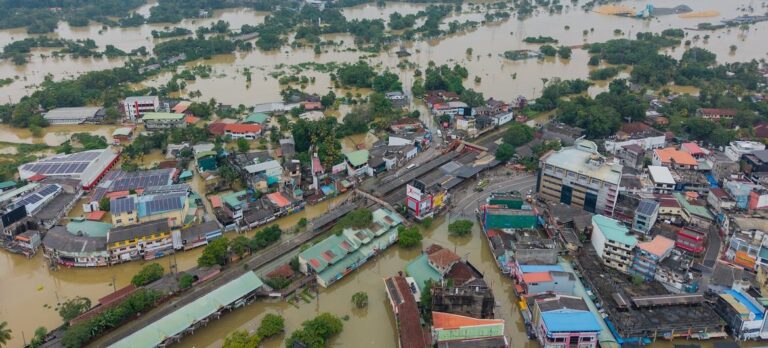
Swift Compensation Plan Launched for Farmers Hit by Widespread Flooding
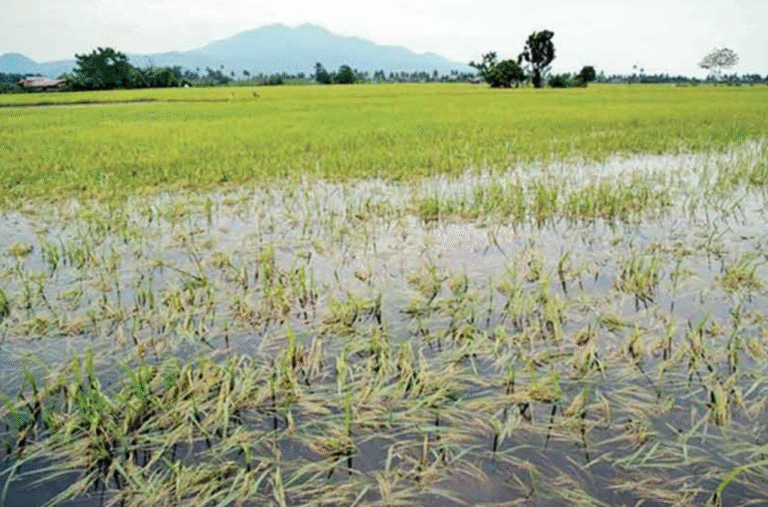
December 02, Colombo (LNW): The Agricultural and Agrarian Insurance Board has announced a fast-tracked programme to support farmers whose livelihoods have been devastated by the recent spell of extreme weather and the extensive flooding that has swept across much of the country.
Under the initiative, officials will begin issuing compensation once on-site assessments are completed for crops protected by the compulsory insurance scheme. These include paddy, maize, big onions, potatoes, chillies and soya beans—staples that many rural communities rely on both for income and subsistence.
Farmers have been urged to alert their local Agricultural Research and Production Assistant (ARPA) as soon as floodwaters begin to subside, or to record losses in the disaster-reporting registers kept at Agrarian Service Centres.
Authorities noted that the continuing high water levels have made it difficult to gauge the true scale of destruction, and early reporting will help speed up the verification process.
The Board added that damage to other, non-insured crops should also be documented in the official record books at the relevant Agrarian Service Centre. To ease the burden on affected communities, an emergency hotline—1928—has been made available for guidance on reporting losses and seeking assistance.
Private Credit Surge Signals Growing Risks and Opportunities in Economy

By: Staff Writer
December 02, Colombo (LNW): Sri Lanka’s private sector lending has shown a dramatic expansion from April to September 2025, with agriculture and personal loans emerging as the fastest-recovering segments after early-year contractions. Sectoral data from the Central Bank of Sri Lanka’s (CBSL) newly introduced Monthly Survey on Loans and Advances indicates a broadening of credit flows that could have far-reaching implications for the economy.
The survey tracks net changes in lending to four categories: agriculture and fishing, industry, services, and personal loans. Unlike total loan book figures, negative values indicate months when repayments outpaced new borrowing. Early in 2025, both agriculture and personal lending experienced net repayments. Agriculture posted Rs. 3 billion and Rs. 14 billion in May and June, translating to –2.1% and –6.3% of monthly credit. Personal loans mirrored the trend, with net repayments of Rs. 13 billion in April (–13.1%).
From July onwards, these sectors rebounded sharply. Agriculture saw net inflows of Rs. 31 billion in July and Rs. 35 billion in August, representing over 17% of monthly credit, before moderating slightly to Rs. 27 billion (11.7%) in September. Personal lending also surged, reaching Rs. 60 billion in June and 26% of total credit in September, reflecting improved household liquidity and growing small business borrowing.
Industry, as expected, remained the dominant credit recipient, with shares ranging from 24% in June to 45.6% in July, highlighting steady demand from production-linked sectors. Services lending was more volatile, peaking at 61.6% in April and falling to 19% in August, though it rebounded to 30.7% in September due to trade and transport-related borrowing.
Overall, total monthly private sector credit flows rose from Rs. 99 billion in April to Rs. 231 billion in September, setting new monthly highs alongside an annual growth of 22.1% in outstanding credit, which reached Rs. 9.52 trillion. CBSL Governor Dr. Nandalal Weerasinghe emphasized that the rapid expansion does not currently indicate overheating, though the concentration of growth in previously contracting sectors raises questions about sustainable risk management.
Economists warn that while the recovery in agriculture and household credit supports economic activity, unchecked lending could expose banks and borrowers to repayment pressures, particularly if macroeconomic conditions worsen. At the same time, the broader distribution of credit beyond industry and services may foster inclusive growth and bolster rural and household consumption, which are crucial for the economy’s resilience in 2025.
Sri Lanka Apparel Exports Show Resilience amid Global Market Challenges
By: Staff Writer
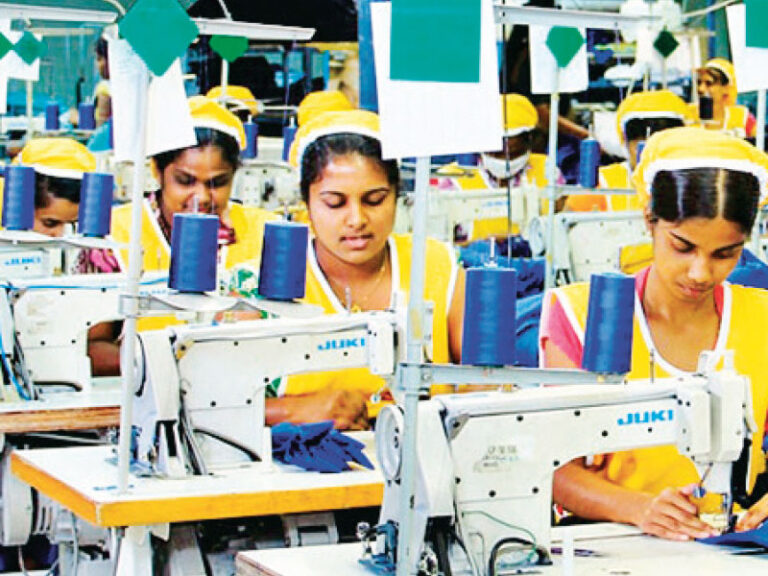
December 02, Colombo (LNW): Sri Lanka’s apparel industry continues to demonstrate steady performance despite challenging global conditions, according to the Joint Apparel Association Forum (JAAF). Exports of apparel and made-up articles for January to October 2025 grew by 6.12% year-on-year (YoY), maintaining a positive trajectory despite weaker monthly results in October.
October 2025 saw a marginal 0.05% decline compared with the same month last year, reflecting uneven demand across key international markets. Exports to the European Union rose 12.53%, underscoring robust demand in the region. Conversely, shipments to the United States fell by 1.92%, the United Kingdom by 11.99%, and other markets by 9.84%. While these declines indicate volatility, they were an improvement over September, when US exports had dropped 4.71% and UK shipments fell 15.06%.
Cumulative figures for the first ten months indicate sustained growth in key markets: US exports rose 1.37%, EU shipments surged 14.05%, UK exports inched up 0.98%, and other destinations recorded an 8.31% increase compared with 2024. JAAF highlighted that the apparel sector’s resilience is largely driven by strong EU demand, continued investment in competitiveness, and the ability to adapt to changing market conditions.
Industry analysts note that global uncertainties, including rising costs, currency fluctuations, and shifting consumer preferences, continue to impact Sri Lanka’s apparel exports. The slowdown in traditional markets such as the US and UK suggests that sustained market diversification will be crucial. JAAF emphasized the importance of consistent policy support and strategic initiatives to maintain growth momentum, particularly as the sector navigates pressures from international competition and geopolitical disruptions.
The apparel industry remains a cornerstone of Sri Lanka’s economy, providing significant employment and contributing to foreign exchange earnings. Experts argue that leveraging technology, improving supply chain efficiency, and expanding into emerging markets could further strengthen the sector. Despite temporary setbacks in certain destinations, the consistent performance in the EU demonstrates the industry’s adaptability and potential to recover from short-term volatility.
As Sri Lanka’s apparel exporters continue to navigate complex global trade dynamics, the sector’s steady growth underscores its resilience and the need for proactive strategies to sustain competitiveness, diversify markets, and safeguard long-term industry sustainability
Crisis-hit Sri Lanka: Death toll climbs to 410
By: Isuru Parakrama
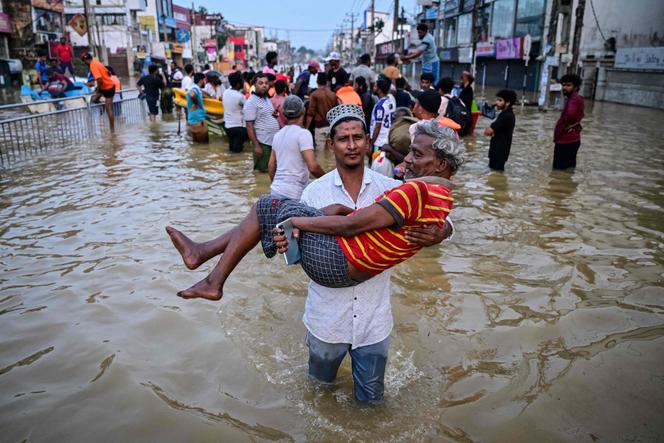
December 10, Colombo (LNW): Sri Lanka is grappling with one of its most widespread natural disasters in recent memory, with authorities confirming that fatalities linked to the relentless spell of severe weather have climbed to 410.
The Disaster Management Centre (DMC), issuing its latest update at 10 a.m. today (02), warned that the situation remains volatile as search efforts continue.
According to the DMC, 336 people are still unaccounted for, with rescue teams working in difficult terrain and often treacherous conditions. Entire communities have found themselves cut off as landslides and floods continue to disrupt access routes.
In total, the extreme weather has affected more than 1.46 million residents, comprising over 407,000 families across all 25 districts. Aid agencies say the scale of displacement is placing enormous strain on temporary shelters, many of which are struggling to provide adequate food, sanitation, and medical support.
Some districts have endured a far heavier toll than others. The hill country, in particular, has suffered grievously: Kandy has recorded the highest number of fatalities at 88, with Badulla and Nuwara Eliya reporting 83 and 75 deaths respectively. The north-western districts have not been spared either, with Kurunegala reporting 52 deaths and Puttalam confirming 27.
The list of those still missing reflects similar regional patterns. Kandy alone accounts for 150 missing persons, while Nuwara Eliya has 62, Kegalle has 48, Badulla has 28, and Kurunegala lists 27 individuals whose whereabouts remain unknown.
Ex-Minister C.B. Rathnayake Detained After Appearing Before Bribery Commission

December 02, Colombo (LNW): Former Cabinet Minister C. B. Rathnayake was taken into custody today (02) by the Commission to Investigate Allegations of Bribery or Corruption (CIABOC), shortly after he arrived to give a statement in connection with an ongoing inquiry.
Rathnayake had been summoned to the Commission’s offices earlier in the day to provide clarifications sought by investigators.
Starlink’s Free Connectivity Boost: A Lifeline for Sri Lanka amid Cyclone Chaos
By: Staff Writer
December 02, Colombo (LNW): Sri Lanka is set to gain a significant technological advantage as Starlink, the satellite-based internet service, has extended free connectivity to the country in the wake of Cyclone Ditwah. The initiative, running through December 2025, aims to support citizens and authorities struggling with widespread flooding, infrastructure damage, and communication blackouts.
Starlink’s move comes as both new and existing users in affected regions can access uninterrupted internet service, with automatic credits applied for active accounts. Suspended users can also reactivate their connections immediately, while new customers are eligible after submitting a support request.
This ensures that emergency communications, disaster relief coordination, and public information flow are maintained during a critical period.
Experts suggest that the benefits for Sri Lanka extend beyond immediate disaster relief. The introduction of reliable satellite connectivity could address long-standing challenges in rural and underserved areas where traditional broadband is unreliable or unavailable. Reliable internet access supports e-learning, telemedicine, and remote work, strengthening resilience against future crises.
The initiative also highlights the groundwork laid by former Prime Minister Ranil Wickremesinghe, who had spearheaded efforts to bring Starlink to Sri Lanka despite opposition criticism of the initiative at the time. Wickremesinghe’s advocacy emphasized technological modernization and improved national digital infrastructure, an approach now proving prescient as climate-related disasters increase in frequency and intensity.
Political observers note that while the current NPP government has coordinated with Starlink to facilitate immediate disaster relief, the initiative reflects earlier strategic planning and engagement with global tech firms, demonstrating the long-term value of fostering international partnerships.
As Sri Lanka continues to recover from Cyclone Ditwah’s devastating impact, Starlink’s free service provides a timely example of how satellite technology can complement national disaster management systems. Analysts argue that such partnerships could serve as a blueprint for future investments in digital infrastructure and national resilience, particularly in an era of escalating climate risks.
In essence, the Starlink gesture is more than a temporary relief measure; it is a strategic step toward bridging digital divides, enhancing connectivity, and reinforcing national disaster preparedness, highlighting the tangible benefits of visionary policymaking in action.
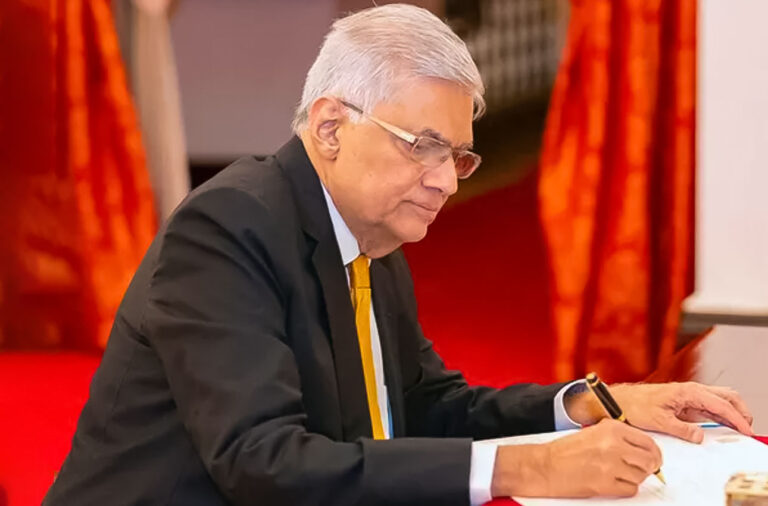
Why Ranil Wickremesinghe should be in Parliament?
By Adolf
Sri Lanka stands at a crossroads. The country is reeling from one of its worst natural disasters in decades, while still navigating the fragile path of economic recovery. At a time when leadership, experience, and institutional maturity are essential, the question of who should guide the State machinery has taken centre stage. In this context, there is a compelling case for Ranil Wickremesinghe to join Parliament and share his experience – not out of political necessity, but out of national urgency.
The current Parliament is home to more than 150 first-time or inexperienced legislators, many of whom have never managed a grocery, let alone the machinery of government. Governance is not merely an extension of political rhetoric; it requires administrative literacy, understanding of systems, and the discipline to manage crises. Many parliamentarians, despite good intentions, are far from equipped to navigate the interplay between policy, institutions, crisis management and public expectations. The gap between political enthusiasm and administrative capability has never been more visible than during the ongoing disaster response.
President AKD
President Anura Kumara Dissanayake, though widely respected as an opposition parliamentarian and a formidable critic of past administrations, is now learning firsthand that running a government demands an entirely different skill set. Opposition politics allows space for critique, for idealism, for exposing flaws. Governance, however, demands execution—timely decision-making, coordination, command over institutions, and the ability to foresee risks before they mature into crises. The current administration’s struggle to respond swiftly and effectively to Cyclone Ditwah reveals this painful transition. The President’s lack of experience in managing State machinery is evident, and it has contributed to delays and institutional paralysis at a moment when decisive leadership is most needed. The worst was shutting down the public services, by declaring a holiday during the crisis.
Experience
Furthermore, the President lacks an experienced team. Beyond a handful of private-sector professionals—many of whom have shifted loyalties repeatedly based on business or personal advantage—the administration does not possess the institutional bench strength required to manage a full-fledged government. Private-sector executives bring valuable skills in planning and strategy, but governance is a different arena altogether. The State is not a corporation; its operations rely on public administration, national security, diplomacy, legal frameworks, welfare, multi-layered bureaucracies, and systems of accountability. Borrowed executives, however capable, cannot compensate for the absence of deep administrative experience and political maturity.
Ranil Wickremesinghe
This is where Ranil Wickremesinghe’s relevance becomes clear. Whatever one’s political leanings, his understanding of governance, constitutional processes, and institutional systems is unmatched in the current political landscape. His track record—whether praised or criticized—shows a consistent ability to manage government machinery, restore stability, negotiate internationally, and steer the country during turbulence. Sri Lanka’s recovery from the economic meltdown was significantly shaped by his leadership, diplomacy, and calm handling of crises. Today, when the country is simultaneously confronting economic fragility and a humanitarian disaster, experience is not a luxury; it is a necessity. Wickremesinghe in Parliament is not about undermining the current administration; it is about reinforcing it where reinforcement is desperately needed. Parliamentary debate would allow the government to draw on institutional memory, stable decision-making, and the required administrative muscle to steer through the crisis. In moments of national emergency, coalitions of competence—not coalitions of political convenience—are what sustain nations.This is also an opportunity for President Anura to demonstrate statesmanship. Instead of criticizing and insulting the opposition at every turn, he would do well to reach across the aisle. Collaboration is not weakness—it is leadership. The country needs unity, not political theatre. It needs partnership, not polarisation. Sri Lankans are watching closely, and confidence is eroding fast. If the administration continues to isolate itself, it risks making the same mistakes that doomed leaders before it. In this grave hour, the Government must rise above party rhetoric. Ranil Wickremesinghe should shed his personal ambitions aside and join parliament and play a role in stabilizing governance, and the President should embrace experienced hands rather than alienate them. Sri Lanka needs competence, maturity, and unity—and it needs them now.
Sri Lanka’s Flood Catastrophe: Economy Faces an LKR 100–300bn Shock
By: Staff Writer
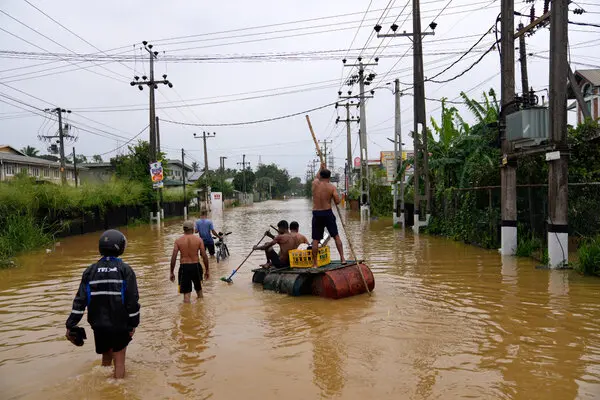
December 02, Colombo (LNW): Sri Lanka’s recent floods and landslides triggered by Cyclone Ditwah have produced human tragedy and an emerging economic bill that while still preliminary is already large enough to dent growth and strain public finances.
Media and humanitarian organisations report widely varying but consistently alarming figures: deaths in the triple digits, between 15,000–20,000 homes destroyed, and tens to hundreds of thousands displaced across hundreds of welfare centres. These are informed-source counts, not final government PDNA numbers (those are not yet available).
Applying typical damage-assessment logic to these field reports produces an early, blunt estimate: direct damage and short-term losses likely fall in a broad LKR 100–300 billion range (roughly USD 350m–1.05bn).
That span reflects alternative scenarios from concentrated damage requiring mainly repairs, to widespread rebuilding of homes, roads, rail and irrigation infrastructure plus agriculture losses if Maha-season crops were inundated.
This is a provisional, evidence-based range built from media counts of houses and displacement, historical PDNA damage profiles, and observed infrastructure failures.
Macroeconomic impact: even at the low end, such a shock will subtract from near-term GDP through lost agricultural output, collapsed tourist receipts in affected coastal areas, and reduced informal-sector earnings.
The rupee impact is indirect but real: emergency spending and reconstruction needs will pressure the Budget, potentially requiring reallocation of scarce fiscal space or fresh external assistance both of which can intensify exchange-rate volatility and inflationary pressures if financed by domestic debt or money creation.
Given the scale and speed required, the JVP-led NPP government must prioritise five immediate steps. First, transparent rapid damage verification (district-level rapid assessments feeding a PDNA) using independent teams to replace uncertain media tallies.
Second, cash-for-work and emergency cash transfers targeted at displaced and daily-wage households to prevent destitution and keep local demand alive. Third, protect agricultural livelihoods with seed/seedling replacement, fertilizer subsidies and urgent rehabilitation of irrigation channels to salvage the Maha season where possible.
Fourth, restore critical transport and power corridors clear roads, temporary bridge fixes and prioritized rail repairs to reopen supply chains. Fifth, mobilize external assistance fast (multilateral emergency finance, donor grants) while avoiding ad-hoc, nontransparent procurement that would worsen public trust.
Finally, this article stresses that all figures cited here are rough estimates from informed sources and media reports not official PDNA outcomes, which remain essential for a final reconstruction plan. Time is the enemy: accurate district-by-district assessments, rapid cash relief and early infrastructure triage will determine whether the economic hit becomes a long-term scar or a recoverable shock.
“Sri Lanka’s Flood Catastrophe: Economy Faces an LKR 100–300bn Shock”
Why this is the best choice:
Direct, powerful, and factual immediately signals the economic magnitude.
Uses the rough estimate range clearly, aligning with your article’s framing of “informed-source” figures, not official data.
Neutral but hard-hitting, suitable for mainstream publication without sounding sensationalist.
Highlights economic impact, which is the core of your investigative angle.
Search-friendly and data-driven, making it strong for digital platforms.
Limited Train Services Available as Flooding Disrupts Key Rail Routes: Dept
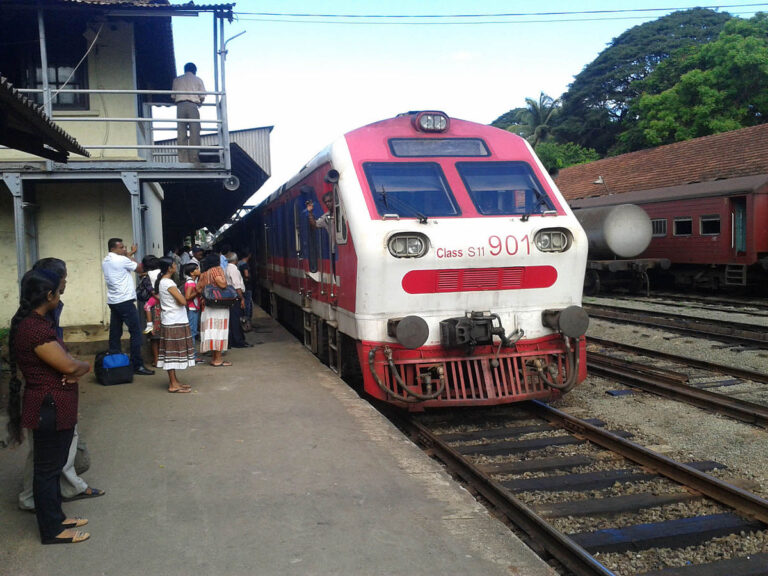
December 02, Colombo (LNW): The Department of Railways has confirmed that several major rail services will face significant restrictions today (02) as bad weather continues to hamper access to crucial sections of the network.
According to the latest operational update, trains on the main line will run only as far as Ambepussa, while Puttalam line services will terminate at Kochchikade. Services on the Kelani Valley and Coastal routes are expected to proceed without interruption, though officials cautioned that conditions remain subject to change.
Railway authorities reported that 18 scheduled trains on both the main and Puttalam lines have been suspended, largely due to blocked or unsafe tracks leading to Polgahawela, Rambukkana, Kurunegala, Ganewatta, Chilaw and Puttalam.
Floodwaters, soft embankments and the risk of landslides have made it impossible for inspection teams to guarantee safe passage further up the line. Engineers are continuing to monitor the affected stretches, but repairs cannot begin until water levels recede.
Passengers were advised to factor in delays and potential last-minute adjustments, with the Department encouraging commuters to seek alternative transport where possible. Additional buses have been deployed on certain routes to help ease the congestion caused by the rail disruption.
Meanwhile, Trade Minister Wasantha Samarasinghe reassured the public that the country is not facing any shortage of essential food items. He stated that stocks are being moved systematically across the island and stressed that supply chains remain intact despite the extreme weather.
With the support of the security forces, distribution teams are working to reach isolated communities where roads remain submerged or blocked by debris, ensuring that families in remote or heavily affected areas continue to receive vital provisions.