November 25, Colombo (LNW): Sri Lanka has stopped issuing new licences for terrestrial analogue television channels, following Cabinet approval of a proposal jointly put forward by the Minister of Mass Media and the President in his role as Minister of Digital Economy.
Currently, 24 analogue TV channels — five of them state-run — operate under licences granted to 16 organisations. Officials say the analogue frequency spectrum has reached full capacity, leaving no room for additional broadcasters and prompting the need for a long-delayed technological shift.
To manage this transition, the Ministry of Mass Media has launched the Digital Non-Terrestrial Television Broadcasting Project, which will replace the nation’s patchwork of 46 analogue transmission systems with a unified digital platform. The initiative promises clearer picture quality, improved reliability and more efficient use of the broadcast spectrum.
The project is being carried out with technical and financial support from the Government of Japan, and is expected to be fully operational by 2029. Once the digital network is complete, authorities plan to phase out analogue transmissions entirely within a two-year wind-down period.
As part of this transition, the Cabinet has formally discontinued the issuance of analogue terrestrial TV licences with immediate effect. Going forward, the Telecommunications Regulatory Commission of Sri Lanka (TRCSL) will oversee all future frequency allocations for terrestrial broadcasting, ensuring that the shift to digital technology proceeds in an orderly and transparent manner.
Government Halts New Analogue TV Licences as Country Moves Toward Digital Broadcast Era

Independent Probe Finds No Basis for Sexual Harassment Claim in Parliament Staff
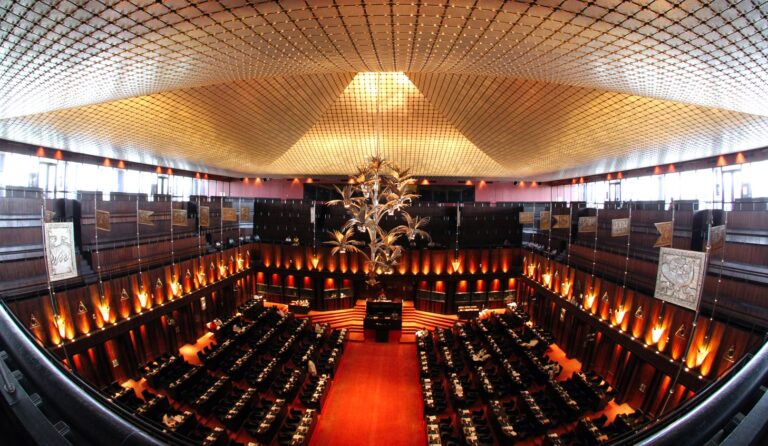
November 25, Colombo (LNW): An external probe commissioned by Parliament has concluded that an allegation of sexual harassment involving a female officer attached to the Department of Information Systems and Management is unfounded, according to an official statement issued by the Parliamentary administration.
The investigation, led by retired High Court Judge Sujatha Alahapperuma, was formally handed over to Speaker Dr Jagath Wickramaratne on November 24.
The inquiry stemmed from a concern raised in the Chamber on January 07, 2025 by MP Mujibur Rahman, who alleged that an employee had faced inappropriate treatment at her workplace.
Although Parliament initially carried out its own internal review, the complainant rejected those findings. In response, the Parliamentary Staff Advisory Committee resolved on July 25, 2025 to commission an independent investigation to ensure impartiality and transparency.
Judge Alahapperuma subsequently interviewed relevant individuals, assessed documentary material and scrutinised the sequence of events before compiling her assessment.
The final report states that no evidence was found to substantiate the complaint. It further notes that there were no indications of similar misconduct affecting other female staff members within the division.
Parliamentary officials said the conclusion brings clarity to the matter and emphasised that safeguarding the wellbeing of employees remains a central institutional priority.
CID Probes Alleged Leak of A/L Economics Paper
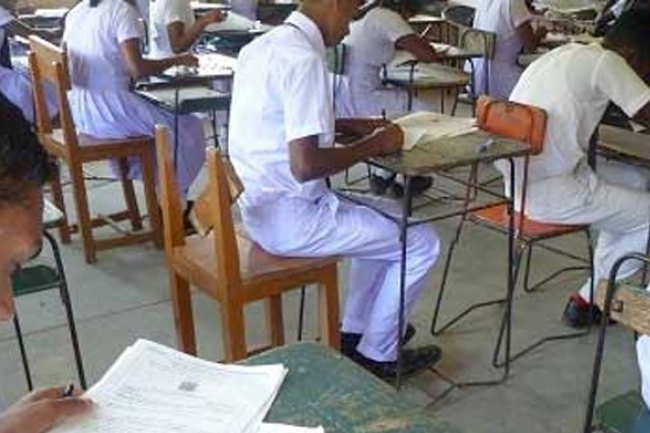
November 25, Colombo (LNW): The Criminal Investigation Department (CID) has launched an inquiry into claims that the Economics paper of the ongoing G.C.E. Advanced Level examination was compromised ahead of its scheduled sitting.
At the weekly Cabinet briefing in Colombo today (25), Mass Media Minister Dr Nalin Jayatissa confirmed that investigators are pursuing information suggesting the paper may have circulated unofficially before the exam. He noted that the CID’s preliminary work is being guided by reports already received from several sources.
Speculation about a possible leak has been intensifying online, with social media users alleging that sets of “predicted questions” shared in advance bore striking similarities to those that appeared in the actual examination. The issue has stirred considerable unease among students and parents, who are demanding clarity and reassurance.
A number of teachers’ unions have also weighed in, saying that any breach of examination integrity must be treated with the utmost seriousness and calling for stronger safeguards to prevent similar incidents in the future. They urged authorities to complete the probe swiftly to protect public confidence in the national assessment system.
Sri Lanka’s Exports Break Records as Sector Surges Past US$ 14 Bn
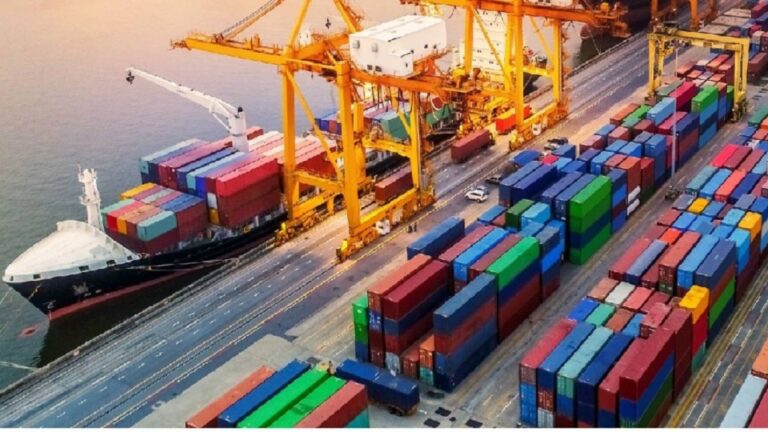
November 25, Colombo (LNW): Sri Lanka has posted its strongest export performance to date, with Customs data showing that total export earnings for the first ten months of 2025 reached US$ 14,433.82 million—well above the level recorded during the same period last year.
The Export Development Board (EDB) confirmed that this is the first time the country has crossed the US$ 14 billion threshold between January and October, marking a significant milestone for the national economy. Overall, exports expanded by 6 per cent during the period, a figure that includes provisional data from the Gems and Jewellery and Petroleum Products sectors.
One of the standout achievements was the performance of coconut-based industries, which topped US$ 1 billion in earnings for the first time within a ten-month span, signalling strong global demand and improved domestic processing capacity.
EDB Chairman and Chief Executive Officer Mangala Wijesinghe said the results illustrated both the resilience and adaptability of Sri Lankan exporters. “This is the highest export total ever recorded for this ten-month period,” he noted, adding that renewed stability in key Western markets and consistent output from local producers have played crucial roles in the sector’s momentum. He further observed that the country has already realised 80 per cent of its US$ 18 billion export target for the year.
Export earnings in October 2025 alone amounted to US$ 1,474.38 million—covering goods and services—a 2.2 per cent rise compared with September. Year-on-year growth was modest at 0.16 per cent, but officials stressed that the steady performance reflects the continued strength of Sri Lanka’s export strategies, including efforts to broaden market access and enhance global competitiveness.
Services exports remain an increasingly important pillar of the sector. Provisional figures show that services generated US$ 316.14 million in October, while the cumulative total for the first ten months of 2025 reached US$ 3,060.21 million—a 4.01 per cent increase.
The services segment, driven by ICT/BPM, construction, financial services and transport and logistics, is not only diversifying the country’s export profile but also creating more high-value job opportunities across Sri Lanka.
Ex-SLBFE Chief Arrested Over Alleged Misconduct in Overseas Job Scheme
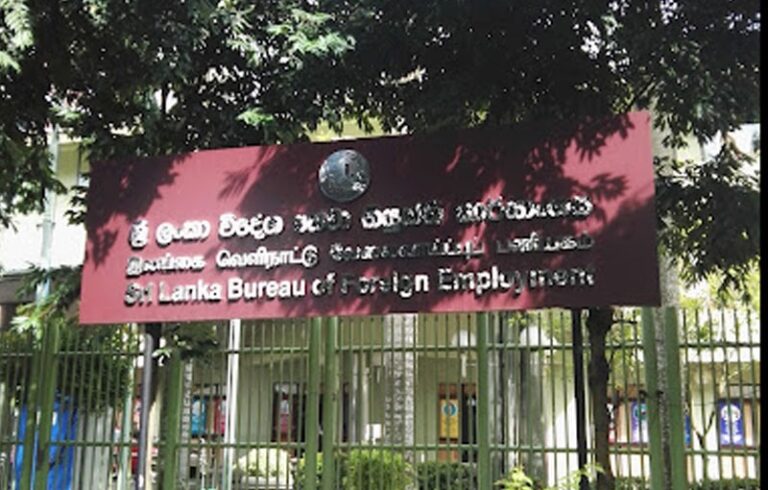
November 25, Colombo (LNW): Mohammed Hilmi, the former head of the Sri Lanka Bureau of Foreign Employment (SLBFE), has been taken into custody by the Commission to Investigate Allegations of Bribery or Corruption (CIABOC) over suspected wrongdoing linked to a foreign job placement initiative.
CIABOC officers arrested Hilmi in connection with what investigators describe as a questionable procedure used during the recruitment of Sri Lankan workers for employment opportunities in Israel.
The alleged irregularities are said to have taken place under the previous administration, during a period when concerns were repeatedly raised about transparency in foreign employment programmes.
The matter had already drawn political attention earlier, when former Foreign Employment Minister Manusha Nanayakkara was arrested over the same episode and later released on bail pending further inquiries.
Cabinet Clears Revised Port City Bill for Gazette and Parliamentary Debate

November 25, Colombo (LNW): The Government has given the green light to publish a revised draft of the Colombo Port City Economic Commission Act in the official gazette, paving the way for its tabling in Parliament in the coming weeks.
According to Cabinet officials, the decision marks the culmination of a series of approvals granted earlier on 7 July and 13 October 2025, aimed at overhauling key sections of the original 2021 legislation.
The proposed amendments are designed to create a more competitive tax environment within the Port City zone, while also reinforcing regulatory oversight and streamlining institutional structures linked to the project.
Legal experts from the Attorney General’s Department have now endorsed the updated draft, which was prepared by the Legal Draftsman’s Office. Their clearance effectively removes the final procedural barrier to gazetting.
With these steps completed, the Cabinet has endorsed a proposal submitted by the President in his capacity as Finance Minister, authorising the publication of the bill and its subsequent submission to Parliament.
Government sources indicated that once tabled, the revised legislation is expected to undergo detailed committee scrutiny, with the administration confident that the changes will accelerate investment and improve governance standards within the Port City development.
Inland Revenue Hits Record Collections as Tax Base Expands

November 25, Colombo (LNW): Sri Lanka’s Inland Revenue Department (IRD) says it has already generated more than Rs. 2 trillion in tax receipts for 2025, the highest annual return in its history and amounting to 92 per cent of this year’s target.
Officials hailed the achievement as evidence of renewed economic stability and more disciplined fiscal management. They noted that the pool of contributors continues to widen, with some 200,000 new individual taxpayers and 18,000 additional companies registering during the first part of the year.
At a media briefing held yesterday (24) at the Government Information Department, IRD Commissioner General Rukdevi Fernando said the Department had been given a considerably more ambitious target for 2025, reflecting stronger economic activity and ongoing reforms to tax administration.
Of the Rs. 2,195 billion assigned for the year, Rs. 2,080 billion has already been collected—placing the IRD in a position to meet, or possibly exceed, the full-year goal.
Commissioner Nandana Kumara underscored that broadening the tax net has been central to the Department’s success. With the latest registrations, Sri Lanka now has around 1.2 million individual taxpayers. VAT registrations have risen to 30,000, while the number of registered organisations has reached 118,000.
According to Kumara, VAT receipts have grown by 21 per cent compared with last year, and corporate income tax revenue has increased by 14 per cent. He also highlighted changes to the personal income tax threshold, which has been lifted from Rs. 1.2 million to Rs. 1.8 million for 2025.
Providing context on recent revenue patterns, Senior Commissioner Nafeel Abu Bakr explained that collections plummeted in 2020—from Rs. 1,025 billion in 2019 to just Rs. 523 billion—amid economic disruption. Revenues then began a gradual recovery, rising to Rs. 632 billion in 2021, Rs. 1,058 billion in 2022 and Rs. 1,842 billion in 2023. The upward trend continued into 2024, when receipts approached the Rs. 2 trillion mark.
Officials added that continued growth will depend on maintaining tax compliance, simplifying systems for new registrants, and ensuring that economic reforms translate into a more predictable revenue stream in the coming years.
Inquiry Launched into Vandalism of Heritage Signboards in Batticaloa
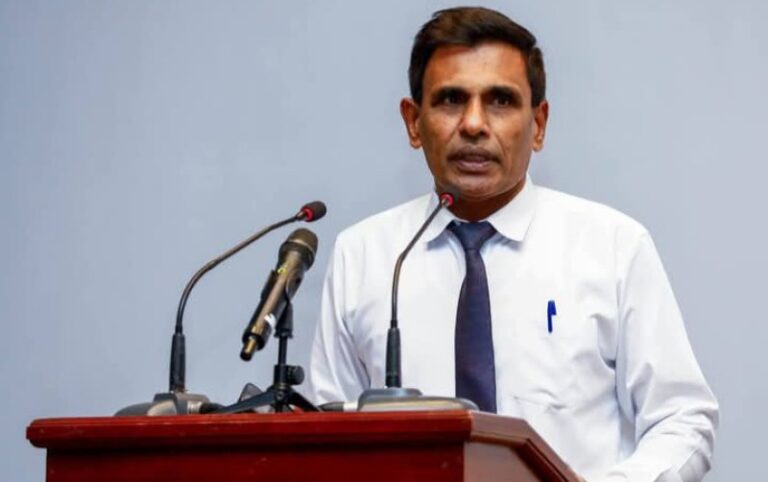
November 25, Colombo (LNW): Public Security and Parliamentary Affairs Minister Ananda Wijepala told Parliament that an investigation is under way into the removal of several directional signboards marking archaeological sites in the Batticaloa district.
He assured MPs that anyone found responsible will be taken into custody and prosecuted in line with judicial directives.
Delivering a statement in Parliament yesterday (24), the Minister said that police in both Valachchenai and Kokkadicholai had received complaints alleging that a group of individuals had dismantled signboards pointing to notable heritage locations in the two areas.
According to the report lodged in Valachchenai, six signs vanished on November 22, with a formal complaint submitted the following day.
It was further alleged that among those implicated is the Chairman of the Valachchenai Pradeshiya Sabha. The Minister noted that the Inspector General of Police has directed local officers to conduct a thorough inquiry, report to the Valachchenai Court without delay, and present any arrested suspects along with the recovered signboards.
A separate complaint filed in Kokkadicholai on November 23 indicated that two signs had been removed several days earlier, on November 20.
Minister Wijepala stressed that the rule of law applies uniformly and that these signposts, maintained for years by the Archaeological Department, play an important role in safeguarding the country’s historical record.
He added that authorities have previously detected attempts by certain groups to manipulate such incidents to inflame communal tensions.
He reaffirmed that the Government would not permit anyone to generate ethnic discord by tampering with heritage markers and promised swift police action to retrieve the missing signs and bring the offenders before the courts.
Audit Flags Surge in Public Grievances Over Police Conduct
November 25, Colombo (LNW): A recent audit of the National Police Commission has uncovered a marked rise in public complaints levelled against the Sri Lanka Police over the past four years, raising fresh concerns about the service’s responsiveness and independence.
According to the review, which covers the period up to 31 December 2024, the volume of grievances has climbed steadily from 1,893 in 2021 to 2,863 in 2024. The intervening years reflect similar volatility: 1,676 complaints surfaced in 2022, followed by a sharp jump to 2,448 in 2023. Officials say the upward trend suggests growing public frustration with policing standards.
The 2024 figures reveal that nearly a third of the complaints centred on alleged inaction by officers, while more than a fifth related to the abuse of authority. The auditors remarked that reforms required under Article 155(g)(3) of the Constitution—intended to bolster the impartiality and effectiveness of the police—had not been meaningfully advanced.
A senior official at the Commission acknowledged that lengthy delays in processing cases were partly due to incomplete or vague submissions from complainants, slow delivery of internal investigation reports, a longstanding vacancy in a key investigative post, and the sheer volume of new cases last year. He added that the backlog had reached “a level that demands urgent structural attention.”
The audit also cast light on a troubling accumulation of unresolved matters: of 5,935 complaints received between 2016 and 2024, some 4,902—around 82 per cent—remained pending as of the end of last year. Notably, none of the files lodged directly at the Commission’s Head Office had moved beyond the initial stage of review.
Auditors urged the Commission to overhaul its investigative processes, warning that persistent inertia risks undermining accountability and weakening public trust in the country’s law enforcement apparatus.
Sri Lanka Presses Canada to Curb Overseas Support for Separatist Causes
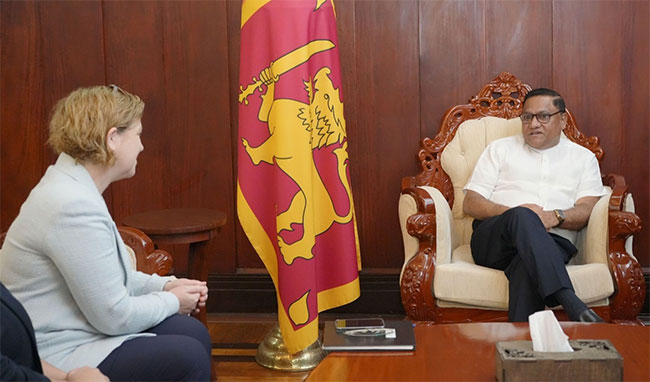
November 25, Colombo (LNW): Sri Lanka’s Foreign Minister, Vijitha Herath, met yesterday (24) with Canada’s High Commissioner in Colombo, Isabelle Catherine Martin, for what officials described as a “frank and constructive” exchange on matters affecting bilateral relations.
During the conversation, Minister Herath called on Canada to take firmer steps to prevent groups operating on Canadian soil from promoting separatist narratives linked to Sri Lanka’s past conflict.
He emphasised that the public display of LTTE-related symbols and activities that inflame ethnic tensions run counter to the government’s ongoing efforts to reinforce national cohesion.
Herath reportedly noted that certain diaspora factions in Canada continue to engage in campaigns that undermine reconciliation initiatives in Sri Lanka, adding that such conduct risks sowing discord both at home and abroad.
High Commissioner Martin, for her part, reiterated that the LTTE remains a proscribed organisation under Canadian law and that the federal government does not endorse any emblem, event, or rhetoric associated with separatist agendas.
She reaffirmed Canada’s support for Sri Lanka’s sovereignty and territorial integrity, while expressing readiness to continue dialogue on issues affecting both nations, according to the Foreign Ministry.