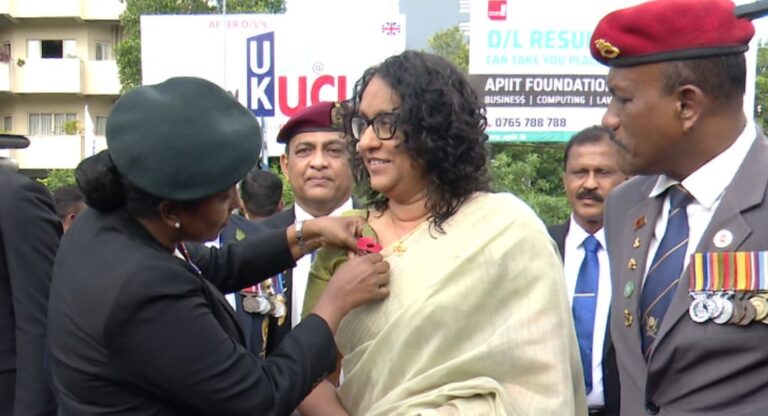
November 17, Colombo (LNW): Sri Lanka marked its annual Armed Forces Commemoration and Poppy Day this morning with a solemn ceremony led by Prime Minister Dr Harini Amarasuriya.
The event, organised by the Sri Lanka Ex-Servicemen’s Association, served as a tribute to generations of military personnel who have given their lives in defence of the country, from the era of the First World War to the challenges of the present day.
The remembrance ceremony took place at the War Heroes’ Memorial in Colombo’s Viharamahadevi Park, where floral tributes were laid and a moment of silence observed in honour of the fallen.
The atmosphere was dignified and reflective, with many attendees emphasising the continued importance of national unity and support for service members and their families.
A notable gathering of dignitaries took part, including Deputy Defence Minister Retired Major General Aruna Jayasekara, Defence Secretary Retired Air Vice Marshal Sampath Thuyacontha, commanders of the three armed services, senior officers both serving and retired, government officials, and relatives of those who made the ultimate sacrifice.
Participants remarked that the ceremony, held annually, not only commemorates the courage of past generations but also reaffirms the nation’s commitment to peace, reconciliation, and the wellbeing of military families.
Nation Pays Tribute at Armed Forces Commemoration and Poppy Day Ceremony
Parliament Set for Further Scrutiny of 2026 Budget as Committee Debate Continues
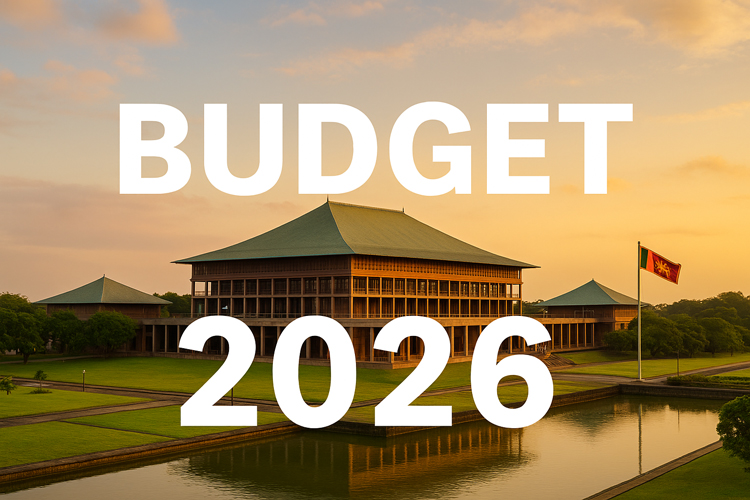
November 17, Colombo (LNW): Parliament is due to resume its scrutiny of the 2026 Budget today (17), with lawmakers expected to turn their attention to the spending proposals of the Ministry of Justice and National Integration.
This marks the second day of the Committee Stage Debate, a detailed phase in which individual ministries’ allocations are examined and contested.
The Committee Stage discussions are scheduled to run until December 05, culminating in the final vote on the Budget’s third reading at 6 p.m. on the same day. The decisive division is expected to draw considerable attention, given the political undercurrents that emerged during earlier stages of the debate.
The Budget’s second reading was approved on November 07 with a comfortable majority of 118 votes. That vote produced several noteworthy shifts in parliamentary alignment. Mano Ganesan and three colleagues from the Tamil Progressive Alliance — a constituent party of the Samagi Jana Balawegaya — backed the Budget, citing their support for the proposed wage increase for plantation sector employees. The move was viewed by some observers as a pragmatic gesture towards long-standing demands from estate communities.
Adding to the day’s surprises, Jeevan Thondaman, General Secretary of the Ceylon Workers’ Congress and a member of the opposition, also voted in favour. His decision was interpreted as an endorsement of measures aimed at improving the livelihoods of plantation workers, a constituency central to his party’s mandate.
The 2026 Budget, presented to Parliament by President Anura Kumara Dissanayake on November 07, has been described as an ambitious effort to address structural economic challenges while offering targeted relief to underrepresented sectors. With several weeks of debate still ahead, MPs are expected to press for further clarity on revenue plans, public sector reform, and regional development priorities.
Govt Announces Plan for Select Committee to Steer Provincial Council Elections
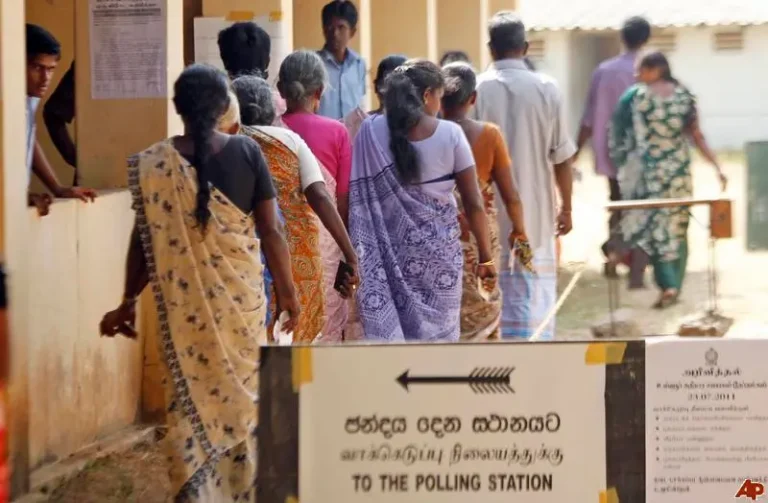
November 17, Colombo (LNW): Leader of the House, Minister Bimal Ratnayake, told Parliament on Saturday (15) that the government will establish a special select committee to guide the long-delayed Provincial Council elections, signalling renewed momentum to finally hold the polls.
Responding to a query raised by Opposition MP Dayasiri Jayasekara, Ratnayake confirmed that the minister in charge of the subject is preparing to submit a formal motion during the Committee Stage Debate of the Public Administration Ministry. This motion will outline the structure, scope, and mandate of the proposed committee, which is expected to examine both the electoral framework and the current voting system.
The announcement came during wider discussions on budget allocations for the President, Prime Minister, higher courts, government departments, Parliament and a number of independent commissions. Several MPs used the opportunity to press the government on its commitment to restoring elected provincial bodies, many of which have remained inactive for years.
Parliamentarians across the aisle noted that provincial representation has become a pressing public concern, especially in regions where essential administrative work has slowed without elected oversight. Ratnayake assured the chamber that the government intends to “move swiftly and transparently” once the select committee is approved, adding that all political parties will have an opportunity to contribute to the process.
Parliamentary Committee Reviews Proposals to Overhaul Public Sector Pay and Professional Standards
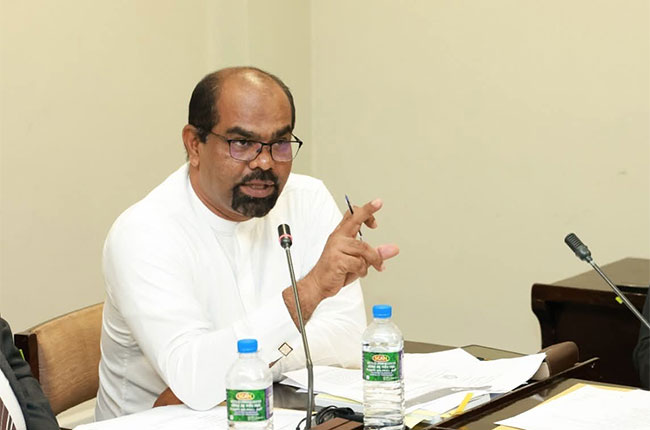
November 17, Colombo (LNW): A preliminary report outlining recommendations for a more coherent salary structure and measures to strengthen professionalism across Sri Lanka’s public sector has been submitted to the Ministerial Consultative Committee on Public Administration, Provincial Councils and Local Government. The document, prepared by a subcommittee headed by MP Chandana Sooriyarachchi, was tabled during a recent committee session held within the Parliament premises.
Chaired by Minister Prof. A. H. M. H. Abeyrathna, the meeting also provided MPs with an opportunity to raise long-standing concerns about administrative bottlenecks and operational shortcomings in Divisional Secretariats and Local Government bodies. Officials present were instructed to prioritise follow-up action, with several members noting that inefficiencies at ground level continue to affect public access to essential services.
Among the proposals brought forward was a call to re-examine pension entitlements for individuals who had served in the public sector for over a decade before entering Parliament. As former public servants who resign to take up legislative roles do not automatically receive a parliamentary pension, committee members argued that the matter warrants a more equitable approach. The Chair indicated that wider consultation would take place before any final position is adopted.
Additionally, several MPs highlighted growing uncertainty within the public service following amendments by the Public Service Commission to efficiency bar criteria, recruitment guidelines, and promotion pathways. Ministry officials acknowledged the concerns and signalled a willingness to revisit the changes in order to restore clarity for public employees.
The meeting was attended by Deputy Minister P. Ruwan Senarath, parliamentary committee members, and senior administrative officers, all of whom emphasised the importance of restoring confidence in the public sector through clear policy direction and fair professional standards.
Police Detain Man After Alleged Indecent Act Against Tourist
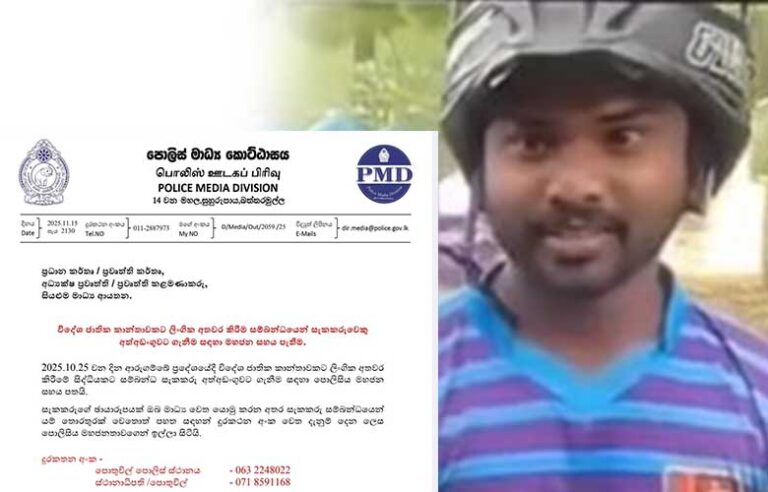
November 17, Colombo (LNW): Police have taken a 25-year-old man into custody on suspicion of committing an indecent act towards a foreign visitor in the Thirukkovil area, after footage of the incident spread rapidly across social media platforms.
The suspect, a father of one, was located yesterday during a targeted search operation in Marandamadu, Kalmunai, led by the Officer-in-Charge of Thirukkovil Police together with a supporting team. Officers had been tracing his movements for several days after the online circulation of a video linked him to the incident.
Authorities say the man had been living with his wife in a series of rented properties in Thirukkovil. When an online post identified him—incorrectly—as a chickpea seller, investigators focused on nearby neighbourhoods. At one former residence, officers recovered photocopies of identity documents belonging to the suspect and his wife, and learned he had abruptly disappeared three days earlier.
Police continued to sweep through areas where he was believed to have sought refuge. He was ultimately discovered in Marandamadu, having shaved his head and altered his appearance in what officers believe was an attempt to avoid detection. He has been transferred to Pottuvil Police for further inquiries.
The investigation stems from a complaint lodged by a 24-year-old tourist from New Zealand, who contacted the Sri Lanka Tourist Police Division via email after witnessing the video online. She had been travelling by three-wheeler from Arugam Bay to Pasikuda on October 25 during a visit to the island when she encountered the suspect in Thirukkovil, at which point he allegedly exposed himself.
Doctors Set to Scale Back Services in Fresh Trade Union Action

November 17, Colombo (LNW): The Government Medical Officers’ Association (GMOA) is poised to launch a new round of industrial action from 8 a.m. today, following what its members describe as long-standing frustrations over unresolved problems within the public health sector.
According to the union, this latest move stems from dissatisfaction with President Anura Kumara Dissanayake’s 2026 Budget, which they argue offers little in the way of meaningful solutions to challenges faced by medical professionals and the wider health service.
As part of their protest, doctors across state-run hospitals are expected to restrict a range of non-emergency services. Among the measures proposed are tighter limits on writing prescriptions that require patients to purchase medication from private pharmacies, as well as more stringent referrals for laboratory tests carried out outside the public system.
Union representatives maintain that these steps are intended to highlight mounting pressure on medical staff and to press the government for swift, concrete reforms.
Cloudy skies over most parts of SL: Showers expected elsewhere (Nov 17)

November 17, Colombo (LNW): The low pressure area over the island continues to persist and cloudy skies can be expected over most parts of the island, the Department of Meteorology said in its daily weather forecast today (17).
Showers or thundershowers will occur at times in Northern, North-central, Eastern and Uva provinces and in Hambantota district.
Showers or thundershowers will occur at several places in the other areas of the island after 1.00 p.m.
Heavy falls above 100 mm are likely at some places in Northern and Eastern provinces. Fairly heavy falls above 75 mm are likely at some places elsewhere.
Misty conditions can be expected at some places in Western, Sabaragamuwa, Central and Southern provinces during the early hours of the morning.
The general public is kindly requested to take adequate precautions to minimise damages caused by temporary localised strong winds and lightning during thundershowers.
Marine Weather:
Condition of Rain:
Showers or thundershowers will occur at times in the sea areas off the coast extending from Pottuvil to Mannar via Trincomalee and Kankasanthurai.
Showers or thundershowers will occur at several places in other sea areas around the island during the afternoon or night.
Winds:
Winds will be north-easterly and speed will be (20-30) kmph. Wind speed can increase up to 45 kmph at times in the sea areas off the coast extending from Trincomalee to Galle via Kankasanthurai, Mannar, Puttalam and Colombo.
State of Sea:
The sea areas off the coast extending from Trincomalee to Galle via Kankasanthurai, Mannar, Puttalam and Colombo will be fairly rough at times.
Temporarily strong gusty winds and very rough seas can be expected during thundershowers.
Sri Lanka Fails to Safeguard Ancient Heritage despite Oversight
By: Staff Writer
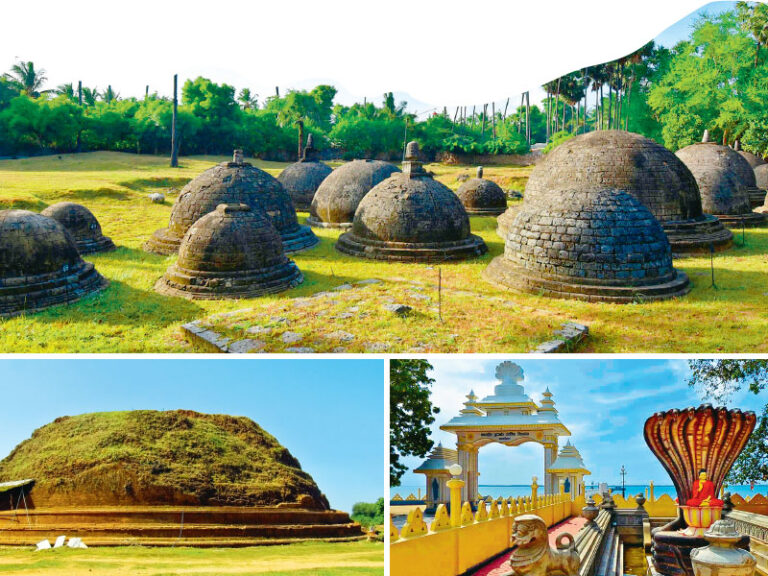
November 16, Colombo (LNW): Sri Lanka’s ability to protect its rich archaeological heritage has come under sharp scrutiny following revelations of major gaps in site documentation, law enforcement and financial management within the Department of Archaeology purview.
Despite having a dedicated state institution and a vast catalogue of ancient sites, nearly half of the country’s known archaeological locations remain without official protection, exposing them to theft, encroachment and destruction.
According to the latest National Audit Office report, the Department of Archaeology had identified 5,664 archaeological sites by the end of 2023. Yet 2,706 of these a staggering 48 percent had not been declared and published in the National Archaeological Sites Gazette. Without formal gazetting, these sites lack legal safeguards, leaving them vulnerable to illicit digging, treasure hunting and unauthorised development.
The department’s digital documentation efforts are equally concerning. Of the 1,758 sites uploaded into its geospatial database, more than 69 percent of geographic data for registered locations had not been fully recorded. This means that a majority of ancient sites do not appear in the official digital mapping system, undermining monitoring, research and enforcement.
The audit also points to troubling failings in the enforcement of the Antiquities Ordinance. In 2023 alone, 179 incidents related to the theft, destruction or illegal excavation of antiquities were reported. In 12 cases, suspects were never identified, and in 64 others, although suspects were known, legal action was never initiated. These lapses have allowed offenders to evade prosecution, sending a damaging signal that illegal antiquities trade can continue with minimal consequences.
Further, the department has failed to execute key legal responsibilities under the Antiquities (Amendment) Act of 1998. The law requires authorities to recover illegally used antiquities, secure endangered sites and reward informants by allocating half of the court-imposed penalties to an antiquities reward fund.
However, due to delays in drafting and implementing necessary regulations, Rs. 130.5 million in court fines collected in 2023 were never transferred to the fund. As a result, informants, law enforcement partners and field officers received no incentives to assist in heritage protection.
Financial inefficiencies extend beyond legal penalties. The Department of Archaeology also neglected to revise fees for providing archaeological recommendations for mineral and stone extraction despite clear instructions to review charges every three years, with increases capped at 15 percent.
The failure to update these fees since 2019 has cost the government significant revenue. Similar lapses were noted in the temporary leasing of the historic Nupe Old Holland Market Building in Matara, where fees remained unchanged at just Rs. 5,000.
These shortcomings collectively highlight a systemic failure in safeguarding the nation’s historical legacy. With nearly half of archaeological sites lacking legal protection and enforcement mechanisms weakened by poor administration, Sri Lanka’s ancient heritage faces mounting risks. As calls grow for stronger protection frameworks, the Audit Office’s findings underscore an urgent need for reform, accountability and modernised practices to prevent the irreversible loss of history.
BOC’s Nine-Month Results Cement Its Role as Sri Lanka’s Economic Anchor
By: Staff Writer
November 16, Colombo (LNW): The Bank of Ceylon has reinforced its status as the country’s most influential financial institution, reporting a Profit before Tax of Rs. 87.7 billion for the first nine months of 2025. The strong results signify the bank’s ability to stabilise, expand, and support the wider economy at a time when Sri Lanka continues rebuilding from recent fiscal shocks.
Chairman Kavinda de Zoysa said the results underscore how BOC blends commercial success with social responsibility. “Our growth must uplift every Sri Lankan. Through youth empowerment, SME support, and affordable digital services, we aim to build an economically empowered nation,” he said.
BOC recorded a 62% jump in Net Interest Income to Rs. 153.2 billion, supported by strategic interest rate management and rising customer activity. Interest income grew by 15%, while interest expenses fell by 5%, helping the bank widen its margins significantly. Non-interest income grew 11% to Rs. 16.8 billion on the back of expanding retail and digital banking usage.
Total operating income reached Rs. 181.1 billion, while costs were tightly controlled, rising only 6% and reducing the cost-to-income ratio to 32%. After settling taxes on financial services and income, BOC posted a Profit after Tax of Rs. 55.7 billion. The bank also contributed Rs. 55.3 billion to government revenue, underscoring its fiscal importance.
CEO Y.A. Jayathilaka highlighted that beyond financial performance, BOC’s strategy is anchored in community impact and long-term stability. “We are building a future of resilience, shared prosperity, and real economic value for the next generation,” he said.
BOC’s total assets rose to Rs. 5.5 trillion, with notable increases in government securities. Loans climbed to Rs. 2.5 trillion and deposits to Rs. 4.6 trillion. Credit quality remained stable, supported by an 18.7-billion-rupee impairment charge and strong provisioning.
The bank maintained solid capital levels and sector-leading liquidity, while key profitability metrics such as ROA and ROE remained strong.
Its digital transformation gathered momentum with the launch of the BizPlus MSME credit card, enhanced remittance platforms, and wider digital adoption across customer segments. Sustainability also gained traction, with 100 branches generating solar power and BOC joining global carbon-accounting initiatives.
On the ground, the bank expanded financial inclusion with new agent banking centres, the Gammana programme, and rural outreach efforts aimed at raising financial literacy and access.
With top global rankings from The Banker, recognition as Sri Lanka’s most valuable brand, and its AA-(lka) national rating reaffirmed by Fitch, BOC enters the remainder of 2025 in a position of unmatched strength, poised to deepen its role as the country’s economic anchor.
Who Really Approved Sri Lanka’s 2022 Debt Default Decision?
By: Staff Writer
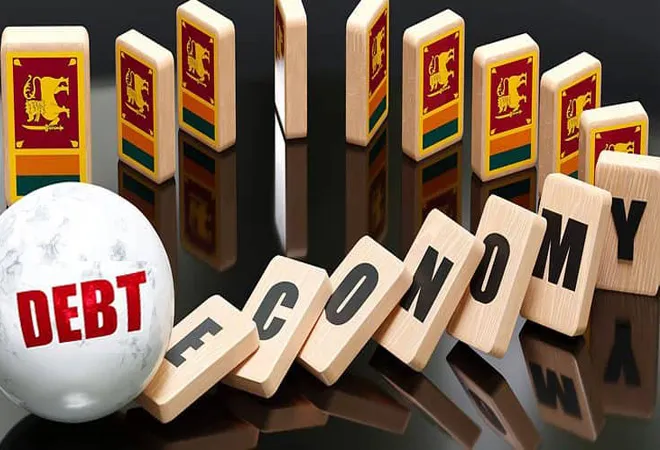
November 16, Colombo (LNW): Sri Lanka’s contentious 2022 decision to suspend external debt repayments has resurfaced, with former Finance Minister Ravi Karunanayake challenging the legality and transparency of the move that pushed the country into its first-ever sovereign default. His renewed scrutiny has revived debate over whether the suspension announced by newly appointed Central Bank Governor Dr. Nandalal Weerasinghe was a necessary economic safeguard or an unconstitutional act executed without proper authority.
Karunanayake, in a detailed letter to President Anura Kumara Dissanayake, has demanded clarity on who authorised the April 12, 2022 declaration halting all foreign debt servicing. He alleges that neither Parliament nor the Cabinet approved the decision and that no legal framework permitted the Central Bank or Finance Ministry to unilaterally suspend payments. The move, he argues, “redefined the country’s economic destiny without the people’s representatives being consulted.”
Media reports from the time confirm that Dr. Weerasinghe, only days into office, told reporters that debt repayment had become “challenging and impossible,” describing the suspension as a temporary measure until negotiations with the IMF and creditors progressed. It was widely portrayed as a prudent step to conserve scarce foreign reserves for critical imports, including fuel, medicine and essential food items.
However, no official documentation Cabinet papers, Monetary Board decisions or advice from the Attorney General has ever surfaced confirming formal approval for the default announcement. The absence of a clear decision-making trail has intensified questions over procedural legitimacy.
The economic backdrop in early 2022 was catastrophic. By March, Sri Lanka’s usable reserves had dwindled to near-zero. Total official reserves stood at US$1.9 billion most of it unusable while foreign debt obligations for the year exceeded US$6 billion.
World Bank data later revealed that by mid-2022, reserves excluding the Chinese swap line had plunged below US$400 million. Maintaining debt payments and financing essential imports had become virtually impossible.
Economists generally agree that default was inevitable under these conditions. But the crux of Karunanayake’s argument is that inevitability does not override constitutional procedure. A sovereign debt default, he stresses, cannot be declared through a press briefing alone.
The fallout was immediate and devastating. International credit rating agencies slashed Sri Lanka to junk status, the rupee plummeted by nearly 80 percent, and inflation soared above 60 percent. Millions were pushed deeper into poverty, and by 2023, the government was compelled to secure a US$3 billion IMF Extended Fund Facility to stabilise the economy. Sri Lanka’s exclusion from global capital markets continues to hamper recovery efforts.
Three years on, the questions remain unresolved. Karunanayake’s renewed call for accountability highlights what many analysts describe as a deeper governance failure, a life-altering national decision made without transparency, legal clarity or parliamentary oversight. As Sri Lanka struggles to rebuild trust among investors and citizens, one question continues to loom large: not just who announced the default, but who actually authorised it.