Home Blog Page 307

Foreign Minister Travels to Geneva for Key UN Human Rights Council Engagement

0

September 07, Colombo (LNW): Foreign Minister Vijitha Herath departed for Geneva early this morning to take part in the 60th session of the United Nations Human Rights Council, which officially commences tomorrow.

The high-level gathering is expected to bring together international leaders, diplomats, and human rights advocates from across the globe to deliberate on pressing global issues related to human rights, accountability, and international cooperation.

Minister Herath is slated to deliver a formal address on behalf of Sri Lanka, outlining the government’s current stance on human rights and its recent efforts in strengthening democratic governance, reconciliation, and institutional transparency.

His speech is anticipated to reflect on the administration’s first year in office and highlight the progress made under the new leadership since the National People’s Power (NPP) coalition came into power.

In addition to his scheduled remarks at the Council, Minister Herath is set to engage in a series of bilateral discussions with key diplomatic counterparts from other member states. These sideline meetings are aimed at fostering constructive dialogue, reaffirming Sri Lanka’s commitment to international cooperation, and discussing pathways to enhance mutual understanding in the area of human rights protection.

A particularly noteworthy engagement on the minister’s agenda is a scheduled meeting with Volker Türk, the United Nations High Commissioner for Human Rights. This conversation is expected to provide an important platform for Sri Lanka to articulate its ongoing reforms and policy initiatives, as well as to respond to continuing international interest and scrutiny regarding the country’s human rights record.

Accompanying the Foreign Minister on this mission is Dyani Mendis, Director-General of the United Nations and Human Rights Division at the Ministry of Foreign Affairs.

Rare Celestial Spectacle: Sri Lanka to Witness Striking Blood Moon Tonight

0

September 07, Colombo (LNW): A dramatic and visually stunning astronomical event is set to unfold in Sri Lanka’s night sky tonight, as the nation prepares to witness a rare total lunar eclipse – commonly known as a “Blood Moon”.

This striking occurrence, where the moon takes on a deep crimson hue, is expected to begin shortly after nightfall and will be visible in its entirety across the island, provided the weather remains favourable.

The phenomenon results from the Earth moving directly between the sun and the full moon, casting its shadow over the lunar surface and refracting sunlight through the Earth’s atmosphere – filtering out the blue light and leaving the red tones that give the moon its distinctive colour.

Professor Chandana Jayaratne, a leading expert in astronomy and Director of the Astronomy and Space Science Unit at the University of Colombo, remarked that this will be the final total lunar eclipse visible in 2025, making it a particularly special event for both casual stargazers and seasoned sky-watchers.

According to him, this eclipse will be visible to approximately 85% of the global population, with Asia, Africa, Australia, and large portions of Europe and the Americas all falling within the viewing range.

Sri Lanka, he noted, is well-positioned to enjoy an uninterrupted view of the full sequence of the eclipse, weather permitting. For those eager to catch the entire celestial drama, the timings are as follows:

– The subtle penumbral phase begins at 8:58 p.m., when the moon starts to dim slightly.
– The partial eclipse commences at 9:57 p.m., as the Earth’s shadow visibly begins to creep across the lunar surface.
– The total eclipse, the main event, starts at 11:01 p.m. and reaches its peak at 11:42 p.m., when the moon will appear at its most vibrant red.
– The period of totality will last for 1 hour and 22 minutes, with the moon emerging from the Earth’s shadow completely by 2:25 a.m.

In total, the eclipse will span over five hours from start to finish, offering a rare opportunity for uninterrupted viewing.

Unlike solar eclipses, which require protective eyewear, a lunar eclipse is entirely safe to observe with the naked eye. Viewers may also use binoculars or telescopes for a closer look at the moon’s changing appearance throughout the night.

President Prioritises Public Sector Reform and Rural Advancement in Budget Planning

0

September 07, Colombo (LNW): In preparation for the forthcoming national Budget, President Anura Kumara Dissanayake has underscored the government’s commitment to overhauling the country’s public service framework and enhancing the effectiveness of local government bodies.

His remarks came during a high-level district coordination meeting held at the Monaragala District Secretariat, where key development initiatives were reviewed.

Speaking to regional administrators and public representatives, President Dissanayake highlighted the urgent need to streamline public sector operations, noting that outdated administrative practices continue to hinder progress and service delivery.

He stated that the upcoming Budget would allocate specific resources aimed at equipping public institutions with modern tools and capabilities, while also encouraging greater accountability and efficiency within government departments.

The President also placed significant emphasis on empowering rural communities, stressing that national development should not be confined to urban centres. He called for an accelerated rollout of grassroots-level projects, particularly those designed to improve infrastructure, healthcare, and education in underdeveloped areas.

In this context, he noted that financial allocations from the Treasury must be disbursed promptly and utilised effectively to ensure tangible benefits for village populations.

Addressing challenges in project execution, the President urged government officials to work with clear targets and timelines, warning against administrative delays that often result in public dissatisfaction. He emphasised that each initiative should be guided by a structured implementation plan extending through to its completion.

In addition to developmental concerns, the President directed attention to the hardships faced by the local farming community. Farmers in the Monaragala district continue to grapple with inconsistent access to resources, unpredictable weather patterns, and market instability.

In response, the President instructed relevant authorities to adopt a coordinated and evidence-based approach to resolve these long-standing issues, pledging continued support for agricultural livelihoods.

Foreign Income Flows Bolster Sri Lanka’s Economy Amidst Recovery Efforts

0

September 07, Colombo (LNW): Sri Lanka has witnessed a notable influx of foreign income, with workers’ remittances and tourism revenue both showing marked improvements over the first eight months of 2025, according to the latest data from the Central Bank of Sri Lanka (CBSL).

In August alone, remittances sent home by Sri Lankan workers abroad amounted to US$ 680.8 million, contributing to a cumulative total of US$ 5.116 billion from January to August.

This represents a year-on-year increase of 19.3 per cent, a significant rise from the US$ 4.28 billion recorded during the same period in 2024.

The steady growth in remittances is being attributed to enhanced global employment opportunities for Sri Lankans, particularly in the Middle East and East Asia, alongside improved formal banking channels that have made transferring funds more accessible and secure.

In parallel, the tourism sector—long considered a vital pillar of the national economy—has also shown encouraging signs of revival. Revenues generated from international visitors during the first eight months of the year reached US$ 2.03 billion, reflecting a 7.8 per cent increase over the US$ 1.88 billion recorded in the corresponding period last year.

Atmospheric conditions favourable for evening thundershowers (Sep 07)

0

September 07, Colombo (LNW): Atmospheric conditions are getting favourable for evening thundershowers in the Northern, North-Central, Eastern and Uva provinces during the next few days.

Showers or thundershowers may occur at several places in Northern, North-Central, Eastern and Uva provinces after 2.00 p.m. Fairly heavy falls above 50 mm are likely at some places.

A few showers may occur in Western and Sabaragamuwa provinces and in Galle, Matara, Kandy, and Nuwara-Eliya districts.

The sun is going to be directly over the latitudes of Sri Lanka during August 28 to September 07 due to its apparent southward relative motion. The nearest places of Sri Lanka over which the sun is overhead today (07) are Mirissa, Kamburugamuwa, Matara, Dondra, Gandara and Talalla about 12.08 noon.

Marine Weather:

Condition of Rain:
Few showers may occur in the sea areas off the coast extending from Colombo to Matara via Galle.

Winds:
Winds will be westerly to south-westerly and wind speed will be (30-40) kmph.

Wind speed can increase up to (50-55) kmph at times in the sea areas off the coast extending from Matara to Pottuvil via Hambantota.

State of Sea:
The sea areas off the coast extending from Matara to Pottuvil via Hambantota will be rough at times.


Ranil and AKD: A Tale of Two Presidencies, Courtesy of the Constitution

0

By Adolf

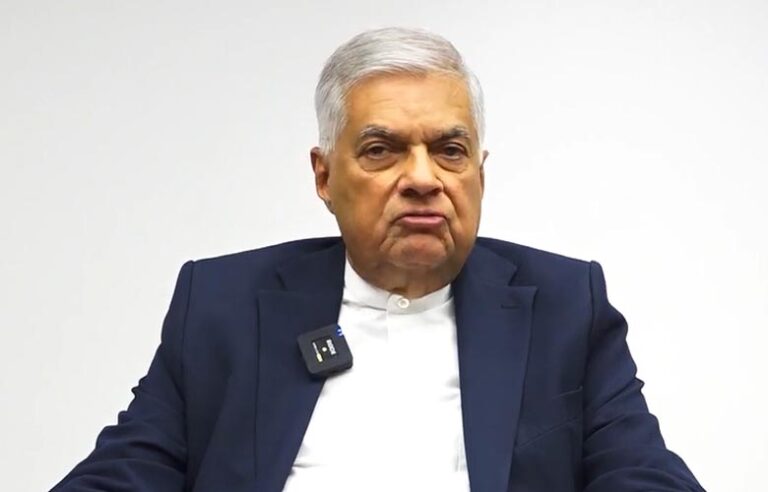
Sri Lanka’s politics has always been shaped by its Constitution, but rarely has that been more evident than in the rise of its two most recent presidents. Both Ranil Wickremesinghe and Anura Kumara Dissanayake ascended to the highest office not through sweeping electoral mandates but through the workings of constitutional mechanics. That fact alone is a reminder of the fragility of political legitimacy in today’s Sri Lanka.

Ranil Wickremesinghe assumed the presidency in July 2022 at the lowest point in the nation’s modern history. The economy had collapsed. Foreign reserves were nearly depleted. People were queueing for fuel, gas, and food. Electricity cuts were paralyzing daily life. Public anger spilled into the streets, forcing a sitting president to flee. At that point, Parliament turned to Ranil — a man without a significant parliamentary group but with decades of political and administrative experience.What followed was, by any measure, a remarkable rescue operation. Ranil navigated debt negotiations with international creditors, re-established ties with the IMF, restored basic supplies, stabilized the currency, and prevented the complete breakdown of state institutions. For all his flaws — and there are many — it is undeniable that Ranil delivered at the very worst point in our history. His presidency may not have carried the strength of a popular mandate, but it carried the weight of responsibility. Anura Kumara Dissanayake, by contrast, comes to power at a very different moment. His election as president, like Ranil’s, was not the result of a landslide victory by the people but the product of the constitutional process. He enjoys a wave of expectation, particularly from younger generations and those disillusioned by decades of failed leadership. Yet, unlike Ranil, he has not yet had to prove himself in the crucible of crisis.

Anura Presidency

This is why his approach matters. Instead of focusing on reforms, institution-building, and credible governance, Anura has so far leaned heavily on rhetoric and threats directed at political opponents. Such a strategy may work in rallies, but it is dangerous in governance. Politics built on vengeance will not only distract from the urgent reforms the country needs, but could also backfire. By targeting rivals, Anura runs the risk of drawing attention to the darker chapters of his own movement’s past.

The Janatha Vimukthi Peramuna (JVP) is not without baggage. Its insurrections in the 1970s and 1980s left scars on Sri Lankan society — from killings and disappearances to widespread fear. While Anura represents a newer generation of leadership, the shadow of those atrocities has never fully disappeared. If his presidency becomes about settling scores, he could end up reawakening painful memories that undermine both his credibility and his ability to unify the country.

Governing

There are also immediate governance issues that cannot be swept aside. Allegations about the 300 containers, questionable land acquisitions, the misuse of vehicles by senior staff, and controversial imports of essentials such as potatoes and onions are serious. For a leader who campaigned on a platform of transparency, anti-corruption, and accountability, these issues are tests. They will determine whether his government is genuinely different from those that came before or just another administration weighed down by scandal. Ranil Wickremesinghe now stands at the twilight of a long political career. Whatever his shortcomings, he has been a central figure in Sri Lankan politics for over four decades. If he chooses to retire gracefully, offer guidance to the next generation, and play the role of elder statesman, he can secure a legacy of resilience and leadership during crisis. Clinging to politics , on the other hand, will only diminish his contributions. Anura Kumara Dissanayake, in turn, has an opportunity — and a warning. He has the chance to show that his brand of politics can move beyond confrontation and vengeance to constructive leadership. But he must also recognize the dangers of overreach. Spending more time talking and threatening opponents, rather than governing and delivering, will not only stall progress but may expose him and his party to renewed scrutiny over their past. Sri Lanka is at a crossroads. The Constitution may have been the vehicle through which both Ranil and Anura ascended to power, but constitutions do not bestow legitimacy. That must come from conduct in office, from humility, integrity, and delivery. Ranil has already proven that he could steady the ship when it was on the verge of sinking. Anura, with the benefit of calmer seas, must now prove that he can steer it toward a better future. The people of this country have heard enough promises. They want action. Ranil has already written his chapter. He should work  with the next generation like Sajith Premadasa and Namal Rajapaksa. It is now Anura’s turn to decide whether his will be a story of transformation and decency — or just another missed opportunity in the long, weary history of Sri Lankan politics.

Cashew Industry Stumbles amid Policy Hurdles and Supply Shortfalls

0

Sri Lanka’s ambitions to transform cashew into a major cash crop for both domestic use and export markets are facing severe challenges, with industry stakeholders blaming bureaucratic hurdles, policy ambiguities, and weak production for stunting growth.

Cashew has long been a household favorite among Sri Lankans and is increasingly popular with foreign tourists, especially in hotels and resorts where it is served as a premium snack. With tourist arrivals on the rise in 2025, demand for cashew has surged.

 However, the country’s annual output remains far below requirements. Officials at the Ministry of Plantation Industries confirmed that current production stands at just 12,500 tonnes, falling well short of national demand, which is estimated at nearly double that figure.

To bridge this gap, the previous government introduced a controlled cashew importation system that allowed imports only between December and April, the off-season for domestic harvests. A multi-ministerial committee monitored this window to protect local farmers.

Yet industry insiders now warn that the mechanism has collapsed, leaving a vacuum in policy and creating uncertainty for both producers and importers.

The situation has been further complicated by the introduction of the National Imports Tariff Guide 2025 (NITG-2025), which restructured Harmonised System (HS) codes and taxes.

Traders complain that the new framework has made import procedures cumbersome, resulting in shipment delays, order cancellations, and rising costs. Each permit now carries only a three-month validity, making them ineffective if approvals are delayed a common occurrence under the new system.

In addition, exporters point to new requirements such as foreign laboratory certification and extended customs verification processes, which they say have crippled efficiency. “By the time approvals are completed, the market demand has shifted, and shipments are either lost or arrive too late,” one exporter lamented.

The Sri Lanka Cashew Corporation (SLCC), which oversees balancing imports with domestic supply, faces its own hurdles. Sudden weather swings often reduce yields, forcing reliance on imports. However, approval bottlenecks prevent timely replenishment of stocks, leading to shortages and price spikes in the local market.

Beyond regulatory snags, the industry struggles with outdated processing facilities, low levels of mechanisation, and limited investment in modern farming techniques. Neighboring countries like India and Vietnam have developed cashew into billion-dollar export earners through mechanised processing, contract farming, and aggressive marketing areas where Sri Lanka lags significantly.

Analysts warn that unless swift reforms are made such as digitising import approvals, streamlining customs checks, and supporting farmers with improved technology—the industry could lose its potential to become a valuable export earner.

 For now, the cashew sector remains trapped between growing demand and systemic inefficiencies, a situation that risks turning a promising crop into a bitter harvest

Government Fast Tracks Reforms Targeting Corporate Transparency

0

The government is swiftly pushing new legislative reforms to overhaul the corporate registration and oversight system—part of a broader push to modernise corporate governance and align with global anti-financial crime norms.

Comprehensive Re-Registration to Renew Records

A centerpiece of the reform is a plan to re-register over 200,000 active companies, mandating that all must update and verify their information with the Registrar. This move is designed to bring months- or years-old company data up to date, enabling authorities to maintain more accurate and reliable corporate records.

New Beneficial Ownership Registry to Boost Disclosure

Another pillar of the reform agenda is the creation of a Beneficial Ownership Register. Under the proposed Companies (Amendment) Bill, businesses will be required to collect and disclose comprehensive personal details for anyone owning or controlling at least 10 percent of a company.

 This includes full name, birth details, nationality, addresses, and identification numbers. Companies must keep this register at their registered office for at least 10 years and submit updates within 14 working days of any change to the Registrar of Companies

Failure to complyor knowingly supplying false information—could trigger serious penalties, including fines and up to 10 years’ imprisonment

 Select informationsuch as names and extent of ownershipwill be accessible to the public upon request, while authorities like the Attorney-General, Financial Intelligence Unit, customs, revenue authorities, and others can access full details

While these reforms mark an alignment with Financial Action Task Force (FATF) standards and are part of meeting IMF benchmarks, non-governmental organisations have flagged concerns over exemptions.

 Specifically, offshore and overseas companies may be exempted from these disclosure rules raising fears that such loopholes could undermine transparency and accountability

.Offshore Registrations within Port City Soar

In contrast, the Port City offshore registration system remains fully operational and efficient amid ongoing digital hurdles at the national company registry. Governed under the Port City Economic Commission Act No. 11 of 2021, its process operates independently of the troubled eROC system

Companies can obtain “Authorised Person” (AP) status necessary for operating offshore in the Port City within just three working days, provided documentation is in order

 As of August 2024, over 100 companies spanning IT, finance, shipping, healthcare, tourism, real estate, and professional services had been registered as APs; 22 of those have also earned Business of Strategic Importance (BSI) designation, securing massive tax and investment incentives

Civil Society Calls for Digital and Legislative Overhaul

Public-interest groups are urging authorities to address long-standing weaknesses in national digital infrastructure calling for a fully functional e-registry system (eROC), swift passage of the new legislation, and full implementation of the beneficial ownership regime without exemptions. They argue these reforms are vital to restoring trust and enhancing resilience within the corporate governance framework.

Sri Lanka’s Duty-Free Car Permit System Faces Scrutiny 

0

Sri Lanka’s long-standing duty-free vehicle permit scheme, originally designed to reward senior public servants and reduce state costs on official transport, has come under fresh criticism after revelations that thousands of permits were issued despite a strict vehicle import ban.

Since 2020, the Finance Ministry has issued 25,508 duty-free permits to government employees, a senior official confirmed. These permits, which offer tax concessions of up to Rs. 3.6 million, were distributed even after the government suspended vehicle imports to conserve foreign exchange. However, recipients remain unable to use them, as no decision has been made to allow imports under the scheme.

Finance Ministry records reveal fluctuating distribution numbers over the years: 5,373 permits in 2020, 2,972 in 2021, 3,340 in 2022, 5,718 in 2023, 6,062 in 2024, and 2,043 so far in 2025. While the ministry insists the scheme remains suspended, questions are mounting over why such permits continued to be issued during a period of severe import restrictions.

Critics argue that the scheme has strayed far from its original purpose. Instead of serving as an incentive to retain skilled public servants and cut official vehicle costs, it has allegedly become a privilege for parliamentarians and senior officials. Public interest groups claim many permits have been sold or transferred to third parties for profit, effectively turning a state benefit into a tradable commodity.

The lack of transparency and accountability has only deepened public frustration. At a time when Sri Lanka is struggling to rebuild foreign reserves and manage external debt, issuing permits that could eventually trigger further foreign currency outflows is seen as poor fiscal management.

Activists stress that the government must urgently explain how it intends to manage the existing stock of permits. “This is not just a question of vehicle imports, but one of trust in how public resources are handled during economic crises,” one watchdog group observed.

The Finance Ministry is reportedly reviewing reforms to restore credibility to the system. Proposals under discussion include digitising the permit process, enforcing strict non-transfer rules, restricting eligibility to essential service roles, and introducing alternatives such as transport allowances or vehicle subsidies.

Analysts argue that a thorough audit and public disclosure of all permit holders is essential to ensure accountability. Without such measures, they warn, the system risks continuing as a loophole for privilege rather than a genuine incentive for long-serving public servants.

President’s Fund to Provide Rs. 1 Million Compensation for Ella–Wellawaya Bus Crash Victims

0

The President’s Fund has announced that Rs. 1 million will be granted as compensation to the families of those who lost their lives in the tragic bus accident on the Ella–Wellawaya main road last night (04), the President’s Media Division (PMD) confirmed.

The accident occurred at around 9:00 p.m. near the 24th kilometre post, when a bus carrying employees of the Tangalle Urban Council and their families, returning from a trip, veered off the road. The bus first collided with an oncoming SUV and then struck a metal barrier before plunging nearly 1,000 feet down a precipice.

Fifteen people, including Tangalle Urban Council Secretary T.W.K. Rupasena, 12 council employees, two children, and the bus driver, were killed in the tragedy.

Eighteen others, among them several children, sustained injuries and are currently receiving treatment at the Badulla Teaching Hospital.