Home Blog Page 31

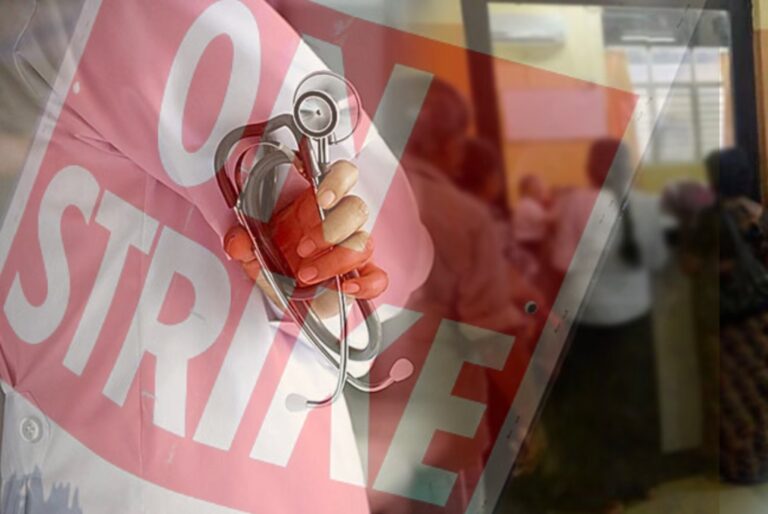
Doctors’ Strike Continues for Second Day Across the Island

0

April 05, LNW(Colombo): The Government Medical Officers’ Association (GMOA) has launched a nationwide token strike starting at 8:00 a.m. today (05), following a decision taken at its Executive Council meeting yesterday.

The 24-hour strike is set to continue until 8:00 a.m. on Monday, causing a complete disruption to routine and general medical services across the country. Patients seeking outpatient care and non-urgent treatments are expected to face significant inconvenience.

Despite the strike, the GMOA has assured that emergency medical services will continue without interruption, ensuring critical care remains available.

The association further stated that its Executive Council will closely monitor the situation and take additional decisions on a day-to-day basis, depending on how events unfold.

“The Rock” Reawakens? Trump Proposes $152M Plan to Revive Alcatraz Prison

0

LISTEN TO STORY

Watch Story

By: Puli

April 05, LNW (Colombo): US President Donald Trump has proposed allocating $152 million (£115 million) in the 2027 federal budget to bring the infamous Alcatraz Island back to life as a modern high-security prison.

The historic island, located near the iconic Golden Gate Bridge, once housed some of America’s most dangerous criminals before shutting down in 1963. Today, it operates as a popular tourist destination managed by the National Park Service.

According to the proposal, the requested funds would cover the initial phase of rebuilding Alcatraz into a state-of-the-art correctional facility. However, the plan has sparked skepticism among California politicians, who question both the long-term costs and the logistical challenges of operating a prison on the isolated island.

If approved, the project would mark a dramatic transformation for “The Rock,” shifting it from a historic landmark back into one of the nation’s most secure detention centers.

Afternoon Thunderstorms Expected Across Most Provinces Today

0

April 05, LNW (Colombo): Showers or thundershowers will occur at several places in Western, Sabaragamuwa, Central, Southern, Uva, Eastern and Northcentral provinces after 2.00 p.m. 

Fairly heavy falls about 50 mm are likely at some places in Central, Sabaragamuwa and Uva provinces and in Polonnaruwa district.

Misty conditions can be expected at some places in Western, Central, Sabaragamuwa, Uva and North-central provinces and in Jaffna and Kurunegala districts during the early hours of the morning.

The general public is kindly requested to take adequate precautions to minimize damages caused by temporary localized strong winds and lightning during thundershowers.

On the apparent northward relative motion of the sun, it is going to be directly over the latitudes of Sri Lanka during 05th to 15th of April in this year. The nearest areas of Sri Lanka over which the sun is overhead today (05th) are Dodanduwa, Rathgama, Yakkalamulla, Akuressa, Mulgirigala, Ranna, Kalamatiya and Ussangoda at about 12:13 noon.

New Tax Law Sparks Fear of Business Collapse and Investor Flight

0

Sri Lanka’s new Inland Revenue (IR) (Amendment) Bill 2026 is attracting scrutiny for its potential repercussions on businesses, taxpayers, and the broader economy. Following the March 30 deadline for Supreme Court challenges, the Ceylon Chamber of Commerce (CCC) has outlined concerns regarding the legislation, emphasizing the need to maintain a fair and balanced tax framework.

The Chamber’s Tax Steering Committee conducted a detailed evaluation of the bill, focusing on provisions affecting financing, investor confidence, compliance, and the competitiveness of Sri Lankan businesses. Through consultations with policymakers, regulators, and the private sector, the CCC has highlighted amendments that, if implemented without adjustments, could inadvertently hinder business operations.

A central issue involves the Thin Capitalisation Rules, where the CCC warns that including negative reserves in debt calculations could impose undue tax burdens on struggling companies. The Chamber also advocated for allowing finance costs on all genuine commercial borrowings, aiming to protect legitimate business financing arrangements.

Strict compliance timelines are another point of contention. The bill requires taxpayers to submit evidence within six to nine months a rule the Chamber believes could be unfair in complex cases. Flexibility, the CCC argues, is essential to balance administrative efficiency with fairness to taxpayers.

Penalties for minor infractions have also raised concerns. CCC officials caution that overly punitive measures, including imprisonment, could undermine business confidence. Instead, reliance on existing recovery and enforcement mechanisms is recommended to maintain compliance without deterring investment.

Insurance companies are likely to be affected by Section 67, which could tax policyholder distributions and create confusion under IFRS 17 accounting standards. The CCC has called for further consultation before implementation to avoid disrupting the sector and its customers.

The discretionary powers of the Commissioner General are also under review. The CCC stresses that clear guidelines and transparency are crucial to prevent arbitrary enforcement, ensure consistent decision-making, and maintain public trust.

Overall, the Chamber reiterates that a predictable, stable, and investment-friendly tax framework is vital for Sri Lanka’s economic recovery. Constructive engagement with the government is ongoing to refine the amendments, ensuring they support growth while safeguarding revenue objectives.

For citizens and businesses alike, the effectiveness of the new tax policy will depend on how well the government balances enforcement with fairness. Missteps could affect taxpayer confidence, business investment, and ultimately, the nation’s economic stability, highlighting the delicate interplay between taxation and public trust.

Inside NDB Bank Fraud Scandal: Questions Over Internal Controls

0

The recent disclosure of a financial fraud at National Development Bank PLC has raised serious concerns about internal governance, risk oversight, and the vulnerability of financial institutions to insider collusion. According to the bank’s official statement, the fraud involves certain employees acting in coordination with external parties, with preliminary estimates placing the exposure at around Rs. 380 million. However, the bank has cautioned that the final figure could be significantly higher, pending ongoing investigations.

At the core of this issue lies a breakdown in internal controls systems designed to prevent exactly this kind of misconduct. When employees are able to collaborate with outsiders to manipulate financial processes, it suggests potential weaknesses in supervision, auditing, or segregation of duties. While the bank has acted quickly to notify law enforcement and regulators, the incident raises the broader question of how such activities went undetected in the first place.

Financial institutions operate on trust, and even isolated incidents can erode public confidence. Although the bank has reassured customers that deposits and account balances remain safe, the psychological impact on customers cannot be ignored. In markets like Sri Lanka, where banking stability is closely tied to economic confidence, even the perception of risk can influence customer behavior, including withdrawals or reduced engagement with financial services.

The bank’s communication strategy has emphasized transparency and caution, avoiding speculation while investigations are underway. This approach is appropriate, yet it also highlights the uncertainty surrounding the case. Without clear details on how the fraud occurred or how long it persisted, stakeholders are left with unanswered questions.

Regulatory oversight will play a critical role moving forward. The involvement of the Central Bank and law enforcement agencies indicates the seriousness of the matter, but it also underscores the need for stronger preventative frameworks across the banking sector. Incidents like this often prompt industry-wide reviews of compliance systems, internal audits, and employee monitoring mechanisms.

The economic implications extend beyond a single institution. Financial fraud can have ripple effects, influencing investor sentiment, stock market performance, and the perceived stability of the banking sector. If the final loss exceeds initial estimates, it could impact profitability and shareholder confidence.

Ultimately, this case serves as a reminder that financial integrity depends not only on systems but also on ethical conduct. Strengthening internal controls, enhancing accountability, and fostering a culture of transparency will be essential steps in restoring trust and preventing similar incidents in the future.

Middle East Conflict Disrupts Sri Lanka Tourism Recovery Momentum

0

Sri Lanka’s fragile tourism recovery has been abruptly shaken by escalating geopolitical tensions in the Middle East, exposing the sector’s heavy reliance on global aviation stability. The fallout from the US–Israel conflict escalation on Iran has rippled across international travel networks, directly impacting visitor arrivals to the island at a critical stage of its rebound.

Official figures show that tourist arrivals dropped sharply by 20 percent year-on-year in March, falling to 183,979 visitors. This marks a significant reversal after strong gains in January and February, when pent-up travel demand and aggressive promotions had boosted confidence in the sector. The decline reflects not a lack of interest in Sri Lanka, but the logistical chaos caused by disrupted air travel routes.

The Middle East functions as a vital transit corridor linking Europe and Asia, and Sri Lanka depends heavily on these hubs for inbound traffic. With airspace restrictions, flight cancellations, and increased insurance and fuel costs, airlines have reduced frequencies or rerouted services. As a result, average daily arrivals fell to 5,935 in March, down from 7,397 a year earlier clear evidence of constrained accessibility rather than weakened demand.

Despite the downturn, there were signs of underlying resilience. The peak single-day arrival of 7,318 visitors on March 14 suggests that travelers were still willing to visit but faced limited flight availability. Key Western markets including the UK, Germany, France, and the United States continued to generate demand, partially offsetting losses.

Regional dynamics also remained stable. India retained its position as Sri Lanka’s largest source market, contributing over a quarter of total arrivals in March. Russia, China, and Germany followed closely, highlighting the country’s dependence on a relatively narrow pool of origin markets.

For the first quarter overall, Sri Lanka managed modest growth, recording 740,634 arrivals—an increase of 2.5 percent year-on-year. However, analysts warn that this growth may mask deeper vulnerabilities. The March slump underscores how external shocks, particularly geopolitical conflicts, can quickly derail tourism-dependent economies.

Looking ahead, projections for 2026 are increasingly uncertain. If disruptions persist into the peak European summer travel season, Sri Lanka may struggle to meet its ambitious target of 3 million arrivals. Conservative estimates now suggest total arrivals could range between 2.4 to 2.7 million by year-end, depending on how quickly global aviation stabilizes.

Revenue projections are equally sensitive. With average tourist spending estimated at $170–$180 per day, total tourism earnings could fall short of earlier expectations, potentially reaching $3.8 to $4.2 billion instead of higher projected figures. Rising travel costs may also shift visitor profiles toward shorter stays or budget-conscious travelers.

Ultimately, Sri Lanka’s tourism outlook now hinges not only on domestic policy but also on international geopolitical stability factors largely beyond its control.

Political Fallout Grows Over Sri Lanka’s Controversial Coal Deal

0

Sri Lanka’s unfolding coal controversy is rapidly escalating into a major political and regulatory crisis, with mounting pressure on authorities over the importation of substandard fuel for the Lakvijaya Power Plant. Allegations of corruption, environmental negligence, and regulatory lapses have triggered parliamentary action and intensified public scrutiny.

At the center of the storm is a coal procurement contract awarded in late 2025, covering 25 consignments scheduled for delivery before April 20, 2026. The deal, reportedly involving India-based supplier Trident Chemphar Ltd, is now under investigation amid claims that quality standards were compromised. Critics argue that the decision to proceed with low-grade coal has exposed systemic failures in oversight and accountability.

The political response has been swift. The opposition, led by the Samagi Jana Balawegaya (SJB), has tabled a no-confidence motion against Energy Minister Kumara Jayakody, set for debate on April 10. The motion cites both environmental damage and financial losses resulting from inefficient power generation.

Regulatory bodies have also raised serious concerns. The Public Utilities Commission of Sri Lanka (PUCSL) has warned that current coal supplies fail to meet mandatory quality verification protocols. This non-compliance could jeopardize the plant’s Environmental Protection License, potentially leading to legal and operational consequences.

Parliament’s Sectoral Oversight Committee on Environment has intervened, directing officials to urgently develop a sustainable ash disposal strategy. However, experts caution that such measures may come too late if the influx of substandard coal continues unchecked.

Complicating matters is the logistical reality of Sri Lanka’s coal supply chain. With monsoon conditions halting unloading operations between April and September, even canceling the current contract may not allow sufficient time to secure alternative shipments. This creates a dilemma: continue using environmentally harmful coal or risk severe power shortages.

On the ground, communities are already feeling the impact. Residents near Norochcholai report increased respiratory problems and concerns over contaminated water sources. Farmers fear that fly ash could infiltrate irrigation systems, damaging crops and livelihoods.

The crisis underscores a broader challenge facing Sri Lanka balancing urgent energy demands with environmental protection and governance integrity. As investigations continue and political tensions rise, the outcome of this dispute will likely shape the country’s energy policy and regulatory landscape for years to come.

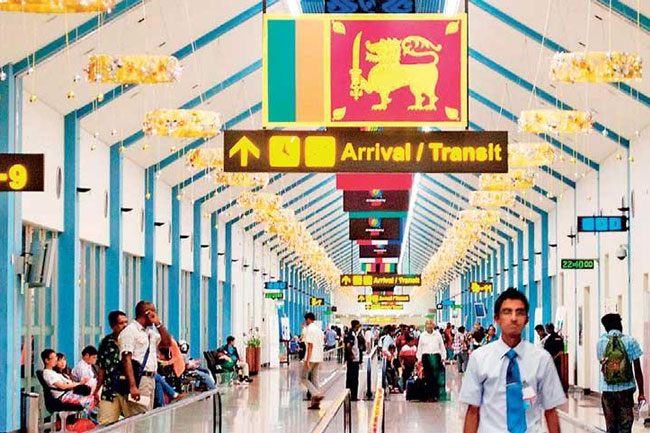
Sri Lanka Eyes $10 Billion Transport Boost, Invites Global Firms for Airport Operations

0

The Government has announced plans to invest between US$8 billion and US$10 billion over the next three years to strengthen Sri Lanka’s transport infrastructure, with a focus on enhancing connectivity and trade.

As part of this initiative, international private companies will soon be invited to operate one of the country’s international airports, signalling a shift towards greater private sector participation in key infrastructure.

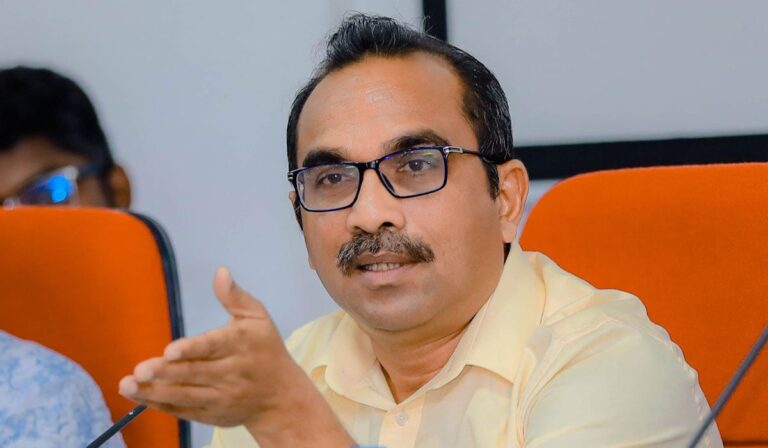
Transport, Highways and Urban Development Minister Bimal Rathnayake, speaking at the International Transport and Logistics Forum in St. Petersburg, reaffirmed Sri Lanka’s openness to partnerships with countries that respect its sovereignty and mutual reputation.

“We are open to working with friendly nations that respect sovereignty and recognise the reputation of other countries,” the Minister said.

He revealed that plans are also underway to establish two new ports, further strengthening Sri Lanka’s position as a regional logistics hub.

Highlighting the country’s strategic ambitions, Rathnayake expressed Sri Lanka’s readiness to integrate into the Eurasian Transport Framework, noting that developing nations stand to benefit significantly from improved connectivity and trade links.

He underscored Sri Lanka’s historic role as a global connector, stating, “We have been a connecting point for two to three millennia, and connectivity is in our DNA.”

The Minister also pointed to growing cooperation between Sri Lanka and Russia despite geographical distance, expressing interest in expanding maritime links, including potential routes via Vladivostok.

In addition, the Government has requested Russia to operate year-round flights between the two countries, citing strong growth potential in tourism and trade.

Rathnayake further stated that Sri Lanka has achieved a level of economic and social stability, while maintaining friendly relations with all nations. He emphasised that the country aims to position itself as a point of global convergence rather than a stage for geopolitical rivalry, engaging constructively with major powers including China, Russia, Europe, and India.

World Bank Launches $2 Billion Partnership Framework to Boost Sri Lanka’s Growth and Jobs

0

The World Bank Group (WBG) and the Government of Sri Lanka today unveiled a new five-year Country Partnership Framework (CPF) aimed at supporting the country’s ongoing economic recovery, achieving a medium-term growth target of 7%, and generating employment opportunities.

Under the partnership, the World Bank Group is expected to mobilise over US$2 billion in support. This includes more than US$1 billion in direct and mobilised investments by the International Finance Corporation (IFC) over five years, alongside up to US$1 billion in low-interest financing from the World Bank over the next three years. The initiative will leverage the full suite of WBG tools, including financing, guarantees, advisory services, and private capital mobilisation.

President Anura Kumara Dissanayake emphasised the government’s commitment to sustaining economic reforms and achieving inclusive growth. “We are committed to building on continued macroeconomic stability, strengthened governance, and revenue-based fiscal consolidation. Our goal is to steer the economy towards strong, sustainable, and inclusive growth, targeting over 7% in the medium term,” he said. He also noted the longstanding relationship with the World Bank Group, which spans more than 70 years.

A key focus of the CPF is private sector-led job creation, particularly as nearly one million young Sri Lankans are expected to enter the workforce over the next decade. Without accelerated growth and increased private investment, only around 300,000 formal jobs are projected to be created, leaving a significant gap in quality employment opportunities.

World Bank Vice President for South Asia Johannes Zutt highlighted the importance of inclusive recovery. “Sri Lanka’s recovery over the past three years has been hard-won. This framework is designed to ensure its benefits reach all segments of society by combining public resources with private sector innovation,” he said.

Echoing this, IFC Vice President for Asia and the Pacific Sarvesh Suri stressed the role of the private sector in driving future growth. “Sri Lanka’s next phase of development will depend on a competitive and innovative private sector capable of creating jobs. With its strategic location and skilled workforce, the country is well-positioned to expand its regional presence, and we remain committed to supporting this transformation,” he said.

SLTB Hatton Depot to Launch Safari Bus Service to Boost Tourism

0

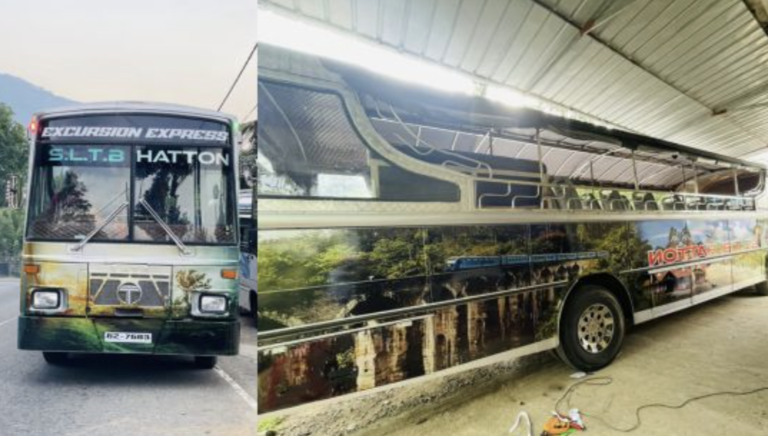
The Sri Lanka Transport Board (SLTB) Hatton depot is set to introduce a safari bus service aimed at promoting tourism in the region.

The bus has been refurbished from an older vehicle sourced from the Ratmalana depot and redesigned specifically for tourist use at a cost of Rs. 4 million.

Equipped with 42 seats, the bus includes modern सुविधities such as air conditioning, a sound system, and a television. It has also been modified with open-roof and window access, allowing passengers to enjoy sightseeing more comfortably.

The new service is expected to operate across key tourist destinations, including Sri Pada (Adam’s Peak) and several areas within the Nuwara Eliya district.