By: Staff Writer
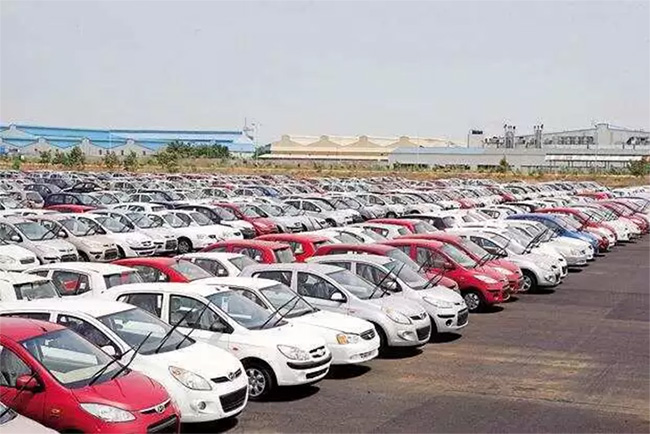
November 03, Colombo (LNW): Sri Lanka’s fragile economic recovery faces renewed stress as soaring vehicle imports drive a fresh wave of foreign exchange outflows and growing exposure among financial institutions through vehicle leasing. According to the Central Bank of Sri Lanka (CBSL), import spending on personal and commercial vehicles surged to US$ 286 million in September 2025, bringing the total bill for the first nine months of the year to a staggering US$ 1.2 billion.
Of this, personal vehicles accounted for US$ 227.5 million, while commercial vehicles made up US$ 58.7 million. The sharp import spike following the relaxation of pandemic-era restrictions has injected short-term momentum into the automobile market but triggered concerns over renewed pressure on foreign reserves and exchange rate stability.
Economists warn that the sudden rise in vehicle imports reflects a classic case of policy contradiction. After maintaining tight import controls to preserve foreign currency, Sri Lanka has now reopened the market without adequately managing liquidity or credit growth. “Each wave of import liberalisation increases dollar demand, creating pressure on the rupee and potentially undermining the Central Bank’s deflationary stance,” one analyst observed.
Vehicle imports have traditionally been a major revenue source for the government, contributing through customs duties, excise taxes, and VAT. However, the foreign exchange cost of these imports often outweighs fiscal gains, especially when importers use bank loans or leasing schemes, fuelling credit expansion. Banks and finance companies have intensified leasing promotions to capture the rising demand, further linking domestic credit growth to external imbalances.
Data from the financial sector shows a double-digit rise in vehicle leasing portfolios since mid-2025, driven largely by pent-up consumer demand and a rebound in business sentiment. Analysts caution that if the rupee weakens further, debt-servicing pressures could rise for both borrowers and lenders, creating risks for financial stability.
Overall imports in September 2025 hit US$ 2.05 billion, up sharply year-on-year, with intermediate goods—including fuel climbing 13.4% to US$ 1.18 billion, indicating higher production activity. Investment goods also grew 6.8% to US$ 346 million, but machinery imports dipped even as commercial vehicle purchases rose more than tenfold compared to last year.
The Central Bank has continued to purchase dollars US$ 177.3 million in September alone—to strengthen reserves. However, market participants note that these inflows are partly offset by excess liquidity and import-driven outflows. Experts argue that buy–sell swap operations, which inject rupees into the system, have unintentionally spurred lending that fuels import growth and rupee depreciation.
As Sri Lanka attempts to balance growth with external stability, the vehicle import boom underscores the fragile link between domestic consumption, credit expansion, and foreign exchange vulnerability a recurring policy dilemma that continues to challenge the post-crisis economy.
Surge in Vehicle Imports Drains Sri Lanka’s Dollar Reserves
Port City Tax Breaks Spark IMF Concerns amid Reform Promises

By: Staff Writer
November 03, Colombo (LNW): In a move that has sparked renewed scrutiny, the government has granted sweeping tax exemptions to four companies operating under the Colombo Port City project, despite earlier assurances to the International Monetary Fund (IMF) to suspend such incentives until a transparent legislative framework is enacted.
According to extraordinary gazette notifications 2445/2 through 2445/5, issued by President Anura Kumara Dissanayake on July 14 in his capacity as the Minister of Finance, Economic Stabilisation, and National Development, has granted tax exemptions under the Inland Revenue Act for a period of 35 years to four companies operating within the Colombo Port City.
All income, profits, and dividends distributed will be exempted from all taxes specified under this Act for the first twenty-five years and all payments made shall be exempted from the Withholding Tax specified under this Act for the first twenty-five years;
After the end of the aforesaid twenty-five year period, 50 percent incentive from the prevailing corporate tax rate specified under this Act will be given for a period of ten years
Ceylon Real Estate Holdings (Private) Limited (licensed on 03 May 2024), Clothespin Management and Development (Private) Limited (licensed on 28 March 2025), IFC Colombo (Private) Limited (licensed on 21 August 2024) and ICC Port City (Private) Limited (Licenced on 04 April 2025) were the companies that were eligible for tax relief.
These companies have been classified as “Authorised Persons” and “Businesses of Strategic Importance” and shall be entitled to long-term corporate income tax exemptions, VAT exemptions, customs duty exemptions, dividends tax exemptions, and exemptions of personal income tax for foreign employees.
This decision comes in direct disparity to Sri Lanka’s commitments under the IMF’s Extended Fund Facility (EFF), where the government agreed to suspend all new tax exemptions under the Port City and Strategic Development Projects (SDP) Acts until new, rules-based frameworks are introduced.
According to the IMF’s Fourth Review Staff Report (July 2025), the government has committed to not issuing additional exemptions under the outdated laws and bringing amendments to the Port City and SDP Acts to the House by October 2025 with the aim of enhancing transparency, accountability, and alignment with fiscal reform goals.
The IMF previously stated that discretionary tax relief had led to revenue losses, corruption risk, and investor mistrust, requiring the complete overhaul of exemption policy by appropriately set criteria and time limits.
Any backtracking, analysts further comment, would undermine world confidence and complicate Sri Lanka’s process of debt restructuring.
Sri Lanka has made a commitment to the IMF not to provide any tax exemptions or incentives or approving new projects under the Strategic Development Projects (SDP) Act and to refrain from exemptions under the Port City Act, between January and September 20, 2024.
Despite this assurance tax exemptions to 24 companies (four as Primary Businesses, three as Duty Free Businesses, and 17 as Secondary Businesses) were gazetted without consulting IMF staff, the present government has informed them via its Memorandum of Economic and Financial Policies released by the IMF on July 03.
The continuous structural bench mark of suspending tax exemptions will be removed in consultation with IMF staff upon successful amendments to the SDP and Port City Acts and regulations in September and October this year the government has pledged in its memorandum.
Sri Lanka Moves toward Direct RMB Trade Settlement Framework
By: Staff Writer
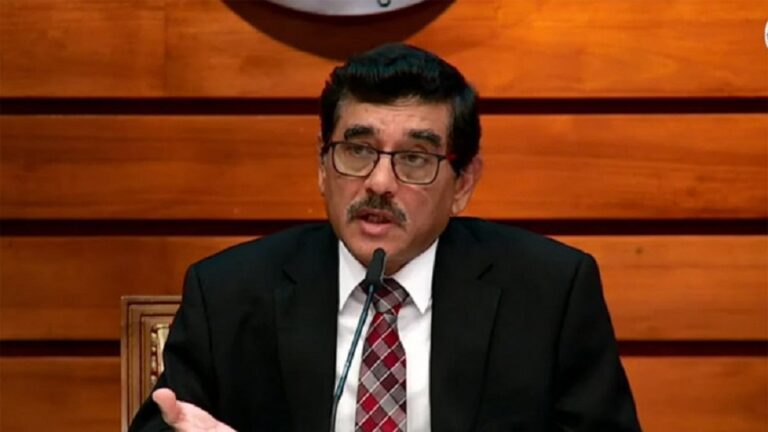
November 03, Colombo (LNW): In a significant policy shift aimed at reducing reliance on the U.S. dollar, the Central Bank of Sri Lanka (CBSL) is advancing plans to introduce a direct renminbi (RMB) payment mechanism for trade with China. Governor Dr. Nandalal Weerasinghe said the move would modernise cross-border payment systems, lower transaction costs, and strengthen financial resilience in bilateral commerce.
At present, Sri Lankan importers convert rupees to U.S. dollars before settling payments in RMB, exposing them to multiple exchange-rate risks and higher processing fees. A direct RMB settlement pathway, Dr. Weerasinghe explained, would allow same-day transactions, eliminate intermediaries, and provide greater pricing stability for both importers and exporters.
To achieve this, the CBSL is exploring the establishment of a dedicated RMB clearing bank in Sri Lanka an offshore Chinese-authorised entity that would enable local banks and enterprises to open RMB accounts, settle payments directly, and conduct domestic RMB transactions without using foreign correspondent banks. Similar clearing facilities already operate in over 30 countries under Beijing’s global RMB expansion initiative.
The macroeconomic benefits could be considerable. According to the IMF, linking to an offshore RMB clearing bank can raise a nation’s share of RMB-settled transactions by up to six percentage points annually. For Sri Lanka struggling with constrained foreign exchange reserves and heavy import payments the move promises reduced dollar dependency, lower conversion costs, and improved reserve diversification.
China’s ambassador in Colombo has endorsed the initiative, noting that broader RMB use could support Sri Lanka’s recovery by mitigating foreign exchange volatility and boosting economic stability. Given that annual imports from China amount to several billion dollars, shifting part of that volume to RMB-denominated settlements would free U.S. dollar reserves for critical imports or debt obligations.
Dr. Weerasinghe also stressed that the system could attract more Chinese investors and exporters by providing smoother financial infrastructure and reinforcing trade confidence. However, he cautioned that the transition must be managed carefully to prevent over-reliance on China’s financial ecosystem.
Sri Lanka’s experience with a RMB 10 billion currency swap with the People’s Bank of China in 2021 highlighted both the opportunities and complexities of deepening financial ties with Beijing. A direct clearing mechanism could, in the long run, reduce the need for such emergency swap arrangements.
Ultimately, CBSL’s RMB settlement plan represents a bold step toward financial diversification and trade efficiency. If implemented with strong regulatory oversight and risk management, it could enhance Sri Lanka’s economic sovereignty while deepening strategic links with one of its largest trading partners.
Sri Lanka-Netherlands Ties Deepen Amid Renewed Focus on Maritime Cooperation
By: Staff Writer
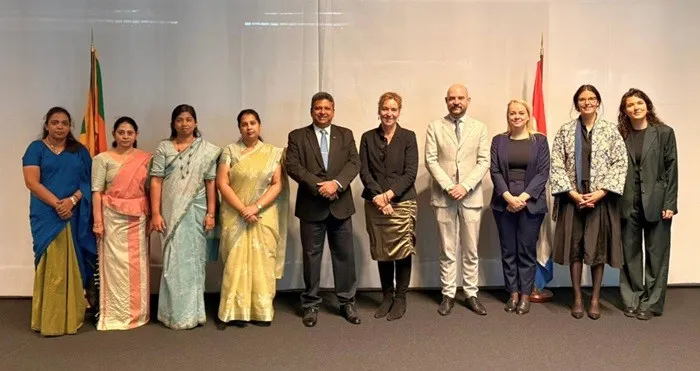
November 03, Colombo (LNW): Sri Lanka and the Netherlands are strengthening their century-old political and economic relationship, with both nations seeking to redefine cooperation as they approach the 75th anniversary of diplomatic ties in 2026. The second round of bilateral political consultations, held this week in The Hague, has underscored a new phase in this partnership one that blends historical reconciliation, maritime collaboration, and growing trade and tourism links with strategic geopolitical alignment.
The meeting was co-chaired by Dominique Kuhling, Director of the Asia and Oceania Department of the Netherlands’ Ministry of Foreign Affairs, and Sugeeshwara Gunaratna, Director-General of the Europe and North America Division at Sri Lanka’s Ministry of Foreign Affairs. Both delegations reaffirmed their commitment to shared values of democracy, maritime freedom, and cultural preservation key areas that now anchor bilateral ties.
At the forefront of discussions was the cultural heritage agenda, particularly the Netherlands’ ongoing effort to return colonial-era artefacts taken from Sri Lanka. Both sides hailed the active partnership between the National Archives of the Netherlands and the National Archives of Sri Lanka, which is engaged in conserving and digitising centuries-old Dutch-period documents. Officials described this process as a symbol of “healing historical legacies through cultural respect.”
Economically, the Netherlands remains one of Sri Lanka’s top ten tourism source markets and a key European trading partner. Discussions focused on expanding Dutch investments in tourism infrastructure, renewable energy, and port development, while encouraging collaboration between national chambers of commerce. The Sri Lankan delegation highlighted new investor incentives under the Board of Investment (BOI) and expressed readiness to deepen trade engagement with the Dutch private sector, particularly in logistics, shipping services, and sustainable agriculture.
Maritime collaboration emerged as a key strategic pillar. The Netherlands, known globally for its port engineering expertise, has been a long-term technical partner of the Sri Lanka Ports Authority (SLPA). Both parties agreed to strengthen cooperation in port development, coastal resilience, and maritime safety, aligning with Colombo’s ambition to position itself as the Indian Ocean’s logistics hub.
The consultations also addressed regional stability and security, with commitments to enhance cooperation within frameworks such as BIMSTEC and the Indian Ocean Rim Association (IORA). On the multilateral front, both sides discussed mutual support for candidacies within the United Nations system, reflecting their shared interest in a rules-based international order.
The meeting concluded with agreement to institutionalise these consultations at regular intervals to track progress. The Sri Lankan delegation included Ambassador Rekha Gunasekera, Dr. Nadeera Rupesinghe of the National Archives, and officials from the Ministry of Foreign Affairs. The Dutch side comprised senior foreign ministry officers overseeing Asian and cultural cooperation.
Analysts note that the renewed engagement between the two countries goes beyond ceremonial diplomacy. As Sri Lanka seeks post-crisis economic recovery, Dutch partnerships in trade, heritage restoration, and maritime technology could play a pivotal role in shaping a modern, resilient Sri Lanka–Netherlands relationship built on mutual respect and pragmatic cooperation
India–Sri Lanka Power Grid Link: Major Opportunity with Key Risks
By: Staff Writer
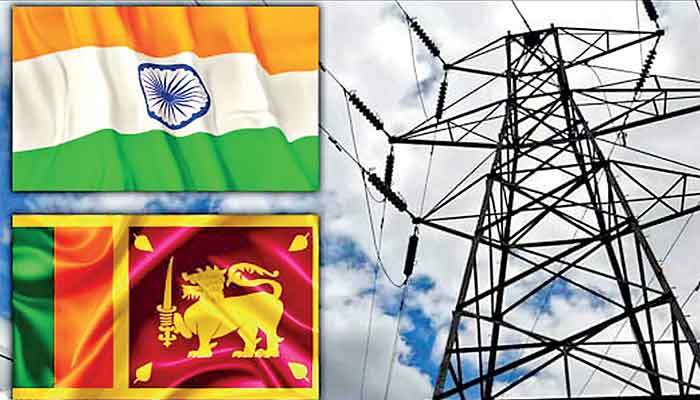
November 03, Colombo (LNW): India and Sri Lanka are pushing ahead with a landmark power grid interconnection project, marking a significant turn in regional energy integration. A virtual meeting held on Thursday (30) brought together senior members of the two nations’ energy ministries India’s Power Secretary Pankaj Agarwal and Sri Lanka’s Energy Secretary Prof. K.T.M. Udayanga Hemapala — to nail down implementation modalities and next steps for the venture which, once completed, will link the grids of the two countries.
The interconnection plan foresees a technical specification of approximately 1,000 MW capacity (in two phases of 500 MW each) through a ±320 kV VSC-HVDC (Voltage Source Converter – High Voltage Direct Current) bipole line spanning roughly 240 km of transmission including submarine cable across the Palk Strait.
The cost is estimated at around US$1.225 billion for the first phase alone, with the full project cost likely to exceed this once both phases are complete.
Among the primary benefits: Sri Lanka will gain the ability to import power during domestic shortages crucial during hydro-dry seasons or fuel-supply disruptions—and to export surplus renewable energy (especially solar and wind) to the Indian grid, earning valuable foreign exchange. The link also promises to enhance grid stability, diversify energy sourcing, and integrate Sri Lanka more directly into the broader South Asian regional power market.
However, significant challenges remain. Coordinating technical standards (grid codes, protection, and synchronisation), aligning pricing and tariff mechanisms across jurisdictions, and ensuring regulatory oversight are complex tasks.
There’s also the risk of Sri Lanka becoming overly reliant on imported power potentially reducing incentives for domestic generation investment. Exporting renewables demands robust forecasting systems and storage capacity, while imported power exposes Sri Lanka to price volatility in India’s market. Environmental and social safeguards, as well as cybersecurity and operational reliability of the HVDC link, must be rigorously managed.
The two governments have agreed to continue intensive technical and policy-level discussions and aim to finalise the implementation roadmap in coming months, targeting operation by the late 2020s often cited as 2030 for full commercial readiness.
If executed smoothly, this project could become a model for cross-border electricity trading in South Asia, creating mutual benefits but only if the risks are carefully managed and the regulatory framework strengthened.
Supreme Court Rejects Petitions Challenging Asset Freeze on Keheliya Rambukwella’s Family
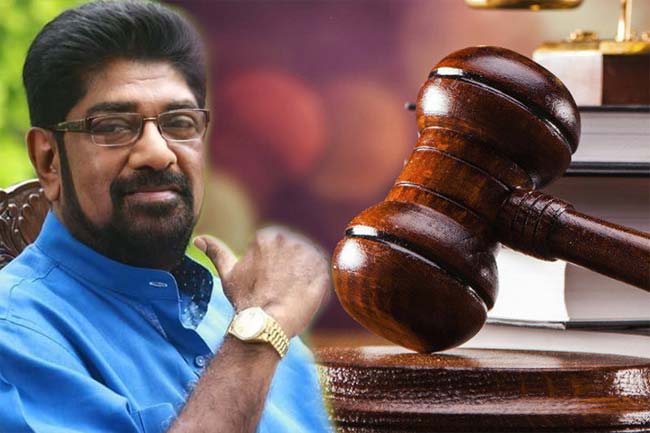
November 03, Colombo (LNW): Sri Lanka’s Supreme Court has dismissed three petitions filed by family members of former Minister Keheliya Rambukwella, who sought to overturn a Colombo High Court order freezing their assets.
The asset freeze was imposed in connection with an ongoing inquiry by the Commission to Investigate Allegations of Bribery or Corruption.
A three-judge bench of the Supreme Court, chaired by Justice Janak de Silva, ruled that the petitions lacked sufficient grounds for further consideration and ordered their dismissal after examining the preliminary submissions.
Former Cricket Captain Marvan Atapattu Urges Social Media Ban for National Cricketers to Restore Discipline
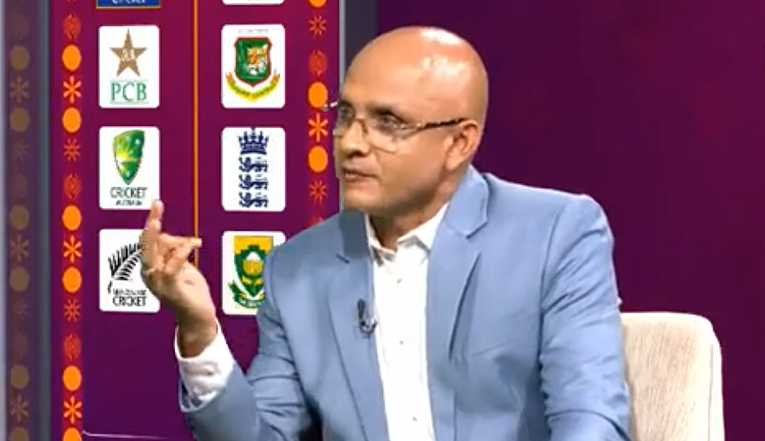
November 03, Colombo (LNW): Former Sri Lanka cricket captain Marvan Atapattu has urged authorities to prohibit national players from using social media, claiming that excessive online engagement is undermining their concentration and professionalism.
Atapattu, known for his disciplined approach both on and off the field, said that representing the nation demands complete dedication to preparation and performance, without the distractions of digital platforms.
“Any player who believes social media is essential to their life should consider stepping away from cricket,” he remarked. “When you wear the national jersey, your only responsibility is to train, perform, and uphold the game’s standards.”
He added that reducing social media activity — even temporarily — could help restore focus, accountability, and the sense of purpose that once defined Sri Lankan cricket.
Two Arrested for Harassing Female Buddhist Monk in Wattala

November 03, Colombo (LNW): Wattala Police have taken into custody two men accused of verbally abusing a female Buddhist monk and causing a public disturbance near the Rathnawali Temple in Kerawalapitiya.
The suspects, aged 58 and 67, are both residents of the Wattala area, according to police sources.
The alleged incident, which took place on Sunday night (02), was caught on camera and has been widely circulated across social media platforms, drawing strong public criticism.
The two individuals are scheduled to be presented before the Welisara Magistrate’s Court today (03) in connection with the case.
Sri Lanka Records First Monthly Current Account Deficit of 2025 as Imports Surge
November 03, Colombo (LNW): Sri Lanka’s external sector experienced a slowdown in September 2025, marking the first monthly current account deficit of the year after eight consecutive months of surpluses, according to the Central Bank of Sri Lanka (CBSL).
Despite the September dip, the overall current account for the first nine months remained in surplus, amounting to approximately US$ 1.9 billion.
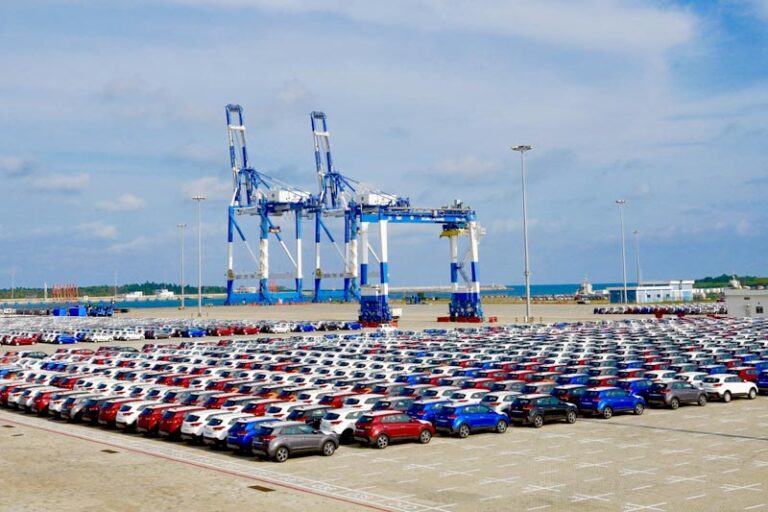
The setback was largely attributed to a widening trade gap, as import expenditure surpassed US$ 2 billion, primarily due to a notable rise in vehicle imports.
Meanwhile, the services sector showed some resilience, with net inflows climbing to US$ 2.8 billion over the January–September period. Tourist arrivals continued to increase compared to the previous year, although revenue growth in the sector remained moderate.
Workers’ remittances maintained strong performance, registering a 20 percent year-on-year increase during the first nine months, reflecting sustained inflows from overseas employment.
Foreign investment trends were uneven—while the government securities market recorded net gains, the Colombo Stock Exchange witnessed foreign outflows in both primary and secondary markets.
By the end of September, Sri Lanka’s gross official reserves, inclusive of the currency swap arrangement with the People’s Bank of China, stood at around US$ 6.2 billion, even after external debt settlements. Over the ten months leading to October 2025, the Sri Lankan rupee depreciated by 3.9 percent against the US dollar.
Legal Action to Be Taken Against Two Former NLB Representatives Over Alleged Fraud

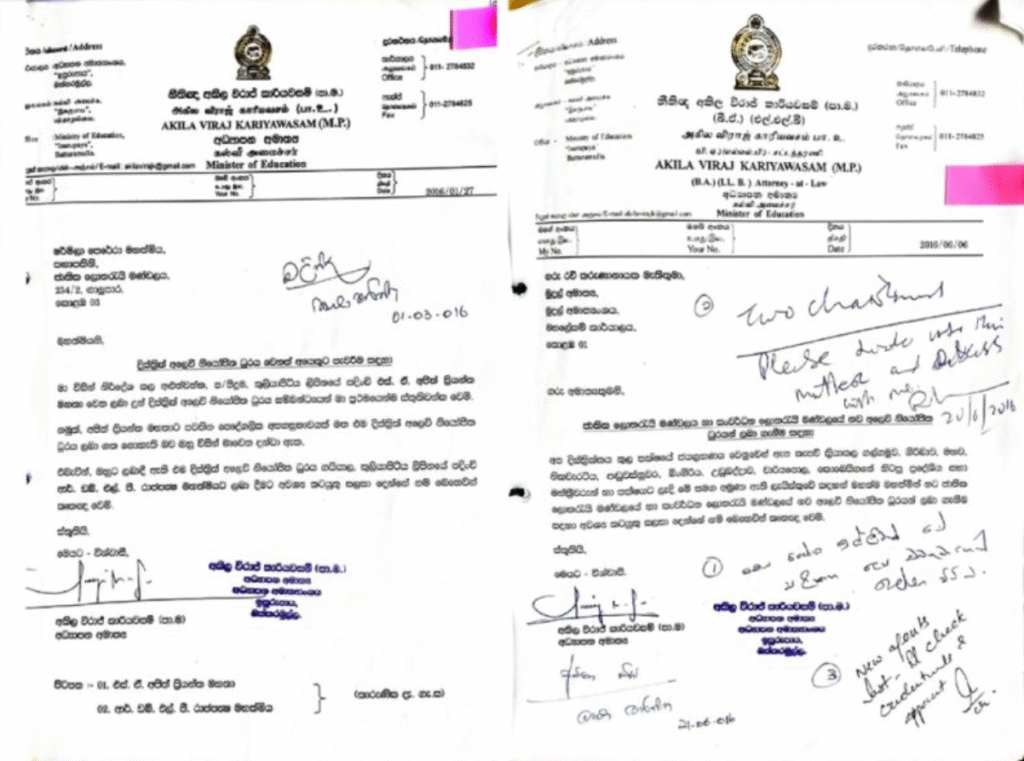
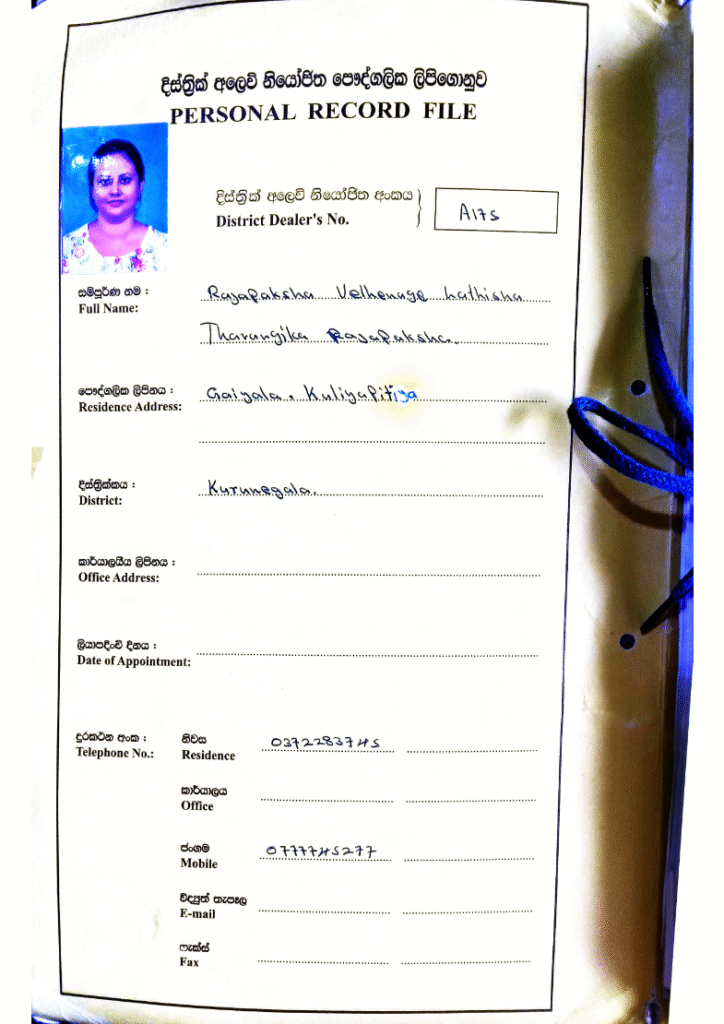
November 03, Colombo (LNW): The Chairman of the National Lottery Board (NLB), M.D.C.A. Perera, has stated that the institution will initiate legal proceedings against two women—identified as the wife of MP Hesha Withanage and the sister-in-law of former Minister Akila Viraj Kariyawasam—on allegations of financial misconduct.
Perera revealed during a recent press briefing that the accused, who were employed as district representatives of the NLB, are suspected of misappropriating funds exceeding Rs. 120,000 from the sale of over half a million lottery tickets.
In response to the allegations, United National Party (UNP) General Secretary Akila Viraj Kariyawasam addressed the media in Colombo on Friday (01), denying any involvement in the matter. He asserted that he had not issued letters authorising his relatives to act as sales representatives for the board.
However, documents allegedly dating back to 2016 have emerged, appearing to contradict his statement by showing letters that facilitated the appointment of new representatives to the NLB.