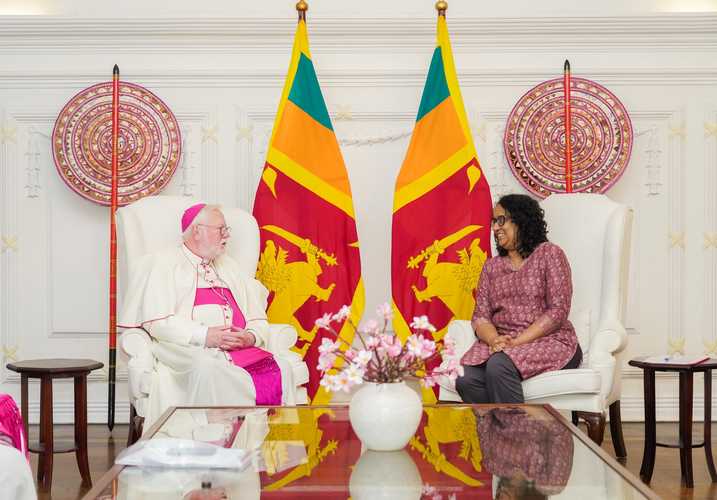
November 04, Colombo (LNW): Archbishop Paul Richard Gallagher, the Vatican’s Secretary for Relations with States and International Organisations, has met with Prime Minister Dr Harini Amarasuriya during his official visit to Sri Lanka. The discussion took place at Temple Trees, the Prime Minister’s official residence, according to a statement from her office.
He was accompanied by Rev. Monsignor Roberto Lucchini, Chargé d’Affaires of the Holy See’s Embassy in Colombo, and Rev. Monsignor Tomislav Zubac, Second Secretary of the Vatican Secretariat of State.
Archbishop Gallagher arrived in the country on November 03 and is scheduled to remain until 8 November, as confirmed by the Ministry of Foreign Affairs. His visit comes at the invitation of Minister of Foreign Affairs, Foreign Employment and Tourism, Vijitha Herath, to mark half a century of diplomatic relations between Sri Lanka and the Holy See.
During his stay, the Archbishop is expected to meet with President Anura Kumara Dissanayake and take part in a special commemorative event in Colombo celebrating the 50th anniversary of diplomatic ties. He is also set to deliver an address at the ceremony, which will highlight the enduring partnership between the Vatican and Sri Lanka.
In addition to official engagements, Archbishop Gallagher’s itinerary includes visits to culturally and spiritually significant sites across the island, including churches impacted by the Easter Sunday attacks of 2019, as part of efforts to express solidarity and strengthen interfaith dialogue.
Vatican’s Foreign Affairs Chief Meets Sri Lankan Prime Minister During Official Visit
CID Warns Public of Surge in WhatsApp-Based Financial Scams

November 04, Colombo (LNW): The Criminal Investigation Department (CID) has reported a sharp increase in complaints linked to individuals being deceived into transferring money through fraudulent WhatsApp messages.
Assistant Superintendent of Police W. G. Jayanethsiri revealed that the department has received a significant number of such reports in recent days, urging users to remain vigilant when communicating via WhatsApp and other messaging platforms.
Explaining how the scam unfolds, he noted that fraudsters typically impersonate well-known or respected individuals by using phone numbers linked to their identities. They then send messages crafted to appear genuine — often referencing routine activities such as online meetings or professional discussions.
Victims are invited to join a supposed virtual meeting through a link, followed by a request to share a verification code allegedly needed for participation. However, this code is in fact a One-Time Password (OTP) sent by WhatsApp itself. By obtaining this OTP, scammers gain complete control of the victim’s WhatsApp account, giving them access to personal information, messages, and contacts.
Once in control, the impostors send messages to the victim’s friends, colleagues, or family members, claiming to face an emergency and requesting money transfers. Many recipients, trusting the apparent sender, send funds before realising they have been deceived.
ASP Jayanethsiri cautioned that many victims only discover their accounts have been compromised after several days, by which time multiple people may already have fallen prey to the scheme. He urged the public to avoid sharing verification codes or personal information through messaging apps and to verify any unusual requests directly via a phone call or in-person confirmation.
GovPay Surpasses Rs. 1 Bn in Digital Transactions for Government Services

November 04, Colombo (LNW): Sri Lanka’s GovPay digital payment platform has crossed a major milestone, processing transactions exceeding Rs. 1 billion since its launch, according to the Ministry of Digital Economy.
Designed to simplify and secure payments for public services, GovPay enables both individuals and businesses to settle a wide range of government dues online — including taxes, fines, educational fees, utility bills, and other official charges — through banks and approved digital finance systems.
Official figures released on November 03 indicate that 40,969 transactions, totalling Rs. 1,007,997,008, have been completed so far via GovPay, covering 200 government agencies across the island.
The initiative, administered by LankaPay under the oversight of the Information and Communication Technology Agency (ICTA) and the Central Bank of Sri Lanka, has been credited with improving efficiency, accountability, and transparency in state financial management. By digitising payment processes, the platform aims to reduce manual handling of funds while ensuring real-time traceability and accuracy.
GovPay was officially launched in February 2025 under the guidance of President Anura Kumara Dissanayake and the Minister of Digital Economy. The project continues to expand in stages, with further integration planned to bring additional public services into the digital payment ecosystem.
Chemmani Mass Grave Excavation Delayed After Heavy Rainfall Floods Site
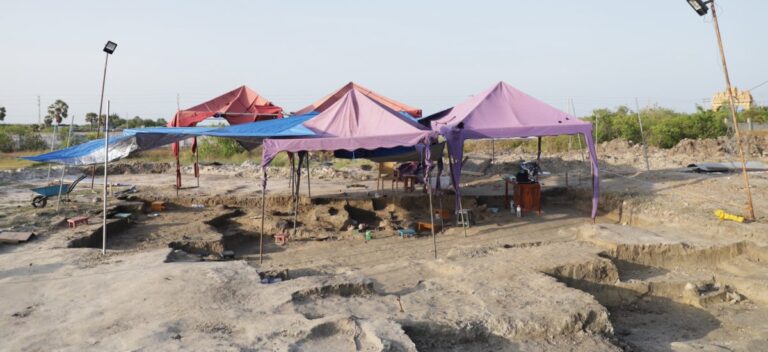
November 04, Colombo (LNW): The planned third phase of excavation at the Chemmani mass grave has been temporarily halted after heavy rainfall caused significant water accumulation within the burial area.
Authorities confirmed that excavation work could not proceed under the current conditions, as the standing water has made the site unsafe and unsuitable for further digging. During the first two stages of excavation, investigators uncovered 240 sets of human skeletal remains, of which 239 were exhumed for forensic examination.
A delegation, including Jaffna Magistrate S. Lenin Kumar, the Judicial Medical Officer, and a group of legal representatives, recently visited the location to review progress and discuss the next steps. Upon inspection, the team noted that persistent rain had submerged sections of the site, making it impossible to continue excavation until the area is properly drained and stabilised.
Although funds for the third phase have already been secured, officials have agreed to delay further work until conditions improve.
The inspection team is scheduled to return to Chemmani on January 19, 2026 to re-evaluate the situation and determine a suitable date to resume operations.
The Chemmani site remains one of the most controversial mass graves in the region, with investigators committed to ensuring that all remains are recovered and examined with the utmost care and respect.
Teachers and Principals Demand Reversal of Extended School Term Decision
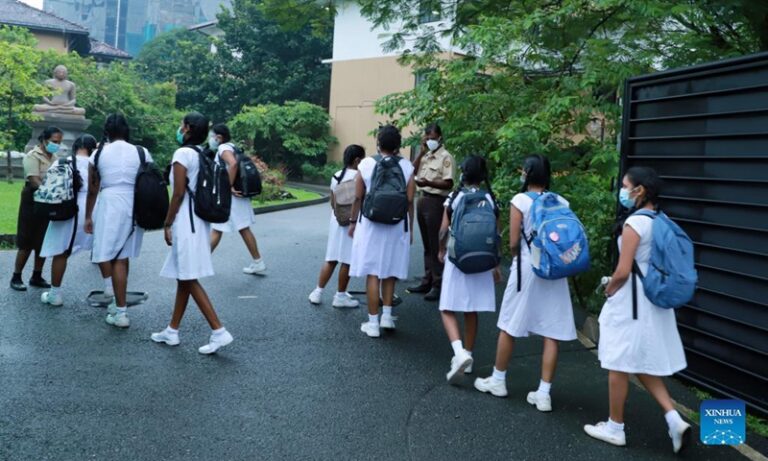
November 04, Colombo (LNW): The Teachers’ and Principals’ Trade Union Alliance has issued a firm ultimatum to the government, calling for the withdrawal of its recent decision to lengthen the current school term. The Alliance has given authorities until November 07 to reconsider the move, warning of serious repercussions should the demand go unheeded.
Speaking at a briefing in Colombo, Joseph Stalin, General Secretary of the Ceylon Teachers’ Union, criticised the government’s decision, arguing that it places an undue burden on both educators and students.
He noted that teachers have already endured challenging working conditions throughout the year and that any further extension to the term would exacerbate fatigue and disrupt family commitments during the upcoming holiday season.
The Alliance emphasised that if the government fails to retract the decision by the stated deadline, an island-wide campaign of trade union action will commence during the first week of December.
Such action, according to union representatives, could include strikes, protests, and other forms of organised dissent aimed at compelling the authorities to reconsider their stance.
Union leaders urged the Ministry of Education to engage in constructive dialogue and to prioritise the welfare of the teaching community and the education sector as a whole.
President AKD Names Hanif Yusoof as His Special Envoy to Drive Foreign Investment
By: Krishantha Prasad Cooray
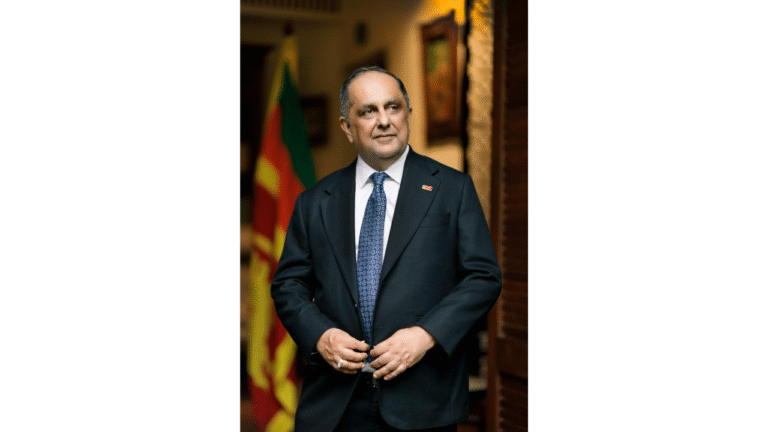
Hanif Yusoof represents the best of Sri Lankan business. Starting out making deliveries on a Honda motorcycle, he built Sri Lanka’s most valuable listed company, Expolanka Group.
When he left Expolanka, the company had grown from a tiny family run firm into a global multinational with offices in 39 countries. Expolanka was able to compete, thrive and swallow others in the fiercely competitive global logistics market. It was able to prove that a Sri Lankan company could play with the world’s best and beat them at their own game.
Expolanka’s prowess was so formidable, it attracted a buyout from Sagawa, the Japanese logistics giant. They retained Hanif because they knew he was the man who made it all happen.
That’s what President Anura Kumara Dissanayake, a consummate talent spotter, knew too. Which is why he appointed him as Western Province Governor and now the President’s Special Envoy on Foreign Investments as well.
This is the first time a President has appointed a Special Envoy for Foreign Investments, demonstrating the seriousness of the governments FDI drive and the priority it commands.
As Presidential Special Envoy for Foreign Investments he will engage strategically with international investors; lead efforts to strengthen investor confidence and champion reforms to unlock foreign direct investment. He will also coordinate across government to facilitate investment, including across the Board of Investment (BOI), Export Development Board (EDB), Port City Commision and line ministries.
As Sri Lanka climbs out of the hole of crisis, there is no one who can marshall the credibility and connections Hanif does.
With his extensive track record in international business leadership, his experience leading major global investment partnerships, and his longstanding contributions to Sri Lanka’s private sector development, he is the man for the job.
With someone like Hanif in the room, foreign investors will have the confidence to engage and invest. They will know that roadblocks will be removed and problems solved swiftly.
As a result, just as Upali Wijewardene brought Motorola to Lanka to build a semiconductor plant, we can expect Hanif and the crack team the President is putting together to deliver similar feats and take Sri Lanka’s foreign investments to the next level.
Several provinces to witness afternoon showers, thundershowers: Mainly fair weather to prevail elsewhere (Nov 04)

November 04, Colombo (LNW): Showers or thundershowers may occur at a few places in Sabaragamuwa, Central, Uva and Northern provinces and in Trincomalee district after 2.00 p.m., the Department of Meteorology said in its daily weather forecast today (04).
Mainly fair weather will prevail in the other areas of the island.
Misty conditions can be expected at some places in Central, Sabaragamuwa and Uva provinces and in Ampara district during the early hours of the morning.
The general public is kindly requested to take adequate precautions to minimise damages caused by temporary localised strong winds and lightning during thundershowers.
Marine Weather:
Condition of Rain:
Showers or thundershowers may occur at several places in the sea areas off the coast extending from Mannar to Mullaitivu via Kankasanthurai.
Mainly fair weather will prevail in the other sea areas around the island.
Winds:
Winds will be Westerly or variable in direction and speed will be (20-30) kmph.
Wind speed can increase up to (40-45) kmph at times in the sea areas off the coast extending from Puttalam to Pottuvil via Colombo, Galle and Hambantota.
State of Sea:
The sea areas off the coast extending from Puttalam to Pottuvil via Colombo, Galle and Hambantota will be fairly rough at times. The other sea areas around the island will be slight.
New Fiscal Regime Forces Major Consolidation of State Funds

By: Staff Writer
November 03, Colombo (LNW): Sri Lanka’s statutory and non-statutory funds being operated by various government institutions including ministries currently are to be absorbed into the consolidated fund before July 31 this year, the finance ministry circular revealed.
Statutory funds are established by law for specific purposes while non-statutory funds created by executive action or regulations rather than being explicitly mandated by law.
The aim of merging it and bringing it under treasury is to streamline public finance management. The process involves winding up non-statutory funds by the stated deadline.
Those funds previously managed separately will now be part of the central government’s financial resources. This is part of a broader effort to streamline government finances and improve financial management, according to the Treasury.
Some 210 such funds will be brought under the control of the treasury while shutting down a further 13 public funds in accordance with the provisions of the newly enacted Public Financial Management Act No.44 of 2024, which mandates the closure of all such unlinked state resources
A new system has been introduced to make changes on the scope, mandate and objectives of such funds to reflect the present day requirements under the direct and strict monitoring of the Treasury, a senior official on condition of anonymity told the Sunday Times Business.
All these funds will be made more efficient and transparent service providers, he said adding that it will raise the quality of the government’s fiscal policies.
A special committee appointed to look into the fund management has come to a conclusion that out of the total 210 funds reviewed, 105 funds have been identified as public funds, of which 10 funds have been identified as the highly impacted funds. Hence it requires further study to take policy decisions.
Based on the recommendations of the committee, 12 public funds have already been placed under the national budget department and it has identified that the continuation of 21 funds were not feasible to operate.
According to the Public Financial Management Act, any non-statutory fund should cease its operations from the date of coming into operation of the Act and will be dissolved within one year from such date, and those funds should be remitted to the Consolidated Fund.
In the event of winding up a non-statutory fund, the whole process will have to be completed before July 31 or early August this year, the treasury circular indicated.
The 13 funds listed to be closed are the National Botanical Garden Trust Fund, Judicial Infrastructure Maintenance Trust Fund, Road Maintenance Trust Fund, National Child Development Fund, Wild Life Trust Fund, Vehicle Emission Trust Fund, “Sisu Aruna” Scholarships Fund, “Mahindodaya” Scholarship Fund, “Sujatha Diyaani” Fund, Shipping Development Fund, Temporary Surplus Trust Fund, Self Employment Revolving Fund, and Dedicated Economic Centres Maintenance Fund.
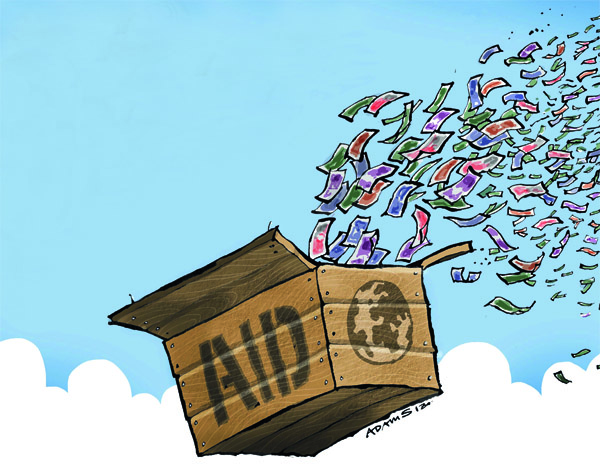
Sri Lanka Revamps Foreign Aid Policy to Drive Climate-Resilient Growth
By: Staff Writer
November 03, Colombo (LNW): In a decisive shift from fragmented donor-funded projects to a unified and strategic model, Sri Lanka has unveiled a major overhaul of its Official Development Assistance (ODA) framework under the new National Climate Finance Strategy 2025–2030, Finance Ministry sources revealed.
The strategy serves as the backbone for integrating donor commitments into the country’s national priorities focusing on building climate resilience, modernizing infrastructure, and mobilizing private investment.
The Ministry of Finance is now set to streamline the administration and disbursement of ODA, aligning it with international best practices to ensure funds are effectively channelled into key development areas such as renewable energy, sustainable water management, and coastal protection.
According to ministry data and donor announcements, Sri Lanka’s total ODA inflows for 2025 are projected to reach approximately US$4.7 billion, a significant increase compared to recent years. The surge stems from renewed engagement by major multilateral and bilateral partners.
The Asian Development Bank (ADB) is expected to allocate around US$900 million, while the World Bank Group’s multi-year package exceeds US$1 billion, with substantial commitments scheduled for 2025.
Further strengthening the funding envelope, India’s expanded grant assistance, estimated at US$780 million, and contributions from other bilateral partners and specialized climate initiatives have positioned Sri Lanka for one of its strongest ODA years in recent memory.
Officials emphasized that each of these financing streams whether loans, grants, or blended instruments will now be strategically aligned with the government’s long-term reform agenda. The Treasury and the Department of External Resources will prioritize bankable projects consistent with the Climate Finance Strategy, ensuring that development efforts produce tangible and sustainable outcomes.
A centralised monitoring mechanism will be introduced to track ODA utilization, while regular public impact reports are expected to enhance transparency and accountability. With donors increasingly focused on measurable results, Sri Lanka aims to demonstrate credible fiscal management and improved governance in external financing.
Oversight of concessional loans and blended instruments will fall under the Public Investment Committee, supported by capacity-building initiatives to strengthen institutional performance. Analysts note that the success of this reform will depend on how effectively the government can translate increased financial inflows into visible climate resilience and sustainable growth outcomes.
If implemented as planned with robust coordination, transparency, and accountability the 2025 ODA framework could mark a turning point, transforming donor support from short-term relief into a sustainable driver of Sri Lanka’s climate-resilient and inclusive economic growth.
Senior Savers Squeezed: 10 percent WHT Drains Life Savings

By: Staff Writer
November 03, Colombo (LNW): The Government’s decision to double the Withholding Tax (WHT) on interest income to 10 percent effective April 1, 2025, has begun tightening the noose around the life savings of thousands of retired citizens who depend almost solely on bank deposit interest to live.
Inserted in the Inland Revenue (Amendment) Act No. 2 of 2025, the new tax law will make it mandatory for all banks and financial institutions to withhold 10 percent of interest income as advance, irrespective of the amount of annual income of the depositor.
The government has asked the citizens receiving less than Rs 1.8 million to give a declaration to banks and financial institutions not to deduct the 10 percent and the financial institutions are doing it
However, citizens getting more than 1.8 million up to Rs 4 million are the ones who are affected as WHT of 10% is more than the tax payable and since they are receiving more than 1.8 Mn cannot sign the declaration.
.While intended to strengthen revenue collection, the measure has unintentionally hit those least able to bear the burden, several senior citizens living off modest savings complained. .
They urged the government to
A senior with Rs. 3 million in fixed deposits now earns around Rs. 300,000 annually as interest, but faces an automatic deduction of Rs. 30,000 under the new system, they pointed out.
After applying the standard Rs. 1.8 million personal allowance, the actual tax payable may be less than Rs. 10,000.
Yet the Inland Revenue Department (IRD) holds the full Rs. 30,000, leaving the retiree to navigate a complex refund process that can stretch for months.
This system, taxes people beyond their true liability and expects them to beg for refunds later,” lamented Senaka Samaraweera a retired engineer from Galle . “For someone in their 70s, filling forms and visiting tax offices is not practical. Many of us just give up.”
Sri Lanka’s fiscal authorities are under immense pressure to raise revenue. The tax revenue has reached Rs. 3,400 billion by the fourth week of September, driven largely by new taxes and higher collection efficiency, finance ministry data shows.
As officials prepare the 2026 Budget, these disgruntled senior citizens called on President Anura Kumara Dissanayake provide some redress for their financial difficulty. With over a million elderly depositors contributing to government coffers through interest taxes, even a modest reform could restore faith and fairness in the system
A large group of retired public servants has appealed to the finance ministry to take corrective steps in the 2026 Budget. They recommended establishing a simple exemption declaration for low-income seniors at bank level and introducing automatic refund credits for overpayments within 60 days.
The group argued that “a fair taxation policy must balance fiscal need with compassion for ageing citizens who have contributed to the nation’s growth for decades.”
According to Census data, Sri Lankans aged 60 and above now account for nearly 18 percent of the population about 3.9 million people. Of these, analysts estimate around one million elderly depositors are currently subject to WHT deductions.
For many, this tax is not merely a fiscal inconvenience but a direct reduction in essential income used for food, medicine, and utility bills.
A national advocacy group for the elderly, has voiced deep concern over what it calls “a policy that taxes the vulnerable to fill budget gaps.”
In a recent statement, the organisation noted that the WHT revision “creates refund barriers so high that thousands of seniors will effectively pay more than their fair share.”
Economists and social policy experts are calling on the Government to urgently revisit the policy before the upcoming Budget.
A high official of the finance ministry, noted that withholding tax systems are intended to simplify compliance, not punish low-income savers. “When interest earnings form the only income for many seniors, automatic deductions without regard to thresholds distort the equity of the tax system,” he said.
In response to mounting public pressure, the Finance Ministry has introduced a special fixed deposit scheme offering an extra 3 percent interest rate for citizens over 60 with deposits up to Rs. 1 million, funded through a Rs. 15 billion state allocation.
However, this initiative only applies to new deposits and provides no immediate relief for those already over-taxed under the WHT regime.