Home Blog Page 32

Government Moves to Fast-Track Highlands Protection Authority After Cyclone Damage

0

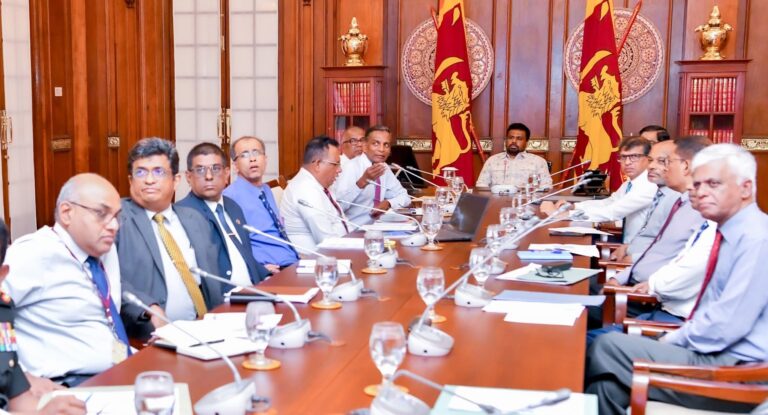
April 30, Colombo (LNW): A high-level meeting convened yesterday (29) at the Presidential Secretariat focused on accelerating plans to create a specialised body tasked with safeguarding and rehabilitating the Central Highlands. The discussion was chaired by President Anura Kumara Dissanayake.

During the session, the President underscored the pressing need for decisive action to restore the region, which has suffered extensive environmental degradation after a series of landslides linked to the recent Cyclone Ditwah. Officials highlighted that the scale of destruction has exposed long-standing vulnerabilities in the highland ecosystem.

In response, the government has resolved to establish a dedicated authority with a clear mandate to oversee conservation efforts in the upper catchment areas. This institution will also be responsible for tackling broader environmental concerns while ensuring the long-term protection of the Central Highlands.

The meeting included a comprehensive review of progress made so far, particularly in relation to drafting the necessary legal framework. Participants presented a range of proposals and technical insights aimed at strengthening the proposed authority’s structure and effectiveness.

After considering these recommendations, the President directed relevant agencies to move swiftly in implementing the next steps, signalling an urgency to transition from planning to action.

Once operational, the new authority is expected to play a central role in restoring degraded landscapes and coordinating efforts across multiple sectors. Its responsibilities will extend beyond conservation to encompass critical national priorities such as water and food security, disaster preparedness, energy efficiency, and climate resilience. It is also anticipated to contribute to more systematic valuation and management of the country’s natural resources.

Afternoon showers, thundershowers persist across Island (April 30)

0

April 30, Colombo (LNW): Showers or thundershowers will occur in the most parts of the island after 1.00 pm, the Department of Meteorology said today (30).

Fairly heavy falls above 50 mm are likely at some places in Sabaragamuwa, Central and North-central provinces and in Trincomalee district.

Showers are likely at some places in Southern province and in Kalutara district during the morning too.

Misty conditions can be expected at some places in Central, Sabaragamuwa, North-central and Uva provinces.

The general public is kindly requested to take adequate precautions to minimise damages caused by temporary localised strong winds and lightning during thundershowers.

Marine Weather:

Condition of Rain:
Showers or thundershowers will occur at several places in the sea areas off the coast extending from Puttalam to Hambantota via Colombo and Galle.

Winds:
Winds will be South-westerly and wind speed will be (25-35) kmph. Wind speed can increase up to 45 kmph at times in the sea areas off the coast extending from Puttalam to Kankasanthurai via Mannar.

State of Sea:
The sea areas off the coasts extending from Puttalam to Kankasanthurai via Mannar will be fairly rough at times. The other sea areas around the island can be slight to moderate.

Temporarily strong gusty winds and very rough seas can be expected during thundershowers.

A Breach Foretold: How Sri Lanka Failed to Stop a Preventable Cyber Heist

0

LISTEN TO STORY

WATCH STORY

By: Pramod Chinthaka Peiris

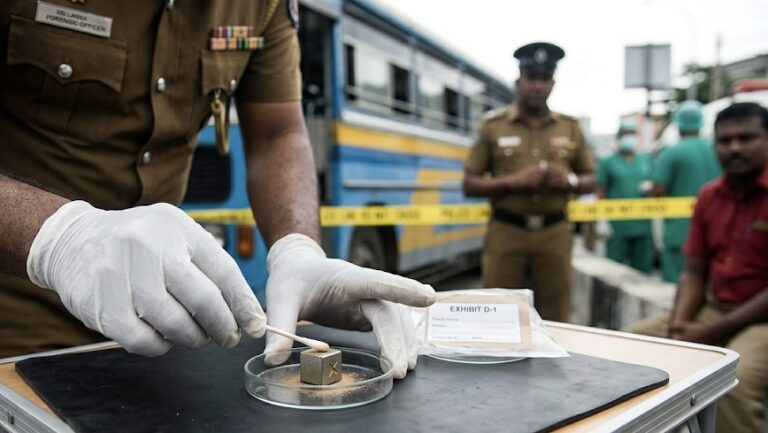
April 29, Colombo (LNW): Sri Lanka’s largest-ever state cyber theft, amounting to a staggering $2.5 million, has exposed a profound failure in governance, not merely of technology but of foresight. The breach, which targeted the Finance Ministry in early 2026, was not the result of an unforeseeable cyber onslaught. Instead, it was the culmination of neglected warnings, ignored safeguards, and a systemic failure to address one of the most basic and preventable threats in the digital age: spam-driven phishing attacks.

At its core, the incident illustrates the dangerous intersection between hacking and spamming—two distinct yet increasingly interconnected cyber threats. While hacking involves the exploitation of system vulnerabilities to gain unauthorised access, spamming relies on mass unsolicited communication, often as a vehicle for deception. In this case, the latter appears to have served as the gateway for the former.

The Anatomy of a Preventable Breach

The attack unfolded when hackers infiltrated government systems and altered bank details linked to sovereign debt repayments intended for international creditors, including Australia and potentially India. The manipulation went undetected until the intended recipients themselves raised the alarm. By then, millions had already been siphoned away.

What makes this breach particularly alarming is not merely its scale, but its simplicity. Evidence strongly suggests that the attackers gained initial access through phishing emails—messages designed to appear legitimate while tricking recipients into divulging credentials or executing malicious instructions. Such methods do not require sophisticated exploits; rather, they prey on predictable human behaviour and weak institutional safeguards.

Globally, phishing remains one of the most successful cyberattack vectors, with studies indicating that approximately 81% of breaches stem from human error, often triggered by deceptive emails. In Sri Lanka’s case, this pattern appears to have repeated itself with costly consequences.

A Failure to Address the Obvious

Perhaps the most damning aspect of the incident is the government’s failure to implement well-established anti-spam measures. Modern cybersecurity frameworks emphasise preventative tools such as email authentication protocols—SPF, DKIM, and DMARC—which can block up to 99% of spam and phishing attempts when properly deployed. These are not cutting-edge innovations but standard practices in even moderately secure systems.

Yet, Sri Lankan authorities appear to have overlooked these basic defences. There was no evidence of robust email filtering systems, no comprehensive staff training programmes to identify phishing attempts, and no sustained public awareness campaigns. The absence of these measures created an environment in which malicious emails could circulate freely, eventually enabling unauthorised access to critical financial systems.

Compounding this failure was the lack of real-time monitoring. A functioning National Cyber Security Operations Centre (NCSOC), operating with continuous oversight, could have detected anomalies in financial transactions or suspicious system activity at an early stage. Instead, the breach remained undetected until external parties intervened.

Structural Weaknesses and Policy Paralysis

The breach did not occur in a vacuum. Since as early as 2020, proposals for a comprehensive Cyber Security Act and the strengthening of the Government Computer Emergency Readiness Team (GCERT) had been under discussion. However, implementation delays meant that these frameworks remained largely theoretical at the time of the attack.

This policy inertia proved costly. Without enforceable standards or coordinated oversight, government institutions were left to manage cybersecurity risks in a fragmented and inconsistent manner. Basic practices—such as timely software updates, secure configurations, and multi-factor authentication—were either inadequately applied or entirely absent.

The situation is further exacerbated by Sri Lanka’s ongoing digital transformation initiatives, including programmes aimed at modernising public services. While these efforts are essential for economic recovery and efficiency, they also expand the attack surface. Without corresponding investments in cybersecurity—particularly in areas as fundamental as spam prevention—such initiatives risk becoming liabilities rather than assets.

Lessons Ignored, Consequences Paid

The tragedy of this breach lies in its preventability. Unlike sophisticated zero-day exploits or highly targeted cyber-espionage campaigns, phishing-based attacks can be effectively mitigated through relatively low-cost measures. Spam filters, authentication protocols, and user awareness training form the first line of defence, often stopping malicious communications before they reach their targets.

Had these measures been properly implemented, the outcome could have been markedly different. Phishing emails might have been blocked at the gateway, suspicious links flagged, and fraudulent instructions identified before any financial damage occurred.

Instead, the government’s failure to act on known vulnerabilities allowed a preventable threat to escalate into a national financial crisis. The incident serves as a stark reminder that in cybersecurity, negligence is often more dangerous than ignorance.

What Happens Next?

To prevent a recurrence, Sri Lanka must urgently shift from reactive to proactive cybersecurity governance. This includes enforcing pending legislation, strengthening institutional capabilities, and prioritising basic yet highly effective measures such as spam prevention and user education.

The introduction of mandatory email authentication standards, continuous monitoring systems, and nationwide awareness campaigns could significantly reduce the risk of similar attacks. Equally important is the need for accountability—ensuring that failures of this magnitude are thoroughly investigated and addressed at both technical and administrative levels.

In the final analysis, the $2.5 million loss is not merely a financial setback but a warning. It underscores the cost of complacency in an era where the most dangerous threats are often the simplest to prevent.

Children Take Their Fight to Minister as Campaign Against School Corporal Punishment Continues

0

By: Isuru Parakrama

April 29, Colombo (LNW): Two young child rights advocates have once again brought Sri Lanka’s long-running debate over corporal punishment into the spotlight, urging the government to close legal loopholes that they say continue to leave children vulnerable in schools despite a recent official ban.

Sahil Manan (11), and Shashyanu Deeghayu Munasinghe (10) have become determined voices in the campaign to end physical punishment of children in educational institutions. The pair first met the Minister of Women and Child Affairs, Saroja Savithri Paulraj, in February last year alongside members of the Child Protection Alliance, where they appealed for stronger legal protections for children.

During that meeting, the minister reportedly assured them that child protection remained a priority for the government. The children left encouraged that meaningful change would soon follow.

However, their optimism faded when planned legal reforms aimed at fully abolishing corporal punishment stalled later in the year, leaving existing provisions in place that campaigners say still permit abusive disciplinary practices under certain circumstances.

Their hopes were briefly revived earlier this month when the Ministry of Education issued Circular 11/2026, formally informing schools that corporal punishment is prohibited. The circular warned that anyone found using physical punishment against children would face action “in terms of the law”.

Yet for Sahil and Shashyanu, the announcement did not go far enough.

In an open letter addressed to the minister ahead of the International Day to End Corporal Punishment (April 30), the children praised the circular but warned that the current legal framework remains inadequate because of loopholes that could undermine enforcement.

They wrote that without changing the law itself, the circular alone would not be enough to ensure children are genuinely protected in classrooms across the country.

The children also reminded the minister that Sri Lanka made international commitments at the First Global Ministerial Conference to End Violence Against Children held in Bogotá in November 2024. Among those pledges were promises to legally prohibit corporal punishment and to create safer school environments by training teachers in positive discipline methods by mid-2025.

According to the two campaigners, those commitments remain unfulfilled, leaving many children still exposed to violence in places meant to provide safety and learning.

In their letter, Sahil and Shashyanu expressed disappointment that many of their peers continue to suffer in silence because they are too frightened to speak openly about abuse by adults in authority. They said they felt compelled to speak not only for themselves but also for countless children who cannot safely raise their voices.

Their appeal also drew attention to growing international evidence about the harm caused by corporal punishment. They referenced a report published by the World Health Organization in August 2025 outlining both the immediate and long-term physical and psychological consequences of children being subjected to violent discipline.

The young advocates argued that ending corporal punishment would not simply protect individual children, but could reshape Sri Lankan society for generations by fostering safer and more respectful learning environments.

“On behalf of all children in Sri Lanka, we urge you to make the promises made in 2024 come true,” they wrote in their closing appeal to the minister.

Their campaign has now become a powerful reminder that the push for children’s rights in Sri Lanka is no longer being led solely by adults — but increasingly by children themselves, demanding that the country match its promises with action.

Full Letter:

Open letter to the Minister of Women and Child Affairs, Hon (Mrs.) Saroja Savithri Paulraj,on the International Day to End Corporal Punishment.

30th April, 2026

Dear Minister Paulraj,

We hope you remember us. We came to meet you on February 28th, 2025 with the Child Protection Alliance to talk about ending corporal punishment in schools in Sri Lanka. This was the photo we took on that day.

You assured us that protecting children was a priority for your government. At the beginning of this month, we were happy to hear that the Education Ministry issued circular 11/2026 informing schools that corporal punishment is banned.

The circular also said that anyone who uses corporal punishment on children will be dealt in terms of the law. But the law has loopholes in it. That’s why we asked, when we met you, for the law to be changed. Unless the law is changed, the circular alone won’t protect children in schools.

At the First Global Ministerial Conference to End Violence Against Children in Bogota in November 2024, Sri Lanka made 4 promises. Two of them were to ban corporal punishment by law, and to create safer schools by training teachers on positive discipline, both by mid-2025. These are published on the website of your Ministry. 

We are disappointed that our friends are still suffering in schools because these promises have not been kept. The World Health Organization published a report in August 2025 on the short-term and long-term consequences of corporal punishment. We believe you will agree with us, that it is not fair for our friends to continue to face the risk of these consequences.

Banning corporal punishment will make a huge impact to the society of Sri Lanka, for generations to come. It is our hope that no child will ever have to face being hit, injured, or hurt in any other way. 

Because the two of us are safe from corporal punishment, we can talk openly about it. But we know, from friends and family, that most children are afraid to speak about it. So, on behalf of all children in Sri Lanka, we urge you to make the promises made in 2024 come true.

Thank you,

Sahil Manan (11 years old) and Shashyanu Deeghayu Munasinghe (10 years old)

How Can Deloitte Conduct the NDB Forensic Audit? Will it Be a Cover-Up? 

0

By Adolf

The appointment of Deloitte to conduct the forensic audit of National Development Bank PLC (NDB), following the Rs. 13.2 billion internal fraud, raises serious and unavoidable questions around independence, governance, and regulatory judgment. The engagement is reportedly led by Romal Shetty, CEO of Deloitte South Asia. His proximity to Sri Lanka is not incidental—he was in the country in November 2023, shortly after Deloitte’s acquisition of PwC Sri Lanka & Maldives. At the time of that transition, Sujeewa Mudalige was the Lead Partner for PwC Sri Lanka & Maldives. Today, he sits on the Board of NDB as an Independent Non-Executive Director and, critically, as Chairman of its Board Audit Committee—the very committee responsible for overseeing financial integrity.

This is not a marginal overlap. It goes to the heart of governance credibility. According to NDB sources, the two are also friends. At best, this represents a perception problem. At worst, it points to a structural conflict of interest between the leadership of the firm conducting the forensic audit and the individual heading the audit oversight mechanism of the institution under investigation. In the tightly networked professional circles of South Asia’s Big Four ecosystem, it would be naïve to assume no prior familiarity or professional intersection.

Equally troubling is the complete lack of transparency around the selection process. How was Deloitte India chosen? Who evaluated the alternatives? Were other firms considered? In a matter of this magnitude, opacity is not acceptable—it erodes confidence before the audit even begins.

A non-independent report

While the appointment is said to have been made by the NDB Board, the audit findings are to be reported directly to the Central Bank of Sri Lanka (CBSL). This duality exposes a deeper concern: a Board commissioning an audit it does not fully control, and a regulator receiving findings from a process in which it appears to have had influence.

The terms of reference remain undisclosed. Critically, it is unclear whether the scope of the forensic audit will extend to examining regulatory oversight, including the role—or failure—of the CBSL during the period in which the fraud took place. This is where the issue becomes most serious.

If the regulator has played any role in selecting the auditor, influenced the terms, and is simultaneously a potential subject of scrutiny, then the entire exercise risks being seen as compromised. Independence cannot exist where oversight, participation, and review intersect. In a crisis of this scale, credibility is everything. Without absolute clarity on independence, scope, and process, this forensic audit risks being viewed not as a search for truth—but as an exercise in containment.And in the final analysis; why is NDB reluctant to bring in KPMG or BDO to conduct the audit? The answer is clear.

Sri Lanka Cricket Under Ministry Oversight as Minister Accepts Resignation of Shammi Silva and Executive Committee

0

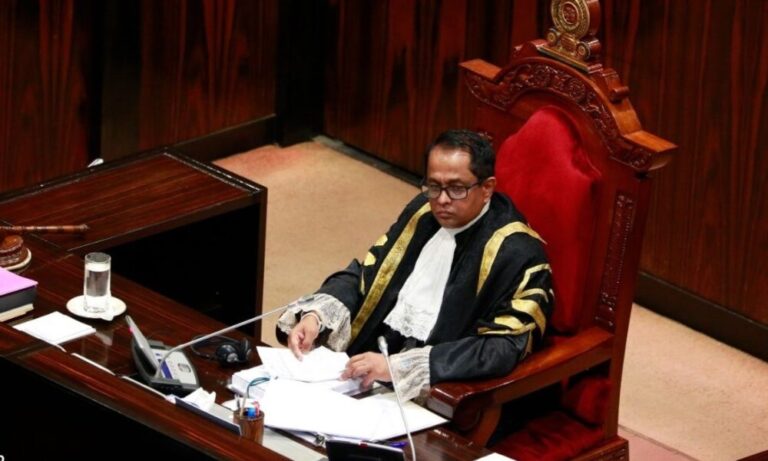
April 29, LNW (Colombo): The Minister of Sports has today accepted the resignation of the President of Sri Lanka Cricket (SLC), Mr. Shammi Silva, along with the Executive Committee.

Accordingly, under the powers vested in him by Sections 31 and 34 of the Sports Law No. 25 of 1973, all administrative functions of Sri Lanka Cricket will be temporarily placed under the Ministry of Youth Affairs and Sports, effective immediately.

A committee is expected to be appointed shortly to identify solutions to the current issues in cricket and to implement structural reforms.

ICT Market Entry in Japan Faces Conversion Challenges

0

Sri Lanka’s growing engagement with Japan’s technology sector has been highlighted by its participation at Japan IT Week Spring 2026. Although the event generated significant interest, questions remain about whether these initial gains can be converted into tangible export revenue and long-term partnerships.

A delegation of ten Sri Lankan ICT companies participated in the exhibition, collectively securing more than 300 business leads. The Export Development Board has estimated future business potential at over $2 million, along with opportunities for partnerships and joint ventures. However, industry observers emphasize that such figures reflect early-stage discussions rather than finalized agreements.

The Japanese market is known for its high entry barriers, including strict quality standards, detailed contract requirements, and a preference for long-term business relationships. For many small and medium-sized Sri Lankan firms, meeting these expectations can be challenging without sustained investment and local representation.

The companies showcased a variety of digital solutions, including software development, artificial intelligence, and IT-enabled services. These sectors align well with Japan’s demand for advanced technology solutions, particularly in areas such as automation and digital transformation. However, competition is intense, with established global players already dominating the market.

Support for the initiative came through a partnership between the EDB, JICA, and the Sri Lankan Embassy in Japan. Since its launch in 2024, the program has aimed to strengthen Sri Lanka’s ICT presence in Japan by providing targeted support to around 30 companies. This includes training, market insights, and opportunities to connect with potential Japanese clients.

As part of the preparation for the exhibition, participants attended seminars and networking sessions focused on understanding Japanese business culture and improving engagement strategies. They also visited innovation hubs and business centers to gain insights into Japan’s technology ecosystem.

Despite these efforts, the main challenge lies in follow-through. Many international trade missions generate strong initial interest, but only a fraction of leads typically result in actual contracts. Without continuous engagement, including regular communication and on-the-ground presence, potential deals may not materialize.

Another concern is the scale of expected returns. While $2 million in potential business is a positive outcome, it remains relatively modest in the context of Sri Lanka’s broader export targets. To make a significant impact, such initiatives will need to be expanded and supported by a larger pool of companies and resources.

For Sri Lanka, the Japanese market represents both an opportunity and a test. Success will depend on the ability of local firms to adapt to demanding conditions and build long-term relationships. It will also require consistent support from policymakers to address structural challenges and improve competitiveness.

As the country continues to promote its ICT sector globally, the experience at Japan IT Week 2026 highlights an important reality: generating interest is only the first step. Turning that interest into sustained export growth remains the bigger challenge.

Chinese Tourist Growth Masks Gaps in Revenue Gains

0

Sri Lanka’s renewed tourism engagement with China under the Belt and Road Initiative (BRI) is being promoted as a major boost to the island’s travel sector. However, a closer look at visitor numbers and revenue trends reveals a more complex picture, where rising arrivals have not fully translated into strong economic returns.

As of April 2026, an estimated 95,000 to 110,000 Chinese tourists have visited Sri Lanka since the beginning of the year. This marks a clear recovery from the pandemic years, yet it remains below pre-2019 levels when Chinese arrivals exceeded 265,000 annually and ranked among the top inbound markets.

Revenue generated from these visitors is estimated between $90 million and $110 million for the first four months of 2026, based on average spending of $900 to $1,100 per tourist. While this is a meaningful contribution to foreign exchange earnings, analysts argue that the figures fall short of the segment’s full potential.

A key reason lies in the structure of Chinese tourism. Many visitors arrive on pre-arranged group tours organized by overseas travel companies. These packages often include accommodation, transport, and meals at fixed rates, limiting the amount of money spent within Sri Lanka. As a result, a portion of the revenue is retained outside the local economy.

In response, the government has sought to strengthen ties with China through institutional partnerships. Recent discussions during an official visit to a tourism college in Sichuan resulted in proposals such as a Sichuan Cuisine Academy, joint research initiatives on mountain tourism, and expanded student exchange programs. These efforts aim to build long-term collaboration and improve tourism skills and services.

However, critics question whether such initiatives will deliver immediate economic benefits. They point out that more pressing challenges remain unresolved, including limited flight connectivity, visa processing delays, and insufficient targeted marketing campaigns in China.

Competition from other Asian destinations is also increasing. Countries like Thailand and Vietnam have invested heavily in infrastructure and promotions tailored to Chinese travelers, making it harder for Sri Lanka to capture a larger share of this market.

Ultimately, the issue is not just about increasing visitor numbers but improving the quality of tourism revenue. Higher spending, longer stays, and broader participation of local businesses are essential for maximizing benefits.

While the upward trend in Chinese arrivals is encouraging, the gap between potential earnings and actual returns remains significant. Bridging this gap will require more focused strategies that prioritize economic impact alongside visitor growth.

Diesel Import Controversy Sparks Corruption Concerns and Probes

0

Allegations of irregularities in Sri Lanka’s diesel import process have intensified concerns over transparency and governance, with a formal complaint now calling for an investigation into procurement decisions that may have cost the state millions. The controversy highlights deeper flaws in the country’s fuel purchasing framework, particularly the interplay between tender processes and ad hoc spot buying.

The complaint, lodged with the Commission to Investigate Allegations of Bribery or Corruption (CIABOC), centers on claims that procurement decisions deviated from standard competitive practices. According to the, allegation, an unsolicited supplier was granted a deal with a premium of $45 per barrel for a shipment of 248,000 barrels, while a lower bid quoting $38 per barrel was reportedly rejected. Such discrepancies have raised questions about whether due process was followed and whether the state received value for money.

At the heart of the issue is the growing reliance on spot purchasing. While tenders are designed to ensure transparency and competitive pricing, spot purchases are often executed under time pressure, reducing scrutiny. This creates an environment where pricing irregularities can occur, particularly during periods of global supply disruption.

The current global context has exacerbated these risks. Supply constraints linked to geopolitical tensions in the Middle East have tightened markets, pushing up prices for both crude and refined products. However, experts argue that while external factors explain rising costs, they do not justify procurement inefficiencies or the acceptance of unusually high premiums.

Sri Lanka’s aging refining infrastructure further complicates the situation. Limited flexibility in processing different crude types has increased dependence on imported refined products, which are typically more expensive. This dependence amplifies the financial impact of procurement decisions, making transparency even more critical.

The financial implications extend beyond individual transactions. With domestic fuel prices kept below cost, losses incurred through overpriced imports are effectively transferred to the պետական balance sheet. This not only strains public finances but also undermines confidence in economic management.

The complaint to CIABOC calls for a thorough examination of documentation, decision-making processes, and the roles of officials involved. It also urges authorities to pursue legal action if wrongdoing is established. Such investigations are seen as essential to restoring credibility and ensuring accountability.

However, analysts caution that addressing individual cases will not be enough. Broader reforms are needed to strengthen procurement governance, including clearer guidelines for spot purchases, enhanced oversight mechanisms, and greater public disclosure of contracts.

As Sri Lanka navigates a challenging energy landscape, the integrity of its fuel procurement system will remain a critical issue. Ensuring that imports are conducted transparently and efficiently is not only a matter of financial prudence but also a key component of rebuilding public trust in state institutions.

Stalled Housing Schemes Expose Deep Policy Failures Nationwide

0

The government’s recent decision to appoint an expert committee to revive thousands of stalled housing projects underscores a long-standing structural failure in Sri Lanka’s public housing delivery system. Originally launched between 2015 and 2019, the National Housing Development Authority (NHDA) program envisioned 2,562 projects and over 64,000 housing units aimed at low- and middle-income families. Yet, nearly a decade later, only a fraction has materialized, raising urgent questions about accountability, financing, and policy continuity.

Out of the planned developments, just 386 villages have been completed, delivering slightly over 10,500 housing units barely 16 percent of the original target. The remaining projects remain in limbo, stalled by funding gaps, contractor disputes, land issues, and weak institutional coordination. Officials now estimate that an additional Rs. 11.26 billion is needed to complete the unfinished units, a figure likely to increase amid inflation and rising construction costs.

The issue is not limited to NHDA projects. Urban Development Authority (UDA) housing programs, particularly high-rise apartment schemes intended for underserved urban populations, have also faced delays. As of April 2026, government data indicates that fewer than 40 percent of UDA-led housing units planned since 2020 have been completed. Several high-profile relocation projects in Colombo and suburban areas remain partially built, with some beneficiaries still waiting years after being displaced.

The current administration, which has been in office for roughly 16 months, pledged to accelerate housing construction as part of its broader economic recovery strategy. However, progress has been widely criticized as sluggish. Industry analysts point to a combination of fiscal constraints, limited private sector participation, and bureaucratic inertia as key barriers. Capital expenditure on housing has remained below projected levels in consecutive budgets, reflecting the government’s tight fiscal position under ongoing economic reforms.

The newly appointed committee is expected to recommend targeted interventions, including prioritizing genuinely vulnerable families, restructuring loan recovery mechanisms, and streamlining project management. While these steps are necessary, critics argue they may not be sufficient without broader institutional reform.

There is also concern about the sustainability of beneficiary loan schemes, which account for more than half of the planned villages. High default rates and weak monitoring systems have undermined revolving funds meant to finance new projects. Without stronger financial oversight, similar initiatives risk repeating past failures.

Ultimately, the housing crisis reflects deeper governance challenges. For thousands of families still waiting for promised homes, the issue is not just about delayed construction it is about trust in public institutions. Whether the new committee can translate recommendations into tangible outcomes remains to be seen, but expectations are understandably cautious.