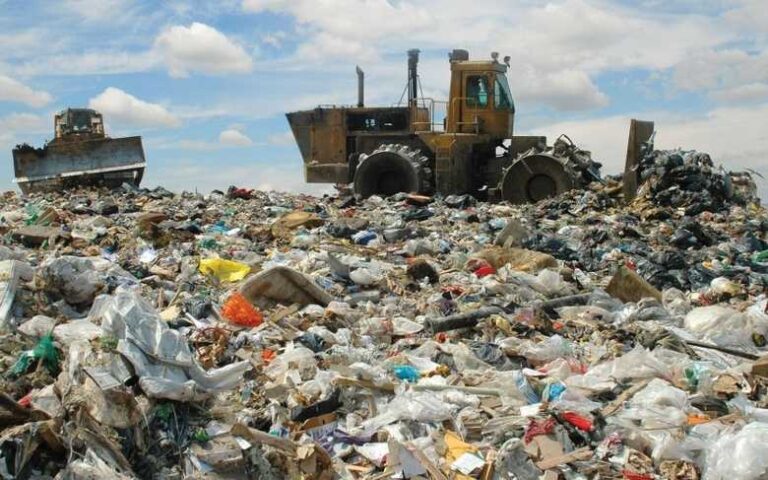
October 27, Colombo (LNW): The Colombo Municipal Council (CMC) has announced a renewed push to confront the mounting waste management crisis in the capital, with daily garbage output now reaching nearly 450 tonnes.
Colombo Mayor Vraie Cally Balthazaar has called for “innovative and sustainable” solutions to address what she described as one of the city’s most pressing environmental challenges.
In a recent statement, Mayor Balthazaar stressed the need to move beyond short-term fixes and invest in long-term waste management systems that are both efficient and environmentally responsible. At present, a majority of Colombo’s solid waste is transported to the Kerawalapitiya waste-to-energy facility—the only such plant currently operating in Sri Lanka.
However, the Mayor acknowledged that relying solely on this site is no longer sufficient to cope with the city’s growing waste volume.
The CMC, she said, is working closely with the Western Province Waste Management Authority (WMA) to develop a comprehensive strategy aimed at improving collection, recycling, and disposal processes. The goal is to create a cohesive framework that can serve not only Colombo but also neighbouring urban areas struggling with similar waste challenges.
As part of these efforts, CMC officials recently carried out field visits to the Karadiyana waste treatment facility and the Kerawalapitiya waste park. The visits were intended to review current operations, identify inefficiencies, and explore opportunities for collaboration with private-sector partners and local communities.
Reflecting on the inspections, Mayor Balthazaar described the experience as “eye-opening,” noting that it underscored the urgency of encouraging behavioural change among residents. She urged the public to take greater responsibility for reducing household waste, adopting recycling practices, and avoiding the overuse of plastics.
Colombo Mayor Unveils Plans for Sustainable Waste Management Amid Rising Garbage Concerns
Main Suspect in Weligama PS Chairman’s Murder Transferred to FCID for Further Investigation

October 27, Colombo (LNW): The main suspect arrested in connection with the assassination of Weligama Pradeshiya Sabha Chairman, Lasantha Wickramasekara—popularly known as “Midigama Lasa”—has been handed over to the Financial Crimes Investigation Division (FCID) for further questioning.
Two other suspects, including a woman, have also been transferred to the division, police confirmed today (27).
The move marks the beginning of the next stage of investigations, which will now be conducted under the direct oversight of the Inspector General of Police (IGP). The FCID is expected to probe deeper into possible financial links, motives, and connections that may have led to the killing, which has shocked both the political and business communities in the Southern Province.
The suspects were initially taken into custody yesterday (26). Two men and a woman were apprehended in Kekirawa, while the alleged mastermind—who had reportedly fled the area following the attack—was later captured in Nawinna, Maharagama.
The arrest was the result of a joint operation involving the Police Special Task Force (STF), the State Intelligence Service (SIS), and local police units.
Wickramasekara, aged 38, was gunned down at his office in Weligama on October 22 by two assailants who entered the premises under the pretence of seeking his signature on a letter. He succumbed to his injuries while being treated at the Matara General Hospital. A pistol was used in the attack, according to forensic reports.
Police Headquarters has since confirmed that the suspected shooter responsible for the murder has also been arrested. The case is being handled by multiple divisions under the IGP’s supervision, including the Senior Deputy Inspectors General (DIGs) for the Southern and Western Provinces, the CID, the FCID, and the STF, with coordination across regional and intelligence units.
Over 780 Suspects Arrested in Nationwide Police Crackdown on Crime and Narcotics

October 27, Colombo (LNW): An extensive island-wide police operation carried out on yesterday (26) has led to the arrest of 781 individuals linked to a range of criminal, narcotics, and illicit liquor offences, according to the Police Media Division.
The large-scale operation, conducted simultaneously across all provinces, was part of an ongoing effort to curb rising criminal activity and strengthen public security.
Police officers inspected nearly 30,000 individuals during the coordinated raids, which targeted known hotspots and areas of concern identified through intelligence reports.
Out of those detained, 17 individuals were confirmed to have direct connections to organised criminal activity, while 485 suspects with outstanding warrants were also taken into custody.
Law enforcement teams additionally focused on traffic enforcement, resulting in the apprehension of 26 intoxicated drivers and 25 motorists charged with reckless driving. Another 4,306 individuals were cited for various traffic-related offences, including speeding, failure to wear helmets, and driving without valid documentation.
Government Imports Ponni Samba Rice to Ease Local Market Shortage
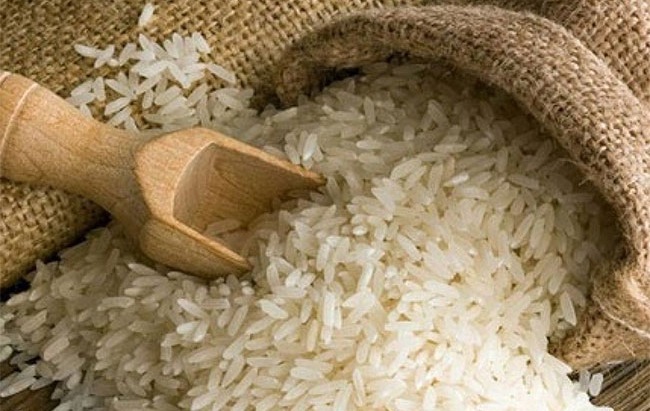
October 27, Colombo (LNW): Sri Lanka Customs has confirmed the arrival of 3,500 metric tonnes of Ponni Samba rice as part of a government initiative to address the current shortage of Keeri Samba rice in the domestic market.
The move comes amid rising consumer demand and limited local supply, which have contributed to fluctuating prices in recent weeks.
The first shipment of Ponni Samba rice reached the island on October 23, with additional consignments arriving on the following Friday and Saturday. According to Customs officials, the rice is now being cleared and distributed under the supervision of the Ministry of Trade and the Food Policy and Security Committee to ensure that supplies reach both wholesalers and retailers promptly.
The Cabinet of Ministers had earlier authorised the importation of GR-11 grade Ponni Samba from 15 October, following recommendations from food security experts who warned of an imminent shortage in premium rice varieties.
In an effort to expedite the process, the government temporarily lifted the requirement for import control licences, allowing importers to bring in consignments more efficiently. Each licensed importer was permitted to import up to 520 metric tonnes under the revised policy.
Officials from the Ministry of Agriculture noted that while local paddy cultivation has been affected by inconsistent rainfall and rising production costs, the government remains committed to maintaining stable food supplies and preventing market shortages. The current import measure, they said, is a short-term solution designed to stabilise consumer prices until the next harvest season.
Many districts to witness showers, thundershowers further: Public urged to exercise caution (Oct 27)

October 27, Colombo (LNW): Showers or thundershowers will occur at times in Northern, North-central, Western, Sabaragamuwa, Central and North-western provinces and in Galle and Matara districts, the Department of Meteorology said in its daily weather forecast today (27).
Strong winds of about (50-60) kmph can be expected at times over Western slopes of the central hills and in Western, Sabaragamuwa, Central, Southern, Northern, North-central and North-western provinces and in Trincomalee and Batticaloa districts.
The general public is kindly requested to take adequate precautions to minimise damages caused by temporary localised strong winds and lightning during thundershowers.
Marine Weather:
The depression over southeast Bay of Bengal moved nearly west-northwestwards with a speed of 10 kmph during past 6 hours, intensified into a Deep Depression and lay centered at 05.30 a.m. yesterday (26), over the same region, near latitude 11.1°N & longitude 87.2°E, about 720 km north-east of Trincomalee.
It is likely to move nearly west-northwestwards, intensify further into a cyclonic storm over southwest & adjoining west-central Bay of Bengal during next 24 hours. Thereafter it is likely to move north-westwards and intensify into a severe cyclonic storm by October 28.
Continuing to move further north-northwestwards, it is very likely to cross Andhra Pradesh coast on October 28 as a severe cyclonic storm.
Naval and fishing communities are warned not to venture to the deep sea areas bounded by 05N-15N and 80E-95E, until further notice. Naval and fishing communities operating in those sea areas are advised to move away from the affected sea areas.
Naval and fishing communities are warned not to venture to the shallow sea areas off the coast extending from Kankasanthurai to Batticaloa via Trincomalee, until further notice.
Naval and fishing communities, engaging activities over the shallow sea areas off the coast extending from Galle to Pottuvil via Hambantota are requested to be vigilant in this regard.
The wind speed in the sea areas marked on the map below will increase to (55-65) kmph at times with heavy thundershowers and those sea areas will be rough or very rough at times.
Condition of Rain:
Showers or thundershowers will occur at several places in the sea areas off the coast extending from Trincomalee to Galle via Kankasanthurai, Mannar and Colombo.
Winds:
Winds will be westerly and speed will be (30-40) kmph. Wind speed can increase up to (50-60) kmph at times in the sea areas around the island.
State of Sea:
The sea areas around the island will be fairly rough and, rough at times.
Temporarily strong gusty winds and very rough seas can be expected during thundershowers.
Sri Lanka’s apparel sector grows amid policy uncertainty and global shifts
By: Staff Writer
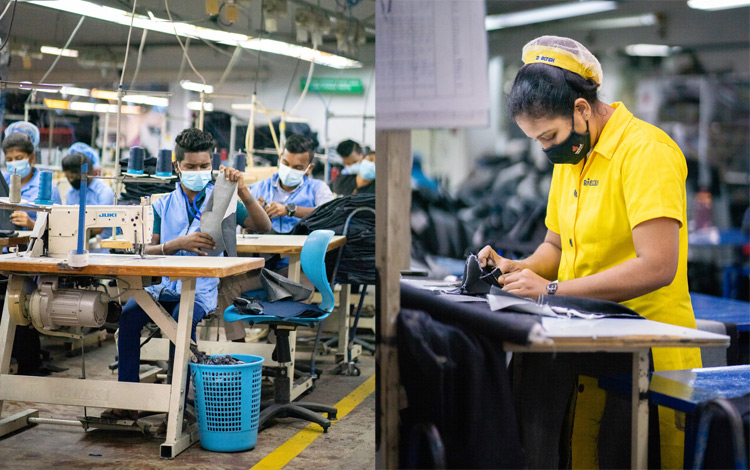
October 26, Colombo (LNW): Sri Lanka’s apparel sector long regarded as the backbone of the country’s industrial exports—has shown renewed resilience in 2025 despite policy inconsistency and external challenges. According to the Joint Apparel Association Forum (JAAF), apparel exports for the first nine months of 2025 reached $3.8 billion, reflecting a 6.83% increase from the same period in 2024.
The industry recorded steady cumulative growth, driven mainly by improved performance in the European Union and other emerging markets, even as exports to traditional destinations like the United States and the United Kingdom declined. In September 2025, total apparel exports amounted to $403.01 million, up 1.58% year-on-year, with the EU market rising 10.75% and “other markets” growing 19.49%. However, exports to the US and UK fell by 4.71% and 15.06%, respectively.
While September figures dipped slightly from August, JAAF noted this seasonal trend is typical, reflecting shipment cycles linked to Western retail demand. Despite uneven month-to-month performance, the sector has retained its competitive edge, particularly through diversification, productivity improvements, and innovation.
Exports to the United States totaled $1.46 billion a modest 1.73% growth while the EU (excluding the UK) expanded strongly by 14.24% to $1.17 billion. Exports to the UK increased 2.31% to $533.7 million, while other destinations reached $630.3 million, marking a 10.45% rise.
JAAF said that while global demand remains fragile, Sri Lankan exporters have displayed “remarkable adaptability” through efficiency and ethical production standards. “The positive cumulative growth highlights the strength and competitiveness of Sri Lanka’s apparel sector even amid global headwinds,” the association stated.
However, JAAF also voiced concern over policy inconsistency and the slow pace of reforms that continue to hinder investor confidence and long-term planning. Industry stakeholders point to frequent changes in trade, tax, and customs policies, as well as a lack of clarity on energy pricing and export incentives, which complicate operational decisions for manufacturers.
Analysts note that while Sri Lanka’s apparel industry has transitioned from basic garment production to value-added, design-driven exports, sustaining momentum will require stable policies, logistics modernization, and stronger sustainability initiatives to meet global buyer expectations.
The sector, which directly employs over 350,000 workers and contributes nearly 6% of GDP, remains Sri Lanka’s top foreign exchange earner. Yet, competition from regional peers such as Bangladesh, Vietnam, and India continues to intensify.
JAAF reaffirmed its commitment to working closely with the Government and stakeholders to enhance policy alignment, support small and medium manufacturers, and ensure Sri Lanka’s apparel industry remains a reliable, ethical, and future-ready sourcing destination in the global market.
Sampath Bank, NCE renew partnership to boost ethical exports
By: Staff Writer
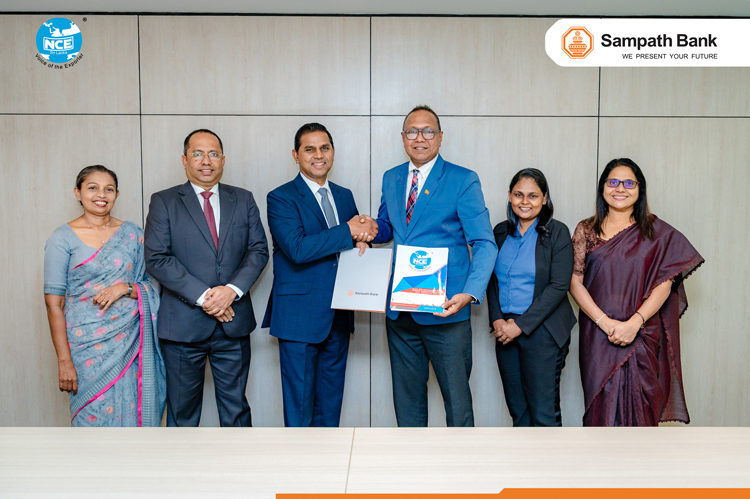
October 26, Colombo (LNW): Sampath Bank has reaffirmed its strong commitment to Sri Lanka’s export sector by renewing its partnership with the National Chamber of Exporters (NCE) for 2025. The agreement, signed at the bank’s head office in Colombo, marks another milestone in a long-standing collaboration aimed at promoting ethical trade, sustainable practices, and global competitiveness among Sri Lankan exporters.
The renewal underscores Sampath Bank’s role as a key financial partner to the nation’s exporters at a time when the country seeks to strengthen export earnings and rebuild investor confidence. Through this partnership, the bank will continue to champion responsible trade and sustainable development across the export industry.
A major highlight of the agreement is Sampath Bank’s decision to sponsor 30 member companies to obtain the NCE’s Certificate of Ethical Trading (CET). The certification, unique to the NCE as the only Sri Lankan trade chamber authorised to issue it, serves as an internationally recognised benchmark for ethical and sustainable business operations.
The CET helps exporters demonstrate their adherence to fair labour practices, environmental stewardship, and sound corporate governance attributes increasingly demanded by global buyers. By supporting this initiative, Sampath Bank aims to help exporters enhance their brand credibility, access new markets, and gain a competitive advantage in the global marketplace.
Speaking at the signing, Sampath Bank PLC Assistant General Manager–International Banking, Halin Hettigoda, said, “Exporters continue to play a defining role in revitalising Sri Lanka’s economy. At Sampath Bank, we remain deeply committed to empowering them through responsible banking, ethical trade support, and financial innovation. Our ongoing partnership with the NCE reflects this shared vision to strengthen the export sector and build a more resilient and inclusive economy.”
The collaboration will also give Sampath Bank greater visibility through NCE’s high-profile trade seminars and policy discussions that bring together industry leaders, policymakers, and business owners. These platforms encourage dialogue, knowledge sharing, and innovation in the export sector.
In addition, the bank will participate in NCE’s Regional Exporters Delegation program, which facilitates engagement with regional producers and suppliers, promoting financial inclusion and regional trade development.
The year-long partnership will culminate in the prestigious 33rd NCE Export Awards, to be held on February 13, 2026, at the Shangri-La Hotel, Colombo. The event celebrates outstanding exporters who contribute significantly to national growth.
Through this renewed alliance, Sampath Bank continues to position itself as a catalyst for ethical trade and sustainable export growth reinforcing its long-term vision of empowering Sri Lankan businesses to thrive in an increasingly responsible global economy.
Central Bank Pushes Banks to Cut Interest Margins Amid Recovery
By: Staff Writer
October 26, Colombo (LNW): The Central Bank of Sri Lanka (CBSL) signaled its intention to push commercial banks toward lowering their interest margins, highlighting the need for greater competition and transparency in the financial sector as the economy stabilizes. Governor Dr. Nandalal Weerasinghe said the current net interest margin (NIM) of around 4 percent higher than the pre-crisis average of 3.5 percent must gradually decline in line with falling interest rates and the recovery of economic activity.
Despite reductions in the policy rates over the past year, Sri Lanka’s banking sector has posted exceptionally high profits. According to the CBSL’s 2025 Financial Stability Review, commercial banks reported a post-tax profit of Rs. 187.5 billion in the first half of 2025, compared to Rs. 111.8 billion during the same period in 2024 a 67.8 percent surge. Much of this improvement, the Governor explained, stemmed from the reversal of loan loss provisions made during the height of the financial crisis and debt restructuring process.
Dr. Weerasinghe noted that while both deposit and lending rates are on a downward trajectory, the net interest margin has expanded by about 0.5 percentage points due to the lag effect of monetary easing and banks’ cautious approach to adjusting rates. “We would like to see the net interest margin lower than the current level,” he said. “With improved competition and regulatory transparency, margins should normalize as the economy strengthens.”
To accelerate this adjustment, the Central Bank has mandated new disclosure and transparency measures through the Financial Consumer Relations Department (FCRD) regulations. These reforms are aimed at compelling banks to compete more aggressively on lending and deposit rates, reducing intermediation costs, and ensuring that the benefits of monetary easing reach consumers and businesses more effectively.
The Governor also pointed out that higher tax burdens and a still-elevated level of non-performing loans (NPLs) have contributed to maintaining wider spreads between lending and deposit rates. “The intermediation cost remains slightly higher, but as recovery gains pace and credit quality improves, we expect margins to compress naturally,” he added.
The Central Bank expects the narrowing of interest margins to benefit the broader economy by lowering borrowing costs for the private sector and stimulating investment-led growth. Analysts suggest that the policy stance will encourage banks to adopt more efficient lending practices and prioritize productive sectors over short-term profitability.
With steady disinflation, stable exchange rates, and a rebound in confidence, the CBSL’s strategy marks a decisive shift from crisis management to growth facilitation ensuring that the banking system supports, rather than constraints, the country’s economic revival.
Sri Lanka Unveils Climate Finance Strategy to Attract Global Investment
By: Staff Writer
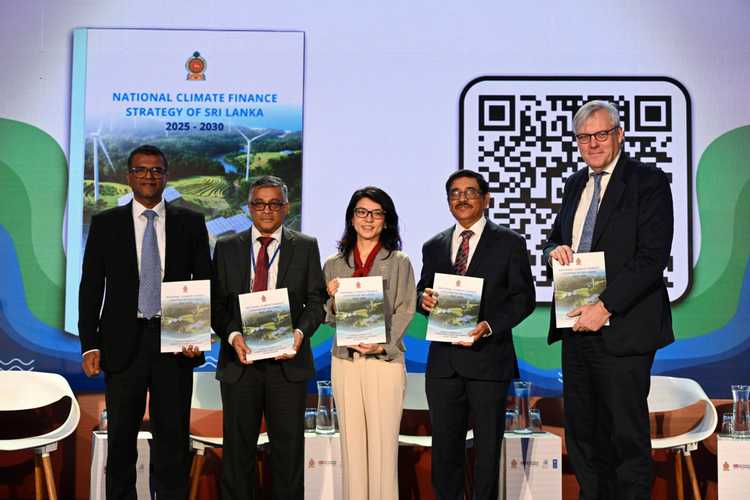
October 26, Colombo (LNW): Sri Lanka’s newly introduced National Climate Finance Strategy 2025–2030 is expected to open the door for greater access to international climate funds and attract global investors to green and sustainable projects, British High Commissioner to Sri Lanka Andrew Patrick said yesterday.
Speaking at a forum in Colombo, Patrick described the strategy as a critical milestone in Sri Lanka’s climate transition, enabling the government to meet international due diligence requirements while planning for the medium- and long-term economic impacts of climate change.
“There are some very obvious and serious challenges for Sri Lanka, particularly in the agriculture and tourism sectors, which are heavily dependent on biodiversity and natural ecosystems. Both are at risk due to climate change,” he said.
The National Climate Finance Strategy (NCFS), first conceptualised and launched under the previous administration in collaboration with the United Nations Development Programme (UNDP) and the Ministry of Finance, aims to provide a structured framework for mobilising both public and private climate-related investments. The strategy identifies funding pathways to strengthen renewable energy, climate-smart agriculture, coastal protection, water management, and disaster resilience, while improving transparency and accountability in climate finance management.
Developed with support from international partners such as the UK Government and the Green Climate Fund (GCF), the NCFS is designed to help Sri Lanka align its financing with global climate goals under the Paris Agreement. It also lays out a roadmap to integrate climate budgeting across ministries, create incentives for green investments, and develop local capacity to attract concessional loans and grants.
Patrick said the UK, as one of the world’s leading contributors to global climate finance, continues to support Sri Lanka through initiatives like the Climate Action for Resilient Asia (CARA) program. “Without a climate finance strategy of this kind, it is much harder for the Government to access those international funds,” he noted.
Highlighting Sri Lanka’s potential in renewable energy, Patrick pointed out that the island nation has enormous potential for offshore and onshore wind power, areas in which the UK has already extended technical and financial assistance. “Sri Lanka has huge capacity to generate offshore wind power, and we are glad to partner in that transition,” he said.
The British envoy also referred to several ongoing UK-backed projects, including collaboration with IMI on studying groundwater salinity in Jaffna, and regional programs aimed at enhancing climate forecasting and disaster preparedness. Improved early-warning systems, he noted, have already reduced casualties from extreme weather events despite the growing frequency of such disasters.
Patrick reaffirmed that the UK Government, the UNDP, and the Sri Lankan authorities are working in partnership to transform climate challenges into long-term investment opportunities. “International collaboration is essential for building resilience and creating sustainable growth,” he said
Sri Lanka Shines at South Asian Senior Athletics Championships with Multiple Relay and Track Medals

October 26, Colombo (LNW): Sri Lanka delivered a remarkable display of athletic prowess at the 4th South Asian Senior Athletics Championships 2025, held in Ranchi, India, leaving a strong mark across both track and field events.
The nation’s athletes demonstrated speed, strength, and consistency, contributing to a medal haul that highlighted Sri Lanka’s growing dominance in regional athletics.
The Men’s 4x100m relay team set the tone for the competition, racing to a sensational gold-medal finish in 39.99 seconds. Their flawless baton exchanges and powerful sprinting cemented Sri Lanka’s position at the top of the podium.
Not to be outdone, the Women’s 4x100m relay quartet followed with an equally impressive performance, claiming gold in 44.70 seconds and completing a clean sweep of the relay events for the island nation.
Individual successes further added to the celebration. Kalinga Kumarage claimed gold in the Men’s 400m, clocking an outstanding 46.21 seconds, while Kalhara Indupa secured bronze in the same race, demonstrating Sri Lanka’s depth in sprinting talent.
In field events, Milantha Sampath, who transitioned from long jump to discus throw, captured bronze in the Men’s Discus Throw, showcasing versatility and determination. Sayuri Mendis also contributed to the medal tally with a bronze in the Women’s 400m, further reinforcing the nation’s competitive presence.