October 13, Colombo (LNW): Sri Lanka has seen a notable surge in income from overseas remittances this year, with the latest figures indicating a steady upward trend in inflows from its global workforce—an encouraging sign for the country’s foreign exchange position.
According to newly released figures from the Central Bank of Sri Lanka (CBSL), the total amount received from Sri Lankan migrant workers in September 2025 reached USD 695.7 million. This reflects a sharp rise compared to the USD 555.6 million sent home during the same period in 2024, marking a year-on-year increase of nearly 25 per cent.
When looking at the broader picture, remittances received during the first nine months of 2025 have amounted to USD 5.81 billion. This represents a significant improvement over the USD 4.84 billion recorded between January and September last year—a nearly 20 per cent growth in earnings from overseas labour.
These inflows, largely sent by Sri Lankans employed in the Middle East, Europe, and Asia-Pacific regions, have long served as a financial lifeline for the island nation, particularly during times of economic uncertainty.
Overseas Remittances See Strong Growth, Bolstering Sri Lanka’s Economy in 2025

WHO Chief Arrives in Sri Lanka Ahead of Major Regional Health Summit
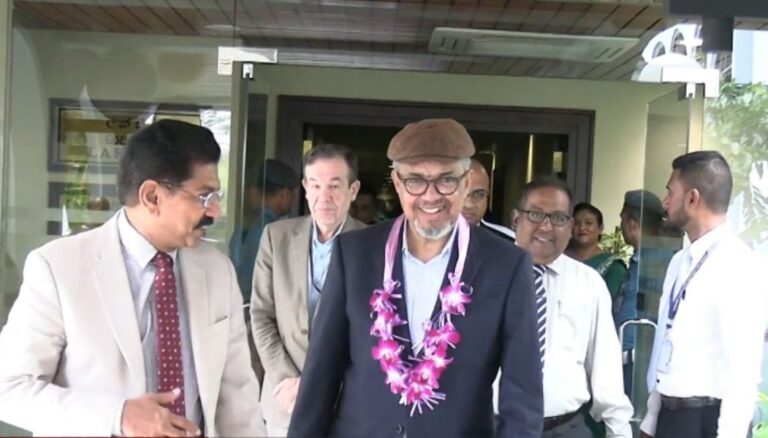
October 13, Colombo (LNW): Director-General of the World Health Organisation (WHO) Dr Tedros Adhanom Ghebreyesus touched down in Sri Lanka this morning for a key international health gathering set to bring together top-level policymakers and medical experts from across South and South-East Asia.
Arriving aboard Qatar Airways flight QR 660 from Doha, Dr Tedros landed at Bandaranaike International Airport at 9:40 a.m., where he was warmly welcomed by Dr Anil Jasinghe, Secretary to the Ministry of Health and Mass Media.
His visit marks a significant moment for Sri Lanka as it prepares to host the 78th session of the WHO South-East Asia Regional Health Conference.
Dr Tedros will attend the conference as the Chief Guest, underscoring the importance the WHO places on strengthening health systems and regional cooperation in the wake of global challenges such as pandemics, climate-related health threats, and rising non-communicable diseases.
The conference, which begins tomorrow (14) and runs through to October 15, is expected to draw Health Ministers and senior officials from across the region. The agenda will focus on public health priorities, including post-pandemic resilience, health equity, disease prevention, and access to essential healthcare services.
Legal Action Looms Over Senior Lawyer Amid Mount Lavinia Courtroom Clash

October 13, Colombo (LNW): The Sri Lankan government has signalled its intent to pursue legal proceedings against prominent legal practitioner Gunaratne Wanninayake, following a confrontation within the Mount Lavinia Court complex that has raised questions about professional conduct and law enforcement accountability.
Public Security Minister Ananda Wijepala announced that Wanninayake’s behaviour within the courthouse will be addressed through formal legal channels, characterising his actions as amounting to contempt of court—a grave charge within the judicial system.
The incident, which unfolded during a dispute involving the relocation of a vehicle within court grounds, has sparked a broader investigation into the conduct of both police officers and legal professionals.
Efforts to contact Wanninayake intensified yesterday (12) when officers visited his residence, though he was reportedly not present at the time. The lawyer had earlier been requested to present himself for questioning, but according to reports, he has indicated that he will only engage with the process after seeking guidance from the Bar Association of Sri Lanka (BASL).
Meanwhile, Inspector General of Police Priyantha Weerasooriya confirmed that the Attorney General’s Department has been consulted regarding the arrest of a police constable implicated in the alleged assault of a lawyer during the altercation. A state counsel is expected to appear in court on behalf of the detained officer as proceedings resume.
The constable, who was taken into custody after accusations that he physically attacked a lawyer during the disagreement, remains on remand until October 13. The Mount Lavinia Additional Magistrate has ordered a thorough examination of CCTV footage from the scene as part of the inquiry, and the Special Investigation Unit (SIU) has been tasked with evaluating the conduct of police personnel involved in the incident.
The altercation, which occurred on October 10, has ignited debate within both legal and law enforcement circles. In addition to the claims of assault, further allegations have emerged suggesting that Wanninayake, who was accompanying the assaulted lawyer, may have attempted to threaten or interfere with the duties of the police officer involved. This aspect of the incident is now subject to a separate police investigation.
Sri Lanka Companies Act amendment marks a cultural shift: Panel
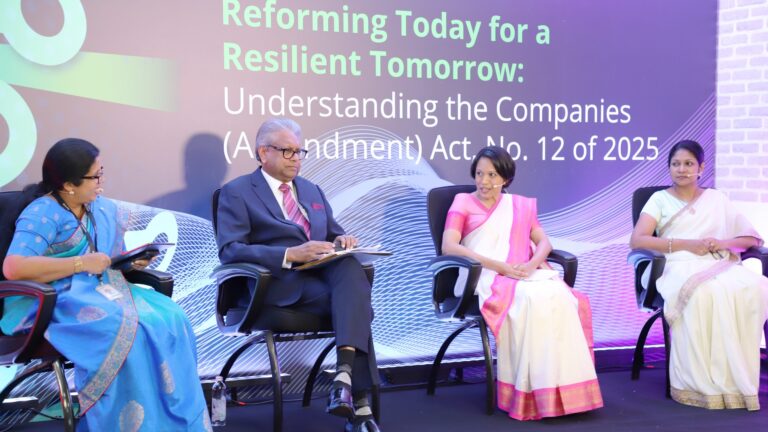
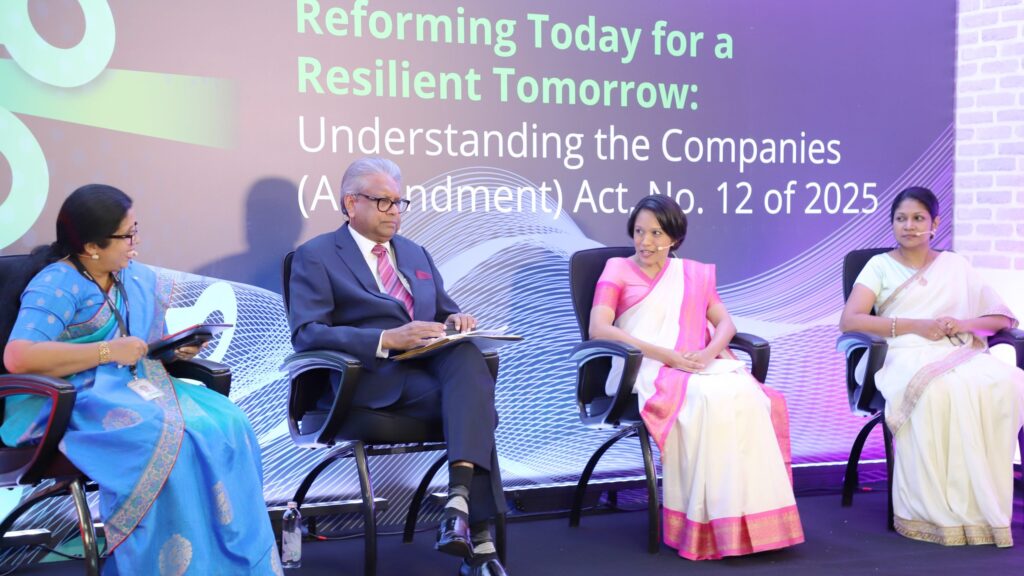
Economy Next: Deloitte Sri Lanka hosted a webinar “Reforming Today for a Resilient Tomorrow: Understanding the Companies (Amendment) Act No. 12 of 2025” following the enactment of the landmark amendment to the Companies Act No. 7 of 2007 on 4th August 2025.
This amendment marks a significant step in strengthening Sri Lanka’s regulatory framework for corporates, with beneficial ownership disclosure as its key feature.
This webinar brought together corporate law experts, regulators, and Deloitte professionals to discuss how these reforms will reshape business practices, governance, and compliance.
Delivering the keynote, Dr. Harsha Cabral, President’s Counsel and Chairman of National Savings Bank, outlined the evolution of corporate law in Sri Lanka and the growing importance of transparency.
He highlighted that global bodies such as the Financial Action Task Force (FATF), World Bank, and United Nations Office on Drugs and Crime (UNODC) have long called for identifying the real owners of corporate entities to prevent misuse of company structures for money laundering, tax evasion, and other illicit activities.
Many countries, including Sri Lanka, began introducing beneficial ownership declarations as early as 2018 through financial institutions, and with this new amendment Act these obligations are now formally mandated under corporate law.
Dr Cabral emphasised that this represents not just a legal update but a cultural shift, placing clear duties on directors, secretaries, and shareholders to ensure accountability and transparency.
Shivandini Liyanage, Senior Vice President – Legal Enforcement & Compliance at the Colombo Stock Exchange (CSE), explained how the CSE is preparing to align its rules with the new requirements.
She noted that although regulations and prescribed forms are still to be finalised, the Central Depository Systems (CDS) must begin preparing now by establishing internal systems, issuing guidelines, and working closely with brokers and custodians to identify and report beneficial owners; particularly those holding 10% or more of shares.
Given the complexity of ownership structures, she stressed that both CDS and companies will need to strengthen due diligence processes, modernise data collection practices, and train staff to ensure compliance once the Act becomes fully operational.
From the regulatory perspective, Shyama Harshani, Registrar at the Registrar of Companies, detailed how the ROC will implement the new beneficial ownership disclosure regime.
She explained that companies will be required to file seven (7) key Beneficial Ownership (BO) forms (B01 to B07) on the eROC portal within prescribed timelines and with applicable fees, as to be set out in the upcoming regulations.
She ensured that all information will be stored in a centralised registry accessible to regulators and, with certain restrictions, to the public, reinforcing both transparency and compliance with anti-money laundering and corporate governance laws.
Harshani underlined that to avoid penalties, companies must keep pace with regulatory updates, submit reports on time, and maintain accurate BO records.
This session also introduced Deloitte’s Green BO Flow, a SharePoint-based automation process that digitalises and streamlines the collection of beneficial ownership details and securely maintains a beneficial ownership register.
By reducing manual effort and embedding ESG principles such as paperless processes and data privacy, Deloitte perceives compliance as a transparent and sustainable practice through Green BO Flow.
Moderating the panel discussion, Disna Perera, Director – Corporate Secretarial at Deloitte Sri Lanka, shared Deloitte’s perspective on turning compliance into an opportunity for stronger governance. She further emphasised “The message is clear – the bar for governance requirements has been raised.
Companies must quickly adapt to these changes and leverage technology effectively.
This is crucial not only to mitigate risks but also to ensure compliance with the evolving regulatory landscape”.
The webinar reaffirmed Deloitte’s role in helping corporates navigate regulatory reforms with confidence, providing practical insights and proactive tools to align compliance with long-term resilience.
China Reaffirms Global Commitment to Gender Equality: PM
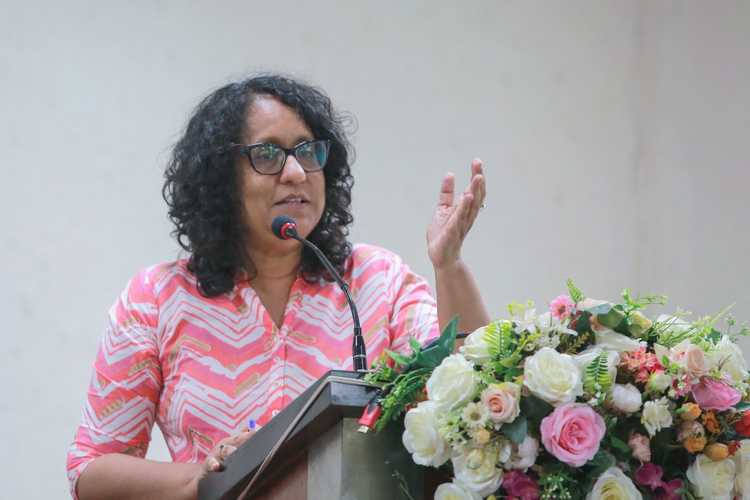
October 13, Colombo (LNW): Sri Lanka’s Prime Minister, Dr. Harini Amarasuriya, has praised China’s ongoing dedication to promoting gender equality, describing its actions on women’s empowerment as both “significant” and “globally impactful”.
Speaking ahead of her planned visit to Beijing for a high-level international summit focused on women’s development, Amarasuriya highlighted China’s proactive stance and leadership in fostering progress on issues affecting women around the world.
In an interview conducted at the Sri Lankan Parliament, Amarasuriya emphasised the importance of returning to Beijing for this global gathering, nearly three decades after the city hosted a pivotal summit on women’s rights. “The discussions held thirty years ago in Beijing continue to resonate today,” she said. “It’s highly symbolic, and indeed powerful, that China is once again convening world leaders to address gender issues.”
The Prime Minister underscored the urgent need to integrate women’s perspectives into broader development efforts, warning that many women across the globe still contend with unequal access to economic opportunities. “Persistent disparities—such as low pay, informal work, and minimal social protection—undermine women’s contributions and restrict their full participation in public life,” she observed.
Amarasuriya called for comprehensive structural reform to tackle these inequalities. “True change cannot occur without ensuring that women have equal access to education, healthcare, and the economy. Moreover, their voices must be present at all levels of decision-making.”
She also commended China’s tangible progress in improving the status of women. “Today, Chinese women are more self-assured, independent, and visible in public and political spaces. That sense of agency is itself a form of freedom,” she said, noting that this evolution is a testament to China’s unique approach to societal transformation.
According to Amarasuriya, China’s political and economic systems have enabled it to address systemic barriers and support inclusive development. “Their efforts go beyond national boundaries. China’s willingness to take a global leadership role on gender issues is commendable,” she remarked.
Touching on the growing partnership between Sri Lanka and China, the Prime Minister expressed optimism about future collaborations, particularly in areas such as education and health—sectors with direct implications for women and children. “There are exceptional female leaders in China, and Sri Lanka, too, has seen a historic increase in women’s parliamentary representation. These shared advancements open doors for meaningful cooperation,” she said.
Amarasuriya also extended gratitude for China’s recent contribution of school uniform fabric to Sri Lanka, describing the gesture as “deeply appreciated” and a sign of enduring friendship between the two nations.
Looking ahead to the upcoming summit in Beijing, Amarasuriya said she anticipates rich dialogue and shared learning among global female leaders. “This will be my first experience participating in a global forum dedicated to women,” she said. “It’s a timely moment to reflect on the progress made over the past three decades—and to chart a course for a future in which women’s rights are firmly embedded in our development and policy priorities.”
She concluded with a call for renewed urgency and commitment: “The world needs to be reminded that gender equality is not a finished agenda. Women’s voices must not only be heard—they must shape the direction of our societies.”
Fairly heavy falls about 75 mm expected in several areas (Oct 13)

October 13, Colombo (LNW): Showers or thundershowers will occur at times in Western, Sabaragamuwa, Southern and Northwestern provinces and in Mannar district, the Department of Meteorology said in its daily weather forecast today (13).
Showers or thundershowers will occur in the other areas after 1.00 p.m.
Fairly heavy falls about 75 mm are likely at some places in Western, Sabaragamuwa, Central, Southern and Uva provinces.
Misty conditions can be expected at some places in Central, Sabaragamuwa, and Uva provinces during the morning, the Met. Department added.
The general public is kindly requested to take adequate precautions to minimise damages caused by temporary localised strong winds and lightning during thundershowers.
State Counsel to Represent Remanded Officer in Mount Lavinia Courtroom Assault Case
October 12, Colombo (LNW): A State Counsel is expected to appear before the Mount Lavinia Magistrate’s Court tomorrow (13 October) on behalf of the police officer currently in remand custody over the alleged assault of a lawyer within the court premises, according to Inspector General of Police (IGP) Priyantha Weerasuriya.
The incident, which reportedly occurred on October 10 during an altercation involving the relocation of a vehicle belonging to the lawyer, has sparked widespread concern over the conduct of law enforcement officers, particularly within the confines of a judicial setting.
Speaking to the media, IGP Weerasuriya confirmed that the Police Special Investigation Unit (SIU) has been tasked with determining whether proper procedures were followed by police personnel during the incident. He emphasised that the investigation will be conducted impartially, without interference or bias.
The Attorney General has taken note of the situation and is offering legal guidance, and a State Counsel has been appointed to represent the officer and take the necessary legal steps in court, the IGP revealed.
In response to a directive from the Mount Lavinia Additional Magistrate, further investigations are underway, including a review of CCTV footage captured within the court premises on the day of the incident. The footage is expected to be central to the inquiry, helping to establish a clear account of the events.
The police officer accused in the matter was arrested following the complaint and was subsequently remanded until Monday (13 October), pending further judicial proceedings.
Government Fails to Deliver on 2025 Budget as Capital Spending Collapses

By: Staff Writer
October 12, Colombo (LNW): Sri Lanka’s 2025 budget implementation has come under sharp scrutiny following revelations by the World Bank that the government has failed to utilize even a quarter of its annual budget allocations during the first seven months of the year. The under-execution of capital expenditure, in particular, has raised serious concerns over the administration’s fiscal management and its ability to drive economic recovery through planned public investment.
According to the World Bank’s latest update, only 22.2 percent of the total budgeted expenditure was spent by the end of July 2025 marking a 19.8 percent decline compared to the same period last year. The sluggish performance is primarily attributed to the late passage of the Appropriation Act in March and the delayed restart of foreign-funded infrastructure and development projects following the debt restructuring process.
While the government has been quick to highlight its improved fiscal discipline, analysts argue that the slow pace of spending particularly on capital projects indicates administrative paralysis rather than prudence. Capital expenditure, which finances infrastructure, industrial development, and public sector modernization, has seen one of its lowest execution rates in recent years, leaving several planned projects either stalled or abandoned.
In contrast, government revenues surged by 26.5 percent year-on-year, mainly due to higher taxes on imports. The removal of the long-standing vehicle import ban in February 2025 contributed to this surge, as personal vehicle imports rose thirteenfold to USD 506.1 million by July, surpassing the total import value recorded during 2020–2024 combined. The revival of vehicle imports, along with stronger consumer goods demand, pushed the overall import bill up by 11.8 percent in the first seven months of 2025.
Meanwhile, primary expenditure (excluding interest payments) increased by 7.2 percent, driven by the government’s decision to resume public sector recruitment, implement the 2025 salary hikes, and expand welfare programs. These current expenditures have consumed much of the available fiscal space, leaving capital investment underfunded and under-executed.
Despite the rise in expenditure, the World Bank notes that the government’s primary balance surplus improved by 87.5 percent year-on-year, largely because the capital budget remained unspent. Economists, however, caution that such a surplus is misleading. “The fiscal surplus is not a reflection of sound management but of inaction,” a senior policy analyst said . “When you don’t execute development projects, you automatically spend less but that also means you generate fewer jobs and delay infrastructure-led growth.”
The under-utilization of capital allocations is likely to have ripple effects across multiple sectors, including transport, health, and education, which rely heavily on public investment. With Sri Lanka’s economic recovery still fragile, experts warn that failing to implement budgeted capital projects could undermine growth targets for 2025 and beyond.
As the government prepares for the 2026 budget cycle, calls are growing for greater transparency, accountability, and efficiency in public spending. The World Bank report makes it clear that while fiscal stability may appear to improve on paper, Sri Lanka cannot afford to achieve it by freezing capital investment the very engine needed to drive sustainable development and economic revival.
Private Sector Drives Sri Lanka’s Pharmaceutical Manufacturing Expansion

By: Staff Writer
October 12, Colombo (LNW): Sri Lanka’s pharmaceutical manufacturing industry is gaining momentum with growing private sector investment and advanced technology integration, positioning the country to reduce import dependency and enhance local drug production capacity.
Highlighting this progress, Health and Mass Media Minister Dr. Nalinda Jayatissa recently visited LAUGFS Life Sciences Ltd., a leading sterile pharmaceutical manufacturing facility located within the Koggala Export Processing Zone under the Board of Investment (BOI). The visit underscored the government’s encouragement of private sector participation in strengthening the national healthcare supply chain.
The facility, a subsidiary of LAUGFS Holdings Ltd., represents one of the most advanced sterile infusion therapy manufacturing plants in the region. It contributes to Sri Lanka’s growing network of over 25 pharmaceutical manufacturing factories currently operating under BOI and private ownership a significant step toward the government’s target of meeting 50 percent of the nation’s pharmaceutical demand through local production in the next few years.
During the inspection, Minister Jayatissa commended LAUGFS Life Sciences for pioneering Large Volume Parenteral (LVP) production using Euro Multiport and Form-Fill-Seal (FFS) technologies.
These systems ensure sterile, safe, and efficient production with minimal human handling, a major advancement in infusion therapy manufacturing. “This project is a commendable step forward for Sri Lanka’s healthcare sector. By investing in advanced pharmaceutical technologies, LAUGFS Life Sciences directly supports our goal of enhancing local production and saving valuable foreign exchange,” the Minister said.
Sri Lanka currently spends nearly USD 700 million annually on pharmaceutical imports. Industry experts note that local manufacturers like LAUGFS Life Sciences, State Pharmaceutical Manufacturing Corporation (SPMC), and several BOI-approved private ventures can help reduce import expenditure by as much as 30 to 40 percent within the next few years if production continues to expand.
LAUGFS Life Sciences CEO Dr. Rajiv Perera said the company’s advanced production lines will soon introduce infusion therapies on par with global standards. “With Euro Multiport and FFS technologies, we are ensuring the highest levels of quality and safety while delivering affordable solutions for both the public and private health sectors,” he noted.
Group CEO Dr. Ravi Edirisinghe added that LAUGFS’s investment in pharmaceutical manufacturing aligns with its broader mission to create sustainable, value-driven industries. “Through LAUGFS Life Sciences, we are not only contributing to the national healthcare agenda but also building Sri Lanka’s reputation as a regional hub for quality-driven pharmaceutical manufacturing,” he said.
The Health Minister emphasized that public-private partnerships are vital to building a resilient healthcare ecosystem. “Initiatives like this ensure patient safety, reduce reliance on imports, and strengthen national health security,” he remarked.
Industry analysts highlight that the expansion of domestic pharmaceutical production supported by over 15 new projects under construction and increased investment incentives will create thousands of skilled jobs, enhance export potential, and reinforce Sri Lanka’s standing in the South Asian medical manufacturing landscape.
With companies such as LAUGFS Life Sciences leading the way, Sri Lanka’s private sector is now playing a pivotal role in transforming the country into a self-sufficient, innovation-driven pharmaceutical producer, ensuring long-term health security and economic stability.
Policy Confusion Threatens Sri Lanka’s Digital Economy Ambitions

By: Staff Writer
October 12, Colombo (LNW): Sri Lanka’s much-touted ambition to build a $15 billion digital economy by 2030 risks remaining a distant dream due to inconsistent policies, sluggish implementation, and a lack of coherent global positioning, industry experts warn.
Speaking at the Chartered Accountants of Sri Lanka National Conference this week, Doerscircle Chief Operating Officer and Sarvodaya Fusion Board Member Yasas Vishuddhi Abeywickrama cautioned that the country’s digital economy will not achieve its full potential unless policymakers urgently rethink their export strategy, branding, and approach to global integration.
Over the past 15 years, Sri Lanka’s digital exports have expanded from $300 million in 2010 to nearly $2 billion in 2025, yet the country continues to fall short of its own targets. “We set a goal of $5 billion by 2022, then $3 billion by 2025, and now $5 billion again by 2030. The question is not that we failed to achieve it, but why we failed,” Abeywickrama said, reflecting the industry’s growing frustration over missed opportunities.
The Government’s latest Digital Economy Policy aims to generate $5 billion in digital exports, digitise public services, and create 200,000 tech professionals by 2030. But critics argue that such targets lack a realistic roadmap. “The professionals will come automatically if we grow exports and services. The real question is how we plan to get there,” Abeywickrama said.
A recurring concern among stakeholders is policy inconsistency, which continues to discourage digital entrepreneurs, freelancers, and investors. For example, while countries such as the UAE, Thailand, and Indonesia have introduced digital nomad visas and incentives to attract global tech workers, Sri Lanka’s proposal for such a scheme discussed as early as 2019 remains stalled.
Meanwhile, government agencies have sent mixed signals to freelancers providing digital services to overseas clients. Attempts to impose income taxes and foreign exchange restrictions on these earnings have caused confusion and deterred inflows, undermining a key segment of the digital economy. “Instead of empowering freelancers who bring in valuable foreign exchange, we are trapping them in red tape and tax uncertainty,” a senior IT industry source said
Abeywickrama highlighted that Sri Lanka remains largely invisible in the global digital services map. “If companies in the US or UK look for a cost-effective outsourcing destination, Sri Lanka doesn’t even make the top 20. We are known for tourism, not technology,” he said.
The industry’s branding strategy, he added, has also failed to evolve. The ‘Island of Ingenuity’ campaign launched in 2016 no longer reflects the sophistication of Sri Lanka’s current IT and BPM
Although Sri Lanka’s digital workforce is recognized for its high quality, the lack of scale remains a major bottleneck. “Companies looking to hire 2,000 IT or accounting professionals a year cannot find that capacity here. We have the talent, but not the numbers,” Abeywickrama observed.
He also urged the country to move beyond outsourcing and begin creating proprietary digital products and platforms, citing India’s Zoho and Ireland’s innovation-led policy model as successful examples. “When you create a good product, it sells itself — it travels globally,” he said.
Experts say that Sri Lanka must bridge the gap between education and industry needs, engage its diaspora to attract projects, and strengthen partnerships with global digital hubs such as India, Singapore, and the UAE.
“This is a market of 22 million people. To grow, we must connect with others. We have quality what we need now is visibility, consistency, and strategy,” Abeywickrama concluded.
Unless the government aligns its fiscal, trade, and digital policies with long-term goals rather than ad-hoc measures like taxing freelancers, Sri Lanka’s digital economy risks stagnating, leaving the nation’s most promising growth engine idling on the runway.