October 11, Colombo (LNW): Park authorities at Horton Plains have issued a firm reminder to the public to adhere strictly to conservation regulations, following a sharp increase in visitor numbers drawn by the blooming of the elusive ‘Nelu’ flower—a rare botanical event that occurs only once every few years.
The vibrant purple-blue blossom, native to the montane forests of Sri Lanka’s central highlands, has become a magnet for nature enthusiasts, photographers, and social media influencers alike. However, park officials are now concerned that this surge in attention is putting pressure on the delicate ecosystem.
Sisira Rathnayake, the warden in charge of Horton Plains National Park, cautioned that rules are being disregarded by some visitors in their eagerness to capture the perfect shot or get closer to the flowering plants.
According to Rathnayake, dozens of individuals have already been fined in recent days for violating park guidelines—ranging from straying off marked trails to picking flowers and feeding wild animals.
Particularly concerning to officials is the trend of individuals venturing off established pathways to take photographs or videos, often posting the content online and encouraging others to do the same.
Park authorities have warned that such behaviour not only disrupts fragile habitats but also sets a dangerous precedent. Legal action is now being considered against those who have posted content taken in restricted areas.
Visitors Warned to Respect Rules Amid Bloom of Rare Flower at Horton Plains

Court Rules in Favour of ex-Minister in Defamation Case: Union Secretary Ordered to Pay Compensation
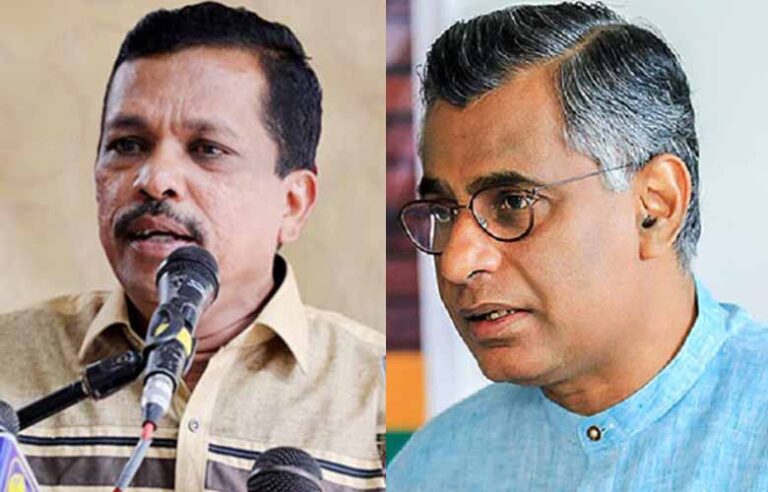
October 11, Colombo (LNW): The Colombo District Court has issued a ruling in a long-running defamation case brought by former Cabinet Minister Patali Champika Ranawaka, determining that a public statement made against him by trade unionist Ranjan Jayalal was entirely without merit.
The judgment, delivered yesterday (10), concluded that Jayalal — who served as General Secretary of the Ceylon Electricity Workers’ Union at the time of the incident — had made demonstrably false allegations against Ranawaka during his tenure as Minister of Power and Energy.
The court subsequently ordered Jayalal to pay compensation of one million rupees for the harm caused to the former minister’s reputation.
The case centred around comments made by Jayalal suggesting that Ranawaka had inappropriately used public resources for personal benefit, including the alleged transportation of a luxury bed, valued at Rs. 80,000, from Colombo to a Ceylon Electricity Board (CEB) circuit bungalow in Kataragama. These claims, now officially discredited by the court, were found to have no factual basis.
Speaking after the ruling, Ranawaka welcomed the verdict but emphasised that the issue at stake went beyond financial restitution. “I have no intention of accepting this compensation,” he said, addressing media representatives. “What matters is accountability. The leadership of the group that made these false claims should instead return the vast sums they have allegedly extorted from CEB employees over the years.”
He further criticised what he described as a pattern of political mudslinging designed to tarnish reputations without evidence, calling for greater responsibility in public discourse.
Tech billionaires seem to be doom prepping. Should we all be worried?

Zoe Kleinman (BBC)
Mark Zuckerberg is said to have started work on Koolau Ranch, his sprawling 1,400-acre compound on the Hawaiian island of Kauai, as far back as 2014.
It is set to include a shelter, complete with its own energy and food supplies, though the carpenters and electricians working on the site were banned from talking about it by non-disclosure agreements, according to a report by Wired magazine.
A six-foot wall blocked the project from view of a nearby road.
Asked last year if he was creating a doomsday bunker, the Facebook founder gave a flat “no”. The underground space spanning some 5,000 square feet is, he explained, “just like a little shelter, it’s like a basement”.
That hasn’t stopped the speculation – likewise about his decision to buy 11 properties in the Crescent Park neighbourhood of Palo Alto in California, apparently adding a 7,000 square feet underground space beneath.
Though his building permits refer to basements, according to the New York Times, some of his neighbours call it a bunker. Or a billionaire’s bat cave.
Then there is the speculation around other tech leaders, some of whom appear to have been busy buying up chunks of land with underground spaces, ripe for conversion into multi-million pound luxury bunkers.
Reid Hoffman, the co-founder of LinkedIn, has talked about “apocalypse insurance”. This is something about half of the super-wealthy have, he has previously claimed, with New Zealand a popular destination for homes.
So, could they really be preparing for war, the effects of climate change, or some other catastrophic event the rest of us have yet to know about?
In the last few years, the advancement of artificial intelligence (AI) has only added to that list of potential existential woes. Many are deeply worried at the sheer speed of the progression.
Ilya Sutskever, chief scientist and a co-founder of Open AI, is reported to be one of them.
By mid-2023, the San Francisco-based firm had released ChatGPT – the chatbot now used by hundreds of millions of people across the world – and they were working fast on updates.
But by that summer, Mr Sutskever was becoming increasingly convinced that computer scientists were on the brink of developing artificial general intelligence (AGI) – the point at which machines match human intelligence – according to a book by journalist Karen Hao.
In a meeting, Mr Sutskever suggested to colleagues that they should dig an underground shelter for the company’s top scientists before such a powerful technology was released on the world, Ms Hao reports.
“We’re definitely going to build a bunker before we release AGI,” he’s widely reported to have said, though it’s unclear who he meant by “we”.
It sheds light on a strange fact: many leading computer scientists and tech leaders, some of whom are working hard to develop a hugely intelligent form of AI, also seem deeply afraid of what it could one day do.
So when exactly – if ever – will AGI arrive? And could it really prove transformational enough to make ordinary people afraid?
An arrival ‘sooner than we think’
Tech leaders have claimed that AGI is imminent. OpenAI boss Sam Altman said in December 2024 that it will come “sooner than most people in the world think”.
Sir Demis Hassabis, the co-founder of DeepMind, has predicted in the next five to ten years, while Anthropic founder Dario Amodei wrote last year that his preferred term – “powerful AI” – could be with us as early as 2026.
Others are dubious. “They move the goalposts all the time,” says Dame Wendy Hall, professor of computer science at Southampton University. “It depends who you talk to.” We are on the phone but I can almost hear the eye-roll.
“The scientific community says AI technology is amazing,” she adds, “but it’s nowhere near human intelligence.”
There would need to be a number of “fundamental breakthroughs” first, agrees Babak Hodjat, chief technology officer of the tech firm Cognizant.
What’s more, it’s unlikely to arrive as a single moment. Rather, AI is a rapidly advancing technology, it’s on a journey and there are many companies around the world racing to develop their own versions of it.
But one reason the idea excites some in Silicon Valley is that it’s thought to be a pre-cursor to something even more advanced: ASI, or artificial super intelligence – tech that surpasses human intelligence.
It was back in 1958 that the concept of “the singularity” was attributed posthumously to Hungarian-born mathematician John von Neumann. It refers to the moment when computer intelligence advances beyond human understanding.
More recently, the 2024 book Genesis, written by Eric Schmidt, Craig Mundy and the late Henry Kissinger, explores the idea of a super-powerful technology that becomes so efficient at decision-making and leadership we end up handing control to it completely.
It’s a matter of when, not if, they argue.
Money for all, without needing a job?
Those in favour of AGI and ASI are almost evangelical about its benefits. It will find new cures for deadly diseases, solve climate change and invent an inexhaustible supply of clean energy, they argue.
Elon Musk has even claimed that super-intelligent AI could usher in an era of “universal high income”.
He recently endorsed the idea that AI will become so cheap and widespread that virtually anyone will want their “own personal R2-D2 and C-3PO” (referencing the droids from Star Wars).
“Everyone will have the best medical care, food, home transport and everything else. Sustainable abundance,” he enthused.
There is a scary side, of course. Could the tech be hijacked by terrorists and used as an enormous weapon, or what if it decides for itself that humanity is the cause of the world’s problems and destroys us?
“If it’s smarter than you, then we have to keep it contained,” warned Tim Berners Lee, creator of the World Wide Web, talking to the BBC earlier this month.
“We have to be able to switch it off.”
Governments are taking some protective steps. In the US, where many leading AI companies are based, President Biden passed an executive order in 2023 that required some firms to share safety test results with the federal government – though President Trump has since revoked some of the order, calling it a “barrier” to innovation.
Meanwhile in the UK, the AI Safety Institute – a government-funded research body – was set up two years ago to better understand the risks posed by advanced AI.
And then there are those super-rich with their own apocalypse insurance plans.
“Saying you’re ‘buying a house in New Zealand’ is kind of a wink, wink, say no more,” Reid Hoffman previously said. The same presumably goes for bunkers.
But there’s a distinctly human flaw.
I once met a former bodyguard of one billionaire with his own “bunker”, who told me his security team’s first priority, if this really did happen, would be to eliminate said boss and get in the bunker themselves. And he didn’t seem to be joking.
Is it all alarmist nonsense?
Neil Lawrence is a professor of machine learning at Cambridge University. To him, this whole debate in itself is nonsense.
“The notion of Artificial General Intelligence is as absurd as the notion of an ‘Artificial General Vehicle’,” he argues.
“The right vehicle is dependent on the context. I used an Airbus A350 to fly to Kenya, I use a car to get to the university each day, I walk to the cafeteria… There’s no vehicle that could ever do all of this.”
For him, talk about AGI is a distraction.
“The technology we have [already] built allows, for the first time, normal people to directly talk to a machine and potentially have it do what they intend. That is absolutely extraordinary… and utterly transformational.
“The big worry is that we’re so drawn in to big tech’s narratives about AGI that we’re missing the ways in which we need to make things better for people.”
Current AI tools are trained on mountains of data and are good at spotting patterns: whether tumour signs in scans or the word most likely to come after another in a particular sequence. But they do not “feel”, however convincing their responses may appear.
“There are some ‘cheaty’ ways to make a Large Language Model (the foundation of AI chatbots) act as if it has memory and learns, but these are unsatisfying and quite inferior to humans,” says Mr Hodjat.
Vince Lynch, CEO of the California-based IV.AI, is also wary of overblown declarations about AGI.
“It’s great marketing,” he says “If you are the company that’s building the smartest thing that’s ever existed, people are going to want to give you money.”
He adds, “It’s not a two-years-away thing. It requires so much compute, so much human creativity, so much trial and error.”
Asked whether he believes AGI will ever materialise, there’s a long pause.
“I really don’t know.”
Intelligence without consciousness
In some ways, AI has already taken the edge over human brains. A generative AI tool can be an expert in medieval history one minute and solve complex mathematical equations the next.
Some tech companies say they don’t always know why their products respond the way they do. Meta says there are some signs of its AI systems improving themselves.
Ultimately, though, no matter how intelligent machines become, biologically the human brain still wins. It has about 86 billion neurons and 600 trillion synapses, many more than the artificial equivalents.
The brain doesn’t need to pause between interactions either, and it is constantly adapting to new information.
“If you tell a human that life has been found on an exoplanet, they will immediately learn that, and it will affect their world view going forward. For an LLM [Large Language Model], they will only know that as long as you keep repeating this to them as a fact,” says Mr Hodjat.
“LLMs also do not have meta-cognition, which means they don’t quite know what they know. Humans seem to have an introspective capacity, sometimes referred to as consciousness, that allows them to know what they know.”
It is a fundamental part of human intelligence – and one that is yet to be replicated in a lab.
President Promotes Five Senior Army Officers in Honour of Service and Sacrifice

October 11, Colombo (LNW): In a gesture of deep appreciation for service rendered under extraordinary circumstances, President Anura Kumara Dissanayake, who also serves as Commander-in-Chief of the Armed Forces, has authorised the promotion of five senior officers from the rank of Brigadier to Major General.
The announcement was made in conjunction with the 76th Army Day celebrations held on October 10, 2025.
The elevated officers are all individuals who sustained injuries during active service, and their promotions are being recognised as a tribute to their resilience, loyalty, and unwavering commitment to national defence.
The move has been hailed within military circles as both symbolic and substantive—honouring personal sacrifice while reinforcing the values of courage and leadership within the ranks.
According to the official statement from Army Headquarters, the decision followed a detailed review process and was made upon the joint recommendations of the Secretary to the Ministry of Defence, Air Vice Marshal Samipath Thuiyakontha (Retired), and the Commander of the Army, Lieutenant General Lasantha Rodrigo.
Sri Lanka Unveils First AI-Driven Hotel in Landmark Tourism Milestone

October 11, Colombo (LNW): Sri Lanka has marked a significant step forward in modernising its tourism sector with the official launch of its first artificial intelligence-powered hotel project, Grand Serendib Colombo.
The ceremonial opening took place on the evening of October 10 at the Shangri-La Hotel in Colombo, bringing together a diverse audience of dignitaries, investors, and innovators.
The initiative, spearheaded by leading hospitality and development firm ABEC, coincides with the company’s 20th anniversary and symbolises a bold leap into the future of smart tourism in the region. The event was graced by Minister of Foreign Affairs, Foreign Employment and Tourism, Vijitha Herath, who officiated the launch alongside ABEC Premier Dilip K. Herath and national cricket icon and current head coach, Sanath Jayasuriya.
In his remarks, Minister Herath hailed the project as a transformative development for Sri Lanka’s travel and hospitality industry. “This is more than just a hotel,” he stated. “It represents a fusion of technology, innovation, and vision. By incorporating AI into the hospitality experience, we are aligning Sri Lanka with the global shift towards intelligent tourism solutions that cater to the expectations of modern travellers.”
The Grand Serendib Colombo is positioned as a next-generation hospitality destination, integrating artificial intelligence to personalise guest experiences, streamline services, and enhance operational efficiency. With features such as smart check-ins, AI-driven concierge systems, and predictive room service, the project aims to set new benchmarks in customer-centric travel experiences in South Asia.
The inauguration was attended by a host of distinguished guests, including Member of Parliament Dr Harsha de Silva, senior academics, diplomatic representatives, and university officials from both local and international institutions. Their presence underscored the project’s broader relevance—not just as a commercial venture, but as an example of how technological advancement can reshape key sectors of the national economy.
The hotel, once completed, is expected to attract both tech-savvy tourists and investors seeking innovation-driven destinations. It also serves as a statement of confidence in Sri Lanka’s potential as a forward-looking hub for tourism and digital transformation.
The celebration also paid tribute to ABEC’s two-decade journey, recognising its contributions to infrastructure and hospitality development in Sri Lanka. As the nation looks to revitalise its tourism sector post-crisis, ventures like Grand Serendib Colombo signal a move towards more resilient, tech-integrated economic strategies.
PM Urges Youth to Seize Opportunities at National Skills Exhibition
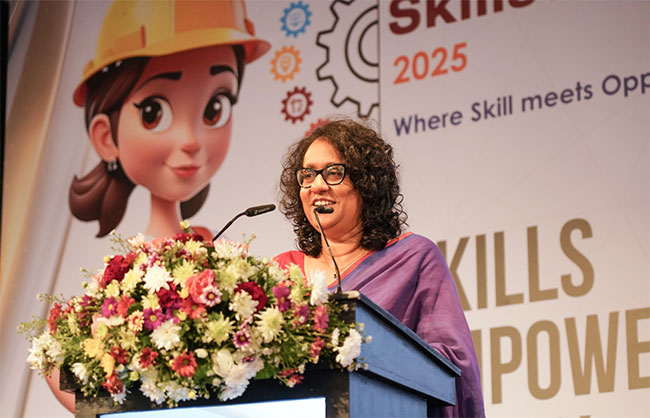
October 11, Colombo (LNW): Prime Minister Dr Harini Amarasuriya has called upon the younger generation to embrace the emerging opportunities before them, declaring that Sri Lanka’s future lies in the hands of its youth — and it is the duty of today’s leaders to pave the way.
Her remarks were made at the official opening of Sri Lanka Skills Expo 2025, which commenced yesterday (10) at the Temple Trees main auditorium.
Held for the third consecutive time, the Skills Expo serves as a platform to address youth unemployment and promote career pathways in modern industries. Organised jointly by the Ministry of Education, Higher Education, and Vocational Education in partnership with the Industry Sector Skills Councils, the event will continue through October 11.
The exhibition showcases educational, vocational, and entrepreneurial opportunities aimed at empowering students, recent graduates, and jobseekers with practical insight into evolving career landscapes.
In her address, Prime Minister Amarasuriya emphasised the importance of adapting the country’s education system to match the pace of global transformation. She noted that traditional career paths no longer guarantee success and highlighted the need for flexible, forward-thinking learning models that prepare students for a rapidly changing world.
“We are witnessing a pivotal moment in our education reform efforts,” she stated. “This exhibition is not just an event—it represents a shift in how we approach learning and development. It’s a chance for young people to explore diverse opportunities aligned with their strengths, interests, and aspirations.”
The Prime Minister urged students to look beyond conventional academic paths and explore vocational and technical avenues that are increasingly in demand both locally and globally. She noted that a generation facing complex challenges—driven by digital disruption, climate change, and economic restructuring—must be equipped not only with knowledge but also with adaptability, confidence, and creativity.
“This is your moment to take initiative,” she told the gathered students. “Our responsibility is to ensure the doors are open for you. Yours is to walk through them. We believe in your potential, and we are committed to ensuring you receive the tools and support needed to shape the nation’s future.”
She also underscored the collaborative nature of development, highlighting the role of parents, teachers, and policymakers in building an environment where young people can thrive and lead. The Skills Expo, she said, is designed to help students identify their own pathways while contributing to the broader national agenda.
Among the dignitaries present at the event were Minister of Industries and Entrepreneurship Development Sunil Handunnetti, Deputy Minister Chathuranga Abeysinghe, Deputy Minister of Vocational Education Nalin Hewage, Secretary to the Prime Minister Pradeep Saputhanthri, and Secretary to the Ministry of Education Nalaka Kaluwewa, along with representatives from various educational institutions and industry bodies.
The two-day exhibition features hands-on demonstrations, career guidance booths, and interactive sessions aimed at equipping youth with knowledge of emerging sectors, including green energy, digital technology, advanced manufacturing, and entrepreneurship.
The Prime Minister concluded by reaffirming the government’s commitment to investing in education and skills development, stating that the nation’s future prosperity hinges on how well it harnesses the talent and energy of its young people.
Electricity Tariff Revision Decision Set for Mid-October Amid Concerns Over Sector Reforms

October 11, Colombo (LNW): The Public Utilities Commission of Sri Lanka (PUCSL) has announced that it will deliver its final verdict on the proposed adjustments to electricity tariffs on October 14.
The decision follows a formal request by the Ceylon Electricity Board (CEB) to increase rates by 6.8 per cent.
According to PUCSL Director Jayanath Herath, the Commission is currently reviewing the proposal, which has sparked a range of responses from stakeholders across the energy and consumer sectors. The proposed increase, while modest in percentage terms, comes at a time of broader unease regarding the financial stability and structural management of the power sector.
Speaking on behalf of the Technical Engineers and Supervisors Association of the CEB, Vice President Nandana Udayakumara pointed to persistent inefficiencies and delays in implementing long-promised reforms as a key reason behind the proposed rate hike. He argued that poor execution of restructuring efforts has exacerbated operational challenges and left the utility in a vulnerable financial position.
Meanwhile, concerns have also been raised by consumer advocacy groups. The Chairman of the Electricity Consumers Association, also Nandana Udayakumara, warned that the cost burden on consumers could become even heavier in the long run, particularly in light of the potential corporatisation or privatisation of sections of the CEB. He alleged that administrative fees, such as the board levy—which currently stands at approximately Rs. 1.5 million—could balloon to nearly Rs. 10 million as a result of institutional restructuring.
UN Officials Engage in Parliamentary Dialogue to Explore Support for Electoral Reforms
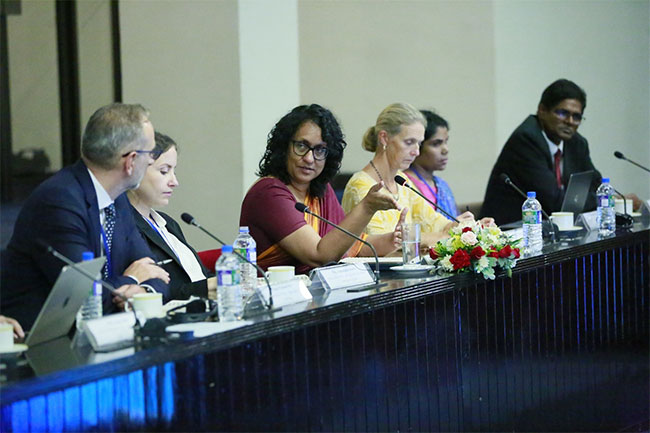
October 11, Colombo (LNW): A high-level delegation from the United Nations has carried out a series of discussions with key figures in Sri Lanka’s Parliament, aimed at evaluating potential avenues for international cooperation in bolstering the country’s electoral systems.
The mission, composed of senior UN officials from the Electoral Assistance Division and other relevant branches, visited Sri Lanka at the invitation of the country’s Election Commission. Their objective was to gather perspectives from a wide spectrum of national stakeholders, and to better understand the landscape of electoral governance in the country.
Meetings were held within the Parliament premises and included consultations with Prime Minister Dr Harini Amarasuriya, alongside a group of lawmakers representing the Government. The delegation also engaged in separate talks with Opposition Leader Sajith Premadasa and opposition parliamentarians, ensuring a bipartisan approach to the discussions.
In addition, the visiting officials met with members of two key parliamentary caucuses: the Women Parliamentarians’ Caucus and the Parliamentary Caucus for Youth. These engagements reflected the mission’s broader interest in promoting inclusivity and participation in the democratic process.
The discussions covered a range of areas critical to the development of a modern and resilient electoral framework. Among the primary topics were the enhancement of electoral transparency, increased representation of women in political life, the importance of civic education, and the use of digital technologies to streamline election procedures. Addressing obstacles faced by young people and women entering the political arena was also given particular emphasis.
The UN team acknowledged the competence of Sri Lanka’s Election Commission and praised the integrity of the electoral mechanisms currently in place. The officials expressed the organisation’s readiness to extend technical guidance and support to help drive reforms that ensure elections are fair, inclusive, and secure.
The delegation included several senior figures from UN Headquarters in New York, such as Ms Michele Griffin, Director of the Electoral Assistance Division; Mr Dan Malinovich, Electoral Policy Specialist; Ms Amanda Stark, Political Affairs Officer for Asia and the Pacific; and Ms Mikyong Kim, a specialist in electoral and political affairs. Their visit forms part of the UN’s broader commitment to supporting democratic institutions around the world through capacity-building and dialogue.
Fairly heavy showers expected across island (Oct 11)

October 11, Colombo (LNW): The Meteorological Department has forecast a spell of unsettled weather across various parts of the island today, particularly in the afternoon and evening hours.
A combination of showers and thundershowers is anticipated in the Eastern, Uva, and Central provinces, as well as in parts of the Polonnaruwa and Hambantota districts, with rainfall activity likely to intensify after 1.00 p.m.
In particular, residents of the Uva province may experience fairly heavy rainfall, with some areas expected to receive over 50 millimetres. While the central and eastern regions are expected to bear the brunt of this weather system, isolated thundershowers may also develop in other parts of the country later in the day.
The morning hours could see showers developing along the western and southern coastal belts. In addition, misty conditions are forecast for certain locations within the Sabaragamuwa, Central, and Uva provinces during the early part of the day, potentially affecting visibility and travel.
Authorities are urging the public to remain vigilant and to take necessary safety measures, particularly during periods of thunderstorm activity. Localised gusty winds and lightning strikes are possible during these storms, posing risks to both individuals and property.
Breaking News: Venezuelan Politician Maria Corina Machado Awarded 2025 Nobel Peace Prize

Venezuelan opposition leader Maria Corina Machado has been awarded the 2025 Nobel Peace Prize, recognized for her relentless efforts to defend democracy and human rights in Venezuela.
Announcing the award in Oslo, the Nobel Committee hailed Machado as “one of the most extraordinary examples of courage in Latin America in recent times.”
Committee chair Jørgen Watne Frydnes emphasized that democratic activism in Venezuela remains dangerous, yet Machado has stood unwaveringly for free and fair elections for more than two decades, describing her advocacy as “a choice of ballots over bullets.”
“The Nobel Peace Prize for 2025 goes to a woman who keeps the flame of democracy going, amidst a growing darkness,” Frydnes declared.
Machado, a long-standing critic of Venezuela’s authoritarian government, has become a unifying figure in the country’s opposition movement. The committee praised her “tireless work promoting democratic rights for the people of Venezuela” and her leadership in pursuing “a just and peaceful transition from dictatorship to democracy.”
The award also comes at a time when democratic values face increasing threats globally. The committee stressed that Machado embodies the core of democracy—defending principles of popular rule even when disagreements remain.
“At a time when democracy is under threat, it is more important than ever to defend this common ground,” the chairman added.
The announcement followed speculation surrounding other high-profile candidates. Notably, U.S. President Donald Trump had mounted a public campaign for the prize, though nominations closed at the beginning of his second term earlier this year.
With this honor, Machado joins a prestigious list of Nobel laureates and becomes a powerful symbol of resistance and hope for Venezuela’s democratic future.