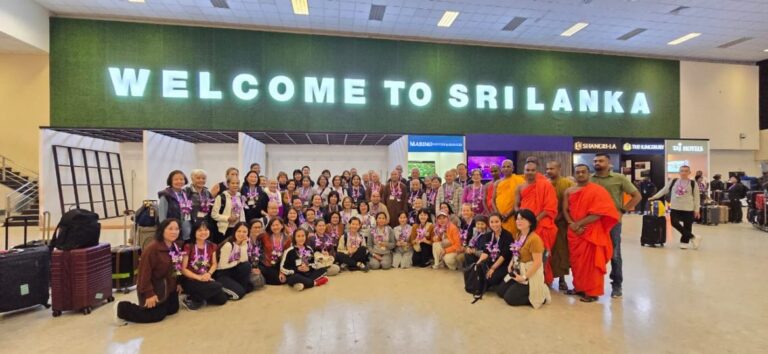
October 19, Colombo (LNW): A group of 86 Vietnamese Buddhist monks, nuns, and lay followers based in the United States arrived in Sri Lanka on Friday (17), to embark on a week-long spiritual and cultural pilgrimage.
The delegation is being led by Venerable Thien Thero, the abbot of the Lien Hoa Buddhist Temple in San Antonio, Texas, and is visiting the island under the spiritual guidance of Venerable Udumule Saranapala Thero, a Royal Pandita and senior teacher affiliated with the same temple.
During their stay, the group is expected to engage in a number of religious and cultural activities aimed at deepening their understanding of Sri Lanka’s Theravāda Buddhist traditions. A key part of their itinerary includes formal audiences with the Most Venerable Maha Nayaka Theros of the Malwatta and Asgiri Chapters in Kandy, as well as spiritual leaders of the Atamasthana—the sacred eight sites of Anuradhapura.
In addition to these ceremonial engagements, the visitors will take part in religious observances and offer alms and educational assistance to local monastics. The delegation is also scheduled to visit several iconic heritage sites such as the Temple of the Tooth Relic in Kandy, the ancient ruins of Anuradhapura, the rock fortress of Sigiriya, and the Dambulla cave temple complex.
Venerable Saranapala Thero explained that the journey is not only a pilgrimage, but also a gesture of spiritual solidarity with Sri Lanka’s monastic community, with the broader goal of fostering global Theravāda unity and supporting the continued revival of Buddhist practice in the region.
Vietnamese Buddhist Delegation from the US Begins Spiritual Tour of Sri Lankan
Sri Lanka Secures $100 Million ADB Loan to Strengthen Secondary Healthcare System
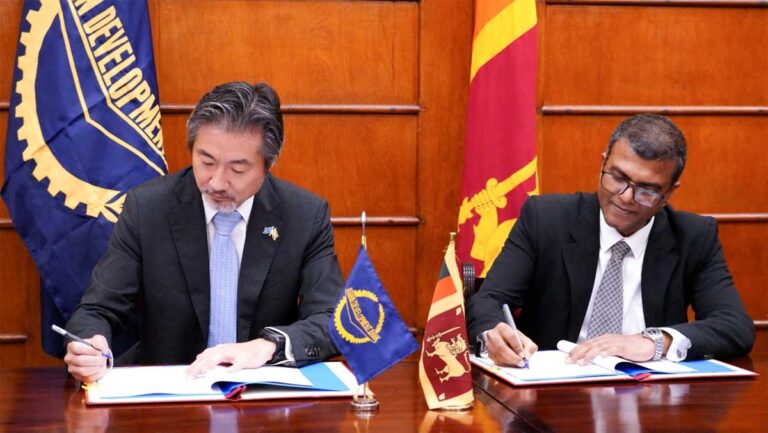
October 19, Colombo (LNW): Sri Lanka has finalised a new financial agreement with the Asian Development Bank (ADB), securing a loan of US$ 100 million aimed at strengthening the country’s healthcare infrastructure, with a particular focus on improving secondary-level medical services.
The initiative forms part of a broader effort to ensure equitable access to quality healthcare under the government’s commitment to universal health coverage.
The loan has been extended through ADB’s Ordinary Capital Resources and will directly support a national health development programme designed to improve the efficiency, reach, and responsiveness of the public health system—especially in areas serving as the first point of referral for patients beyond primary care.
According to the Ministry of Finance, the project will centre on three key areas: enhancing the delivery of first referral care services, building robust systems for pandemic prevention and emergency response, and improving technical capabilities within the health sector, including more effective management of the pharmaceutical supply chain.
In addition to the main loan facility, the programme will receive a supplementary grant of US$ 6.9 million from the ADB-managed Pandemic Prevention, Preparedness and Response Trust Fund, further boosting the capacity of Sri Lanka’s healthcare system to respond to future health emergencies.
The agreement was formally signed by Harshana Suriyapperuma, Secretary to the Ministry of Finance, Planning and Economic Development, on behalf of the Sri Lankan government, while Takafumi Kadono, ADB’s Country Director, represented the lending institution.
Officials involved in the project noted that the programme will play a critical role in bridging the gap between primary care and specialised hospital services, while also helping modernise health infrastructure and workforce training in line with global standards. Implementation is expected to be carried out in phases across multiple provinces, with particular attention to underserved and rural areas.
Hulftsdorp Court Murder: Police Granted 90-Day Detention Order for Ishara Sewwandi

October 19, Colombo (LNW): Sri Lankan authorities have secured official clearance to detain and question Ishara Sewwandi—a key suspect in a high-profile underworld murder case—for a period of 90 days.
The Ministry of Defence approved the extended detention period following a formal request from Sri Lanka Police. The approval allows investigators additional time to conduct in-depth interrogations related to the killing of underworld figure known as ‘Ganemulla Sanjeewa.’
Sewwandi, who had been evading arrest for several months, was recently tracked down and apprehended in Nepal through coordinated international efforts. She was subsequently repatriated to Sri Lanka to face legal proceedings.
Investigators suspect her involvement in a broader criminal network, and believe she may hold critical information about the circumstances surrounding Sanjeewa’s murder, as well as other related criminal activity.
Zimbabwe Confirmed for T20 Tri-Series in Pakistan Alongside Sri Lanka

October 19, Colombo (LNW): Zimbabwe has formally accepted an invitation from the Pakistan Cricket Board (PCB) to compete in a T20 international tri-series, which will also feature Sri Lanka. The tournament is set to take place across two Pakistani cities—Rawalpindi and Lahore—from November 17 to 29.
This marks the first time a T20 tri-series will be hosted on Pakistani soil, and it has been designed to serve as crucial match preparation for all three teams ahead of the ICC Men’s T20 World Cup in 2026, which will be jointly hosted by India and Sri Lanka.
The series will kick off on November 17 at the Rawalpindi Cricket Stadium, where Pakistan will face Zimbabwe in the opening clash. On November 19, Zimbabwe will return to the field to take on Sri Lanka at the same venue.
After these initial two fixtures, the tournament will move to Lahore’s Gaddafi Stadium, which will host the remaining five matches, including the final, scheduled for November 29.
The inclusion of Zimbabwe comes after Afghanistan withdrew earlier in the day, citing scheduling constraints. Their absence opened the door for Zimbabwe to step in and provide competitive balance to the three-nation series.
Sri Lanka’s Public Debt Jumps by One Trillion in 1H of 2025

October 19, Colombo (LNW): Sri Lanka’s public debt has reportedly surged by one trillion rupees in the first half of 2025.
Notwithstanding the massive increase in taxes and the implementation of the cost-reflective prices of utilities since the beginning of the IMF programme, Government indebtedness and its debt stock has been rising at a dangerous pace.
At the end of December 2024, the total debt stock of the Government was Rs.28.7 trillion. By June 2025 (in six months), it had jumped to Rs.29.7 trillion: an increase of Rs.1 trillion or Rs.1000 billion in just six months at an unbelievable rate of about Rs.5.6 billion per day!
President Stresses Integrity in Public Service at Air Force Commissioning in Trincomalee
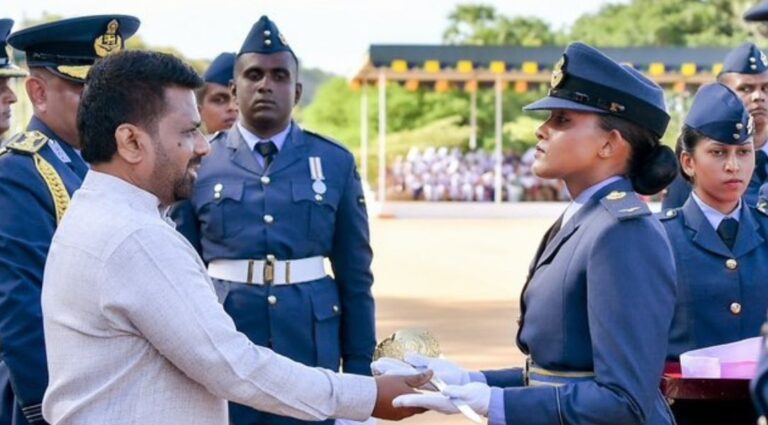
October 19, Colombo (LNW): President Anura Kumara Dissanayake has underscored the urgent need for a state sector built on professionalism, responsibility, and public trust, calling for a renewed commitment to duty across all branches of government service. His remarks were delivered during a formal event hosted by the Sri Lanka Air Force at China Bay in Trincomalee.
Speaking at the ceremony, President Dissanayake emphasised that the country’s progress depends on a disciplined and accountable public service, where each institution carries out its mandate with dedication and efficiency. In this context, he announced that the Air Force will be assigned an enhanced role in the national campaign against drug trafficking and organised crime—a growing concern that threatens public health and national security.
The occasion marked a significant milestone for the Sri Lanka Air Force, as the No. 3 Maritime Squadron was honoured with Presidential Colours in recognition of its service and operational excellence. The symbolic gesture is reserved for military units that have demonstrated exceptional discipline, loyalty, and contribution to national defence.
The event also celebrated the commissioning of 66 officers, including graduates of the 103rd Flying Cadet Officer Course. Each newly commissioned officer was formally decorated with flight badges, presented personally by the President, in a ceremony that combined military tradition with national pride.
President Dissanayake further recognised cadet officers who exhibited outstanding skill and leadership during their training, presenting them with special awards in acknowledgement of their excellence.
The ceremony, held at the Sri Lanka Air Force Academy in China Bay, showcased the discipline, precision, and spirit of service that the armed forces represent. It also served as a platform for the President to reaffirm his administration’s commitment to reforming public institutions, starting with those entrusted with national defence and public safety.
Protective Barriers to Be Installed Along Risk-Prone Mountain Roads in Sri Lanka

October 19, Colombo (LNW): In a move to enhance road safety in hilly terrain, the Road Development Authority (RDA) has launched a targeted infrastructure project aimed at reducing accidents along embankments deemed particularly dangerous.
The initiative follows a concerning rise in road-related incidents across mountainous regions.
As part of the initial phase of this safety enhancement programme, the RDA will begin constructing protective fencing along treacherous road stretches in the Uva, Sabaragamuwa, and Central Provinces.
These regions, known for their winding roads and steep gradients, have seen a disproportionate number of vehicle mishaps in recent months, particularly during periods of heavy rainfall and low visibility.
Deputy Director General of the RDA’s Road Safety and Traffic Management Division, K. Chandrakumara, stated that approximately 50 kilometres of iron fencing will be installed in areas that have been identified through risk assessments and accident data analysis.
The fencing will serve as a physical barrier to prevent vehicles from veering off sharp bends and plunging down embankments—a common and often fatal occurrence on Sri Lanka’s hill-country roads.
The project has been prioritised due to the urgent need to protect both local commuters and tourists who frequently travel through these scenic but perilous routes.
In many of the identified locations, minimal infrastructure exists to prevent vehicles from leaving the roadway, particularly in rural or remote areas where emergency response times can be delayed.
While the current phase covers only a portion of the country’s high-risk areas, authorities have indicated that the initiative may be expanded in future stages to include additional provinces and secondary roads, subject to funding and further evaluations.
Sri Lanka Launches National Mapping Project to Certify Rubber Lands Using GIS Technology
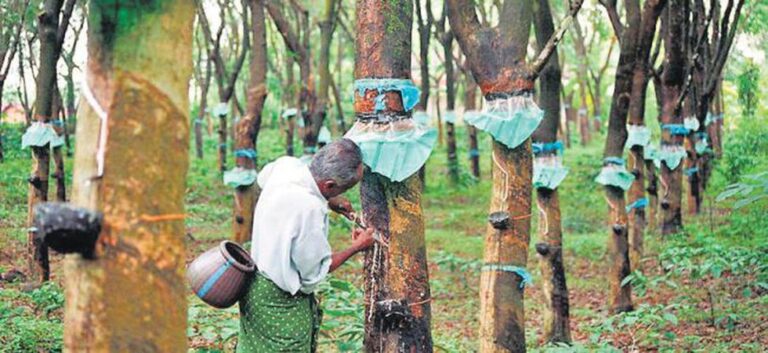
October 19, Colombo (LNW): Sri Lanka has embarked on an ambitious nationwide initiative to digitally map all rubber cultivation areas using cutting-edge Geographic Information System (GIS) technology.
The effort, jointly spearheaded by the Rubber Development Department and the Department of Survey, aims to ensure the country’s rubber industry meets emerging international environmental standards—particularly new European Union regulations targeting deforestation.
With global scrutiny increasing over the environmental impact of agricultural supply chains, the European Union has introduced strict import controls to curb the trade of goods linked to deforestation.
Under these rules, exporters of rubber and rubber-based materials must now demonstrate that their products are not sourced from ecologically sensitive or illegally cleared land. Accurate mapping and transparent data are essential to proving such compliance.
In response, Sri Lanka’s rubber authorities have initiated a detailed mapping programme that will geolocate every smallholder rubber plantation across the country. The Ministry of Plantations and Community Infrastructure confirmed that the data collection process is expected to be completed by 2025, creating a comprehensive digital inventory of rubber-growing regions.
Once a rubber holding is verified and mapped, the Rubber Development Department will issue a unique QR code to the registered farmer, at no cost. This digital tag will serve as a proof of origin, linking each batch of rubber to a verified location.
Farmers will be expected to present this QR code to buyers or intermediaries during transactions, helping to streamline supply chain traceability and support exporters in fulfilling EU requirements.
Officials have stressed the importance of cooperation from small-scale estate owners during the field verification stage. When teams from the Survey Department and the Rubber Development Department arrive to conduct site assessments, landowners will need to be present and prepared with relevant documentation.
This includes the rubber planting licence, land deeds, and detailed land plans—all of which are necessary for accurate geotagging and official recognition.
Authorities believe that this modernisation of rubber land registration will not only enhance environmental accountability but also strengthen Sri Lanka’s competitiveness in the global rubber market, particularly at a time when sustainable sourcing is becoming a decisive factor in trade negotiations.
Sri Lanka Moves to Pursue Athletes Who Vanished After 2022 Commonwealth Games

October 19, Colombo (LNW): Sri Lankan authorities have begun legal proceedings to track down a group of athletes and officials who failed to return home after participating in the 2022 Commonwealth Games in Birmingham. The government is now preparing to issue international arrest warrants through Interpol, a court in Colombo was informed on Friday.
The Chief Magistrate’s Court has imposed overseas travel restrictions on ten individuals suspected of remaining illegally in the United Kingdom after disappearing from the Games Village. According to the Offences Prevention Unit of the Sports Ministry, their unauthorised stay has led to an estimated financial loss of approximately LKR 50 million — roughly USD 150,000 — due to state-funded travel and accommodation costs.
Police Inspector Supun Vidanage, who is heading the inquiry, told the court that a total of 177 people formed Sri Lanka’s official delegation to the Games, including 116 athletes and over 60 support staff. Among them were representatives in boxing, judo, wrestling, and volleyball. Following the conclusion of the event, nine athletes, a team official, and a sports photographer reportedly went missing.
“These individuals left the Games Village during or shortly after the event and failed to return as scheduled,” Vidanage stated, adding that the next step involves securing domestic arrest warrants before moving to request Interpol red notices for their capture and extradition.
He stressed that formal court action is a necessary precursor to international cooperation through Interpol. Once warrants are issued locally, authorities will move forward with engaging global law enforcement channels.
The 2022 Commonwealth Games were held from late July to mid-August, during a period of deep economic and political instability in Sri Lanka. The nation had, by that time, declared itself bankrupt following a sovereign debt default and widespread public protests. Despite these challenges, Sri Lanka managed to secure a silver and a bronze medal, placing 31st in the final medal tally.
Legal proceedings are being carried out under the Prevention of Offences Relating to Sports Act, a legislative framework introduced in 2019 to address misconduct and corruption within the realm of sport.
The law enables the state to pursue those who violate agreements or cause undue financial or reputational harm to national sporting institutions.
Re-scrutinised Grade 5 Scholarship Exam Results Now Available Online
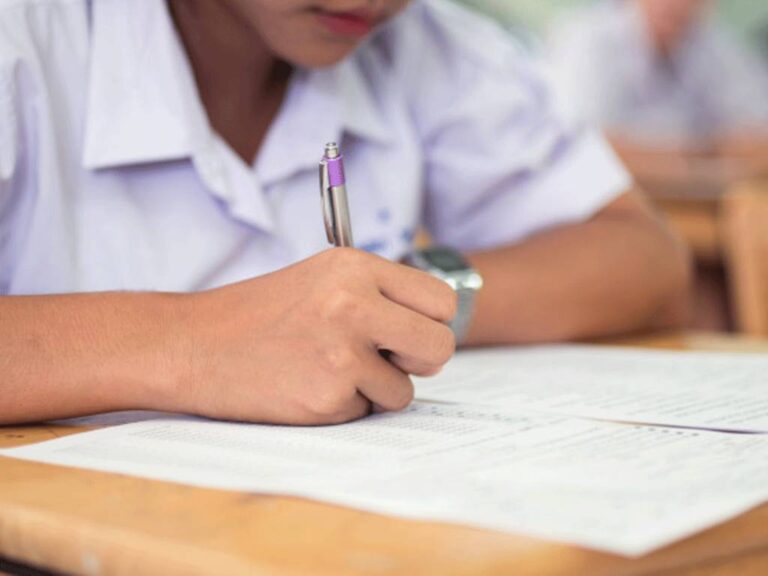
October 19, Colombo (LNW): Revised results for the 2025 Grade 5 Scholarship Examination have now been made accessible to the public, following a thorough re-evaluation process carried out by the Department of Examinations.
Parents and guardians wishing to check the updated scores can do so by visiting the department’s official websites—http://www.doenets.lk and http://www.results.exams.gov.lk.
To retrieve the results, users must enter the appropriate index number associated with the student.
This re-scrutiny was initiated after the initial results, released on September 04, 2025, prompted a number of appeals and queries regarding marking accuracy. The examination itself took place earlier in the year on August 10, with thousands of students across the country sitting for this highly competitive national assessment, which plays a crucial role in determining eligibility for scholarships and placement in prestigious schools.
Officials from the Department of Examinations have emphasised that the updated results reflect the most accurate and fair assessment of candidates’ performances. The re-marking process was conducted with heightened scrutiny to ensure full transparency and integrity.
Those seeking further information or clarification are encouraged to contact the department directly. Assistance is available via the 1911 hotline, or through the School Examinations Organisation and Results Branch at the following numbers: 011 2784208, 011 2784537, and 011 2785922. Queries may also be submitted via fax to 011 2784422.