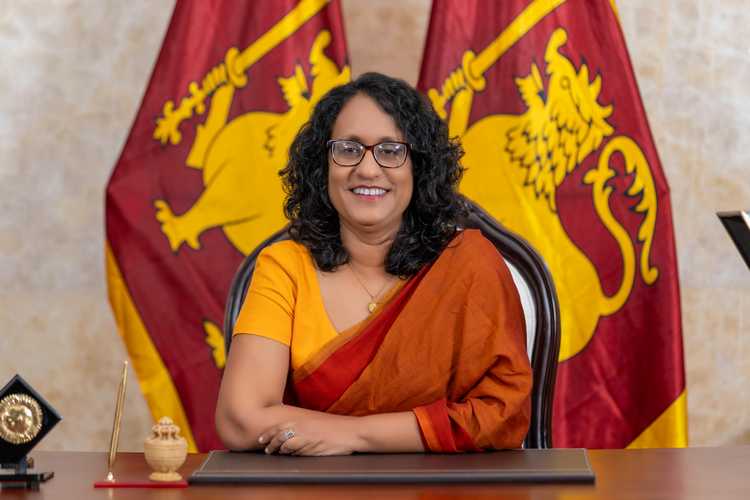
October 19, Colombo (LNW): Prime Minister Dr Harini Amarasuriya has concluded a multi-day official visit to India and returned to Sri Lanka, touching down at Bandaranaike International Airport in Katunayake late on the evening of October 18.
The Prime Minister embarked on the diplomatic mission on October 16 with the primary aim of deepening cooperation and enhancing bilateral ties between Sri Lanka and India—two nations bound by longstanding cultural, economic, and political ties.
The visit came at a critical juncture, as both countries continue to explore new avenues for regional collaboration and mutual development.
During her stay in New Delhi, Dr Amarasuriya engaged in a series of high-level meetings, most notably with Indian Prime Minister Narendra Modi. The two leaders are reported to have held wide-ranging discussions, covering trade, regional security, energy cooperation, and climate resilience. Sources close to the delegation suggest that both parties expressed a strong commitment to building upon existing agreements while exploring new frameworks for strategic partnership.
In addition to governmental engagements, Dr Amarasuriya also played a prominent role in the NDTV World Summit—an influential policy and media forum co-hosted by NDTV and the Chintan Research Foundation. As the keynote speaker, she addressed an audience comprising global policymakers, academics, and business leaders, highlighting the importance of regional solidarity, sustainable development, and digital inclusivity in the Global South.
Prime Minister Concludes High-Level Diplomatic Mission to India
Afternoon showers, thundershowers expected: Misty conditions likely to occur (Oct 19)

October 19, Colombo (LNW): Showers or thundershowers will occur at most parts of the island after 1.00 p.m., the Department of Meteorology said in its daily weather forecast today (19).
A few showers may occur in Southern province and in Colombo and Kaluthara districts in the morning too.
Misty conditions can be expected at some places in Sabaragamuwa, Central and Uva provinces during the morning.
The general public is kindly requested to take adequate precautions to minimise damages caused by lightning and temporary localised strong winds during thundershowers.
Marine Weather:
Condition of Rain:
Showers will occur in the sea areas off the coast extending from Colombo to Pottuvil via Galle and Hambantota.
Showers or thundershowers may occur at several places in the sea areas off the coast extending from Kankasanthurai to Pottuvil via Trincomalee and Batticaloa during the evening or night.
Winds:
Winds will be south-westerly or variable and wind speed will be (25-35) kmph.
Wind speed can increase up to 45 kmph at times in the sea areas off the coast extending from Matara to Pottuvil via Hambantota.
State of Sea:
The sea areas off the coast extending from Matara to Pottuvil via Hambantota will be moderate at times.
The other sea areas around the island will be slight.
Temporarily strong gusty winds and very rough seas can be expected during thundershowers.
DP Education Celebrates Its 6th Anniversary: Six Years of Transforming Sri Lanka’s Education Landscape

Sri Lanka’s leading online education platform, DP Education, celebrates its 6th anniversary today (October 18).
DP Education is a massive social initiative launched by the Dhammika and Priscilla Perera Foundation, funded by the country’s leading entrepreneur and philanthropist Dhammika Perera and his wife Priscilla Perera.
From preschool to Advanced Level, the platform offers students across the island the opportunity to study a wide range of essential subjects completely free of charge, taught by the best teachers in Sri Lanka through online learning.
The platform also covers Pirivena (monastic) education syllabi and focuses on vocational education. One of its most notable programs, DP Education IT Campus, aims to raise computer literacy among Sri Lankan youth and create a large number of employment opportunities in the information technology sector.
In addition, DP Education operates a language school that provides pathways to local and international employment opportunities. Students can learn multiple languages — including English, Japanese, and Italian — up to internationally recognized examination standards.
Beyond this, DP Education continues to implement numerous annual initiatives designed to elevate Sri Lanka’s education system to a global standard and make education more accessible and engaging for children across the nation.
Recognized both locally and internationally, DP Education marks its 6th anniversary as a proud milestone in its educational journey.
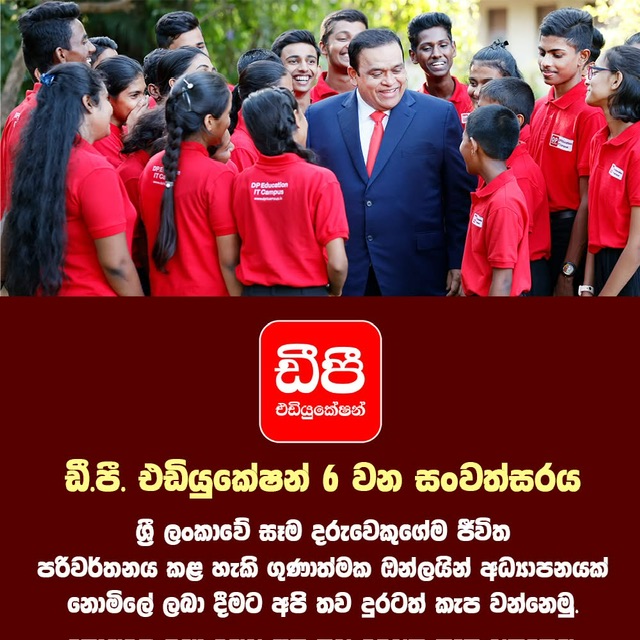
Below is a statement from Dhammika Perera, Co-Chairman of DP Education, marking this special occasion:
“As we celebrate six years of our educational mission today, we take great pride in the path we have traveled — providing quality education to every student in Sri Lanka.
When we began this initiative in 2019 with the vision of offering free, high-quality education equally to every child in Sri Lanka, we aimed to transform lives. By 2025, DP Education has become a powerful nationwide movement achieving that very goal.
This anniversary, marking our launch on October 18, 2019, is not just a reminder of our accomplishments, but a reaffirmation of our unwavering vision — to continue building a future generation equipped with knowledge and skills to lead the world.
Our strategic plan for the next five years (2025–2030) will further strengthen this mission.”
To learn more about the 2025–2030 strategic plan, visit:
https://drive.google.com/file/d/1oaYQozq5HZWsMRkS0W0lFQqlcJYwtI5P/view
Colombo Charts Bold Course to Become Blue Economy Hub
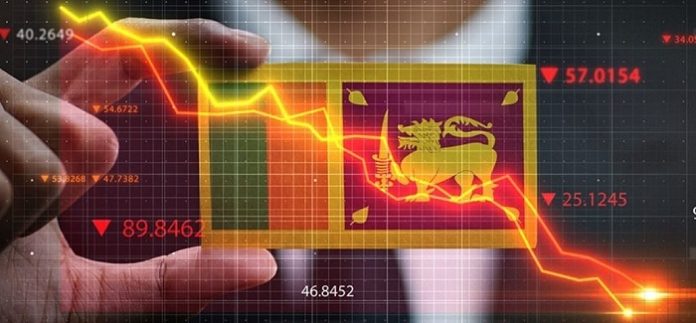
Sri Lanka is charting a new course for its post-crisis economic recovery this time, turning to the ocean. With a sweeping Blue Economy Vision 2030, the Government aims to transform the island into South Asia’s premier destination for ocean-based investment, capitalising on its strategic maritime position and rich marine resources.
Delivering the keynote at Marine Summit: Voyage Sri Lanka 2025 in Colombo, Labour and Economic Development Deputy Minister Dr. Anil Jayantha Fernando described the plan as a “bold, forward-looking vision” to unlock untapped potential in five key sectors: sustainable fisheries and aquaculture, marine biotechnology and pharmaceuticals, port development and maritime logistics, marine tourism and recreation, and offshore and renewable energy services.
“The oceans surrounding us are not just a resource they are the foundation of our future prosperity,” Dr. Fernando said, calling the initiative a cornerstone of Sri Lanka’s 2030 development agenda.
The strategy emphasizes both economic and environmental sustainability. Policy reforms are being implemented to streamline investor approvals, expand port and coastal infrastructure, and offer tax incentives for marine industries. The Government is also aligning these initiatives with the UN’s Sustainable Development Goal 14, “Life below Water,” to ensure long-term ecosystem balance.
Sri Lanka’s geographic position, straddling major East-West shipping routes, gives it a natural edge. With the expansion of the Colombo Port and the development of Hambantota and Trincomalee harbours, the country hopes to become a key logistics, bunkering, and ship-repair hub in the Indian Ocean.
“We sit at the crossroads of a trillion-dollar trade corridor,” Dr. Fernando said, underscoring the island’s potential to attract global maritime traffic and investment.
Beyond logistics, the plan highlights marine biotechnology and pharmaceuticals — areas where Sri Lanka’s marine biodiversity could support high-value industries such as bio-based medicine and cosmetics. Meanwhile, eco-tourism, diving, and coastal recreation will be integrated into the broader tourism strategy to diversify the sector.
Dr. Fernando also stressed the importance of environmental governance and skilled human capital. With an exclusive economic zone (EEZ) over seven times its landmass and a growing pool of maritime professionals, Sri Lanka aims to leverage both natural and human resources to secure long-term competitiveness.
The summit, organised by the Export Development Board (EDB), brought together global experts and investors, including representatives from the Asian Development Bank (ADB), International Maritime Organisation (IMO), and United Nations Development Programme (UNDP).
EDB Chairman Mangala Wijesinghe said the initiative marks a “turning point” for Sri Lanka’s marine economy. “By fostering innovation, sustainability, and international partnerships, we can make Sri Lanka the beating heart of South Asia’s Blue Economy,” he noted.
As the island nation rebuilds its economy, the Blue Economy Vision may be the compass that guides Sri Lanka toward a sustainable and globally competitive maritime future.
TRI Calls for Climate-Smart Farming, GI Branding in Sri Lanka Tea Sector
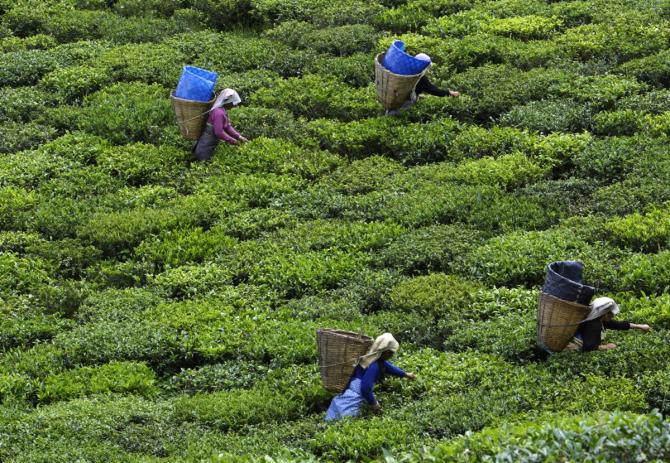
Sri Lanka’s tea industry, the lifeblood of its rural economy and a global symbol of national pride, is facing a defining moment. The Tea Research Institute (TRI) has called for sweeping reforms—blending climate adaptation with Geographical Indication (GI) certification—to safeguard the future of Ceylon Tea amid mounting environmental and market challenges.
Speaking at the “Perspectives on Geographical Indications in Sri Lanka” forum in Colombo, TRI Deputy Director of Research (Production) Dr. Shyamantha Bandara said the industry must urgently shift toward climate-smart and sustainable cultivation models. He warned that Sri Lanka, ranked among the world’s most climate-vulnerable nations, is already witnessing yield declines caused by erratic rainfall and rising temperatures.
“With nearly one million livelihoods tied to the tea sector, our future depends on innovation,” Dr. Bandara noted. Sri Lanka’s tea production, which reached about 262 million kilograms in 2024, must rise to 400 million kilograms to sustain export growth. However, he cautioned that achieving this goal requires modernised cultivation systems, advanced technology, and better soil and water management.
To adapt, the TRI is promoting shade management, improved irrigation systems, and intercropping methods such as tea-and-coconut cultivation. Dr. Bandara highlighted the potential of micro-irrigation a system successfully used in other tea-producing countries—to reduce water stress and ensure yield stability. He added that such methods should align with GI standards to strengthen sustainability credentials and market differentiation.
GI certification, which legally protects products linked to specific regions, has become a crucial strategy for global competitiveness. Following the success of Ceylon Cinnamon’s European Union (EU) GI recognition, the Tea Board and its French partners are working to secure similar protection for Ceylon Tea. “GI certification enhances traceability, prevents mislabelling, and ensures authenticity critical for maintaining trust in international markets,” Dr. Bandara explained.
He also pointed out that Sri Lanka’s tea production costs are among the highest globally, leaving limited room for price competition. Instead, the country must leverage quality and heritage through GI certification to justify premium pricing and strengthen its international reputation.
Dr. Bandara further called for institutional coordination to modernise certification frameworks and integrate digital traceability tools to meet global standards. “We must view GI as a bridge between our producers and global consumers, enhancing transparency and market access,” he said.
The Colombo forum, co-organised by the Sri Lanka Tea Board, the French Agricultural Research Centre for International Development (CIRAD), and the Institute of Policy Studies (IPS), concluded the Ceylon Tea GI project supported by the French Agency for Development.
As climate pressures intensify, the TRI’s message is clear: without urgent innovation and GI-backed sustainability, Sri Lanka’s world-famous tea risks losing its competitive edge in an increasingly uncertain global market.
Sri Lanka Weighs Risks and Rewards of INR Bond Move

India’s latest proposal to allow Sri Lankan entities to issue bonds in Indian Rupees (INR) marks a bold shift in regional financial diplomacy one that could redefine Sri Lanka’s access to credit while also raising questions over economic sovereignty and long-term fiscal risk.
Announced by Indian Deputy High Commissioner to Sri Lanka Dr. Satyanjal Pandey at the ‘Bridging Borders II’ dialogue in Colombo, the move aims to enable both government and private sector entities in Sri Lanka to raise capital through INR-denominated bonds. Dr. Pandey described it as a “long-term vision” built on “deepening trust” between the two neighbours.
The proposal’s appeal is clear. Issuing INR bonds would give Sri Lanka and its corporates access to a wider investor base in India the world’s fastest-growing major economy while reducing dependence on costly dollar borrowings. With the rupee gaining regional prominence and India’s bond market offering high liquidity, the initiative could help Colombo diversify funding channels, lower borrowing costs, and mitigate exchange rate risks that have plagued the country’s external debt.
Yet, beneath the optimism lie considerable complexities. India’s own capital account is not fully convertible, meaning cross-border issuance in INR would require significant regulatory reforms by the Reserve Bank of India. Dr. Pandey acknowledged these “steep challenges,” including potential rupee volatility and compliance constraints under India’s external commercial borrowing rules.
Critics in Colombo also warn that greater financial alignment with India may deepen dependency and limit policy autonomy. With nearly 65% of Sri Lanka’s trade already tied to India, further financial integration could make the economy more susceptible to rupee-driven shocks. Moreover, if rupee depreciation occurs, Sri Lankan issuers could face repayment risks similar to those triggered by dollar fluctuations in the past.
Still, the timing is strategic. Sri Lanka’s economy, emerging from its worst crisis in decades, has begun to stabilize recording 5% growth in 2024 and regaining modest investor confidence after successful debt restructuring. The IMF has repeatedly urged Colombo to broaden funding options while maintaining fiscal discipline, and the INR bond route could serve that purpose.
Dr. Pandey also hinted at broader regional implications, suggesting that India’s regulators consider allowing INR bond financing for sustainable and infrastructure projects across South Asia. He pointed to the GIFT City model where DFCC Bank has already raised US$8 million as a proof of concept.
As policymakers weigh the opportunity, the initiative stands as both a promise and a test: whether Sri Lanka can harness India’s growing financial clout to rebuild stability, without surrendering too much of its own economic independence.
IMF Stresses Fiscal Discipline Vital for Sri Lanka’s Recovery
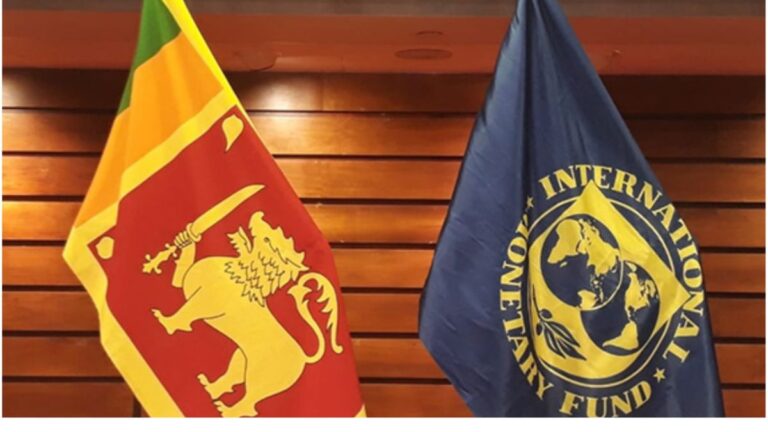
Sri Lanka’s economic recovery, while encouraging on paper, remains on a precarious footing as the International Monetary Fund (IMF) renews its call for deeper fiscal discipline and urgent State-owned enterprise (SOE) reforms. Despite visible progress under the Extended Fund Facility (EFF), the country continues to walk a fine line between stabilisation and slippage.
At the IMF’s latest Regional Economic Outlook briefing, Asia-Pacific Department Director Krishna Srinivasan and Deputy Director Thomas Helbling painted a cautiously optimistic picture. They noted that the economy, after contracting sharply in 2022, rebounded with a robust 5% GDP growth in 2024 and is projected to expand by around 4.2% in 2025. However, Sri Lanka’s potential growth remains capped at roughly 3%, signalling that without structural change, the recovery could quickly lose steam.
Helbling stressed that fiscal consolidation curbing the budget deficit and ensuring SOE viability—is central to sustaining this recovery. “Ensuring the financial viability of SOEs and mitigating fiscal risks will be crucial for sustaining these benefits,” he warned. The IMF’s advice comes amid mounting fiscal pressures: public debt remains above 120% of GDP, while interest payments consume nearly 40% of government revenue.
SOE reform remains one of the most politically and economically challenging fronts. Many state enterprises, including those in energy, transport, and utilities, continue to post significant losses, costing the Treasury billions each year. The IMF noted that reforms in cost-recovery pricing—particularly in electricity and fuel are ongoing, but warned that delays could reverse recent gains in macroeconomic stability.
Srinivasan commended Sri Lanka for making “significant progress compared to a few years ago,” but cautioned that the hardest part lies ahead. “The country has already done the difficult part by continuing with reforms, you will continue to see the benefits,” he said.
The Fund also emphasized the need for stronger institutional frameworks particularly in public investment management and fiscal transparency to prevent the re-emergence of governance weaknesses that contributed to the 2022 crisis.
As the Government faces growing social pressures from rising living costs and calls for increased public spending, maintaining fiscal restraint poses a political challenge. Any deviation from the IMF’s reform roadmap could risk disbursement delays or renewed market instability.
For now, the IMF remains supportive but firm: Sri Lanka’s fragile recovery hinges on consistent reform execution, disciplined budgeting, and political resolve. Without these, the country’s hard-won macroeconomic stability could once again be at risk
Irresponsible Borrowing Hindered Post-War Growth, Says Deputy Minister Anil Jayantha Fernando

Labour Minister and Economic Development Deputy Minister Dr. Anil Jayantha Fernandoyesterday said that irresponsible borrowings following the end of the war in 2009 had prevented Sri Lanka from achieving sustained economic growth, as much of the borrowed funds had not been directed into productive economic channels.
Speaking at the Voyage Sri Lanka 2025 International Maritime Summit, which brought together global experts, investors, policymakers, and industry leaders to shape the country’s blue economy, Dr. Fernando noted that while some economic growth was visible in 2010, it was not sustainable due to poor investment decisions.
“You may see some growth in economic development in 2010, but it was not sustainable, because most of the borrowing had not gone into productive economic channels,” he said.
Dr. Fernando emphasized that Sri Lankans are capable of contributing meaningfully to development, but structural missteps and poor financial decisions had hindered progress. “Opportunities alone don’t bring change. What we need is action — and that includes committed Government intervention,” he added.
Highlighting the Government’s proactive role in economic facilitation, he said, “Our mandate is to look at everything carefully and support investors. This is not politicisation – it’s facilitation.”
He further clarified that while political engagement is necessary to support investment, politicisation — or intervening to maximize private interests — will not be tolerated.
The Voyage Sri Lanka 2025 Summit aims to foster collaboration and unlock new opportunities for development in key sectors such as ship repair, shipbuilding and boatbuilding, offshore services and energy, and marine tourism — all identified as critical drivers of export growth and technological advancement in the maritime domain.
Court Imposes Travel Ban on Ten Sri Lankan Athletes Who Failed to Return After 2022 Commonwealth Games

The Colombo Chief Magistrate, Asanga S. Bodaragama, yesterday (17) issued an overseas travel ban on ten Sri Lankan athletes who allegedly failed to return to the country after participating in the 2022 Commonwealth Games in Birmingham, United Kingdom.
According to the Special Investigation Unit for the Prevention of Sports-Related Offences, the absconding athletes have caused an estimated financial loss of nearly Rs. 50 million to the government. The Unit informed the court that measures are being taken to issue red notices against the ten individuals.
Investigations were launched following a complaint lodged by the Director General of Sports, alleging that the athletes had travelled to the UK to represent Sri Lanka but did not participate in the scheduled events and failed to return after the conclusion of the Games.
Charges have been filed under Sections 5 and 6 of the Prevention of Offences Relating to Sports Act No. 24 of 2019.
The travel ban was imposed on the following athletes: Asela de Silva, Chamila Dilani, S. Chathuranga, Y. Nicholas, Ashen Rashmika, S. Malintha, Sriyanthika Fernando, Sanjeewa Rajakaruna, and Jeevantha Vimukthi Kumara.
Chief Inspector Supun Widanage, Head of the Special Investigation Unit for the Prevention of Sports-Related Offences, told the court that 116 athletes, along with 28 coaches, 11 officials, and 4 medical officers, represented Sri Lanka at the Birmingham Games. Among them, three wrestlers, two judokas, two boxers, and two volleyball players reportedly absconded in the UK.
After reviewing the submissions, the Magistrate ordered an overseas travel ban on the ten suspects pending further investigations.
Sri Lanka Signs USD 100 Million Loan Agreement with ADB to Strengthen Health Sector
Sri Lanka has entered into a USD 100 million loan agreement with the Asian Development Bank (ADB) to enhance the country’s health sector, the Ministry of Finance announced.
The agreement was signed by Finance Ministry Secretary Harshana Suriyapperuma on behalf of Sri Lanka, and ADB Country Director Takafumi Kadono representing the Asian Development Bank.
According to the Ministry, the funds—provided through ADB’s Ordinary Capital Resources window—will support the implementation of the National Strategic Framework for Health Services Development, focusing on improving the efficiency and quality of secondary healthcare services as the first point of referral care. The initiative aims to strengthen Sri Lanka’s progress toward universal health coverage.
In addition to the loan, the package includes an externally financed grant of USD 6.9 million from the Pandemic Fund, provided under a Results-Based Lending approach. This grant component is expected to support measures that enhance the health system’s resilience and preparedness for future public health emergencies.