Home Blog Page 346

US Launches South Asian Youth Leadership Program in Colombo

0

By:Staff Writer

August 19, Colombo (LNW): Colombo this week became the center of a new United States initiative to cultivate the next generation of South Asian leaders, with the launch of the Young South Asian Leaders Initiative (YSALI). The three-day workshop, funded by the U.S. Department of State, brings together more than 80 youth leaders from Bangladesh, Bhutan, India, Maldives, Nepal, Pakistan, and Sri Lanka to strengthen regional networks and address shared challenges.

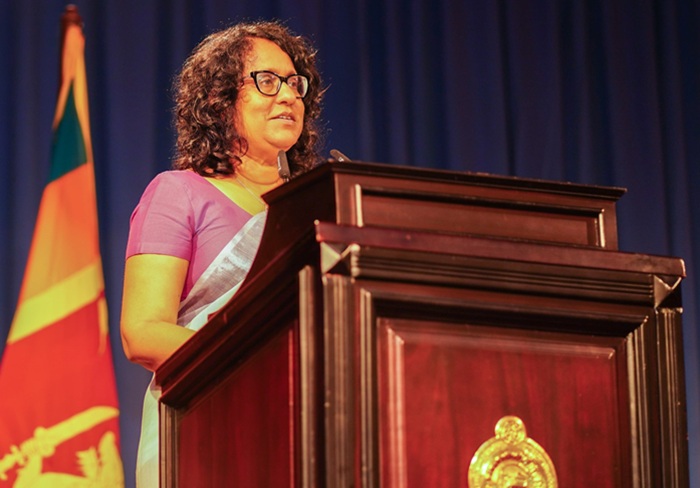
The program, inaugurated by U.S. Ambassador to Sri Lanka Julie Chung, Acting Deputy Assistant Secretary for South and Central Asian Affairs Shelly Seaver, and Sri Lanka’s Minister of Youth Affairs and Sports Sunil Gamage, is designed to foster leadership, entrepreneurship, and civic engagement. Participants were selected competitively from alumni of earlier U.S. government exchange initiatives and represent diverse fields including business, academia, health, and governance.

“Each of you has already demonstrated leadership through your participation in U.S. government exchange programs, taking the initiative to create change—often in challenging circumstances,” Ambassador Chung told participants. “Now, by coming together, you are combining your ideas, talents, and dreams to shape the future of this region. When you succeed, the Indo-Pacific becomes stronger, more connected, and more prosperous for all.”

Over the course of the workshop, attendees will engage with experts, government officials, and business representatives in interactive sessions designed to share U.S. expertise in leadership and innovation. A highlight of the program will be the YSALI Expo, where local organizations, American partners, and program alumni will showcase civic initiatives, entrepreneurial projects, and U.S. business engagement in the region.

The initiative aims to serve as a networking hub, encouraging collaboration among young leaders across national borders. By creating long-term professional ties, U.S. officials argue, the program not only builds leadership capacity within South Asia but also strengthens people-to-people connections that benefit both the region and the United States.

Launched in September 2024 on the sidelines of the UN General Assembly, YSALI is Washington’s newest youth engagement effort. It builds on earlier models, such as the Young Southeast Asian Leaders Initiative (YSEALI), and reflects a broader U.S. strategy to promote regional cooperation in the Indo-Pacific.

According to the U.S. Embassy, YSALI will provide young leaders with the tools, resources, and networks to tackle pressing issues such as economic development, climate change, and civic participation.

Analysts view the initiative as having dual benefits. For South Asian participants, it provides exposure to global best practices in entrepreneurship, governance, and social innovation, while offering opportunities for regional collaboration that might otherwise be difficult to access. For the United States, YSALI helps build enduring ties with future decision-makers, ensuring that American businesses and institutions remain active partners in South Asia’s growth story.

Critics, however, point out that such initiatives also serve U.S. strategic interests, positioning Washington as a key influencer in the Indo-Pacific at a time of growing geopolitical competition. While the workshops emphasize collaboration and empowerment, they also underscore the United States’ intent to deepen its soft power presence in the region.

Nonetheless, participants in Colombo voiced optimism that the program could create a platform for meaningful dialogue and shared action across borders. As one Sri Lankan attendee remarked, “This is a chance to learn from each other, collaborate across boundaries, and take small but important steps toward building a more connected South Asia.”

With regional cooperation increasingly essential in addressing economic and social challenges, the Colombo workshop signals both a commitment to youth empowerment and a reminder of the strategic role young leaders will play in shaping South Asia’s future.

CEB Steps Up Modernization of Power Transmission Network

0

By:Staff Writer

August 19, Colombo (LNW): Sri Lanka’s power sector is moving into a new phase of modernization as the Ceylon Electricity Board (CEB) accelerates efforts to upgrade its transmission network to improve efficiency, reduce breakdowns, and integrate renewable energy into the national grid.

 Power and Energy Minister Eng. Kumara Jayakody gave directives this week to fast-track the program, which falls under the National Transmission and Distribution Network Development and Efficiency Improvement Project (Package 02 – Grid Substations). The instructions came during an inspection tour of two newly completed substations in Kirindiwela.

New Substations to Strengthen Reliability

Under this project, three new facilities are being developed: the Battaramulla 132/33kV (domestic) substation, the Kirindiwela 132/33kV grid substation, and the Kirindiwela 220/132kV switching station. Two of the Kirindiwela units were opened for ministerial inspection.

The completion of the Kirindiwela switching station will allow hydropower generated at the Mahaweli and Kelani power plants to be transmitted more effectively to the Western Province. This will enhance system reliability by converting the current single transmission path into a multi-path network, significantly reducing the risk of power outages.

The new facility will also increase the transmission capacity of the Western Province’s 132kV network by 500 MW, while the Kirindiwela substation alone will boost distribution capacity by 63 MW. This expansion will help meet the rising demand for electricity in Kirindiwela, Yakkala, Kadawatha, and nearby areas, ensuring a more stable supply for both households and industries.

Boost for Renewable Integration

A key benefit of the upgraded system is its ability to integrate more renewable energy into the national grid. The strengthened network will allow household rooftop solar power in the Western Province to be absorbed more efficiently. In addition, it will prepare the grid to accommodate large-scale renewable energy projects planned across the island, from solar to wind and hydropower.

By minimizing electricity losses through reduced transmission resistance, the project will also increase overall system efficiency and lower costs in the long run.

Wider Expansion Plans

Beyond Kirindiwela and Battaramulla, the modernization program will expand to cover substations in Kosgama, Kotmale, Padukka, Pannipitiya, Ratmalana, Seethawaka, Thulhiriya, Veyangoda, Nawula, Polpitiya, and Ukuwela. These upgrades are expected to reinforce the backbone of Sri Lanka’s national power transmission system.

Minister Jayakody stressed the need for rapid completion of these projects, assuring officials that his ministry would extend full support to overcome any challenges during implementation.

The CEB’s transmission modernization initiative marks a critical step in strengthening Sri Lanka’s energy security, ensuring a more reliable supply for consumers, and enabling the shift toward a 70% renewable energy target in the coming years

Colombo Port City Commission Halts Visa Recommendations Amid Probe Into Foreign Worker Incident

0

August 19, Colombo (LNW): The Colombo Port City Economic Commission (CPCEC) has temporarily suspended the issuance of visa recommendations for two Authorised Persons (APs) following a recent incident involving the detention and deportation of foreign employees linked to their operations.

In a statement issued this week, the Commission confirmed that the suspension would remain in place pending the outcome of an internal investigation related to the incident at Bandaranaike International Airport.

The CPCEC has formally requested comprehensive written explanations and relevant documentation from both APs to aid in what it described as a “transparent and thorough” review.

The move comes after authorities flagged irregularities concerning the foreign nationals, prompting swift action by the Department of Immigration and Emigration. The CPCEC expressed its appreciation to the department for its vigilance and reaffirmed that all national regulatory bodies continue to exercise full authority within the Colombo Port City Special Economic Zone (SEZ), as stipulated under Section 74 of the CPCEC Act, No. 11 of 2021.

The Commission also used the opportunity to urge all authorised entities operating within the Port City to adhere strictly to compliance protocols, including conducting detailed background checks when recruiting foreign talent. The call reflects the Commission’s broader effort to reinforce accountability and safeguard the integrity of Sri Lanka’s flagship economic zone.

Whilst reiterating its long-term commitment to facilitating responsible investment and high-quality commercial activity, the CPCEC emphasised that maintaining national security and upholding legal standards remain non-negotiable priorities.

Positioned as a cornerstone of Sri Lanka’s economic future, the Colombo Port City SEZ is expected to attract significant international interest.

Electricity (Amendment) Bill Becomes Law

0

August 19, Colombo (LNW): Speaker of Parliament Dr Jagath Wickramaratne has formally endorsed the certificate on the Sri Lanka Electricity (Amendment) Bill, officially enacting it into law as the Sri Lanka Electricity (Amendment) Act, No. 14 of 2025.

This legislative milestone follows the passage of the Bill in Parliament on August 06, where it was approved during its Third Reading with a majority of 96 votes.

The newly enacted law introduces a number of structural and policy reforms aimed at modernising Sri Lanka’s power sector and aligning it with broader energy and environmental goals.

Among the most notable changes introduced under the Act is the replacement of the long-standing National Electricity Advisory Council with a more strategically aligned framework for developing a National Electricity Policy—which will now form a core part of the overarching National Policy on Energy.

Additionally, the Act replaces the term Wholesale Electricity Market with National Electricity Market, signalling a broader redefinition of how energy is traded and regulated in the country. The new market model is underpinned by key objectives: ensuring the delivery of uninterrupted and affordable electricity, encouraging efficiency across the system, reducing the carbon footprint of power generation, and boosting investment in renewable energy sources.

The Bill, introduced by the government earlier this year, sparked considerable debate both within and outside Parliament. It was met with legal challenges, including petitions filed before the Supreme Court by various stakeholders, such as the Ceylon Electricity Board Engineers’ Union. Concerns raised ranged from governance transparency to the potential impact on national energy security and public accountability.

However, the Supreme Court determined that, subject to certain amendments, the proposed legislation was in line with constitutional provisions—paving the way for its passage and eventual certification by the Speaker.

SSP Sathish Gamage Remanded Amid Corruption Allegations Linked to Criminal Underworld

0

August 19, Colombo (LNW): Senior Superintendent of Police (SSP) Sathish Gamage has been ordered to remain in remand custody until September 02, following a court ruling issued by Colombo Chief Magistrate Thanuja Lakmali Jayathunga.

The decision comes as investigations continue into serious corruption allegations involving large sums of illicit money.

SSP Gamage, who is currently attached to the Cultural Division of the Police Field Force Headquarters, was apprehended by the Commission to Investigate Allegations of Bribery or Corruption. Authorities allege that during his previous appointments overseeing the Galle and Embilipitiya Police Divisions, Gamage engaged in a covert financial operation involving the use of third-party bank accounts.

According to investigators, the senior officer is suspected of establishing three bank accounts under the name of another individual at separate private banking institutions. These accounts were then allegedly used to funnel approximately Rs. 14 million, believed to have been collected in the form of bribes. The funds are said to have come from various sources, including figures linked to organised crime, individuals seeking preferential treatment from law enforcement, and others with known criminal backgrounds.

No-Confidence Motion Tabled Against Deputy Defence Minister, Speaker to Review

0

August 19, Colombo (LNW): Speaker Dr Jagath Wickramaratne confirmed the receipt of a motion of no confidence aimed at the Deputy Minister of Defence, Major General (Retired) Aruna Jayasekara.

The motion, formally submitted by members of the opposition, bears the signatures of 31 MPs, including the Leader of the Opposition, Sajith Premadasa.

Addressing the chamber this morning shortly after sittings commenced at 9:30 a.m., the Speaker informed members that the document had been handed over on August 12. Dr Wickramaratne assured the House that he would thoroughly examine its contents before delivering a decision on the next procedural steps.

A no-confidence motion is a serious parliamentary instrument, typically indicating a perceived failure in conduct, policy, or accountability.

Major General Jayasekara, a retired military officer turned politician, has held the deputy portfolio in the Ministry of Defence during a period marked by both security challenges and institutional reforms. His critics have questioned aspects of his leadership, while his supporters argue that he has brought discipline and experience to a sensitive national role.

Dozens of New Political Parties Seek Registration Ahead of 2025 Polls

0

August 19, Colombo (LNW): Sri Lanka’s Election Commission has begun the formal evaluation process for the registration of new political parties ahead of the 2025 electoral calendar.

According to Commissioner-General of Elections Saman Sri Ratnayake, preliminary interviews are now underway for 47 aspiring political movements that have cleared the initial screening phase. These interviews form part of a multi-stage selection process through which successful applicants may ultimately be granted official party status.

The Commission originally received 83 applications from various groups and individuals following a call for submissions earlier this year in February. However, 36 of these were dismissed outright for not satisfying the basic eligibility criteria set out by the Commission—ranging from administrative shortcomings to incomplete documentation.

Those that met the minimum requirements have now progressed to the first round of formal interviews, where each applicant’s structure, proposed political ideology, and adherence to democratic principles are being scrutinised. The Commission has emphasised that only those with clear organisational frameworks and demonstrable public engagement potential will be considered for the next stage.

Parties that pass the current vetting process will be invited to a second round of interviews, during which more detailed assessments will be made. Following this final stage, qualifying groups will be granted official recognition as political parties for the year 2025.

At present, Sri Lanka has 86 registered political parties, though many of these remain inactive or function with minimal public presence. The introduction of new parties could inject fresh ideas and competition into the democratic arena, especially as the country approaches key elections amid evolving political sentiments and public demands for reform.

Former Lottery Board Chief Thusitha Halloluwa Arrested Over Shooting Probe

0

August 19, Colombo (LNW): Thusitha Halloluwa, former director of Sri Lanka’s National Lotteries Board (NLB), was taken into police custody in the early hours of Tuesday (19) in the Colpetty area, following days of evasion.

Halloluwa, who had failed to appear before court despite a formal summons, was the subject of an arrest warrant issued by the Colombo Magistrate’s Court on Monday (18). The warrant came after the Colombo Crimes Division (CCD) informed the court of Halloluwa’s failure to cooperate with an ongoing criminal investigation.

Colombo Additional Magistrate Pasan Amarasena issued the warrant after evaluating the CCD’s report, which pertains to a recent shooting incident involving Halloluwa’s vehicle in Narahenpita. Although no injuries were reported in the incident, it has raised serious concerns and prompted a broader investigation into the circumstances surrounding the attack and Halloluwa’s subsequent disappearance.

Sources close to the investigation indicate that police had been actively tracking Halloluwa’s movements over the past several days, culminating in his arrest without incident in Colpetty.

He is expected to be presented before the Colombo Magistrate’s Court later today, where further legal proceedings will be determined, including the possibility of remand custody or conditional bail.

Sri Lanka Among Top Contributors to India’s Tourism Surge Over Past Five Years

0

August 19, Colombo (LNW): Sri Lanka has emerged as a key contributor to India’s foreign tourist arrivals (FTAs) over the last five years, according to official figures recently released by the Indian government. The data highlights Sri Lanka’s continued relevance as a top source market for inbound tourism into India, alongside major nations such as the United States, the United Kingdom, Australia, Canada, and Bangladesh.

The information was shared in the Indian Parliament by Culture Minister Gajendra Singh Shekhawat, who responded in writing to a series of questions regarding the performance of India’s tourism sector since the onset of the COVID-19 pandemic. The statistics reveal a promising rebound in international tourism, with the number of FTAs reaching approximately 9.95 million in 2024—a strong indicator of recovery and growth following the global travel slump.

The minister provided a detailed breakdown of the top 10 countries that consistently contributed to India’s FTAs from 2020 to 2024. The list includes the United States, Bangladesh, the United Kingdom, Australia, Canada, Malaysia, Sri Lanka, Germany, France, and Singapore. Notably, Sri Lanka has maintained a steady presence in this group throughout the five-year period.

In the years 2020 and 2023, Bangladesh topped the chart as the largest source of foreign tourists to India. However, in 2021, 2022, and again in 2024, the United States led the rankings. The UK, Australia, and Canada were also ranked prominently, typically occupying positions within the top five.

The data, compiled in line with the UN World Tourism Organization’s classification of International Tourist Arrivals (ITAs)—which includes both foreign visitors and non-resident nationals—shows a dynamic and resilient tourism landscape in India, with regional neighbours like Sri Lanka playing a vital role.

Sri Lanka’s inclusion in this elite group reflects not only the strong historical and cultural ties between the two nations but also the growing preference among Sri Lankan travellers for India as a destination for medical treatment, pilgrimage, education, and business.

As India continues to strengthen its tourism infrastructure and enhance bilateral travel agreements, countries like Sri Lanka are expected to remain pivotal to its inbound tourism strategy in the years ahead.

Postal Workers Persist with Nationwide Industrial Action Amid Ongoing Disputes

0

August 19, Colombo (LNW): Postal services across the country remain disrupted today (19), as members of the United Postal Trade Union Front extend their island-wide strike, now in its third consecutive day.

The trade union alliance, representing postal workers from various divisions, initiated the industrial action on August 17, pressing for a resolution to a list of 19 long-standing demands concerning working conditions, benefits, and administrative reform.

Chinthaka Bandara, one of the group’s key representatives, stated that the strike is gaining momentum and has received significant backing from across the postal workforce. He affirmed that the action would persist until the authorities take concrete steps to address their concerns.

According to Bandara, union leaders are preparing to formally submit a memorandum to the President today, detailing the workers’ grievances and proposed solutions.

Despite the growing impact on postal operations, Postmaster General Ruwan Sathkumara played down the scale of the dispute, asserting that the majority of issues raised by the unions have already been resolved.

He urged union leaders to abandon the strike and return to the negotiating table, emphasising the importance of dialogue over disruption.In a separate but equally charged protest, a collective of teachers has been staging a demonstration outside the Presidential Secretariat since yesterday morning.

The group, affiliated with the United Teachers and Parents Organisation, is voicing strong opposition to a recent government decision to scrap a long-standing circular that permitted the enrolment of teachers’ children in local schools.

Indika Abeysinghe, the organisation’s convener, condemned the move as unjust and short-sighted, arguing that it disregards the welfare of educators and their families.

The teachers’ protest carried on through the night, with demonstrators refusing to disperse until their demands are acknowledged.