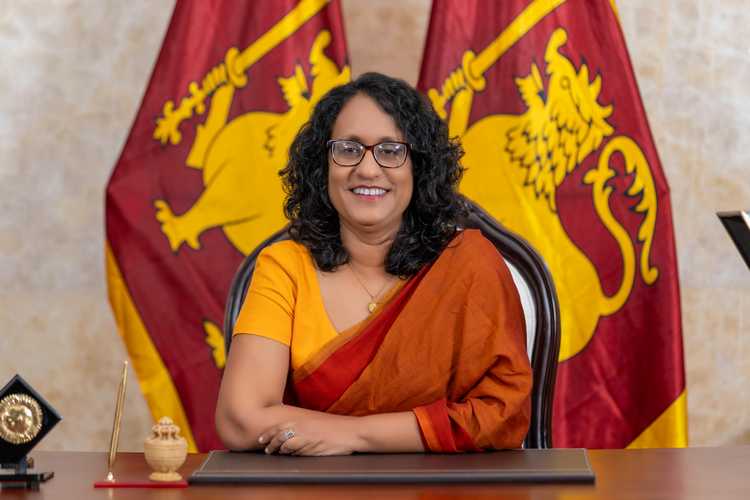
October 12, Colombo (LNW): Prime Minister Dr Harini Amarasuriya departed for Beijing late yesterday (11) to participate in the Global Leaders’ Meeting on Women 2025, following an official invitation extended by the Government of the People’s Republic of China, according to a statement released by the Prime Minister’s Office.
The international gathering, held under the theme “One Shared Future: New & Accelerated Process for Women’s All-round Development,” is a collaborative initiative between the Chinese government and UN Women. The summit aims to bring together heads of state, government leaders, and key global figures to deliberate on new strategies to promote gender equality and empower women across all sectors of society.
Dr Amarasuriya is scheduled to deliver a keynote address during the conference, in which she is expected to highlight Sri Lanka’s progress and ongoing challenges in the area of women’s empowerment, social inclusion, and policy innovation. Her speech will also outline the country’s renewed commitment to gender-responsive governance and inclusive economic development.
In addition to her address at the summit, the Prime Minister will engage in a series of high-level bilateral meetings on the sidelines of the event. These include talks with Chinese President Xi Jinping and Premier Li Qiang of the State Council, where discussions are likely to focus on strengthening diplomatic ties, expanding economic cooperation, and exploring collaborative efforts in development and education—particularly initiatives that support women and marginalised communities.
Prime Minister Departs for Beijing to Attend High-Level Summit on Advancing Women’s Development
Government Issues Official Gazette Formalising Changes in Ministerial Portfolios Following Cabinet Overhaul
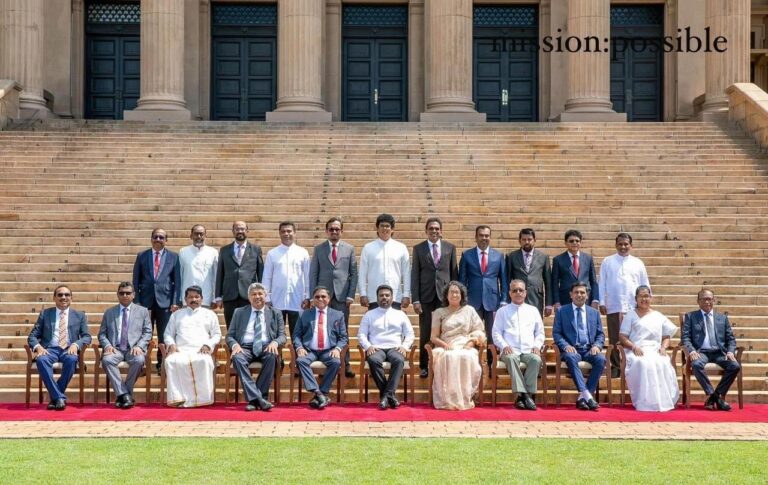
October 12, Colombo (LNW): The latest reshuffle within the Cabinet of Ministers under the National People’s Power (NPP) government has been formally ratified, with the publication of an official Gazette notification outlining the revised allocation of ministerial and deputy ministerial responsibilities.
This follows the announcement made on October 10, when the government unveiled adjustments to several key positions, including the reassignment of three Cabinet-level portfolios and the induction of ten Deputy Ministers. The newly appointed officials took their oaths before the President during a ceremony held at the Presidential Secretariat on the same day.
The reshuffle, conducted under the constitutional provisions of Articles 44(2) and 46(1) of the Democratic Socialist Republic of Sri Lanka, was officially enacted on the authority of the President. The Gazette notification was issued by Dr N. S. Kumanayake, Secretary to the President, thereby bringing legal validity to the changes.
Among the more notable reassignments is the reallocation of the Ports and Civil Aviation portfolio. Bimal Rathnayaka, who previously held a consolidated brief as Minister of Transport, Highways, Ports and Civil Aviation, has been relieved of responsibilities related to maritime and aviation affairs. Instead, he assumes oversight of Urban Development, and now serves as Minister of Transport, Highways and Urban Development.
Taking charge of the Ports and Civil Aviation Ministry is Anura Karunathilaka, who has transitioned from his earlier role as Minister of Urban Development, Construction and Housing. His new appointment reflects a targeted shift in focus, perhaps suggesting the government’s intent to streamline infrastructure governance.
Meanwhile, the Construction and Housing brief previously held by Minister Karunathilaka has been entrusted to Dr H. M. Susil Ranasinghe. Formerly serving as Deputy Minister of Lands and Irrigation, Dr Ranasinghe has now been elevated to Cabinet rank and will oversee the newly configured Ministry of Housing, Construction and Water Supply.
In addition to the changes at the Cabinet level, four individuals—Dr Kaushalya Ariyarathna, Dinindu Saman Kumara, Nishantha Jayaweera, and M. Arkam—have been brought into government as Deputy Ministers, marking their first official entry into ministerial office. Their appointments form part of a broader strategy to inject fresh energy into the administration and ensure more comprehensive representation across regions and policy domains.
Judicial Officers Instructed to Uphold Uniform Detention Standards Across All Prisons
October 12, Colombo (LNW): In a bid to standardise procedures and uphold the integrity of judicial practice, the Judicial Service Commission (JSC) has issued a formal directive to all magistrates across the country, firmly instructing them not to authorise the detention of suspects or prisoners in so-called “special” prison facilities.
The instruction, delivered via an official circular signed by JSC Secretary Prasanna Alwis, was distributed to all judicial officers as part of a broader effort to curtail inconsistent practices and reinforce the equal application of custodial regulations.
This decision comes in response to rising concerns and complaints over select judicial officers having previously directed that certain individuals in custody be granted special treatment—such as being detained in facilities offering enhanced conditions or security, outside the purview of standard prison protocol.
The Commission’s communication made it explicitly clear that magistrates are not to issue instructions that allow for preferential treatment, including special security arrangements for suspects or inmates. Should any such requests arise during court proceedings, magistrates are now expected to redirect them to the relevant prison authorities, particularly the superintendent, who holds the responsibility for such decisions.
The circular further prohibits judicial officers from permitting prisoners temporary leave from incarceration for personal reasons—such as attending family gatherings or events. The JSC insisted that the sanctity of custodial sentences must be respected, regardless of personal circumstances.
Moreover, the directive includes specific guidance on how to handle cases where prisoners must be taken out of prison for any reason. In such situations, the prison superintendent is now required to provide written notice to the relevant magistrate, including a full account of the reasons behind the transfer or outing.
Medical concerns raised by inmates are also addressed in the new guidelines. Any request made by a prisoner regarding medical treatment must be simultaneously reviewed by both the presiding magistrate and the designated prison medical officer, ensuring a dual layer of oversight.
President Pledges Robust Safeguards for Foreign Investment Amid Reform Drive
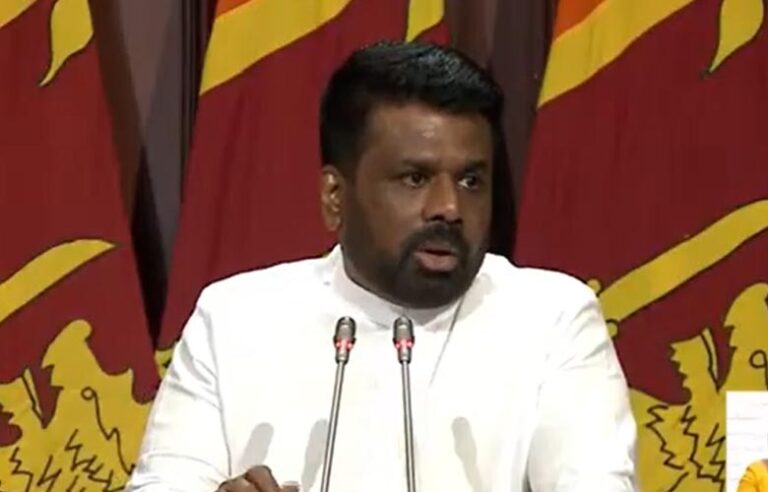
October 12, Colombo (LNW): In a high-level discussion with a delegation of American business leaders at the Presidential Secretariat this morning, Sri Lankan President Anura Kumara Dissanayake reaffirmed his government’s unwavering commitment to safeguarding foreign investments and enhancing investor confidence in the island nation.
President Dissanayake conveyed that Sri Lanka has made considerable strides in fostering a secure, predictable, and transparent environment for international investors. He highlighted that the current administration is actively dismantling legacy issues tied to investment mismanagement and opaque practices that were commonplace under past regimes. According to the President, this reset is being carried out within the framework of democratic governance and legal reform.
He elaborated that the introduction of new legislation is underway, aimed specifically at reinforcing investor protection. Among these measures is a proposed Investment Protection Act, which he described as a cornerstone of the government’s strategy to build long-term trust with both existing and prospective investors.
The President also underlined that encouraging foreign direct investment is not merely a fiscal policy, but a central pillar of his broader economic vision. To that end, his administration is working to expand the range of investment opportunities across sectors, streamline bureaucratic processes, and modernise infrastructure to accommodate foreign capital.
In addressing the visiting American delegation, President Dissanayake painted a broader picture of national renewal, noting that economic reform goes hand-in-hand with social transformation. He stressed the government’s efforts to foster national unity, counter communal and religious extremism, and deliver a professional and responsive public service.
These social initiatives, he explained, are crucial for sustaining a stable investment climate in the long term. Additionally, the President noted that Sri Lanka is investing in digital transformation to overcome technological limitations and improve administrative efficiency, thus enhancing ease of doing business.
President Dissanayake reiterated that international partnerships—grounded in mutual respect and transparency—are vital to the country’s recovery and growth. He assured the delegation that his administration is fully committed to nurturing such partnerships through consistent policy and open diplomatic engagement.
Showers, thundershowers expected in most provinces: Fairly heavy falls above 50 mm likely to occur (Oct 12)

October 12, Colombo (LNW): Showers or thundershowers will occur in several places in most provinces after 1.00 p.m., the Department of Meteorology said in its daily weather forecast today (12).
Fairly heavy falls above 50 mm are likely in some areas of the Sabaragamuwa, Central, and Uva provinces.
Showers may occur in the Western and Sabaragamuwa provinces and in the Galle, Matara, and Puttalam districts in the morning as well.
Misty conditions can be expected in some places in the Sabaragamuwa, Central, and Uva provinces during the morning.
The general public is kindly requested to take adequate precautions to minimise damage caused by lightning and temporarily localised strong winds during thundershowers.
Foreign Remittances Surge as Sri Lankans Flock Overseas for Jobs

By: Staff Writer
October 11, Colombo (LNW): Sri Lanka’s foreign remittances have surged to record levels in 2025, driven by a sharp rise in overseas employment and a return of confidence in formal banking channels, providing much-needed relief to the island’s fragile foreign exchange reserves.
According to the latest data released by the Central Bank of Sri Lanka (CBSL), official worker remittances rose 25.2 percent year-on-year to US $695.7 million in September 2025, marking one of the strongest monthly inflows since the onset of the economic crisis. Cumulative remittances for the first nine months of the year reached US $5.81 billion, reflecting a 20 percent increase compared to the same period in 2024.
This continued momentum follows a strong rebound in 2024, when annual inflows climbed 10.1 percent to US $6.57 billion, up from US $5.96 billion the previous year. It was the highest level in six years, underscoring the growing importance of migrant workers in stabilizing Sri Lanka’s post-crisis economy.
The surge in remittances has coincided with an unprecedented wave of labour migration. Data from the Sri Lanka Bureau of Foreign Employment (SLBFE) shows that 212,302 Sri Lankans left the country for employment between January and August 2025, largely to destinations in the Middle East, South Korea, and Europe. Authorities expect this figure to surpass the record set in 2024, as both skilled and unskilled workers continue to seek better opportunities abroad amid high domestic unemployment and inflation pressures.
Since declaring bankruptcy in 2022, Sri Lanka has prioritized foreign employment as a key policy tool to boost foreign exchange inflows. The government has particularly encouraged the migration of professionals such as healthcare workers, IT specialists, and engineers, aiming to increase the quality not just the quantityof remittances.
A key factor behind the recent rise in official remittances has been the normalization of exchange rate policies. For much of 2021 and 2022, the CBSL’s attempt to maintain a dual exchange rate system led to a booming black market for foreign currency. Expatriates, offered better rates through informal Undiyal and Hawala networks, avoided the formal banking system causing a sharp drop in official remittance flows.
However, after the CBSL abandoned the parallel rate regime in early 2023, confidence in the formal financial system began to recover. The unification of the exchange rate and improved liquidity conditions encouraged expatriates to send money home through official channels, helping rebuild foreign reserves and stabilize the rupee.
Worker remittances remain one of Sri Lanka’s largest sources of foreign exchange, alongside tourism and exports. The steady inflows have been instrumental in financing essential imports, easing foreign currency shortages, and supporting macroeconomic stabilization under the ongoing IMF Extended Fund Facility (EFF) programme.
Yet, analysts caution that while remittance growth is a positive sign, it also reflects a troubling social reality: the continued outflow of Sri Lanka’s working-age population. Economists warn that long-term dependence on foreign labour could exacerbate domestic skill shortages and slow economic recovery if not balanced with sustainable job creation at home.
With remittance inflows now on track to exceed US $7 billion by the end of 2025, policymakers face a dual challenge maximizing the benefits of migrant earnings while addressing the economic conditions that compel so many Sri Lankans to seek livelihoods abroad.
If current trends persist, the island’s financial stability may strengthen in the short term but the social cost of its overseas labour exodus will remain an enduring concern.
Widening Private Credit Gap Signals Hidden Financial Risks, CBSL Warns
By: Staff Writer
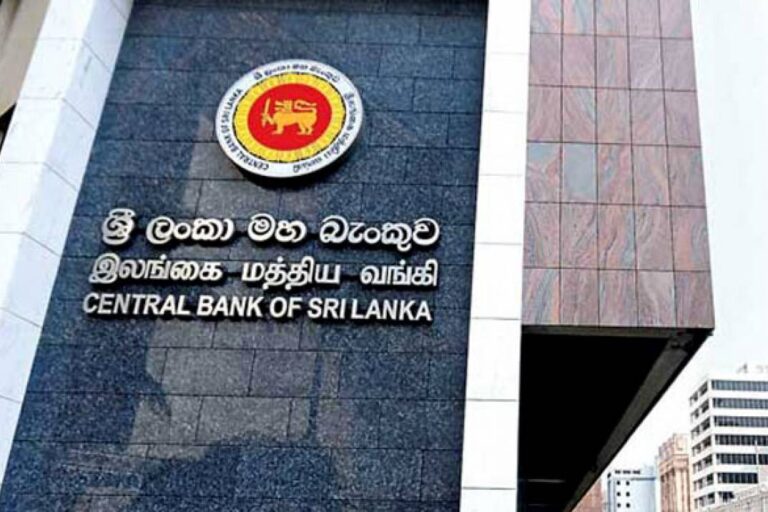
October 11, Colombo (LNW): Sri Lanka’s Central Bank has raised a red flag over potential vulnerabilities in the country’s financial system, warning that the widening gap between private sector credit and GDP could pose systemic risks despite the current surge in lending activity.
Releasing its Financial Stability Review 2025 yesterday, the Central Bank of Sri Lanka (CBSL) noted that private sector credit has expanded rapidly through 2025, but the credit-to-GDP ratio an indicator used to gauge leverage in the economy has been widening since mid-2024. This pattern, the CBSL cautioned, suggests that credit growth may be outpacing real economic expansion, heightening the risk of asset bubbles or unsustainable borrowing.
“The widening credit-to-GDP gap points to a potential build-up of systemic risk,” the CBSL stated. “However, robust GDP growth alongside credit expansion would support a healthy and sustainable financial environment.”
According to the report, total lending by regulated financial institutions including banks and finance companies grew by 14% year-on-year by the end of the second quarter of 2025. Finance companies led the expansion with a remarkable 35.1% surge in lending, while commercial banks recorded an 11.4% increase.
The Central Bank attributed this trend to improved business confidence, lower interest rates, and its accommodative monetary policy stance, which collectively boosted borrowing across industries and households.
A sectoral breakdown showed that household borrowing increased notably, driven by vehicle loans, gold-backed financing, and rising consumer spending. Meanwhile, businesses have been borrowing to rebuild inventories and invest in expansion projects, signalling a return of optimism following years of contraction.
The CBSL highlighted that a gradual correction in credit allocation from government borrowing toward productive private sector activity has been a crucial and positive development. Exposure to the government and public corporations declined to 46.5% of total credit by end-June 2025, continuing a structural shift that began in 2024 as fiscal consolidation policies took hold.
“This redirection of lending toward the private sector supports balanced financial intermediation,” the CBSL said, adding that it would enhance the economy’s production capacity and long-term growth prospects.
Despite these improvements, overall private sector credit remains below pre-crisis levels. The credit-to-GDP ratio stood at 28.6% by mid-2025, indicating significant room for further expansion as the economy continues to stabilize.
While the pickup in lending is a positive sign of recovery, the Central Bank cautioned that unchecked credit growth without corresponding GDP gains could expose the financial system to stress. A prolonged gap between credit expansion and real output growth may lead to deteriorating asset quality and rising default risks, particularly if global or domestic shocks reverse current economic momentum.
Survey data in the report revealed that both banks’ willingness to lend and borrower demand strengthened during the first half of 2025, supported by stable liquidity and improving macroeconomic confidence. However, the CBSL emphasized the need for prudent credit assessment and tighter supervision to prevent overheating in the banking and finance sectors.
Analysts say the CBSL’s message reflects a fine balancing act: encouraging credit-driven growth while guarding against systemic risks that could undermine recovery. The continued reduction of government borrowing and greater credit flow to businesses are viewed as positive structural shifts but the pace and quality of credit expansion will determine whether Sri Lanka’s post-crisis recovery remains stable or becomes fragile.
As the CBSL warned, the coming months will test whether the financial system’s newfound momentum can translate into sustainable, broad-based growth or whether the widening private credit gap becomes a harbinger of hidden financial vulnerabilities.
Crumbling Buses, Chaotic Commutes: Sri Lanka’s Transport in Crisis
By: Staff Writer
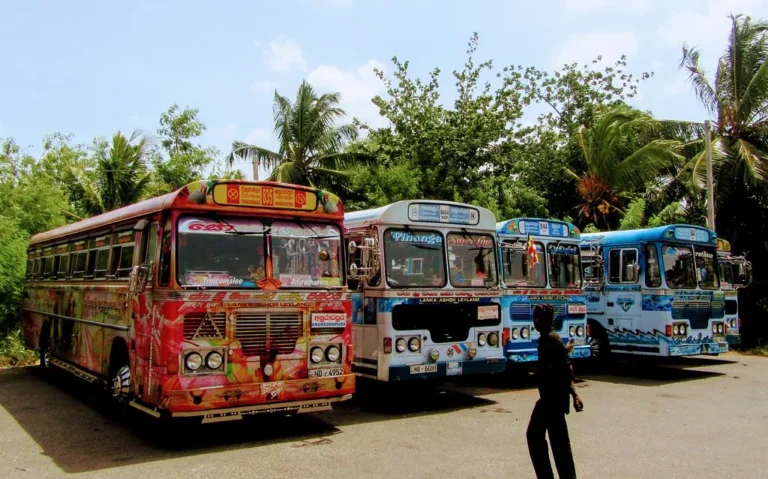
October 11, Colombo (LNW): Sri Lanka’s public transport sector has entered a critical phase. Once the lifeblood of mass mobility, the system is now under strain from a dilapidated bus fleet, rampant misconduct among drivers and conductors, serious environmental impacts, and daily hardships faced by commuters. Recent statistics for the first nine months of 2025 reveal a system teetering on the brink — and even the government’s bold reforms face both optimism and opposition.
A revealing audit from early 2024 indicates that nearly one-third (1,904 buses) of the Sri Lanka Transport Board’s (SLTB) fleet is non-operational. Many of these defunct buses are well past their serviceable life: 1,240 over 12 years old, and 1,105 surpassing 15 years, including 630 old Tata buses and 425 Leylands.
In 2022 alone, maintenance costs ballooned to Rs. 2.52 billion, yet rehabilitated buses remained idle raising serious questions about fiscal accountability.
Compounding the hardware crisis is rampant crew misconduct and lack of enforcement. In May 2025, 11 long-distance buses (including five SLTB units) were prosecuted following safety inspections that uncovered mechanical and safety violations.
In April 2025, the Transport Ministry disclosed that nearly 1,000 SLTB drivers and conductors had been sidelined as a result of disciplinary action.
The issue is not academic: on 11 May 2025, a heavily overcrowded SLTB bus carrying 84 people on a 50-seat capacity crashed off a cliff in Kotmale, killing 22 and injuring dozens. The probe cited driver fatigue from overextended duty hours as a likely cause.
Old, inefficient, and poorly maintained buses spew pollutants and consume more fuel per passenger than modern vehicles. The transport sector is thus a visible contributor to air quality degradation in urban zones, particularly Colombo. Long idling times in gridlocked traffic exacerbate emissions.
For ordinary commuters, the impact is deeply felt: unreliable service, increased delays, harassment, and safety anxieties are now part of daily life. Overcrowding and breakdowns are commonplace, and the public’s faith in the system is steadily eroding. A recent bus tragedy in Gerandi Ella illustrated how poorly maintained vehicles and reckless driving continue to put lives at risk.
In the first nine months of 2025, though national transport statistics remain incomplete, wider trends indicate a sharp decline in public transport patronage. A growing shift toward private vehicles and tuk-tuks suggests the public is voting with their feet. (Public transport historically accounted for around 60 % of modal share, but that share has been slipping.)
Faced with mounting pressure, the government has launched a series of reforms:
Digital ticketing by card: From 30 November 2025, commuters will be able to pay fares using bank debit/credit cards beginning with routes already fitted with ticket machines, and expanding over time.
Urban transit overhaul: Lanka Metro Transit (Pvt) Ltd is now operational administratively, with plans to deploy 100 comfortable, low-entry buses across Colombo, Kaduwela, Kadawatha, Moratuwa, and Makumbura.
Terminal & depot upgrades: The Colombo Central Bus Terminal is being redeveloped under the “Clean Sri Lanka” programme with a Rs. 425 million investment. Meanwhile, 25 SLTB depots are being upgraded to bolster operational efficiency.
Modernising rail & recruitment: A “Dream Destination” plan launched on 27 June 2025 aims to revamp 100 railway stations nationwide. The government also plans to recruit female drivers and conductors for SLTB and strictly enforce seatbelt laws for bus drivers.
These efforts hold promise. Digital ticketing could reduce fare evasion and improve revenue flows. Replacing worn buses and modernizing core infrastructure may restore reliability and public confidence. The entry of a fresh urban bus operator hints at competition and innovation.
But challenges remain. The government must secure sustainable funding for upgrades without starving maintenance of existing services. The sidelined drivers/conductors raise concerns about morale and institutional capacity. Private bus operators, already struggling, warn that state expansion could further erode their ridership.
And unless discipline, safety enforcement, and transparency improve, hardware investment alone may not prevent future tragedies.
Sri Lanka’s public transport sector is in a perilous moment: its foundational structure is creaking under the weight of decades of neglect. The government’s multi-pronged reform agenda is bold, but success hinges on consistent oversight, fiscal discipline, and strengthening institutions. For millions of daily commuters, the hope is that the gloomy present may yet give way to a safer, cleaner and more dependable future on Sri Lanka’s roads.
IMF Calls Out Sri Lanka’s Misleading FDI Claims, Urges BOI Reform
By: Staff Writer
October 11, Colombo (LNW): Sri Lanka’s claims of robust foreign direct investment (FDI) inflows have come under scrutiny, with the International Monetary Fund (IMF) subtly but firmly challenging the government’s attempt to inflate figures and mislead the public. The latest IMF comments underscore the growing concern that the Board of Investment (BOI) — once envisioned as the country’s investment promotion engine — has become a vehicle for distorting data rather than facilitating genuine foreign investment.
According to official figures released by the BOI, Sri Lanka has attracted a total of US$787 million in FDI during the first nine months of 2025, including US$121.8 million from new projects and US$665.2 million from existing companies registered under the BOI. However, the IMF has questioned these numbers, noting that much of the reported inflow includes intra-company loans, reinvested earnings, and commercial borrowings, rather than new capital injections. Analysts note that this practice artificially inflates FDI figures, masking the country’s real investment performance.
IMF Mission Chief Evan Papageorgiou, in his recent statement, emphasized that genuine FDI—not accounting adjustments or internal corporate transfers—is essential for Sri Lanka’s macroeconomic recovery and long-term growth. He described FDI as a “cornerstone of the nation’s economic framework” and a vital barometer of investor confidence. While acknowledging Sri Lanka’s progress under the Extended Fund Facility (EFF) programme—especially in debt restructuring and macroeconomic stabilization—Papageorgiou urged the government to ensure transparency and policy consistency to attract credible investors.
The IMF’s analysis exposes a key structural weakness: Sri Lanka’s overdependence on tax holidays and exemptions as the main tool for attracting investors. Papageorgiou warned that these incentives have limited long-term benefits, often eroding fiscal revenues without ensuring technology transfer or job creation. “Tax exemptions should not be the only tool used to attract FDI,” he stated, adding that sustainable investment depends on a competitive, transparent, and rule-based business environment.
The Fund also highlighted the importance of labour market flexibility, improved infrastructure, digital connectivity, and the expansion of logistics and port access. These, it said, are the real drivers of competitiveness—not artificially boosted FDI statistics.
Given these observations, economic analysts argue that it may be time to scrap or overhaul the BOI, as proposed by the previous administration. Once instrumental in attracting major foreign projects, the institution is now seen as outdated and bureaucratic, contributing more to statistical manipulation than investment facilitation.
In the current context, the IMF’s intervention serves as a wake-up call. Genuine foreign investment, policy credibility, and institutional reform—not inflated figures or tax giveaways—are what Sri Lanka truly needs to rebuild investor confidence and sustain economic growth.
Manoja Madhuwanthi, Wife of Journalist Shanuka Karunaratne, Passes Away at 42

October 11, Colombo (LNW): Mrs. Manoja Madhuwanthi, the wife of journalist Shanuka Karunaratne, passed away this afternoon (11) following an extended period of illness.
She was 42 years old at the time of her passing.
A devoted mother of two, Mrs. Madhuwanthi was employed at the head office of People’s Bank, where she was known among colleagues for her warm presence and dedication to her work.
According to family sources, her remains will be placed at the Jayaratne Funeral Parlour in Borella beginning tomorrow morning, where relatives, friends, and well-wishers will have the opportunity to pay their final respects.
Funeral rites are scheduled to take place on Monday. Further details regarding the proceedings will be communicated by the family in due course.