Home Blog Page 36

Parliamentary Finance Committee to Examine Treasury Payment Dispute

0

June 08, Colombo (LNW): The Committee on Public Finance (COPF) is set to convene this afternoon to review developments surrounding a disputed international payment involving public funds, with senior financial officials expected to provide explanations on the matter.

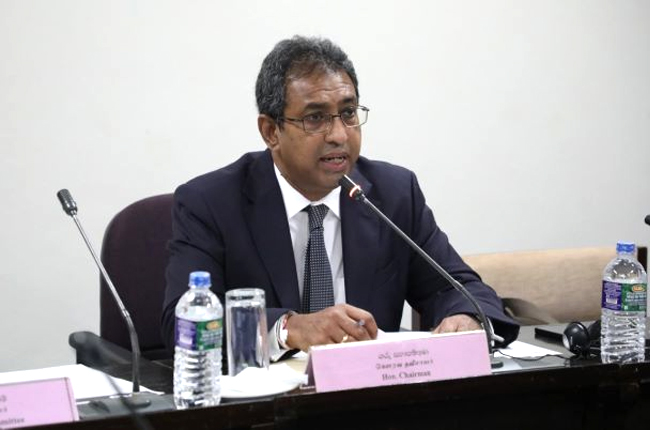
The meeting, chaired by Member of Parliament Harsha de Silva, will focus on the circumstances surrounding a transfer of USD 2.5 million that was reportedly intended for an Australian firm but was subsequently diverted to a different recipient following an alleged cyber security breach.

Committee members are expected to scrutinise a report prepared by the Treasury detailing the sequence of events, the mechanisms involved in the transaction and the actions taken after the irregularity was detected. The report was requested by the committee during an earlier session and has since been submitted to Parliament for review.

As part of the inquiry, top officials responsible for the country’s financial administration have reportedly been called before the committee. Among those expected to participate are Finance Ministry Secretary Dr. Harshana Suriyapperuma and Central Bank Governor Dr. Nandalal Weerasinghe.

The session is anticipated to examine not only the transfer itself but also the safeguards in place to protect state funds from cyber-related threats. Lawmakers are likely to seek clarification on whether existing financial control systems were sufficient and what measures may be required to prevent similar incidents in the future.

Oil Markets Surge as Middle East Tensions Undermine Peace Prospects

0

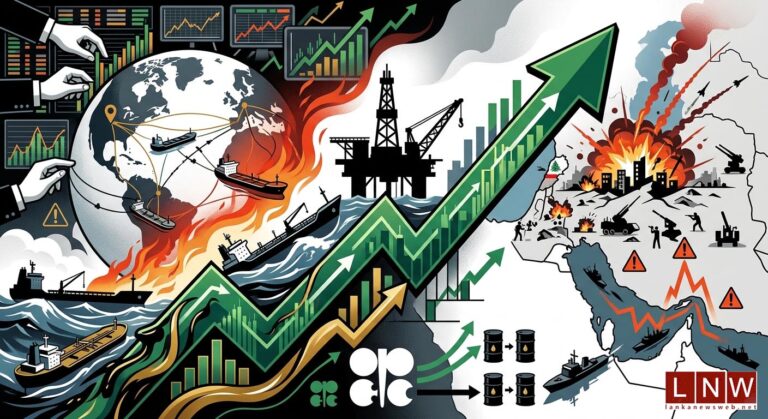
June 08, World (LNW): Global oil prices climbed sharply at the start of the week as renewed military developments in the Middle East fuelled concerns over energy supplies and dampened expectations of a diplomatic breakthrough in the region.

Crude markets reacted after Israel carried out fresh strikes in Lebanon, raising fears that recent efforts to stabilise the conflict could unravel. The escalation prompted traders to reassess the likelihood of a broader regional settlement and the potential restoration of shipping routes that are critical to global energy trade.

In early trading, benchmark oil contracts posted notable gains, with both Brent and West Texas Intermediate crude rising by more than two dollars per barrel. The increase reversed much of the decline seen at the end of the previous week, when investor sentiment had improved on speculation that tensions between Washington and Tehran might ease.

Market analysts said the latest developments have complicated negotiations aimed at reducing hostilities across the region. Particular attention remains focused on the Strait of Hormuz, one of the world’s most important maritime corridors for oil and natural gas exports. Continued restrictions and security concerns surrounding the route have contributed to persistent uncertainty in energy markets.

The renewed violence followed reports of Israeli operations targeting positions linked to Hezbollah in Lebanon. In response, Iran, a key supporter of the group, was reported to have launched missile attacks towards Israel, further heightening fears of a wider confrontation. Diplomatic efforts by international actors continue, although prospects for a lasting settlement appear increasingly fragile.

The conflict has already had significant implications for global energy supplies. While direct military operations against Iran have largely subsided in recent months, disruptions affecting shipping through the Strait of Hormuz have continued to constrain market confidence and influence pricing trends.

Meanwhile, the OPEC+ alliance agreed to another increase in production quotas in an effort to bolster supply. However, several industry observers questioned the practical impact of the decision, noting that a number of member states face difficulties in expanding output due to logistical constraints, infrastructure challenges and ongoing geopolitical instability.

Energy analysts suggested that, despite the announcement, the additional production is unlikely to substantially alter current market conditions in the near term. As a result, traders remain focused primarily on geopolitical developments, which continue to be the dominant factor driving oil prices higher.

Authorities Commence Three-Day Operation to Combat Rising Spread of Dengue

0

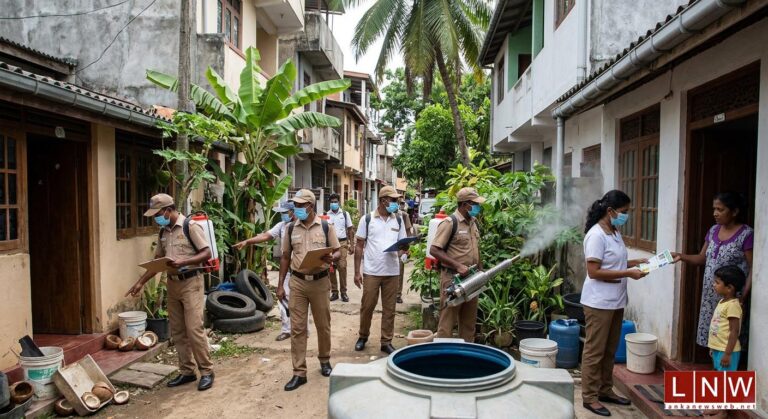
June 08, Colombo (LNW): Health officials have commenced a targeted three-day operation to combat the rising spread of dengue, focusing on areas identified as being particularly vulnerable to outbreaks.

The initiative, coordinated by the National Dengue Control Unit (NDCU), is being carried out from 8 to 10 June and will involve extensive inspections, awareness campaigns and mosquito control activities across 72 Medical Officer of Health (MOH) divisions located in 12 districts.

The programme comes amid growing concern over the increasing number of dengue infections reported this year. According to the latest figures available, more than 36,000 cases had been recorded nationwide by early June, highlighting the continued public health challenge posed by the mosquito-borne illness.

The Western Province remains the most affected region, accounting for a significant share of reported infections. However, health authorities have also observed a notable rise in cases in several other districts, including Matara, Galle, Ratnapura, Kegalle, Puttalam and Kandy, prompting intensified surveillance and preventive measures.

Public health teams are expected to inspect residential properties, construction sites, schools, commercial establishments and other locations where stagnant water may provide breeding grounds for mosquitoes. Residents are being urged to cooperate with officials and take responsibility for keeping their surroundings free of potential mosquito habitats.

The disease has also resulted in a number of fatalities this year. Health authorities reported that 20 people have died from dengue-related complications, including three children, underscoring the importance of early medical attention and preventive action.

Officials have encouraged the public to remain vigilant, seek prompt treatment if symptoms develop and actively participate in community clean-up efforts, warning that sustained cooperation will be essential to reducing transmission during the coming months.

Showers, thundershowers to occur in many provinces: Fairly heavy falls above 50 mm expected (June 08)

0

June 08, Colombo (LNW): Showers or thundershowers will occur at times in Western, Sabaragamuwa and North-western provinces and in Galle, Matara, Kandy and Nuwara-Eliya districts.

Fairly heavy falls above 50 mm are likely at some places in Western and Sabaragamuwa provinces and in Galle, Matara, Kandy and Nuwara-Eliya districts.

A few showers may occur in Anuradhapura and Hambantota districts.

Strong winds about (40-50) kmph can be expected at times over Western slopes of the central hills, Northern and North-central provinces and in Hambantota and Trincomalee districts. Fairly strong winds about (30-40) kmph can be expected at times over other areas of island.

The general public is kindly requested to take adequate precautions to minimise damage caused by temporary localised strong winds and lightning during thundershowers.

Marine Weather:

Condition of Rain: Showers or thundershowers will occur at times in the sea areas off the coast extending from Chilaw to Hambantota via Colombo and Galle.

Winds: Winds will be south-westerly. Wind speed will be (30-40) kmph. Wind speed can increase up to (60-70) kmph at times in the sea areas off the coast extending from Kankasanthurai to Kalpitiya via Mannar.

Wind speed can increase up to (50-60) kmph at times in the sea areas off the coast extending from Trincomalee to Kankasanthurai via Mullaittivu and Kalpitiya to Pottuvil Via Colombo, Galle and Hambantota.

State of Sea: The sea areas off the coasts extending from Kankasanthurai to Kalpitiya via Mannar will be very rough at times. Naval and fishing communities are advised not to venture into these sea areas, until further notice.

The sea areas off the coasts extending from Trincomalee to Kankasanthurai via Mullaittivu and Kalpitiya to Pottuvil Via Colombo, Galle and Hambantota will be rough at times. The other sea areas around the island will be fairly rough at times.

The wave height may increase about (2.0 – 2.5) meters in the sea areas off the coast extending from Mannar to Pottuvil via Colombo, Galle and Hambantota.

Temporarily strong gusty winds and very rough seas can be expected during thundershowers.

Commercial Bank Expands Presence with New Branch in Port City Colombo

0

June 07, Colombo (LNW): Commercial Bank of Ceylon PLC has strengthened its footprint in Sri Lanka’s emerging financial district with the opening of a new full-service branch in Port City Colombo, signalling its confidence in the long-term growth potential of the country’s newest business and investment destination.

Situated within the Port City Business Centre’s Commercial Hub, the branch has been established to cater to the growing banking and financial needs of local and international businesses, investors, entrepreneurs, professionals and residents operating within the development.

The facility offers a broad range of banking products and services, enabling customers to access everything from everyday retail banking to specialised corporate financial solutions. These services include personal and business accounts, fixed-income investment products, lending facilities, trade and treasury services, foreign currency transactions, remittance solutions, import and export financing, leasing options and digital banking platforms.

The move is expected to enhance financial accessibility for companies and individuals establishing operations within Port City Colombo, which is being positioned as a regional centre for commerce, investment and financial services. Bank officials noted that the branch has been designed to support both domestic and international clients seeking efficient and modern banking solutions within a rapidly developing economic zone.

In addition to conventional banking services, the branch features self-service facilities that allow customers to carry out deposits and withdrawals at any time. The installation of automated banking technology, including cash recycling and cash withdrawal facilities, ensures uninterrupted access to essential services throughout the year.

By combining in-person banking expertise with advanced digital capabilities, Commercial Bank aims to provide a seamless customer experience aligned with international standards. The opening of the branch is also expected to contribute to the broader development of Port City Colombo by supporting business activity, facilitating investment flows and strengthening the area’s financial infrastructure.

The expansion reflects the bank’s continuing focus on innovation and its intention to play a prominent role in supporting Sri Lanka’s evolving economic landscape as Port City Colombo attracts increasing interest from both local and overseas stakeholders.

Sri Lanka Revamps Sustainability Reporting Amid Rising ESG Demands

0

By: Staff Writer

June 07, Colombo (LNW): A comprehensive overhaul of Sri Lanka’s National Green Reporting System (NGRS) is set to place greater emphasis on corporate transparency, environmental responsibility, and sustainable business practices as international markets increasingly prioritise sustainability credentials.

The revised guidelines, launched by President Anura Kumara Dissanayake at the National Environment Day event held at Temple Trees, represent the latest outcome of collaboration between the Ministry of Environment, the European Union, and the United Nations Industrial Development Organisation (UNIDO). The initiative was implemented through the European Union-funded Accelerating Industries’ Climate Response in Sri Lanka (AICRSL) project.

At the centre of the revision is an effort to align Sri Lanka’s sustainability reporting framework with globally accepted standards. The updated guidelines are based on the Global Reporting Initiative (GRI), providing organisations with internationally recognised methods for reporting environmental, social, and governance (ESG) performance.

The original NGRS was introduced in 2011 through the EU-supported SWITCH-Asia Programme. However, the sustainability landscape has changed dramatically over the past decade. Businesses today face growing pressure from investors, regulators, consumers, and trading partners to provide transparent information about their environmental impact, labour practices, governance structures, and climate-related risks.

Officials involved in the revision argue that maintaining outdated reporting systems could leave Sri Lankan companies vulnerable to emerging international compliance requirements. By adopting a framework compatible with global reporting expectations, the country aims to ensure local businesses remain competitive in export-driven industries and continue to access international markets.

European Union Head of Cooperation Dr. Johann Hesse highlighted the strategic importance of the revision, noting that robust ESG reporting is becoming a prerequisite for doing business in many global markets. He stressed that internationally comparable sustainability data would help Sri Lankan organisations demonstrate compliance with evolving environmental and social standards while preserving valuable trade opportunities.

The revised NGRS is designed as a practical and voluntary platform for organisations operating in manufacturing, commercial, and service sectors. Businesses using the framework will be able to systematically assess sustainability performance, identify operational improvements, and communicate their achievements to investors, regulators, and consumers.

Experts suggest that greater transparency can deliver benefits extending beyond regulatory compliance. Strong sustainability reporting can improve risk management, enhance corporate reputation, strengthen stakeholder confidence, and support long-term business resilience. It may also open new avenues for investment, particularly from institutions that increasingly evaluate ESG performance before making funding decisions.

AICRSL Chief Technical Specialist Dr. Jagathdeva Vidanagama described the launch as evidence of Sri Lanka’s determination to pursue climate-resilient economic growth. He noted that the revised reporting system offers organisations a practical pathway for aligning with international standards while contributing to broader national sustainability goals.

As climate concerns and sustainability requirements continue to influence global trade and investment decisions, the revamped National Green Reporting System could become a key instrument in helping Sri Lankan businesses adapt to changing expectations and secure their place in an increasingly sustainability-conscious world.
Online Bus Booking Pilot Targets Travel System Inefficiencies

0

By: Staff Writer

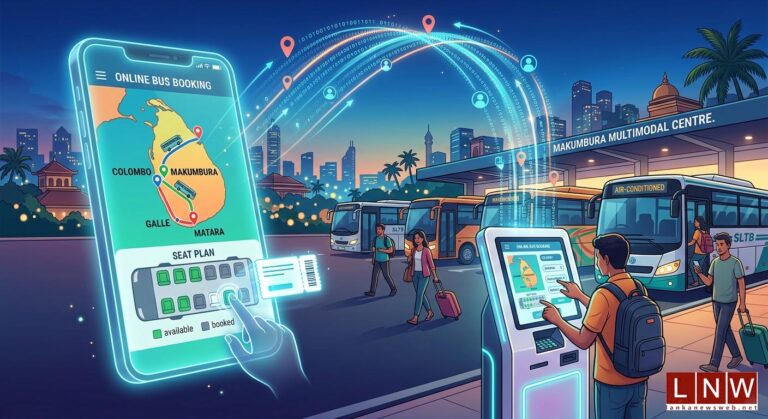
June 07, Colombo (LNW): Sri Lanka’s public transport sector has entered a new phase of digital transformation with the launch of an online bus ticket reservation platform designed to simplify long-distance travel and improve operational transparency.

Introduced alongside the reopening of Colombo’s renovated Central Bus Stand, the pilot project currently covers the Makumbura–Matara and Makumbura–Galle routes. The system enables passengers to check seat availability, select preferred seats, and secure bookings before arriving at the terminal, reducing the need for lengthy queues and last-minute uncertainty.

Transport sector analysts suggest that the initiative addresses several persistent challenges faced by commuters, particularly during peak travel periods and festive seasons when demand often exceeds available seating. By digitizing reservations, authorities hope to introduce greater predictability into the travel experience while improving service standards.

Beyond passenger convenience, the platform is expected to deliver operational benefits for regulators and bus operators. Digital booking records can provide greater visibility into passenger volumes, departure schedules, and seat utilization rates, helping authorities monitor compliance and improve planning. Increased transparency may also contribute to stronger discipline in scheduling and departures.

The project has been developed through collaboration among the Ministry of Transport, Highways and Urban Development, the National Transport Commission (NTC), Sri Lanka Transport Board (SLTB), private bus operators, and SLT-MOBITEL. Stakeholders worked within tight implementation timelines to establish a platform that can potentially be expanded nationwide.

Officials indicate that the pilot phase will focus heavily on gathering feedback from passengers, terminal staff, and operators. Insights collected during this period will be used to refine the system, strengthen security features, improve scalability, and evaluate readiness for broader deployment.

Travelers can currently access the service through the official booking website, self-service kiosks at the Makumbura Multimodal Centre in Kottawa, or a dedicated hotline. If successful, the initiative could become a cornerstone of Sri Lanka’s efforts to modernize public transportation and create a more efficient, accountable, and commuter-friendly travel network.

US Tariff shock Threatens Sri Lanka’s Exports and Recovery

0

By: Staff Writer

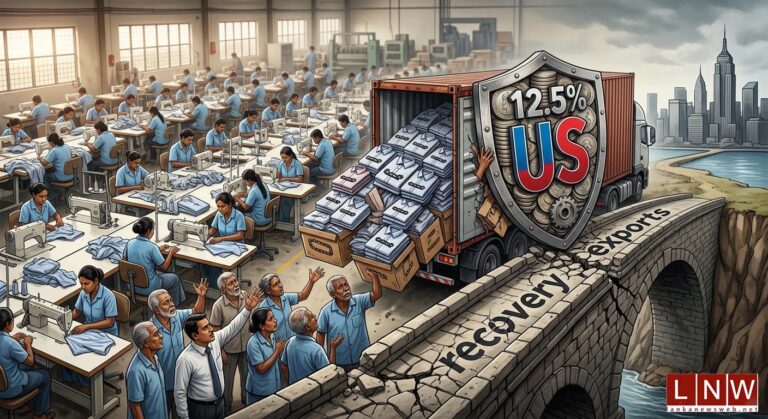
June 07, Colombo (LNW): Sri Lanka’s fragile economic recovery faces a fresh challenge following the United States proposal to impose an additional 12.5 percent duty on imports from the island nation over concerns related to forced labour in global supply chains.

The proposed measure, announced by the Office of the United States Trade Representative (USTR) on June 2-3, 2026, places Sri Lanka among 54 countries accused of failing to adequately prohibit or enforce restrictions on imports linked to forced labour. The additional tariff is not yet final, with public consultations scheduled until July and hearings to follow. However, the proposal alone has already raised alarm among exporters and trade analysts.

For Sri Lanka, the implications are potentially severe. The United States remains the country’s single largest export market, accounting for billions of dollars in annual export earnings, particularly in apparel. An additional 12.5 percent tariff would immediately reduce the competitiveness of Sri Lankan products in the American market, forcing buyers to either absorb higher costs or shift sourcing to alternative suppliers.

Industry observers point out that Sri Lanka’s apparel sector, already struggling with rising production costs and weak global demand, can ill afford another setback. Competitor countries that secure lower tariff rates or exemptions could gain market share at Sri Lanka’s expense. The Joint Apparel Association Forum has already warned that the country has been placed in the higher tariff category, creating a significant competitive disadvantage.

Deputy Finance Minister Anil Jayantha insists that discussions are underway with Washington and that Sri Lanka can eventually secure relief by strengthening safeguards against forced labour within supply chains. He also says legislative amendments are being considered.

However questions remain over how quickly such assurances can translate into concrete outcomes. The USTR investigation was formally launched only on March 12, 2026, with findings announced on June 2. If the Sri Lankan Government indeed established a committee “several months ago” specifically to address this issue, critics ask how authorities became aware of a trade action that had not yet been publicly announced. The timeline appears inconsistent and demands clarification.

More importantly, securing relief from Washington may prove difficult. Trade decisions in the United States are increasingly influenced by broader geopolitical considerations. Sri Lanka’s recent foreign policy positions, particularly its engagement with Iran and growing ties with countries viewed cautiously by Washington, may not strengthen Colombo’s negotiating leverage.

While the Government projects confidence that discussions with the USTR will produce a favourable outcome, exporters remain unconvinced. If the tariff is ultimately implemented, the consequences could extend beyond trade statistics. Reduced export earnings would weaken foreign exchange inflows, pressure employment in export industries and complicate Sri Lanka’s broader economic recovery at a time when stability remains far from guaranteed.

Cyber Fraud Exposes Treasury Weaknesses as IMF Grants Relief

0

By: Staff Writer

June 07, Colombo (LNW): The International Monetary Fund’s decision to grant Sri Lanka a waiver following a cybercrime-induced debt repayment failure has prevented what could have become a significant setback for the country’s fragile economic recovery. While the IMF described the breach as minor, the incident has exposed serious vulnerabilities within the State’s financial management systems at a time when economic credibility remains crucial.

The controversy stems from a sophisticated phishing scam that diverted approximately $2.5 million in debt repayments owed to Export Finance Australia. According to official findings, cybercriminals manipulated payment instructions through fraudulent emails, leading Treasury officials to transfer funds to unauthorized accounts across ten separate transactions.

Although the Government has maintained that the incident did not constitute a technical default because Sri Lanka remained willing and capable of making the payment, the episode has nevertheless raised troubling questions. The fact that multiple fraudulent transactions were processed without detection points to weaknesses in internal controls, verification procedures, and oversight mechanisms within key financial institutions.

The IMF acknowledged that Sri Lanka had failed to meet a continuous performance criterion prohibiting the accumulation of external payment arrears. However, the Fund concluded that the missed payment represented only 0.002 percent of GDP and that authorities had moved swiftly to address the issue. As a result, the Executive Board approved a waiver and proceeded with the fifth and sixth reviews under the Extended Fund Facility program.

The timing of the decision is significant. Sri Lanka’s economic recovery remains heavily dependent on continued IMF support and the confidence it generates among international creditors and investors. A failure to secure the waiver could have disrupted the reform program and delayed the release of nearly $695 million in IMF financing, potentially undermining macroeconomic stability.

However the larger concern extends beyond the relatively small financial loss. The incident reveals how cyber vulnerabilities can threaten sovereign debt management and damage confidence in public institutions. At a time when Sri Lanka is attempting to rebuild trust after its unprecedented debt crisis and sovereign default, even minor operational failures can have disproportionate reputational consequences.

Recognizing these risks, authorities have pledged a series of corrective measures. New standard operating procedures for debt payments are expected to be implemented by the end of June, while the Meridien debt management information system is scheduled to become operational by August. These reforms aim to strengthen verification processes and reduce the possibility of similar incidents recurring.

While the IMF’s waiver provides immediate relief, it should not obscure the underlying lessons. The phishing scandal demonstrates that economic recovery depends not only on fiscal discipline and debt restructuring but also on robust governance and institutional safeguards. As Sri Lanka continues its path toward financial stability, strengthening cyber resilience may prove just as important as meeting fiscal targets.

Private Bus Operators to Scale Back Services Amid Fare Dispute

0

June 07, Colombo (LNW): Commuters across Sri Lanka may face reduced public transport availability from 8 June, after private bus operators announced plans to cut services in response to mounting operational costs and the absence of a revised fare structure.

The Lanka Private Bus Owners’ Association (LPBOA) said transport providers are increasingly struggling to absorb rising expenses, particularly following the recent increase in fuel prices. As a result, operators have decided to reduce the number of buses on the road, with service levels expected to fall significantly over the coming days.

Addressing a briefing in Colombo, LPBOA Chairman Gemunu Wijeratne stated that a sizeable number of operators had already begun withdrawing vehicles from service on a voluntary basis. He estimated that roughly a quarter of the private bus fleet is currently inactive, a figure that could increase if the ongoing dispute remains unresolved.

According to the association, repeated appeals for temporary relief measures and an early review of fares have failed to secure a favourable response from transport authorities. Bus owners argue that current fare levels no longer reflect the realities of operating costs, which they claim have risen sharply over the past year.

Under the planned action, services will be prioritised during the busiest travel periods, including morning rush hours, school dismissal times and the evening commute. However, even during these periods, operators are expected to reduce the number of scheduled journeys. Routes that previously operated several trips within a given timeframe may see frequencies cut, resulting in longer waiting times for passengers.

The association also signalled that this year’s annual fare revision, traditionally implemented in early July, could result in a noticeable increase due to escalating costs associated with fuel, maintenance, spare parts and labour. Industry representatives warned that many operators are now functioning at a loss and may be unable to continue normal operations without financial adjustments.

Wijeratne maintained that bus owners had sought assistance within the existing legal framework, including measures to offset fuel-related expenses, but claimed those requests had not been addressed. He added that the industry would continue to escalate its response if a solution is not reached, while emphasising that responsibility for the disruption rests with the relevant authorities.

Passengers have been advised to expect service interruptions and plan their journeys accordingly as discussions between transport stakeholders and government officials continue.