November 27, Colombo (LNW): The Kandy District Secretary has announced that an Emergency Disaster Situation has been officially declared for the district as heavy rain and worsening weather conditions continue to pose serious risks.
Authorities say the declaration enables quicker deployment of relief teams and the mobilisation of additional resources to areas already experiencing flooding, landslides and other weather-related hazards.
Residents have been urged to remain alert and follow the instructions of local disaster management officials as conditions may deteriorate further.
Kandy District Placed Under Emergency Disaster Status Amid Severe Weather
Three Killed as Vehicle Plunges Into Canal in Sainthamaruthu
November 27, Colombo (LNW): Three people lost their lives when the vehicle they were travelling in veered off the road and crashed into a canal near Bolivia village in Sainthamaruthu, Ampara.
Efforts to rescue the occupants were unsuccessful, and all three were pronounced dead at the scene.
Police have launched an investigation to determine the circumstances that led to the accident.
Severe Weather Claims 31 Lives as Thousands Affected Nationwide
November 27, Colombo (LNW): The Disaster Management Centre has confirmed that the death toll from the recent spate of severe weather across Sri Lanka has risen to 31 since November 17.
In addition, 10 people have been injured and 14 are still reported missing as emergency teams continue search and rescue operations.
The extreme conditions, marked by torrential rainfall, flooding, and strong winds, have disrupted the lives of more than 4,000 residents across multiple districts.
Authorities have urged those living in vulnerable areas to take precautions and follow official guidance as relief efforts continue.
Hambantota Port Unveils Major Expansion to Ease Trade Bottlenecks
By: Staff Writer
November 27, Colombo (LNW): Hambantota International Port Group (HIPG) has announced a major operational expansion through a partnership with Rank Container Terminals Ltd. (RCT) to establish a dedicated container inspection yard inside the port. The new facility valued at Rs. 1 billion will function as the central inspection point for all import and export containers moving through the port, marking one of the most significant logistics developments in Sri Lanka’s southern region.
The project is designed to modernise container processing, reduce delays, and create a streamlined inspection hub in close coordination with Sri Lanka Customs and other government agencies. Senior Customs officials, including Director General Seevali Arukgoda, attended the groundbreaking ceremony, underscoring the state’s support for the initiative.
RCT Chairman Ravi Wijeratne said the new yard is specifically aimed at servicing the southern hinterland, noting that Hambantota can help ease the pressure on the congested Colombo Port by offering an efficient alternative for container inspection and handling.
HIPG CEO Wilson Qu said the expansion fits directly into the port’s long-term development blueprint. Hambantota recently added new cranes and equipment that allow it to handle up to one million containers annually. The inspection yard, he said, strengthens the port’s ability to respond to rising logistics needs and positions Hambantota as a catalyst for southern Sri Lanka’s industrial growth.
RCT, founded in 1994, operates the country’s leading inland clearance depot in Colombo and is known as Sri Lanka’s pioneer import inspection terminal. It is also the largest inland operator hosting all key state agencies—including Customs—under one roof. The company plans to replicate this “one-stop-shop” model in Hambantota, bringing comprehensive handling, inspection services, and modern technology to reduce bottlenecks and accelerate cargo movement.
Hambantota Port continues its push to establish itself as a diversified maritime hub connecting energy, automotive, industrial, and container operations. The new project is expected to strengthen the port’s competitiveness at a time when the government is moving to attract more foreign investment and build stronger external buffers.
Speaking at an investor forum organised by Tellimer and Softlogic Stockbrokers, Deputy Minister of Industry and Entrepreneurship Development Chathuranga Abeysinghe said Sri Lanka must enhance reserves ahead of rising external debt repayments after 2028.
He noted that debt service obligations will increase by around USD 785 million from that year onward, making reserve accumulation critical. However, he dismissed fears of a renewed repayment crisis, saying the restructuring has smoothed the debt profile and that the additional payments are manageable if current fiscal discipline is maintained.
Independent think tank Arutha Research also stated last September that concerns about a post-2028 “debt cliff” are overstated, noting that repayments scheduled to resume in 2028 add only about USD 1 billion to servicing costs comparable to existing obligations.
Abeysinghe added that the government expects stronger reserves through tourism, remittances, and especially foreign direct investment, which it aims to double to USD 2 billion within two to three years.
He emphasised that the discipline introduced under the IMF programme must continue beyond it. “The IMF gave us a framework and structure,” he said. “Fiscal discipline is essential, whether the IMF is here or not.”
The Hambantota–RCT partnership is expected to support this broader economic strategy by improving trade efficiency and strengthening Sri Lanka’s logistics competitiveness at a crucial time.
US $1bn X-Press Pearl Verdict Triggers Fears for Sri Lanka’s Shipping Hub
By: Staff Writer
November 27, Colombo (LNW): Sri Lanka’s unprecedented US$1 billion Supreme Court award in the X-Press Pearl environmental case has set off major alarm bells among global marine insurers, with international trade publications reporting that underwriters are now reassessing the country’s maritime risk profile. This renewed scrutiny comes at a moment when the Port of Colombo is grappling with persistent congestion, raising questions about whether shifting carrier preferences could divert traffic toward rapidly expanding Indian trans-shipment ports.
The ruling, celebrated domestically as a forceful declaration of environmental responsibility, has gained global attention for a very different reason: its scale, its implications for predictability in maritime insurance, and the possibility that insurers may significantly increase coverage costs for vessels calling at Sri Lankan ports.
The UK’s Financial Times, in a report by Lee Harris titled “Shipping insurers threaten to raise prices after $1bn fine for plastic spill,” noted that insurers and reinsurers are warning that environmental liabilities—particularly for plastic spills may no longer be capped in certain jurisdictions. This has raised concerns that the industry could face a wave of multibillion-dollar claims following recent petrochemical-related maritime disasters, with Sri Lanka’s judgment now viewed as a decisive precedent.
Industry analysts argue that when a single accident results in a settlement of this scale, insurers inevitably recalibrate their exposure. Increased uncertainty traditionally leads to higher premiums, stricter exclusions, and tougher underwriting standards. Early indications suggest that vessels calling at Colombo may soon face premium adjustments or revised risk classifications, complicating the operating environment for shippers and carriers.
This development coincides with mounting operational pressure at Sri Lanka’s main trans-shipment hub. Colombo, which handles more than 70 percent of India’s container volume, is experiencing what exporters describe as chronic congestion ranging from delays in inter-terminal transfers to administrative slowdowns that disrupt supply chains. Yohan Lawrence, Secretary-General of the Joint Apparel Association Forum (JAAF), recently warned that prolonged delays are affecting production schedules, export timelines, and international contract commitments.
India, meanwhile, is moving quickly to position itself as a beneficiary of any loss of confidence in Sri Lanka’s ports. A 3 November report in the Daily Shipping Times (India) noted that if global carriers begin to view Sri Lanka as a high-risk or operationally unpredictable destination, “the confidence shift may prove more consequential than the accident itself.”
India’s expanding maritime strategy anchored by the deep-water Vizhinjam trans-shipment terminal and ongoing upgrades at Vallarpadam and Tuticorin seeks to recapture a share of the regional container flows historically dependent on Colombo.
Colombo’s congestion now forms part of insurers’ overall risk calculations. Prolonged waiting times, uncertain berthing windows, and increased idling all heighten operational risk, leading to potential premium increases.
Although the port handled around 7.7 million containers this year, exporters argue that capacity, digital efficiency, and supporting infrastructure lag behind major regional competitors such as Singapore, Dubai, and emerging Indian terminals.
Maritime experts say that Sri Lanka can still manage the fallout if it strengthens its regulatory frameworks, clarifies environmental-liability rules, accelerates port modernisation, and engages directly with global underwriters.
They warn, however, that failure to act swiftly may gradually push trans-shipment volumes toward India’s rising maritime hubs turning a landmark environmental victory into a long-term economic setback.
Tax Evaders Shielded as Government Targets the Powerless
By: Staff Writer
November 27, Colombo (LNW): Sri Lanka’s promise of a fresh start against corruption is under growing scrutiny as allegations mount that the country’s wealthiest tax evaders are enjoying political protection. While the new administration publicly pledges to cleanse state institutions, critics say enforcement overwhelmingly targets the powerless while billionaires escape accountability.
Former Minister Patali Champika Ranawaka recently made explosive claims: individuals responsible for over Rs. 1 trillion in unpaid taxes remain “fully protected” by the government. He revealed that 4,570 people owe more than Rs. 100 million, including 90 individuals whose unpaid taxes exceed Rs. 1 billion each. Despite these massive sums, none have faced legal action.
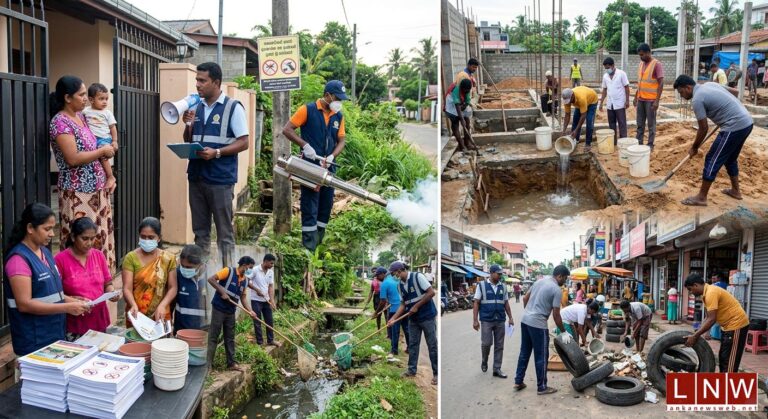
Instead, Ranawaka alleges the government is pursuing trivial cases involving the distribution of spectacles or placing of advertisements while billion-rupee tax evaders remain untouched. He also highlighted another troubling issue: individuals who defaulted on Rs. 700 billion in loans from state banks continue to operate freely under government protection.
National data supports these concerns. By late 2025, the Inland Revenue Department confirmed that unpaid taxes had exceeded Rs. 1 trillion, a steep rise from 2024. Public Finance Lanka attributes this to unresolved assessments, outdated audits, and a backlog in tax litigation. Meanwhile, new VAT hikes and expanded payroll tax burdens disproportionately affect middle-income earners.
Experts argue that Sri Lanka’s ongoing struggle to raise its tax-to-GDP ratio still one of the lowest in Asia is largely the result of systemic evasion among the ultra-wealthy. Sectors such as casinos, large-scale retail, construction, and luxury imports have long been accused of understating revenue and exploiting loopholes.
The government disputes claims of inaction. The IRD launched criminal probes into VAT evasion in mid-2025 and initiated asset seizures against firms with long-standing arrears. President Anura Kumara Dissanayake has vowed to restructure revenue departments and claimed he possesses a list of 200 high-value tax evaders under review.
However, critics argue these announcements amount to political theatre. They point out that no major evaders have been prosecuted, no assets belonging to billionaire businessmen have been seized, and no travel bans have been issued against top defaulters. In contrast, small traders, middle-income professionals, and minor offenders continue to receive aggressive enforcement notices.
Sri Lanka’s fiscal recovery depends not on new taxes imposed on ordinary citizens, but on the crackdown of entrenched tax evasion networks that have operated for decades. As long as the wealthy remain shielded while the poor shoulder the burden, genuine reform will remain out of reach.
Sri Lanka Launches Tough Crackdown to Clean Up Gambling Industry
November 27, Colombo (LNW): Sri Lanka is preparing for one of its most far-reaching regulatory reforms in decades as the Gambling Regulatory Authority Act, No. 17 of 2025, comes into force on December 1. The move marks a decisive state-led intervention in an industry long criticised for lax oversight, murky financial reporting, and persistent tax leakages that successive administrations failed to plug.
For years, casinos, betting centres, and online gambling operators functioned within a fragmented legal framework that enabled inconsistent monitoring and wide revenue losses. The new Gambling Regulatory Authority (GRA) consolidates the entire sector under a single, independent regulator tasked with enforcing uniform standards and closing the loopholes that allowed billions in state revenue to go uncollected.
The shift follows a special gazette issued by President Anura Kumara Dissanayake, which repealed three outdated laws that had governed the sector for decades. Under the new framework, the GRA will oversee casinos, sports betting outlets, offshore and ship-based gambling, online gaming platforms, and future Port City gaming operations. Officials say the centralisation is designed to modernise the industry and align regulation with global compliance norms.
A senior Finance Ministry official described the change as “structural reform overdue by more than two decades,” emphasising that the previous system’s fragmentation enabled “long-term, sustained revenue erosion.” The official added that the government can no longer afford to let informal practices and opaque accounting drain public finances. “The GRA will be an enforcement-driven authority, not a symbolic one,” he said.
The legislation passed Parliament without opposition rare in today’s polarised political climate—signalling consensus that the sector had operated too long without effective oversight. The authority will impose strict anti–money laundering safeguards, regulate promotions to curb irresponsible gambling, and impose mandatory social-responsibility obligations on both physical and online operators.
“For the first time, every rupee circulating in this sector will leave a regulatory footprint,” a member of the Public Finance Committee said, framing the reform as a turning point for fiscal transparency.
The timing of the overhaul coincides with Sri Lanka’s efforts to reposition itself as a luxury tourism and investment hub. The recent opening of Melco’s USD 1.2 billion City of Dreams Sri Lanka has intensified interest in Colombo’s potential to attract high-rollers from South Asia. Industry specialists argue that Sri Lanka’s ambition to emerge as “India’s Macau” hinges on the credibility of its regulatory apparatus something long viewed as inadequate.
But enforcement will be the true test. Colombo’s major casino operators Bally’s, Bellagio, Casino Marina, Ritz Club, Stardust, and the newly opened City of Dreams have for years benefited from loosely applied permits and discretionary taxes that facilitated under-reporting. Meanwhile, online gambling now estimated to represent more than half of all local betting has operated with virtually no oversight.
An Inland Revenue Department official warned that this regulatory void has cost the country tens of billions of rupees annually, noting that the core issue is “administrative failure, not revenue capacity.”
Treasury officials believe that if the GRA maintains independence and withstands political pressure, the sector could evolve into a “stable and significant fiscal contributor within two years.” With December 1 approaching, expectations are sharp. “Compliance is no longer optional,” a senior Treasury source said. “The regulator will not just supervise it will enforce. The real test begins the moment the doors open.”
Four Killed in Walapane Landslide as Heavy Rains Persist
November 27, Colombo (LNW): At least four people have lost their lives after a landslide struck the Walapane area in Nuwara Eliya, according to the Disaster Management Centre.
Emergency teams were dispatched to the scene soon after reports emerged, with officials warning that unstable ground conditions in the region could lead to further incidents if the rainfall continues.
Local authorities say rescue efforts are ongoing, and residents in nearby high-risk zones have been advised to remain vigilant and follow safety instructions issued by disaster response teams.
Sri Lanka Poised for Strongest Reserve Position Since Economic Downturn: CBSL Chief
November 27, Colombo (LNW): Sri Lanka is likely to record its highest level of foreign reserves since the onset of the economic crisis, with fresh funding from the IMF and ADB expected before the end of December, Central Bank Governor Dr Nandalal Weerasinghe told participants at the November 2025 Monetary Policy Review held in Colombo yesterday (26).
Dr Weerasinghe explained that the exchange rate continues to respond to market behaviour, stressing that fluctuations reflect underlying demand for foreign currency. He noted, however, that healthy inflows from tourism, worker remittances and export earnings are helping to maintain stability.
According to him, the recent ups and downs of the rupee indicate a market adjusting in a largely orderly manner. He also remarked that pressure on vehicle imports appears to be easing, with letters of credit retreating in November after a surge between July and September.
Turning to domestic credit conditions, the Governor said that lending to the private sector remains below its long-term trend when measured against GDP, leaving space for responsible credit expansion. He added that fiscal management in 2025 has outperformed previous years, and projected that the current account surplus will settle at close to 1 per cent of GDP—roughly one billion dollars.
The Monetary Policy Board, after reviewing global and local developments, opted to keep the Overnight Policy Rate unchanged at 7.75 per cent. The Board believes this stance remains appropriate to guide inflation towards the 5 per cent target. Consumer prices, measured by the Colombo Consumer Price Index, continued their upward path in October, though the rise has been less steep than previously anticipated.
Officials expect inflation to ease towards the target by the second half of 2026, with core inflation likely to pick up only moderately as economic demand strengthens.
Indicators point to continued economic recovery, with private sector credit showing broad-based growth throughout 2025, partly due to improved confidence and resumed demand for imported vehicles. Although the trade deficit has widened with higher import volumes, strong earnings from tourism and remittances have helped offset the imbalance.
Gross official reserves have remained above USD 6 billion this year, supported by the Central Bank’s net purchases of foreign currency. Additional inflows from multilateral lenders are anticipated in December.
Dr Weerasinghe noted that recent downward pressure on the rupee has begun to ease as foreign exchange liquidity improves. The Central Bank, he added, will continue to monitor economic conditions carefully and adjust its policy approach if required.
PM Highlights Drop in Unemployment as Parliament Reviews Latest Labour Data
November 27, Colombo (LNW): Prime Minister Dr Harini Amarasuriya told Parliament that Sri Lanka’s unemployment level has continued its downward trend, with the latest figures indicating that 365,951 people are currently without work across the country.
Citing the 2024 Labour Force Report, she noted that the national unemployment rate, which stood at 4.5 per cent in the first quarter of 2024, has fallen to 3.8 per cent this year.
Her remarks came in response to a query raised by Opposition Leader Sajith Premadasa under Standing Order 27/2. The Prime Minister added that the second quarter of 2024 recorded a rate of 4.7 per cent, showing that the reduction to 3.8 per cent represents a considerable improvement in labour market conditions.
She provided a breakdown of unemployment by educational level, explaining that 103,308 jobseekers have qualifications below the GCE Ordinary Level, while a further 91,405 have passed the O/Level examination. Meanwhile, 128,984 individuals with Advanced Level qualifications are still looking for work, along with 42,254 graduates and postgraduates.
Dr Amarasuriya said the Government has already placed more than 12,000 unemployed graduates in jobs and intends to absorb the remaining applicants in accordance with the National People’s Power policy framework.
Touching on the long-delayed teacher recruitment process, she confirmed that ongoing court proceedings have now concluded. The Ministry awaits formal notification from the Court of Appeal, after which appointments will begin.