By: Staff Writer
October 06, Colombo (LNW): The World Bank has issued a stark warning to Sri Lanka, urging immediate and comprehensive reforms in the energy sector, public administration, and public-private partnerships (PPPs), as the country’s inefficiencies and bloated cost structure continue to undermine competitiveness and fiscal stability.
During a high-level meeting with parliamentary oversight committees on 25 September, a World Bank delegation led by Country Manager Gevorg Sargsyan cautioned that Sri Lanka’s current trajectory was unsustainable without deep structural reforms.
The discussions, held with the Committee on Public Finance (CoPF), Public Enterprises (CoPE), Public Accounts (CoPA), and the Committee on Ways and Means, focused on urgent measures needed to restore economic discipline and attract investment.
Officials highlighted that Sri Lanka’s energy prices remain among the highest in South Asia — nearly double those of regional peers such as India and Bangladesh primarily due to poor pricing policies, political interference, and inefficiencies in state-run utilities.
The World Bank stressed the necessity of market-based pricing, improved investment management, and greater private participation to ensure affordability and supply reliability. The current pricing distortions, it warned, are eroding industrial competitiveness and discouraging foreign investment.
A major concern raised was the excessive size of the public sector. Sri Lanka employs over 1.5 million government workers nearly 13 of its labor force one of the highest ratios in Asia. Yet, productivity remains dismal. Many state agencies operate with overlapping functions and little accountability.
Despite low wage levels, the overall wage bill consumes almost half of government recurrent expenditure, crowding out spending on health, education, and capital projects. The World Bank recommended “rightsizing” the bureaucracy through rationalization, skill-based recruitment, and performance-based evaluations.
The delegation also called for reforms in the Public-Private Partnership (PPP) framework, emphasizing that PPPs, if designed transparently, could deliver infrastructure and services without resorting to wholesale privatization.
However, Sri Lanka’s recent PPP record has been marred by allegations of corruption, opaque tendering, and politically driven decision-making particularly in transport and renewable energy projects. The World Bank urged stronger regulatory oversight and independent evaluation mechanisms to restore investor confidence.
Committee Chairs including Dr. Harsha de Silva, Dr. Nishantha Samaraweera, and Kabir Hashim acknowledged the need for urgent reform, pledging to strengthen oversight in revenue collection, employment creation, and public accountability.
As Sri Lanka seeks recovery under IMF-backed reforms, the World Bank’s message was clear: without tackling energy inefficiencies, an overstaffed public sector, and corrupt PPP structures, the country risks trapping itself in a cycle of stagnation and fiscal distress.
Bloated Public Sector, Costly Energy Dragging Sri Lanka Down: World Bank
EXCLUSIVE: April 2026 Election Rumours Spark Scramble
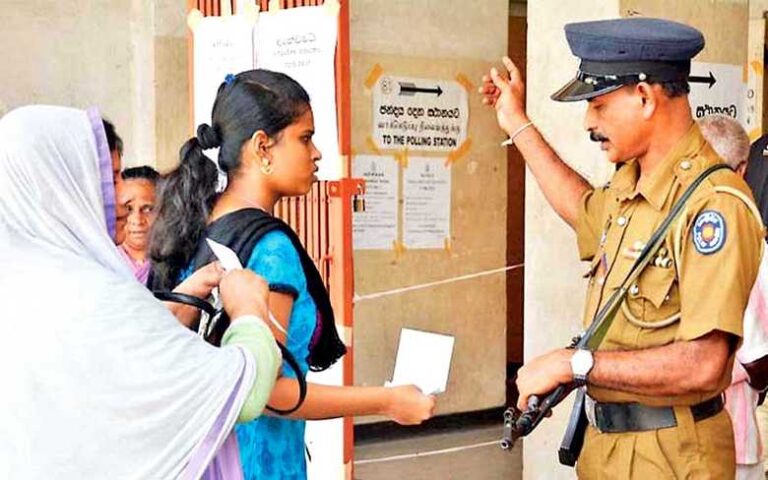
October 06, Colombo (LNW): Whispers of a provincial council election in April 2026 have sparked a political chain reaction. Still, the Election Commission is pouring cold water on the timeline, even as the opposition begins strategising for a contest that may not materialise.
While rumours suggest the government is eyeing an April date ahead of the New Year celebrations, an Election Commission official told LNW on condition of anonymity that holding elections under the current system by that deadline would be “difficult.” The challenge centres on unresolved delimitation issues, the redrawing of electoral boundaries, that must be addressed before implementing the new framework.
The government has remained conspicuously silent on the matter. Sources close to the JVP confirmed that no definitive decision has been made, leaving political parties and voters in a state of uncertainty.
Yet the opposition isn’t waiting for clarity. A prominent figure from the previous administration has already approached two respected individuals to serve as chief minister candidates for the Western and Southern provinces, signalling confidence that elections are inevitable.
The disconnect is stark, while the Election Commission grapples with technical hurdles and the government stays mum, opposition forces are treating the contest as a foregone conclusion. Provincial councils have been without elected representatives for years, making any movement toward elections politically significant, if logistically uncertain.
Public Tips Spur Police Action as Thousands Use WhatsApp to Report Crime in Sri Lanka

October 06, Colombo (LNW): Authorities in Sri Lanka have intensified efforts to combat illicit drug activity and organised crime following the launch of a WhatsApp tip-off line by the country’s top police official.
The initiative, introduced by Inspector General of Police (IGP) Priyantha Weerasuriya, has seen a considerable public response, with law enforcement receiving over 8,000 messages since its inception.
The dedicated number—071 859 8888—was set up to encourage citizens to report drug-related offences, criminal networks, and other pressing concerns directly to police.
Officers have confirmed that a number of these complaints have already led to the opening of formal inquiries, with follow-ups currently underway across several districts.
However, officials noted that not all messages received have been relevant to their jurisdiction or remit. In light of this, the public has been asked to use the platform responsibly by submitting only crime-related information that falls within the scope of police duties. This is to ensure that resources are not diverted from serious investigations and that response times remain efficient.
Sri Lanka Prepares for Crucial Global Review of Anti-Money Laundering Regime
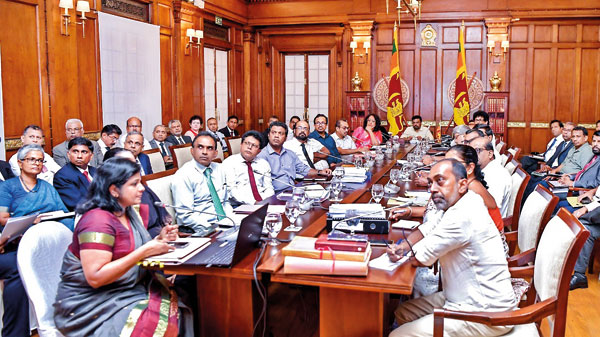
October 06, Colombo (LNW): Sri Lanka is gearing up for a high-stakes evaluation of its measures to combat money laundering and terrorist financing, as the country enters its third mutual assessment under international standards in 2025.
The process, coordinated by the Financial Action Task Force (FATF) and its regional counterpart, the Asia Pacific Group on Money Laundering, was postponed earlier this year due to the country’s major elections.
This time, however, the review will be conducted under the FATF’s enhanced methodology, which goes beyond simply having laws in place and instead focuses on how effective those measures are in practice.
Sri Lanka’s track record has been mixed. Following previous assessments in 2006 and 2015, the country was twice placed on FATF’s “grey list” for shortcomings in its anti-money laundering and counter-terrorism financing frameworks. These listings also led to being blacklisted by the European Union, damaging Sri Lanka’s financial reputation before it was eventually removed from both lists by 2020.
Now, authorities say the country cannot afford a repeat.
“We are still rebuilding after multiple shocks — from the Easter Sunday attacks to the pandemic and the economic collapse,” said Subhani Keerthiratne, Director of the Financial Intelligence Unit (FIU), which operates under the Central Bank. “Being grey-listed again would bring consequences we are not in a position to absorb.”
A grey listing, while not a sanction, prompts global financial institutions to treat a country as high risk. This can impact everything from international banking relationships to sovereign credit ratings, ultimately raising borrowing costs and insurance premiums.
To strengthen its position, Sri Lanka has completed two national risk assessments, the most recent of which identifies drug trafficking, corruption, and trade-based money laundering as significant threats. A national policy has also been adopted to guide anti-money laundering efforts from 2023 to 2028, with 24 government institutions assigned implementation responsibilities. A high-level task force is monitoring progress.
Yet critical gaps remain. One such area is virtual assets — including cryptocurrencies — where regulatory oversight is still lacking. Under FATF rules, countries must oversee virtual asset service providers, but Sri Lanka remains only “partially compliant.” The Central Bank has urged the government to take a policy decision, and legal amendments are being drafted to address this issue.
Another major concern is transparency over beneficial ownership — identifying the true owners behind companies. FATF deems Sri Lanka non-compliant in this area. A recent amendment to the Companies Act now mandates companies to maintain ownership records, and efforts are underway, with international assistance, to build a central registry by 2025.
The FATF also places emphasis on actual outcomes. Financial institutions are expected not just to follow formal “know your customer” protocols, but to apply them in practice, along with continuous monitoring. The same applies to lawyers, accountants, real estate agents, and casinos, all considered vulnerable to misuse by criminals.
Sri Lanka’s FIU stands out for having legal authority to freeze accounts, halt transactions, and levy penalties — powers that many of its counterparts lack. Even so, challenges such as high staff turnover and weak inter-agency coordination hinder progress.
The country now has more convictions for money laundering than it did during its last review — 14, up from just one in 2015. But FATF will be looking for systemic effectiveness.
“We need to make financial crime unprofitable,” said Ms Keerthiratne. “It’s not just about jailing offenders. It’s about dismantling the economic incentives behind criminal activity.”
Sri Lankan Banks Show Signs of Recovery as NPLs Decline and Profits Surge
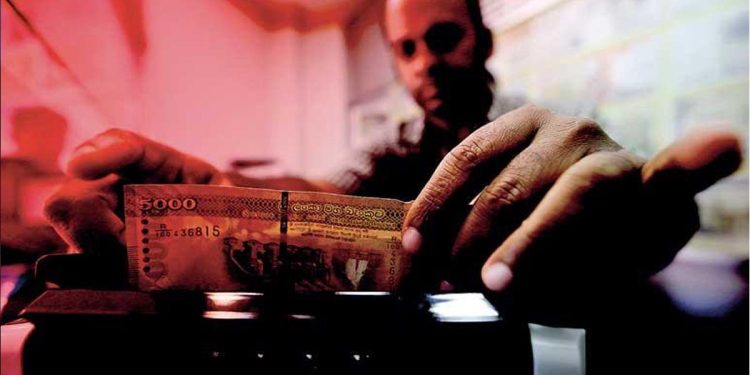
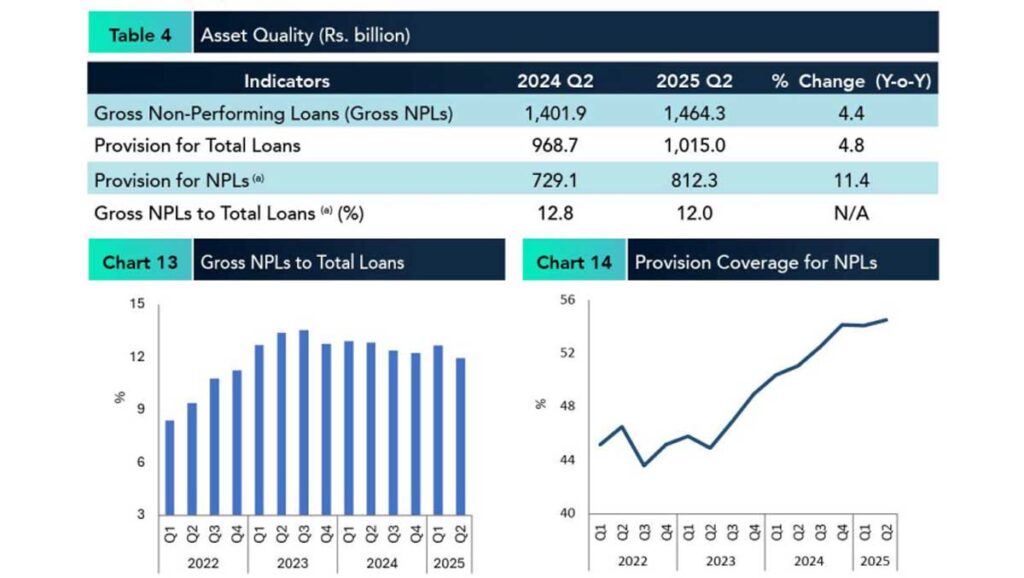
October 06, Colombo (LNW): Sri Lanka’s banking sector has shown early signs of stabilisation, with non-performing loans (NPLs) easing and profitability strengthening during the second quarter of 2025, according to the latest analysis from the Central Bank of Sri Lanka (CBSL).
The ratio of gross NPLs to total loans fell to 12.0 per cent by the end of June 2025, down from 12.7 per cent in the first quarter. In absolute terms, gross NPLs declined to Rs. 1,464 billion from Rs. 1,474 billion over the same period, indicating a modest improvement in asset quality following a prolonged period of stress.
Banks also reported a sharp rise in earnings. Net interest income more than doubled to Rs. 501.1 billion in Q2, up from Rs. 251.4 billion in the first quarter. Pre-tax profits rose to Rs. 291.2 billion from Rs. 146.6 billion, while after-tax profits increased to Rs. 187.8 billion, compared to Rs. 93.6 billion in Q1.
The improving financial performance marks a tentative turnaround for the sector, which has been navigating the aftermath of one of the country’s most severe economic and currency crises. The crisis, triggered in part by past rate cuts and excessive liquidity injections, led to Sri Lanka defaulting on its external sovereign debt—the first in its history.
Unlike some nations that opted to restructure domestic debt by defaulting on government securities—an approach that would have inflicted direct losses on commercial banks—Sri Lanka steered clear of such a move. This decision preserved the integrity of domestic government securities and helped maintain stability in the banking sector’s capital base, supporting investor confidence in the local bond market.
During this period, the Central Bank also pursued a deflationary monetary policy stance, which allowed interest rates to gradually ease after a period of sharp tightening. The shift in policy has contributed to a more favourable environment for lending and banking profitability, though risks remain.
Despite the encouraging data, the NPL ratio remains elevated by historical standards, and further progress will depend on broader economic recovery, debt restructuring outcomes, and continued policy discipline.
Nevertheless, the latest figures suggest that the sector is on a cautious path to recovery, with capital buffers, earnings, and asset quality gradually moving in a positive direction.
CEB Invites Bids for Major Battery Storage Project to Support Renewable Energy Integration
October 06, Colombo (LNW): The Ceylon Electricity Board (CEB) has officially called for tenders to develop 200MW/200MWh of battery energy storage systems (BESS), as part of its broader strategy to strengthen Sri Lanka’s national grid and increase its capacity to absorb renewable energy.
The initiative, backed by funding from the Asian Development Bank (ADB), represents a key step in the country’s energy transition.
The BESS project, to be located at the Kolonnawa grid substation, is being tendered in two equal parts—each for 100MW/100MWh of storage capacity. This large-scale deployment is intended to address one of the major technical challenges in integrating variable renewable sources, such as solar and wind, into the grid: their intermittent nature.
The ADB had previously extended a credit facility of USD 150 million to Sri Lanka, aimed specifically at upgrading the transmission and distribution infrastructure to better handle renewable power generation. Unlike traditional fossil-fuel plants or large hydropower stations, solar and wind installations are subject to fluctuations in output, depending on weather and time of day.
Without appropriate grid support, these fluctuations can trigger voltage instability and potentially cause cascading failures across the system.
Battery storage offers a critical solution to this problem. BESS installations can respond to imbalances in supply and demand within milliseconds, helping to smooth out short-term fluctuations and improve overall grid reliability. In doing so, they act as a buffer—storing excess energy when supply is high and releasing it when demand rises or generation dips.
Over 130 Traders Face Legal Action for Selling Rice Above Controlled Prices

October 06, Colombo (LNW): The Consumer Affairs Authority (CAA) has initiated legal proceedings against 135 traders across Sri Lanka for allegedly selling rice at inflated prices, as part of a broader clampdown on unethical market practices amid rising concerns over food affordability.
According to the CAA, the cases stem from raids conducted islandwide over the past month, targeting both individual vendors and businesses suspected of price manipulation or hoarding of essential food items.
The authority confirmed that enforcement operations are ongoing, particularly against those attempting to profit by concealing rice stocks or violating price controls.
Under the Consumer Affairs Authority Act, traders found guilty of overpricing rice may face significant penalties. Individuals risk fines ranging from Rs. 100,000 to Rs. 500,000, imprisonment for a period of up to five months, or both.
In the case of corporate entities, penalties can range from Rs. 500,000 to Rs. 5 million, with the added possibility of custodial sentences and the confiscation of goods found to be hoarded or sold unlawfully.
The CAA also issued a stern warning to repeat offenders, stating that courts are empowered to impose double the standard fine and extend prison terms to a maximum of one year upon a second conviction.
Central Bank Launches Survey on Virtual Asset Service Providers Ahead of AML Evaluation
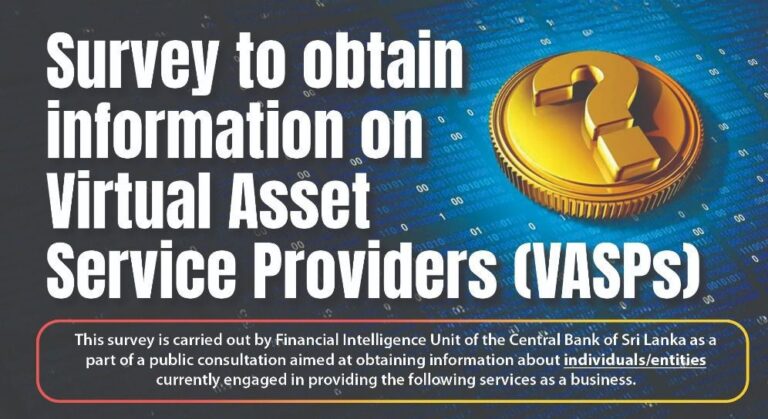
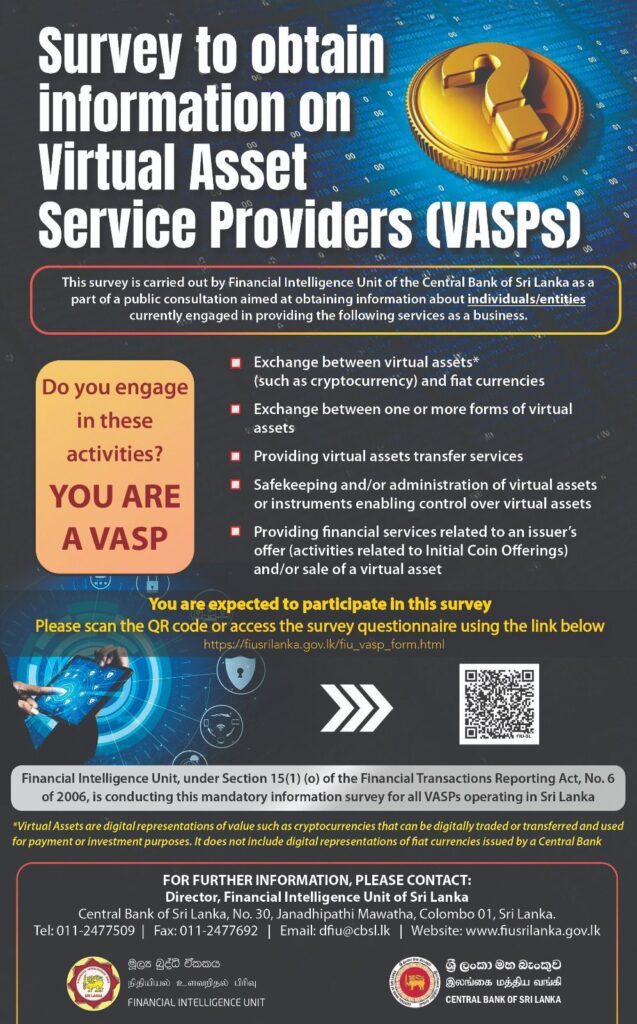
October 06, Colombo (LNW): Sri Lanka’s Financial Intelligence Unit (FIU), operating under the Central Bank, has launched a mandatory survey aimed at identifying individuals and businesses engaged in Virtual Asset Service Provider (VASP) activities.
The initiative comes as part of preparatory efforts ahead of the country’s third national evaluation of its Anti-Money Laundering and Countering the Financing of Terrorism (AML/CFT) framework.
The survey forms part of a broader public consultation process designed to map out the landscape of virtual asset-related services currently being offered in the country. It targets any persons or entities involved in business activities such as the exchange of virtual assets for fiat currency, the transfer or safekeeping of virtual assets, and the provision of financial services tied to virtual asset offerings or sales.
The Central Bank clarified that virtual assets—such as cryptocurrencies—are defined as digital representations of value that can be digitally traded, transferred, or used for investment purposes. These assets, however, do not include digital representations of fiat currency issued by the Central Bank itself.
While the use of virtual assets continues to grow globally, Sri Lanka maintains strict regulations on their use within its financial system. Under current foreign exchange laws, the use of cryptocurrencies or other virtual assets for payment transactions remains prohibited.
Nonetheless, activities related to virtual assets for investment or trading purposes, if conducted as a business, may fall under the scope of VASP classification and be subject to regulatory scrutiny.
The FIU’s effort to collect data on VASPs is expected to inform both domestic policy and international assessments, particularly as global watchdogs continue to tighten standards around digital finance and its potential links to money laundering and terrorist financing.
The Central Bank has encouraged individuals and businesses involved in virtual asset services to participate fully in the survey, noting that compliance will help enhance regulatory clarity and bolster the country’s readiness for the upcoming AML/CFT evaluation.
Power Restoration Efforts Hindered as CEB Trade Union Action Enters Second Month

October 06, Colombo (LNW): Efforts to restore power across Sri Lanka have been significantly hampered due to ongoing industrial action by employees of the Ceylon Electricity Board (CEB), as the country grapples with widespread outages triggered by severe weather.
According to CEB sources, nearly 30,000 power failures have been reported islandwide, largely attributed to high winds that have brought down trees and damaged power lines. However, despite the urgent need for repairs, response times have been severely affected due to a continuing work-to-rule campaign by electricity sector trade unions.
The Sri Lanka Nidahas Sevaka Sangamaya, a key union within the CEB, confirmed that the industrial action has delayed power restoration in many affected areas. Their campaign, now in its 32nd consecutive day, has seen employees limit themselves strictly to regular working hours, refraining from overtime and additional duties typically essential during emergency repair operations.
The protest began on September 04 and initially involved 25 trade unions, including those with affiliations to political parties such as the Sri Lanka Freedom Party (SLFP), United National Party (UNP), and Sri Lanka Podujana Peramuna (SLPP). It has since expanded in scope and impact.
Union representatives originally tabled 24 demands focused on the ongoing restructuring of the CEB. However, the list has since grown to include grievances over stalled promotions, unpaid salary arrears, and the non-permanency of a temporary Rs. 10,000 monthly allowance paid until the end of 2023.
Workers are also calling for this allowance to be incorporated into their basic salary and for a 25 per cent salary increase effective from 1 January 2024, along with corresponding back payments.
In response to the deteriorating situation, the CEB has suspended all forms of employee leave in a bid to maintain critical operations and minimise disruptions to the public. Meanwhile, an Extraordinary Gazette declaring electricity services as essential remains in force, theoretically obligating staff to report for work. Despite this, the industrial campaign continues to paralyse key functions, particularly emergency repair work.
Police Administrative Powers to Shift Back to IGP Amid Structural Changes

October 06, Colombo (LNW): The authority to oversee transfers, promotions, and other administrative matters concerning police personnel is set to return to the Inspector General of Police (IGP) in the coming week, marking a notable shift in the governance of Sri Lanka’s police force.
A formal gazette notification is expected to be issued shortly, officially transferring these powers from the National Police Commission (NPC) back to the IGP. This development follows a decision made during a recent meeting of the NPC held last Wednesday.
Currently, the National Police Commission is vested with the power to manage critical human resource functions within the police service, including disciplinary matters, career advancement, and officer transfers.