Home Blog Page 362

Fitch Affirms Sri Lanka’s Sovereign Rating at ‘CCC+’

0

Fitch Ratings has affirmed Sri Lanka’s Long-Term Foreign-Currency Issuer Default Rating (IDR) at ‘CCC+’, noting that despite the completion of the country’s debt restructuring in 2024, risks remain due to elevated government debt levels and a high interest-to-revenue ratio.

The agency highlighted that Sri Lanka’s ongoing reforms are supporting a solid economic recovery, with low inflationsubstantial fiscal adjustments, and improvements in the external finance position.

“Substantial progress has been made under the 48-month IMF programme,” Fitch noted, citing the passage of the 2025 budget in line with programme targets, restoration of cost-reflective electricity pricing, improved tax compliance and revenue administration, and reforms to the Ceylon Electricity Board and other state-owned enterprises.

Fitch added that improving the investment climate, particularly in terms of foreign direct investment (FDI), will be key to bolstering Sri Lanka’s medium-term growth, though progress is likely to be incremental.

Looking ahead, Fitch said a substantial decline in the government debt-to-GDP ratio, supported by credible fiscal consolidation, stronger revenue growth, and faster economic expansion, could pave the way for a future rating upgrade.

WEATHER FORECAST FOR 02 OCTOBER 2025

0

A few showers may occur in Western and Sabaragamuwa provinces and in Galle, Matara, Kandy and Nuwara-Eliya districts.

Mainly fair weather will prevail over elsewhere of the island.

Fairly strong winds of about (30-40) kmph can be expected at times over Western slopes of the central hills and in Northern, North-central, North-western, and Central provinces and in Trincomalee and Hambantota districts.

Sri Lanka Govt Urged to Build AI Infrastructure and Skills to Stay Competitive

0

Artificial Intelligence (AI) is reshaping global industries and redefining the nature of work, but Sri Lanka risks being left behind unless it urgently strengthens its computing infrastructure, data readiness, and education systems, experts warned at a recent national webinar on AI transformation.

Information Communication Technology Agency (ICTA) Board Member and Microimage CEO Harsha Purasinghe, speaking at the event, said that while AI presents vast opportunities, Sri Lankan startups face severe limitations due to the absence of local Graphics Processing Unit (GPU) clusters. These GPU networks vital for training AI models are unavailable in local data centres, forcing innovators to rely on expensive international cloud services.

“You can come up with fantastic ideas, but you need to train your models and experiment. For a startup, the biggest challenge is paying for compute,” Purasinghe noted, urging collaboration between Government and the private sector to attract global hyperscalers and establish local GPU infrastructure.

He emphasised that Sri Lanka’s competitive edge in AI will depend on nurturing high-quality talent rather than large workforces. “AI requires small but highly skilled teams capable of building proprietary systems and intellectual property. Curricula must evolve, and young people need to be guided to use these tools,” he said, calling for urgent reforms in university and vocational training.

Purasinghe also highlighted AI’s potential to transform traditional sectors like agriculture by empowering farmers with predictive tools to plan crops, optimise yields, and cut costs. He added that access and affordability would determine whether businesses and individuals can meaningfully engage with AI.

ICTA has already begun piloting AI awareness across the public sector, starting with the Presidential Secretariat and now training more than 5,000 officials on AI tools, prompting techniques, and workplace applications. “Training officials on AI tools had a massive impact on efficiency,” Purasinghe said.

Nimbus Cloud Lanka Managing Director Damith Hettihewa stressed that AI adoption depends on strong data frameworks. “AI models are only as good as the data they are trained on. We must consolidate, organise, and govern data under ethical and legal frameworks,” he said, noting that the Personal Data Protection Act and international standards such as the EU’s GDPR guide these efforts.

Hettihewa added that companies can begin preparing data frameworks using existing CPU resources or cloud credits, reducing costs for startups.

NCINGA Chief Technology Officer Chathura Peiris said AI has transformative potential across sectors including banking, healthcare, education, agriculture, and Government services. “AI-first banking will drive hyper-personalised services and digital engagement. The foundation is scalable data infrastructure,” he explained.

ACCA Asia Pacific Policy Manager Dean Hezekiah said professional bodies are revising qualifications to include digital and AI competencies. “Every graduate should have at least a baseline understanding of AI technologies,” he said.

Experts agreed that Sri Lanka’s ability to compete in the global AI economy depends on rapid investment in computing power, data ecosystems, and education a race the nation cannot afford to lose.

2026 Budget to Focus on Growth without New Taxes

0

Sri Lanka’s 2026 Budget is expected to build on strong fiscal consolidation achieved this year, with the Government signalling that no new taxes will be introduced next year despite ambitious revenue targets. President Anura Kumara Dissanayake, during his recent official visit to Japan, reaffirmed that the 2026 fiscal plan will rely on improved revenue collection, better management of State enterprises, and efficiency-driven spending rather than new levies on the public.

According to the latest data from the Central Bank of Sri Lanka (CBSL), the Government’s fiscal position has significantly strengthened, with the overall budget deficit shrinking by nearly 55% in the first eight months of 2025 to Rs. 411 billion, compared to Rs. 911 billion during the same period last year. This improvement reflects the administration’s efforts to enhance tax compliance, rationalise expenditure, and strengthen the performance of State institutions under the IMF-supported economic reform framework.

Tax revenue grew 31% year-on-year, reaching Rs. 3.07 trillion by end-August 2025, up from Rs. 2.35 trillion in the same period of 2024. Non-tax revenue also recorded a modest rise of 8%, amounting to Rs. 226.2 billion, while foreign grants declined by 17% to Rs. 6.7 billion. The CBSL attributed the surge in revenue primarily to improved collection efficiency by the Inland Revenue Department, customs reforms, and higher VAT receipts from expanding domestic consumption.

Meanwhile, recurrent expenditure grew 11% to Rs. 3.4 trillion, a slower pace than revenue growth, underscoring improved fiscal discipline. Capital expenditure and lending excluding repayments dropped 24%, reflecting tighter project prioritisation and a focus on essential infrastructure investments. Notably, the primary balance recorded a surplus of Rs. 1.27 trillion, a near doubling from Rs. 648.7 billion last year, signalling progress toward fiscal stability and debt sustainability.

Despite this improvement, public debt remains high. The CBSL reported that as of mid-2025, total Government debt stood at Rs. 29.6 trillion, up 3% from Rs. 28.7 trillion a year earlier. Foreign debt grew 3.8% to Rs. 10.8 trillion, while domestic borrowings rose 2.7% to Rs. 18.8 trillion. Treasury bill issuance declined 3.4% to Rs. 3.9 trillion, while Treasury Bonds expanded 6% to Rs. 14.9 trillion, indicating a shift toward longer-term financing.

The upcoming 2026 Appropriation Bill, to be tabled in Parliament in October, is expected to outline a projected revenue target exceeding Rs. 5.2 trillion, driven primarily by stronger tax administration, digitalised collection systems, and higher earnings from State-Owned Enterprises (SOEs). The Government aims to sustain the fiscal deficit below 4% of GDP, aligning with IMF targets while protecting social spending and public investment.

 Officials said revenue growth in 2026 would be achieved by broadening the tax base, reducing evasion, and enhancing efficiency, rather than imposing new burdens on citizens. The Budget is expected to prioritise public sector reforms, infrastructure development, and innovation-led growth, marking a policy shift toward stability-driven expansion.

If fiscal trends continue, the 2026 Budget could represent a milestone in Sri Lanka’s post-crisis recovery  combining fiscal restraint with social equity and economic renewal, all without new taxes on the public.

JKCG Suspends Advance Payments for BYD EV Orders Amid Customs Dispute

0

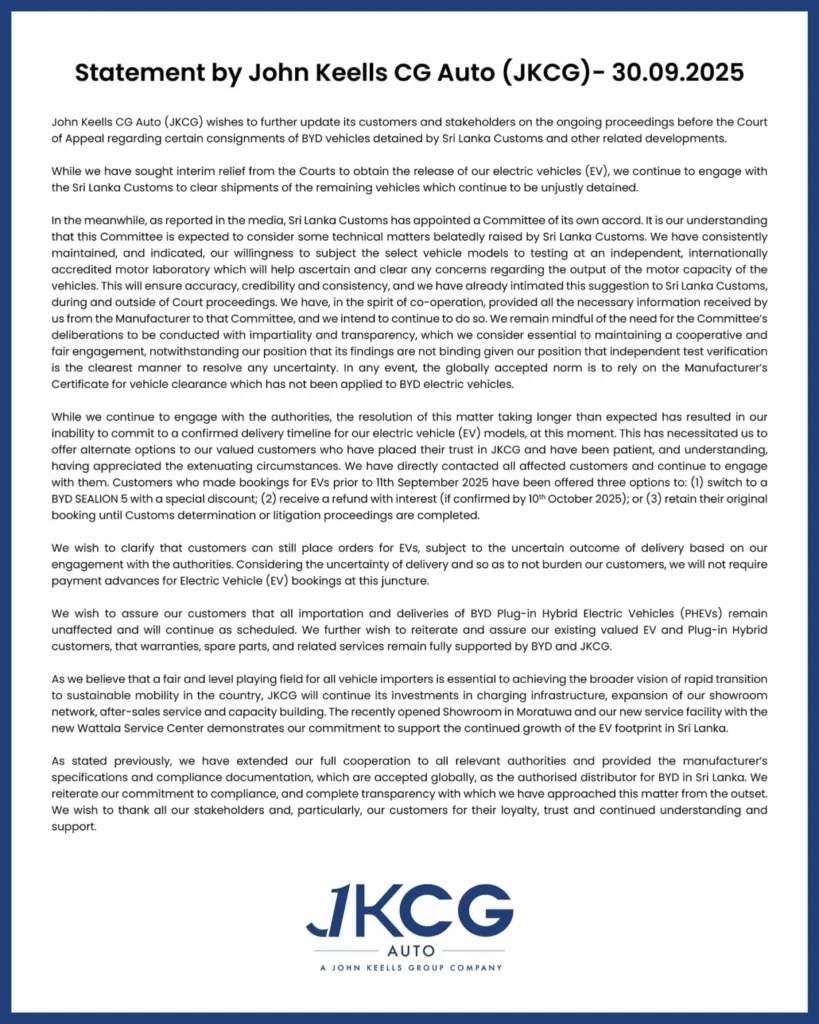
John Keells CG Auto Pvt Ltd, the authorized distributor for China-manufactured BYD vehicles in Sri Lanka, has announced that it will temporarily halt the collection of advance payments for BYD electric vehicle (EV) orders.

The decision comes in the wake of an ongoing issue with Sri Lanka Customs regarding the motor capacity of the imported EVs. In a statement released yesterday (September 30), JKCG said the resolution of the dispute is taking longer than expected, making it difficult to provide customers with a confirmed delivery timeline for the vehicles.

Options for Existing Customers

For customers who had placed orders and made advance payments up to September 11, 2025, the company has offered three alternatives:

  1. Switch to a BYD SEALION 5 Plug-in Hybrid with a special discount (if confirmed before October 10).
  2. Request a refund with interest (if requested before October 10).
  3. Keep the order as it is until the final decision from Customs or the relevant tax authorities is concluded.

New Orders and Ongoing Commitments

JKCG further clarified that while new orders for BYD EVs will continue to be accepted, no advance payments will be collected until the matter with Customs is resolved.

The company also assured customers that warranties, spare parts, and after-sales services for BYD EVs and plug-in hybrids already delivered will continue uninterrupted.

Stalled Reforms and Policy Hurdles Cloud Sri Lanka’s Investment Outlook

0

Sri Lanka’s sluggish progress in privatising State-Owned Enterprises (SOEs), rigid labour market regulations, and restrictions on foreign participation continue to undermine investor confidence, the U.S. State Department warned in its 2025 Investment Climate Statement.

According to the report, 527 SOEs, including 55 classified as strategic, continue to strain public finances and crowd out private sector activity. The previous administration had launched a reform drive aimed at restructuring and partially privatising major loss-making enterprises.

However, the current government halted those privatisation efforts upon taking office, opting instead for internal restructuring measures focused on cost-cutting and improved governance within existing state ownership.

The report observed that the suspension of privatisation, particularly at the Ceylon Electricity Board (CEB), has slowed energy sector reform, keeping electricity prices high and discouraging industrial competitiveness.

“Foreign investors consistently face high transaction costs, unpredictable policy shifts, and opaque procurement procedures,” the statement said, noting that uncertainty continues to weigh heavily on Sri Lanka’s investment prospects.

Despite these setbacks, the report acknowledged several enduring strengths. Sri Lanka allows 100% foreign ownership in most sectors, offers constitutional guarantees for investment protection, and ensures full repatriation of profits and capital.

The Colombo Stock Exchange recorded $66.5 million in net foreign inflows in 2024, raising a total of $568 million in capital. Worker remittances surged to $6.58 billion, boosting foreign reserves to $6.1 billion by the end of the year.

Export Processing Zones continue to attract investors, while newer ventures such as the Hambantota pharmaceutical zone and Colombo Port City are expected to open fresh opportunities.

Yet, the Economic Transformation Act, which aimed to streamline approvals by replacing the Board of Investment with five specialised agencies, remains unimplemented leaving investment approvals fragmented and slow.

The report cited uneven tax treatment, corruption in procurement, and bureaucratic inefficiencies as persistent obstacles. It highlighted the government’s decision to impose new taxes on service exporters while offering exemptions to Port City firms, reinforcing perceptions of policy inconsistency.

Labour rigidity was flagged as a key constraint. Strict dismissal laws have made restructuring costly, while labour shortages have intensified due to emigration, particularly in the IT, apparel, tourism, and engineering sectors. The garment industry, the report noted, faces turnover rates as high as 40%, compounded by limited social protection for informal workers.

Although Sri Lanka recorded 5% GDP growth in 2024, surpassing expectations, foreign direct investment (FDI) remains weak. Most deals are small, ranging from $3–5 million, concentrated in tourism, ICT, renewable energy, and real estate.

The government’s pledge to finalise Sinopec’s $3.7 billion oil refinery in Hambantota could become the largest FDI in history, but investor confidence suffered when Adani Green Energy withdrew from a $400 million wind project after renegotiation attempts.

Land restrictions also limit foreign participation, with companies holding over 50% foreign equity barred from purchasing land. Sectoral caps of 40% apply to agriculture, shipping, and education, while areas such as small retail and coastal fishing remain off-limits.

The report concludes that Sri Lanka’s ability to attract investment hinges on converting recent macroeconomic stability into genuine reforms. Without progress in governance, regulatory simplification, and labour flexibility, the government’s ambitious $5 billion FDI target for 2025 is unlikely to be met.

Sri Lanka’s 2025 Growth Outlook Splits Economists as Forecasts Diverge

0

Sri Lanka’s post-crisis economic recovery has entered a decisive phase, with international financial institutions sharply divided over the country’s growth prospects for 2025. While some agencies forecast a modest rebound, others see slower progress amid global trade headwinds, tight fiscal space, and lingering structural vulnerabilities.

The differences among the Asian Development Bank (ADB), the World Bank, the International Monetary Fund (IMF), and the Central Bank of Sri Lanka (CBSL) reveal a complex picture of a nation cautiously emerging from one of its worst economic crises.

According to the ADB’s September 2025 outlook, Sri Lanka’s growth projection for 2025 remains unchanged at 3.9 percent, the same figure forecast in April. However, the regional lender has revised down its 2026 forecast, warning that the 20 percent tariff imposed by the United States on imports could weaken Sri Lanka’s export earnings and reduce domestic consumption due to potential job losses.

 The ADB has also sharply lowered its inflation projection for 2025 to 0.5 percent, reflecting subdued demand and easing import costs. The Bank observed that lower inflation would enhance real household incomes and improve purchasing power, providing room for genuine wage gains while preserving the value of long-term savings and investments.

The World Bank, in contrast, maintains a slightly more conservative view, estimating growth at 3.5 percent in 2025. It attributes the slower pace to the prolonged effects of the 2022–23 economic meltdown, persistent external debt vulnerabilities, and weak private investment flows.

 The Bank expects growth to moderate further to 3.1 percent in 2026, citing the need for continued fiscal and structural reforms to sustain momentum. Although inflation is expected to stay low, the World Bank warns that prolonged deflationary pressures could weigh on domestic demand and investment sentiment.

The IMF, which continues to anchor Sri Lanka’s macroeconomic reform program under its Extended Fund Facility, projects growth in the range of 3.7 to 4 percent for 2025.

 In its mid-year staff assessment, the IMF reported that real GDP had expanded 4.9 percent in the second quarter of 2025, exceeding expectations, even as inflation fell below target at –1.1 percent year-on-year due to energy price declines. The Fund cautioned that while stability had returned to monetary conditions, further progress in debt restructuring and revenue reforms was essential to secure long-term growth.

In contrast, the Central Bank of Sri Lanka remains the most optimistic, projecting 4.5 percent growth in 2025. It attributes the recovery to robust domestic demand, improved investor confidence, and stable monetary conditions achieved since 2022.

The Bank noted that inflation had dropped to 1.2 percent in August, allowing room to support growth while maintaining policy stability. Public debt, however, remains a key concern, with estimates exceeding 110 percent of GDP, underscoring limited fiscal flexibility despite progress under the IMF program.

The divergence in forecasts underscores both the fragility and potential of Sri Lanka’s recovery. The ADB’s benign inflation outlook suggests improved purchasing power, but the IMF’s deflationary trend raises concerns about weak demand.

With global uncertainty, external tariff shocks, and the lingering impact of debt restructuring, policymakers face a delicate balancing act  sustaining growth without reigniting instability. As the nation braces for 2026, Sri Lanka’s ability to consolidate reforms, attract investment, and restore export competitiveness will determine whether optimism or caution ultimately prevails.

FUTA Highlights Severe Shortage of University Lecturers

0

The Federation of University Teachers Association (FUTA) has warned of a severe shortage of lecturers in Sri Lanka’s university system, with only about 5,000 currently serving against the required 12,000.

FUTA Secretary Charudatta Ilangasinghe said yesterday (30) that resignations, overseas assignments, and study leave have worsened the shortfall. He revealed that around 200 lecturers at the University of Peradeniya resigned during the past year alone.

University lecturers staged a symbolic strike yesterday to press their demands, warning that if the government fails to respond, they will be compelled to take stronger trade union action.

Ilangasinghe added that unattractive working conditions are discouraging qualified professionals from joining the university system. He also noted that despite sending a letter to the President a month ago requesting a meeting to discuss the issue, FUTA has yet to receive a response.

Fines Imposed on Bus Passengers Without Tickets in Western Province

0

Effective today (1), passengers travelling on buses without a valid ticket will face a fine of Rs.100 in addition to double the fare, according to the Western Provincial Road Passenger Transport Authority.

Authority Chairman Gamini Jasinghe said the regulation will also apply to bus conductors who fail to issue tickets.

The Western Province has 529 bus routes, and inspections are scheduled to cover all of them. Raids will initially be conducted on selected routes, with plans to extend the operation to the entire province within a week.

President Dissanayake Meets Nippon Foundation Chairman in Tokyo

0

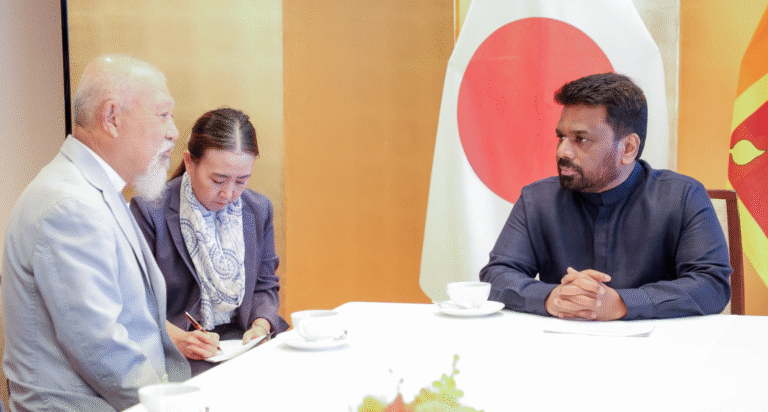
President Anura Kumara Dissanayake, currently on an official visit to Japan at the invitation of the Japanese Government, met with Yohei Sasakawa, Founding Chairman of the Nippon Foundation, at the Imperial Hotel in Tokyo this morning (30).

Discussions centered on strengthening the long-standing friendship between Japan and Sri Lanka. Mr. Sasakawa reaffirmed his commitment to improving the livelihoods of all communities in Sri Lanka and outlined plans to renovate and modernize 100 schools in the Northern and Eastern Provinces.

President Dissanayake expressed his gratitude to Mr. Sasakawa for his longstanding contributions to Sri Lanka’s development and social welfare.

Minister of Foreign Affairs, Foreign Employment and Tourism Vijitha Herath, along with other officials, also attended the meeting.