September 30, Colombo (LNW): Several spells of showers will occur in Western and Sabaragamuwa provinces and in Galle, Matara, Kandy and Nuwara-Eliya districts, the Department of Meteorology said in its daily weather forecast today (30).
A few showers may occur in North western province.
Fairly strong winds of about (30-40) kmph can be expected at times over Western slopes of the central hills and in Northern, North-central, North-western, and Central provinces and in Trincomalee and Hambantota districts.
Marine Weather:
Condition of Rain:
Showers will occur at several places in the sea areas off the coast extending from Chilaw to Matara via Colombo and Galle.
Winds:
Winds will be south-westerly and wind speed will be (30-40) kmph. Wind speed can increase up to (50-55) kmph at times in the sea areas off the coast extending from Matara to Pottuvil via Hambantota and from Chilaw to Kankasanthurai via Mannar. Wind speed can increase up to 50 kmph at times in the sea areas off the coast extending from Kankasanthurai to Trincomalee.
State of Sea:
The sea areas off the coast extending from Matara to Pottuvil via Hambantota and from Chilaw to Kankasanthurai via Mannar will be rough at times. The sea areas off the coast extending from Kankasanthurai to Trincomalee will be fairly rough at times.
A few districts to witness showers further: Fairly strong winds to occur elsewhere (Sep 30)

Vehicle Import Boom Threatens Sri Lanka’s Reserve Targets
By: Staff Writer
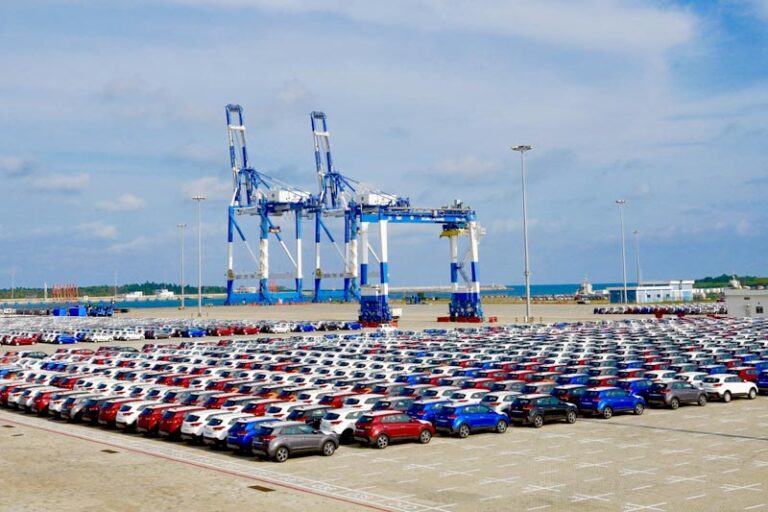
September 29, Colombo (LNW): Sri Lanka’s decision to lift the four-year ban on vehicle imports has unleashed a massive surge in demand, with Letters of Credit (LCs) for imports already nearing US$1.6 billion, raising concerns over potential pressure on the country’s fragile foreign exchange reserves.
Despite assurances from senior officials that the outflows are “manageable,” financial analysts warn that the timing of this import spree could complicate Sri Lanka’s commitments under the International Monetary Fund (IMF) programme, which requires the country to build reserves to over US$7 billion by year-end.
Director General of Customs Seevali Arukgoda confirmed that there are no foreign exchange ceilings on commercial vehicle imports, with only a one-vehicle-per-year restriction on private buyers. “There is no threshold. Any amount of imports can come in. It will not negatively affect foreign reserves,” he asserted.
However, data from the banking sector indicates a sharp spike in LC openings between June and September 2025, largely driven by pent-up demand from vehicle dealers and leasing companies preparing for the post-ban market. With each LC backed by U.S. dollars, the foreign exchange outflow over the next few months could exceed US$2 billion, depending on shipping and settlement timelines.
Deputy Secretary to the Treasury Ajith Abeysekera defended the Government’s position, saying the current LC volume remains within “expected parameters” agreed under the IMF programme. “It does not look like it will impact foreign reserves,” he said, stressing that the IMF team stationed in Colombo is monitoring the country’s fiscal and external stability closely.
Officials maintain that the surge in imports is providing an unexpected fiscal windfall. Customs revenues from vehicle imports have already exceeded Rs. 700 billion, significantly strengthening Government coffers after years of stagnation. Yet, economic experts caution that short-term revenue gains may not offset the long-term foreign exchange cost, especially if importers settle LCs simultaneously during the final quarter.
Health and Mass Media Minister Dr. Nalinda Jayatissa, also the Cabinet Spokesperson, insisted that the Central Bank has raised no objections to the scale of imports. “We are doing this in cooperation with the CBSL, and there’s been no indication that it will harm reserves,” he said.
While officials argue that demand has peaked and is now stabilising, market observers note that the renewed appetite for vehicles especially hybrids and electric cars reflects rising consumer confidence and credit expansion. But if foreign inflows from tourism, remittances, and exports falter in coming months, Sri Lanka’s reserve accumulation target of US$7.5 billion could come under threat.
As one senior banker observed, “The question is not whether we can import, but whether we can afford this pace without derailing external stability. A few billion dollars in vehicles today could mean tighter monetary controls tomorrow.”
FACETS 2026 to Shine as Sri Lanka’s Gem Renaissance
By: Staff Writer
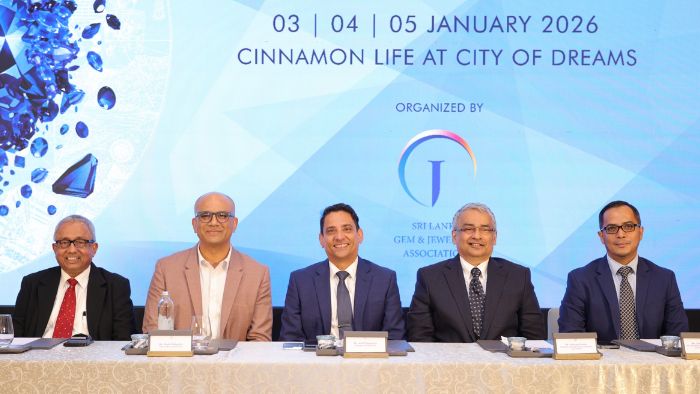
September 29, Colombo (LNW): With just three months to go, anticipation is building for FACETS Sri Lanka 2026, the 33rd edition of Asia’s premier gem and jewellery exhibition.
Organised by the Sri Lanka Gem and Jewellery Association (SLGJA) in collaboration with the National Gem and Jewellery Authority, the event will take place from 3-5 January 2026 at Cinnamon Life- The City of Dreams, unveiling a bold, two-floor showcase that merges heritage with innovation.
This year’s edition marks a new era for the global gem trade, reaffirming Sri Lanka’s position as the “Island of Gems”. The event will feature immersive experiences that trace the gemstone journey from mine to market, including interactive displays, VR showcases, and Story Corners where exhibitors narrate their brand legacies.
A major highlight is the formation of the Sapphire Sponsorship Circle, comprising 11 of Sri Lanka’s top gem and jewellery exporters.
The elite group includes Colombo Jewellery Stores, Domico Gems, Ellawala Exports, Gem Paradise, Mushan International, Regal Gems, RnR Fine Gems, Ruwanpura Gems, Subash Gems, Trust Gems, and Zam Gems. Their collective support underscores industry unity and commitment to positioning FACETS as the region’s most influential gem showcase.
SLGJA President Akram Cassim hailed the Sapphire Circle as a milestone for the sector. “Their support is a powerful endorsement of our shared vision to showcase Sri Lankan gemstones and craftsmanship on a global stage,” he said. “FACETS has always been more than an exhibition — it’s a celebration of our heritage and a bridge to the world.”
FACETS 2026 Chairman Armil Samoon emphasised the exhibition’s enduring legacy. “Since 1991, FACETS has carried Sri Lanka’s gem story across the globe. This edition builds on that history with a futuristic vision connecting our past to the opportunities of tomorrow,” he said.
Adding further value, Universal Travel Bureau (UTB) joins as the event’s Official Travel Partner, curating exclusive pre- and post-show experiences for delegates. These include gem mine tours offering a rare look into Sri Lanka’s centuries-old mining traditions and sustainable practices — transforming the exhibition into a cultural journey blending heritage, hospitality, and discovery.
FACETS 2026 also places strong emphasis on sustainability, ethical sourcing, and design innovation, ensuring alignment with evolving global standards and consumer expectations. Over the past three decades, FACETS has grown into a hallmark of excellence, drawing traders, collectors, and jewellery enthusiasts from around the world.
As Sri Lanka prepares to open its doors in January, FACETS 2026 promises to be its most dynamic and visionary edition yet a dazzling celebration of tradition, creativity, and the enduring brilliance of Sri Lanka’s gem heritage.
CEB’s Massive Losses Fuel Debate over New Tariff Increases
By: Staff Writer
September 29, Colombo (LNW): The Committee on Public Enterprises (CoPE) recently disclosed that the Ceylon Electricity Board (CEB) recorded a jaw-dropping cumulative loss of Rs. 594.36 billion between 2014 and 2022 (excluding 2015), attributing much of the damage to internal inefficiencies and poor governance.
The revelations, made during a CoPE session chaired by MP Dr. Nishantha Samaraweera, have triggered renewed calls for deep structural reform and brought into sharp focus the proposed shift toward a cost-reflective tariff formula.
During the same hearing, the Auditor General’s performance review for 2022–2023 and related years laid bare other malpractices: irregularities in shareholding arrangements of LTL, West Coast, and ESOT entities; a failure to deliver six vehicles worth Rs. 124 million for the Puttalam Coal Project; unauthorized provident fund loans exceeding Rs. 6.6 billion; and Rs. 507 million in allowances disbursed without Cabinet approval.
Of particular note: CEB lacked a permanent internal auditor for nearly a year before corrective action. CoPE has summoned LTL to appear before the committee next month.
While CoPE’s critique centers on past mistakes, the debate now extends to present-day policy: can CEB justify increasing tariffs under a cost-reflective model, given its more recent financial performance?
According to Central Bank of Sri Lanka data, despite steep tariff cuts and market headwinds, CEB reported a net profit of Rs. 148.6 billion in 2024, up 142.8 percent year-on-year.
The 2024 result was aided by foreign exchange gains of Rs. 11.7 billion and a capital gain of Rs. 26 billion from the sale of shares in LTL Holdings.
However, the grace did not last. In Q1 2025, after regulators implemented a 20 percent tariff cut in January, CEB’s revenue tumbled 44 percent (from Rs. 167 billion to Rs. 93.9 billion), and it posted a gross loss of Rs. 18.2 billion.
The cost of sales actually increased year-on-year, compounding the damage. In the following quarter (Q2 2025), CEB engineered a turnaround with a profit of Rs. 5.31 billion (group level profit Rs. 7.4 billion), largely by reinstating tariff adjustments mid-year and containing costs. +2
Yet, over the first half of 2025, CEB still faced a cumulative loss of Rs. 13.1 billion. These volatile swings in profitability highlight the precarious balancing act CEB must perform. On one hand, the legacy losses unearthed by CoPE suggest that unsustainable cross-subsidies and operational weaknesses plagued the utility. On the other, recent figures show that tariff cuts can swiftly reverse gains and plunge CEB back into red territory.
Proponents of a cost-reflective tariff formula argue that the utility must be priced to cover its production, transmission, and financing costs to avoid perpetuating state-sponsored losses. In Sri Lanka’s context, such a move is also seen as a structural necessity under the IMF-backed reform agenda to stabilize the power sector and limit contingent liabilities.
Critics, however, warn that frequent tariff hikes if not matched with efficiency improvements risk rubbing salt into consumers’ wounds in a country already under economic stress. Tariffs that oscillate with fluctuations in fuel costs or foreign exchange rates may prove politically unsustainable unless accompanied by stricter governance, prudent capital investment, and tougher accountability at all levels of the CEB.
As CoPE prepares to grill LTL and revisit CEB’s internal control failures, the public eye remains fixed on the tariff debate. Sri Lanka may soon confront a test: can the power sector be made self-sustaining and fair after decades of losses, mismanagement, and political interference?
CEA Joins GovPay to Boost Digital, Eco-Friendly Payments

By: Staff Writer
September 29, Colombo (LNW): The Central Environmental Authority (CEA) has officially joined Sri Lanka’s GovPay digital payment platform, allowing the public to settle fees for a wide range of environmental services online from Friday, September 26.
The move marks a major step in the government’s digital transformation drive— promising faster, paperless transactions, while also raising questions about accessibility and digital readiness among rural users.
Under the new system, clients can now make electronic payments for inspections, environmental licences, waste management permits, Basel export consents, certifications, laboratory tests, procurement services, and annual renewals. The initiative aims to eliminate lengthy in-person queues and reduce administrative delays that have long plagued service delivery at state offices.
According to the CEA, the integration with GovPay will enhance efficiency, transparency, and accountability, ensuring payments are securely processed through 14 licensed banks and six fintech apps. Clients can also access real-time receipts and transaction records a key shift toward improving trust in government services.
The GovPay platform, introduced by the Information and Communication Technology Agency (ICTA) in collaboration with LankaPay (Pvt.) Ltd., operates under the Ministry of Digital Economy. Since its launch in February 2025, over 147 government institutions have adopted the system, facilitating Rs. 291 million in transactions across 2,017 services. The CEA becomes the latest state agency to integrate into this expanding digital ecosystem.
At the official signing ceremony held at CEA headquarters, senior officials from both organisations hailed the partnership as a milestone in Sri Lanka’s journey toward e-governance and sustainable administration. CEA representatives emphasised that digitisation not only improves service convenience but also contributes to environmental sustainability by reducing paper waste and physical travel.
However, while the system is widely welcomed by urban users and corporate clients, some experts caution that limited digital literacy and internet access in rural areas could hinder equal participation. “The platform is efficient, but public awareness and access remain key,” said an ICT consultant. “Without inclusive outreach, small businesses and rural applicants may still depend on manual processes.”
Despite these challenges, GovPay’s adoption is seen as a critical reform in improving public sector efficiency and reducing opportunities for corruption and cash leakages. With real-time transaction monitoring, the Treasury and Auditor General’s Department can track revenue collections more accurately.
For the CEA, the integration marks a significant leap in aligning environmental governance with digital transformation and transparency goals. As more state agencies join GovPay, Sri Lanka’s public service is steadily evolving toward a faster, greener, and more accountable digital future.
Jaffna MP Ramanathan Archchuna Arrested Over Alleged Obstruction of Police During Colombo Protest
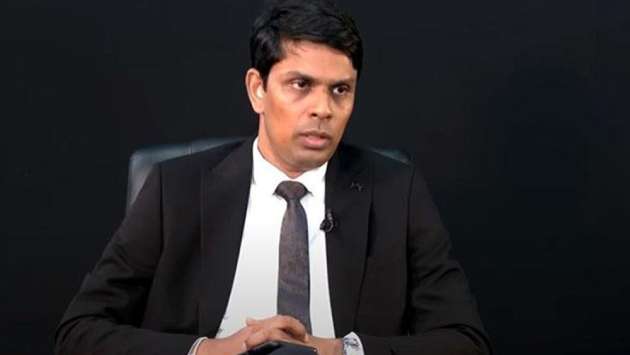
September 29, Colombo (LNW): Jaffna District Member of Parliament Dr Ramanathan Archchuna was taken into custody earlier today by officers from the Fort Police, following an ongoing investigation into an incident during a recent public demonstration.
The arrest took place when the MP voluntarily appeared at the Fort Police Station this morning (29th) to provide a statement related to the matter. The investigation stems from a Satyagraha protest held in Colombo, during which Dr Archchuna was reportedly involved in a verbal confrontation with a police officer assigned to the area.
Authorities have confirmed that the arrest was made on allegations of obstructing a police officer in the execution of their duties.
Call for Oversight as Concerns Grow Over Unregulated Fund Collection in Schools

September 29, Colombo (LNW): The head of Sri Lanka’s anti-corruption watchdog Commission to Investigate Allegations of Bribery of Corruption (CIABOC) has called for a structured mechanism to oversee the collection of money from students in schools, amid rising concerns over the lack of transparency and potential misuse of such funds.
Ranga Dissanayake, Director General of the CIABOC, has stressed the importance of enforcing existing guidelines and ensuring that any fundraising or financial contributions requested by schools are managed through clearly defined and lawful procedures.
Speaking on the matter, Dissanayake acknowledged that many school principals are working under difficult circumstances and often take commendable steps to keep their institutions running smoothly. However, he cautioned that the absence of formal protocols for collecting money—whether through school development societies or other informal channels—could open the door to misinterpretation and even potential abuse.
“There have been instances reported to the Commission where money is being collected from students and parents, sometimes in ways that might be seen as improper or coercive,” he said. “Without a clearly issued directive or policy framework, these practices could be viewed by some as bordering on bribery.”
He further noted that a standardised, government-endorsed approach would not only offer protection for school administrators acting in good faith but would also help prevent misconduct by others who might exploit the system.
Touching on the sensitive issue of financial exchanges during student admissions, Dissanayake underscored the importance of addressing the pressures faced by parents during enrolment periods. “This is a matter that needs careful handling, with a clear and compassionate process in place. Any informal dealings during admissions risk undermining public trust in the education system,” he said.
Update: Three Workers Confirmed Dead After Earth Collapse at Construction Site in Mawanella
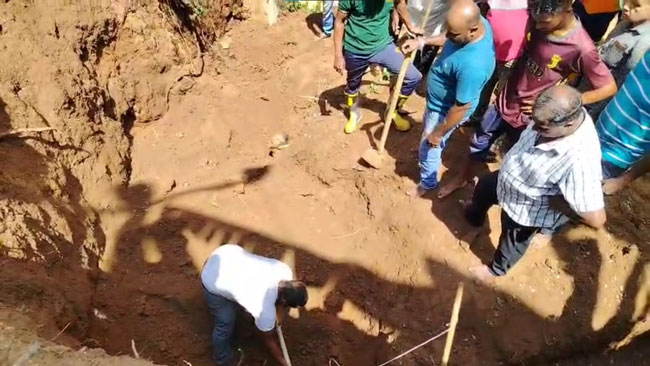
September 29, Colombo (LNW): Tragedy struck in the Manikkawa area of Mawanella today, as the bodies of three workers were recovered following the collapse of a mound of earth at a construction site.
Police confirmed that the victims had been engaged in construction work when the incident occurred, with all three reportedly caught beneath a sudden landslide of soil. Despite a rapid response from emergency services, the rescue effort ultimately became a recovery mission.
An extensive operation was launched earlier in the day in hopes of reaching the trapped individuals alive, but authorities later confirmed that all three had succumbed to their injuries before they could be reached.
The circumstances surrounding the collapse are still under investigation.
Previous Report:
https://lankanewsweb.net/archives/130121/rescue-operations-underway-after-earth-collapse-traps-workers-in-mawanella/
Production of Nutritional Supplement Thriposha Halted Amid Maize Shortage
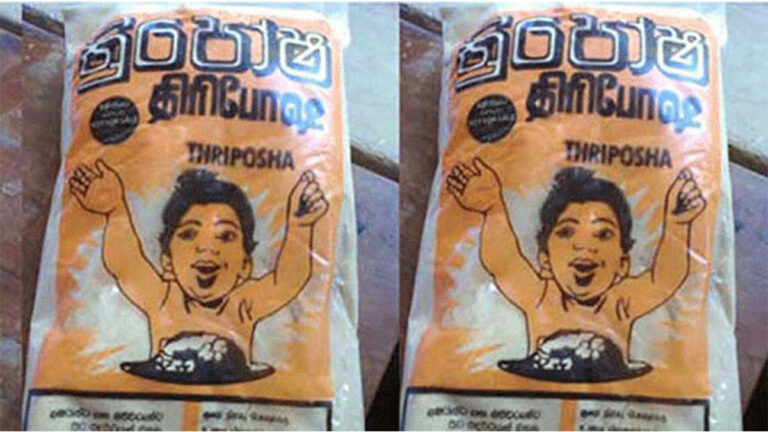
September 29, Colombo (LNW): Sri Lanka’s long-standing fortified food programme has faced a temporary setback, with the production of Thriposha—a nutritional supplement distributed to pregnant mothers and young children—coming to a standstill due to a shortage of key raw materials.
Officials from Sri Lanka Thriposha Limited confirmed that manufacturing was suspended on September 21 after supplies of maize, a primary ingredient in the supplement, ran out. The shortage has been attributed to delays in securing import approval for new stocks.
Although Cabinet authorisation had previously been granted to bring in 18,000 metric tonnes of maize specifically for Thriposha production, the process hit a bureaucratic hurdle when the Controller General of Imports and Exports introduced revisions to the approved conditions. As a result, the planned import has been paused pending further governmental review.
Amal Attanayake, Chairman of Sri Lanka Thriposha Limited, explained that a revised Cabinet paper incorporating the proposed amendments is due to be submitted for consideration on October 07.
Production is expected to resume soon after, provided approval is granted and imports proceed without further interruption.
Rescue Operations Underway After Earth Collapse Traps Workers in Mawanella
September 29, Colombo (LNW): Several workers are feared to be trapped beneath a collapsed mound of earth in the Manikkawa area of Mawanella, following a construction site accident reported earlier today.
Preliminary reports indicate that the incident occurred while the workers were engaged in building a retaining wall, when a section of earth suddenly gave way, burying some of those on site.
Emergency services and rescue teams were swiftly dispatched to the location and are currently engaged in efforts to locate and extract the individuals believed to be trapped.
Authorities have not yet confirmed the number of workers affected or their condition. Local officials, along with police and disaster response units, are coordinating the operation as anxious family members and bystanders gather near the scene.
Further updates are expected as the situation develops.