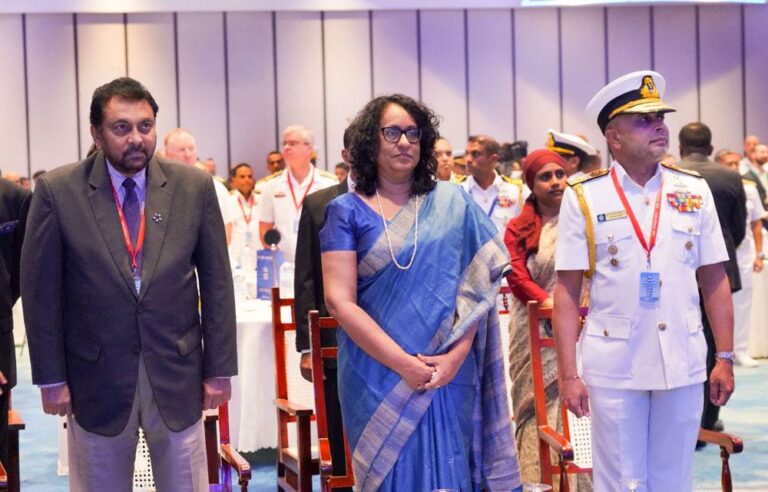
September 25, Colombo (LNW): Prime Minister Dr Harini Amarasuriya has emphasised the critical importance of international cooperation in addressing escalating security threats in the Indian Ocean, particularly the rise in maritime drug trafficking.
Her remarks were delivered during the opening of the 12th International Maritime Conference – Galle Dialogue 2025 – held at the Navy’s Wave and Lake Banquet Hall in Welisara.
Addressing a gathering of defence officials, diplomats, and maritime experts from across the globe, the Prime Minister underscored that the Indian Ocean is not only a key artery for international trade and energy flows, but also a crucial lifeline for the economic and social well-being of millions across the region. She noted, however, that with its strategic significance comes a host of mounting challenges.
“The Indian Ocean continues to witness increasing pressures—from shifting geopolitical dynamics and environmental degradation to illicit trafficking and unregulated migration. These are issues that no single country can confront in isolation,” she said.
Dr Amarasuriya pointed to Sri Lanka’s unique position at the heart of the Indian Ocean maritime corridor as both a responsibility and an opportunity. She stressed the need for Sri Lanka to play a proactive role in preserving the region’s peace, stability, and ecological balance.
She expressed particular concern over the proliferation of transnational organised crime at sea, especially the movement of narcotics, which she described as a growing menace to regional security and social stability.
The Prime Minister reaffirmed her government’s commitment to combating maritime drug smuggling, highlighting recent successes by the Sri Lanka Navy and Coast Guard in intercepting illicit shipments through coordinated patrols and targeted intelligence operations.
Reflecting the seriousness of the government’s intent, she announced that Rs. 92.5 billion has been allocated to the Navy under the 2025 Defence Budget — a 12 per cent increase from the previous year. The funding boost, she explained, will enhance surveillance capabilities, expand patrol coverage, and improve maritime domain awareness.
However, she was clear that national efforts alone will not suffice. “Sri Lanka cannot – and should not – attempt to shoulder these burdens on its own. Maritime threats are borderless, and so must be our responses,” she said, calling on regional and international partners to deepen collaboration.
Dr Amarasuriya advocated for robust coordination between naval forces, maritime industries, regulatory bodies, and civil society. She emphasised that upholding the rule of international maritime law and fostering trust between nations were essential to ensuring open and secure sea lanes.
“We must move beyond competition and into cooperation if we are to transform the Indian Ocean into a region defined not by conflict, but by peace, opportunity, and shared prosperity,” she concluded.
The Galle Dialogue, hosted annually by the Sri Lanka Navy, has evolved into a key forum for global maritime discourse, with the 2025 edition attracting record participation amidst growing concerns over maritime governance in an increasingly contested oceanic space.
Prime Minister Stresses Global Unity in Combatting Indian Ocean Threats at Galle Maritime Summit
Tangalle Drug Raid: Three Suspects Remanded
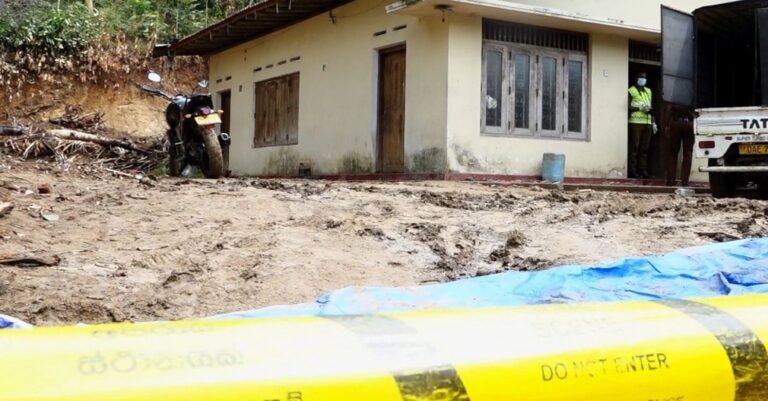
September 25, Colombo (LNW): Three individuals have been remanded in custody until September 29 as part of an ongoing probe into a suspected drug trafficking operation in the coastal town of Tangalle, where three men were found dead under mysterious circumstances and an enormous quantity of illicit drugs was seized.
The arrests stem from a major police operation launched after officers, acting on a confidential tip-off, discovered two lifeless bodies at a residence in the Seenimodara area on the morning of September 22.
A third man, found in critical condition at the same location, was rushed to Tangalle Hospital but later succumbed to his injuries.
Authorities quickly cordoned off the property and initiated a comprehensive investigation into the deaths and the surrounding events.
The three suspects currently in remand were brought before the Tangalle Magistrate late last night. Among those held is a relative of one of the deceased, along with two individuals linked to vehicles in which a vast quantity of illegal drugs was discovered.
One of the lorries reportedly belonged to Thusitha Wenukumara, who is also believed to have ties to the deceased, while another was registered to a different suspect now in custody.
According to police, six individuals in total have been detained in connection with the case. Investigators have traced over 700 kilograms of heroin and crystal methamphetamine—commonly known as “ice”—hidden in three separate lorries. The street value of the haul is estimated to be in the region of Rs. 10 billion, making it one of the largest drug busts in the region in recent memory.
Forensic examinations conducted by Judicial Medical Officer Dr Ruwan Nanayakkara at the Tangalle Base Hospital confirmed the presence of multiple narcotic substances in the systems of the deceased. The post-mortem results suggest that the men may have either overdosed or been deliberately administered high doses of synthetic drugs, though toxicological reports from the Government Analyst are still pending.
Initial inquiries indicate that the drug consignment was likely smuggled into the country via two boats that reportedly made landfall near Kudawella and Mawella on September 21. Authorities suspect that the narcotics were offloaded under cover of night and temporarily stored in the Tangalle property pending further distribution.
Fatal Road Crash Claims Three Lives in Early Morning Collision on Kurunegala–Anuradhapura Route
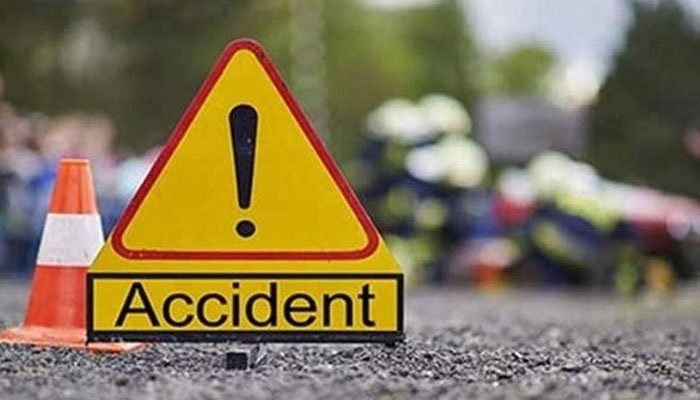
September 25, Colombo (LNW): A tragic road accident early this (25) morning has left three people dead and four others injured following a violent head-on collision between a lorry and a van near the Thalawa–Mirigama junction, along the Kurunegala–Anuradhapura main road.
According to initial reports from authorities, the crash occurred just before dawn when a lorry travelling from Anuradhapura towards Kurunegala collided directly with a van heading in the opposite direction. The force of the impact left both vehicles severely damaged, with wreckage strewn across the roadway.
Emergency services responded swiftly, and all seven individuals involved — including both drivers — were rushed to Thalawa and Anuradhapura hospitals for treatment. Despite the efforts of medical teams, three travelling in the van succumbed to their injuries shortly after being admitted.
The Thalawa Police Station have launched a full inquiry to determine the exact cause of the collision.
Update:
Latest developments indicate that another individual who was hospitalised after the accident has succumbed to his injuries.
Foreign Minister Engages in High-Level Diplomatic Talks on UNGA Sidelines to Bolster International Partnerships

September 25, Colombo (LNW): Foreign Minister Vijitha Herath engaged in a series of high-level diplomatic meetings with his counterparts from several nations on the margins of the 80th session of the United Nations General Assembly in New York, reaffirming Sri Lanka’s commitment to strengthening international partnerships and fostering deeper collaboration across diverse sectors.
During a cordial discussion with Maldivian Foreign Minister Abdulla Khaleel, both parties reviewed the enduring ties between their nations. The ministers reaffirmed the importance of continued engagement and explored new avenues for cooperation in areas such as maritime security, tourism, climate resilience, and regional development.
There was a shared understanding of the need to elevate the bilateral agenda to meet emerging regional challenges and shared aspirations.
In a separate meeting, Minister Herath held talks with Elina Valtonen, Minister of Foreign Affairs of Finland. The two sides expressed interest in enhancing cooperation in the spheres of education, green technology, and innovation.
They also exchanged views on the importance of transparent governance, human rights, and sustainable development — key pillars in Finland’s international outlook. Minister Herath expressed Sri Lanka’s readiness to collaborate with Nordic countries on climate-smart solutions and digital transformation.
Further adding to the day’s diplomatic engagements, Minister Herath conferred with Serap Güler, Minister of State at the Federal Foreign Office of Germany. Their conversation centred on deepening bilateral relations, with particular emphasis on trade, vocational training, and renewable energy.
The pair also exchanged views on pressing global matters, including geopolitical tensions, international peacebuilding efforts, and multilateral cooperation in addressing transnational threats.
The Minister also met with his Indian counterpart Dr. S. Jaishankar to reaffirm the strong friendship and close cooperation between Sri Lanka and India.
All meetings took place alongside the UN General Assembly in an atmosphere of mutual respect and cooperation. Minister Herath underscored Sri Lanka’s proactive role in international diplomacy and reaffirmed the country’s commitment to constructive engagement with global partners, particularly in the face of shared global challenges such as climate change, economic inequality, and digital transformation.
GovPay Digital Platform Sees Strong Uptake as Government Pushes for Nationwide Adoption

September 25, Colombo (LNW): Sri Lanka’s transition to a digital economy has taken a significant step forward with the growing adoption of GovPay, the government’s centralised digital payment platform.
Since its rollout, the system has processed transactions worth over Rs. 285 million, reflecting a marked shift towards digital financial services within the public sector.
Digital Economy Minister Eranga Weerarathne, speaking to journalists earlier this week, hailed the platform’s early success and underlined its growing reach across the country. According to the Minister, a total of 137 institutions — including a wide range of government departments and agencies — are now actively connected to GovPay.
Highlighting recent developments, the Minister noted that all state institutions across the Southern Province are now fully integrated with the system. Similar groundwork has been completed in the Northern Province, with ongoing efforts to extend the digital infrastructure into the Central Province.
“We’re laying the foundation for a more efficient, transparent and accessible public service,” the Minister remarked, adding that the uptake of GovPay is also helping to build public confidence in digital transactions.
In addition to government services, the GovPay platform has been introduced as a payment solution for traffic fines across the Western Province and along major expressways. The Ministry has confirmed that preparations are underway to implement the same facility in three more provinces, with plans to cover the entire country in a phased rollout.
Tender Chaos Leaves Number Plate Supply in Disarray

September 25, Colombo (LNW): A high-stakes government tender for the supply of vehicle number plates has sparked controversy after the two lowest bidders were excluded on technical grounds, clearing the way for the priciest offer to move forward—potentially costing the state over Rs. 500 million more than necessary.
This development unfolds amid mounting pressure on the roads, with more than 200,000 vehicles estimated to be operating without proper number plates, raising both logistical and security concerns, according to a report by Daily Mirror.
The tender process, riddled with shifting conditions and protracted delays, has now hit a standstill, according to the report.
Both rejected bidders—Access International and Metropolitan Technologies—have lodged formal appeals with the Procurement Appeal Board. Access, the lowest bidder, reportedly sourced its aluminium from the globally reputed Aditya Birla Group, which has supplied material for Sri Lankan plates since 2009.
The controversy hinges on a technical test conducted by the University of Moratuwa, which allegedly found that the sample plates failed to meet the required elasticity standards. However, questions have been raised over the consistency and fairness of the evaluation.
The Department of Motor Traffic defended the process, noting the same testing body was used in a previous tender. Still, critics argue that the rejection of the lowest bids undermines public trust in procurement procedures.
If awarded to the current highest bidder, South Asian Technologies, the state could be looking at a contract worth Rs. 2.59 billion—over half a billion rupees more than the lowest offer. With vehicle import restrictions now lifted and demand surging, the true financial impact could edge towards Rs. 1 billion.
All bidders have now been asked to extend their bid bonds, indicating further delays in resolving the impasse. Meanwhile, motorists remain caught in the middle of a stalled process with no clear end in sight.
Major Corruption Probe Launched into Suspected Irregularities at Colombo National Hospital
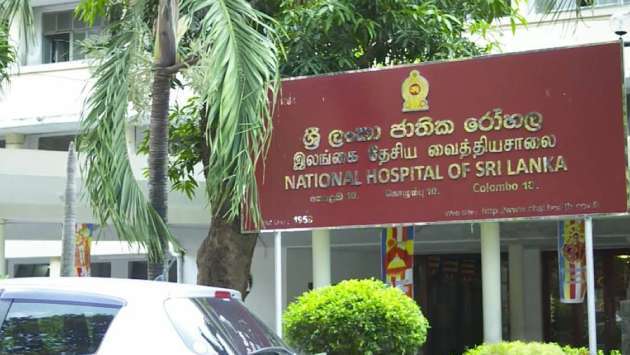
September 25, Colombo (LNW): Authorities have opened a formal investigation into allegations of large-scale procurement fraud at Colombo National Hospital, centring around the purchase and potential misuse of laboratory reagents valued at over Rs. 2.5 billion.
The inquiry, spearheaded by Sri Lanka’s Commission to Investigate Allegations of Bribery or Corruption, will focus on claims that substandard, expired, or nearly expired chemical reagents were acquired through questionable procurement practices.
Concerns have also been raised regarding the lack of proper standardisation protocols and the alleged monopolisation of contracts by a single private supplier.
According to a statement released by the Commission, investigators will examine how such purchases were authorised, whether due diligence was followed, and whether public funds were knowingly misused in the acquisition of faulty or soon-to-expire materials.
At the centre of the unfolding controversy are several high-ranking figures in the health sector. Among those implicated are the current Secretary to the Ministry of Health, a former Deputy Director General of Health Services attached to the National Hospital, senior consultants, and technical staff working in the hospital’s laboratories.
These individuals are suspected of facilitating or turning a blind eye to a procurement process that allegedly favoured a specific company without due competitive bidding or proper quality assessment.
The case has come to light following a formal complaint lodged by Dr Chamal Sanjeewa, a medical specialist who had previously raised alarm bells over persistent irregularities in hospital supply chains. His initial reports were submitted to both the Criminal Investigation Department (CID) and the Bribery Commission, citing systemic failures and lack of transparency in how critical medical supplies were being handled.
The CID, having already begun gathering preliminary testimony, is said to be working in parallel with the Bribery Commission as the investigation deepens. Dr Sanjeewa has publicly voiced frustration over institutional delays in addressing what he described as a serious risk to patient safety and public trust.
Sri Lanka and United Nations Explore Deeper Ties in Peacekeeping and Human Rights Cooperation
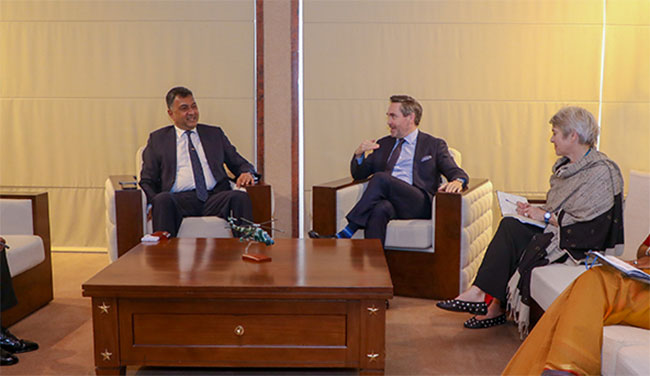
September 25, Colombo (LNW): In a significant move aimed at reinforcing international collaboration, a senior delegation from the United Nations held extensive discussions with Sri Lanka’s Ministry of Defence yesterday (24), focusing on expanding cooperation in global peacekeeping operations and reinforcing human rights initiatives.
The meeting took place at the Ministry of Defence headquarters in Colombo and was led by Marc-André Franche, the United Nations Resident Coordinator in Sri Lanka, accompanied by Karen Whiting, Deputy Director for Protection and Solutions at the UNHCR Regional Bureau for Asia and the Pacific.
They were welcomed by Air Vice Marshal Sampath Thuyacontha (Retired), Secretary to the Ministry of Defence.
Discussions centred on a shared vision to further develop Sri Lanka’s involvement in UN peacekeeping missions. Particular emphasis was placed on streamlining the deployment process through faster and more rigorous screening procedures, enhancing pre-deployment training, and ensuring that deployed personnel are equipped with tools and resources that meet United Nations standards.
Both parties stressed the importance of maintaining operational readiness and professionalism in line with evolving international demands.
The delegation also touched on matters of broader concern, including the role of human rights in peacekeeping contexts. Franche expressed the UN’s recognition of Sri Lanka’s continuing efforts to reinforce human rights frameworks and its engagement with global governance norms.
He welcomed the island nation’s willingness to strengthen its peacekeeping infrastructure while aligning its policies with the broader mandates of the United Nations.
Air Vice Marshal Thuyacontha reiterated Sri Lanka’s commitment to multilateral engagement, underlining the country’s dedication to serving in peacekeeping capacities with discipline, transparency, and a respect for global humanitarian standards. He noted that Sri Lankan forces have a long history of serving under the UN banner and conveyed the government’s aspiration to play a more active role in future missions.
President AKD Calls for Global Unity in Address to UN, Urges Immediate Action on Gaza and Global Crises
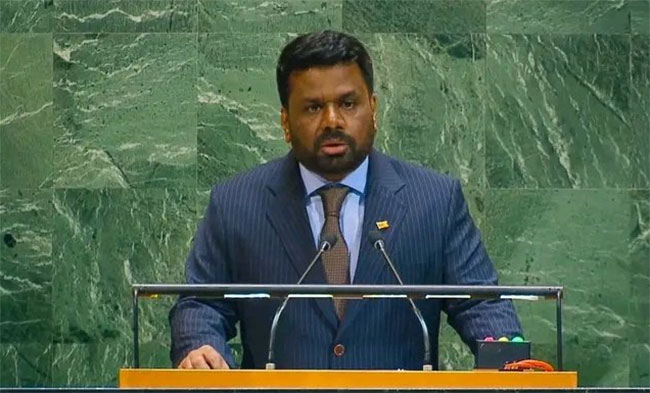
September 25, Colombo (LNW): In a powerful address to the 80th United Nations General Assembly in New York, Sri Lankan President Anura Kumara Dissanayake made an impassioned plea for international unity in the face of escalating global challenges.
Speaking during the morning session on the 25th (Sri Lanka time), the President called on global leaders to embrace a shared responsibility for creating a secure and humane world for generations yet to come.
President Dissanayake began by drawing urgent attention to the deepening humanitarian disaster in the Gaza Strip, condemning the ongoing violence and loss of innocent lives. He issued a stern appeal for an immediate cessation of hostilities, the unobstructed flow of humanitarian assistance, and the release of all hostages in accordance with resolutions brokered by the United Nations and other international actors. Stressing the severity of the crisis, he called on the international community to apply meaningful pressure to stop the bloodshed and to act with resolve and compassion.
Beyond the crisis in Gaza, the President addressed a broader spectrum of global issues, describing poverty as an enduring blight that continues to breed inequality and instability across nations. He urged world leaders to treat poverty not as an isolated domestic issue, but as a systemic global emergency that demands coordinated and decisive action. In his view, economic disparity and social marginalisation represent moral failures that fuel conflict, disillusionment and extremism.
Turning to the issue of narcotics, President Dissanayake warned of the far-reaching consequences of the global drug trade, describing it as a corrosive force that jeopardises public health, undermines democratic institutions and threatens societal cohesion. He pointed to Sri Lanka’s own multi-pronged approach to combating drug abuse—focusing on stricter border control, legal reform, and expanded rehabilitation infrastructure—as a potential model for international cooperation. He called for a collective global initiative that tackles drug trafficking at its roots and prioritises the rehabilitation of those afflicted by addiction.
On the topic of corruption, the President characterised it as a pernicious enemy of development, equity and democracy. He stressed that corruption entrenches poverty and thwarts progress, highlighting Sri Lanka’s commitment to building a transparent and ethical governance framework. Acknowledging the difficulty of this task, he nonetheless declared it an essential battle in the effort to create just and prosperous societies. He encouraged nations to embed a culture of integrity within public institutions and to foster civic trust through transparency and accountability.
In his closing remarks, President Dissanayake spoke of the Sri Lankan people’s determination to build a brighter future founded on dignity and justice. He reaffirmed the country’s commitment to a vision of national renewal under the banner of “A Thriving Nation – A Beautiful Life,” a concept rooted in ethical governance, digital innovation, environmental responsibility, and equitable access to education and healthcare. The President noted that these goals are being pursued with determination and unity, aiming to transform Sri Lanka into a model of sustainable, inclusive progress.
Full Speech:
Madam President, Mr. General Secretary, honoured invitees and distinguished delegates,
Allow me, Madame Annalena Baerbock, representing the beautiful country of Germany, to begin my speech by offering my warmest congratulations to you on being elected the President of the 80th session of this organisation, formed with the noble aim of bringing about a just and lasting peace among the nations of the world.
I would also like to use this opportunity to express my country’s appreciation to His Excellency Philemon Young for the exceptional leadership he provided during the 79th session. We are gathered here today to plan the future path of this organisation, which has worked tirelessly for eight decades to bring about a world of peace.
It is my honour to address this August Assembly for the first time as the President of Sri Lanka.
As representatives of nations, we all bear the responsibility to work towards fulfilling the aspirations of our people. The decisions we make now will impact people across the world and play a decisive role in the future of this planet, our common home.
Distinguished delegates,
Our decisions will have a very important impact on our future. Poverty, a tragedy as old as human civilisation, has accompanied humankind on its journey through time. For centuries, countries across the world have faced this painful and relentless struggle. Poverty and problems stemming from it are also casting an oppressive shadow on our future. This assembly must pay special attention to eradicate extreme poverty. I believe our conscience dictates us to do so.
Distinguished delegates,
For centuries, many countries in the world are struggling against poverty. Poverty is a terrible enemy with many faces. Even as we gather here in the countries we represent, including in my own, children are suffering from hunger. A child’s right to education is an internationally accepted fundamental right.
This right is enshrined in the constitutions of most of our nations. Yet, across the world, poverty has denied this right to hundreds of thousands of children. In a world which boasts of its technological advances, how can there be children without access to education? Education is the foundation of every great nation.
It is the most vital factor deciding one’s future. We firmly believe that investment in education is an investment in global progress. Many developing countries are constrained in their struggle against poverty by indebtedness.
Low-income countries allocate twice as much on debt servicing than on education or healthcare.
Our people and our countries are caught in debt traps. The 2030 Agenda for Sustainable Development pledges to leave no one behind and to reach the last first. The Agenda acknowledges the most critical challenge before the world is the challenge to end poverty.
I would also like to recall the decisions taken at the Global Summit for Social Development in Copenhagen in 1995.
However, wars and political upheavals and the COVID pandemic have obstructed the fulfilment of these hopeful agendas. I propose to you that the time has come to accept that inequality and poverty are a global catastrophe and we should act accordingly.
Madam President, esteemed guests,
Drugs and organised crimes linked to drugs have become a serious concern to this world. This has been acknowledged in the World Drug Report 2025 published by the United Nations Office on Drugs and Crime.
The drug problem is a complex issue affecting millions of people globally. The market for drugs and the related criminal organisations are creating issues globally. Drug cartels are turning entire states into their hunting grounds. They pose a major threat to global health and politics and eventually global well-being as well.
While Sri Lanka is taking effective steps to address this challenge, I respectfully request all of you to join in the effort to implement the global agenda on drugs and crime.
I bring to your notice the need to implement the law strictly against these drug traffickers and prevent drug traffickers from taking refuge in our countries and also to set up rehabilitation centres for rehabilitation purposes.
Madam President, honoured guests,
We regard corruption as an epidemic causing widespread harm to broad swathes of society. We believe corruption to be an obstruction for development, a decisive threat to democracy and global well-being and also a cause for poverty. Let me remind you that fighting corruption is dangerous, but not fighting corruption is even more dangerous.
The Universal Declaration of Human Rights of 1948 was a remarkable victory for the people of the world. Civilisational achievements were never accomplished overnight. They were all results of unwavering efforts and sacrifices. And the struggle against corruption is also a difficult one. We must take the necessary steps here. The first step may be difficult, but if the courageous first step we take is correct, a thousand steps will follow. That is what I believe.
Madam President, delegates, be brave. All the rest will follow.
Sri Javaharlal Nehru has once stated so. I represent a small island of nearly 22 million people. Sri Lanka’s population is about 0.30 of the global population. It is true that we are small in size and in numbers, yet we have begun the struggle against corruption for the future generations of our country and the world. I propose that an integral part of the culture of all UN member countries should be to fight against corruption.
Madam President,
I feel confident that all of you will join me in condemning war. There is no nation in the world that desires a war. The result of a war is a tragedy wherever it happens. We all know that. Even now, many countries of the world are experiencing the pain of that tragedy. As a country that lived through a three-decade war, we know well the futility of war. No one who sees the pain and the suffering of parents, spouses and children of the victims of war would never dream of another war.
We have witnessed these painful sights with our own eyes. Even as suffering caused by conflict has reached unprecedented levels, the international community has become reduced to bystanders.
Opportunistic power politics has turned the lives of children and innocent civilians into a game. No one has the right to inflict pain and suffering on another to enhance one’s own power. The duty of a ruler is not to destroy lives but to protect them.
We are deeply distressed by the ongoing catastrophe in the Gaza Strip. Gaza has been turned into an open prison full of pain and suffering, echoing with the cries of children and the innocent civilians. The United Nations Organisation and all related parties must work towards an immediate ceasefire, enable adequate humanitarian aid to these areas and to ensure the release of hostages of all parties. We recognise the Palestinian people’s inalienable right to their own state.
We also believe that legal, security and humanitarian concerns of Israel and Palestinian people need to be acknowledged.
Sri Lanka reiterates the importance of early implementation of the UN General Assembly resolutions regarding a two-state solution on the basis of the 1967 borders. The time has come for the international community to stop being a mere spectator and to move decisively to end the suffering of millions.
Religious extremism and racism have been major causes of wars and conflicts, bringing suffering to millions of people.
Although a century has passed since the abolition of slavery, the poison of racism still lingers in many places. Extremist and racist ideas are as deadly as epidemics. We must ask ourselves how these extremist and racist ideas survive like sparks under the ashes in a world that has witnessed so many advances on so many fronts.
I believe that we must awaken our conscience to oppose racism and religious extremism in protection of human rights and freedoms. We must be brave enough to speak up for peace. We must not be afraid to speak up against war. We must be afraid to speak up for war. In a world where millions of children die of hunger, we spend millions on weapons. When tens of millions die of inadequate health facilities, hundreds of millions are spent on futile wars. When hundreds of thousands of children are denied the right to an education, millions are spent on invading another’s land.
If every inch of this world can be turned into peaceful communities, what a wonderful world would it be. As a country that suffered the horrors of war for decades, where families still weep in remembrance of their loved ones, we have a duty to make that heartfelt proposal.
I would like to remind you that at the last election, the people of Sri Lanka decided in favour of a centuries-old dream. A legislature has been established according to that decision, reflecting the ethnic and religious diversity of the country.
A parliament has been established with women and other marginalised communities in representation. We believe that the duty of legislatures is to develop the country and the people, not to develop themselves. And we have established that idea.
Madam President, distinguished guests,
Our people have chosen light over darkness. They have given their approval to realise the vision of a thriving nation, a beautiful life. To fulfil this historic mandate, we have focused on establishing non-corrupt administration, poverty eradication, and digitalisation. And we have also placed great emphasis on education health as well. We are moving towards these goals step by step. Digital democracy is one of our aims.
Ensuring that every person and every country can enjoy the opportunities of the digital age is a global challenge. If we succeed in our task, we will be able to open doors to technology, accelerate development, and to strengthen governance. If we fail, technology will turn into one more force, worsening inequality, insecurity, and injustice.
The digital gap between states that can and cannot establish access to digital tools is clear. An even greater gap is being created in relation to artificial intelligence. Sri Lanka and many other developing nations in Asia and also many other nations are facing challenges in using AI as a development tool due to the inadequate infrastructure facilities.
Madam President, distinguished delegates,
I ask the international community to work together and we have to develop a dignified society, a dignified world. I present this August assembly a proposal to set up a neutral sovereign Artificial Intelligence zone. We must build a new and better world, a world which represents the dignity of humankind. You as members of this assembly must be the architects of that better world.
As President Harry Truman stated on the occasion of founding the United Nations, in your hands rests our future. We must not act in fear or under compulsion, but with hope for a better and more secure world.
Today we must commit ourselves not to lead the world to another disaster, but to make it a better place for the next generation.
I have dreams and expectations for my country. Similarly, you have dreams and expectations for your countries. My dream is to ensure that my people are rich and they have happiness. I believe that you too have such dreams. We must try to achieve these dreams not in competition with each other, but by working arm in arm, peace, dignity, and equality on a healthy planet. That is the motto of the United Nations organisation. Therefore, let us become the true healers of the world.
Heavy falls about 100 mm expected: Strong winds likely to occur (Sep 25)
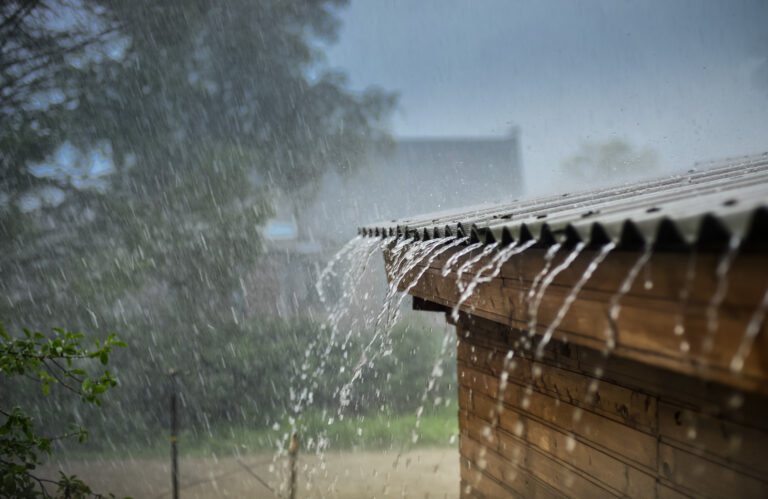
September 25, Colombo (LNW): Showers will occur at times in Western, Sabaragamuwa and North-western provinces and in Galle, Matara, Kandy and Nuwara-Eliya districts, with heavy falls of about 100 mm expected at some places, the Department of Meteorology said in its daily weather forecast today (25).
A few showers may occur in North-central province.
Showers or thundershowers are likely at a few places in Uva province and in Ampara and Batticaloa districts after 2.00 p.m.
Fairly strong winds of about (40-50) kmph can be expected at times over Western slopes of the central hills and in Central, Northern, North-central and North-western provinces and in Trincomalee and Hambantota districts.
The general public is kindly requested to take adequate precautions to minimise damages caused by lightning and temporary localised strong winds during thundershowers.
Marine Weather:
Condition of Rain:
Showers will occur at several places in the sea areas off the coast extending from Puttalam to Matara via Colombo and Galle.
Winds:
Winds will be south-westerly and wind speed will be (30-40) kmph.
Wind speed can increase up to (55-65) kmph at times in the sea areas off the coast extending from Galle to Pottuvil via Matara and Hambantota and from Puttalam to Kankasanthurai via Mannar.
Wind speed can increase up to (50-55) kmph at times in the sea areas off the coast extending from Puttalam to Galle via Colombo and from Kankasanthurai to Trincomalee.
State of Sea:
The sea areas off the coast extending from Galle to Pottuvil via Matara and Hambantota and from Puttalam to Kankasanthurai via Mannar will be rough to very rough at times.
The sea areas off the coast extending from Puttalam to Galle via Colombo and from Kankasanthurai to Trincomalee may be rough at times.
Naval and fishing communities are requested to be vigilant in this regard.