By: Staff Writer
September 16, Colombo (LNW): Sri Lanka’s financial system appears steadier in the short run, but cracks are visible in the medium-term horizon, according to the Central Bank of Sri Lanka’s (CBSL) latest Systemic Risk Survey (SRS) for the second half of 2025. Conducted between late June and mid-July with input from 146 financial institutions, the survey found improved confidence over the next 12 months, but a dip in confidence for the three-year horizon, underscoring the fragile nature of the country’s recovery.
Respondents including banks, insurers, stockbrokers, and microfinance institutions—assessed the probability of a high-impact negative event as lower in the short term yet higher in the medium term. The shift reflects a domestic economy showing signs of revival while still tied to an unsettled global environment.
Global Headwinds
The CBSL highlighted “global macroeconomic risks” as a key concern, citing geopolitical tensions, high borrowing costs, and slowing global trade. Fitch Ratings recently projected global GDP growth to slow to 2.4% in 2025, from 2.9% in 2024. With US tariffs raising average effective rates to 16% and European growth stagnating, the external outlook for small, trade-dependent nations like Sri Lanka remains challenging.
China’s fiscal easing and currency depreciation support its exports, but weak domestic demand there limits the rebound in Asian trade. For Sri Lanka—whose recovery depends heavily on exports and worker remittances these dynamics could suppress growth.
Domestic Lending and Growth Dynamics
Domestically, credit conditions show a mixed picture. Private sector borrowings grew by Rs. 201.5 billion in July 2025, lifting total outstanding credit to over Rs. 9.5 trillion by mid-year. While this supports investment and consumption, the July increase was smaller than June’s Rs. 221.5 billion, suggesting momentum is uneven.
The CBSL’s Willingness to Lend Index rose in Q2 2025, extending a nine-quarter upward trend. Yet the index subsequently fell from 59.6 in Q2 to 41.4 in Q3, signalling banks’ growing caution despite favourable liquidity.
Signs of Stabilisation and Fragility
International lenders such as the IMF and World Bank expect Sri Lanka’s GDP growth to hover around 2–3% in 2025, a modest rebound following contraction in 2022 and fragile recovery in 2023-24. Inflation, which exceeded 70% at its 2022 peak, is projected to average below 8% in 2025, aided by tight monetary policy and stabilising food and fuel prices. Foreign reserves, replenished partly through IMF disbursements and debt restructuring progress, stand close to US$ 5–6 billion, offering short-term cover for imports and debt servicing.
Yet risks persist. The country remains heavily dependent on remittance inflows and tourism, both vulnerable to global shocks. Public debt ratios, while under renegotiation, still exceed 110% of GDP, leaving little room for fiscal manoeuvre.
The Road Ahead
The SRS paints a nuanced picture: short-term confidence in financial stability has improved, but doubts linger about resilience beyond 2025. As one Colombo-based economist observed, “We’ve moved from the edge of crisis to a fragile plateau. The danger is mistaking short-term calm for lasting stability.”
For Sri Lanka, the path to true economic stability lies in navigating external turbulence, sustaining reform momentum, and building buffers against future shocks. The CBSL’s warning is clear: while the immediate horizon may appear calmer, the medium-term risks cannot be ignored.
Sri Lanka’s Economic Balancing Act: Short-Term Calm, Long-Term Doubt

Aviation Student Acquitted After Nine-Month Detention Under PTA Over Social Media Post
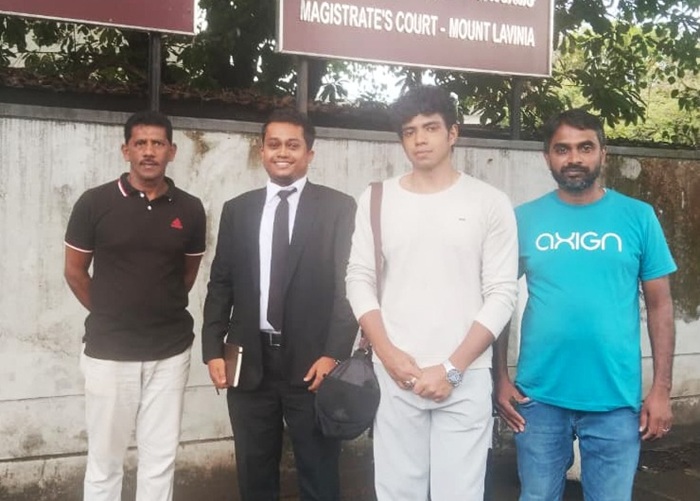
September 16, Colombo (LNW): Mohamed Suhail, a 21-year-old student of aviation from Mawanella, has been acquitted by the Mount Lavinia Magistrate’s Court after spending nine months in detention under the Prevention of Terrorism Act (PTA), in connection with a social media post expressing opposition to Israel.
Suhail was originally taken into custody in October 2024 near the Israeli consular premises in Dehiwala. At the time, he was briefly held for failing to carry his national identity card, a matter which was resolved in court. However, he was re-arrested shortly thereafter under the PTA, reportedly due to an Instagram post that depicted the Israeli flag being stepped on — a post authorities interpreted as potentially inciting hatred or unrest.
Following extensive legal proceedings and prolonged detention, Suhail was granted bail on July 15, 2025. The case resumed today (16), where Attorney-at-Law Ilham Hassanali, appearing on behalf of the accused through the Lawyers for Social Justice organisation, petitioned the court for a full acquittal.
Counsel argued that police investigations had failed to uncover any evidence of criminal activity linked to the social media content in question, and therefore, it would be unjust to allow the proceedings to continue.
“It is both legally and morally indefensible to keep this young man entangled in a legal process when the police themselves have reported no crime has been committed,” the defence submitted during the hearing.
The Magistrate accepted the submission and ordered that Suhail be discharged and acquitted of all charges under the PTA, effectively bringing the controversial case to a close at the lower court level.
Meanwhile, in a move to seek redress for what is being described by rights advocates as a misuse of anti-terrorism laws, the Lawyers for Social Justice have filed a Fundamental Rights petition before the Supreme Court. Notices have already been issued in relation to the case.
Ex-Minister Rambukwella and Others Indicted Over Alleged Misuse of State Funds in Immunoglobulin Scandal
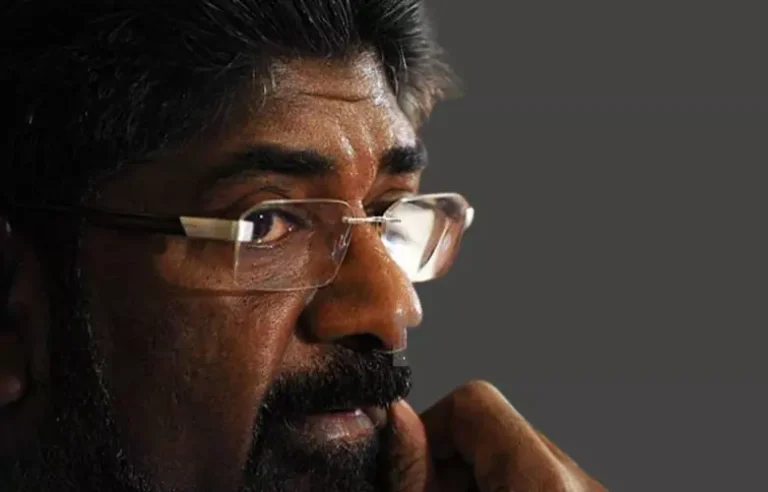
September 16, Colombo (LNW): Former Cabinet Minister Keheliya Rambukwella, along with several other individuals, was formally indicted today (16) before a special three-judge bench at the Colombo High Court over allegations of misappropriating public funds in connection with the procurement of substandard human immunoglobulin vials during the previous administration.
The charges stem from a high-profile investigation into irregularities in the purchase of vital medical supplies, which reportedly involved the use of state funds to acquire immunoglobulin injections that failed to meet established pharmaceutical standards.
Following the reading of the indictments, Deputy Solicitor General Lakmini Girihagama, appearing on behalf of the Attorney General’s Department, informed the bench of the state’s strong opposition to granting bail for the accused.
The prosecution maintains that the gravity of the offences, the potential for interference with witnesses, and the broader implications for public trust in government procurement processes necessitate remand custody at this stage.
Defence counsel representing the accused began presenting arguments in favour of bail, urging the court to consider their clients’ cooperation with the investigation thus far and citing the presumption of innocence until proven guilty.
Admissions Open for Korean Language Exam as Gateway to Jobs in South Korea
September 16, Colombo (LNW): The Sri Lanka Bureau of Foreign Employment (SLBFE) has officially opened the admissions process for the 2025 Korean Language Examination, a vital requirement for Sri Lankans aspiring to work in South Korea under its Employment Permit System (EPS).
This annual examination serves as the first step for those seeking employment in South Korea’s manufacturing and fisheries industries—two sectors that continue to welcome foreign workers through a structured and legal framework.
The EPS initiative, managed in partnership with the South Korean government, aims to streamline the process of recruiting skilled foreign labour while safeguarding the rights and welfare of overseas workers.
Aspiring candidates who meet the eligibility criteria—namely, being between the ages of 18 and 39—can obtain their examination admissions online by visiting the SLBFE’s official website at http://www.slbfe.lk. The deadline for downloading admissions is set for midnight on September 17.
The Korean Language Examination is designed to assess applicants’ language proficiency, a critical skill for effective workplace communication and integration into South Korea’s professional environment. Those who pass the test will move on to the next stage of the recruitment process, which includes further evaluations and placement within the appropriate industry.
The SLBFE encourages all eligible individuals to act promptly and ensure that they are registered in time. Officials have also reminded applicants to prepare thoroughly, as demand for positions in South Korea remains high due to competitive wages, favourable working conditions, and the opportunity to gain international experience.
World Bank Reaffirms Support for Sri Lanka’s Recovery and Growth Agenda

September 16, Colombo (LNW): The World Bank’s Vice President for South Asia, Johannes Zutt, has concluded a two-day official visit to Sri Lanka, marking his first since assuming the role. The visit underscored the World Bank Group’s commitment to strengthening its partnership with Sri Lanka at a time of economic transition and reform.
During his stay, Mr Zutt held high-level discussions with President Anura Kumara Dissanayake, Central Bank Governor Dr Nandalal Weerasinghe, Treasury Secretary Dr Harshana Suriyapperuma, and other key government officials. The meetings focused on Sri Lanka’s ongoing economic recovery efforts and the importance of accelerating structural reforms aimed at unlocking investment and expanding job opportunities.
The visit follows up on the commitment made during World Bank Group President Ajay Banga’s visit earlier this year, during which the institution pledged over US$1 billion in development financing for Sri Lanka over the next three years.
That partnership has already borne fruit with two major initiatives launched: a US$150 million renewable energy programme aimed at generating 1 GW of clean energy through private sector participation, and a US$100 million agriculture project focused on improving resilience and productivity in the sector.
Building on this momentum, further programmes are in the pipeline, including initiatives in tourism development, digital transformation, regional economic upliftment—especially in the Northern and Eastern provinces—and improvements in port infrastructure and logistics.
Mr Zutt praised the Sri Lankan government for the progress made so far in stabilising the economy after years of crisis, while noting that the next phase must centre on building sustainable growth through employment generation and private sector participation.
A key point of discussion was the country’s labour market challenges. With close to one million young people expected to enter the workforce over the next ten years—but projections showing only 300,000 new jobs likely to be created—Zutt emphasised the urgent need to stimulate private sector growth as a means to close this gap.
He reiterated the World Bank’s readiness to support the government’s reform agenda, with a particular emphasis on policies that encourage foreign direct investment, improve competitiveness, and deliver tangible development outcomes for citizens.
Govt Moves to Explore Voting Rights for Sri Lankans Abroad

September 16, Colombo (LNW): In a move aimed at strengthening democratic participation, the Cabinet of Ministers has given the green light to initiate a formal review of existing electoral laws with a view to granting voting rights to Sri Lankan citizens residing outside the country.
Currently, under Sri Lanka’s election framework, only those physically present within the country and registered on the electoral roll are eligible to vote. This limitation excludes a significant number of Sri Lankans living overseas—many of whom contribute to the nation economically and socially—from exercising their franchise in national elections.
The government acknowledges that this legal gap contrasts with practices in several other Asian democracies, such as India, Bangladesh, and the Philippines, which have established mechanisms allowing their diaspora communities to vote from abroad.
Recognising the growing demand for more inclusive electoral policies, Sri Lankan authorities now consider it both necessary and timely to revisit these outdated legal provisions.
The Constitution of Sri Lanka places sovereignty firmly in the hands of the people, exercised most directly through the electoral process. However, the absence of enabling laws has meant that this right has not extended beyond national borders, despite the increasing number of Sri Lankans living and working overseas.
To address this, the Cabinet has authorised the Minister of Public Administration, Provincial Councils and Local Government to assemble a multi-agency committee. This body will include representatives from the Election Commission, the Ministry of Foreign Affairs, the Ministry of Labour and Foreign Employment, the Ministry of Tourism, and other relevant institutions. Their mandate will be to conduct a comprehensive study on potential legislative reforms, as well as to propose new legal frameworks that could enable absentee or remote voting for overseas citizens.
Mithila Wegapitiya new Vice Chairman of LAUGFS Holdings

Mithila Wegapitiya has been appointed the Vice Chairman of LAUGFS Holdings Ltd., following the resignation of Thilak de Silva, who was also the Co-Founder, last week.
He currently serves as the CEO of LAUGFS Power PLC, one of Sri Lanka’s largest public listed renewable energy companies, as well as operating as a Group Executive Director for LAUGFS Holdings, one of Sri Lanka’s most diversified conglomerates hosting 26 companies ranging from Power and Energy, Oil and Gas, Manufacturing, Retail, and Pharmaceuticals.
This appointment is fresh off the acquisition of 50% of shares of LAUGFS Holdings by Vallibel Three Ltd., of renowned business leader Dhammika Perera.
Son of other Co-Founder and Chairman W.H.K. Wegapitiya, Mithila Wegapitiya is a Liquefied Petroleum Gas (LPG) and renewable energy leader, technology entrepreneur, and an innovation enthusiast stemming from a management and finance, global marketing, and information technology background.
Wegapitiya has over 15 years of experience working in large global organisations, such as Warner Bros Interactive Entertainment (London), Ve Interactive (London), Deutsche Bank (Asia), as well as Virtusa Corporation for Sri Lanka, Asia and the Pacific (APAC), and the Americas. He is also a thought leader and advocate in APAC for up-and-coming technologies, such as intelligent automation and Robotic Process Automation.
In 2016, Wegapitiya co-founded POTENZA, a global startup focusing on technology consulting and digital transformation services in the areas of SAP Consulting, Data and Analytics, and Intelligent Automation and Artificial Intelligence (AI). With a workforce of over 100+ consultants across the globe across 13 different countries headquartered in Singapore and Australia, POTENZA is a startup working with some of the biggest brands in the world, including that of Bombardier, Bacardi, AIA Insurance, Chip Mong, and many more.
Wegapitiya is an undergraduate of Aston University in the UK and holds an MBA from the prestigious Postgraduate Institute of Management (PIM) In Sri Lanka. He also served in the Executive Committees of the Sri Lanka Association for Software and Services Companies (SLASSCOM) Intelligent Automation Centre of Excellence and Federation of Information Technology Industry Sri Lanka (FITIS). He is also one of the youngest Board Members to serve Sri Lanka Computer Emergency Readiness Team (CERT|CC), which is the national body for and first line of defence for Sri Lankan cybersecurity and cyber threats.
Wegapitiya’s new role as Vice Chairman will focus on utilising the deep synergies between LAUGFS’s newfound series of sister companies, where the organisation would be transformed through financial restructuring of the Group, post-acquisition strategy formulation, organisational restructuring, new business development, and internationalisation.
Source: DailyFT
Government Dismisses Fears of Rice Shortage, Vows Action Against Market Manipulation

September 16, Colombo (LNW): Deputy Minister of Agriculture and Livestock Namal Karunaratne has firmly rejected concerns circulating about a potential rice shortage in the country, assuring the public that available stocks remain more than sufficient to meet national demand.
Addressing a press conference held at the Department of Agriculture in Gannoruwa, the Deputy Minister highlighted that both the previous harvest and the ongoing collection from the current season have provided ample reserves, including a steady supply of the much-discussed Keeri Samba variety.
“As of now, we have 47,500 metric tonnes of rice in storage, with a substantial portion made up of Keeri Samba,” he stated. “In addition, over 12 million kilogrammes of paddy are being stored in government-run warehouses, ready to be milled and distributed if necessary.”
The Deputy Minister went on to warn that certain unscrupulous groups are attempting to engineer an artificial shortage of premium rice varieties in order to drive prices up. “This is not a supply issue—it’s a deliberate attempt to mislead consumers and exploit the market,” he said, adding that the government has already taken steps to monitor and respond to such actions.
According to Mr Karunaratne, the Consumer Affairs Authority is currently investigating reports of hoarding and price manipulation, particularly in relation to Keeri Samba. Legal measures will be pursued against those found to be creating unnecessary panic or engaging in unethical trading practices.
The Deputy Minister urged the public not to fall prey to misinformation, reassuring citizens that the Ministry is closely monitoring the situation and will act swiftly to protect both consumers and the stability of the local food supply chain.
Sri Lanka Clinch Second Victory in Asia Cup with Confident Win Over Hong Kong

September 16, Colombo (LNW): Sri Lanka recorded their second triumph in the ongoing 2025 Men’s T20 Asia Cup, overcoming Hong Kong by four wickets in a spirited encounter under the lights in Dubai.
After winning the toss, Sri Lankan captain Charith Asalanka opted to field first—a decision that paid dividends as the bowlers kept Hong Kong’s batsmen largely in check throughout the innings.
Despite a promising start, Hong Kong’s top order struggled to build lasting partnerships. Their first wicket fell with 41 on the board, and though the innings maintained a steady pace, the Sri Lankan bowling attack prevented any major acceleration.
Zeeshan Ali chipped in with 23 runs, and Anshy Rath added a resilient 48. The highlight for Hong Kong, however, came from Nizakat Khan, whose composed 52 off 38 deliveries anchored the innings and gave them a fighting total.
Sri Lanka’s bowlers remained disciplined, with Dushmantha Chameera picking up two crucial wickets, while Wanindu Hasaranga and Dasun Shanaka each took one. Hong Kong concluded their innings at 149 for 4, setting a target that was competitive but within reach on a good batting surface.
In reply, Sri Lanka’s run chase began with Pathum Nissanka and Kusal Mendis at the crease. Mendis departed early after scoring 11, but Nissanka soon took control, demonstrating excellent shot selection and composure under pressure. His 68 off 44 balls, punctuated by six boundaries and two sixes, proved to be the backbone of the innings.
Kamil Mishara added a handy 19, while the middle order chipped away at the target with steady contributions. Although Hong Kong managed to pick up wickets at intervals and briefly stalled the chase, the Lankans held their nerve. They reached the target in 18.5 overs, closing the match at 150 for 6.
Customs Surpasses Revenue Targets with Record Collections
September 16, Colombo (LNW): Sri Lanka Customs has reported an exceptional surge in revenue generation, with earnings in recent months far exceeding projected targets and marking one of the department’s most successful periods in recent history.
According to official figures, Customs revenue for August reached an impressive Rs. 244 billion—comfortably surpassing the monthly target of Rs. 190 billion.
This strong performance follows similarly high earnings in previous months, with Rs. 231 billion collected in July and Rs. 200 billion in June.
Cumulatively, Customs has brought in Rs. 1,471 billion during the first eight months of 2025, reflecting a substantial increase when compared to the same period in the previous year.
Officials attribute the rise to enhanced monitoring mechanisms, improved enforcement at ports, and the streamlining of key processes through digitalisation and risk-based inspections.