September 21, Colombo (LNW): Sri Lanka’s law enforcement authorities have reported significant progress in their ongoing campaign against drug trafficking, organised crime, and unlawful possession of firearms, with large-scale operations conducted across the island throughout the year.
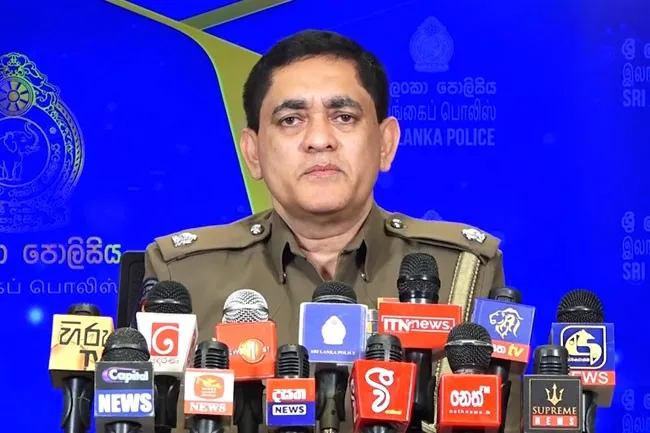
According to the latest update released by Police Media Spokesperson Assistant Superintendent F.U. Wootler, anti-narcotics and anti-crime efforts have resulted in the confiscation of vast quantities of illicit substances.
Among the narcotics seized to date are approximately 955 kilogrammes of heroin, 1,422 kilogrammes of crystal methamphetamine (commonly known as ICE), 471 kilogrammes of hashish, 29 kilogrammes of cocaine, and over 13,770 kilogrammes of cannabis. In addition, authorities have intercepted some 3.5 million narcotic tablets, believed to be part of large-scale smuggling operations.
The intensified operations, launched earlier this year, have also disrupted numerous criminal networks. Police have recovered a total of 1,721 illegal firearms, including 61 T-56 assault rifles and 62 handguns. Since January, 328 individuals linked to gun-related violence have been taken into custody, among them hired shooters, motorcycle getaway drivers, and other associates involved in planning or executing attacks.
ASP Wootler noted that the momentum of these efforts has been sustained through daily targeted operations, which have been in place since January 12. In that period, over 5.1 million people have been stopped and searched, leading to the arrest of more than 104,000 suspects. Among those, 4,630 have been identified as being directly involved in ongoing criminal activity.
Traffic enforcement has also seen a surge in activity, with nearly 47,000 individuals arrested for driving under the influence. In parallel, more than 3,400 drivers have faced legal action for reckless driving offences, a sign of the growing emphasis on public safety on the roads.
Police Record Major Breakthroughs in Nationwide Crackdown on Crime and Narcotics in 2025
New Licensing and Safety Measures for Passenger Transport Drivers to Be Enforced by Year-End
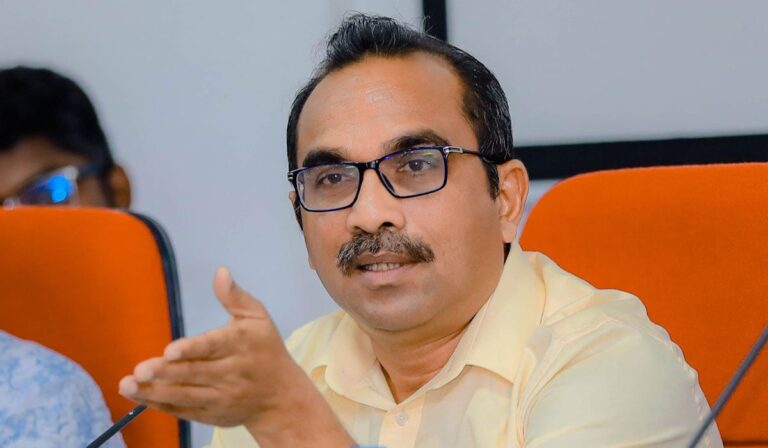
September 21, Colombo (LNW): All individuals operating passenger transport vehicles will be required to hold a valid Public Transport (PT) Licence by December 31, according to Minister of Transport, Highways, Ports and Civil Aviation Bimal Rathnayake.
The announcement was made during a meeting held in Ampara yesterday (20), where the Minister outlined a series of reforms aimed at improving safety and accountability in the public transport sector.
The PT Licence, which will serve as a formal authorisation for drivers responsible for carrying passengers, is being introduced to ensure that only qualified and disciplined individuals are entrusted with the lives of commuters.
Minister Rathnayake confirmed that the necessary administrative groundwork for the new licensing system is already underway, with full enforcement expected before the year’s end.
Highlighting broader concerns about road safety, the Minister also addressed the mandatory implementation of seat belts in all passenger vehicles. While acknowledging that some older buses were manufactured without built-in restraints, he revealed that retrofitting efforts are currently being carried out to bring these vehicles up to standard.
Expressing serious concerns over irresponsible behaviour by some drivers, Rathnayake pointed out instances where individuals had attempted to deceive authorities by fastening school bag straps in place of proper seat belts.
“We cannot allow the safety of fifty passengers to be compromised by the recklessness of a few,” he stated. “This is precisely why we are determined to ensure that only those who demonstrate a clear sense of responsibility and professionalism are permitted to operate public transport vehicles.”
The Minister reiterated that failure to comply with the new licensing requirement by December 31 deadline would result in strict penalties, and urged all drivers currently engaged in passenger services to initiate the application process without delay.
Medicine Shortages Attributed to Procurement Delays, Not Budgetary Constraints
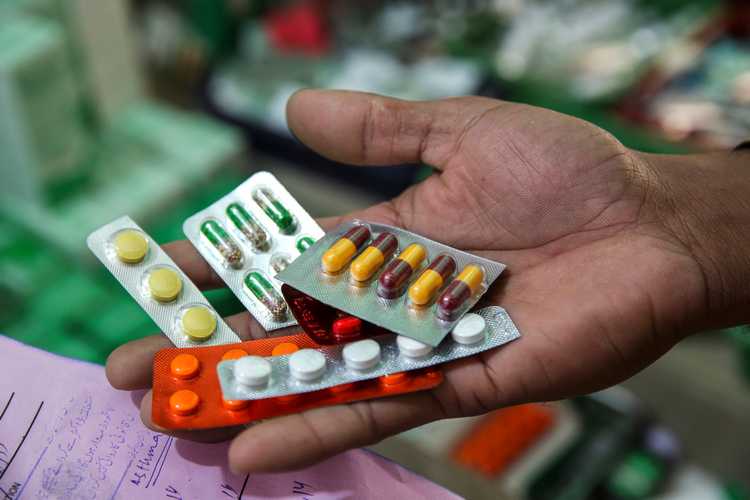
September 21, Colombo (LNW): Health Minister Dr Nalinda Jayatissa has clarified that the ongoing shortage of essential medicines across the country is not the result of a lack of funding, but rather stems from delays and complications in the procurement process.
Speaking at a public function in Ampara, the Minister explained that administrative setbacks within the medical procurement system have led to disruptions in the timely import of pharmaceuticals. He assured that remedial steps have already been taken, with fresh procurement procedures now underway. Deliveries of the much-needed medical supplies are expected to begin arriving from November onwards.
Dr Jayatissa also pointed out that the issue is not confined to public hospitals alone. A number of essential medications have also become scarce in private pharmacies, raising broader concerns about availability in the open market.
Addressing the underlying reasons for the gaps in private sector supply, the Minister emphasised the government’s commitment to maintaining affordability in medicine pricing.
“We do not permit arbitrary pricing during the drug registration process. Instead, we have established a regulated price band that reflects the prevailing market trends within the South Asian region,” he stated.
According to him, certain pharmaceutical companies have opted not to supply medicines after refusing to comply with this pricing framework.
To mitigate the impact of the shortages, the State Pharmaceuticals Corporation (SPC) has been tasked with overseeing the importation process. The Minister reported that between 80 and 85 per cent of the procurement work has already been finalised, suggesting that a resolution may be in sight.
Dr Jayatissa also drew attention to the significant fiscal strain caused by stalled development projects. He noted that 17 major initiatives, which were originally scheduled for completion as far back as 2018, remain unfinished.
“These abandoned projects have already drained Rs. 59 billion from the treasury, and completing them will require an additional Rs. 29 billion,” he said, indicating that the cumulative effect of mismanaged development continues to weigh heavily on public finances.
Indian Naval Frigate Docks in Colombo for Maintenance and Crew Respite
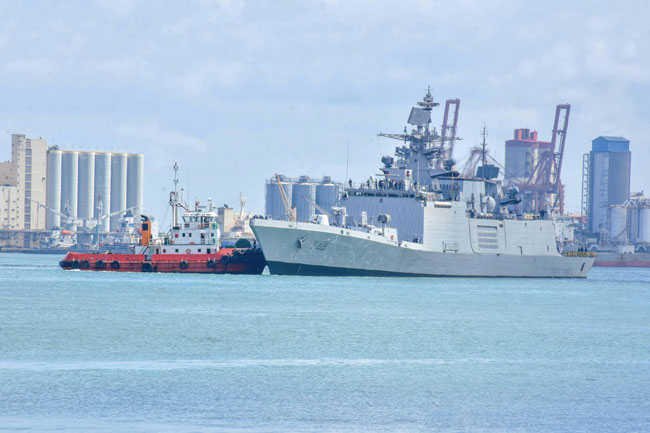
September 21, Colombo (LNW): The Indian Navy’s frontline warship has made port in Sri Lanka, with the guided-missile frigate INS Satpura arriving in Colombo yesterday (20) for logistical support and servicing. The vessel’s arrival marks yet another chapter in the enduring maritime cooperation between India and Sri Lanka.
The Sri Lanka Navy greeted the Indian warship with traditional naval honours, reflecting the mutual respect and longstanding camaraderie between the two maritime forces. Naval officials and ceremonial contingents welcomed the vessel as it berthed at the Colombo harbour.
INS Satpura is a formidable stealth frigate, extending over 142 metres in length, and operates with a complement of 403 naval personnel. Built to undertake a variety of missions including anti-air, anti-surface and anti-submarine warfare, the vessel stands as a symbol of India’s maritime capability and strategic reach in the Indian Ocean Region.
During its stay in Sri Lanka, the crew is expected to participate in a series of onshore activities, including cultural excursions and informal engagements.
Prevailing showery, windy conditions expected to continue (Sep 21)

September 21, Colombo (LNW): Prevailing showery and windy condition over the south western parts of the island is expected to continue, the Department of Meteorologys said in its daily weather forecast today (21).
Showers will occur at times in Western and Sabaragamuwa provinces and in Galle, Matara, Kandy and Nuwara-Eliya districts. Fairly heavy falls of about 75 mm are likely at some places.
Several spells of showers may occur in Northern and North-western provinces.
Showers or thundershowers are likely at a few places in Uva province and in Ampara and Batticaloa districts after 2.00 p.m.
Fairly strong winds of about (30-40) kmph can be expected at times over Western slopes of the central hills and in Central, North-central and North-western provinces and in Trincomalee and Hambantota districts.
The general public is kindly requested to take adequate precautions to minimise damages caused by lightning and temporary localised strong winds during thundershowers.
Marine Weather:
Condition of Rain:
Showers are likely at several places in the sea areas off the coast extending from Kankasanthurai to Matara via Puttalam, Colombo and Galle.
Winds:
Winds will be south-westerly and wind speed will be (30-40) kmph. Wind speed can increase up to (50-55) kmph at times in the sea areas off the coast extending from Chilaw to Trincomalee via Mannar and Kankasanthurai and from Matara to Pottuvil via Hambantota.
State of Sea:
The sea areas off the coast extending from Chilaw to Trincomalee via Mannar and Kankasanthurai and from Matara to Pottuvil via Hambantota may be rough at times.
“Veerabhivandana” – Prof. E. A. Weerasinghe Felicitation Ceremony
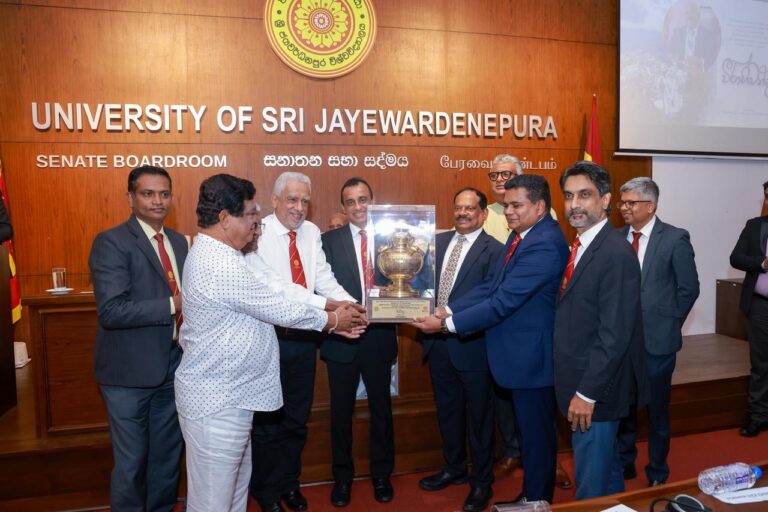
Honouring a Visionary Leader, a Transformative Force, and a True Inspiration for Generations to Come.
The Founding Vice Chancellor of NSBM Green Prof. E. A. Weerasinghe was proudly honoured during the “Veerabhivandana” felicitation ceremony organized by the Alumni Association of the University of Sri Jayewardenepura. This special event celebrated Prof. Weerasinghe, an esteemed alumnus of the University, for his recent recognition as the Most Visionary Leader of the Year 2025 at the Sri Lankan Entrepreneur Awards.
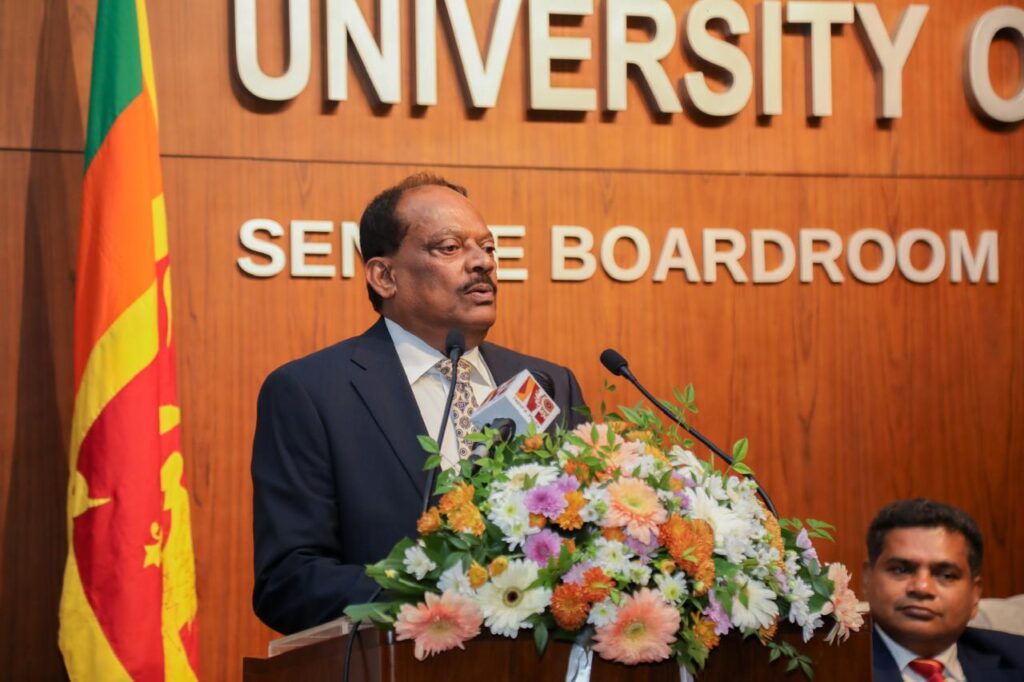
The ceremony was held under the respectable patronage and presence of Chancellor of the University of Sri Jayewardenepura Ven. Dr. Ittapana Dhammalankara Anu Nayake Maha Thero, the Chief Prelate (Mahanayake) of Kotte Sri Kalayani Samagri Dharma Maha Sangha Sabha of SiyamMaha Nikaya.
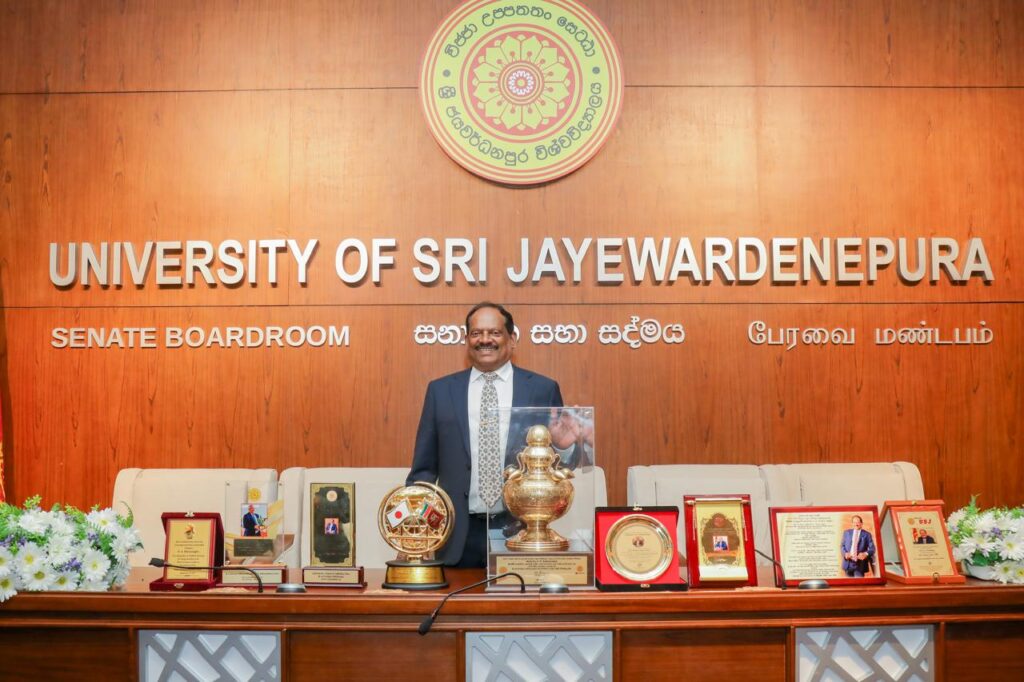
Also in attendance were senior officials and staff from the University of Sri Jayewardenepura (USJP), led by Vice Chancellor Senior Professor Pathmalal M. Manage, Senior Professor Sampath Amaratunga, Former Vice Chancellor of USJP, Emeritus Professor Sunil Ariyaratne, the Chancellor of the University of the Visual and Performing Arts as well as members of the alumni association under the leadership of Mr. Gamini Silva, President of the Alumni Association.
Representatives from NSBM Green University, including Deputy Vice-Chancellor Professor Chaminda Ratnayake, deans, heads, family members of Prof. Weerasinghe, and other notable dignitaries were also present to celebrate his remarkable achievements.
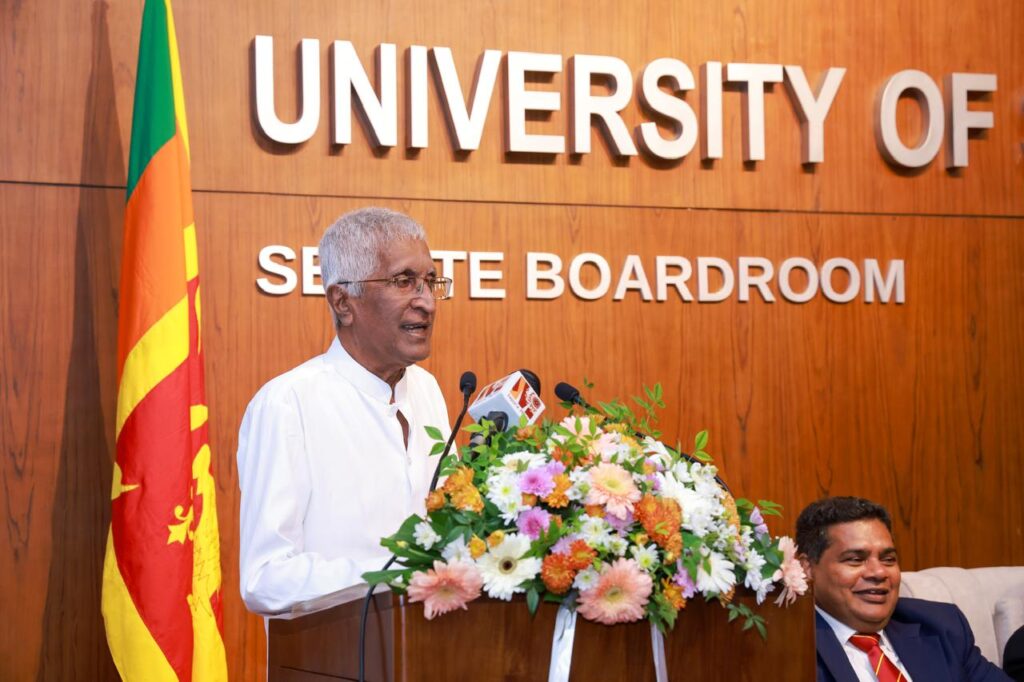
For NSBM Green University, Prof. Weerasinghe’s pioneering vision has been the driving force behind the institution’s growth, innovation, and international collaborations. His exceptional leadership, and transformative contribution inspire the NSBM community to uphold excellence, embrace innovation, and make a meaningful impact on society.
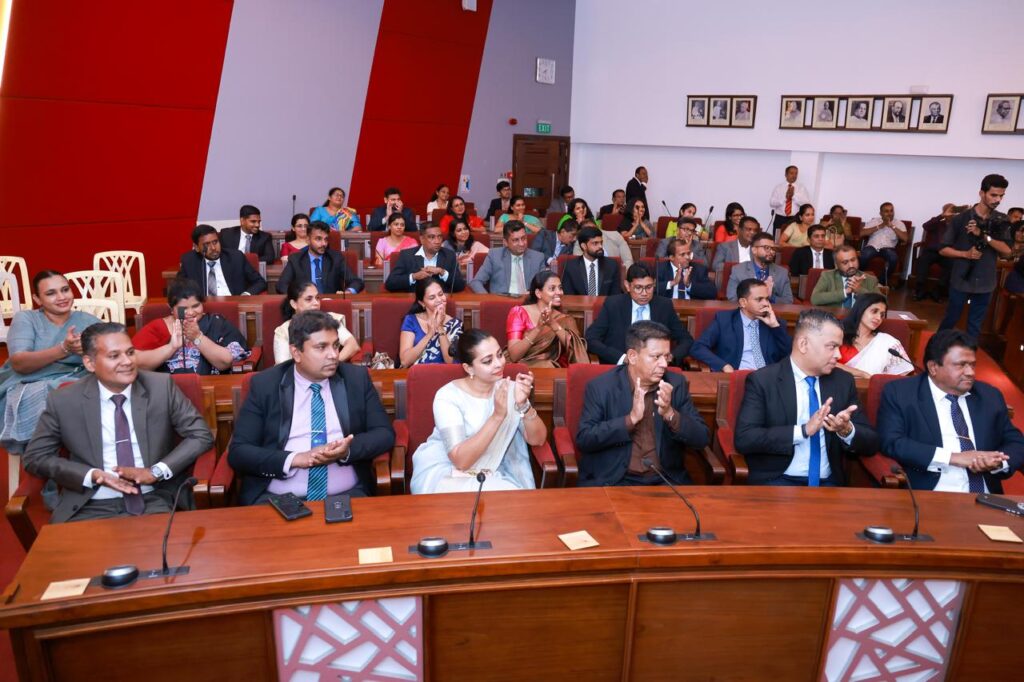
A Father’s Death Exposes Cricket’s Darker Side
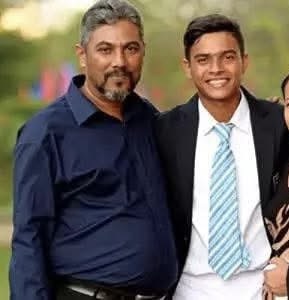
A Retired Cricketer
The death of Suranga Wellalage on September 18, 2025, has sent shockwaves through Sri Lankan cricket that extend far beyond the boundaries of the sport itself. The 53-year-old former wicketkeeper-batsman, who captained Prince of Wales’ College Moratuwa in 1993, suffered a fatal cardiac arrest while watching his son Dunith endure one of cricket’s most brutal experiences – conceding 32 runs in the final over against Afghanistan.
What followed Dunith’s expensive bowling figures was a familiar yet disturbing pattern in modern cricket: social media erupted in a torrent of abuse directed at both the young spinner and captain Charith Asalanka’s decision-making. Within hours, a promising cricketer had become the target of thousands of angry voices, his every mistake dissected and amplified across digital platforms.
For Suranga Wellalage, watching from afar, the vitriol may have been unbearable. Here was his son – the boy he had coached and mentored from childhood – being torn apart by strangers who would never face the pressure of bowling to international batsmen with a match on the line.
The Social Media Scourge
The incident has reignited urgent questions about social media’s role in modern sport. Cricket, once a gentleman’s game played before appreciative crowds, has morphed into a gladiatorial spectacle where every ball is scrutinized and every failure becomes ammunition for online mobs.
Young cricketers today don’t just battle opposing teams; they face an invisible army of keyboard warriors ready to pounce on any sign of weakness. The psychological toll is immense, but it extends beyond the players themselves to their families, who watch helplessly as their loved ones are subjected to public humiliation.
The transformation has been swift and merciless. Social media platforms that promised to bring fans closer to their heroes have instead created echo chambers of negativity where nuanced understanding of cricket’s complexities is lost in the rush to assign blame.
Performance at All Costs
Suranga’s death also highlights cricket’s relentless demand for perfection. In an era where every statistic is recorded and every failure replayed endlessly, the pressure on players has reached unprecedented levels. The margin for error has all but disappeared, replaced by an expectation that professional cricketers should be immune to the failures that define the sport’s very nature.
This “performance at all costs” mentality has created a generation of cricketers who carry enormous psychological burdens. They know that one poor over, one dropped catch, one mistimed shot could trigger an avalanche of criticism that follows them for months or even years.
For families watching from the sidelines, this pressure is equally intense. Parents who once celebrated their children’s sporting achievements now fear the potential backlash of poor performances. The joy of cricket is being steadily eroded by the weight of expectation and the certainty of harsh judgment.
The Health Crisis Among Former Cricketers
Perhaps most concerning is the emerging pattern of cardiac-related deaths among former Sri Lankan cricketers. Suranga’s passing follows several similar incidents, suggesting a deeper health crisis that demands immediate attention.
Former athletes often struggle with the transition from highly active professional lives to more sedentary retirement. The cardiovascular systems that were once finely tuned for peak performance can suffer when regular intense exercise stops. Add to this the stress of watching children face public criticism, and the health implications become genuinely alarming.
Cricket boards and medical professionals must urgently address this trend. Regular health screenings for former players should be mandatory, not optional. The sport owes this duty of care to those who gave their best years to entertaining fans and building cricket’s legacy.
A Son’s Grief, A Nation’s Reflection
As young Dunith Wellalage flew from Abu Dhabi to pay his final respects to the man who was his first coach and biggest supporter, Sri Lanka began an uncomfortable period of self-reflection. The same public that had vilified him just days earlier suddenly rallied to his support, perhaps recognizing their role in a family’s tragedy.
This outpouring of belated sympathy, while welcome, cannot undo the damage already done. It serves instead as a stark reminder of social media’s power to destroy and the human cost of our collective hunger for sporting drama.
The Way Forward
Cricket in Sri Lanka and globally stands at a crucial juncture. The sport can continue down its current path, where players are treated as commodities and families bear the psychological cost of public expectations. Or it can reclaim its soul, remembering that behind every statistic is a human being deserving of respect and understanding.
Social media platforms must take greater responsibility for the content they host and promote. Cricket boards need to provide better mental health support for current and former players. Most importantly, fans must remember that their words have power and the power to inspire or destroy, to build up or tear down.
Suranga Wellalage’s death should serve as a wake-up call. In our pursuit of sporting excellence and entertainment, we must not lose sight of our humanity. The price of victory should never be measured in lives lost or families destroyed.
As Dunith returns to cricket, carrying both his father’s legacy and his nation’s hopes, perhaps we can learn to support our players with the same passion we once reserved for criticism. It may be the most important lesson cricket can teach us all.
The author extends condolences to the Wellalage family and calls for cricket communities worldwide to reflect on their role in supporting, not destroying, the athletes who represent their hopes and dreams.
Sri Lanka’s Child-Friendly Courts: A Turning Point in Justice and Protection
By: Ovindi Vishmika
September 20, Colombo (LNW):
A New Era for Child Witnesses
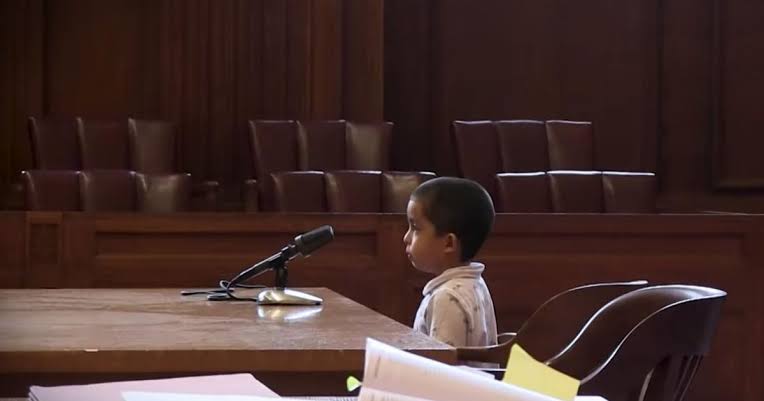
Sri Lanka has taken a landmark step in reimagining its justice system with the introduction of child-friendly court facilities, beginning at the Kandy High Court. The initiative allows children to testify from secure, age-appropriate rooms equipped with modern audio-visual technology, ensuring that victims are not forced into direct confrontation with alleged perpetrators.
For decades, children in Sri Lanka faced the intimidating and often traumatizing experience of entering traditional courtrooms. The new child witness rooms are designed to protect their dignity while preserving the integrity of legal proceedings. Justice Minister Harshana Nanayakkara, inaugurating the facility, called it a “turning point” for the country’s judicial system—one where justice now also means protection.
Beyond Technology: A Comprehensive Model Service
These witness rooms are part of a larger reform package: a comprehensive model service for child protection and justice. Jointly launched by the Ministry of Justice and National Integration and the Ministry of Women and Child Affairs, with support from the European Union and UNICEF under the JURE project, the service introduces six flagship reforms.
These reforms include an enhanced 1929 Child Helpline, integrated case management, stronger support services, streamlined justice processes, improved practices for child testimony, and the establishment of child-friendly courts across the country. Together, they create a holistic framework to ensure that children receive not just justice but also sustained care and protection.
Legal Backing and Structural Change
Importantly, the initiative is anchored in law. The facilities operationalize recent amendments to the Code of Criminal Procedure, passed in June 2025, which formally recognize the validity of child testimony recorded outside the traditional courtroom. This legal recognition ensures that the innovation is enforceable, not symbolic.
By embedding these practices into legislation, the reforms represent more than pilot projects—they are structural changes to the justice system. They also lay the groundwork for specialized high courts for children, a step Minister Nanayakkara emphasized as crucial for the future of Sri Lanka’s judiciary.
Reducing Trauma, Strengthening Justice
The positive implications of these reforms are profound. Shielding children from direct confrontation with perpetrators reduces the risk of secondary victimization, a well-documented weakness of adversarial justice systems. Children are able to testify in a safe, supportive environment, which makes their accounts more reliable and less influenced by fear.
For prosecutors, this translates into stronger evidence and a greater likelihood of securing convictions in cases of violence against children. In turn, the credibility of the justice system is enhanced, as victims and their families gain confidence that courts can deliver justice without compounding harm.
Meeting Global Commitments
The reforms also reflect Sri Lanka’s international commitments. At the 2024 Bogotá Conference on Ending Violence Against Children, the government pledged to strengthen legal frameworks and protection mechanisms. The establishment of child witness rooms, coupled with moves to outlaw corporal punishment and advance child-centered legislation, is a direct fulfillment of those promises.
By aligning its justice system with the UN Convention on the Rights of the Child and other international standards, Sri Lanka demonstrates its determination to protect its youngest citizens in line with global best practices. This alignment not only strengthens children’s rights domestically but also enhances the country’s reputation as a leader in child protection within the region.
International Partnerships and Digital Transformation
The role of international partners is central to this success. The European Union, through its Support to Justice Sector (JURE) project, and UNICEF have provided the technical and financial support to make these reforms possible. EU Ambassador Carmen Moreno underscored the urgency of addressing violence against children, while UNICEF Representative Emma Brigham emphasized the importance of holistic, child-centered systems that integrate justice with welfare.
Equally important is the integration of digital innovations. From video testimony systems to digital case management, technology is being harnessed not just to modernize court infrastructure but to humanize it. This aligns with the government’s broader digital transformation agenda, making justice more efficient, accessible, and compassionate.
Building a Nationwide Network
The launch in Kandy is only the beginning. The Ministry of Justice has announced plans to expand the initiative to 15 more high courts in the first phase, followed by 35 additional judicial institutions nationwide.
Once fully implemented, Sri Lanka will have a national network of child-friendly courts.
This expansion redefines the role of the justice system in the lives of children. Instead of being an intimidating institution, courts will become spaces of protection, dignity, and recovery. It is a cultural shift as much as a legal one, marking a new relationship between the state and its youngest citizens.
A Cultural and Legal Watershed
Sri Lanka’s introduction of child witness rooms and the broader child protection model represents a watershed in its justice system. It is more than a courtroom reform—it is a systemic shift that integrates legal, social, and digital innovations into a child-centered approach.
The positive legal implications are clear: operationalizing child rights, reducing secondary trauma, strengthening prosecutions, and laying the groundwork for specialized courts. Just as importantly, the initiative fulfills international obligations and demonstrates the current government’s commitment to embedding child protection at the heart of governance.
By creating a justice system where children’s voices can be heard without fear, Sri Lanka is setting a new standard for the region. If scaled effectively, these reforms will not only deliver justice but also rebuild trust in state institutions ensuring that the country’s youngest citizens grow up in a society that values their dignity, safety, and rights above all else.
IMF Presses Sri Lanka on Power Tariffs and Renewable Shift
Sri Lanka’s power sector has once again come under scrutiny, this time in the presence of the International Monetary Fund (IMF), lawmakers, and key regulatory officials. At a closed-door session in Parliament earlier this week, IMF technical experts and legislators debated the Ceylon Electricity Board’s (CEB) electricity tariff methodology and the broader energy reform agenda. The review is part of commitments tied to the IMF’s Extended Fund Facility (EFF), with a critical deadline looming in November 2025.
While the meeting was framed as a “technical review,” several Sri Lankan participants pushed back, insisting tariff reforms must strike a balance—ensuring cost recovery and efficiency while keeping electricity affordable for households and industries already reeling from economic strain.
The IMF team, led by energy specialist Delphine Prady, engaged with members of the Committee on Public Finance (CoPF), Committee on Public Enterprises (COPE), the Sectoral Oversight Committee on Infrastructure, and senior officials from the Finance and Energy ministries, the CEB, and the Public Utilities Commission of Sri Lanka (PUCSL).
At the heart of the discussion was the clash between fiscal discipline and social protection. IMF officials highlighted that cost recovery is essential—without it, the sector accumulates losses, drives inefficiency, and fails to attract investment or credit lines needed for modernisation. Cost-reflective pricing, they argued, ensures consumers pay the real cost of their demand, eliminating unfair cross-subsidies that have long distorted Sri Lanka’s electricity market.
But MPs warned that steep tariff hikes, if not carefully designed, could push vulnerable families and small businesses into crisis. “We cannot afford to treat this as a purely mathematical exercise,” one government member said, adding that tariff policy must be tied to wider social and developmental goals.
The country’s commitment to 70% renewable energy by 2030 dominated much of the debate. Experts underscored that reaching this target will require billions in investment, new transmission infrastructure, and incentives for private sector participation. Expanding solar, wind, and hydro, while experimenting with storage systems and green hydrogen, was identified as the only path to insulating Sri Lanka from the volatility of fossil fuel markets.
Thermal generation, once the backbone of the grid, was described by participants as “super expensive” and dangerously exposed to global price shocks. Renewables, by contrast, are becoming more competitive but demand upfront financing that cash-strapped institutions like the CEB struggle to mobilise.
Another thorny issue was data integrity and governance. Lawmakers flagged gaps in Power Purchase Agreements (PPAs), incomplete cost breakdowns, and weak information systems. Without credible data and regulatory independence, experts cautioned, any new tariff methodology risks being undermined by corruption and mismanagement.
There was consensus that tariff reform must go beyond technical fixes. A successful framework must safeguard vulnerable households through targeted subsidies, protect workers affected by restructuring, and ensure efficiency gains translate into lower costs for end-users.
As the November 2025 IMF deadline approaches, Sri Lanka faces a difficult balancing act: building a financially viable power sector, accelerating its renewable transition, and protecting consumers from the shocks of reform. The stakes, as one participant noted, are nothing less than the country’s economic and energy future.
Sri Lanka’s 2026 Budget Faces Test of Tax Reform and Debt Control

Sri Lanka is preparing to present its 2026 Budget under the theme of “Achieving a Productive Economy and Fostering the Engagement of Everyone in Economic Development.” Yet behind the hopeful message lies the hard truth of rising debt repayments, IMF programme conditions, and a fragile fiscal base that will force the government toward higher taxation and new levies.
The 2026 Appropriation Bill, approved by Cabinet and gazetted on September 20, is due for its first reading in Parliament on September 26, with the Budget Speech scheduled for early November. According to Treasury Secretary Dr. Harshana Suriyapperuma, ministries and provincial councils have been told to submit spending plans within strict fiscal limits, prioritising arrears settlement, the revival of stalled infrastructure, public transport upgrades, and digitalisation.
But financing these goals requires a sharper revenue drive. The IMF has repeatedly urged Colombo to broaden its tax base and reduce reliance on indirect taxes. “Sri Lanka cannot achieve debt sustainability without decisive tax reform,” a senior IMF mission official told local media recently, stressing the need for more progressive taxation.
For 2026, the government is drafting a restructured capital gains tax aimed at high-net-worth individuals, while reviving proposals to tax imputed rental income on owner-occupied and vacant properties. Certain tax exemptions for export-oriented services may also be trimmed. Value Added Tax (VAT) will expand to cover digital services supplied by foreign firms from April 2026, while higher corporate taxes are likely for liquor, tobacco, and gaming.
Economist Dr. Nishan de Mel of Verité Research noted that the government has little room for maneuver: “To raise the tax-to-GDP ratio to 14–15 percent by 2026, as agreed with the IMF, revenues must grow to Rs. 5,500–6,000 billion. Without widening the net to include wealth and property taxes, this will fall disproportionately on households through indirect levies.”
The Appropriation Bill sets total expenditure for 2026 at Rs. 4.54 trillion, up from Rs. 4.22 trillion this year, though the borrowing ceiling has been cut from Rs. 4 trillion to Rs. 3.8 trillion. Health and education receive significant boosts: the Ministry of Health’s recurrent budget rises to Rs. 449 billion from Rs. 412 billion, while education allocations climb to Rs. 231 billion from Rs. 206 billion. Defence spending remains steady, with Rs. 60 billion earmarked for capital projects, while transport and highways see capital allocations fall to Rs. 390 billion from Rs. 421 billion in 2025.
Despite the effort to tilt the balance toward direct taxes, analysts caution that indirect taxation will remain dominant. “When more than 80 percent of state revenue comes from indirect sources, it is the poor and middle classes who carry the heaviest burden,” warned senior tax expert and former Inland Revenue official Kalyani Dahanayake. “Unless wealth taxes and property-based levies are effectively implemented, inequality will deepen.”
The risks are clear. Expanding consumption taxes could stoke inflation, while politically sensitive measures like taxing property and capital gains may face stiff resistance from vested interests. Yet without them, the fiscal deficit could widen again, undermining recovery efforts.
Ultimately, Budget 2026 will be more than a spending plan it will be a test of Sri Lanka’s resolve to restructure its tax system, stabilize its economy, and meet IMF targets. As one Colombo-based investment analyst put it, “This Budget will show whether the government can push through reforms that shift the tax burden onto those best able to pay or whether it will buckle under political pressure and return to old patterns of borrowing and austerity.”