Home Blog Page 388

Health Authorities Warn of Rising Chikungunya Cases in Colombo and Kotte

0

Health authorities have raised concerns over a resurgence of the Chikungunya virus in Colombo and Kotte, following several years of low transmission. Medical experts emphasize that the only effective way to curb the spread of the virus is by eliminating mosquito breeding sites.

The Chikungunya virus is transmitted to humans through the bite of an infected mosquito and has been reported across Africa, the Americas, Europe, Asia, and various islands in the Pacific and Indian Oceans. Officials warn that infected travelers could further contribute to the spread of the disease to new regions.

Authorities note that Sri Lanka is experiencing a re-emergence of the virus, particularly in urban zones. With school holidays ongoing, children are spending more time outdoors, and recent rainfall has increased mosquito density, raising the risk of transmission. The public is urged to remain vigilant, destroy mosquito breeding grounds, and maintain clean surroundings to help prevent further outbreaks.

According to the World Health Organization (WHO), symptoms of Chikungunya typically appear four to eight daysafter a mosquito bite but can range from two to 12 days. The most common symptoms include:

  • Sudden onset of fever
  • Severe joint pain, particularly in the hands and feet
  • Muscle pain
  • Headache
  • Nausea
  • Fatigue
  • Skin rash

Most patients recover fully, but joint pain can persist for weeks or even months in some cases. While Chikungunya is rarely fatal, it can be more severe in older adults, newborns, and individuals with underlying health conditions.

Health officials urge the public to take proactive measures to reduce the risk of infection, particularly in high-risk urban areas, and to seek medical attention if symptoms appear.Health authorities have raised concerns over a resurgence of the Chikungunya virus in Colombo and Kotte, following several years of low transmission. Medical experts emphasize that the only effective way to curb the spread of the virus is by eliminating mosquito breeding sites.

The Chikungunya virus is transmitted to humans through the bite of an infected mosquito and has been reported across Africa, the Americas, Europe, Asia, and various islands in the Pacific and Indian Oceans. Officials warn that infected travelers could further contribute to the spread of the disease to new regions.

Authorities note that Sri Lanka is experiencing a re-emergence of the virus, particularly in urban zones. With school holidays ongoing, children are spending more time outdoors, and recent rainfall has increased mosquito density, raising the risk of transmission. The public is urged to remain vigilant, destroy mosquito breeding grounds, and maintain clean surroundings to help prevent further outbreaks.

According to the World Health Organization (WHO), symptoms of Chikungunya typically appear four to eight daysafter a mosquito bite but can range from two to 12 days. The most common symptoms include:

  • Sudden onset of fever
  • Severe joint pain, particularly in the hands and feet
  • Muscle pain
  • Headache
  • Nausea
  • Fatigue
  • Skin rash

Most patients recover fully, but joint pain can persist for weeks or even months in some cases. While Chikungunya is rarely fatal, it can be more severe in older adults, newborns, and individuals with underlying health conditions.

Health officials urge the public to take proactive measures to reduce the risk of infection, particularly in high-risk urban areas, and to seek medical attention if symptoms appear.

Sri Lanka’s Apparel Industry Demonstrates Resilience Amid Market Shifts

0

Sri Lanka’s apparel industry exhibited resilience and adaptability in February 2025, recording a 2.3% export growth generating $407.93 million compared to the same period in 2024. According to provisional data from the Joint Apparel Association Forum (JAAF), the industry experienced mixed performance across key markets, with declines in traditional regions but notable gains in emerging destinations.

Exports to the United States, a primary market for Sri Lankan apparel, saw a 7.43% drop, amounting to $153.11 million, while the UK market recorded a 14.58% decline, with total exports at $54.85 million. These downturns reflect economic uncertainties and changing consumer demand in Western markets.

However, the industry saw strong growth in other regions. Apparel exports to the European Union (excluding the UK)rose by 7.54% to $120.69 million, while shipments to other international markets surged by 39.85%, reaching $79.28 million. This diversification highlights Sri Lanka’s strategic expansion into emerging markets to mitigate losses in traditional strongholds.

For the first two months of 2025, total apparel exports increased by 12%, reaching $845 million compared to the same period in 2024. Despite a February decline, exports to the US market grew by 8.12% in January and February, totaling $322.86 million. The EU (excluding the UK) also showed a 17% increase, reaching $250.18 million. Meanwhile, the UK market remained weak, recording a 0.21% decline, with exports totaling $116.42 million.

The most significant growth was seen in non-traditional markets, with exports rising 23.16% to $155.54 million in the first two months of 2025. This shift underscores the industry’s focus on diversification and expansion beyond Western markets.

Despite challenges in key regions, Sri Lanka’s apparel industry remains robust, with total export earnings reaching $4.7 billion in 2024, marking a 5% year-on-year growth. Industry leaders are increasingly exploring alternative markets and adopting innovative strategies to ensure sustained expansion and competitiveness in an evolving global landscape.

Sri Lanka’s Economic Confidence on the Rise amid Investment Uncertainty

0

The March edition of LMD, a leading business magazine, reports a generally optimistic outlook for Sri Lanka’s economy, despite an underlying sense of fragility in the investment environment.

According to LMD, corporate confidence in the economy remains strong, supported by a continued increase in business sentiment, as reflected in the latest LMD-PEPPERCUBE Business Confidence Index (BCI). However, insights from PepperCube Consultants reveal that while corporate perceptions have improved, concerns persist regarding long-term economic growth and strategic planning.

During the first week of February, LMD recorded that 64% of survey respondents believed the economy would improve over the next 12 months, marking a six-percentage-point increase from January. The magazine also highlighted a stark contrast in sentiment compared to the period leading up to the presidential election in September, when only 8% expressed optimism about the economy’s future.

A notable surge in confidence among sales professionals was also observed in February, with 90% of polled executives expecting an increase in sales volumes over the coming year—a sharp 20% jump from January’s results. Additionally, expectations for higher sales in the next three months soared by 28 percentage points to reach 79%, up from 51% in January.

The latest edition of LMD, published by Media Services, is now available, with its digital version circulated via WhatsApp and the publisher’s social media channels. The cover story of this edition explores the prospects for Sri Lanka’s crucial export sector, featuring insights from industry leaders on the opportunities and challenges in meeting the nation’s export goals.

Current Business Climate in Sri Lanka

Despite rising business confidence, Sri Lanka’s economic recovery remains delicate. The country continues to navigate high inflation, currency fluctuations, and ongoing debt restructuring efforts.

While investor sentiment is improving, concerns persist regarding policy stability and the ability to attract foreign direct investment. Sectors such as tourism and exports show signs of gradual recovery, but businesses are calling for stronger reforms and infrastructure improvements to sustain long-term growth. T

he coming months will be crucial in determining whether the recent optimism translates into tangible economic progress.

Sri Lanka’s Automotive Industry: Current Landscape and Future Prospects

0

Sri Lanka’s automotive assembly sector currently experiencing a significant growth, becoming pivotal for the nation’s industrial landscape is to hit disastrously by imposing tax on tax and lifting vehicle import ban without any protective measures for the local industry, leading assemblers complained.    .

The new government’s move comes at a time in which the benefits of the Standard Operating Procedure (SOP) for the industry, and strategies to penetrate the Indian market, particularly Tamil Nadu area bearing fruits, Nalin Welgama, Founder and Executive Chairman of Ideal Motors  emphasised.

Under his leadership, Ideal Motors partnered with India’s Mahindra & Mahindra to assemble vehicles locally is boosting the domestic automotive industry

Sri Lanka operates over 17 vehicle assembly plants producing a diverse range of vehicles, including motorcars, SUVs, motorcycles, and electric three-wheelers.

An additional 17 investors are preparing to commence operations, signaling robust industry growth

. The sector directly employs over 5,000 technically skilled workers and indirectly supports more than 10,000 jobs, underscoring its role in national economic development.

 While this decision of lifting vehicle import ban is expected to enhance government revenue through duties and taxes, it poses challenges for the local assembly industry, Mr Welgama said a advocating for a competitive tax structure that prioritises locally assembled vehicles to sustain growth, attract investments, and ensure long-term viability.

Hydrogen fuel cell vehicles (FCVs) are emerging as an alternative to battery-electric vehicles. They offer longer driving ranges and quicker refueling times.

 However, the development of hydrogen infrastructure is still in its infancy globally, and high production costs remain a barrier to widespread adoption. For Sri Lanka, investing in hydrogen technology would require substantial infrastructure development and policy support, he said.

Sri Lanka’s component manufacturing sector is now producing  high-quality automotive parts, including batteries, tires, bumpers, exhaust systems, seats, plastic and composite parts, liners, wire harnesses, rubber components, and metal components.

These advancements have elevated the sector to international standards, positioning Sri Lanka as a competitive player in the regional automotive supply chain. The industry aims to increase component export revenues from $800 million to $2 billion within the next five years, creating an additional 45,000 jobs, he pointed out.  

The Ministry of Industries’ Standard Operating Procedure (SOP) has provided a structured framework for the automotive industry, facilitating streamlined operations and regulatory clarity. This has attracted both local and international investors, fostering an environment conducive to industrial growth and technological advancement, he revealed. .

Tamil Nadu, a neighboring state of Sri Lanka, is a significant hub for India’s automotive industry. Sri Lankan companies can explore joint ventures and collaborations to penetrate this market.

 For instance, Lanka Ashok Leyland, a joint venture between Lanka Leyland Ltd (a wholly-owned company of the Government of Sri Lanka) and Ashok Leyland Ltd India, imports commercial vehicles in both knock-down kits and fully built units, carrying out assembly operations, repair and service, and body building on chassis.

Such collaborations can serve as models for future partnerships, leveraging Tamil Nadu’s established automotive ecosystem to enhance Sri Lanka’s industry capabilities, he explained.  

Sri Lanka’s vehicle fleet comprises approximately 8.5 million vehicles, including 5 million motorcycles, 1.3 million three-wheelers, and 2.2 million other vehicles.

Importing electric vehicles will not be a viable option for Sri Lanka at present as the present in adequacy of    widespread charging stations may hinder EV adoption, he predicted. .

 EVs often have higher upfront prices compared to internal combustion engine vehicles, which could deter consumers, he said adding that increased electricity demand from EVs may strain the existing power grid, necessitating upgrades.

Preserving Sri Lanka’s Coral Reefs: A Conservation Effort at Hambantota Port

0

Sri Lanka’s Hambantota Port is witnessing the natural growth of coral colonies along its breakwaters and artificial island, presenting a unique opportunity for conservation and research. The port, developed on reclaimed land and later flooded with seawater, has unexpectedly become a sanctuary for various coral species. Recognizing this ecological phenomenon, the port’s China-backed operating company has initiated a research project to study and protect these marine ecosystems.

The initiative aligns with the port’s commitment to sustainability under its ‘green port’ policy, which aims to balance industrial development with environmental preservation. The Coral Reef Protection Project, in collaboration with the Ocean University of Sri Lanka (OCUSL), seeks to assess the coral cover, species diversity, and presence of marine organisms such as fish, invertebrates, and algae.

“Several thriving coral colonies have developed within the port’s channel and basin,” said Wilson Qu, Chief Executive of Hambantota International Port Group. “Beyond fostering natural growth, we recognized the need for scientific research to understand and sustain this ecosystem.”

Coral reefs play a vital role in marine biodiversity, providing habitats for numerous marine species. Corals, though invertebrates, contribute to reef-building through their calcium carbonate skeletons. Some gain their vibrant colors from algae growing on their surface, while others, like soft corals, resemble anemones without skeletons.

Leading the research efforts is M.F.M. Fairoz, Senior Lecturer at OCUSL’s Faculty of Fisheries and Ocean Science. Over the next five months, the team will monitor coral health, establish a baseline for future conservation, and contribute insights to global coral restoration initiatives.

“This project not only evaluates coral cover and species diversity but also provides students with hands-on experience in marine biology and conservation,” Fairoz emphasized. “Fieldwork and data analysis will enhance their practical skills while advancing crucial marine research.”

Images released from the port showcase various coral species, including lettuce leaf coral, staghorn coral, and brain grooved coral, alongside diverse marine life. The project underscores the urgent need for coral reef conservation in Sri Lanka, ensuring these fragile ecosystems thrive despite environmental challenges.

Among requirements for some types of corals is to be protected from strong wave action.

The study will also evaluate sea water quality, macroalgae growth, with the ultimate goal of assessing the health of coral ecosystems and their potential as models for future conservation and restoration efforts.

Hambantota International Port has initially allocated 1.2 million rupees for the first phase of the project, Jeevan Premasara – Senior General Manager HR and Admin said. The first phase will be completed in May 2025.

Prime Minister Calls for Urgent Action to Eliminate Barriers Faced by Women

0

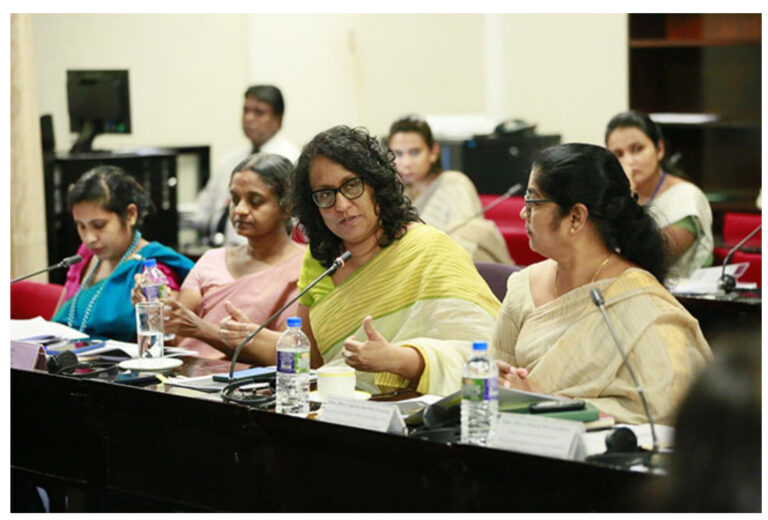
Prime Minister Dr. Harini Amarasuriya has emphasized the need for decisive and immediate action to address the challenges, barriers, and discriminatory practices encountered by women both locally and globally.

Speaking at the International Women’s Day celebration organized by the United Nations Association in Sri Lankaat the Sri Lanka Foundation Institute in Colombo on March 22, the Prime Minister highlighted the government’s commitment to gender equality and women’s empowerment.

During the event, awards were presented to women who have made significant contributions in various fields, earning societal recognition.

In her keynote address, Dr. Amarasuriya stressed the importance of safeguarding the fundamental rights of all women, regardless of their socioeconomic status, educational background, religion, ethnicity, or disability. She noted that Sri Lanka has a long history of strong female leaders and that many such individuals were present in the audience.

The Prime Minister outlined the government’s initiatives to promote women’s leadership in politics, business, and social movements, including the enactment of the 2024 Women’s Empowerment Act, which established an Independent National Women’s Commission to institutionalize gender equality.

She also pointed out that while efforts are being made to enhance women’s participation in the workforce—including entrepreneurship programs and digital financial literacy initiatives for rural women—women’s representation in leadership and economic participation remains disproportionately low.

Key concerns raised by the Prime Minister included:

  • The need for greater female representation in Parliament, which, despite doubling, still stands at only 10%.
  • The low workforce participation rate of women, currently at 32%, compared to their male counterparts.
  • The unrealistic expectations placed on women regarding work-life balance.
  • The importance of recognizing unpaid caregiving responsibilities undertaken by women.
  • The urgent need for legal and social reforms to combat gender-based violence and discrimination.

Dr. Amarasuriya stressed that achieving gender equality requires a collective effort, urging Sri Lanka to strengthen global partnerships and align with the United Nations Sustainable Development Goals (SDG), particularly Goal 5 on Gender Equality.

The event was attended by Foreign Minister Vijitha HerathSecretary-General of the United Nations Association of Sri Lanka, M.M. RushaudeenAssistant Secretary-General Panchali Ratnayake, and other distinguished guests.

Sri Lankan High Commission in Singapore Hosts Iftar Dinner to Celebrate Ramadan

0

The High Commission of Sri Lanka in Singapore hosted an Iftar dinner on March 17, 2025, bringing together members of the Sri Lankan Muslim community in Singapore to celebrate the spirit of Ramadan.

The event fostered a strong sense of belonging among the Sri Lankan diaspora, emphasizing the values of compassion, reflection, and togetherness.

The Guest of HonourDr. Maliki Bin OsmanMinister in the Prime Minister’s Office and Second Minister for Education and Foreign Affairs, joined the gathering, reflecting Singapore’s commitment to interfaith harmony.

Welcoming the guests, High Commissioner Senarath Dissanayake highlighted the significance of Ramadan as a time for self-reflection, generosity, and communal solidarity. He also commended Singapore’s dedication to interfaith understanding and multiculturalism, values that resonate with Sri Lanka’s vision of peaceful coexistence.

The religious observances were led by Qari Sheikh Ibrahim from Balavi Mosque, followed by Maghrib prayers after breaking the fast.

The evening concluded with a traditional Sri Lankan Iftar dinner, offering guests a taste of Sri Lankan cuisine, further strengthening community ties in a spirit of unity and celebration.

INDOPACOM Commander Reaffirms U.S. Support for Sri Lanka’s New Government

0

Commander of the United States Indo-Pacific Command (INDOPACOM), Admiral Samuel J. Paparo, reaffirmed the U.S. commitment to strengthening bilateral ties with Sri Lanka and expressed support for the country’s new governmental policies during a meeting with President Anura Kumara Dissanayake at the Presidential Secretariat on March 21.

Admiral Paparo extended his best wishes to President Dissanayake and the new administration, highlighting Sri Lanka’s crucial role in ensuring security in the Indian Ocean Region and maintaining a peaceful maritime environment.

President Dissanayake expressed gratitude for the United States’ assistance in developing human resources within Sri Lanka’s defence sector, recognizing the continued support provided over the years.

The meeting was attended by Foreign Minister Vijitha Herath, Senior Additional Secretary to the President Roshan Gamage, U.S. Ambassador to Sri Lanka Julie Chung, Lieutenant Colonel Anthony C. Nelson of the U.S. Army, and Senior Foreign Policy Advisor to INDOPACOM David Ranz.

Election Commission Launches Mobile App for Election Complaints

0

The Election Commission introduced a new mobile application, EC EDR, on March 22 to facilitate the filing of complaints related to local government elections.

The app provides the public with a formal and technologically advanced platform to report election-related issues. It enables users to submit complaints, track their status, and upload video or photo evidence to support their claims.

Election Commission Chairman R.M.A.L. Ratnayake stated, “If the public has a complaint, they can now file it through this app. Additionally, users can track the status of their complaints.”

This initiative aims to enhance transparency and efficiency in addressing election-related concerns, ensuring a more accountable electoral process.

CARDINAL TREADING ON DANGEROUS TERRAIN  

0

By Adolf

The Easter Day Carnage that targeted Churches and Hotels was the biggest catastrophe in recent history of the country outside the Ethnic war. I have forwarded many analytical presentations on the carnage as a Catholic having closely followed the events since the date of the massacre and made prediction that the main conspirators behind the attack whom we wish to call ‘Maha Molakarus’ will be left to remain incognito and none will be charged with indictment to face justice of the law of the land. I also make prediction that the current Marxist coloured Government despite better efforts will be unable to make much headway  without concrete proof of involvement of those suspected and the underlying complexities of foreign involvement wrapped so far by amateurish governance. President AKD may be sincere in his efforts but seems to lack effective managerial support.   

The Government of Gotabaya Rajapakse was clearly sidetracking action in catching the conspirators and meting out justice for the victims which intention was clearly on the wall from the beginning which His Eminence Malcolm Cardinal Ranjith failed to see. It is important to digest the ground situation on the camaraderie and relationship among our diverse communities. Despite the so called brotherhood among diverse religious communities in the country the fact is Christianity and Christians remain the cynosure of hate and jealousy, most especially of the Buddhist majority with a few negligible exceptions. This fact should be understood by our Church leadership to tread carefully mindful of pitfalls and quick sand when challenging a rock hard government in power. We have had such experiences in the past since 1956.

THE NON ALIGNED POLICY OF THE CHURCH 

The Colombo Diocese founded in 1845 was considered the flagship of the Church in Sri Lanka and Archbishop the leader. Thomas Cardinal Cooray was the first Sri Lankan Archbishop of the Diocese installed in 1947 ending his term in 1976. The Church leadership of the Archbishops of the past prior to Cardinal Ranjith becoming Archbishop in 2009 was very circumspect in its liaison with political leadership of the country maintaining a healthy balance and distance. The Church leaders certainly had their political colourings but it remained strictly private and personal. They provided leadership at the most difficult and challenging periods firstly under the Bandaranaikes with Nationalizations, the takeover of our schools and land later the ethnic war. 

So much so the Catholic Church earned immense respect for its firm and dignified stand on politicians and politics. Archbishops Thomas Cardinal Cooray, Nicholas Marcus Fernando and Oswald Gomis are still revered and respected for what they were in most astutely and religiously guiding and serving their flock.

MISTAKES OF THE CHURCH LEADERSHIP & FALLOUTS

It is a majority opinion that Archbishop Malcom Cardinal Ranjith went beyond the line of his eminent predecessors. Some speak of his strong outer manifestations of inner feelings for socialist likings from his early age. Aspersions were galore on the Cardinal on his pattern of behavior before and after the Presidential Election held on 16th November 2019 where he openly supported Gotabhaya Rajapakse and lately that of 21st September 2024 helping a Marxist candidate Anura Dissanayake to be President.One may come to the defense of the Cardinal stating that he supported both believing early Justice for the victims of the Easter carnage but he has failed by miscalculation or otherwise. And in that context with lessons learnt in the past he now needs to be wise changing the Church stance from being antagonist to coercive diplomacy having last felt the punches of irritated Gotabaya when President. 

Gota targeted the base and foundation of religious activity in the Archdiocese which is mainly in the Negombo belt. His Muturajawela Gazette was a salvo against the Church. Churches with its land and the Catholic households in the area clearly becoming the main targets.       State Media began witch hunting the Clergy. Gota then appointed Gnanasara Thero as Chairman of the Task Force for the implementation of his concept ‘One Country One Law’. Gnanasara Thero stance against the Catholic Church was well known. He visited Madhu area to inquire into a land ownership matter against the Madhu Church Authorities on the invitation of a Tamil politician Sri Ranga. 

      Gnanasara bared his stance on admissions to schools of religious base. Wholly an attempt to admit non-Catholics in numbers to Catholic schools to upset the balance in a new Constitution set to be drafted. If admissions are to be on a proportionate or pro rata basis Catholic children seeking religious atmosphere would suffer with a Buddhist or other religious majority occupying Catholic schools. And Gota on purpose failed to nominate any Catholic to the Committee to represent Catholic interests. Then came the Bopitiya Church fiasco with some Naval Officers of the Welisara Camp warning the Parish Priest of a Bomb threat and to be vary of persons in Cassocks, the threat to be subsequently withdrawn by the Defense Secretary himself stating it as mistake. Then we had the Borella Church bomb incident fizzling out to be a hoax after some innocent and respected Catholics being remanded on false charges.        

The Cardinal clearly seems to be wholly obsessed with the punishment of the fiends behind the Easter Day massacre and not with other large matters related to the wide welfare and the Status quo and future of the Church in the country. He needs to think beyond the Colombo Archdiocese and the damage that could be perpetrated on the wide and future interests of the Catholic Church in the country. It becomes important that he realizes that he is gambling staking a minority fraction of the population against a powerful Marxist Regime and the traumatic experiences the Church underwent especially under Marxist backed Sirimavo government. Cardinal’s needs to evaluate himself and the clout he carries which is truthfully below par in confronting the powerful Marxist Regime. It is no trivial matter of what others are thinking as to how one person’s behavior as the leader could affect the Catholic Church as a whole in the context of Christians being a minority in the country.

     ENSURING A FUTURE FOR CHRISTIANS              

 The Cardinal clearly seems to be wholly obsessed with the punishment of the fiends behind the Easter Day massacre and not with other large matters related to the wide welfare and the Status quo and future of the Church in the country. He needs to think beyond the Colombo Archdiocese and the damage that could be perpetrated on the wide and future interests of the Catholic Church in the country. It becomes important that he realizes that he is gambling staking a minority fraction of the population against a powerful Marxist Regime and the traumatic experiences the Church underwent especially under Marxist backed Sirimavo government. Cardinal’s needs to evaluate himself and the clout he carries which is truthfully below par in confronting the powerful Marxist Regime. It is no trivial matter of what others are thinking as to how one person’s behavior as the leader could affect the Catholic Church as a whole in the context of Christians being a minority in the country.