Home Blog Page 396

SL’s economic activity continues to grow as Festive Season approaches

0

March 18, Colombo (LNW): As Sri Lanka prepares for the upcoming Sinhala and Tamil New Year, the nation’s economy has seen continued growth, with both the manufacturing and services sectors showing positive performance throughout February.

The festive season has provided an added impetus, contributing to further expansion across various industries.

The Purchasing Managers’ Index (PMI), which measures the health of the manufacturing and services sectors, recorded values of 56.8 and 56.5 respectively for February, signalling consistent growth in both areas.

Whilst this marks a slight slowdown from January’s readings of 59.0 for manufacturing and 58.5 for services, the index values still indicate robust expansion, as anything above 50.0 reflects growth.

Manufacturing activities were notably driven by the food and beverage sector, as businesses within this field geared up for the festive demand. The sector saw positive movement in both new orders and production levels, a clear indicator that preparations for the festive period are well underway.

Additionally, employment within this sector has seen an uptick, with companies hiring workers to meet the increasing demand, possibly helping to replace jobs lost during the economic downturn.

The survey conducted by the Central Bank revealed that both employment and the volume of stock purchases grew, suggesting that firms are proactively preparing for the surge in demand.

In the services sector, growth has been driven by a diverse range of industries, from financial services to wholesale and retail trade, education, real estate, and more.

Notably, the financial services sector has seen a boost, largely due to increased lending activities facilitated by lower interest rates.

This has led to the emergence of new business opportunities, further stimulating economic activity. Additionally, other sectors, including accommodation, food and beverage, insurance, and personal services, have all shown signs of growth when compared to the previous month.

The services sector has also experienced a rise in employment, as companies across various industries ramp up hiring in preparation for the festive season.

The ongoing positive trend in employment reflects the broader economic recovery, with businesses expanding to meet the demands of the season.

Looking ahead, both the manufacturing and services sectors remain optimistic, with expectations for continued growth, largely driven by the upcoming festive season.

Sri Lanka successfully rescues 14 nationals from cybercrime trafficking in Myanmar

0

March 18, Colombo (LNW): The Ministry of Foreign Affairs, Foreign Employment, and Tourism, in collaboration with Sri Lanka’s diplomatic missions in Myanmar and Thailand, successfully orchestrated the rescue of 14 Sri Lankan nationals who had been trafficked and forced into labour at cybercrime centres in Myawaddy, Myanmar.

The repatriation of the individuals is scheduled for 18th March 2025, following a series of coordinated efforts involving the Governments of Myanmar and Thailand.

These efforts were pivotal in ensuring the safe return of the victims, who had been subjected to exploitation and illegal work in dangerous conditions.

This breakthrough comes after months of sustained diplomatic negotiations led by Sri Lankan officials. Notably, Foreign Affairs Minister Vijitha Herath engaged in high-level discussions with Myanmar’s Deputy Prime Minister and Union Minister of Foreign Affairs, U Than Swe, on February 03, 2024, followed by talks with Thailand’s Minister of Foreign Affairs, Maris Sangiampongsa, on February 13, 2025.

During these conversations, Minister Herath emphasised the urgency of securing the release and safe return of the trafficked Sri Lankans.

The Sri Lankan Ministry of Foreign Affairs has expressed deep gratitude to the governments of Myanmar and Thailand for their swift and effective support in the rescue operation.

Additionally, recognition has been given to the International Organisation for Migration (IOM) for assisting with international air travel and internal transportation, as well as to various non-governmental organisations in Myanmar who provided essential welfare services to the victims during the period of their ordeal.

Adani Group still pursuing $1 bn renewable energy project in Sri Lanka despite earlier setback

0

March 18, Colombo (LNW): The Adani Group remains determined to push forward with its $1 billion renewable energy project in Sri Lanka, despite announcing its withdrawal from the venture in February, The Hindu reported.

Sources familiar with the ongoing discussions told The Hindu that the company is still actively engaging in talks with the Sri Lankan government, focusing on agreeing to a tariff rate that could pave the way for the project’s revival.

Negotiations over the tariffs, which are critical for the success of the project, are ongoing. A tentative rate of around 7 cents per kWh has been suggested, although the Sri Lankan government had initially sought a lower rate of 5-6 cents per kWh, down from the original proposed 8.26 cents for a 20-year power purchase agreement.

Sources have indicated that both parties are optimistic about reaching a mutually acceptable rate soon.

The timeline for the project’s launch remains fluid, but work could potentially commence as early as June, provided all necessary administrative procedures and approvals are finalised in time.

The Indian government is reportedly supportive of the project, viewing it as a key strategic investment for both nations. This backing from the Indian government could provide a crucial boost to the project’s prospects, sources added.

Despite the earlier announcement of its withdrawal, the Adani Group has not taken any legal steps to formally abandon the project. It has kept a door open for potential future collaborations, reiterating its interest in returning to Sri Lanka for new development opportunities.

Notably, the group had already invested $5 million in pre-development activities for the wind farm project, which includes the construction of two large-scale wind farms in Mannar and Pooneryn, along with necessary transmission lines and the expansion of the 220 kV and 400 kV networks.

Although the project has received most of the necessary regulatory clearances, the environmental approval for the Mannar site remains pending. The initial push for the project came during the previous administration in Sri Lanka, but it faced delays when the current government, led by President Anura Kumara Dissanayake, appointed a committee to reassess the project’s tariff structure.

The government’s push for a more competitive tariff has been a sticking point in negotiations.

The discussions continue and the future of the project hinges on finding a resolution that satisfies both the Adani Group and the Sri Lankan authorities.

With both sides showing a willingness to compromise, the project could yet move forward, potentially bringing significant renewable energy capacity to the island and fostering stronger economic ties between India and Sri Lanka.

Health professionals launch token strike over Budget cuts to paramedical allowances

0

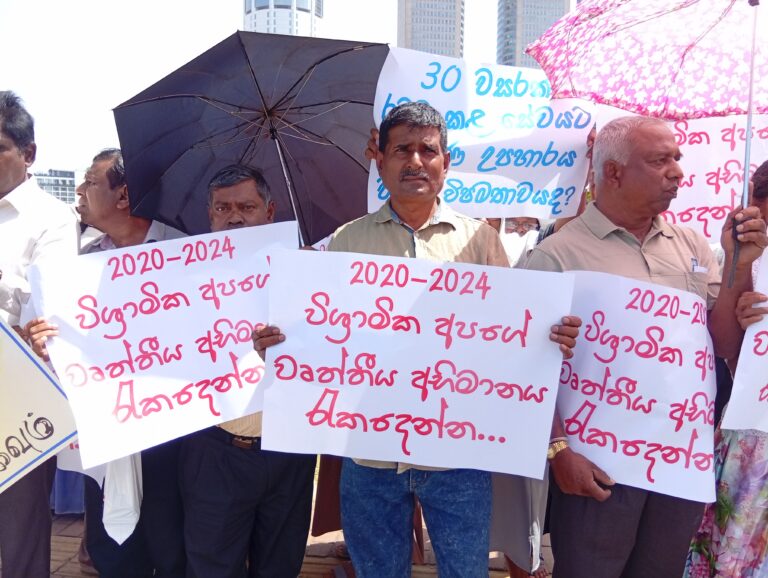
March 18, Colombo (LNW): The Academy of Health Professionals has initiated a token strike today (March 18) in response to the government’s decision to reduce allowances for paramedical staff under its recently presented budget.

The strike, which began at 7:00 AM, is being observed across hospitals nationwide and has garnered the support of several trade unions.

Notably, seven unions from the Joint Federation of Paramedic Professionals and eleven unions from the Joint Front of Paramedic Services have thrown their weight behind the action.

Upul Rohana, Co-Convenor of the Academy of Health Professionals, explained that the strike was the result of failed discussions with Ministry of Finance officials on March 17.

Despite efforts to engage in dialogue, the government’s decision to slash allowances for paramedics has prompted widespread discontent within the sector, with many healthcare professionals feeling that their contributions are being undervalued.

However, not all within the paramedic community agree with the strike. Chalith Amaradiwakara, Co-Convenor of the Joint Federation of Paramedic Professionals, has expressed concerns about the action, labelling it unjustified.

This highlights a growing division within paramedic trade unions, with differing opinions on the effectiveness and necessity of the strike.

In a separate but related development, the ongoing postal workers’ strike, which began earlier this week, is set to continue today. The Joint Postal Trade Union Front has confirmed that negotiations with the government have yet to produce a resolution.

According to Chinthaka Bandara, Co-Convenor of the association, over one million pieces of mail and parcels are currently piling up in post offices across the island as a result of the industrial action.

Meanwhile, Jagath Mahinda, Chairman of the Sri Lanka Postal Services Association, has downplayed the impact of the strike, claiming that it has been largely ineffective and that services are still operating at a reduced capacity.

Fairly heavy showers above 50 mm expected: Misty conditions to follow (Mar 18)

0

March 18, Colombo (LNW): Showers or thundershowers will occur at several places in Western, Sabaragamuwa, Southern, Central, North-western and Uva provinces after 2.00 p.m., the Department of Meteorology said in its daily weather forecast today (18).

Fairly heavy showers above 50 mm can be expected at some places in Western, Sabaragamuwa and Southern provinces.

A few showers may occur in Eastern province and in Polonnaruwa district.

Misty conditions can be expected at some places in Western, Sabaragamuwa, Central and Uva provinces and in Galle and Matara districts during the morning.

The general public is kindly requested to take adequate precautions to minimise damages caused by temporary localised strong winds and lightning during thundershowers.

Marine Weather:

Condition of Rain:
Showers or thundershowers may occur at a few places in the sea areas off the coast extending from Trincomalee to Hambantota via Batticaloa.  Showers or thundershowers may occur at several places in the sea areas off the coast extending from Hambantota to Mannar via Galle, Colombo and Puttalam during the evening or night.
Winds:
Winds will be North-easterly or variable and speed will be (20-30) kmph.
State of Sea:
Sea areas around the island will be slight to moderate. Temporarily strong gusty winds and very rough seas can be expected during thundershowers.

Maldives Confronts Economic Crisis similar to Sri Lanka’s Financial Collapse

0

By: Staff Writer

March 17, Colombo (LNW): Maldives, too, stands on the cusp of a massive debt crisis, similar to the economic meltdown of Sri Lanka in 2022. While it has moved to cut expenditure and is trying to rein in spending, the island nation is also piling on rising external debt and losing its foreign exchange buffers. With a large repayment of its debt falling due in 2025 and 2026, with a growing fear of default, economic experts said.

Increased Debt and Depreciating Reserves

Maldives’ foreign loans have risen to US$3.4 billion, of which most are from China and India. The first priority is to pay $600 million in 2025, then a staggering $1 billion in 2026, official sttistics showed.

The country’s foreign reserves are declining rapidly, and these payments are making everyday life tougher.

The government, under President Mohamed Muizzu, has raised tourism levies, reduced officials’ salaries, and floated plans to privatize state enterprises in an attempt to ease financial strain. But even after seeking help from the Gulf nations, these efforts have yet to yield results Maldivian. News agency reports revealed.  

Sri Lanka’s Debt Crisis: A Cautionary Tale

Sri Lanka had faced one of the worst economic debacles in 2022 simlar to Maldivian present situtraion asa result of over-borrowing, mismanagement of funds, and external shocks.countrywids protests, which created political instability greatly affecting standard of living, a former treasury high official said.  .

One of the main reasons for Sri Lanka economic crisis was its funding of major infrastructure projects like the Hambantota Port with high-interest Chinese loans that were not providing adequate returns in massive investments.

The tax cuts in 2019 also eroded government coffers, and the COVID-19 pandemic devastated the tourism industry, sucking out more foreign reserves, he added.

By April 2022, Sri Lanka was a history default on sovereign debt and created unprecedented disturbances in the economy. Inflation hit over 50% threshold and became expensive for such essentials. Later crisis erupted in the form of road riots and President Gotabaya Rajapaksa’s resignation.

In an attempt to mitigate the crisis, Sri Lanka requested an IMF bailout package of $2.9 billion in March 2023. Fiscal reforms like tax hikes, cutting subsidies, and debt restructuring helped curb inflation and foreign reserves.

Tourism and exports have also increased to a certain degree, but long-term debt sustainability remains a problem..Tourism and exports have also somewhat improved, but long-term debt sustainability is a concern.

Maldives Seeks Regional Support

Like Sri Lanka, Maldives has turned to regional and international financial institutions for assistance. It has requested $200 million in budget support from the China Development Bank and explored a currency swap arrangement with China.

However, Beijing has not responded to these appeals of the Maldivian authorities. Attempts s to get help from Sri Lanka and Bangladesh have also been ineffective.

Furthermore, Sharjah Islamic Bank has hesitated at arranging a $200 million Sukuk bond issue, rendering the nation’s $1 billion repayment in 2026 increasingly uncertain.

Tourism and India’s Support: An Interim Reprieve

Although Maldives boasts a thriving tourism sector and a $750 million currency swap with India, the measures are not likely to fully cure the debt issue.

The country’s economic model remains vulnerable due to its limited production base, high reliance on imports, and exposure to externalities such as COVID-19 and soaring oil prices.

Debt Projections and the Way Forward

Despite taking foreign loans and grants, Maldives’ total debt has more than doubled since 2018 and reached $8.2 billion as of March 2024. It is projected to exceed the $11 billion mark by 2029, sounding alarm bells for financial collapse unless remedial action is initiated at the earliest.

Maldives’ economic crisis today bears a striking resemblance to Sri Lanka’s recent one, underlining the risks of financial profligacy and fiscal excess. Maldives also could be destined for the same fate unless halted at this point.

Foreign assistance and regional cooperation could provide temporary respite, but long-term economic stability will require prudent financial policy, diversification of income, and sustainable debt strategies.

Sri Lanka Seeks Trade Concessions Amidst New U.S. Tariff Policies

0

By: Staff Writer

March 17, Colombo (LNW): A Sri Lankan delegation is scheduled to visit the United States next month to engage in discussions with the U.S. Trade Office regarding the upcoming reciprocal tariffs set to take effect on April 2, 2025. This visit aligns with the Sri Lankan government’s broader efforts to introduce a national tariff policy and a new Customs Act aimed at boosting exports and achieving a revenue target of $19 billion for the year, according to Foreign Minister Vijitha Herath.

Speaking in Parliament, Minister Herath underscored the urgency of these discussions, emphasizing the need to secure exemptions from the tariffs due to Sri Lanka’s fragile economic condition. He warned that the country could not afford additional financial burdens on its exports and stressed the importance of diplomatic negotiations to mitigate the impact.

This initiative follows U.S. President Donald Trump’s recent address to Congress, where he defended his strict tariff policies and announced reciprocal tariffs on several nations, including Canada, Mexico, China, and India. The policy aims to counteract what the U.S. administration perceives as unfair trade practices.

The United States remains a crucial trading partner for Sri Lanka, having imported $3 billion worth of goods from the island nation last year. Notably, over 70% of these exports were from the garment industry, making the U.S. market indispensable to Sri Lanka’s economy. Minister Herath expressed optimism that Sri Lanka’s ongoing engagement with the International Monetary Fund (IMF) could help secure a waiver from these tariffs.

In addition to official trade discussions, a high-level Sri Lankan business forum will be held in the U.S. next month, featuring representatives from the Finance Ministry, Foreign Ministry, and key business leaders. This forum aims to explore economic relief measures and negotiate possible waivers to lessen the impact of the tariff changes.

The national tariff policy is part of a broader initiative to better integrate Sri Lanka into global trade and enhance the competitiveness of its goods and services. A senior ministry official stated that tariff restructuring efforts would align Sri Lanka’s trade policies with evolving global economic trends. The government aims to create a fairer trading environment by adjusting tariff structures to accommodate technological advancements and market dynamics. Lowering tariffs on raw material imports while maintaining protective tariffs on finished goods is expected to stimulate local industries and promote economic self-sufficiency.

Furthermore, the government has launched the National Export Development Plan 2025–2029 to drive export sector growth. President Anura Kumara Dissanayake, who also serves as the Finance Minister, reaffirmed the commitment to streamlining the tariff regime to benefit exporters. The introduction of a new Customs Act is also underway to facilitate trade and enhance revenue collection.

Meanwhile, opposition lawmaker Dr. Harsha de Silva of the Samagi Jana Balawegaya (SJB) urged the government to act proactively in response to the U.S. tariff policy changes. He stressed the need to protect Sri Lanka’s trade relations with the U.S. and offered his expertise as the head of the parliamentary committee on public accounts.

Economists have warned that increased U.S. tariffs could lead to higher import costs and reduced competitiveness for Sri Lankan exports. This could result in decreased export volumes and revenue losses. To counter these risks, the government plans to introduce a clear, transparent, and predictable tariff framework that ensures exporters can access raw materials at competitive prices.

Deputy Minister of Industry and Entrepreneurship Development Chathuranga Abeysinghe outlined additional strategies, including setting minimum prices for key inputs, reducing production costs in the energy sector, and improving transportation infrastructure. These measures aim to enhance the business environment and attract investment.

A senior economist emphasized the importance of a data-driven, transparent mechanism to evaluate industry requests for tariff adjustments. Such an approach would ensure that businesses and labor groups receive appropriate government support to adapt to the changing global trade landscape.

Sri Lanka lobbies for Joint Venture investments in Bangladesh

0

By: Staff Writer

March 17, Colombo (LNW): Sri Lanka has expressed its willingness to invest in joint ventures in Bangladesh, particularly in synthetic fabric manufacturing, which holds significant potential for investors from both nations, Sri Lankan High Commissioner to Bangladesh Dharmapala Weerakkody said today.

He made these remarks during a courtesy call on Taskeen Ahmed, president of the Dhaka Chamber of Commerce & Industry (DCCI), at the chamber’s office in the capital, according to a press release.

Weerakkody highlighted several sectors as highly promising for joint venture investments, including healthcare, tourism, large hotels, information technology, education, and pharmaceuticals.

He pointed out that both Bangladesh and Sri Lanka are members of the South Asian Association for Regional Cooperation and have maintained a strong and friendly bilateral diplomatic relationship for many years.

He urged Bangladeshi entrepreneurs to leverage Sri Lanka’s experience and technical expertise to develop the country’s local tourism sector.

The high commissioner also said that Sri Lanka has already signed preferential trade agreements (PTAs) with several countries, and negotiations with Bangladesh are set to begin soon to further expand bilateral trade and investment.

During the meeting, DCCI President Taskeen Ahmed stated that bilateral trade between Bangladesh and Sri Lanka reached $134.06 million in the fiscal year (FY) 2023-24.

This marked a significant increase from the $93.11 million recorded in FY 2019-20, reflecting a notable annual growth rate of 9.5 percent, he said.

Taskeen added that a substantial number of Sri Lankan investors, particularly from the banking, textile, power, construction, and pharmaceutical sectors, have already made foreign direct investments of $428.56 million in Bangladesh.

He also encouraged Sri Lankan entrepreneurs to consider investing further in agriculture and food processing, the construction industry, healthcare, tourism, IT, and fast-moving consumer goods (FMCG).

Taskeen Ahmed emphasised Sri Lanka’s expertise and technical assistance in areas such as deep-sea fishing, tourism, and the shipping industry.

He also proposed that negotiations at the government level be expanded to facilitate the early signing of the proposed PTA, which would significantly enhance bilateral trade and investment.

Among others, Razeev H Chowdhury, senior vice-president of the DCCI, Md Salem Sulaiman, vice-president, and Srimali Jayarathne, counsellor (commercial) at the Sri Lankan High Commission in Bangladesh, were also present.

Adani’s Uncertain Exit result in Sri Lanka’s Wind Power Project in Limbo

0

By: Staff Writer

March 17, Colombo (LNW): The Adani Group has reiterated its intention to withdraw from its wind power project in Sri Lanka, a stance previously communicated to the country’s Board of Investment. However, the company remains open to discussions. In response, Sri Lanka’s Energy Ministry reached out to Adani Green Energy Ltd’s local arm to understand the reasons behind the potential exit.

A senior Sri Lankan government official confirmed that Adani responded within two weeks, indicating that the project remains active. However, the Ministry of Energy is awaiting court decisions and the Attorney General’s clearance before initiating any negotiations. Until legal clarity is achieved, no definitive steps can be taken.

The primary issue causing the deadlock is the tariff rate. While Sri Lanka proposed a tariff of approximately 6 cents per unit, Adani had put forth an offer of around 8 cents per unit. This tariff discrepancy remains a key hurdle in finalizing the agreement.

There was speculation that Indian Prime Minister Narendra Modi’s upcoming visit to Sri Lanka might include discussions on the Adani project, given its government-to-government nature. However, multiple sources from both India and Sri Lanka have denied that this issue is on the agenda.

On March 14, Sri Lanka’s Minister of Power and Energy, Kumara Jayakodi, stated in Parliament that if Adani chooses to exit, the wind power contract in Mannar will be reassigned to another company. The government is currently awaiting a final response from Adani’s local representatives.

 Meanwhile, sources suggest that Sri Lanka’s Energy Ministry has informally reached out to other potential investors. The government is also deliberating whether to continue with a direct government-to-government agreement or invite competitive bids for the project.

A significant policy shift is emerging, as Sri Lanka now indicates that all future renewable energy projects, including rooftop solar installations, will be awarded through competitive tenders. The newly formed Sri Lankan Cabinet has also established a committee to address the ongoing tariff dispute.

Adani Green’s initial letter to the Board of Investment in February created uncertainty about the project’s future. A follow-up letter to the Energy Ministry was recently submitted in response to government queries.

In its communication, Adani Green detailed its engagement in extensive discussions with the Ceylon Electricity Board and various government entities for over two years regarding the establishment of 484 MW wind farms in Mannar and Pooneryn.

The project also includes an associated transmission system and network expansion to facilitate power distribution to southern Sri Lanka.

Adani Green further stated that it has obtained almost all necessary clearances except for Mannar’s environmental approval, which remains entangled in a Supreme Court case. The company has already invested approximately $5 million in pre-development activities. Given these significant efforts and investments, the company’s willingness to remain in discussions suggests that negotiations could still yield a viable resolution.As Sri Lanka grapples with its renewable energy ambitions, the fate of this high-profile project remains uncertain. The government’s next steps—whether to renegotiate with Adani or seek alternative investors—will be crucial in determining the country’s renewable energy trajectory.

Sri Lanka’s Pro-Transparency Reforms Attract Global Investors mainly USA

0

By: Staff Writer

March 17, Colombo (LNW): Sri Lanka’s commitment to transparency, anti-corruption measures, and investor-friendly policies has rekindled interest among international investors.

This sentiment was evident at the Business Roundtable held in Washington D.C. on March 11, where Sri Lankan Ambassador to the US, Mahinda Samarasinghe, engaged with US business leaders.

The event was organized by the US Business Council for International Understanding in partnership with Washington Global Advisors.

Over 25 corporate representatives, including former US Ambassadors to Sri Lanka now serving in major US firms, attended the discussion. Many participants acknowledged the recent political changes in both Sri Lanka and the US, with particular enthusiasm for President Anura Kumara Disanayake’s strong anti-corruption stance. His governance reforms have reinvigorated investor confidence, making Sri Lanka an attractive destination once again.

Ambassador Samarasinghe provided an overview of Sri Lanka’s financial crisis in 2022, attributing it to years of economic mismanagement, nepotism, and corruption. He recounted his role in initiating discussions with the International Monetary Fund (IMF), which led to Sri Lanka securing an Extended Fund Facility (EFF) program. He expressed gratitude for the crucial support from the US, particularly the US Treasury, in helping Sri Lanka stabilize its economy.

Highlighting Sri Lanka’s remarkable turnaround, the Ambassador noted that the country had moved from economic decline to positive growth, with a projected 5% expansion in 2025. Additionally, Sri Lanka now has the capacity to finance nearly four months of imports. This recovery has sparked renewed investor interest, further strengthened by the IMF’s endorsement of Sri Lanka as a model for economic stability and policy continuity, despite political transitions.

Ambassador Samarasinghe emphasized Sri Lanka’s key advantages for foreign investors, including its 92% literacy rate—the highest in South Asia—a highly skilled workforce, and a strategic location along vital Indian Ocean trade routes. He also reassured investors of Sri Lanka’s constitutional protections for foreign direct investment (FDI) and its long-standing commitment to the private sector as the primary driver of economic growth.

He reminded attendees of Sri Lanka’s pioneering role in South Asia’s economic liberalization, having embraced free-market policies as early as 1977. The country now boasts 15 thriving Free Trade Zones, offering lucrative incentives for foreign investors. Notably, the government has remained steadfast in its belief that private enterprise should be the main force behind economic growth, despite changes in political leadership over the years.

The Ambassador outlined key investment opportunities available to US companies, including the Colombo Port City project, which offers a 25-year tax holiday, and the Trincomalee oil tank facility, strategically linked to one of the world’s best deep-water harbors. He also stressed the potential for stronger bilateral cooperation between Sri Lanka and the US in maintaining freedom of navigation in the South Asian region.