Home Blog Page 403

Foreign Ministry Urges Sri Lankans in Nepal to Stay Indoors Amid Unrest

0

The Ministry of Foreign Affairs has advised Sri Lankans in Nepal to remain indoors and take precautions in light of the violent protests sweeping the country.

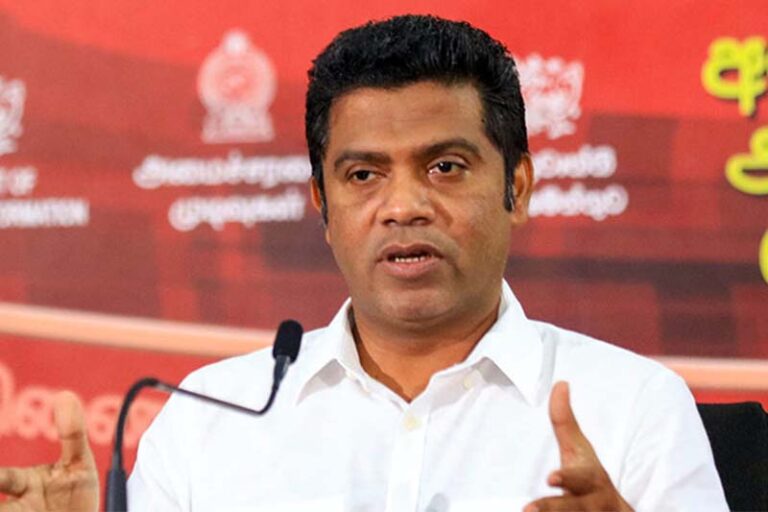
Foreign Ministry Spokesman Thushara Rodrigo said that embassy officials in Kathmandu are on call 24 hours a day and can be reached via +977 9851048653.

He urged Sri Lankans to keep an emergency supply of water, dry food, and essential medicines with them at all times.

According to the ministry, there are currently 99 Sri Lankans in Nepal, including 22 university students, embassy staff, and others. Rodrigo confirmed that none of them have been affected so far, and that students have been contacted through WhatsApp groups for safety updates.

The ministry said it continues to closely monitor developments and remains in touch with the Sri Lankan mission and community leaders in Nepal.

What we know about Nepal anti-corruption protests as PM resigns

0

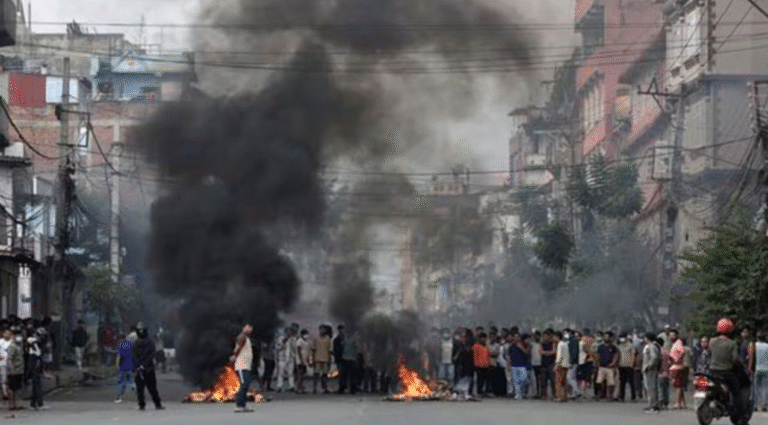
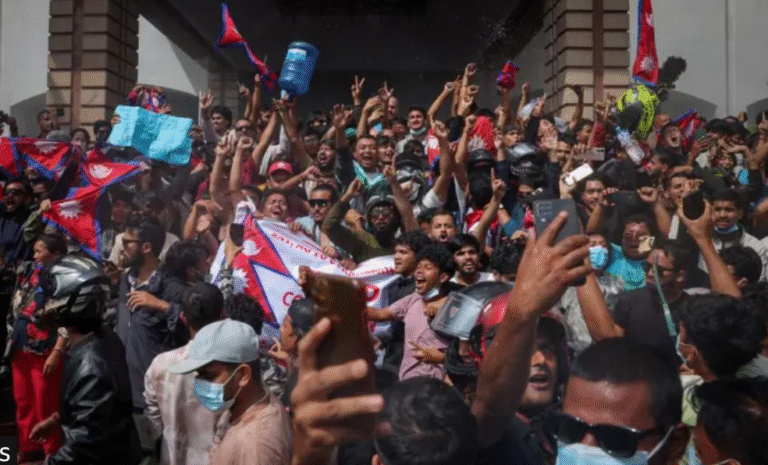
At least 22 people have been killed and nearly 200 injured as anti-corruption protests escalated across Nepal, forcing Prime Minister KP Sharma Oli to resign on Tuesday.

The unrest, sparked by a now-revoked ban on 26 social media platforms, has grown into the country’s largest youth-led movement in decades. Protesters, many identifying as Gen Z, accuse political leaders of corruption and inequality, rallying under the slogans #NepoBaby and #NepoKids to highlight the lavish lifestyles of politicians’ families.

On Monday, thousands clashed with police outside parliament, where officers used tear gas, water cannons, and live fire. Demonstrators later set ablaze government buildings, the parliament, and homes of senior politicians, including former PM Sher Bahadur Deuba.

The army has pledged to restore order while inviting protesters to dialogue. With Oli’s departure, Nepal now faces political uncertainty over who will form the next government amid its worst unrest in decades.

CEB Proposes 6.8% Power Tariff Hike; PUCSL Calls for Public Feedback

0

The Ceylon Electricity Board (CEB) has proposed a 6.8% increase in electricity tariffs for the final quarter of 2025, the Public Utilities Commission of Sri Lanka (PUCSL) announced.

In response, the PUCSL has decided to seek public opinion on the proposed revision. Written comments and suggestions can be submitted to the Commission via email, WhatsApp, Facebook, or post before October 7, 2025.

To gather verbal submissions, nine public consultations covering all provinces will be held, beginning on September 18, 2025.

Submissions can be sent to:

  • Email[email protected]
  • WhatsApp: 076 427 1030
  • Facebookwww.facebook.com/pucsl
  • Post:
    Public Consultation on the Third Electricity Tariff Revision – 2025
    Public Utilities Commission of Sri Lanka
    6th Floor, Bank of Ceylon Trade Tower,
    Colombo 3.

The PUCSL stated that this is the third electricity tariff revision for 2025.

WEATHER FORECAST FOR 10 SEPTEMBER 2025

0

A few showers may occur in Western, Sabaragamuwa and Northern provinces and in Galle, Matara, Kandy, and Nuwara-Eliya districts.

Showers or thundershowers may occur at a few places in Uva, eastern and Northcentral provinces after 2.00 p.m.

Mainly fair weather will prevail elsewhere of the island.

The sun is going to be directly over the latitudes of Sri Lanka during 28th of August to 07th of September due to its apparent southward relative motion. The nearest places of Sri Lanka over which the sun is overhead today (10) are Ahungalla, Elpitiya, Amugoda, Thawalama, Deniyaya, Urubokka, Embilipitiya, Suriyawewa, Beralihela and Galkaduwa about 12.08 noon.

Sri Lanka’s Solar Push: Can Rividanavi Project Deliver Energy Goals?

0

By: Staff Writer

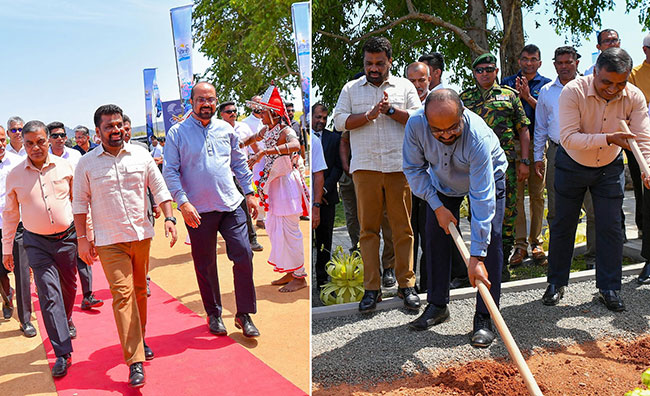
September 09, Colombo (LNW): Sri Lanka took a decisive step toward its renewable energy ambitions on Saturday (6), when President Anura Kumara Dissanayake inaugurated the construction of the country’s largest solar project the $140 million Rividanavi Solar Power Park in Kotiyagala, Monaragala. Spanning 500 acres, the project aims to generate 100 MW of electricity, enough to add 219 GWh annually to the national grid and save Rs. 21 billion in foreign exchange otherwise spent on diesel imports.

On paper, the project marks a landmark in Sri Lanka’s long-delayed renewable transition. By 2030, the Government has pledged to source 70% of the nation’s power needs from renewable energy. Yet the reality of implementation has often been more complicated. Projects frequently stall amid red tape, investor uncertainty, and grid constraints, raising the question: will Rividanavi be different?

A Bold Vision, Tangible Gains

The project, spearheaded by private firm Rivi Danavi (a joint venture between Lakdhanavi Ltd. and WindForce PLC), will include a 12 MWh battery storage facility—the first of its kind in the country. This is intended to stabilize the notoriously fragile grid, which relies heavily on costly thermal plants during peak hours. Moreover, the initiative introduces a new model where the investor, not the Ceylon Electricity Board (CEB), funds and builds the 27 km transmission line and 132 kV substation to connect power to the grid.

Environmental benefits are equally significant. The solar park is projected to cut carbon dioxide emissions by 150,000 metric tons annually, aligning with international climate commitments. On a local scale, the project promises jobs, scholarships, water supply schemes, and vocational training, potentially transforming Monaragala into a renewable hub.

The Bottlenecks in Solar Expansion

Despite the optimism, experts warn that Sri Lanka’s renewable energy roadmap has often been derailed by bureaucratic gridlocks. A single project requires approval from up to 12 different institutions. While the Presidential Secretariat has accelerated approvals for Rividanavi, questions remain about whether such streamlined processes will become standard or remain exceptions.

The CEB, long criticized for favouring coal and thermal expansion over renewables, is another hurdle. Grid absorption capacity remains limited, meaning large-scale projects risk delays once completed. Industry insiders point out that without clear reforms in procurement, transmission planning, and tariff structures, even flagship projects may struggle to achieve their full potential.

Investor Confidence at Stake

Energy Minister Kumara Jayakody has billed the project as a turning point, highlighting the administration’s commitment to backing private investors. However, investors remain wary due to past experiences of policy reversals and payment delays. The fact that Rividanavi has advanced this far signals progress, but consistency will be critical to build long-term confidence.

A Test Case for 2030 Targets

Sri Lanka’s annual electricity demand hovers around 15,000–16,000 GWh. Rividanavi will contribute only about 1.4% of this symbolically important, but insufficient on its own. Meeting the 70% renewable target by 2030 will require dozens of similar projects, timely approvals, and massive investment in transmission infrastructure.

For now, Rividanavi stands as both a milestone and a test. If delivered on schedule by early 2027, it could mark the beginning of a genuine shift toward clean energy. But if delays, institutional rivalries, or grid challenges stall progress, it risks becoming another reminder of Sri Lanka’s unrealized renewable promises.
UN Report Puts Sri Lanka’s Accountability Pledges to the Test

0

By: Staff Writer

September 09, Colombo (LNW): The United Nations High Commissioner for Human Rights, Volker Türk, yesterday (8) presented a critical report on Sri Lanka to the 60th session of the UN Human Rights Council (UNHRC) in Geneva, renewing international calls for accountability and justice over alleged human rights violations and breaches of international humanitarian law.

The report urged Colombo to establish a dedicated judicial mechanism, with an independent special counsel, to handle cases of alleged wartime abuses and serious rights violations. While underscoring that the primary responsibility lies with the Sri Lankan government, the High Commissioner stressed that international engagement remains “essential” to ensure long-term reconciliation and sustainable peace.

Fresh International Pressure

The report comes at a sensitive time for the new administration in Colombo, which has promised to restore rule of law and strengthen democratic institutions. Türk emphasized that the UNHRC and individual member states should continue supporting the Office of the High Commissioner for Human Rights (OHCHR) in undertaking accountability-related work, as mandated by earlier council resolutions on Sri Lanka.

In practice, this means that the UN system will continue to monitor the island closely, keeping alive the possibility of international evidence-gathering and sanctions if Colombo fails to demonstrate progress. For the government, already balancing domestic political pressures and international obligations, the recommendations pose a test of both credibility and political will.

Key Recommendations

Beyond accountability mechanisms, the report outlined broader reforms. These include:

The release of military-occupied land in the north and east.

Repeal of the Prevention of Terrorism Act (PTA) and release of long-term PTA detainees.

Comprehensive security sector reform.

Constitutional, legal, and institutional reforms to align with international human rights standards.

Such measures, while welcomed by human rights advocates, could prove politically contentious at home, particularly with sections of the military and political establishment resistant to external pressure.

The Government’s Dilemma

Analysts note that the new government faces a dilemma: comply with UNHRC recommendations and risk nationalist backlash, or resist reforms and face deepening isolation abroad. With international financial support still critical to Sri Lanka’s fragile economic recovery, the cost of ignoring UN findings may prove high.

At the same time, implementing reforms will require careful political navigation. Moves such as releasing detainees or reducing the military’s footprint in former conflict zones could provoke criticism from opponents who portray such steps as concessions to external actors.

A Chance for Reset?

The High Commissioner’s report follows his recent visit to Sri Lanka, during which he met government officials, civil society groups, political parties, and religious leaders. The visit was seen as an opportunity to re-engage constructively.

If Colombo can demonstrate tangible progress through legal reforms, transparent investigations, and dialogue with affected communities—it could reset relations with the UNHRC and improve its global standing.

However, observers caution that past governments have often promised reforms without delivery. The coming months will reveal whether the current administration intends to break that cycle, or whether Sri Lanka risks once again being caught between international scrutiny and domestic resistance.

Government Moves Ahead with Kerawalapitiya Customs Inspection Center

0

By: Staff Writer

September 09, Colombo (LNW): Sri Lanka is moving to establish a new Customs inspection center at Kerawalapitiya under a hybrid public-private partnership (PPP) model, with the government now seeking private investors to implement the project.

According to S Minister Nalinda Jayatissa, land belonging to the Sri Lanka Land Development Corporation has already been transferred to Sri Lanka Customs for this purpose.

A committee appointed to study the initiative has submitted recommendations on the most suitable business model, following which Cabinet approval was granted to call for expressions of interest and requests for proposals from potential investors.

The proposed Kerawalapitiya Customs Verification Center is intended to serve as a centralized hub for container inspection outside the congested Colombo Port. Officials expect the project to modernize cargo handling and clearance, reduce delays, and improve transparency long-standing concerns among importers and exporters who have faced high costs due to inefficiencies in the current system.

Potential Gains in Trade Facilitation

If successfully implemented, the center could significantly enhance Sri Lanka’s trade competitiveness by reducing clearance times and curbing rent-seeking practices often associated with manual procedures.

Advanced scanning and automated processing, brought in through private-sector investment, may also reduce opportunities for corruption, while allowing the Customs Department to focus more on regulatory oversight.

Challenges under Current Climate

However, the project comes at a delicate moment. Customs officers have launched a “work-to-rule” campaign in response to the government’s anti-corruption drive, slowing operations at a time when trade facilitation is crucial to economic recovery.

Critics argue that moving ahead with a PPP initiative while staff unrest remains unresolved could deepen institutional tensions, risking delays in implementation and possible resistance from unions that view private involvement as an encroachment on their functions.

Public-Private Balance

While the PPP model offers fiscal advantages by shifting initial capital costs to the private sector, it raises questions over long-term revenue sharing and oversight. Without strong regulatory safeguards, there is the risk of private operators gaining undue influence over sensitive inspection processes. Analysts note that any perception of weakened state control over Customs could undermine confidence in the integrity of trade monitoring.

The Broader Reform Agenda

The Kerawalapitiya project reflects the government’s broader attempt to modernize institutions while addressing systemic corruption. Success will depend not only on selecting the right private partner but also on ensuring transparency in procurement, clear delineation of responsibilities, and robust monitoring mechanisms.

Industry stakeholders stress that genuine consultation with Customs officers and trade unions will be essential to avoid further friction and ensure smooth adoption of new practices.

As Sri Lanka works to streamline its trade regime and attract foreign investment, the Kerawalapitiya inspection center presents both an opportunity and a test.

If executed carefully, it could become a model of reform-oriented infrastructure development. If mishandled, it risks becoming another flashpoint in the ongoing struggle between the government and entrenched institutional interests.

Sri Lanka’s Inland Fisheries at Risk despite New Net Plan

0

By: Staff Writer

September 09, Colombo (LNW): Sri Lanka’s inland fishery industry, once seen as a low-cost solution to rural protein needs, is again in crisis.

The government’s latest initiative to install barrier nets in 250 reservoirs is being taken as a bold intervention. Yet, behind the rhetoric lies a troubled sector plagued by inefficiencies, poor planning, and unfulfilled promises, industry stake holders claimed. .

Washed Away: Billions in Protein Lost Each Year

Every year, an estimated 20,000 to 40,000 kilograms of fish are washed out from each reservoir during irrigation releases. The loss is more than numbers: it drains away mature, reproductive-age fish vital for replenishing stocks, undermining both food security and rural livelihoods, fishing community represntaives complained.

The new government says barrier nets will prevent this washout, securing fish for harvest. The National Aquaculture Development Authority insists the project could transform reservoirs into reliable food baskets for thousands of villages.

But critics argue that without strong oversight, the nets could simply become another costly infrastructure experiment with little to show.

Targets Missed, Potential Wasted

The inland and aquaculture sector produced 102,330 metric tons in 2024, well below the 173,000-ton target. This is despite Sri Lanka’s vast inland water resources over 1,400 perennial tanks covering nearly 183,000 hectares, plus thousands of minor reservoirs linked to the ancient tank cascade system.

Per capita fish consumption climbed to 36.85 grams per day in 2024, exceeding official goals. But this improvement masks the reality that inland fisheries supply only a sliver of national demand.

Imports still plug the gap, driving up costs for ordinary consumers in a country already battling inflation and high food prices.

Money Spent, But Results Lag

The Ministry of Fisheries spent Rs. 7.27 billion on capital projects and Rs. 1.98 billion in recurrent expenses in 2024, with impressive disbursement efficiency on paper. International aid from Japan, FAO, and USAID has further boosted funding and technology transfer.

But audits tell a different story: delayed licensing, undertrained staff, slow environmental clearances, and weak monitoring have stalled many initiatives. With so many projects half-completed, doubts remain whether barrier nets will fare any better.

Netting the Future or More Empty Promises?

The barrier net program could be a turning point if implemented with discipline, linking rural reservoirs to national supply chains and safeguarding ecosystems. Yet, history offers reason for caution: Sri Lanka’s fisheries sector is littered with ambitious plans that were never delivered.
Unless the government tackles governance failures head-on, the new initiative risks becoming yet another headline project leaving inland fisheries in the same cycle of untapped potential, and rural communities with empty promises instead of full nets

Proceedings Against Ex-Minister Rambukwella and Family Shift to High Court Over Alleged Illicit Wealth

0

September 09, Colombo (LNW): Judicial proceedings involving former Minister Keheliya Rambukwella and several members of his family have taken a new turn, as the Colombo Chief Magistrate officially brought an end to the preliminary hearings in the Magistrate’s Court following the filing of indictments at the Colombo High Court.

At a hearing held earlier today (09), Chief Magistrate Asanka S. Bodaragama instructed that the proceedings previously underway at the lower court be discontinued, now that formal charges have been filed at the High Court level under the Prevention of Money Laundering Act.

The order came after representatives from the Commission to Investigate Allegations of Bribery or Corruption (CIABOC) informed the Magistrate that indictments had been submitted against the former minister and his family in connection with a major investigation into alleged unlawful enrichment.

The court was told that the transfer of jurisdiction to the High Court was in keeping with legal procedure once indictments are formally lodged.

Accordingly, the Magistrate instructed all defendants to appear before the Colombo High Court as required on the forthcoming trial dates.

Rambukwella, who formerly held the Health portfolio, appeared in court today alongside his wife, three daughters, and son-in-law—all of whom have been named in the case. The family had earlier been arrested by CIABOC in relation to allegations of acquiring assets through illicit means amounting to over Rs. 97 million.

Parliament Schedules Debate on Repeal of Presidential Entitlements

0

September 09, Colombo (LNW): Sri Lanka’s Parliamentary Affairs Committee has confirmed that the debate on the Second Reading of the proposed legislation to repeal entitlements granted to former Presidents will take place tomorrow (10).

According to a statement issued by the Communications Department of Parliament, the debate is scheduled to run from 11.30 a.m. to 3.30 p.m.

The bill, which seeks to revoke certain privileges previously afforded to former heads of state, has drawn significant public and political attention, with tomorrow’s session expected to prompt robust discussion across party lines.