September 09, Colombo (LNW): A sweeping new development initiative valued at US$100 million is set to uplift the lives of over 380,000 individuals across Sri Lanka, as the government joins hands with the World Bank Group to reshape the country’s rural economy and agri-food sector.
The initiative, titled the Integrated Rurban Development and Climate Resilience Project, aims to bridge the rural-urban divide while building a more sustainable, inclusive, and climate-adapted future for Sri Lanka’s farmers and rural workforce.
At the heart of the project lies a multi-pronged strategy designed to modernise agriculture, stimulate employment, and cushion vulnerable communities against the mounting impacts of climate change. The scheme is expected to provide direct support to approximately 8,000 agri-food producers, enhance irrigation and drainage infrastructure on 71,000 hectares of farmland, and accelerate the adoption of climate-smart farming methods among smallholder producers who account for the vast majority of Sri Lanka’s food supply.
According to government officials, the effort is closely aligned with Sri Lanka’s broader development roadmap, which places strong emphasis on a robust, production-oriented economy. Treasury Secretary Dr Harshana Suriyapperuma remarked that the initiative complements the national vision of sustainable economic transformation, while simultaneously bolstering food security and rural prosperity.
With climate-related risks—such as erratic rainfall, extreme heat, and natural disasters—posing growing threats to agricultural output, the project will introduce targeted interventions aimed at strengthening climate resilience. These include upgrading irrigation networks to enable more efficient water use, promoting access to agricultural insurance, and developing infrastructure that can withstand adverse weather patterns.
In addition to environmental adaptation, the initiative will open new economic opportunities, particularly for women and young people in rural regions. By enhancing agribusiness value chains, improving access to domestic and international markets, and linking producers with financial institutions, the project aims to foster job creation across multiple sectors—from processing and packaging to logistics and retail.
An anticipated US$17 million in private capital is expected to be mobilised through the project by facilitating agribusiness loans, encouraging public-private partnerships, and unlocking new streams of investment for rural enterprises.
Crucially, the initiative also includes investments in modernising agricultural data systems, ensuring food quality standards meet export requirements, and offering digital and financial support to micro, small, and medium-scale agricultural enterprises.
Speaking on behalf of the World Bank, David Sislen, Regional Director for the Maldives, Nepal and Sri Lanka, highlighted the significance of integrated collaboration between the public and private sectors. “This is not just about helping farmers survive the effects of climate change—it’s about enabling them to thrive despite those challenges,” he said.
The project builds on a legacy of more than ten years of World Bank involvement in Sri Lanka’s agricultural development. Earlier programmes saw the formation of over 140 farmer-led cooperatives and businesses, resulting in marked increases in rural incomes and productivity. The International Finance Corporation, the private sector arm of the World Bank Group, has also played a vital role in enhancing key export sectors such as cinnamon and coconut through capacity-building and financial innovation.
Sri Lanka and World Bank Launch $100 Million Initiative to Empower Rural Communities and Boost Climate-Resilient Agriculture
Ex-Minister Rajitha Senaratne Released on Bail Following Court Appearance in Colombo
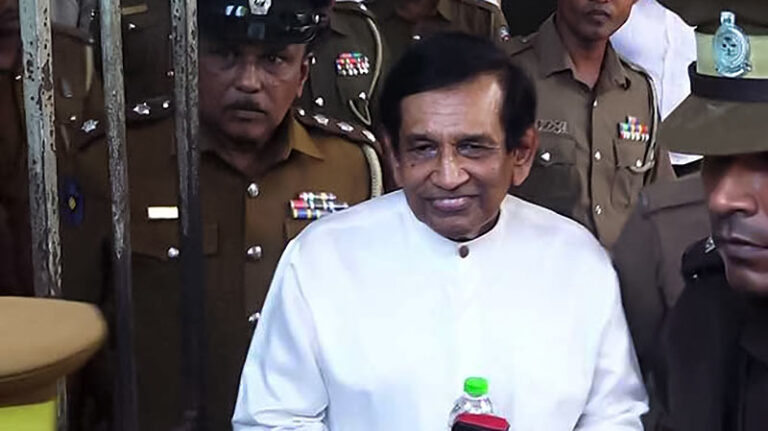
September 09, Colombo (LNW): Former cabinet minister Rajitha Senaratne has been granted bail after being presented before the Colombo Chief Magistrate’s Court earlier today (09).
The decision follows a period of judicial custody stemming from legal proceedings initiated by the Commission to Investigate Allegations of Bribery or Corruption.
Magistrate Asanka S. Bodaragama, presiding over the hearing, ordered the former minister’s release on a cash bail of Rs. 50,000, along with two sureties amounting to Rs. 2 million each. In addition to the bail conditions, the court imposed a restriction on Senaratne’s overseas travel, pending the progression of the case.
The ruling came after submissions were heard from both Bribery Commission officials and legal counsel representing the former minister. The prosecution presented details relating to the case, while the defence petitioned for bail citing various legal and procedural grounds.
Senaratne had previously appeared before the same court on August 29 in connection with an unrelated matter brought forward by the Bribery Commission. During that appearance, a warrant was issued for his arrest due to non-compliance with prior court directives. He was subsequently taken into custody and remained in remand until today’s hearing.
Sajith Premadasa Comes of Age: Anura’s Invincibility a Thing of the Past
By Adolf
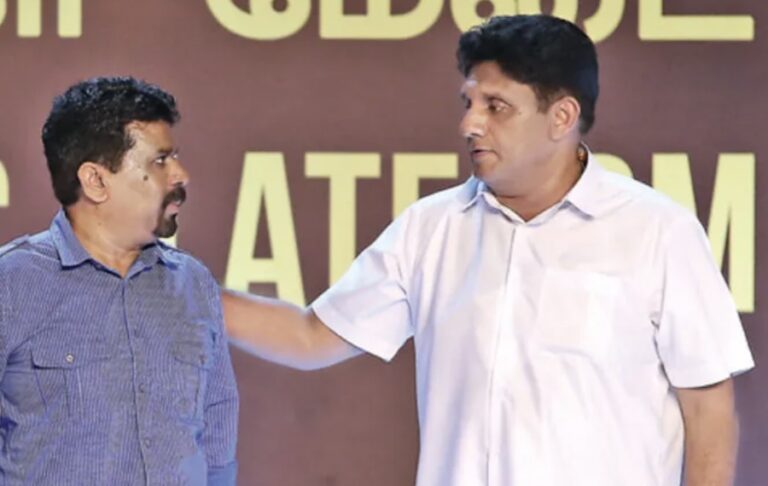
Sri Lanka’s political landscape is entering a decisive phase. With economic stabilisation still fragile, the search for leadership that combines experience, credibility, and vision has become central to public discourse. In this context, Sajith Premadasa has come of age as a national leader, positioning himself as the most formidable candidate to take on Anura Kumara Dissanayake (AKD) in a future presidential contest.
Journey
Premadasa’s journey has been long and often underestimated. For years, critics dismissed him as an extension of his father’s legacy rather than a leader in his own right. Yet, his resilience, consistent focus on grassroots issues, and ability to navigate the challenges of opposition politics have strengthened his credibility. Today, he leads the Samagi Jana Balawegaya (SJB), a party widely regarded as the best-organised and most professional political team in Sri Lanka. Unlike smaller, personality-driven outfits, the SJB has attracted technocrats, professionals, and seasoned political figures, giving it a depth and balance rare in the current political spectrum.
Opportunity to Unify
A significant factor working in Premadasa’s favour is the inevitability of generational change. President Ranil Wickremesinghe, for all his achievements in steering the country through its darkest economic crisis, is now widely viewed as too old to seek another mandate. His role has been historic, but the baton must pass. In this vacuum, Sajith emerges not only as a viable alternative but also as a leader who has grown into the role through years of persistence, constructive opposition, and steady policy articulation.
The Limits of Populism
Anura Kumara Dissanayake, meanwhile, has been riding high on populist rhetoric and the goodwill generated by the JVP’s promise of change. But the test of leadership goes beyond fiery speeches and exposés of opponents. If AKD is to build a lasting legacy, he must abandon the politics of witch-hunting. The law must be applied equally—not just against rivals but also against his own camp. Failure to do so risks reducing him to another partisan figure unwilling to rise above vendetta politics.
The Arrest of Ranil
The recent arrest of Ranil Wickremesinghe on a poorly framed charge revealed how much political capital Anura has squandered. The government cut a sorry figure by pursuing this action, pleasing only a narrow base rather than governing in the interest of all. Governing a country is not about pandering to 35% of the electorate. Anura must not forget that he failed to secure even 45% of the vote at the last election. If he continues down this path, he risks being remembered not as a reformer, but as a leader who squandered his mandate.
The Future
With three and a half years still left in his tenure, Anura has a choice. He can waste this time chasing enemies, or he can channel his political capital into reform, governance, and institution-building. If he fails, Sajith Premadasa and the SJB—backed by the most credible team in opposition—will be ready to take the reins.
Sri Lanka deserves a mature contest between leaders with clear plans, not a circus of vendetta politics. Sajith Premadasa, with his political maturity, growing stature, and proven team, is now best placed to take on Anura in that decisive battle for the country’s future.
Trio Apprehended Over Double Homicide in Southern Sri Lanka, Cache of Weapons Seized

September 09, Colombo (LNW): Law enforcement authorities have arrested three individuals in connection with the recent double murder that took place in Thekkawatta, Middeniya.
The suspects, all 25 years of age and hailing from Embilipitiya, were apprehended during a targeted operation carried out by the Tangalle Division’s Criminal Investigation Unit.
The investigation stems from the grisly discovery of two bodies in a teak plantation in Thorakolayaya, Middeniya, in June this year. The victims, aged 26 and 40, were also identified as residents of Embilipitiya.
Their deaths were the result of gunshot wounds, and the killings sent shockwaves through the local community, prompting a large-scale police inquiry.
Following the arrest of the suspects in Embilipitiya, police conducted interrogations which led to the recovery of a substantial arsenal of weapons and ammunition believed to be linked to the shootings. Among the items seized were:
* A submachine gun resembling an Uzi
* A 9mm pistol
* Fifty-three rounds of 9mm ammunition
* Twenty-five rounds of foreign-manufactured 12-gauge shotgun ammunition
* Four rounds of .45 calibre bullets
* Nineteen rounds of T-56 assault rifle ammunition
* Two spent T-56 cartridges
* A pair of handcuffs
* 300 milligrams of heroin
The seizure suggests the group may have access to an organised supply of illegal weaponry and narcotics. Investigators are now looking into whether the suspects have links to broader criminal networks operating in the region or beyond.
The presence of high-powered firearms and military-grade ammunition has heightened fears that this may not be an isolated incident, but rather part of a more extensive pattern of organised violence. Security officials have indicated that further arrests may be forthcoming as the investigation expands.
Sri Lanka Reaffirms Commitment to Reform and Reconciliation at UNHRC
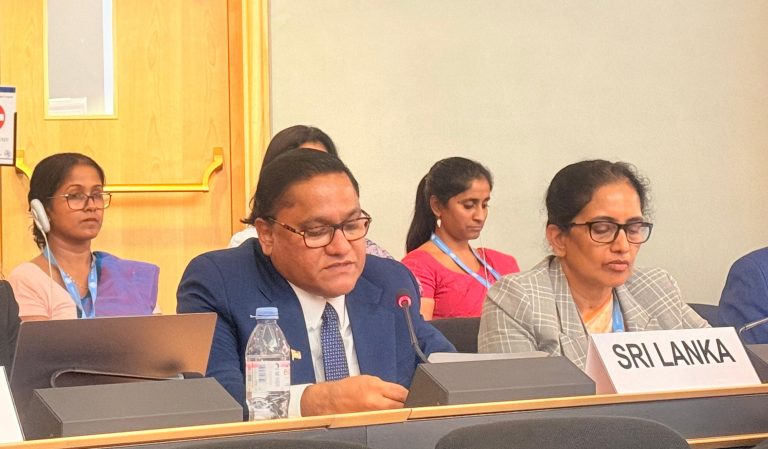
September 09, Colombo (LNW): Addressing the 60th session of the United Nations Human Rights Council (UNHRC) in Geneva, Minister of Foreign Affairs, Foreign Employment and Tourism, Vijitha Herath, affirmed Sri Lanka’s determination to pursue a path of meaningful reform, national unity, and democratic renewal.
He underscored the new administration’s resolve to reshape the country’s political culture and uphold the rights and dignity of all citizens, regardless of background or affiliation.
The remarks were delivered during the Council’s Interactive Dialogue on Sri Lanka, where Herath reiterated the government’s position that reconciliation and progress must be anchored in nationally-led, inclusive processes.
He appealed to the international community to extend both time and space for these efforts to take root, noting that positive strides had already been made within a relatively brief span under the current government.
The Minister also highlighted that the domestic reform agenda was being pursued with renewed political will and openness to dialogue, adding that significant work had been undertaken to build bridges between communities, promote accountability, and create lasting structures for justice and equity. The overarching message was one of engagement—not avoidance—and of partnership rather than imposition.
His intervention came amid a wide-ranging dialogue in which representatives from 43 countries participated, reflecting a diverse spectrum of international opinion. Several states, including those representing the Gulf Cooperation Council (GCC) and a range of nations across Asia, Africa, and Latin America, expressed clear support for Sri Lanka’s approach.
These countries welcomed Colombo’s willingness to cooperate with the Council and acknowledged the visit of the UN High Commissioner for Human Rights, Volker Türk, to Sri Lanka earlier this year as a positive step towards greater transparency and collaboration. Many also recognised the concrete progress the country had made, particularly in areas such as legislative reform, institutional renewal, and intercommunal dialogue.
A recurring concern voiced by a number of states was the risk posed by externally imposed accountability frameworks. Some questioned the allocation of limited UN resources to mechanisms that, in their view, could duplicate or undermine ongoing domestic efforts. Several delegations warned that such approaches could inadvertently deepen divisions rather than support reconciliation.
Others raised objections to the perceived politicisation of human rights discourse, arguing that targeted country-specific mechanisms ran counter to the Council’s principles of fairness, impartiality, and respect for sovereignty. They called instead for a spirit of constructive dialogue, mutual respect, and genuine cooperation as the only viable path to advancing human rights in any context.
In a related statement, the Ministry of Foreign Affairs noted that High Commissioner Türk, during his visit in June, had the opportunity to meet with a broad cross-section of Sri Lankan society—from political leaders and civil society groups to religious and community figures. These interactions, the Ministry said, reflected Sri Lanka’s openness to engage on difficult issues and its willingness to listen.
Sri Lanka’s delegation to the 60th UNHRC session was led by Minister Herath and included senior diplomatic and ministerial officials such as Ambassador Himalee Arunatilaka, Sri Lanka’s Permanent Representative to the United Nations in Geneva; Dayani Mendis, Director General for the United Nations and Human Rights at the Ministry of Foreign Affairs; as well as members of the Permanent Mission in Geneva.
Prime Minister Urges Shift Towards Innovation-Driven Education at Launch of Youth Inventor Initiative
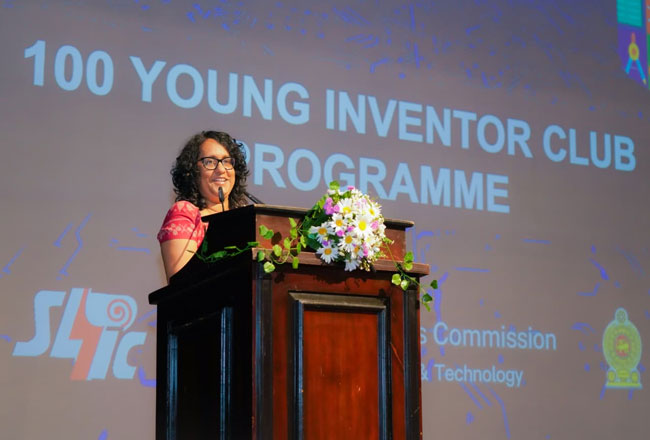
September 09, Colombo (LNW): In a call for transformative change within the education sector, Prime Minister Dr Harini Amarasuriya underscored the urgent need to cultivate a generation of thinkers who are not only informed, but also imaginative, inquisitive, and analytically minded.
Speaking at the inauguration of a nationwide initiative aimed at embedding innovation into the school system, the Prime Minister emphasised that Sri Lanka’s future prosperity will depend on the creativity and critical faculties of its youth.
The event, held on Monday at the Faculty of Medicine, University of Colombo, marked the formal launch of a national programme to establish 100 ‘Young Inventor Clubs’ across schools island-wide. Organised by the Ministry of Science and Technology, the initiative was launched under the joint patronage of the Prime Minister and the Minister of Science and Technology, Professor Chrishantha Abeysena.
In a symbolic gesture to initiate the programme, nine schools—each representing one of Sri Lanka’s provinces—were presented with ‘Innovation Tokens’ by the Prime Minister, formally setting the stage for the formation of inventor clubs in the school network.
The gathering brought together educators, policymakers, scientists, and students for a wide-ranging discussion on how innovation can serve as a cornerstone for national development. Topics explored included the economic potential of fostering innovation from a young age, the structural reforms needed in education, the intellectual property rights associated with student inventions, and the broader role of innovation in cultivating a future-ready workforce.
In her keynote address, Dr Amarasuriya challenged conventional notions of academic success, asserting that innovation should not be measured by degrees, grades, or patent counts, but rather by the tangible impact one makes in improving society. She advocated for an education model that transcends rote learning and embraces independent thought, curiosity, and problem-solving.
“What the world needs today are not passive consumers of information, but young minds who can question what they are told, reinterpret existing data, and use it in ways that can transform lives,” she said. “It’s not about how much you know—it’s about how you think.”
She went on to stress that fostering a culture of socially conscious innovation is a responsibility that rests not just with educators and institutions, but also with the government. The state, she said, must create the right conditions—both material and cultural—for young inventors to thrive. This includes nurturing values of empathy, responsibility, and ethical engagement alongside technical skills.
Professor Chrishantha Abeysena, speaking at the same event, echoed the Prime Minister’s sentiments. He highlighted the critical importance of positioning innovation as a national priority, emphasising that both the Ministry of Science and Technology and the Ministry of Education bear responsibility for nurturing the country’s most vital asset: its young people.
He noted that Sri Lanka’s future will be shaped not only by its natural resources or infrastructure, but by the ideas and ingenuity of the next generation. The government, he affirmed, is committed to supporting young innovators and providing them with the platforms and opportunities they need to pursue their ambitions.
The newly launched inventor clubs are expected to serve as incubators for youthful creativity, where students can collaborate on projects, explore new technologies, and gain hands-on experience in fields ranging from engineering to environmental science.
Supreme Court Greenlights Bill to Revoke Presidential Entitlements
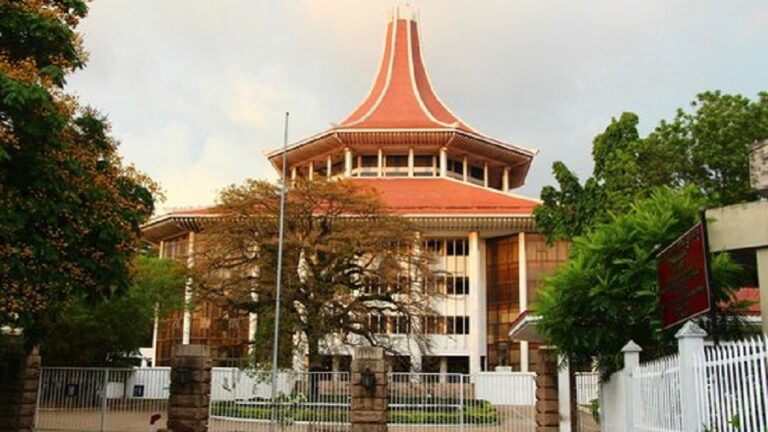
September 09, Colombo (LNW): Parliament was informed today (09) by Speaker Dr Jagath Wickramaratne that the Supreme Court has found no constitutional barriers to the proposed legislation aiming to repeal the entitlements previously afforded to former Presidents of Sri Lanka.
According to the announcement made during today’s session, the apex court concluded that the draft law does not conflict with any clauses of the current Constitution.
As a result, the legislative process can move forward without the need for a special majority or a public referendum. The Speaker confirmed that the bill may be passed through a simple majority vote in Parliament.
The proposed repeal has been the subject of considerable public and political attention, as it signals a shift in the country’s approach to post-presidential privileges.
Heavy falls about 100 mm expected: Public urged to exercise caution (Sep 09)

September 09, Colombo (LNW): Showers or thundershowers will occur in most parts of the island after 1.00 p.m.
Heavy falls about 100 mm are likely at some places. A few showers may occur in Western province and in Galle and Matara districts.
The general public is kindly requested to take adequate precautions to minimise damages caused by temporary localised strong winds and lightning during thundershowers.
Marine Weather:
Condition of Rain:
Showers may occur at several places in the sea areas off the coast extending from Puttalam to Matara via Colombo and Galle.
Winds:
Winds will be westerly to south-westerly in the sea areas off the coasts extending from Colombo to Pottuvil via Galle and Hambantota. Wind speed will be (30-40) kmph and can be increase up to 50 kmph at times.
Winds will be south-westerly or variable in direction and wind speed will be (20-30) kmph in the other sea areas around the island.
State of Sea:
The sea areas off the coast extending from Colombo to Pottuvil via Galle and Hambantota may be fairly rough at times. Temporarily strong gusty winds and very rough seas can be expected during thundershowers
Sri Lanka’s Logistics Boom Stalled: De-Consolidation Ban Bites
By: Staff Writer
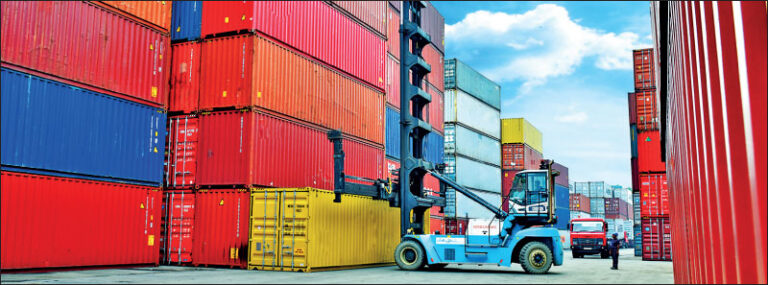
September 08, Colombo (LNW): Sri Lanka’s emergence as a logistics hub for South Asia is faltering after Customs authorities clamped down on de-consolidation, a trade practice that once brought the island considerable economic activity.
For years, Sri Lanka functioned as a vital regional center where consolidated shipments from global e-commerce platforms were broken down, with Sri Lankan goods separated locally and Indian-bound parcels dispatched onward to cities such as New Delhi, Chennai, and Trivandrum.
The new Customs regulations have effectively halted this operation, forcing online retailers and logistics firms to change their supply chain strategies and depriving Sri Lanka of a competitive edge in regional trade.
The change stems from a recent Customs decision to end the bulk clearance system by weight and instead impose duties on individual items using the HS-code classification. Officials argue this move enhances accuracy in tax collection and prevents the abuse of loopholes that allowed commercial shipments to be declared as personal imports.
While this measure may bring more discipline to customs processes, the unintended consequence has been a dramatic collapse in the de-consolidation business. Shipments that once arrived daily for redistribution are now routed elsewhere, leaving Sri Lanka sidelined as a logistics player.
Opposition legislator Ravi Karunanayake, who has experience in the logistics sector, has voiced strong criticism of the new regime. Speaking before the Committee on Public Finance, he explained that Sri Lanka had developed a unique advantage as a consolidation and de-consolidation hub, but that “if there is vision for a logistics operation, it has completely stopped.”
He further warned that the revenues previously generated from handling these consignments would now be lost entirely, as global operators divert their cargo through more business-friendly centers such as Singapore, Hong Kong, or Bangkok.
“Now the goods are going to another country and are coming as de-consolidated cargo. So those revenues we will lose completely,” he cautioned, urging policymakers to study how regional competitors maintain trade efficiency.
The losses are not merely theoretical. Sri Lanka’s position as a shipping hub has already been under strain, with business chambers warning that manufacturers face delays in importing raw materials due to customs backlogs.
Parcels now require individual classification, resulting in bottlenecks and operational inefficiencies that have left thousands of shipments stranded at Customs warehouses.
Local business associations estimate that the country is losing between Rs. 35 million and Rs. 50 million each day due to misclassification, inefficiency, and the diversion of legitimate business away from Colombo.
E-commerce platforms such as AliExpress have already scaled back low-cost shipping options to Sri Lanka, leaving local consumers facing exorbitant costs sometimes as high as Rs. 18,000 just to import a simple replacement keycap while neighboring Bangladesh continues to enjoy free shipping thanks to its more liberal trade regime.
Supporters of the new customs policy argue that the reform is necessary to plug tax loopholes and protect local industries, particularly apparel manufacturers who had long complained about competition from duty-free online imports.
They emphasize that the previous weight-based clearance system was open to abuse, with widespread under-declaration of commercial imports.
By introducing HS-code-based item classification, Customs officials believe they have introduced greater transparency and reduced opportunities for collusion or corruption. From their perspective, only goods destined for Sri Lankan customers are affected, with no restrictions on transshipment or transit cargo.
Yet the costs appear to outweigh the benefits in the eyes of many stakeholders. Sri Lanka, ranked 73rd out of 139 countries in the World Bank’s 2023 Logistics Performance Index, has long been told it must improve clearance efficiency to remain competitive.
Instead of moving forward, the country risks sliding further down the ranks, undermining its strategic geographic advantage in the Indian Ocean. The logistical setbacks now threaten both consumer confidence in e-commerce and the country’s aspirations of becoming a regional shipping hub.
The government has appointed a committee to explore reforms, including the possibility of introducing a de-minimis threshold for low-value imports, but without a practical mechanism to handle consolidated cargo, industry observers doubt whether the de-consolidation trade will return.
Unless Sri Lanka can strike a balance between tax enforcement and trade facilitation, it risks losing out to regional competitors who have already mastered this equilibrium.
The de-consolidation saga underscores a broader dilemma confronting Sri Lanka: whether to prioritize protectionist policies in favor of domestic industries or to embrace trade liberalization to unlock the island’s logistics potential.
For now, the clampdown has left the nation caught in the middle. Consumers are burdened, businesses are throttled, and the dream of positioning Colombo as South Asia’s logistics hub appears to be slipping away.
CEB Profits Rise, Yet Consumers Face Fresh Tariff Hike
By: Staff Writer
September 08, Colombo (LNW): Despite trade union unrest and a controversial restructuring process, the Ceylon Electricity Board (CEB) has quietly submitted yet another proposal for a tariff hike to the Public Utilities Commission of Sri Lanka (PUCSL). The request, made last week, seeks a 6.8% increase in electricity charges, even as the state utility records a return to profitability.
A senior PUCSL official confirmed receipt of the proposal but declined to reveal details until its formal release later this week. However, CEB insiders admitted the proposed hike is already on the table, though not yet approved.
The irony is glaring. After bleeding losses of Rs. 18.47 billion in the first quarter of 2025, the CEB swung back into the black, posting a Rs. 5.31 billion profit by the quarter ending June. The turnaround followed the June tariff revision, which increased rates by 15% despite CEB initially demanding 18.3%. Yet, when compared with Rs. 34.53 billion profit recorded in the same quarter last year, the latest earnings represent an 85% plunge, raising questions about long-term financial sustainability.
Industry experts note that tariff adjustments have now become a double-edged sword. While they are necessary to meet the International Monetary Fund’s (IMF) requirement for cost-reflective pricing, they come at the expense of consumers already battered by a rising cost of living. The January 2025 tariff cut of around 20% largely a political decision created an artificial loss in the first quarter, but PUCSL has already ruled that deficit out of the June–December 2025 pricing formula. Instead, any shortfalls or surpluses from the first half of 2025 will be carried forward into the 2026 calculations.
Adding to the controversy, the PUCSL rejected a disputed Rs. 8.2 billion negative revenue adjustment highlighted by the Auditor General. According to CEB’s own forecast, electricity sales for the second half of 2025 are expected to hit 9,329 GWh, generating a colossal Rs. 230.7 billion in revenue of which domestic users will shoulder the heaviest burden, accounting for Rs. 210.7 billion.
The latest tariff revision in June has already pushed up household bills. Smaller domestic users consuming fewer than 30 units saw their per-unit charge rise by 8% and fixed charges increase by Rs. 5. Higher consumption brackets faced even steeper hikes, while industrial, hotel, and general-purpose categories also recorded sharp increases.
Now, with another 6.8% hike under consideration, consumer advocates warn that electricity affordability will become a serious economic flashpoint. While CEB insists tariff hikes are necessary for financial recovery, the optics of demanding higher prices amid reported profits are bound to ignite public anger.
Analysts caution that the tariff formula though transparent on paper risks turning into a blunt instrument that prioritizes IMF compliance over consumer welfare. If CEB continues to chase profitability through back-to-back hikes, the very citizens who bailed the utility out during its crisis will be left footing an ever-growing bill.
The looming tariff revision, therefore, is not just a technical adjustment; it is a political and economic litmus test for how Sri Lanka balances fiscal discipline with social equity.