By: Staff Writer
August 24, Colombo (LNW): Sri Lanka took a significant step toward strengthening its position in the regional maritime industry this week, with the Ceylon Petroleum Corporation (CPC) and its subsidiary, the Petroleum Storage Terminals Company (PSTC), unveiling an expanded pipeline and bunkering facility at the Port of Colombo.
Until now, bunkering operations at the port were constrained due to a limited pipeline network and the heavy dependence on the Dolphin Jetty, which also handled the country’s oil imports. This dual usage created bottlenecks that restricted the smooth supply of bunker fuel to vessels, limiting Sri Lanka’s competitiveness in the lucrative maritime fuel market.
As part of the government’s new infrastructure development plan, the PSTC constructed a fresh pipeline system and oil-loading terminal at the South Jetty. On 22 August, the CPC successfully supplied bunker fuel through this facility for the first time, partnering with a private operator engaged in bunkering.
Minister of Power and Energy, Eng. Kumara Jayakody, described the milestone as a turning point: “The dependence on the Dolphin Jetty was a serious obstacle for growth. With the South Jetty now operational, we have opened the door for Colombo to expand its role as a maritime service hub.”
Strategic Importance of Bunkering
Bunkering—the supply of fuel to ships—is one of the most vital services in global shipping. Ports that offer efficient and competitively priced bunkering attract greater vessel traffic, boosting ancillary services such as repairs, logistics, and port revenues. In Asia, hubs such as Singapore and Fujairah (UAE) have long dominated the industry, drawing billions in revenue annually.
For Sri Lanka, located at a strategic crossroads of the Indian Ocean’s busiest east–west shipping lanes, the expansion of bunkering facilities is seen as a key opportunity to diversify its foreign exchange earnings and strengthen the Port of Colombo’s competitiveness. Analysts note that if Colombo enhances reliability and pricing, it could capture a significant share of vessel refueling traffic currently bypassing Sri Lanka.
A Step Toward a Regional Maritime Hub
The government envisions Colombo’s bunkering expansion as part of a larger strategy to establish Sri Lanka as a central maritime hub. By reducing operational constraints, CPC and PSTC’s joint effort with the Sri Lanka Ports Authority aligns with national development goals to generate new revenue streams and support post-crisis economic recovery.
Moreover, improved bunkering capacity could position Colombo to benefit from increasing demand for low-sulfur marine fuels under international environmental regulations, offering Sri Lanka a competitive edge in greener shipping services.
The August 22 milestone not only strengthens CPC’s operational efficiency but also signals Sri Lanka’s intent to move beyond being a transshipment port, positioning itself as a full-service maritime destination in the Indian Ocean.
CPC Expands Bunkering Facilities to Boost Colombo’s Maritime Fuel Hub Role

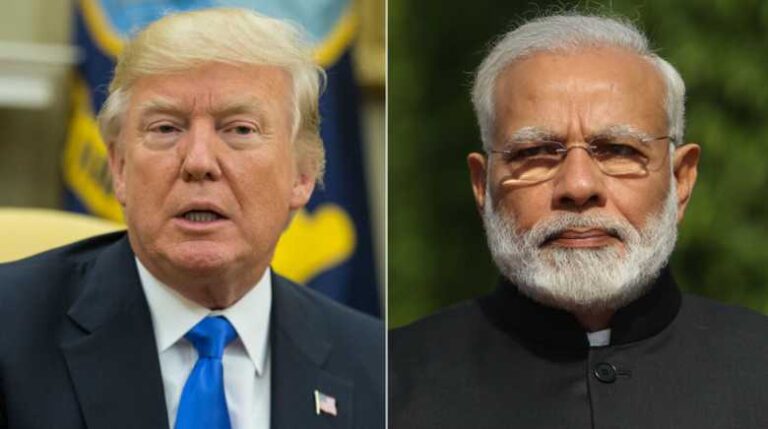
The Cost of Maintaining Trump and Modi in a Day
By Adolf
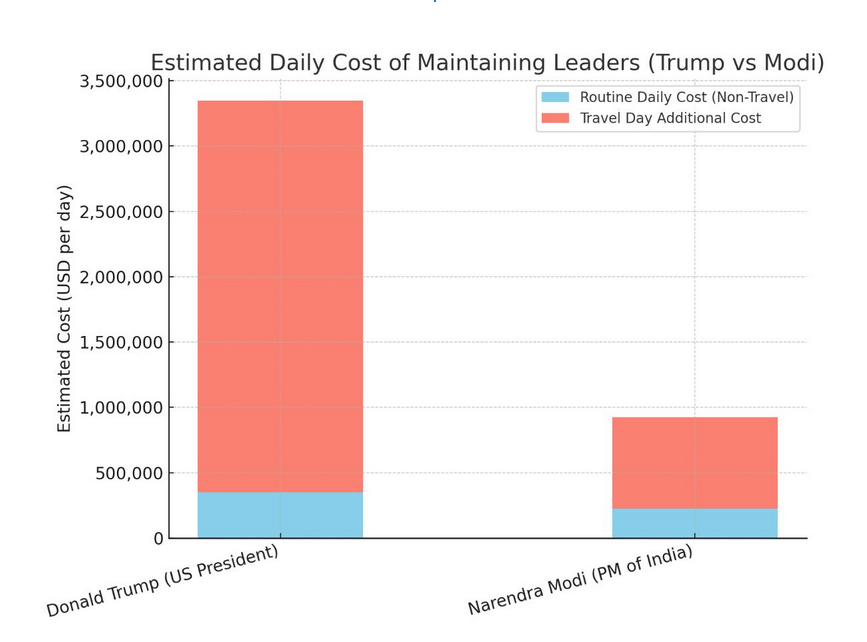
With much debate today over the reported 16 million spent on security for former President Ranil Wickremesinghe , and questions about the procedures followed leading to his imprisonment, it is useful to place such spending in a global context. The daily cost of maintaining top political leaders has long been a subject of discussion, particularly when comparing figures for U.S. President Donald Trump and Indian Prime Minister Narendra Modi.
For Donald Trump, security and operational expenses for his presidency are exceptionally high. Securing Trump Tower—his private residence in New York—is estimated at around $300,000 per day, with costs rising further when his family stays there. Travel added substantially: operating Air Force One costs about $142,000 per flight hour, so a multi-country trip could exceed $5 million, averaging over $700,000 per day.
Narendra Modi’s security is overseen by the Special Protection Group (SPG), which in 2020–21 had an annual allocation of ₹592 crore (around $72 million). This translates to roughly $200,000 per day. On foreign visits, costs increase significantly, with Air India One operations and logistics pushing daily expenses to $600,000–$800,000.
These comparisons highlight the vast sums required to protect global leaders, reflecting both the burden on taxpayers and the premium placed on national leadership security to protect the dignity of the office of Head of State and the image of the country.
Sri Lanka strengthens Audit Bill with IMF-backed powers for accountability
By: Staff Writer
August 24, Colombo (LNW): Sri Lanka is moving closer to tightening its financial governance framework with the National Audit (Amendment) Bill, which has now received the green light from the Parliamentary Sectoral Oversight Committee on Governance, Justice and Civil Protection.
The Bill is expected to be taken up for debate in Parliament shortly, marking a critical step in enhancing accountability and oversight of public finances at a time when the country is under close international scrutiny.
The Amendment, drafted in line with recommendations from the International Monetary Fund (IMF) under its Extended Fund Facility (EFF) programme, seeks to strengthen the authority of the Auditor General’s Department by providing it with enforceable powers rather than limiting its role to reporting irregularities.
The IMF has repeatedly stressed that Sri Lanka must overhaul its governance and anti-corruption frameworks as part of structural reforms tied to financial support, making the Audit Bill a cornerstone of that agenda.
According to the Parliament Secretariat, the proposed law empowers the Auditor General to file complaints directly with law enforcement authorities in cases of fraud, corruption, or misappropriation uncovered during audits.
This move aims to ensure that audit findings no longer end with reports but translate into concrete legal action, addressing long-standing gaps in enforcement.
The Bill also introduces provisions for surcharges. The Auditor General will now be able to recommend financial penalties against officials or institutions responsible for losses or deficiencies in transactions.
A Surcharge Review Committee will be tasked with examining these recommendations, determining the amount to be imposed, and setting out the procedures for recovery. This mechanism, long called for by governance experts and development partners, is designed to create real financial accountability within state institutions.
The IMF has emphasized that for Sri Lanka’s public sector governance to be credible, the Auditor General must be equipped with sufficient powers to enforce compliance. Past IMF staff reports have pointed out that weak enforcement and political interference have undermined the effectiveness of audit recommendations.
Strengthening the independence and authority of the Auditor General was therefore listed as a “governance diagnostic priority” under Sri Lanka’s IMF-backed reform programme.
In addition to approving the Audit Bill, the Oversight Committee also reviewed performance reports of key institutions including the Justice and National Integration Ministry (2024), the Justice, Prisons Affairs and Constitutional Reforms Ministry (2023), the Attorney General’s Department (2022 and 2024), and the Legal Draftsman’s Department (2023).
If enacted, the National Audit (Amendment) Bill will mark a major milestone in Sri Lanka’s governance reforms, signaling both to citizens and international partners that the country is serious about curbing corruption and misuse of public funds.
Government Expenditure Procedures – For the Attention of President AKD
By Adolf
Given the controversy surrounding the manner in which the former President’s arrest was carried out on Friday, it is necessary to recall the long-established principles governing government financial practices.
Government financial regulations clearly set out the procedures relating to expenditure on official overseas travel. When an official returns from such a trip, a statement of accounts must be prepared, indicating the funds obtained, the expenses incurred, and any balance remaining. These accounts are then subject to verification, approval, and audit.
If any expense cannot be justified, the officer concerned must provide clarification. Where an expense is disallowed for valid reasons, the corresponding amount must be refunded. In this particular instance, it is important to note that these procedures were duly followed and that the Auditor General had already reviewed and approved the accounts.
Flawed process followed
It appears, however, that these established procedures were not properly examined before legal action was initiated. Proceeding directly to imprisonment, without reference to the systems and controls in place,
undermines due process and fairness, and cannot be equated with justice.
Verbal allegations alone cannot form the basis of accountability. Legal responsibility must rest on documentary evidence and the official records maintained under government financial regulations.
Accordingly, before pursuing legal action, it is essential that law enforcement and prosecuting authorities carefully review the government’s expenditure systems to ensure proper controls have been followed.
It would also be prudent for President Anura Kumara Dissanayake to reflect on this process, as he too could be subjected to similar treatment if due process is disregarded now for former Presidents.
Knowledge Hub to Drive Innovation at Sri Lanka’s Landmark Food Industry Expo Profood Propack & Agbiz 2025
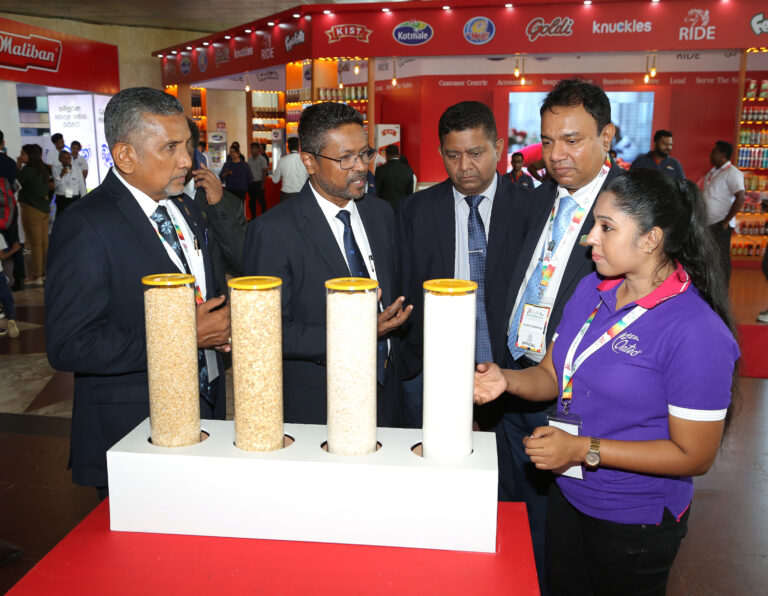
24 August 2025 Colombo LNW : The most anticipated event in Sri Lanka’s food industry calendar, Profood Propack & Agbiz 2025, organised by the Sri Lanka Food Processors Association (SLFPA) in partnership with Lanka Exhibition and Conference Services (LECS), will take place from 22 to 24 August 2025 at the Sirimavo Bandaranaike Exhibition and Convention Centre at BMICH, Colombo.
The exhibition is endorsed and supported by the Ministry of Industries, the National Agribusiness Council, and the Institute of Food Science and Technology Sri Lanka (IFSTSL).
For over 25 years, Profood Propack & Agbiz has been SLFPA’s flagship platform, advancing Sri Lanka’s food sector and contributing to economic growth. It unites market leaders from agriculture, food processing, packaging, and allied services, fostering knowledge-sharing, innovation, and strategic partnerships.
This year, the exhibition has expanded the Knowledge Hub – introduced last year – to include a well-structured Consumer Assistance Desk, serving as an important touchpoint for new entrepreneurs seeking assistance and guidance in identifying opportunities.
Mr Thusith Wijesinghe, President of SLFPA, remarked, “We are excited to present innovative food processing solutions, with the most outstanding entries receiving recognition and awards. Several of these have already progressed to commercialisation with the support of SLFPA, marking a significant step forward for the industry. To further strengthen this initiative, our Executive Committee has introduced a well-structured Industry Help Desk, located within the Knowledge Hub. This will serve as a vital resource for new entrepreneurs and trade visitors seeking guidance and support.”
Mr Aruna Senanayake, Co-Chairman of the Profood Propack Organising Committee 2025, said, “For more than two decades, Profood Propack & Agbiz has been at the forefront of Sri Lanka’s food industry, bringing together entrepreneurs, innovators, and investors under one roof. Our 2025 edition will build on this legacy by creating new pathways for trade, introducing fresh categories, and showcasing world-class solutions in food processing, packaging, and agribusiness. We are proud to offer a platform where ideas become opportunities, and opportunities turn into growth.”
A core objective of the event is to empower Small and Medium Enterprises (SMEs) to present their products, establish strategic connections, enter new markets, and explore collaborations. Given the pivotal role of SMEs in national development, the exhibition offers unrivalled opportunities for visibility and engagement.
Mr Vasantha Chandrapala, Co-Chairman of the Profood Propack Organising Committee 2025, added, “The strength of Sri Lanka’s food industry lies in its remarkable diversity, from small, family-owned enterprises rooted in tradition to large-scale processors driving innovation and efficiency. Profood Propack & Agbiz is a platform where that diversity truly shines, providing a space where every stakeholder, regardless of scale, can connect, collaborate, and contribute to industry growth. We are confident this year’s exhibition will serve as a catalyst for partnerships, investment, and knowledge exchange that will elevate the sector as a whole.”
This year’s Platinum Sponsors are Maliban Biscuit Manufactories (Pvt) Ltd, Cargills Ceylon PLC, and Pakona Engineers (India) Pvt. Ltd. The Gold Sponsors include Diamond Best Food (Pvt) Ltd and Aussee Oats Milling (Pvt) Ltd. Silver Sponsors comprise Goma Engineering (Pvt) Ltd, FPT Food Process Technology Co. Ltd, CMC Engineering Export GmbH, CBL Convenience Foods Lanka PLC, Country Style Foods (Pvt) Ltd, Rancrisp Marketing (Pvt) Ltd, Nelna Farm (Pvt) Ltd, Alli Company (Pvt) Ltd, Maliban Milk Products (Pvt) Ltd, Maliban Dairy & Agri Products (Pvt) Ltd, Freelan Enterprises, FMJ Plastics (Pvt) Ltd, Akhtari Trades (Pvt) Ltd, Nikini Automation (Pvt) Ltd, and Diana Trading Co. (Pvt) Ltd.
SandBrix Transforms Sri Lanka’s Digital Future With Free Cricket Streaming

By: Staff Writer
August 24, Colombo (LNW): Sri Lanka’s digital entertainment landscape is undergoing a dramatic transformation with the rapid rise of SandBrix, the country’s leading over-the-top (OTT) platform, which has emerged as the go-to hub for live cricket and global sports content.
The OTT model, short for “Over-The-Top,” delivers video and audio content directly over the internet, bypassing traditional channels such as satellite and cable TV.
This shift reflects global viewing trends, as audiences increasingly favor convenience, flexibility, and affordability over rigid subscription-based television services.
In Sri Lanka, where smartphone penetration is rising and internet costs are becoming more competitive, OTT platforms are gaining unprecedented traction.
SandBrix has positioned itself at the heart of this change by offering free access to more than 3,500 hours of live cricket.
The platform has already streamed 13 Test matches, 50 One Day Internationals (ODIs), and over 650 T20 fixtures, ranging from iconic tournaments like the Ashes and India’s tour of Australia to popular franchise leagues such as the Big Bash League, Shpageeza Cricket League, and Abu Dhabi T10.
For cricket lovers, this means barrier-free access to world-class sporting action without subscription fees.
The platform’s breakthrough moment came during IPL Season 18, when it captured record-breaking viewership and established itself as a disruptive force in Sri Lanka’s streaming market.
Riding on that momentum, SandBrix is gearing up to broadcast Sri Lanka’s upcoming overseas tours, starting with the Zimbabwe series in August and the much-anticipated Pakistan clash later this year.
A SandBrix spokesperson emphasized the platform’s inclusive vision: “Our mission is simple—cricket should be for everyone. We are proud to provide world-class sports entertainment completely free of charge, breaking down barriers to access.”
However, SandBrix is not stopping at sports. The platform has already ventured into entertainment by streaming the Miss Universe Sri Lanka Grand Finale, including exclusive behind-the-scenes coverage and the first interview with the crowned winner.
It now plans to expand into international cinema, documentaries, and lifestyle programming, aiming to become Sri Lanka’s one-stop destination for digital entertainment.
The significance of this initiative goes beyond entertainment. For Sri Lanka, SandBrix represents a pivotal step in democratizing online services at a time when digital accessibility is increasingly tied to social inclusion and economic growth.
Free, high-quality streaming not only bridges the urban-rural divide but also accelerates internet adoption, strengthens digital literacy, and opens new avenues for advertising and e-commerce
The dangerous myth of unpaid public service – Tharaka Balasuriya
My mother carries a diary of my grandmother, a poignant reminder of the sacrifices made in the name of public service. It details how my grandmother, a reasonably wealthy woman, was left with so little after her husband, my grandfather, had devoted his life to his community and country.
Though he was a self-made man, a teacher, a Principal, a scholar, and a Member of Parliament with an immense reputation for virtue, my grandfather left nothing for his family, not even enough money to afford his own casket. His service was total, but its cost was borne by his family. My mother keeps that diary, I believe, as a reminder that there is no glory in blind service at the expense of one’s family.
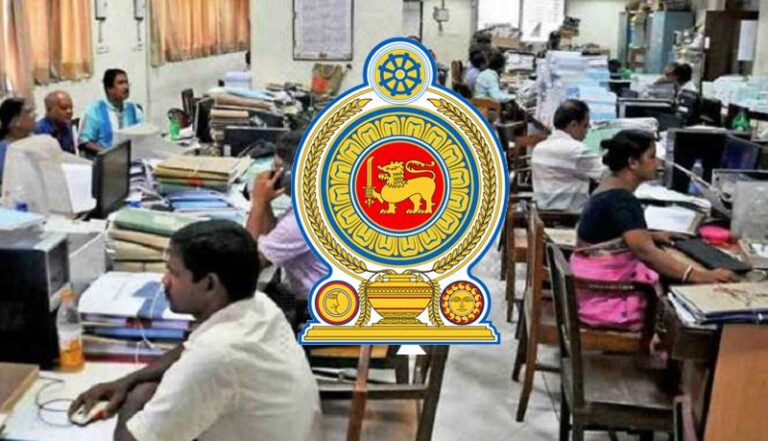
This anecdotal history seems to be a template for the new Janatha Vimukthi Peramuna (JVP)/National People’s Power (NPP) Government’s attitude towards public service. It reinforces the dangerous myth that public service is the most noble cause and can only be fulfilled by one who sacrifices everything.
In this view, public servants should not be rewarded for their immense effort and power. It’s a belief deeply embedded in the psyche of people like Anura Kumara Dissanayake and the JVP, whose recent success has come after a long road of blood, sweat, and tears. This narrative, while powerful, is a pseudo-free public service that takes away all accountability for a leader’s actions.
Public service is not a part-time passion project; it is a full-time, serious job of nation-building. It is a dangerous myth that everyone works for free. Only a handful of individuals are financially independent enough to do so. What about the rest?
When public leaders are at the mercy of businessmen, their decisions become tilted towards business agendas, not the nation’s best interests. It’s a fundamental management principle: not paying people a reasonable remuneration is a bad policy. Expecting those who hold immense power to work for an altruistic purpose is simply a terrible policy.
I have learnt this lesson firsthand. Despite being a third-generation politician, I came from the corporate world. My career was built on the principles of financial integrity and professionalism. When I entered politics, I was determined to conduct my public life with the same standards, ensuring I earned an honest living to support my family.
The JVP’s narrative, however, painted everyone in the opposing camp as rogues, and even Balasuriya, a family name tied to public service, lost an election over this powerful narrative.
The emotional toll of that period was immense. As a loving husband and a father to two beautiful young daughters, I could never justify sacrificing their future on the altar of a political myth. My story isn’t one of glory, but a simple truth: one must be financially secure to serve without compromise.
I have heard Lee Kuan Yew’s argument about the need to pay public representatives well to attract the best talent. While this might not be politically palatable in Sri Lanka, the core principle holds true. Evidence suggests that inadequate salaries lead to more corruption, not less.
We cannot expect people to dedicate their lives to the betterment of the country if they are not provided the basic means to survive. Reasonable remuneration is required so that people who have a passion for public service can have an opportunity to dedicate their lives to the country.
However, salaries alone will not combat corruption. It is just as important to establish effective monitoring systems and eliminate the impunity that many politicians and people in high positions have enjoyed for so long in Sri Lanka.
Ultimately, politics reflects society at large. As I have heard from my father, who served as a politician himself, “You cannot expect an island of virtue in an ocean of corruption.”
Before we jump on the bandwagon and argue that MPs should not get pensions or salaries, we should ask ourselves honestly what sacrifices we are willing to make in our own careers and for how long, at the expense of our families.
*The writer is a former State Minister of Foreign Affairs. He is a third-generation politician and a former corporate executive.
*The article was published on The Sunday Morning.
Why is Sri Lanka resource-rich yet wealth-poor?
By Panduka Keerthinanda
Sri Lanka is a nation of paradox: it is endowed with abundant natural resources, including fertile agricultural land and valuable minerals, yet it struggles with widespread poverty and economic instability. This discrepancy arises from a complex interplay of historical policies, governance issues, economic structure, and external factors.
Given here are the reasons behind this paradox, supported by evidence from the search results.
Historical and policy-related constraints
Outdated agricultural policies: The Paddy Lands Act of 1958, still in force, was intended to protect tenants but has instead led to generational land disputes and entrenched poverty among farmers. This policy discourages investment and innovation in agriculture, perpetuating inefficiency and low productivity.
Mismanagement of mineral resources: Sri Lanka possesses high-quality graphite, phosphate, and ilmenite deposits. But these resources are under-exploited due to corruption, mismanagement, and lack of technological expertise. For example, the nationalization of graphite mines in 1971 led to a decline in exports from dominance to just 10,000 metric tons annually, despite reserves of 1.5 mn tonnes. Similarly, phosphate mining suffers from quality issues, leading to returned products and lost revenue .
Lack of political will: Short-term political agendas prioritize votes over long-term economic growth. Policies are often skewed to serve immediate interests rather than sustainable development, resulting in wasted resources and missed opportunities.
Structural economic issues
Over-reliance on low-value agriculture: Agriculture employs about 30% of the workforce but contributes only 7–8% to GDP. Most farmers work in low-productivity subsistence farming, with limited access to modern technology, credit, and markets. This traps rural populations in poverty, as agricultural growth has not translated into higher incomes.
Inequality between urban and rural areas: Wealth is concentrated in urban centres, while rural areas (home to 75% of the population and 85% of the poor) lack infrastructure, education, and opportunities. This spatial inequality hinders inclusive growth.
Vulnerability to external shocks: Sri Lanka’s economy depends on exports of tea, rubber, and apparel, which are susceptible to global price fluctuations and demand shifts. The COVID-19 pandemic, for instance, caused a 25% decline in exports, exacerbating poverty and unemployment.
Governance and institutional failures
Inefficient State-Owned Enterprises (SOEs): SOEs, such as those in mining and energy, are often managed by political appointees rather than professionals. They operate without accountability, incurring massive losses. For example, the national airline lost more money in eight months than the annual budget for poverty alleviation programmes.
Protectionism and lack of competition: Government monopolies in sectors like lotteries and aviation stifle competition and innovation. Profits in these sectors arise from monopolistic practices rather than wealth creation, further hindering economic dynamism .
Erosion of wealth creation capacity:As Bill Gates noted, wealth is not merely having resources but the ability to create and recreate wealth. Sri Lanka has failed to develop this capacity due to poor governance, corruption, and a lack of entrepreneurial culture.
Social and developmental challenges
High malnutrition and poor human capital: 22% of Sri Lankans suffer from malnutrition, which affects cognitive development and productivity. Despite high primary school enrolment, education quality is low, limiting the workforce’s skills and adaptability .
Inadequate social safety nets: While poverty rates have decreased, social protections remain weak. Only a small fraction of the poor benefit from programs like cash transfers, leaving many vulnerable to shocks like health crises or natural disasters.
Impact of climate change: Frequent floods and droughts threaten food security and livelihoods, particularly in rural areas. This exacerbates poverty and strains limited resources.
Global and geopolitical factors
Competition and market access: Sri Lanka faces intense competition from countries like Madagascar (in graphite) and Vietnam (in agriculture). Without competitive advantages or value addition, it struggles to retain market share.
Dependence on foreign investment and aid: While foreign investment is needed for infrastructure and mining, Sri Lanka has often partnered with unqualified companies, leading to sub-optimal outcomes. Additionally, the country relies on loans and aid to sustain basic imports, such as fuel, further eroding economic sovereignty.
Potential solutions and missed opportunities
Value addition in resources: Sri Lanka could process minerals like graphite and phosphate domestically to capture higher value. For example, graphite could be used in batteries and electronics, while phosphate could be refined into fertilizers .
Tourism and services expansion: Tourism, which earned $15 billion in 2024, could be expanded to $100–150 billion by leveraging natural scenery and cultural assets. Similarly, IT and BPO services could grow significantly with targeted investments .
Port and logistics development: Strategically located ports like Colombo and Hambantota could become regional hubs, boosting trade and logistics services .
Agricultural modernization: Investing in high-value crops (e.g., organic tea, spices) and agro-processing could increase farmers’ incomes and export earnings.
The path forward
Sri Lanka’s poverty amidst plenty is not inevitable. It stems from deep-rooted institutional and policy failures rather than a lack of resources. To transform its economy, Sri Lanka must:
1. Reform policies to encourage private investment and competition.
2. Invest in human capital through better education and healthcare.
3. Modernize agriculture and mining to add value and increase productivity.
4. Strengthen governance to curb corruption and improve public sector efficiency.
5. Leverage its geographic location to become a tourism, logistics, and services hub.
With political will and strategic action, Sri Lanka could potentially triple its GDP in a decade, lifting millions out of poverty. As the World Bank emphasizes, growth must be inclusive and coupled with investments in people and resilience to ensure sustainable prosperity .
(The writer is an attorney-at-law)
Opposition Unites in Condemnation of Ranil Wickremesinghe’s Arrest, Warns Against “Constitutional Dictatorship”
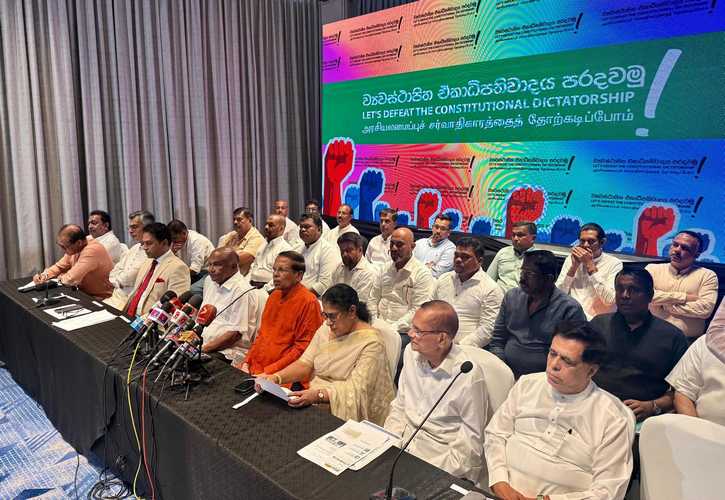
August 24, Colombo (LNW): In an unprecedented show of unity, leaders from across Sri Lanka’s opposition spectrum convened today (24 August) in Colombo to condemn the arrest and remand of former President Ranil Wickremesinghe, warning that the move marks a dangerous slide towards authoritarianism.
Held under the banner “Let’s Defeat the Constitutional Dictatorship”, the joint press conference saw political rivals and former critics of Wickremesinghe come together in defence of democratic principles, asserting that the government’s actions represent an abuse of legal processes to suppress dissent.
The event was attended by a broad range of political figures, including Former President Maithripala Sirisena, SLPP National Organiser Namal Rajapaksa, Wajira Abeywardana, Sagala Rathnayaka, Prof. G. L. Peiris, Patali Champika Ranawaka, Harin Fernando, and several other former ministers and Members of Parliament from across party lines.
In a striking display of political solidarity, many of the attendees had previously been outspoken critics of Wickremesinghe’s leadership, yet now find themselves rallying behind him in the face of what they allege is a politically motivated detention.
Maithripala Sirisena, addressing the media first, pledged full cooperation from all opposition forces to seek the release of the former president. “This is not just about one individual. This is about defending our democracy. All stakeholders will work with commitment and urgency,” he said.
Former Minister Thalatha Athukorala, General Secretary of the UNP, read out a statement from former President Chandrika Bandaranaike Kumaratunga, who had earlier condemned the arrest as a calculated assault on democratic values.
Representing the collective voice of the opposition, Prof. G. L. Peiris provided a legal and constitutional critique of the arrest. He stated that while addressing corruption is vital, the responsibility of determining guilt lies solely with the judiciary — not the executive.
“Ranil Wickremesinghe has not been convicted of any crime. According to the Constitution, he is presumed innocent. He poses no flight risk and has remained actively engaged in political life. With testimony from 33 witnesses already recorded, there is no reasonable concern about witness tampering. So what then is the justification for this arrest?” Peiris asked.
He went on to assert that the arrest does not meaningfully assist the ongoing investigation, and instead, erodes public confidence in the impartiality of legal institutions.
Other prominent voices — including Sagara Kariyawasam (SLPP General Secretary), Mano Ganesan (Leader, Tamil Progressive Alliance), Patali Champika Ranawaka (Leader, United Republican Front), Rauff Hakeem (Sri Lanka Muslim Congress), and former ministers Nimal Siripala de Silva and Dayasiri Jayasekara — echoed similar sentiments.
Many accused the ruling administration of orchestrating a strategic crackdown to intimidate political opposition and consolidate power, all while projecting a façade of legal integrity.
CBK Condemns Arrest of RW, Warns of Democratic Backsliding
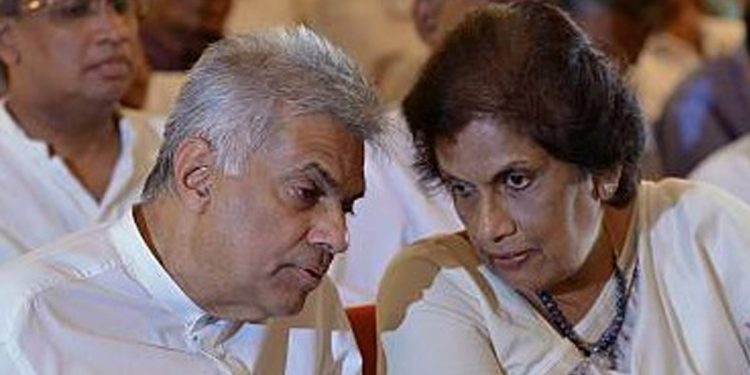
August 24, Colombo (LNW): Former President Chandrika Bandaranaike Kumaratunga has released a strongly worded statement expressing deep concern over the arrest and remand of fellow former head of state Ranil Wickremesinghe, warning that the episode signals a broader threat to Sri Lanka’s democratic institutions.
In the statement, Kumaratunga criticised the timing and manner of the arrest, noting that it occurred when the relevant investigation was reportedly nearing completion. She described the move as deeply troubling, suggesting it may reflect more than just a legal process at work.
“What we are witnessing is a calculated onslaught on the very essence of our democratic values,” the former president stated. “The consequences of this go far beyond the fate of an individual or any political grouping, and involve peril for the rights of our society as a whole.”
Kumaratunga, who served as president from 1994 to 2005, warned that undermining democratic norms for political expedience sets a dangerous precedent — one that could ultimately erode civil liberties and institutional credibility across the board.
She called on all political leaders, regardless of affiliation, to stand in firm opposition to such practices. “I wholeheartedly join in expressing my unreserved opposition to these initiatives, which all political leaders are duty-bound to resist,” the statement read.