September 04, Colombo (LNW): The world of fashion is mourning the loss of Giorgio Armani, the legendary Italian designer and billionaire brand visionary, who has died at the age of 91.
Armani, hailed as the very embodiment of Italian elegance, revolutionized tailoring by reimagining men’s and women’s suits for a modern era. His influence stretched far beyond the runway, shaping the very language of red-carpet style as we know it today.
What began as a fashion label grew into a global empire under his leadership, with Armani branching into beauty, fragrance, music, sport, and even luxury hotels. His company consistently generated more than £2 billion annually, cementing his place not just as a creative genius but also as one of fashion’s most formidable businessmen.
Tributes have poured in from across the fashion world. Donatella Versace honored him on Instagram, sharing a photo and writing: “The world lost a giant today, he made history and will be remembered forever.”
Giorgio Armani leaves behind a legacy of timeless elegance, innovation, and integrity that will continue to shape fashion for generations.
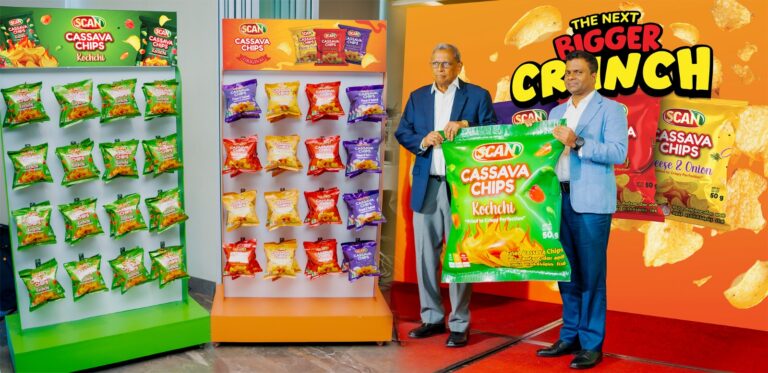
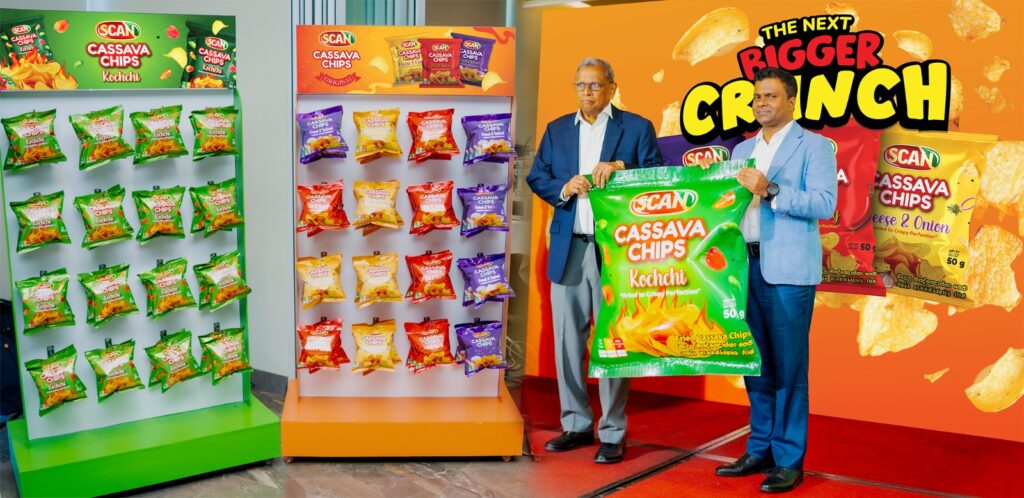
Rashika Hennayake September 04, Colombo (LNW): C.W. Mackie, a well-known conglomerate in Sri Lanka, recently launched a brand-new range of cassava chips under its widely popular food and beverage brand, SCAN.
C.W. Mackie is a multi-cluster, multi-channel organisation with a strong presence in its brands at every level in the market. Sunquick and SCAN Jumbo Peanut are some of the flagship brands of the SCAN Products Division of the C.W. Mackie PLC group. In 2018, C.W. Mackie PLC decided to promote its snacks category with peanut cultivation locally and process the same in a brand-new factory with cutting-edge technology located in Horana, to build a sustainable agriculture and food system in the country.
Today, in its specific product category, SCAN Jumbo Peanut is the category leader with an impressive market share of over 70 percent. The SCAN Jumbo peanuts are selected based on their size, processed with great care, and packaged under the trusted SCAN label in hygienic conditions.
Building upon the success of the consumer movement that gives prominence to locally produced items, demand has grown tremendously in recent months. C.W. Mackie PLC has now extended its locally produced snacks portfolio to cassava chips in four flavours, which include Hot & Spicy, Salted, Cheese & Onion and the newly introduced Kochchi flavour, under an impressive range of snacks at affordable prices. SCAN Cassava range is now available at leading supermarket chains and general trade outlets island-wide. The cassava range consists of 50g packs and 30g packs, specially for general trade consumers.
SCAN products testing laboratories are equipped with state-of-the-art equipment and staffed with skilled and experienced personnel; comparative tests are performed on products in accordance with local and international regulatory standards. The popularity of the SCAN brand is a testament to the trust that consumers have in its products. Its success can be attributed to its focus on quality, careful processing, and strict adherence to hygiene standards. While constantly improving and expanding its product portfolio, the company strives to provide the local consumer with high-quality products that meet their needs and preferences.
Sharing his thoughts at the launch, Mr Mangala Perera, the Director / Group Chief Operating Officer of C.W. Mackie PLC Group of Companies, stated, “We are immensely proud of our snack range, especially the jumbo peanuts and cassava range, that benefits the local economy, including supporting local farmers while encouraging sustainable agriculture, and facilitates tracking the supply chain back to the point of origin to evaluate ecological practices.”
“I would like to thank everyone who made this success possible, our loyal customers, whose ongoing support and belief is firmly established in our products, helped C.W. Mackie PLC to reach its current level of success,” Mr Hemaka Amarasuriya, the Chairman / CEO of C.W. Mackie PLC Group of Companies, concluded.
With a history of 125 years, C.W. Mackie PLC is a company listed in the Colombo Stock Exchange (CSE) that specialises in manufacturing, exporting, and importing a wide range of food and beverages with the purpose of elevating the quality of life of our stakeholders. SCAN Products Division, which is the FMCG arm and the largest growing cluster of the diversified business conglomerate C.W. Mackie PLC, with its hybrid vertical marketing and distribution channels, penetrates the different consumer markets with traditional trade, modern trade, the HORECA food service sector channel, and institutional distribution. Its product brand portfolio consists of well-known brands such as Sunquick, Jumbo Peanuts, Kotagala Kahata, SCAN-branded bottled water, KVC (processed fruits and vegetables) products, N-Joy Coconut Oil and Star Brand Essences and Colourings, which have won the hearts of the Sri Lankan consumers and are market leaders in their respective categories. The management is fully committed to future expansion of the product portfolio with innovative product development.
Image Caption Mr. Mangala Perera, Director/Group COO, officially presented the newly launched Scan Cassava Kochchi Pack to Mr. Hemaka Amarasuriya, Chairman /CEO of C.W. Mackie PLC, marking a significant milestone in the brand’s growing snack portfolio.
September 04, Colombo (LNW): The Ceylon Electricity Board (CEB) has posted a profit of Rs. 5.31 billion for the quarter ending June 30, 2025, bouncing back from a staggering Rs. 18.47 billion loss in the first quarter. While the turnaround signals some financial breathing space, industry experts warn that the profit masks deeper structural issues—chief among them the politically sensitive matter of electricity tariff revisions.
The profit recovery stems directly from the June 2025 tariff adjustment, which partially rolled back the 20% tariff cut introduced in January 2025. That politically popular move, implemented soon after the government assumed office, was widely criticized for being fiscally irresponsible. It left the CEB bleeding cash in the first quarter, forcing a rapid correction under pressure from both the Treasury and the International Monetary Fund (IMF).
Despite the recent profit, the latest figures still reflect an 85% drop compared to the Rs. 34.53 billion profit the utility posted during the same quarter in 2024. “This is a warning sign,” said an energy sector analyst, requesting anonymity. “The CEB’s profitability is not sustainable without a predictable, cost-reflective tariff mechanism. Otherwise, we will continue to see swings between massive losses and temporary profits.”
The IMF has repeatedly stressed that cost-reflective pricing where tariffs reflect the actual cost of generation, transmission, and distribution is a non-negotiable benchmark for Sri Lanka to unlock future disbursements under the Extended Fund Facility (EFF). In practice, this means electricity bills will inevitably rise when fuel prices and generation costs climb, while reductions are rare and politically fraught.
Currently, the Public Utilities Commission of Sri Lanka (PUCSL) follows a formula that takes into account fuel costs, hydropower availability, exchange rate fluctuations, and overall demand. Tariff adjustments are expected biannually in January and July but political intervention often delays or distorts the process.
With the next scheduled revision due in January 2026, speculation is rife on whether the government will allow a full pass-through of rising costs. Industry insiders note that global oil prices have been edging upward in recent months, while drought conditions are reducing hydropower output, factors that could push CEB’s costs higher.
“Tariff revisions are inevitable, but the key question is whether they will be timely and transparent,” said a former PUCSL official. “Delays not only undermine the utility’s financial stability but also risk derailing Sri Lanka’s IMF program.”
As households and businesses brace for the next round of revisions, the balancing act between public affordability, political expediency, and fiscal discipline is once again under scrutiny. The CEB’s second-quarter profit may buy the government some time, but without a depoliticized tariff formula, Sri Lanka risks sliding back into an endless cycle of subsidies, losses, and emergency hikes.
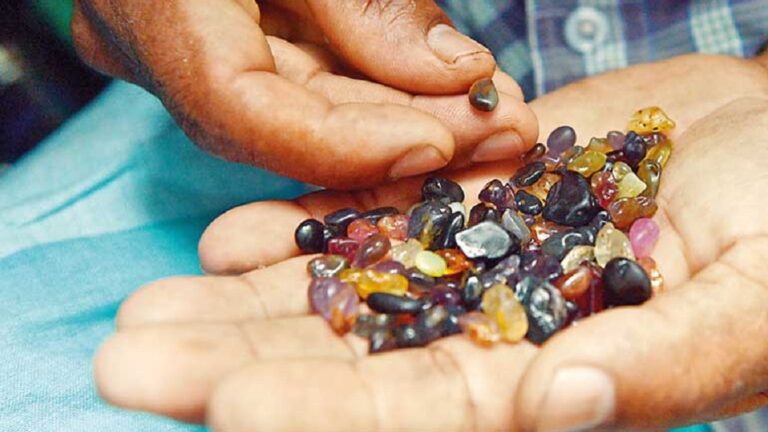
September 04, Colombo (LNW): Sri Lanka’s centuries-old gemstone industry, once a source of national pride, is facing a severe credibility crisis. Corruption, financial mismanagement, and rising smuggling networks often aided by foreign buyers—are undermining both state revenue and the livelihoods of thousands engaged in mining and trading.
Official figures highlight the widening gap between promise and performance. In August 2023, the then-Chairman and CEO of the National Gem and Jewellery Authority (NGJA) projected Sri Lanka’s gem exports would soar to US $2 billion annually by 2025.
That optimism was drawn from US $312 million in exports recorded during the first seven months of 2023. But less than two years later, the government now speaks cautiously of merely reaching US $1 billion, underscoring how corruption and malpractice have drained the sector.
The Committee on Public Enterprises (COPE) has spotlighted the NGJA’s questionable financial decisions. Instead of renovating its headquarters for Rs. 21 million, the Authority chose to rent another building at an eye-watering Rs. 2 billion a figure 95 times higher than necessary. Lawmakers allege the deal reeks of waste and possible kickbacks.
COPE also uncovered a case where a gem parcel valued at Rs. 250 million seized by court order in September 2024 for undervaluation was released back to the same company without proper approvals. The NGJA imposed only a token fine of Rs. 10,000, ignoring the legal maximum of Rs. 333,000 and disregarding court rulings. Lawmakers blasted the move as a blatant betrayal of public trust and state revenue.
Serious lapses extend beyond financial misconduct. COPE noted the NGJA operates without a dedicated imports division, despite being responsible for gem imports. Between 2022 and 2024, 46,815.94 kilograms of gems were imported legally, yet only 1,664.06 kilograms were re-exported, raising red flags about large-scale smuggling.
The committee has urged the case be referred to the Commission to Investigate Allegations of Bribery or Corruption (CIABOC) while calling for urgent internal inquiries.
Adding to the crisis are allegations of foreign interference. Industry insiders say Chinese buyers are increasingly involved in secret purchases of rough sapphires and other gems, some smuggled abroad through unofficial consignments or even diplomatic mail. These networks bypass local auctions, weaken domestic traders, and tarnish Sri Lanka’s image in international markets.
The fallout is deeply human. Nearly 600,000 Sri Lankans rely on the sector from mining in Elahera and Ratnapura to polishing and trading. Many miners complain that gems they extract vanish into black channels, leaving them without fair returns.
Despite glittering showcases like the “Gem City Ratnapura 2025” exhibition, the industry’s future hangs in the balance. Unless swift reforms curb corruption and strengthen oversight, Sri Lanka’s proud gem legacy risks losing its sparkle forever.
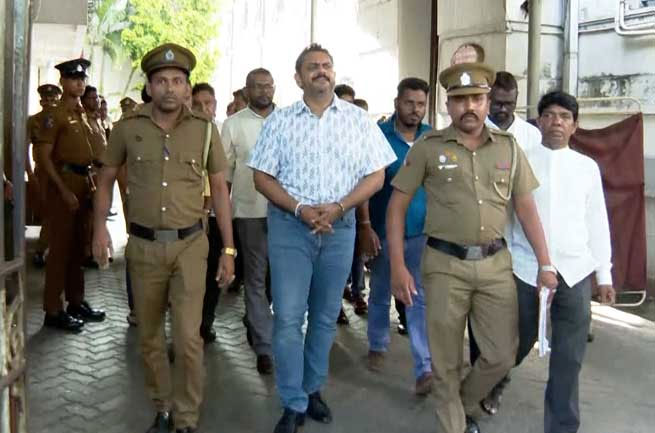
September 04, Colombo (LNW): Former Minister Shasheendra Rajapaksa, currently held in remand custody over alleged misuse of public resources, has submitted a fresh bail application to the Colombo High Court in an attempt to overturn a previous decision by the Magistrate’s Court denying his release.
The matter was taken up before High Court Judge Lanka Jayaratne, who, after hearing initial submissions, scheduled further consideration of the bail application for October 02, allowing time to examine the circumstances and legal arguments surrounding the case.
Rajapaksa was taken into custody on 6 August by officials of the Commission to Investigate Allegations of Bribery or Corruption (CIABOC), in relation to a compensation payment amounting to Rs. 8.85 million. The payment had reportedly been claimed for a property in Sevanagala that was under the purview of the Mahaweli Authority and had sustained damage during the wave of public unrest in recent years.
According to investigators, the compensation was secured under questionable circumstances, allegedly involving undue influence exerted on officials at the Damage Assessment Office. The case falls under the provisions of the Public Property Act, which prescribes stringent penalties for offences involving state assets.
After his initial arrest, Rajapaksa was remanded by order of the Colombo Chief Magistrate. A subsequent bail request made to the Magistrate’s Court was rejected on August 12. In response, his legal team lodged a revision application with the High Court, arguing that the earlier decision should be set aside and that their client be granted release pending trial.
September 04, Colombo (LNW): The Colombo High Court has firmly declined a request by legal counsel representing former Minister Nalin Fernando, seeking to excuse his client from appearing in court until the formal commencement of trial proceedings.
President’s Counsel Sanjay Rajaratnam, appearing for Fernando, argued that the former minister faced significant reputational damage due to ongoing media scrutiny and requested that he be permitted to remain absent until the trial was underway.
However, Chief High Court Judge Manjula Thilakaratne rejected the application, stating that all accused are generally expected to be present at every hearing, except under clearly justified and exceptional circumstances.
The case, filed under the Public Property Act, involves former Ministers Mahindananda Aluthgamage and Nalin Fernando, as well as the former Secretary to the Ministry of Sports, retired Major General Nanda Mallawarachchi.
The allegations relate to the suspected misappropriation of public funds totalling Rs. 39 million during a three-month period in 2014, linked to the procurement of 14,000 carrom boards and an equal number of draught boards, allegedly for distribution among local sports clubs.
When the matter was taken up in court, Aluthgamage and Fernando—both currently serving prison sentences in unrelated cases—were produced by prison authorities. Mallawarachchi, however, was not present. His counsel, President’s Counsel Nalin Ladduwahetty, submitted a medical certificate and similarly requested that his client be excused until the trial officially begins.
That request too was dismissed by the bench, which held that the medical documentation provided failed to meet the required standard to justify a non-appearance.
The judge reiterated the principle that attendance at all stages of criminal proceedings is not only a procedural obligation but a fundamental element of ensuring transparency and accountability, particularly in cases involving the alleged misuse of state resources.
The court has now scheduled the next hearing for October 10, when the trial is expected to formally proceed. All accused have been ordered to remain available for future proceedings, with any further requests for exemption to be subject to strict scrutiny.
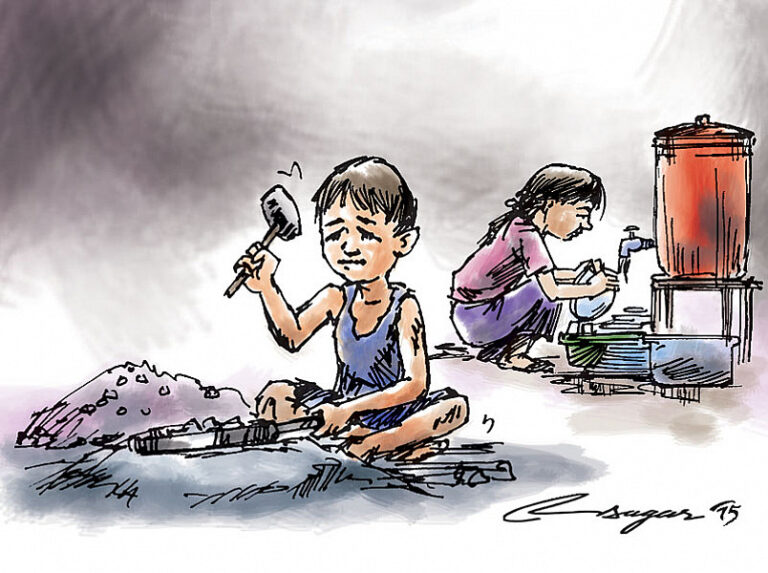
September 04, Colombo (LNW): The Cabinet has given the green light to a proposal aimed at strengthening the legal framework governing the employment of minors by significantly increasing the penalties imposed on those who breach existing labour regulations.
The move will involve amending key provisions of the Employment of Women, Young Persons and Children Act No. 47 of 1956, a decades-old law that sets out strict limits on the employment of individuals under the age of 18.
The Act prohibits the employment of children below the age of 16 entirely and places restrictions on the type of work that can be undertaken by those aged between 16 and 18, specifically banning engagement in hazardous or morally compromising occupations.
Under current legislation, individuals or employers found guilty of violating these provisions face a maximum fine of Rs. 10,000, a custodial sentence of up to one year, or both, in addition to mandatory compensation to the affected child. However, authorities have acknowledged that the existing penalty structure is outdated and no longer serves as an effective deterrent.
According to the Ministry of Labour and Foreign Employment, the proposed amendments are intended to modernise the penalty regime and bring it in line with international standards, particularly those outlined in Conventions No. 138 and No. 182 of the International Labour Organization (ILO), both of which have been ratified by Sri Lanka.
The revision is expected to introduce substantially higher fines and stricter enforcement mechanisms, signalling a more serious approach to tackling child exploitation in the workforce. Officials believe the enhanced penalties will provide the judiciary and law enforcement agencies with a more robust legal toolset to pursue and prosecute violators.
The government maintains that the protection of children from economic exploitation and harmful working conditions is not only a legal obligation but a moral imperative—particularly in the context of Sri Lanka’s broader commitments to child welfare, education, and human rights.
Details regarding the revised fine structure and associated legal procedures are expected to be tabled in Parliament once the legal drafting process is finalised.
September 04, Colombo (LNW): A legal bid by an alleged organised crime figure to challenge the involvement of the Police Special Task Force (STF) within Boossa High-Security Prison has been thrown out by the Court of Appeal.
The application, lodged by J.A. Ruwan Kumara—also known as Midigama Ruwan—was filed through his legal counsel in an effort to halt STF operations relating to internal inspections and other security procedures within the facility.
However, the Court of Appeal, after reviewing arguments from both sides, ruled that the petition lacked merit and failed to demonstrate any valid legal grounds. The ruling was delivered by a bench consisting of Justice Rohantha Abeysuriya, President of the Court of Appeal, and Justice Priyantha Fernando.
During the hearing, Additional Solicitor General Shanil Kularatne, representing the Attorney General’s Department, argued that the petition was procedurally unsound and did not meet the legal threshold for consideration. The court ultimately agreed, stating that the petitioner had not provided sufficient evidence to justify judicial intervention.
As a result, the bench opted to dismiss the application outright, without granting it leave for further review.
The petitioner had argued that the deployment of STF personnel inside the prison—particularly for conducting internal checks and overseeing inmate-related matters—contravenes existing legal frameworks under the Prisons Ordinance. He sought a court order to prevent what he claimed was an unlawful exercise of authority by the STF within the correctional system.
September 04, Colombo (LNW): The Cabinet has approved a proposal to formally dissolve 33 dormant state-owned institutions as part of a broader programme aimed at overhauling Sri Lanka’s bloated public sector and streamlining government expenditure.
The closures will take place in two stages, targeting a diverse set of entities—including statutory bodies, state corporations, and government-owned companies—that have long ceased to function in any meaningful capacity.
Many of these entities, originally created to provide essential services or support economic development, have since lost relevance or financial viability, with some operating in name only.
According to government sources, the continued upkeep of these non-functioning institutions has placed an avoidable strain on public finances, with no corresponding benefit to the economy or the public. The decision to shut them down comes amidst an ongoing restructuring agenda aimed at improving efficiency and redirecting resources towards more impactful areas.
The formal winding-up process will be overseen by a newly established Special Closure Unit within the Ministry of Finance. This unit will be responsible for ensuring that all administrative, legal, and financial matters relating to the dissolutions are handled in an orderly and transparent manner.
The proposal was submitted by the President in his capacity as Minister of Finance and received Cabinet endorsement following internal assessments and consultations with the respective institutions.
At a media briefing held following the Cabinet meeting, Cabinet Spokesman Minister Dr. Nalinda Jayatissa emphasised that the closures would not result in any job losses, noting that these entities have had no active staff for some time. In several cases, he said, the only physical evidence of their existence were signboards on now-vacant premises.
He added that the government had engaged in discussions with the relevant administrative bodies prior to the decision and stressed that the closures were long overdue. “This is about closing files, not cutting jobs,” he remarked, underlining the purely procedural nature of the move.
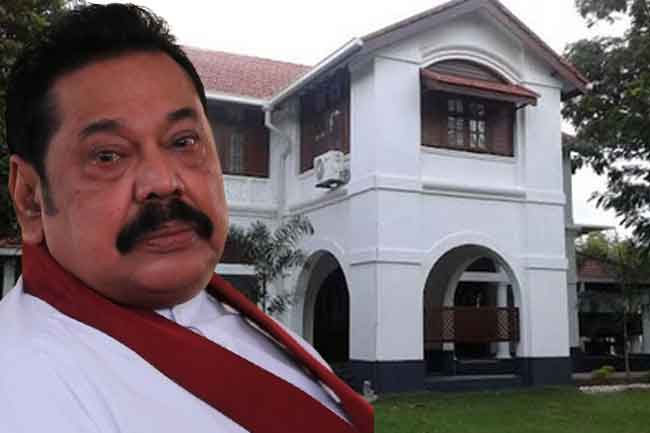
September 04, Colombo (LNW): The government is reportedly exploring the possibility of transferring a state-owned residence on Wijerama Mawatha, Colombo, currently occupied by former President Mahinda Rajapaksa, to the Criminal Investigation Department (CID) as part of a broader review of privileges afforded to ex-heads of state.
Discussions surrounding the reallocation of the high-profile property are said to have taken place during a recent meeting involving several senior government figures. The residence, situated in one of Colombo’s most secure and strategically significant locations, has previously housed a number of top officials, including former President Maithripala Sirisena and other prominent cabinet ministers.
This move comes amid the government’s efforts to roll back longstanding entitlements extended to former Presidents. A draft Bill aimed at repealing the Presidents’ Entitlements Act—legislation that currently provides former heads of state with a range of state-funded benefits—was recently tabled in Parliament.
The Cabinet granted approval on June 16, 2025 for the Legal Draftsman to prepare the necessary legal framework, with the government signalling its intention to bring the measure to a vote in the near future.
Under the proposed legislation, all official facilities extended to ex-Presidents—including state residences, staff, and security privileges—would be withdrawn, retaining only pension rights as a matter of entitlement.
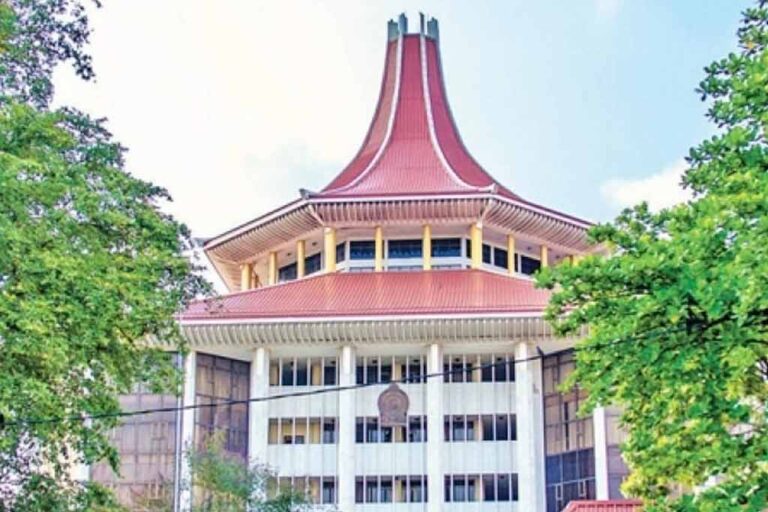
Meanwhile, the Supreme Court is expected to issue its determination on the constitutionality of the Bill shortly, following a mandatory review under the legislative process. Once the Court’s opinion is received, it will be formally presented to the Speaker of Parliament before the Bill proceeds to debate and final passage.
Former President Rajapaksa, in response to the government’s legislative direction, has previously indicated his willingness to vacate the Wijerama residence once the new law is enacted.