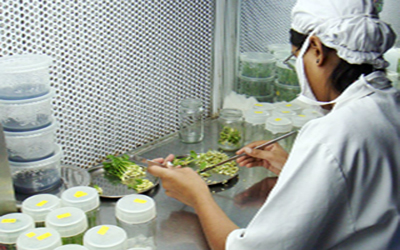
September 02, Colombo (LNW): A major step forward for Sri Lanka’s agricultural innovation has taken root in the heart of the island’s dry zone, as a new Banana Tissue Culture Laboratory has officially commenced operations at the In-Service Training Institute in Maha Illuppallama.
Established by the North Central Provincial Department of Agriculture, this cutting-edge facility is poised to transform banana cultivation across the North Central, Northern, and North Western Provinces—regions that have long contended with the challenges of unreliable and costly planting material supply chains.
Developed with expert technical guidance and funding from the Food and Agriculture Organisation (FAO) through its South-South Cooperation initiative with China, the laboratory represents a significant investment in sustainable farming and regional self-sufficiency.
Until now, banana growers in these parts of the country were heavily reliant on tissue-cultured plants transported from the southern provinces. The logistics of moving such delicate materials often led to damage, delays, and additional expenses for smallholder farmers.
The newly launched lab addresses these issues head-on by producing high-quality, disease-free, and fast-growing banana plants locally—offering both convenience and cost-efficiency to cultivators.
Beyond simply supplying plants, the facility is expected to serve as a knowledge hub. Local agricultural officers and lab technicians have received specialised training to operate and manage the lab according to global best practices, ensuring that its output meets rigorous quality standards.
The FAO has also provided a full suite of scientific equipment, culture media, and other critical materials necessary for the laboratory’s operation.
This initiative forms part of a broader national strategy aimed at revitalising Sri Lanka’s fruit sector, with targeted improvements in banana, mango, and pineapple production. By strengthening the entire value chain—from propagation to post-harvest handling—the programme aims to not only improve domestic availability of fresh fruit but also enhance Sri Lanka’s competitiveness in regional export markets.
Officials believe that by empowering farmers with access to improved planting materials and advanced cultivation techniques, the initiative will significantly increase yields, reduce crop losses due to disease, and ultimately raise incomes for rural communities. The lab is also expected to play a role in encouraging youth engagement in agriculture by showcasing the potential of modern, science-based farming.
State-of-the-Art Banana Tissue Culture Lab Opens in Maha Illuppallama to Boost Local Cultivation
Sri Lanka Endorses China’s Vision for Inclusive Global Governance at Tianjin Forum
September 02, Colombo (LNW): Sri Lanka has expressed its support for a series of global policy frameworks put forward by Chinese President Xi Jinping during the recent SCO Plus gathering in Tianjin, underscoring Colombo’s interest in advancing cooperative multilateral engagement.
Foreign Minister Vijitha Herath, representing Sri Lanka at the high-level forum, welcomed the proposals with optimism, stating that the initiatives reflect principles that align closely with Sri Lanka’s foreign policy outlook.
Amongst the frameworks commended were the Global Development Initiative, the Global Security Initiative, the Global Civilization Initiative, and the newly introduced Global Governance Initiative (GGI).
Minister Herath described the proposals as timely, noting their emphasis on sovereign equality, adherence to international law, people-centred development, and genuine multilateralism.
He further stressed that these values resonate with the growing demand amongst developing nations for a more balanced and equitable approach to global cooperation.
The summit, hosted in Tianjin, served as a platform for an expanded dialogue amongst Shanghai Cooperation Organisation (SCO) member states and partner nations, focusing on regional peace, economic integration, and a shared vision for future development. Discussions reflected a collective desire to move beyond zero-sum geopolitical posturing, with participants highlighting the need to build frameworks that serve mutual interests.
In his keynote remarks, President Xi urged the international community to embrace a new model of global governance that prioritises fairness, inclusivity, and pragmatic collaboration. He reaffirmed China’s commitment to supporting countries in the Global South, reducing global disparities, and confronting emerging challenges that transcend national borders.
Whilst acknowledging persistent issues such as unilateralism, protectionism, and geopolitical rivalry, Xi emphasised that long-standing global aspirations for peace and cooperation still hold sway. He called for collective action to address these imbalances and reaffirmed the equal rights of all nations—irrespective of their size, influence, or economic strength—to shape the future of international affairs.
Minister Herath’s remarks echoed this sentiment, reaffirming Sri Lanka’s belief that genuine multilateral partnerships are vital to navigating the complexities of a rapidly shifting global order. He noted that the initiatives championed at the Tianjin summit provide a meaningful foundation for consensus-building in areas ranging from sustainable development to regional security.
Courts urged to eliminate case backlogs by year-end: Commission

September 02, Colombo (LNW): Sri Lanka’s Judicial Service Commission (JSC) has issued a firm directive to the nation’s judiciary, mandating that all existing case backlogs across the court system be resolved by December 31 this year.
The unprecedented directive is aimed at addressing the mounting delays that have long plagued the justice delivery process.
The directive, which has been formally communicated to District Judges, Magistrates, High Court Judges, and Additional District Judges, follows an assessment of unresolved cases across the country’s legal system in recent weeks.
Judges have now been instructed to prioritise the clearing of pending cases without further delay. Each presiding officer will bear full administrative responsibility for ensuring that their respective courtrooms meet the deadline.
The Commission has clarified that accountability for progress—or the lack thereof—will rest squarely on the shoulders of judicial officers overseeing each jurisdiction.
To support the enforcement of this mandate, the JSC is set to carry out periodic inspections at the regional level, assessing the pace and quality of case disposal. All judges have been instructed to submit monthly progress reports, detailing the status of backlog clearance efforts within their courts.
Sri Lanka Sees Steady Growth in Tourist Arrivals as Sector Eyes Ambitious Year-End Target

September 02, Colombo (LNW): Sri Lanka’s tourism sector continued its upward momentum in August, recording a notable year-on-year increase in international arrivals, as the island nation strives to reclaim its position as a premier destination in the region.
Preliminary data released by the Sri Lanka Tourism Development Authority indicates that 198,235 tourists entered the country during the month, marking a 20.4 per cent rise compared to August last year.
This latest surge brings the cumulative total for the first eight months of 2025 to approximately 1.57 million visitors, pointing to a gradual but consistent recovery in the wake of years of disruption.
August saw a daily average of just under 6,400 arrivals, with numbers almost matching pre-crisis levels—falling only slightly below the 200,000 figure seen in August 2018, before the combined impacts of economic turbulence, political instability, and the global pandemic upended the country’s tourism outlook.
India maintained its position as the most significant source market, contributing 46,473 travellers in August alone—accounting for nearly one in every four visitors. The United Kingdom and Germany followed, providing 17,764 and 12,500 tourists respectively. Other strong-performing markets included China, France, Italy, Spain, Australia, the Netherlands, and Japan, reflecting Sri Lanka’s growing appeal across both traditional and emerging tourism corridors.
Despite the encouraging figures, industry leaders remain cautious. Deputy Minister of Tourism Ruwan Ranasinghe recently acknowledged the challenges ahead in reaching the government’s ambitious target of three million visitors by the end of the year.
To achieve this, Sri Lanka would need to attract over 1.4 million more tourists in the remaining five months—an average of nearly 360,000 arrivals per month, which would represent an unprecedented post-pandemic performance.
To support this push, the National Procurement Commission has reportedly called for new bids to reinvigorate Sri Lanka’s global tourism marketing efforts. While these campaigns may take several months to fully materialise, interim measures are being pursued, including promotional roadshows and bilateral tourism initiatives.
There is also growing concern within the sector about the underutilisation of agreements made with international marketing agencies last year, with stakeholders calling for a more proactive approach to deploying existing resources and partnerships.
Nevertheless, optimism persists. The steady increase in arrivals, bolstered by renewed interest from high-potential markets and a favourable perception of Sri Lanka as a safe, affordable, and culturally rich destination, provides a strong foundation for further growth in the months ahead.
Hundreds to Be Recruited to Strengthen Sri Lanka’s Prison Services
September 02, Colombo (LNW): In a move aimed at addressing longstanding staffing shortages, the Sri Lankan government has sanctioned the recruitment of over 550 new officers to bolster the operations of the Department of Prisons.
According to Prisons Commissioner and official spokesperson Jagath Weerasinghe, formal notification of the recruitment drive was published in the Government Gazette on August 29, 2025, signalling the beginning of a large-scale intake across multiple roles within the prison system.
The recruitment campaign is set to fill critical vacancies with a total of 554 new appointments. These include 409 positions for male prison wardens and 70 for female wardens, both of whom will be tasked with day-to-day custodial and supervisory duties within correctional institutions.
In addition to wardens, the Department is seeking to strengthen its middle management with the hiring of 55 prison officers at the Level II jailer rank, along with 7 positions for their female counterparts. These officers are expected to take on more complex operational responsibilities and contribute to maintaining discipline, order, and safety within the facilities.
Further, in recognition of the evolving role of rehabilitation in the country’s correctional strategy, the recruitment drive also includes openings for 10 male and 3 female rehabilitation officers at the Level II grade. These professionals will be entrusted with supporting the reintegration of inmates into society, focusing on psychological support, vocational training, and behaviour modification programmes.
The staffing shortages in Sri Lanka’s prisons have been a growing concern in recent years, with overcrowding and limited personnel placing strain on daily operations and rehabilitation efforts.
Sri Lanka Freedom Party Marks 74 Years of Political Legacy

September 02, Colombo (LNW): The Sri Lanka Freedom Party (SLFP), one of the country’s most storied political movements, commemorates its 74th anniversary today, reflecting on decades of influence, leadership, and national service.
A ceremonial event is scheduled to be held this afternoon at the party’s headquarters in Colombo, where senior party members, long-standing supporters, and invited guests will gather to mark the occasion.
The event is expected to include speeches reflecting on the party’s achievements, tributes to past leaders, and renewed calls for unity and reform as the SLFP seeks to reposition itself in an evolving political landscape.
Founded on September 02, 1951 by S.W.R.D. Bandaranaike, a former Prime Minister who broke away from the ruling elite to forge a more populist, people-centred political path, the SLFP quickly rose to prominence as a formidable alternative to the established order. Its core philosophy has long centred on social justice, cultural identity, and economic nationalism.
Over the years, the SLFP has been instrumental in shaping Sri Lanka’s modern political history, producing several Presidents and Prime Ministers who left enduring legacies. Amongst them was Sirimavo Bandaranaike, widow of the party’s founder, who became the first woman in the world to hold the office of Prime Minister. Her leadership, which spanned over four decades, symbolised the party’s deep connection with the country’s political and social fabric.
Despite facing setbacks in recent elections and internal challenges that have tested its unity, the SLFP continues to play a relevant role in national discourse.
Party insiders suggest that today’s anniversary is not only a time for remembrance but also a turning point for strategic reflection, as the SLFP eyes a political comeback amid shifting alliances and a changing electorate.
Sri Lanka and Thailand Advance Labour Partnership Talks for Deployment of Skilled Workers
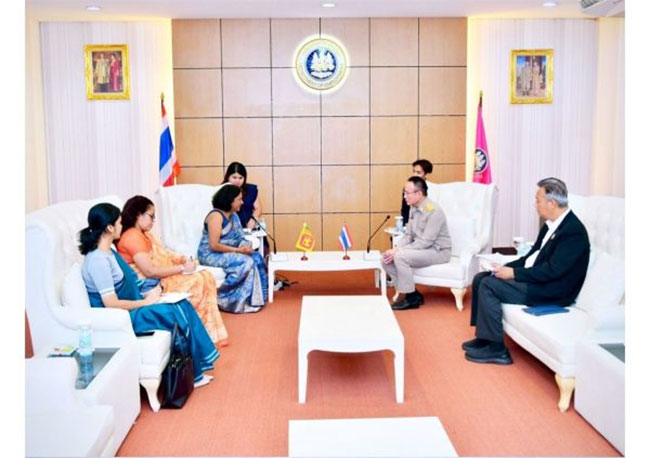
September 02, Colombo (LNW): Efforts to formalise a large-scale labour recruitment initiative between Sri Lanka and Thailand have moved forward, with senior officials from both nations holding key discussions aimed at finalising a bilateral agreement.
Sri Lanka’s Ambassador and Permanent Representative to Thailand, Wijayanthi Edirisinghe, recently met with Somchai Morakotsriwan, Director General of Thailand’s Department of Employment, to assess the status of a proposed Government-to-Government (G-to-G) framework that would facilitate the recruitment of 10,000 Sri Lankan workers to the Thai labour market.
The conversation marked a significant follow-up to the Ambassador’s prior meeting with the Thai Minister of Labour and the subsequent endorsement by the Thai Cabinet to open new employment pathways for Sri Lankans. The initiative is part of Thailand’s broader strategy to address its labour shortages through structured international cooperation.
During the meeting, Ambassador Edirisinghe presented a preliminary draft of a Memorandum of Understanding (MoU), prepared by the Sri Lankan government. She encouraged Thai officials to review the document and provide any suggestions or revisions, clarifying that finalisation of the agreement would depend on formal Cabinet endorsement in Colombo.
Director General Morakotsriwan responded positively, stating that the draft MoU would be examined by the relevant Thai authorities and would undergo scrutiny by the Ministry of Labour before any formal decisions are made.
Ambassador Edirisinghe underscored Sri Lanka’s extensive experience in labour migration, particularly in sectors such as agriculture, construction, and manufacturing. She pointed to the successful integration of Sri Lankan workers in countries including Japan, South Korea, and Israel, emphasising the nation’s readiness to supply a disciplined, skilled workforce.
She also stressed the importance of safeguarding the rights and welfare of workers once deployed, suggesting that both countries could jointly establish robust mechanisms for oversight and support.
The Thai authorities reaffirmed their interest in enhancing cooperation with Sri Lanka in the area of labour mobility. They expressed a commitment to ensuring that any recruitment process under the proposed arrangement would be transparent, ethical, and beneficial to both sending and receiving countries.
President AKD Launches Major Development Projects in Jaffna, Reaffirms Vision for National Unity and Regional Upliftment
By: Isuru Parakrama
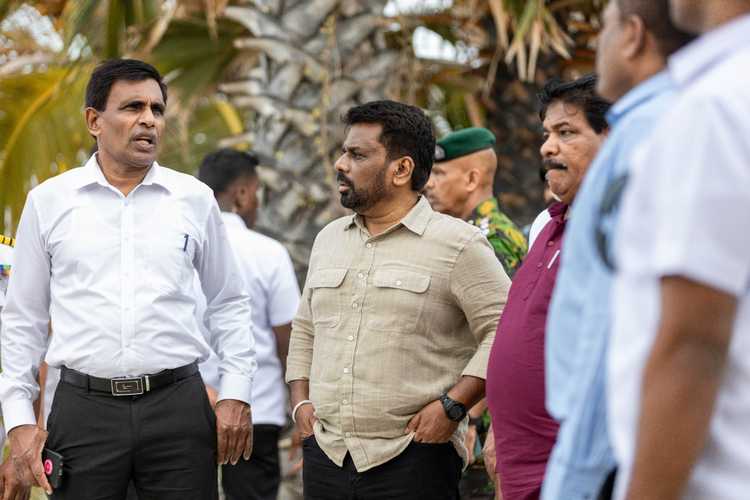
September 02, Colombo (LNW): In a landmark visit to the Northern Province, President Anura Kumara Dissanayake launched a series of major development projects in Jaffna on Sunday (01), reaffirming the government’s commitment to inclusive growth, national unity, and post-war reconciliation.
The visit marked the beginning of a comprehensive programme aimed at revitalising the region through infrastructure, technology, sport, and improved public services.
The President commenced his visit by inaugurating the third phase of the Myliddy Fishery Harbour Development Project, a key initiative designed to strengthen the livelihoods of the Northern fishing community. With a government allocation of Rs. 298 million, the project will introduce critical facilities such as water, electricity, cold storage, fuel stations, net-mending centres, auction halls, and radio communication facilities. These services will benefit not only local fishermen but also vessels arriving from the Eastern and Southern Provinces.
Speaking at the event, President Dissanayake underscored his government’s resolve to develop both North and South equally. He noted that whilst previous administrations were driven by the shadow of war, the current government is focused on building enduring peace, returning occupied lands to their rightful owners, and preventing any recurrence of conflict.
Following the inauguration, the President declared open the Jaffna Regional Office of the Department of Immigration and Emigration, located within the Jaffna District Secretariat premises. The new office aims to ease access to vital services for residents of Jaffna, Kilinochchi, and Mullaitivu, who previously had to travel to Vavuniya. The facility is fully equipped with modern technology and signifies the government’s broader digitalisation agenda.
“Our goal is to decentralise government services,” the President said. “By next year, we aim to enable citizens to complete all transactions with the government online—even from their mobile phones. We are laying the foundation for a digitally empowered Sri Lanka.”
At a subsequent meeting with Jaffna district public officials, President Dissanayake emphasised the importance of a strong and accountable public service. He pledged both support and scrutiny: protection for those who serve the people honourably, and legal consequences for those who misuse their authority.
Another significant step towards regional advancement was the launch of the E-Library Programme at the iconic Jaffna Public Library. Through the newly introduced website jaffna.dlp.gov.lk, users around the world can now access the library’s extensive collection online. The programme also introduced an integrated library management system, smart card access, and assistive technologies for differently-abled users. Rs. 100 million has been allocated in the 2025 budget for the initiative.
The President also presided over the commencement of construction on the Jaffna International Cricket Stadium, a project he described as a “symbol of unity and progress.” Situated on Mandaitivu Island, the stadium is part of a broader vision to transform the area into a full-fledged Sports City, complete with a swimming complex, indoor sports arenas, hotels, apartments, and entertainment facilities.
Built in four phases, the stadium will ultimately seat 40,000 spectators and host international matches, including day-night games. President Dissanayake expressed hope that the first match could be played before the end of this year and that within three years, the venue would be ready for international fixtures.
“Cricket has always brought Sri Lanka together,” he said. “It is my dream to see a national team composed of Sinhalese, Tamil, and Muslim youth, cheered by a united crowd. That is the future we are building—one where humanity triumphs over division.”
Later in the day, the President conducted an inspection visit to Katchatheevu Island, accompanied by ministers and senior naval officers, further underlining the government’s commitment to safeguarding the nation’s maritime borders and coastal communities.
In his various addresses throughout the day, President Dissanayake struck a firm tone against nationalist politics, warning against forces—both in the North and the South—seeking to divide communities for political gain. “Nationalism has served politicians, not the people,” he said. “We must reject it and build a country rooted in unity, justice, and equality.”
As the President continues his visit to the North today (02), several more projects are expected to be launched, furthering the government’s agenda for inclusive development and regional empowerment.
Bribery Crackdown Sees Dozens Arrested Across Public Sector in Early 2025

September 02, Colombo (LNW): Over the first seven months of 2025, nearly 50 individuals have been apprehended across Sri Lanka in connection with various bribery and corruption-related activities, according to figures released by the Commission to Investigate Allegations of Bribery or Corruption (CIABOC).
The anti-corruption body disclosed that it had received a total of 3,937 complaints between January and July this year. Acting upon this influx of reports, authorities carried out 72 targeted operations, with 39 of those missions deemed successful in leading to arrests or the collection of substantive evidence.
Amongst those detained, a significant proportion were members of the Sri Lanka Police—17 officers in total—making the law enforcement sector the single largest group implicated in these incidents.
The arrests, however, were not limited to the police. Suspects also hailed from a range of state bodies, underscoring the breadth of institutional vulnerability to corrupt practices.
Individuals attached to the Ministry of Justice, Ministry of Health, the Department of Immigration and Emigration, the Sri Lanka Transport Board (SLTB), and various District Secretariats were among those taken into custody, according to the Commission’s statement.
In addition to the arrests, judicial proceedings over the same period resulted in 27 convictions, with the individuals found guilty of accepting bribes in the course of their official duties.
A few showers expected in select parts of island: Fairly strong winds may occur (Sep 02)

September 02, Colombo (LNW): A few showers may occur in Western and Sabaragamuwa provinces and in Galle, Matara, Kandy, and Nuwara-Eliya districts, the Department of Meteorology said in its daily weather forecast today (02).
Showers or thundershowers may occur at a few places in Uva province and in Ampara and Batticaloa districts after 2.00 p.m.
Fairly strong winds of about (30-40) kmph can be expected at times over Western slopes of the central hills and in North-central and North-western provinces and in Hambantota district.
The sun is going to be directly over the latitudes of Sri Lanka during August 28to September 07 due to its apparent southward relative motion.
The nearest places of Sri Lanka over which the sun is overhead today (02) are Andigama, Balalla, Migaswewa, Bambaragaswewa, Bakamuna, Aralaganwila, Chenkalady, Eravur about 12.10 noon.
Marine Weather:
Condition of Rain:
Few showers may occur in the sea areas off the coast extending from Negombo to Matara via Colombo and Galle.
Winds:
Winds will be westerly to south-westerly and wind speed will be (30-40) kmph.
Wind speed can increase up to (50-60) kmph at times in the sea areas off the coast extending from Chilaw to Mannar via Puttalam and from Matara to Pottuvil via Hambantota.
Wind speed can increase up to (45-50) kmph at times in the sea areas off the coast extending from Chilaw to Matara via Colombo and Galle and from Mannar to Vakarai via Kankasanthurai and Trincomalee.
State of Sea:
The sea areas off the coast extending from Chilaw to Mannar via Puttalam and from Matara to Pottuvil via Hambantota will be rough at times.
The sea areas off the coast extending from Chilaw to Matara via Colombo and Galle and from Mannar to Vakarai via Kankasanthurai and Trincomalee will be fairly rough at times.
The wave height may increase about (2.5 – 3.0) m in the sea areas off the coast extending from Negombo to Pottuvil via Galle, Matara and Hambantota (this is not for land area).