Home Blog Page 413

Sri Lanka’s Tourism Industry Sees Robust Growth in 2025

0

Sri Lanka’s tourism industry is experiencing strong growth, with over 492,000 visitors recorded in 2025 so far, reflecting an optimistic outlook for the sector. February alone saw more than 240,000 arrivals, surpassing the previous year’s performance and reinforcing the industry’s upward momentum.

The Sri Lanka Tourism Development Authority (SLTDA) reported an average daily arrival of 8,859 tourists, an increase from last year’s 8,282 per day during the same period.

Following a successful 2024, SLTDA set an ambitious goal of attracting 310,937 visitors in February, after recording 252,761 arrivals in January. While January achieved the highest monthly tourist numbers ever, it still fell short by 52,926 visitors from its projected target of 305,687.

Key source markets contributing to this growth include India, Russia, the UK, China, and Germany. Other significant inflows came from France, Poland, Australia, the Netherlands, and Bangladesh. The industry is closely monitoring the rollout of a global promotional campaign, which is expected to boost arrivals further.

February’s 240,217 arrivals pushed the total for 2025 to 492,978, reaffirming the sector’s positive trajectory. Compared to February 2024, this represents a 10.01% year-on-year (YoY) increase and a 2% rise over 2018, a benchmark year for tourism in Sri Lanka. The average daily arrivals also improved, reaching 8,579 in February, up from 8,154 in January 2025 and 7,044 in February 2024.

However, February’s figures showed a slight 5.22% decline compared to January, reflecting a month-on-month dip despite overall strong performance. Weekly arrival patterns indicated a steady inflow of tourists, with 61,664 arrivals in the first week, 63,163 in the second, 59,606 in the third, and 55,784 in the final week. Despite these numbers, February fell short of its projected target by 70,720 visitors, a 29.44% gap.

India continues to be the leading source market, contributing 35,728 tourists in February, followed by Russia (30,295), the UK (25,528), Germany (17,233), and France (15,469). Other significant contributors included China, Australia, Poland, the US, and the Netherlands. Year-to-date (YTD) figures show India leading with 79,103 arrivals, followed by Russia (64,391) and the UK (47,258).

Sri Lanka aims to attract 3 million visitors in 2025, with a revenue target of $5 billion. In contrast, 2024 recorded 2.05 million arrivals, generating $3.2 billion—reflecting a 52.38% YoY revenue increase. The industry’s positive start in 2025 is evident, with January alone generating $400.7 million, marking a 17.2% increase from the previous year.

With the winter tourist season continuing until the end of March, Sri Lanka’s tourism sector remains optimistic about achieving its ambitious goals for 2025.

EPF incurs nearly Rs. 20 billion  in losses; over Rs. 12 bn in foregone earnings

0

The Employees’ Provident Fund (EPF) has suffered close to Rs. 20 billion in losses from bond and equity market investments, with an additional Rs. 12 billion in foregone earnings, as a result of bypassing due process and investing in unlisted equity, according to a new report by Verité Research.

The report has calculated these losses and foregone earnings by analysing the findings of two forensic audit reports commissioned after a series of investigations into the infamous ‘bond scam’ of 2015. 

The key findings of the report are: Bond market losses: The EPF incurred losses of Rs. 9,826 million (2002-2015) as a result of acquiring bonds at unfavourable prices.

Equity market losses: The EPF incurred losses of Rs. 9,859 million (1998-2017) from irregular investments in the equity (share) market, most of it a result of the ‘pumping-and-dumping’ of shares to the EPF. 

 Unaccounted equity losses: The EPF also incurred Rs. 12,382 million (2007-2017) as foregone earnings by investing in unlisted companies instead of Government securities, which provide fixed positive returns every year. 

The full extent of the losses is not captured due to two serious limitations in the forensic audits. (i) The bond market audit only covers transactions up to February 2015, excluding losses that occurred in the aftermath of the ‘bond scam’ of February 2015 and (ii) The audits identify only the direct losses from transactions where there is documentable violation/an anomaly in the conduct of the transaction; the foregone earnings from such transactions are not reported by the audits

The EPF investments in the stock market returning less than 5% when the market index increased byover 100% is not identifiable as a loss in the forensic audit methodology. Only transactions that can be traced topump-and-dump schemes or are identified as violating the investment guidelines are identified as causing losses.

Such limitations significantly reduce the scope of what can be estimated on the losses incurred by the EPF – makingwhat has been enumerated by these forensic audits akin to the visible tip of the iceberg.

The majority of the EPF’s bond market losses, identified totalling LKR 8,973 million, stem from transactions in theprimary market where government securities are bought through direct placement from the Public Debt Department (PDD) of the Central Bank.

In this transaction method, the yield of the securities is fixed through an offer made by the PDD, unlike in auctions where the prices are determined through competitive bidding among multiple investors. 

Theoffers can be public and the same for all market participants, but it has in the past also been private and differentto different market participants. This private offer arrangement is not transparent and prone to abuse. 

The EPF is particularly vulnerable as the Central Bank that offers the debt through its PDD (as the agent of the government) can also be the buyer through its EPF department (as the custodian of the EPF). The standard practice for deciding the yield of a security sold through direct placement has been to base it on the weighted average market price of the previous auction. The forensic audit evaluates cases where the EPF faced losses from purchasing direct placements at off-market prices. See Box 1 for the forensic audit methodology in calculating the losses

Sri Lanka’s Electricity Tariff Breach Triggers Heavy Losses  for CEB

0

Maintaining a cost-reflective electricity pricing formula is crucial for Sri Lanka to adhere to the structural benchmarks set by the International Monetary Fund (IMF). Such a mechanism ensures financial stability within the energy sector, preventing the accumulation of unsustainable losses that could ultimately become a burden on public finances. 

By adhering to cost-recovery pricing, Sri Lanka can avoid fiscal risks and ensure compliance with IMF parameters, which is vital for securing continued financial assistance and maintaining economic stability.

Sri Lanka has breached a structural benchmark in the IMF program following a 20 percent electricity tariff reduction implemented by the country’s regulator. 

The tariff cut, which came into effect on January 17, has raised concerns about potential losses for the Ceylon Electricity Board (CEB) in the coming months. According to an IMF staff assessment, avoiding such losses will be a key requirement for passing the next program review.

One of the most critical next steps for Sri Lanka in meeting IMF program expectations will be to pass a budget that aligns with program requirements.

 The downward revision in tariffs has led to a situation where the CEB is projected to incur losses, necessitating corrective measures to restore cost-recovery pricing. 

To address this, authorities have committed to ensuring the Bulk Supply Transaction Account (BSTA) operates as designed, with an automatic adjustment mechanism triggered when the CEB’s cash balances reach a lower threshold.

 If this mechanism does not sufficiently offset losses, an April tariff revision will be required to restore cost-recovery pricing.

Despite the CEB’s proposal for a modest 3 percent tariff cut for January 2025, the regulator imposed a more significant reduction. 

The IMF has emphasized the importance of allowing automatic pricing mechanisms to function to prevent future debt accumulation within the electricity sector. 

Peter Breuer, the IMF’s Senior Mission Chief for Sri Lanka, highlighted that fluctuations in electricity costs are influenced by several factors, including weather conditions, which impact hydropower generation. 

He warned that failing to maintain cost-reflective tariffs could lead to rising contingent liabilities for the government.

Sri Lanka has already taken steps to reduce the time gap between tariff adjustments to three months, addressing issues caused by unpredictable weather conditions and fluctuating energy costs. 

Previously, a sudden price hike was necessary when dry weather conditions forced the CEB into losses following a substantial tariff cut. 

However, with the change in administration, there appears to be a reversion to six-month tariff adjustments, which could undermine financial stability if not managed effectively.

Labour Minister Refutes Opposition Claims on Adani Investment and Fuel Pricing

0

Labour Minister and Economic Development Deputy Minister Prof. Anil Jayantha Fernando rejected Opposition allegations regarding the Government’s stance on the Adani Group’s investment and fuel pricing, emphasizing that all investments are evaluated with full transparency, regardless of the investor’s identity or country of origin.

Speaking in Parliament yesterday, Prof. Fernando clarified that the Government is committed to expanding investments in multiple sectors, including energy. He dismissed claims that the Adani Group had “suspended” or “pulled back” from its projects in Sri Lanka, calling such assertions misleading.

Addressing concerns over power purchase agreements, he explained that before the current administration took office, a 20-year agreement had been signed at US cents 8.26 per unit, which was deemed a high rate. During a pre-election visit to India, discussions revealed that Adani supplied power to the Indian grid at US cents 3.50 per unit. When questioned about the price difference, Adani officials cited investment risk factors as the reason. Consequently, the matter was referred to the Cabinet for further review to ensure transparency.

On fuel pricing, Prof. Fernando rejected Opposition claims that the Government was overcharging consumers by adding a Rs.10 surcharge above production costs. He stated that under the Government’s pricing formula, the production cost of petrol stands at Rs. 308.89 per litre, while the retail price is Rs. 309 per litre, proving there is no excessive markup.

“The Opposition is deliberately spreading false information to mislead the public,” Prof. Fernando asserted, reaffirming that Sri Lanka welcomes all investors fairly and transparently without giving undue preference to any company or country.

Special Bus Services Announced for Tooth Relic Exposition

0

The National Transport Commission (NTC) has announced special bus services for the upcoming Tooth Relic Exposition, which is being held for the first time in 16 years. Operations Director Shereen Athukorala confirmed that discussions with relevant officials took place yesterday to finalize transport arrangements for the event, which coincides with the Sinhala and Tamil New Year period.

Buses operating between Colombo and Kandy will be directly managed by the NTC, while temporary driving permits will be issued for provincial buses to accommodate the anticipated influx of devotees. These special services will commence on April 18, aligning with the opening of the exposition, and will supplement the regular daily bus services.

The Tooth Relic Exposition will begin on April 18, with the inaugural day’s viewing scheduled from 3:00 p.m. to 5:30 p.m. From April 19 to 27, the relic will be exhibited daily from 12:00 p.m. to 5:30 p.m.

Navy Cracks Down on Illegal Sea Cucumber Harvesting in Jaffna

0

The Sri Lanka Navy apprehended 17 individuals involved in the illegal harvesting of sea cucumbers during a special search operation conducted in the waters off ‘K’ Point and Vinayasodi, Jaffna, in the early hours of March 1, 2025. The operation also led to the seizure of 4,255 illegally harvested sea cucumbers, four dinghies, and diving equipment.

As part of its continuous efforts to combat illegal fishing activities, the Navy regularly patrols the country’s coastal and sea areas to enforce responsible fishing practices. The latest operation was carried out by SLNS Welusumana under the Northern Naval Command, targeting individuals engaged in unauthorized night diving for sea cucumbers without valid licenses.

The arrested suspects, aged between 21 and 56, are residents of Jaffna, Maniyathottam, Udayapuram, Gurunagar, Kurunaaru, Pannakuruppu, and Arialei. They, along with the confiscated sea cucumbers, dinghies, and diving gear, were handed over to the Assistant Directorate of Fisheries in Jaffna for further legal action.

Government Takes Steps to Ensure Food Security Ahead of New Year

0

The Food Policy and Security Committee convened for the fourth time yesterday (04) at the Parliament Complex to discuss critical measures for ensuring food security across the country. The meeting was chaired by Minister of Agriculture, Livestock, Lands, and Irrigation K.D. Lalkantha, alongside Minister of Trade, Commerce, Food Security, and Cooperative Development Wasantha Samarasinghe.

Key discussions focused on maintaining a steady supply of essential food items at affordable prices during the upcoming Sinhala and Tamil New Year season. The committee reviewed strategies to prevent shortages and maintain sufficient stock levels to bolster national food security.

The ministers emphasized the importance of implementing these measures while safeguarding the interests of consumers, farmers, and producers.

A major point of discussion was the approval for maize imports for animal feed after April 1. Minister Lalkantha stressed the need for a new framework to regulate maize imports but directed that the current system remain in place until a revised mechanism is introduced.

Additionally, the meeting underscored the necessity of ensuring citizens’ right to diverse food choices and access to high-quality food products.

The Food Policy and Security Committee reaffirmed its commitment to realizing the government’s policy of providing safe, healthy, and sustainable food for all citizens.

Fair weather expected to prevail over many areas of the island

0

Showers or thundershowers may occur at a few places in Galle, Matara, Kaluthara and Rathnapura districts in the evening or night.

Mainly fair weather will prevail over the other areas of the island.

Misty conditions can be expected at some places in Western, Sabaragamuwa, Central, North-western and North-central provinces and in Galle and Matara districts during the morning.

Economic Concerns Loom over Revenue and Currency Stability amidst Vehicle Imports

0

By: Staff Writer

March 04, Colombo (LNW): The government has lifted its long-standing vehicle import ban, setting the stage for potential economic instability within the next year. Experts warn that if pent-up demand from previous years is unleashed too quickly, the crisis could emerge within months.

 The primary motive behind lifting the restriction is not merely to meet consumer demand but to generate revenue from import tariffs. This revenue is crucial for financing promised salary hikes, tax reductions, and financial aid for farmers and fishermen.

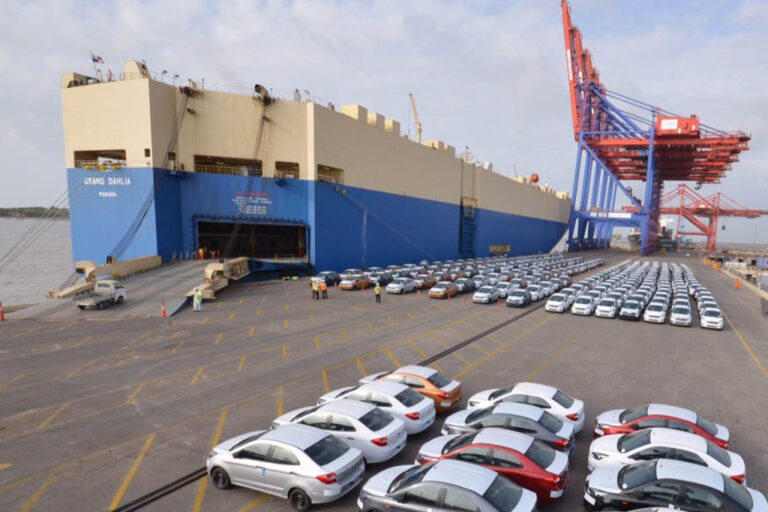
Following the policy change, the Hambantota International Port (HIP) received its first vehicle shipment on Thursday.

The vessel MV Jupiter Leader, operated by NYK Lanka Ltd., delivered 378 vehicles from Japan, of which 196 were designated for the local market. The consignment included popular models such as Land Cruisers, Hilux cabs, Prado SUVs, Toyota sedans, and Suzuki Alto mini cars. Additionally, the port handled 2,318 vehicles, transshipping 1,940 units to African markets.

The HIP is fully equipped to manage the anticipated surge in vehicle imports. With world-class infrastructure and a skilled workforce, the port has implemented specialized facilities for efficient clearance.

A dedicated customs inspection bay, featuring 24/7 CCTV surveillance and high-intensity lighting, ensures compliance checks. Secure storage facilities have been arranged for vehicles awaiting clearance, including additional temporary storage for new imports.

To facilitate importers and clerks, the port has established designated areas with basic amenities and Vehicle Processing Stations to streamline paperwork.

A newly developed vehicle import yard, with a capacity for approximately 4,000 vehicles, has been introduced to accommodate both local and transshipment units. Access to this yard remains restricted to authorized personnel.

 Since 2018, HIP has played a significant role in Sri Lanka’s automotive logistics sector. A $10 million investment in infrastructure upgrades aims to further enhance the port’s ability to handle increased demand. Its strategic location and commitment to efficient operations reinforce its status as a key gateway for vehicle imports.

However, economic analysts express grave concerns over the financial repercussions of lifting the import ban.

The government’s dependency on import tariff revenue to fund essential salary increments and tax reductions poses a serious risk.

If vehicle imports proceed unchecked, the resulting outflow of foreign currency could destabilize the exchange rate, weaken the rupee, and contribute to inflation.

While macroprudential policies like Loan-to-Value (LTV) ratios could be employed to limit excessive imports, such measures would simultaneously reduce tariff revenue.

This places the government in a precarious position: unrestricted vehicle imports could lead to significant rupee depreciation, while restricting imports would create a shortfall in funds needed for approved salary hikes and tax reductions.

If the dollar outflow accelerates, it could deplete foreign exchange reserves, particularly if the central bank intervenes to stabilize the rupee. However, IMF policies discourage direct intervention in the foreign exchange market, advocating for natural exchange rate adjustments. A sharp rupee depreciation would likely lead to inflation, exacerbating the financial burden on consumers. Ultimately, the government faces a challenging dilemma. It must balance the need for tariff revenue with the risk of economic instability. Whether through controlled import measures or alternative revenue streams, a strategic approach is crucial to avoiding a full-blown financial crisis.

Government to Act Swiftly in Reviewing Stalled Kalpitiya Tourism Projects

0

By: Staff Writer

March 04, Colombo (LNW): The Sri Lanka Tourism Development Authority is under increasing pressure to take immediate action to resolve the delays in developing Kalpitiya islands as tourist destinations. Agreements with selected investors, most of which expired in September 2024, have not resulted in any tangible outcome, thus prompting calls for decisive government intervention.

The SLTDA initially obtained 2,056.73 acres across 12 islands in Kalpitiya as free grants for tourism development in 2010 and 2012. By 2022, only 668.69 acres in 10 islands had been leased to seven companies.

Although the agreements were signed, none of the investors had begun development activities by the end of the 2022/2023 period, an audit report showed. Further compounding the problem, SLTDA did not collect approximately Rs. 93 million as lease payments from these lessees during the period from 2018 to 2024.

Amongst these, several factors were pointed out for the low achievement of targets, including delays in getting approval for water bungalows, conflicts with local fishing communities, islands being of insufficient size, and the general lack of infrastructure.

While SLTDA signed another four lease agreements in May 2023, those also struggled to progress properly owing to persistent infrastructure and approval delays.

Compounding the problems is that SLTDA has not, as yet, followed the basic infrastructure needs that were put down in the Kalpitiya Master Plan. Facilities such as jetties, water supply systems, centralized power plants, waste treatment facilities, and waterfront amenities are not available.

Such lack of infrastructure has considerably inconvenienced the investors’ operations and retarded the area’s transformation into a tourist destination.

Further, there is an unfinished master plan for the development of Kalpitiya town and two other islands called Palliyawatta and Muthuwal, which consists of 1,915.96 acres. A separate plan has been prepared for eight islands covering 1,845.48 acres, but the execution of the proposals has also stalled.

Audit findings further highlight financial inefficiencies, with funds allocated for the Kalpitiya Island Resort project largely unutilized. During 2020-2022, Rs. 17.6 million was allocated for resort development to increase the region’s hotel capacity. However, no progress was made toward these objectives as of November 2022.

In the light of these setbacks, the audit report calls for attracting capable investors, speeding up the approval processes, and providing the necessary infrastructure to accelerate project development. It further calls for a clearly defined timeline in the master plan itself, so that accountability would ensure progress.

Kalpitiya has great potential to become one of the key tourist destinations; hence, immediate action needs to be taken to revitalize the stalled projects and bring about the economic dividends of this strategic initiative.