The High Commissioner of India to Sri Lanka, Santosh Jha, hosted a special reception at India House on Monday (June 16) in honour of the Women’s Caucus of the Sri Lankan Parliament. The event was attended by Prime Minister Dr. Harini Amarasuriya, Minister of Women and Child Affairs Saroja Savithri Paulraj, and several other Women Caucus members.
In his remarks, High Commissioner Jha emphasised the historic and evolving role of women in politics in both India and Sri Lanka, noting that the two countries have been global pioneers in women’s political leadership. He highlighted the transformative efforts in India over the past decade, particularly under Prime Minister Narendra Modi, which have positioned women as active nation-builders—from participating in space exploration to grassroots governance.
The event also marked growing cooperation between women parliamentarians in both countries, as guided by President Anura Kumara Dissanayake and Prime Minister Modi. Earlier in May 2025, three members of Sri Lanka’s Women Caucus visited India to participate in an orientation programme at the Parliamentary Research and Training Institute for Democracies (PRIDE) in New Delhi.
With the current Sri Lankan Parliament recording the highest number of women MPs in its history, the initiative aims to strengthen institutional knowledge-sharing and promote democratic values through parliamentary-level exchanges.
France and Sri Lanka on Monday signed a bilateral agreement to implement the terms of the Memorandum of Understanding (MoU) reached on June 26, 2024, with Sri Lanka’s Official Creditors Committee, co-chaired by France, India, and Japan.
The agreement reschedules €390 million of Sri Lanka’s debt until 2042, providing a five-year grace period and a cap on original interest rates. It aligns with the coordinated international effort to restore Sri Lanka’s debt sustainability, following the country’s 2022 economic crisis.
The agreement was signed on June 16 by William Roos, Assistant Secretary for Multilateral Affairs, Trade and Development at the French Treasury, and Finance Ministry Secretary Mahinda Siriwardana. The signing took place in the presence of French Ambassador Rémi Lambert, Deputy Finance Minister Dr. Harshana Suriyapperuma, and Central Bank Governor Dr. Nandalal Weerasinghe.
Officials said the agreement supports the implementation of the IMF’s multi-year €2.8 billion financing programmeand ensures compliance with the principle of comparability of treatment among all creditors, including third-party lenders.
France reaffirmed its continued support for Sri Lanka’s economic recovery and reform agenda, viewing the agreement as a key milestone in strengthening bilateral relations and fostering long-term financial stability.
The Cabinet of Ministers has approved amendments to revoke special privileges granted to former Presidents and Members of Parliament, marking a significant shift in Sri Lanka’s political entitlement framework.
The Cabinet approved the drafting of amendments to the Presidents’ Entitlements Act No. 4 of 1986 and the Parliamentary Pensions Law No. 1 of 1977, instructing the Legal Draftsman to initiate the necessary legislative process.
Cabinet Spokesman and Health and Mass Media Minister Dr. Nalinda Jayatissa, speaking at the weekly Cabinet media briefing, stated that the move aligns with the Government’s policy vision, “A Wealthy Country – A Beautiful Life”. He said the Government has a public mandate to eliminate long-standing privileges for retired leaders and MPs.
“With the enactment of these amendments, all special benefits currently extended to former Presidents and their spouses — including official residences and personal staff — will be revoked. The same applies to pensions granted to MPs who have served for five years,” Dr. Jayatissa said.
However, he clarified that constitutionally protected retirement pensions of former Presidents will remain intact, as the reforms only target benefits under the Presidents’ Entitlements Act.
Calling the decision “historic,” Dr. Jayatissa added, “For the first time in nearly four decades, a Government is taking decisive legislative action to end this entitlement culture. Once passed, these reforms will apply to all living former Presidents and spouses of deceased Presidents.”
Showers will occur at times in the Western and Sabaragamuwa provinces and in Nuwara-Eliya, Kandy, Galle and Matara districts.
Several spells of showers will occur in the North-western province.
Showers or thundershowers may occur at a few places in the Uva province and in Ampara and Batticaloa districts in during the afternoon or night.
Fairly strong winds of about (30-40) kmph can be expected at times over Western slopes of the central hills and in Northern, North-central, Southern and North-western provinces and in Trincomalee district.
The general public is kindly requested to take adequate precautions to minimize damages caused by temporary localized strong winds and lightning during thundershowers.
June 17, Colombo (LNW): Amid continued regional instability and the disruption of international air travel to Israel, the Sri Lankan diplomatic mission in Tel Aviv has announced a series of measures aimed at assisting Sri Lankan nationals attempting to re-enter the country.
With flights to Ben Gurion Airport suspended due to heightened tensions linked to the Israel-Iran confrontation, Sri Lankans stranded abroad have faced growing uncertainty about their ability to return to Israel for employment, family obligations, or other commitments.
In response, the Sri Lankan Embassy has moved to provide administrative support to ease the difficulties facing affected individuals.
Ambassador Nimal Bandara confirmed that he has formally reached out to Israel’s Population and Immigration Authority (PIBA), requesting an extension of re-entry visa validity by a further two months, calculated from the onset of the current regional conflict.
The diplomatic appeal is aimed at ensuring that Sri Lankan citizens who temporarily left Israel and are now facing visa expiry issues are not penalised due to circumstances beyond their control.
Although this request was made on behalf of Sri Lankan nationals, the Ambassador noted that the Israeli authorities may extend the same leniency to citizens of other countries, should the recommendation be accepted. However, he acknowledged that processing timelines remain uncertain given the evolving security situation.
In anticipation of extended airspace closures, the Embassy is also exploring alternative travel arrangements via Egypt. Sri Lankans currently outside Israel may be able to enter the country by flying into Cairo, with subsequent overland transfers arranged to the Israeli port city of Eilat, located near the southern border.
The Embassy has indicated that it is prepared to assist with the necessary paperwork for Egyptian short-stay visas, as well as coordinate group transportation if demand warrants such efforts.
Ambassador Bandara urged those seeking assistance to promptly share their details—including full name, passport number, and contact information—with the Embassy. He emphasised, however, that the mission’s role is strictly limited to facilitating and coordinating the logistical process.
All costs relating to flights, visas, accommodation, and land transport will need to be covered by the individuals involved, he added.
June 17, Colombo(LNW): Aviation expert and veteran commercial pilot Captain Steve Scheibner has suggested that a critical error by the co-pilot may have led to the tragic crash of Air India Flight AI171, which killed all 241 people onboard and dozens on the ground.
The London Gatwick-bound Boeing 787 Dreamliner crashed just minutes after taking off from Ahmedabad, Gujarat, on June 12. Captain Scheibner, a former American Airlines pilot, shared his theory on his YouTube channel, pointing to a possible mistake involving the aircraft’s controls.
According to Scheibner, the co-pilot might have been instructed to retract the landing gear but mistakenly pulled the flap lever instead reducing lift at a crucial moment during takeoff.
“This is just my opinion,” Scheibner emphasized. “But I believe when the captain said, ‘gear up,’ the co-pilot may have accidentally grabbed the flap lever, not the gear lever. If that’s what happened, it could explain why the aircraft suddenly lost lift and crashed.”
He added that under normal conditions, the aircraft’s wings would show visible flexing due to lift forces during takeoff. However, video footage reportedly does not show this, further supporting the flap-retraction theory.
Meanwhile, air accident investigators in India have begun decoding the aircraft’s black box data and are interviewing pilots and crew who operated the aircraft in the days before the crash. Officials hope these steps will shed more light on the circumstances surrounding the disaster.
June 17, Colombo(LNW): As Israeli jets pounded Iranian nuclear and military facilities in an unprecedented aerial assault on June 13 dubbed “Operation Rising Lion” the Middle East plunged deeper into one of its most dangerous escalations in decades. Iran’s immediate and fierce response, including over 100 drone strikes and a barrage of ballistic missiles, confirmed what many had feared: the start of an open war between two of the region’s most formidable powers.But as fire and fury engulf the region, the shockwaves are rippling far beyond its borders,disrupting global markets, deepening geopolitical divides, and threatening to plunge vulnerable economies, like Sri Lanka’s, into deeper crisi
A Long Fuse Ignited
The roots of this conflict stretch back decades. Following Iran’s Islamic Revolution in 1979, diplomatic relations with Israel collapsed. Iran’s theocratic leadership has since viewed Israel not just as an adversary, but as a symbol of what it considers Western imperialism. In response, Israel has long perceived Iran’s regional influence especially through proxies like Hezbollah and Hamas as an existential threat.
The immediate trigger for the current crisis was a series of airstrikes launched by Israel targeting Iranian military and nuclear sites, killing top Iranian generals and scientists. This came just after the International Atomic Energy Agency censured Iran for failing to cooperate with nuclear inspections. Iran’s Supreme Leader Ayatollah Khamenei declared Israel’s attack an act of war, vowing that Tel Aviv would “not remain unscathed.” The tit-for-tat strikes since have claimed hundreds of lives.
A Widening Global Rift
While the conflict remains militarily bilateral, the political and strategic stakes are global. The United States, although not directly involved in initiating the strikes, has provided Israel with military support to intercept Iranian missiles, further entangling Washington in the conflict. President Trump, seeking to avoid full-scale war involvement, continues to walk a tightrope between backing an ally and avoiding deeper regional entanglement while warning Tehran to “make a deal before there is nothing left,” signaling America’s thinly veiled readiness to escalate if provoked.
Meanwhile, China has stepped in with strong condemnations of Israel’s actions, expressing support for Iran’s sovereignty and offering to mediate. India has called for de-escalation, maintaining its strategic neutrality. The UK has deployed assets to the region as a precaution, while Saudi Arabia has condemned Israel’s aggression in rare alignment with Tehran. Russia has also voiced opposition, complicating an already tangled web of alliances and rivalries.
The diplomatic divide is deepening, and the world is dangerously close to witnessing a broader regional conflict that could pull in multiple powers, either through defense treaties, economic dependencies, or proxy alignments.
Global Economic Fallout: An Oil Shock in the Making
Perhaps the most immediate and visible consequence of the conflict is the effect on global energy markets. The Strait of Hormuz through which one-third of the world’s seaborne oil passes now faces serious disruption. Already, Brent crude prices have spiked by nearly 7% to over $74 per barrel, and analysts warn prices could exceed $100 if the conflict worsens or if Iran moves to close the strait.
This matters to the entire world, but to Sri Lanka, the impact is existential.
Sri Lanka’s Fragile Recovery at Risk Still recovering from its worst economic crisis in decades, Sri Lanka faces a perilous new challenge. As a country that imports nearly all of its fuel, any increase in global oil prices will push up domestic costs, deplete scarce foreign reserves, and fuel inflation. Public transport, power generation, and agricultural production already under strain will suffer acutely.
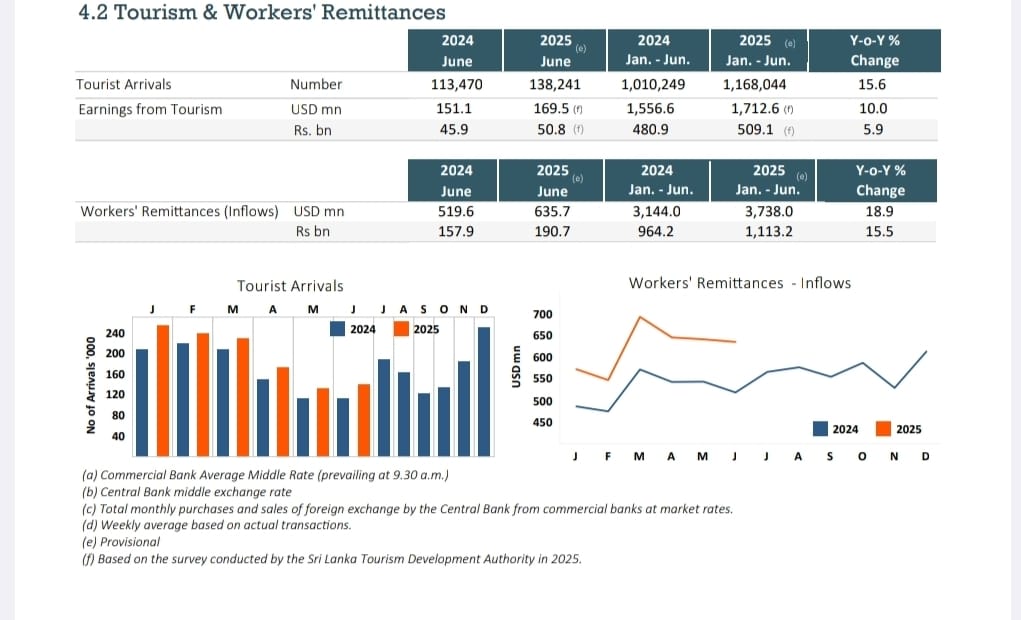
High shipping and insurance costs due to threatened maritime routes (via the Red Sea and Suez Canal) will also add to import and export burdens. Sri Lanka’s apparel and tea exports will become less competitive, and delayed shipments will affect global buyers. The tourism sector, on a path to recovery and crucial for generating foreign currency, could take a hit as geopolitical tensions deter international travel.
Remittances, another economic lifeline, are at risk too. Many Sri Lankan migrant workers are based in Middle Eastern countries. Any prolonged conflict may destabilize host nations’ economies, leading to job losses and mass repatriation—threatening the livelihood of thousands of families and reducing a vital source of foreign exchange.
National Security and Strategic Dilemmas Beyond the economic lens, the conflict poses significant security implications. Sri Lanka’s historic non-aligned position is under pressure, as global powers demand clearer stances. Any perceived alignment could have repercussions for trade, diplomatic support, or foreign investment.
Additionally, the conflict raises fears of ideological radicalization. Sri Lanka, having faced violent extremism in the past, must now be wary of imported ideologies inflamed by sectarian narratives emerging from this war.
Heightened naval presence in the Indian Ocean, crucial for Sri Lanka’s maritime trade, could complicate commercial shipping and require increased security expenditures,a cost the debt-laden government can scarcely afford.
A Dangerous Turning Point for the World This war has no clear exit. Iran is seeking justice for the deaths of its top military leaders; Israel is determined to eliminate what it sees as a mortal threat. Negotiations are on hold, and with mounting casualties on both sides, tempers are flaring. A diplomatic solution is still possiblebut requires immense international effort, restraint, and compromise, which seem in short supply.
As the flames of war engulf the heart of the Middle East, the message for the world is clear: in an interconnected global system, no country remains untouched. The cost of conflict is always highest for those least able to bear it.
For Sri Lanka, the lesson is urgent. Preparing for fuel shocks, safeguarding remittance channels, protecting trade routes, and maintaining internal harmony must become immediate national priorities. Diplomacy and resilience not weapons must be the tools to navigate this turbulent chapter.
No Winners in War
What is unfolding in the Middle East is not just a regional war; it is the symptom of deeper unresolved tensions of nuclear fears, regional rivalries, and superpower competition. The world is once again reminded that in an age of interconnected economies and globalized supply chains, no nation is truly distant from conflict.
For Sri Lanka, the Iran-Israel war is not a spectator event. It is a crisis that could derail its fragile economic recovery, fuel social unrest, and threaten its national security. While it cannot influence the actions of global powers, Sri Lanka must urgently prepare by building energy reserves, securing alternative supply routes, and bolstering maritime and cyber security.
The lessons of history are clear: war may serve political ends in the short term, but its human and economic costs are enduring. Killing people does not bring peace. In the end, it is diplomacy not destruction that builds nations and safeguards futures.
War does not determine who is right—only who is left.
June 17, Colombo (LNW): Showers will occur at times in the Western and Sabaragamuwa provinces and in Nuwara-Eliya, Kandy, Galle and Matara districts, the Department of Meteorology said in its daily weather forecast today (17).
Fairly heavy falls about 50 mm are likely at some places.
Several spells of showers will occur in the North-western province and in Matale district. Showers or thundershowers may occur at a few places in the Uva province and in Ampara and Batticaloa districts in during the afternoon or night.
Fairly strong winds of about (30-40) kmph can be expected at times over Western slopes of the central hills and in Northern, North-central, Southern and North-western provinces and in Trincomalee district.
The general public is kindly requested to take adequate precautions to minimise damages caused by temporary localised strong winds and lightning during thundershowers
Marine Weather:
Condition of Rain: Showers will occur at several places in the sea areas off the coast extending from Puttalam to Hambantota via Colombo and Galle.
Winds: Winds will be south-westerly.
wind speed will be (35-45) kmph and can increase up to (50-60) kmph at times in the sea areas off the coast extending from Puttalam to Kankasanthurai via Mannar.
Wind speed will be (25-35) kmph in the other sea areas around the island. Wind speed can increase up to 50 kmph at times in the sea areas extending from Puttalam to Pottuvil via Colombo, Galle and Hambantota and from Kankasanthurai to Trincomalee via Mullaitivu.
State of Sea: The sea areas off the coast extending Puttalam to Kankasanthurai via Mannar will be rough at times.
The sea areas off the coast extending from Puttalam to Pottuvil via Colombo, Galle and Hambantota and from Kankasanthurai to Trincomalee via Mullaitivu will be fairly rough at times.
The wave height may increase about (2.0 – 2.5) m in the sea areas off the coast extending from Chilaw to Matara via Colombo and Galle (this is not for land area).
Naval and fishing communities are requested to be vigilant in this regard.
Lions international District 306 D5 successfully conducted the Cabinet school for cabinet officers designate on the 15th of June 2025 at PGIM Academic Centre, Borella. The Cabinet school started with the national anthem, followed by pledge of aligence as per the customary of Lions International organitation. The club school was successfully held under the perview of The District Governor elect For 306 D5 Lion Sashikumar Subramaniam SCA PMJF PMAF
The key note speaker Dr. Jeewantha Perera a corporate trainer, Youth Development Guide, Power parenting Coach, visiting lecturer at numours organizations and a Motivational speaker truly captured the audience attention through his art of approaching techniques, including starting with Captivating questions, well placed jokes, humors, compeling stories, using real-life examples where audience could connect with to give more impact to the message and visual aids.
Apart from Dr. Jeevantha the faculty members of DLLI IPDG Lion Anura Kumara Dissanayake PMJF PMAF, IPCC Lion Indra Kaushal Rajapakshe PMJF PMAF, PDG Gamini Jayasooriya, PCC Lion Dr. Fahmy Ismail MJF MAF, Area Leader LCIF & ID endorse Lion P Jeyarajan PMJF MAF, Multiple LCIF chairperson 2025/26 PDG Lion Gratien Fernando PMJF PMAF and the head of DLLI faculty PDG Lion Shyama Silva added more value to the Cabinet school by sharing their depth knowledge in different areas of Lionism they are excelled at.
The head of the faculty PDG Lion Shayama Silva educated the Cabinet elect members of their designate roles while Multiple LCIF chairprlerson Lion Gratien Fernando insisted the importance of LCIF contribution and how it makes an impact in the life of needy people across the Globe.
Lionism in Sri Lanka began in 1958, when the first Lions Club, the Lions Club of Colomo was established as a club extension from the South Indian District. The movement grew, leading to the formation of District 306 in 1972. The Multiple District 306 was initially demarcated into three sub-districts (A, B, & C) in 1998, and then further divided into six in 2004/2005 ( A1,A2, B1, B2, C1 & C2)
With a rapid increase in members and and the establishment of new clubs the Multiple 306 was undergoing a significant redistricting, transitioning from 6 exisisting districts to 12 new districts will be effective from July 2025. This restructuring aims to accommodate the growth of Lionism within the country and provide a more focused approach to community service.
The District Governor Elect for District 306 D5 Lion Subramaniam Sashikumar SCA PMJF PMAF under his perview his elected cabinet members succesfully completed the cabinet school yesterday. . The cabinet school was organized by the District GLT coordinator Lion Amalrajah Jayaseelan & Disrict GMT coordinator Lion Selva Mariyathasan. We wish the District Governor Elect and his team a succesfull Lionistic year ahead
June 16, Colombo (LNW): Sri Lanka is actively pursuing a digital transformation program aimed at modernizing its industrial sector. It is a Joint initiative by Industries and Digital Economy Ministries by introducing digital payments, readiness index, and Industry 4.0 adoption to boost productivity and competitiveness.
This initiative, spearheaded by the Ministry of Industries in collaboration with the Digital Economy Ministry, focuses on leveraging technology to boost productivity and competitiveness. The program includes streamlining public services, promoting digital payments, and digitizing key sectors like manufacturing.
Industrial and Entrepreneurship Development Deputy Minister Chathuranga Abeysinghe announced the launch of a new digital transformation program designed to modernise the industrial sector.
The initiative is being rolled out in collaboration with the Digital Economy Ministry to boost productivity and competitiveness through technology-driven solutions.
“We have officially kicked off our digital journey with the Ministry of Digital Economy,” Abeysinghe noted in a post via ‘X’.
He said the Ministry of Industries (MoIE) is taking bold steps to digitise its services and spearhead digital transformation across the industrial sector.
The program is a joint effort between the Ministry of Industries and the Digital Economy Ministry. The Ministry is digitizing its services and those of its affiliated institutions, starting with onboarding them to the GovPay platform for streamlined payments and service delivery
A key component is the launch of an Industry Digital Readiness Index to assess and accelerate the digital maturity of industries.
The GovPay platform, already used for streamlining public services, will be expanded to facilitate digital payments within the industrial sector.
The program emphasizes raising digital literacy and skills to ensure all citizens, especially those in underserved areas, can participate confidently in the digital economy, according to the Information and Communication Technology Agency of Sri Lanka.
The program aims to embrace Industry 4.0 principles, which involve integrating digital technologies into manufacturing processes to enhance efficiency and collaboration. It aligns with the broader National Digital Economy Strategy 2030, which outlines Sri Lanka’s vision for a digitally transformed future.
It is o enhance productivity and competitiveness within the industrial sector through technology adoption, and modernize industrial processes and operations through digital technologies.
It will contribute to Sri Lanka’s overall economic growth and development through a digitally empowered industrial sector.
Overall, the program represents a significant step towards modernizing Sri Lanka’s industrial sector by embracing digital technologies and promoting a more efficient, competitive, and inclusive digital economy, according to the Ministry of Digital Economy.
“As a first step, all institutions under the Ministry will be onboarded to GovPay starting next month, streamlining payments and service delivery,” Deputy Minister Chathuranga Abeysinghe announced.
“We also finalised plans to launch the Industry Digital Readiness Index — a critical tool to assess and accelerate the digital maturity of our industries,” the Deputy Minister added.