Sri Lanka has launched a fresh support mechanism to rescue struggling small and medium enterprises (SMEs), amid mounting pressure from parate executions and loan defaults that threaten to cripple the sector—the backbone of the island’s economy.
In response to increasing financial distress faced by SMEs due to high interest rates, declining demand, and cash flow constraints, the Ministry of Industries and Enterprise Development unveiled a strategic programme to offer grassroots-level assistance to affected businesses.
The new initiative involves the transformation of existing Development Officers (DOs) and Enterprise Development Training Officers (EDTOs) into a dynamic cadre of ‘Relationship Officers’ under the Small Enterprise Development Division (SEDD). These officers will act as field-level business advisors capable of delivering hands-on support to revive and restructure SME operations.
The first phase of the programme, launched on July 29 at the Sri Lanka Foundation Institute, covers 53 officers from the Western Province. These officers will undergo a capacity-building programme designed around experiential learning principles—‘Learn by Doing’. The focus is on equipping them with essential skills, entrepreneurial mindsets, and strategic know-how to support financially distressed SMEs.
The initiative is a joint effort between the Ministry and the Sri Lanka Institute of Marketing (SLIM), which has pledged Rs. 100 million towards the programme. SLIM has already allocated Rs. 40 million for the pilot phase, with its academic faculty providing services on a voluntary basis.
This effort comes at a critical time. According to Central Bank data, over 30% of the SME loan portfolio in Sri Lanka is currently classified as non-performing. Banks, under mounting pressure to clean up balance sheets, have resumed parate executions—legal actions that allow financial institutions to auction mortgaged properties without court proceedings.
This has caused widespread alarm across the SME sector, especially among small manufacturers, traders, and service providers who were battered by the pandemic and the 2022 economic crisis.
The Central Bank of Sri Lanka (CBSL) has acknowledged the rising SME debt distress and has taken steps to ease the burden.
These include encouraging banks to offer restructuring and rescheduling facilities, as well as pushing for more inclusive credit evaluation models that consider alternative data for loan appraisals.
A credit guarantee scheme and partial risk-sharing facility are also under consideration to incentivize lending to high-risk but viable SME ventures.
However, industry associations argue that these measures must be accompanied by a moratorium on parate executions and more aggressive debt restructuring mechanisms. “The SME sector is not just a loan portfolio; it’s the engine of employment, innovation, and regional development,” a senior official at the National Chamber of Commerce stated.
The government’s deployment of Relationship Officers marks a shift towards proactive and decentralised enterprise development. By bridging the information and advisory gap between policymakers and entrepreneurs on the ground, the move aims to prevent further erosion of the SME base, which accounts for over 75% of all businesses and nearly 45% of employment in Sri Lanka.
With financial institutions tightening credit and legal actions on the rise, the success of this hands-on advisory network could determine the survival and revival of thousands of small businesses in the coming months.
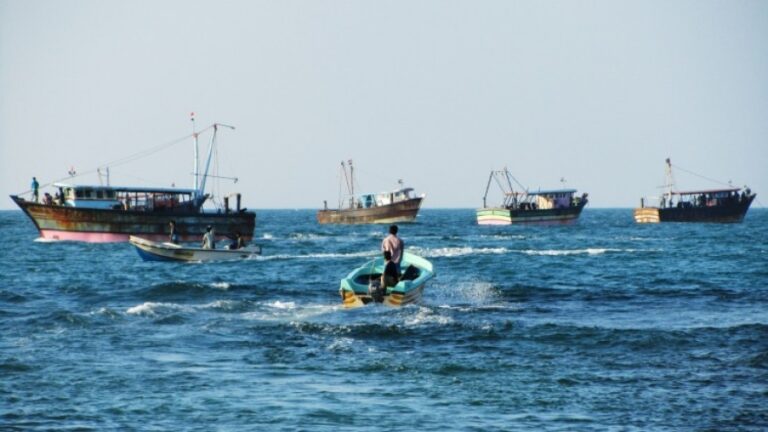
:Sri Lanka’s inland and lagoon fishermen—who make up one of the country’s most vulnerable yet vital livelihoods—are now eligible for a much-needed safety net through a newly introduced insurance scheme by the Agricultural and Agrarian Insurance Board. This initiative aims to offer relief to thousands of fishing families who continue to battle economic hardship, unpredictable weather patterns, and a lack of state support.
According to official data, over 120,000 individuals are engaged in lagoon and inland fishing across Sri Lanka, depending solely on this traditional vocation to feed their families and sustain their lives. Despite their contribution to the local economy and food security, these communities have long operated on the margins, with little to no formal protection or welfare.
The newly announced insurance scheme offers Rs. 1.2 million in compensation in the event of sudden death due to accidents while fishing or during adverse weather events. Fishermen will need to pay a modest annual premium of Rs. 2,000 to benefit from the cover. In addition to fatal accidents, the policy also includes compensation for total or partial disability, and even serious injuries that may occur during or outside of active fishing periods.
This move comes at a time when many fisherfolk are reeling under economic pressure. Rising costs of fishing gear, lack of infrastructure, limited market access, and erratic weather have all made their survival increasingly difficult. Most fishermen operate small, non-motorized boats and often risk their lives navigating shallow inland waters, particularly during the monsoon seasons.
In the past, successive governments have attempted to support the fishing community through kerosene subsidies, concessional loan schemes, and the provision of fishing gear and equipment. However, much of this assistance has been ad hoc and often delayed due to bureaucratic inefficiencies and poor coordination among agencies. The discontinuation of the kerosene oil subsidy—once a crucial lifeline for small-scale fishermen—has further pushed them into financial distress, especially in rural and remote areas.
The new insurance scheme is being hailed as a step in the right direction, offering some level of security to these fishermen and their families. However, experts stress that comprehensive and sustained support—including fuel subsidies, access to modern equipment, and proper market linkages—are still essential if Sri Lanka’s inland fishing sector is to be revived and safeguarded.
While the insurance initiative provides a ray of hope, the broader plight of the inland fishing community underscores the urgent need for a national policy framework that guarantees social protection, livelihood sustainability, and long-term development for this neglected sector.
Digital Mobility Solutions Lanka PLC, the parent company of Sri Lanka’s leading ride-hailing and delivery platform PickMe, has posted stellar financial results for the first quarter of the financial year 2025/26, showcasing strong growth across all key performance indicators.
The company recorded a consolidated revenue of Rs. 1.8 billion for Q1, marking a remarkable 50% increase compared to Rs. 1.2 billion in the same period last year. This surge in earnings was fuelled by a 43% year-on-year increase in platform volume, driven by a record number of monthly active users leveraging PickMe’s diverse mobility and delivery solutions.
Gross Transaction Value (GTV)—which represents the cumulative value of all trips and deliveries conducted via the platform—grew by 36%, climbing to Rs. 16.6 billion from Rs. 12.3 billion a year earlier. This increase in GTV reflects higher user engagement and increased transaction frequency on the platform.
PickMe’s relentless focus on operational efficiency paid off handsomely, as operating profit more than doubled—rising 106% to Rs. 602 million, compared to Rs. 292 million in Q1 of the previous year. This growth was attributed to higher volumes, greater economies of scale, and strategic cost-control measures, particularly within its IT infrastructure.
On a quarter-over-quarter basis, operating profit also saw a healthy 13% growth, indicating sustained momentum built on robust volume expansion and refined cost structures. Net profit soared to Rs. 437 million, a substantial 96% increase over the Rs. 223 million reported in the same period last year. Sequentially, net profit grew 16%, further underlining PickMe’s consistent performance.
In addition to financial performance, the company focused on strengthening its operational capabilities. Strategic investments were made to expand and stabilise the driver base, ensuring platform reliability and service continuity. As a result, both monthly active users and independent third-party drivers hit all-time highs during the quarter, reaffirming PickMe’s strong market presence and scalable growth potential.
Commenting on the results, PickMe Chairman Ajit Gunewardene stated, “Our Q1 results reflect the power of our platform and the soundness of our strategic direction. Strong user engagement and a growing network of independent drivers position us for continued, sustainable growth.”
Founder and CEO Jiffry Zulfer echoed the sentiment, noting, “The 106% jump in operating profit highlights our commitment to disciplined cost management and technological efficiency. Our focus on IT infrastructure optimisation continues to yield significant operational benefits.”
The Presidents’ Entitlements (Repeal) Draft Bill, which seeks to revoke special privileges granted to former Presidents and their widows, was officially gazetted on July 31, 2025.
The Draft Bill, ordered to be published by Justice and National Integration Minister Harshana Nanayakkara, proposes to repeal the Presidents’ Entitlements Act, No. 4 of 1986 in its entirety.
According to the gazette notification, the Bill aims to abolish all special benefits previously provided under Sections 2 and 3 of the Act. These include residences, monthly allowances, secretarial support, official transport, and similar facilities afforded to former Presidents and their widows.
Furthermore, the Bill proposes to cease the monthly pension currently paid to the widow of a former President, as outlined under Section 4 of the repealed legislation.
The Cabinet of Ministers granted approval last week to proceed with the gazetting and tabling of the Bill in Parliament, following a proposal submitted by Minister Nanayakkara.
The Draft Bill also clarifies that all entitlements and payments provided prior to the date of commencement of the new law shall be discontinued from the date it comes into effect.
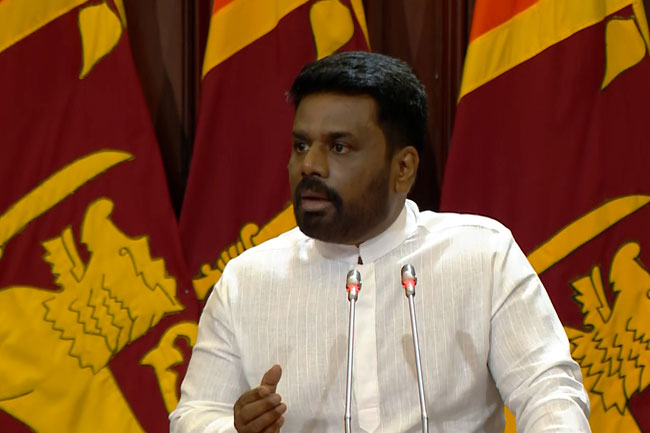
President Anura Kumara Dissanayake reaffirmed his commitment to transforming Sri Lanka’s political landscape, declaring that his administration has introduced a new political culture, replacing a system long plagued by corruption and waste.
Speaking to the Sri Lankan community in the Maldives at an event held on Wednesday (30) at the Maldives National University Auditorium, the President said the current Government has also taken decisive steps to revive the country’s stagnant economy.
“We are building a State where everyone is equal before the law. An era was created where State property and public funds were wasted on a grand scale. We will make Sri Lanka a country where people are not only afraid to take bribes but even to think about taking one,” the President declared.
He emphasised that the rule of law is now being enforced across all sectors, ensuring equal accountability irrespective of status or power.
Organised by the Sri Lankan High Commission in the Maldives, the event brought together Sri Lankan professionals, students, and workers residing in the Maldives.
President Dissanayake said the two central priorities of his Government — political reform and economic renewal — reflect the will of the people expressed at the last Presidential Election.
“We are committed to fulfilling the trust placed in us by the people of Sri Lanka. Let us work together to build a better country for future generations — one they can inherit with hope and pride, not hardship and despair,” he urged.
He also expressed gratitude to Sri Lankans in the Maldives who contributed to the electoral victory of the National People’s Power (NPP) at both the Presidential and General Elections.
During the event, the President engaged directly with the audience, responding to questions about the current situation in Sri Lanka and concerns of Sri Lankan expatriates living in the Maldives.
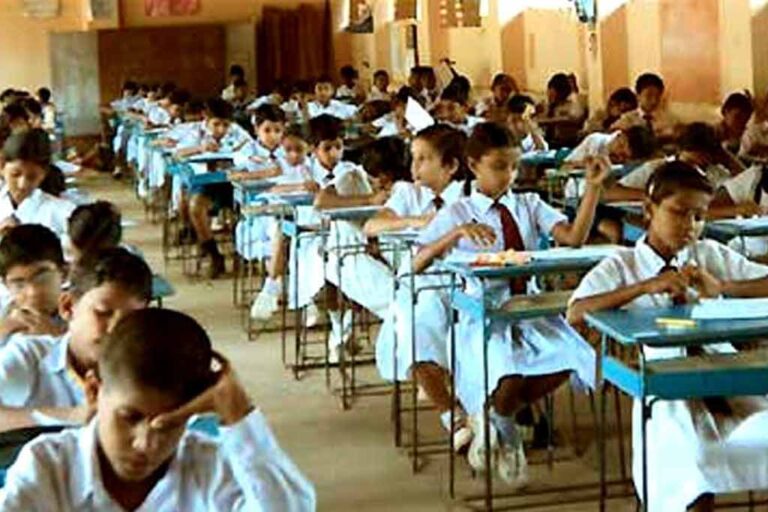
Prime Minister and Education Minister Dr. Harini Amarasuriya has raised alarm over rising school dropouts and absenteeism, revealing that around 20,000 students dropped out of school last year, while a further 80,000 failed to attend regularly.
Speaking at a consultative meeting with education officials in the Central Province held at the Kandy District Secretariat Auditorium on July 31, the Prime Minister cited recent findings from an Education Ministry analysis.
“Each year, around 300,000 children enter Grade One. Of them, approximately 20,000 stop schooling partway through. Although statistically less than 1%, in real terms the number is significant and cannot be ignored,” she said.
Dr. Amarasuriya stressed the need for qualitative research to understand the underlying reasons behind these figures.
“We must identify who these children are and where they have gone. This may be the root cause of many social crises we are witnessing today.”
She also highlighted that about 80,000 children exhibit irregular attendance, with some attending school less than half the time.
“That means nearly 100,000 children — about one-third of those enrolled — are not receiving the education they are entitled to,” she noted.
The Prime Minister said dropout rates are higher among boys, calling for targeted interventions to determine whether these children are pursuing alternative education or abandoning it entirely.
Addressing higher and vocational education, Dr. Amarasuriya noted that while 40,000 students enter State universities annually, another 150,000 pursue vocational training. However, there is no clear data on the fate of the remaining school leavers, many of whom fall outside formal systems.
She also expressed concern about youth employability, particularly among young women, stating:
“Despite strong academic performance, many girls struggle to find employment. Women’s participation in the labour force is about 50% lower than men’s, mainly due to a lack of opportunities.”
While acknowledging that broader societal factors contribute to this disparity, Dr. Amarasuriya maintained that education plays a central role in addressing it.
She further questioned the effectiveness of Sri Lanka’s free education system, asking whether it truly delivers quality and meaningful learning outcomes.
“What we need is not just educated individuals, but citizens capable of resolving crises and engaging meaningfully with society,” she concluded.
The event was attended by Central Province Governor Prof. Sarath Abeykoon, State Minister Gamagedara Dissanayake, MPs Thushari Jayasinghe, Thanura Dissanayake and Ishak Farook, Education Secretary Nalaka Kaluwewa, Central Province Chief Secretary Ajith Premasinghe, and Kandy District Secretary Indika Udawatta.
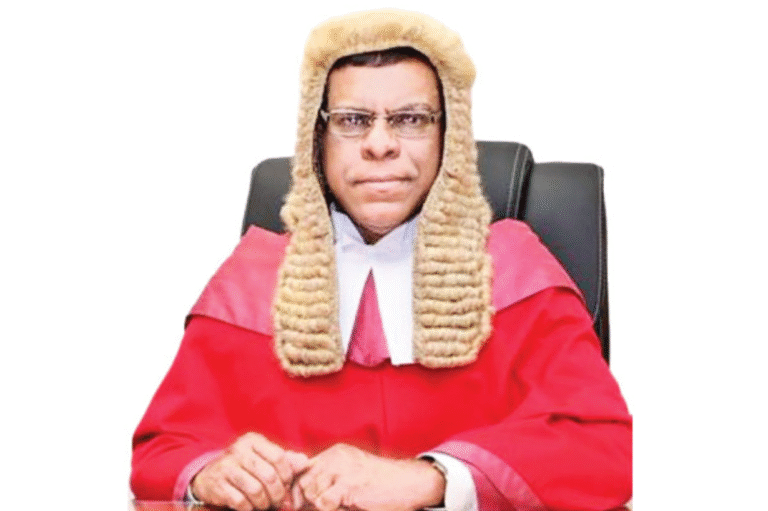
Sri Lanka’s newly appointed 49th Chief Justice, Preethi Padman Surasena, has pledged to accelerate the digital transformation of the country’s judicial system, describing it as vital to delivering efficient and modern justice.
In his first official address at a ceremonial sitting of the Supreme Court held to mark his formal assumption of office, Chief Justice Surasena stressed the urgent need for the judiciary to embrace technology in order to meet public expectations and align with international standards.
“I will fast-track the digitization of the Court system throughout the country. That is what the BASL wants; that is what the Minister wants; that is what the Government wants; that is what the litigants want. If you want different results, start making different choices,” he declared.
Chief Justice Surasena emphasized the judiciary’s responsibility to offer a high-quality service to the public, warning that delays in modernizing the system would impair the profession’s ability to serve justice efficiently. He said the legal community must uphold professional standards, as public trust in the system depends on it.
Calling for immediate and collective action, he noted that government funding and stakeholder support are already in place, but progress has been stalled due to lack of initiative.
The Chief Justice highlighted several benefits of automation, including increased efficiency, cost reduction for litigants, and improved time management.
Earlier in the ceremony, Attorney General Parinda Ranasinghe (Jnr) PC and Bar Association of Sri Lanka (BASL) President Rajeev Amarasuriya welcomed the new Chief Justice and commended his longstanding service to the judiciary.
Showers or thundershowers will occur at several places in North-Central, Uva, Eastern, Central and Sabaragamuwa provinces and in Kurunegala, Vavuniya, Mullaittivu and Hambantota districts after 1.00 p.m. Fairly heavy falls about 75 mm are likely at some places in these areas.
A few showers may occur in Western province and in Galle, Matara and Puttalam districts.
The general public is kindly requested to take adequate precautions to minimize damages caused by temporary localized strong winds and lightning during thundershowers.
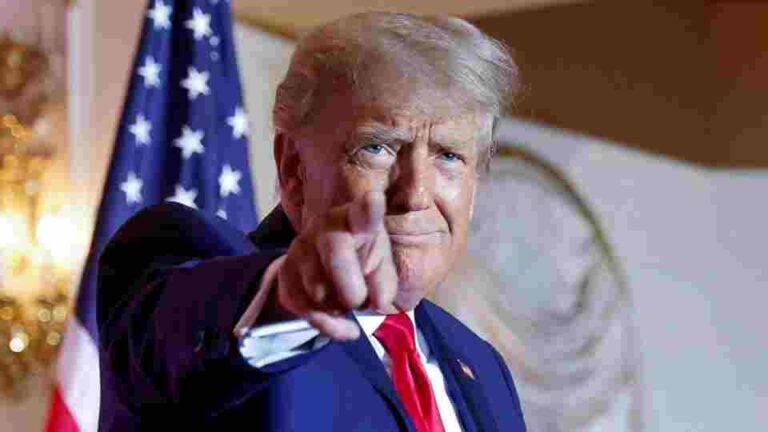
U.S. President Donald Trump signed an executive order on Thursday reducing tariffs on Sri Lankan exports to 20%, down from the 44% rate announced in April. The change was confirmed by the White House and follows a letter sent by President Trump to Sri Lankan President Anura Kumara Dissanayake on July 10.
The tariff adjustment comes under Trump’s sweeping trade initiative declared on April 2 as “Liberation Day,” when a universal 10% tariff was imposed across all countries, with higher rates for countries with trade deficits with the United States.
Sri Lanka, initially subjected to a steep 44% tariff due to its trade deficit with the U.S., saw a brief reduction to 30% before Thursday’s executive order brought the rate down further to 20%.
Key Highlights of the New Tariff Framework:
10% tariff for countries with a trade surplus with the U.S.
15% base tariff for countries with a trade deficit.
Higher or negotiated rates for over a dozen countries with significant deficits.
In total, more than 50 countries saw revised tariffs under the new order, including:
Bangladesh: 37% ➝ 20%
Vietnam: 46% ➝ 20%
Cambodia: 49% ➝ 19%
India: 26% ➝ 25%
Japan: 24% ➝ 15%
European Union (most goods): 20% ➝ 15%
The revised tariff rates will be implemented on August 7, allowing U.S. Customs and Border Protection sufficient time to adjust collection mechanisms.
The White House emphasized that the tariff policy is a “powerful tool to put America First,” aimed at addressing long-standing trade imbalances that the administration argues threaten U.S. economic and national security.
July 31, Colombo (LNW): Experts say rhetoric violates constitutional protections, fuels extremist activity, and risks incitement under Sri Lankan law
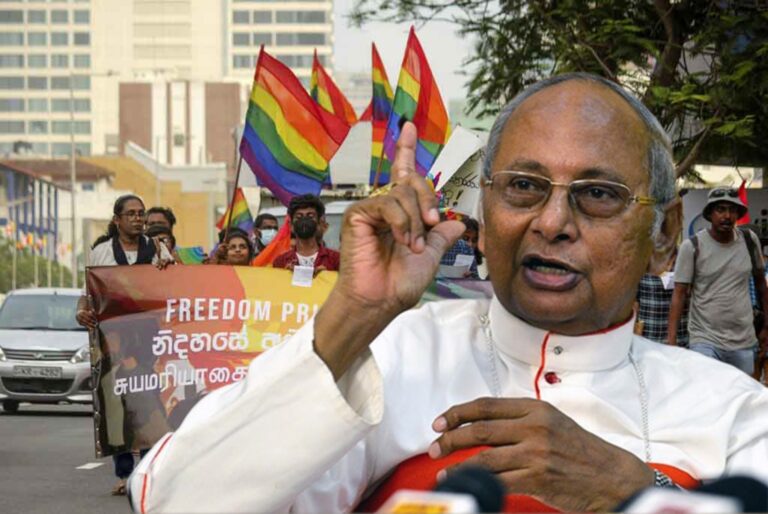
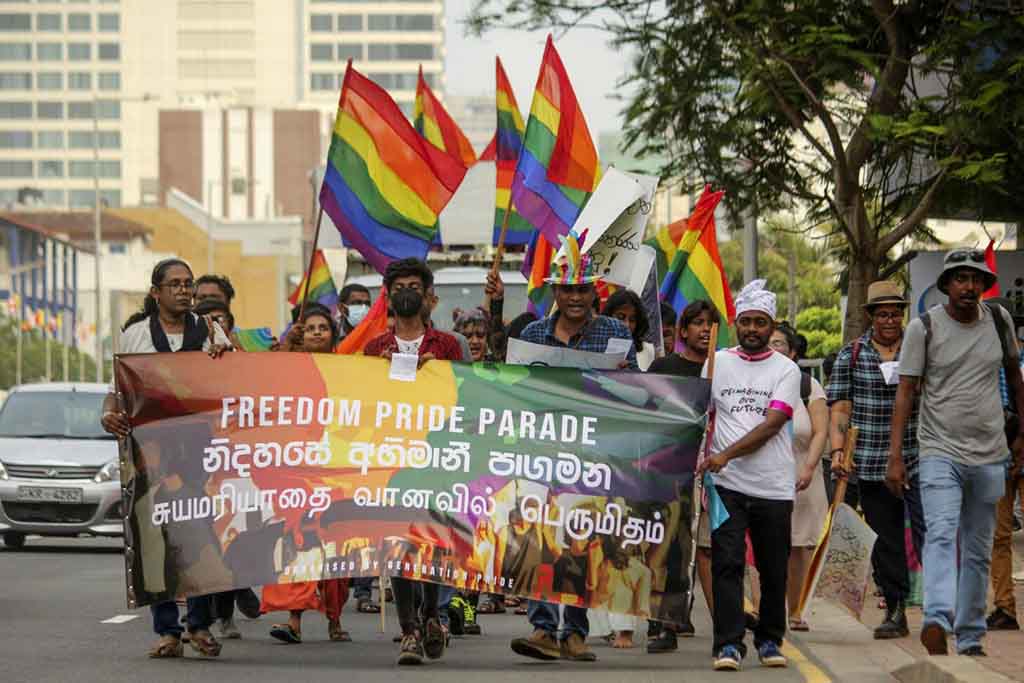
Legal experts and constitutional advocates are raising serious concerns following recent remarks by Archbishop of Colombo, Cardinal Malcolm Ranjith, in which he publicly denounced same-sex marriage as a “corrupt ideology” and questioned the validity of families formed by same-sex couples. Critics say the comments, made during a sermon at St. Anne’s Church in Beruwala, are not only socially inflammatory but legally flawed, constitutionally inconsistent, and potentially dangerous.
While the Cardinal framed his position in religious terms, legal scholars argue that his remarks amount to public discrimination,which could contribute to a hostile environment for LGBTQ+ individuals, particularly in a context where extremist groups are already mobilising against queer communities.
Contradiction of Supreme Court Precedent
At the center of the legal backlash is the Supreme Court’s Special Determination No. 13/2023, in which the Court determined that repealing Sections 365 and 365A of the Penal Code — colonial-era provisions criminalising same-sex sexual conduct — would not be inconsistent with the Constitution. The Court made it clear that consensual same-sex relationships between adults are protected under Sri Lanka’s constitutional framework, and any attempt to prevent their legal recognition without rational justification constitutes unjust discrimination.
In its determination, the Court rejected arguments that decriminalisation would endanger public morality, national security, or social order. The ruling emphasised that the Constitution must be interpreted in light of the values of equality, dignity, and justice, which apply to all citizens, regardless of sexual orientation.
Thus, when the Cardinal claims that same-sex marriage is a moral threat or questions the capacity of same-sex couples to raise families, he directly undermines the reasoning and authority of the Supreme Court, which has already ruled against such assertions.
Violation of Constitutional Guarantees
Legal analysts point to Article 12(1) and (2) of the Sri Lankan Constitution, which guarantees that all persons are equal before the law and prohibits discrimination on arbitrary grounds. While sexual orientation is not expressly listed, the Constitution must be read in harmony with Sri Lanka’s obligations under international human rights law, including the International Covenant on Civil and Political Rights (ICCPR), to which the country is a signatory.
Statements by a senior religious leader that marginalise or stigmatise individuals based on their sexual orientation especially when such statements are made in public forums violate the spirit of constitutional equality and non-discrimination, particularly when they are positioned as a basis for withholding legal recognition of family life.
As public law expert Dr. Ruwan Fernando notes, “Freedom of religion does not provide immunity from constitutional responsibility. When a person in a position of authority uses their platform to delegitimise the rights of a minority group already protected under law, that crosses into the realm of legal concern.”
Potential Breach of the ICCPR Act
The ICCPR Act No. 56 of 2007, which brings the international treaty into Sri Lankan domestic law, prohibits the advocacy of hatred that constitutes incitement to discrimination, hostility, or violence.Section 3 of the Act explicitly criminalises public speech or conduct that incites such hatred based on identity categories, including sexual orientation when read under Sri Lanka’s interpretive obligations.
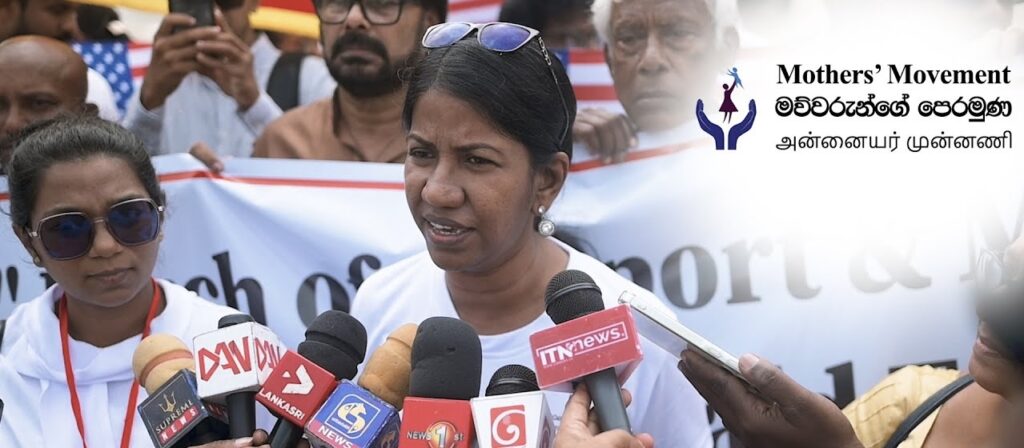
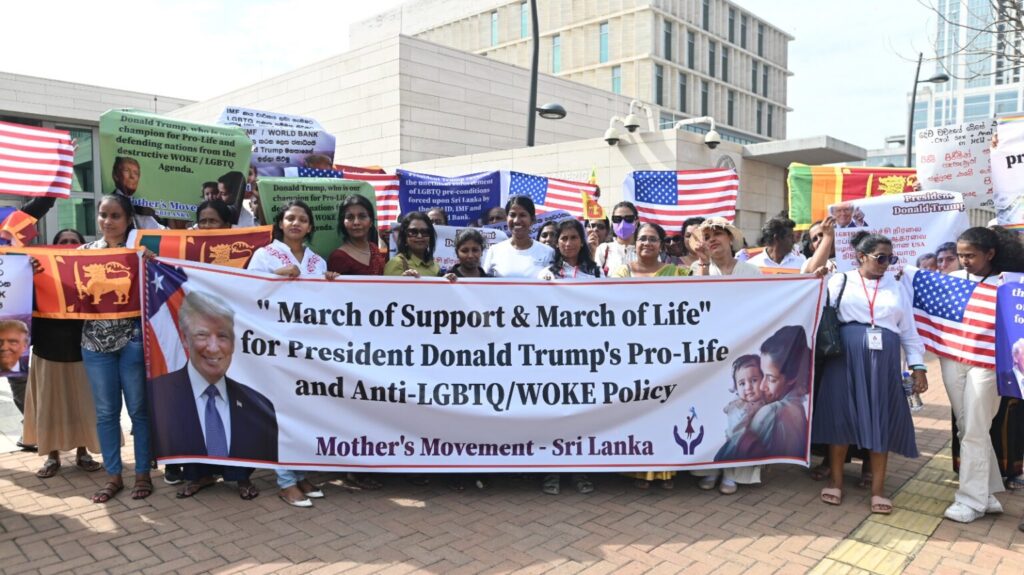
Legal professionals argue that the Cardinal’s comments may not exist in isolation but must be interpreted within a broader context particularly as his statements are being amplified by religious extremists such as the Mawwarunge Peramuna, a far-right group reportedly aligned with evangelical networks.
Mawwarunge Peramuna and Illegal Hate Campaigns
The group,Mawwarunge Peramuna, has in recent months launched a coordinated campaign targeting LGBTQ+ individuals, using homophobic and defamatory rhetoric, including calling them “paedophiles” and “mentally ill.” Most alarmingly, the group has reportedly distributed hate propaganda within government schools, a move which potentially violates the Education Ordinance,child protection laws, and the ICCPR Act.
One of their pamphlets claimed that “Donald Trump is more trustworthy than the Sri Lankan Supreme Court,” directly attacking the judiciary’s legitimacy. The group has also attempted to frame same-sex relationships as a national security threat,an argument explicitly rejected by the Supreme Court.
These activities not only constitute unlawful ideological interference in public education, but may also amount to criminal incitement under the ICCPR Act, especially given their intent to dehumanise and vilify a marginalised group.
With the Cardinal’s remarks now echoing similar themes such as framing same-sex love as a social threat,legal observers warn that his words may function as legitimising rhetoric for extremist actors, thereby expanding their reach and granting moral cover to their illegal actions.
Religious Belief Does Not Justify Legal Harm
While religious freedom is protected under Article 14(1)(e) of the Constitution, it is not absolute. The Constitution does not permit public figures—religious or otherwise—to deny legal rights on the basis of private belief,particularly when the speech undermines equality or promotes social exclusion.
Legal consensus affirms that morality, whether religious or cultural,cannot override the rule of law, particularly when fundamental rights are at stake. As reiterated by the Supreme Court, “Public morality cannot be used as a justification for criminalisation or exclusion when it violates dignity, privacy, or equality.”
-A Coordinated Threat Against Human Rights
What makes the situation particularly concerning, say civil society groups, is the interplay between religious leadership and extremist movements, forming a broader ideological network aimed at stalling or reversing human rights advancements. The alignment between Cardinal Ranjith’s messaging and Mawwarunge Peramuna’s agenda is no coincidence, they argue it is part of a growing global chain of reactionary resistance targeting queer and gender-diverse people.
“This is not merely religious opinion,” said a Colombo-based constitutional rights monitor. “This is systemic exclusion masquerading as doctrine, and it is being weaponised by those who seek to impose one moral worldview on the entire country—at the expense of constitutional democracy.”
Call for Legal Accountability
In response, legal professionals and rights advocates have urged the Attorney General’s Department, the Human Rights Commission of Sri Lanka, and the Ministry of Education to launch investigations into whether the Cardinal’s statements and the actions of Mawwarunge Peramuna constitute violations of law.
They stress that parliamentary debate on LGBTQ+ rights cannot proceed in an atmosphere of fear and hostility, especially when hate is being circulated in public spaces, schools, and houses of worship.
Attorney Dharshana Weraduwage stated, “This is not just a matter of speech—it’s a matter of legal integrity. If we allow public figures to target queer people without consequence, we erode the very foundation of the Constitution.”
Law Must Prevail Over Prejudice
As Sri Lanka moves toward legislative reform in line with the Supreme Court’s directive, the government must now reckon with a growing conflict between constitutional equality and religiously framed discrimination. If left unchecked, the spread of hate rhetoric by religious and extremist actors could jeopardise not only the rights of LGBTQ+ individuals, but also the independence of the judiciary and the rule of law itself.
The law is clear: all citizens regardless of who they love are entitled to dignity, equality, and protection under the Constitution. Religious belief, however sincerely held, cannot be allowed to justify legal exclusion or public incitement.
The silence of institutions, in this moment, would not be neutrality—it would be complicity.