Home Blog Page 455

BIA to undergo major overhaul to enhance passenger experience

0

February 09, Colombo (LNW): In a bid to improve the experience of passengers, particularly the increasing number of tourists arriving in Sri Lanka, the Bandaranaike International Airport (BIA) is set to undergo a significant redesign of its arrival lobby.

This initiative, spearheaded by Airport and Aviation Services (Sri Lanka) (Private) Limited (AASL), is a response to the steady rise in tourist arrivals and aims to address the challenges that come with handling growing passenger numbers.

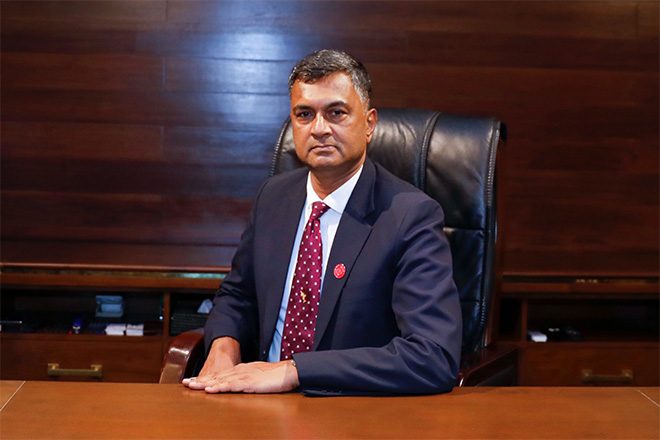
Harsha Abeywickrema, Chairman of AASL and a retired Air Chief Marshal, outlined that the planned upgrades are designed to alleviate congestion in the arrival area and create a more spacious and welcoming environment for visitors.

One of the key changes will be the relocation of the Sri Lanka Tourism Travel Information Counter to a more central and easily accessible location.

This will ensure that tourists are greeted and assisted promptly upon arrival.

Additionally, the number of ATMs in the arrival lobby will be increased to reduce long queues and waiting times for travellers.

These upgrades are expected to improve the overall efficiency of the airport, providing a smoother transition for passengers as they enter the country.

This redesign is part of a broader strategy by AASL to improve passenger facilities whilst managing the increasing volume of travellers at BIA.

These efforts will continue until the completion of Terminal 2, which is expected to be finished in March 2028.

The rise in tourist arrivals to Sri Lanka has been noteworthy, with a particularly sharp increase in the final quarter of 2024 and momentum continuing into 2025. In January 2025, daily arrivals averaged 8,150, reflecting a 23 per cent rise compared to the same month in 2024.

However, the arrival lobby’s current infrastructure has struggled to keep up with the influx of visitors, and the need for expansion has become increasingly evident.

Following a visit to BIA by Minister of Transport, Highways, Ports, and Civil Aviation, Bimal Rathnayake, plans to redesign and expand the arrival lobby were set into motion.

These enhancements are designed to ensure that BIA remains capable of accommodating rising passenger numbers and providing a seamless and positive arrival experience for all travellers.

Coconut Cultivation Board to restructure Kapruka Fund management to boost national growth

0

February 09, Colombo (LNW): The Coconut Cultivation Board has revealed an ambitious plan to reorganise the Kapruka Fund Management Board Societies, a key initiative aimed at expanding coconut cultivation across Sri Lanka.

This restructuring effort is expected to streamline operations and improve support for local coconut farmers, enhancing the country’s production capacity.

Dr. Sunimal Jayakody, Chairman of the Board, announced that the first phase of this strategic initiative will be rolled out in the Gampaha District on February 17.

He highlighted that this move would work in tandem with the existing Kapruka Loan Scheme, ensuring that farmers have access to the necessary financial resources to grow their operations.

This initiative forms part of the Coconut Cultivation Board’s broader, long-term strategy to boost national coconut production.

The Board has set a bold target of planting 2.5 million coconut trees in 2025 as part of its efforts to revitalise the industry and ensure a sustainable future for coconut cultivation.

Dr. Jayakody elaborated on the plan to focus on the Northern Coconut Triangle, a key area for coconut farming in the country, disclosing that approximately one million coconut trees will be cultivated in this region alone, contributing significantly to the overall growth targets.

Water tariffs set to drop following electricity rate reduction

0

February 09, Colombo (LNW): The Ministry of Urban Development, Construction, and Housing has announced that water tariffs will be adjusted in response to the recent decrease in electricity prices, with the new rates due to come into effect at the end of February.

Ministerial Secretary Ranjith Ariyarathne confirmed that a proposal from the National Water Supply and Drainage Board (NWSDB) to lower water tariffs had been received.

This proposal, which was drawn up by the relevant committee, has now been forwarded to the Minister for approval.

Ariyarathne assured the public that once the revised rates are approved by the Cabinet of Ministers, they will be officially announced.

The NWSDB has indicated that the reduction could range from 10% to 30%, providing significant relief to consumers.

This move comes as part of a broader effort to align utility costs with recent drops in electricity prices.

The government hopes this will ease the financial burden on households and businesses alike, encouraging more sustainable consumption of both water and energy.

Fair weather to prevail across island: Strong winds, misty conditions expected in several areas (Feb 09)

0

February 09, Colombo (LNW): Mainly fair weather will prevail over most parts of the island, the Department of Meteorology said in its daily weather forecast today (09).

Fairly strong winds of (30-40) kmph can be expected at times over Eastern slope of the central hills and Northern, North-central, Eastern, North-western and Uva provinces and in Hambantota district.

Misty conditions can be expected at some places in Western, Sabaragamuwa and Central provinces and in Galle, Matara and Badulla districts during the morning.

Marine Weather:

Condition of Rain:
Mainly fair weather will prevail over sea areas around the island.
Winds:
Winds will be north-easterly and speed will be (30-40) kmph. Wind speed can increase up to 50 kmph at times in the sea areas off the coast extending from Colombo to Mannar via Puttalam and from Matara to Pottuvil via Hambantota.
State of Sea:
The sea areas off the coasts extending fromColombo to Mannar via Puttalam and from Matara to Pottuvil via Hambantota will be fairly rough at times.

Indian High Commissioner Meets Sri Lanka’s Defence Secretary to Strengthen Bilateral Ties

0

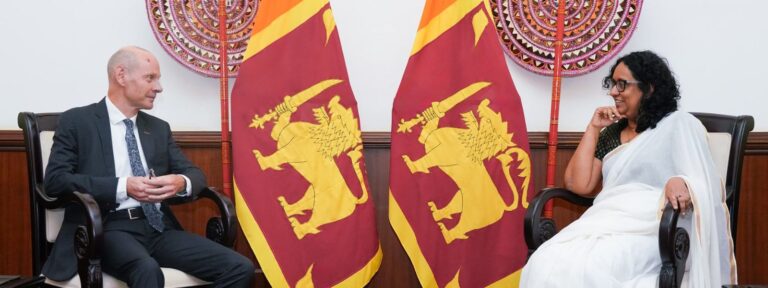
Indian High Commissioner to Sri Lanka, Santosh Jha, met with Defence Secretary Air Vice Marshal (Retd) Sampath Thuyacontha at the Defence Ministry in Sri Jayawardenepura, Kotte, on February 07 to discuss strengthening defence cooperation between the two nations.

Accompanied by Defence Adviser Captain Anand Mukundan and Assistant Defence Advisor Lieutenant Colonel Mandeep Singh Negi, the Indian envoy was warmly received by the Sri Lankan Defence Secretary.

Discussions focused on deepening defence collaboration, regional security, and maritime cooperation. The Indian High Commissioner reaffirmed India’s commitment to supporting Sri Lanka in counter-terrorism efforts, maritime security, and disaster response.

In response, the Sri Lankan Defence Secretary expressed gratitude for India’s continued assistance and highlighted the importance of defence partnerships in ensuring regional stability and security.

The meeting concluded with an exchange of mementoes, and the Military Liaison Officer of the Ministry of Defence also participated in the discussions.

Diplomatic Appointments Spark Controversy amidst SLFSA Concerns

0

President Anura Kumara Dissanayake has appointed a High Commissioner and four Ambassadors to represent Sri Lanka in its diplomatic service. These appointments, made during a formal ceremony at the Presidential Secretariat, have drawn criticism from the Sri Lanka Foreign Service Association (SLFSA), which has raised concerns over the selection process.

Following the appointments, the newly designated diplomats engaged in a brief discussion with the President, who expressed confidence in their abilities. He underscored their responsibility in strengthening Sri Lanka’s bilateral relations and promoting the country’s interests on the global stage. Additionally, he emphasized the importance of improving Sri Lanka’s international image through proactive diplomatic engagement.

President Dissanayake also highlighted the need to ensure fair and equitable welfare services for Sri Lankan expatriates, particularly those working in regions such as the Middle East, South Korea, and Japan. He urged the newly appointed envoys to prioritize the well-being of migrant workers and offer necessary support without discrimination.

The President further stressed Sri Lanka’s aspirations for economic development, calling on diplomats to facilitate increased foreign investments and expand international market opportunities for local entrepreneurs. He assured them of the government’s full support in achieving these objectives and announced plans to assess progress through follow-up discussions.

Despite these assurances, the SLFSA has expressed serious reservations regarding the appointments, arguing that several Head of Mission (HOM) positions have been assigned to individuals outside the Sri Lanka Foreign Service (SLFS). The association contends that this move undermines professionalism, meritocracy, and diplomatic expertise, disregarding established norms.

In a media statement, the SLFSA voiced its disappointment, emphasizing that experienced career diplomats, who have dedicated their professional lives to advancing Sri Lanka’s foreign policy, were overlooked. The association pointed out that the SLFS consists of highly trained specialists who are specifically prepared to manage Sri Lanka’s international relations. Appointing political figures rather than career diplomats, they argue, compromises the integrity of the Foreign Service and weakens Sri Lanka’s diplomatic standing.

Furthermore, the SLFSA noted that these decisions contradict the promises made in the government’s 2024 election manifesto, which pledged to prioritize the appointment of professional diplomats with proven expertise. The manifesto emphasized selecting candidates based on merit and ethical conduct while upholding diplomatic discretion. The SLFSA insists that immediate corrective action is necessary to depoliticize the Foreign Service and ensure that future appointments are based on merit rather than political affiliations.

The association expressed deep concern over the continuation of a long-standing practice where diplomatic positions are awarded as political favors, a tradition they had hoped would end under the current administration. The SLFSA warns that this approach demotivates career diplomats who have undergone rigorous training and possess significant international experience.

Despite multiple requests for discussions with the President and the Minister of Foreign Affairs, Foreign Employment, and Tourism, the SLFSA has yet to secure a meeting to address these concerns. The association remains committed to seeking engagement with the government to advocate for a Foreign Service based on professionalism and merit

Revamping Sri Lanka’s Paddy Marketing Board to Stabilize Rice Prices

0

The Sri Lankan government is set to restructure the Paddy Marketing Board (PMB) to provide better support to farmers and ensure stable rice prices amid prevailing market challenges.

Previously inactive and burdened with a Rs. 28 billion debt to state banks, the PMB will now play a crucial role in directly purchasing paddy from farmers at guaranteed prices, eliminating inefficiencies and market manipulation.

President Anura Kumara Dissanayake has directed officials to strengthen the PMB by upgrading paddy storage facilities and involving small-scale millers in rice production.

Additionally, the government aims to cultivate 1.3 million hectares of land during the Yala and Maha seasons to boost annual rice production.

These steps are designed to curb excessive profits made by large-scale millers, ensuring fair prices for both farmers and consumers.

Despite these measures, inefficiencies within the Food Department, cooperative societies, and even the PMB itself continue to hinder progress.

To counter this, the government plans to purchase between 300,000 and 400,000 metric tonnes of paddy during the 2024–25 Maha season for processing and distribution through cooperative networks such as Sathosa.

This strategy is intended to challenge the dominance of large-scale rice millers, who have been accused of artificially inflating prices.

While Sri Lanka’s daily rice consumption stands at 6,500 metric tonnes, the PMB’s recent intervention only resulted in the purchase of 119 metric tonnes of Keeri Samba rice last season. Expanding the storage capacity of PMB warehouses to 400,000 metric tonnes through renovations could significantly improve stock management and price stabilization efforts.

Agriculture Ministry Secretary M.P.N.M. Wickramasinghe emphasized that market manipulation, rather than actual supply shortages, is the primary cause of rice scarcity. Even with price controls, farmers struggle to sell their paddy, leading to market imbalances.

 To address immediate shortages, the government will import 70,000 metric tonnes of Nadu rice through state-run agencies like Sathosa and the State Trading Corporation (STC). These imports, priced at Rs. 220 per kilogram or lower, will commence on December 15, according to Trade Minister Wasantha Samarasinghe.

Although Sri Lanka produces 3.53 million metric tonnes of rice annually, unaccounted surpluses and industrial redirection, such as the use of rice in arrack production, contribute to supply issues. The country’s annual rice consumption is estimated at 2.4 million metric tonnes, with a monthly production of 200,000 metric tonnes.

The cost of rice production stands at Rs. 25 per kilogram, while retail prices have surged to Rs. 220 per kilogram. Government intervention is expected to reduce prices to a more manageable range of Rs. 150–160 per kilogram.

The revival of the PMB is seen as critical for small and medium-scale millers, many of whom have struggled with debt and closures. According to their association’s president, P.K. Semasinghe, nearly 10,000 mills have shut down over the past decade, leaving only 700 in operation.

He stressed that if the PMB purchases paddy and supplies it to small millers, rice prices could be maintained below Rs. 220 per kilogram. This initiative could benefit both farmers and consumers by stabilizing the market and preventing price manipulation by large-scale millers.

Govt’s Tax Reforms under IMF Scrutiny amid Economic Stabilization Efforts

0

The International Monetary Fund (IMF) has urged the Sri Lankan government to implement tax reforms and manage expenditures to address ongoing budget deficits. The IMF emphasized the necessity of aligning government spending with revenue and continuing progressive tax policies to ensure economic stability.

The newly elected administration has introduced tax reforms aimed at easing financial burdens on individuals and small businesses that have struggled with inflation and rising living costs. However, these changes have drawn scrutiny from the IMF. A comprehensive assessment of the tax measures will be included in an upcoming staff report, which will be presented to the IMF’s Executive Board.

If approved, this will facilitate the release of a $333 million tranche under the Extended Fund Facility program, according to Julie Kozack, Director of the IMF’s Communications Department.

Kozack addressed media queries in Washington, stating that the Sri Lankan government must adhere to the IMF-supported economic reform agenda, including specific preconditions, before securing further financial assistance.

A former treasury secretary with extensive experience in IMF negotiations warned that deviating from IMF recommendations could strain Sri Lanka’s relationship with the institution and hinder access to future foreign funding.

The IMF’s bailout package for Sri Lanka is centered on economic stabilization, including fiscal reforms such as tax increases and debt restructuring.

 President Anura Kumara Dissanayake, who also serves as the Finance Minister, has proposed raising the income tax-free threshold from Rs 100,000 to Rs 150,000.

While this adjustment offers relief to taxpayers, it may lead to a revenue shortfall if a significant portion of the tax base becomes exempt. To counterbalance this, the President has suggested increasing the Withholding Tax (WHT) rate from 5% to 10%.

Additional tax policy changes include VAT exemptions for locally produced yogurt and dairy products, which may reduce government revenue.

Meanwhile, tax exemptions on export services will be eliminated, with a new concessionary rate of 15%, potentially making Sri Lanka less competitive compared to nations that maintain lower tax rates for export-driven industries.

To support low-income groups, the President announced that pensioners and individuals earning below the Rs 150,000 tax threshold can apply for lower withholding tax rates or complete exemption through the Inland Revenue Department.

 Moreover, under the third IMF review, the government has committed to removing VAT on local fresh milk and yogurt to enhance child nutrition.

The IMF has proposed further tax reforms, effective January 1, 2025, to increase Sri Lanka’s tax-to-GDP ratio to 14% by 2026. These measures include new taxes, adjusted rates, and the removal of exemptions to achieve fiscal sustainability.

Notable changes include an imputed rental income tax on residential properties, expected to generate 0.15% of GDP in 2025, and a VAT increase on digital services to 18%, contributing an additional 0.08% of GDP.

Other reforms involve higher corporate income taxes on industries such as tobacco and betting, a doubling of stamp duties on leases, and the removal of the Simplified VAT (SVAT) system, which will increase administrative requirements for businesses.

Additionally, the lifting of import restrictions on vehicles and goods is anticipated to contribute 0.8% of GDP but may intensify competition for local industries.

While these reforms aim to enhance revenue generation and economic equity, they are also expected to raise costs for consumers, businesses, and property owners.Short-term inflationary pressures may arise, but improved tax compliance and reduced evasion could strengthen fiscal stability in the long run. Despite the immediate challenges, the IMF asserts that these measures are crucial for Sri Lanka’s economic recovery and long-term debt sustainability

Sri Lanka Strengthens Anti-Money Laundering Measures in Gem Industry Amid Challenges

0

The Central Bank of Sri Lanka (CBSL), through its Financial Intelligence Unit (FIU), has intensified efforts to combat money laundering and other financial crimes within the gem and jewelry industry. This sector, already burdened by high taxation, has been a focal point for regulatory scrutiny.

The FIU has conducted awareness programs on Anti-Money Laundering and Countering the Financing of Terrorism (AML/CFT) compliance obligations, aiming to educate industry participants. These initiatives are part of Sri Lanka’s preparations for the 2025 international evaluation of its AML/CFT framework, a critical step in maintaining the country’s global reputation and securing market access.

Key measures include training on the Financial Transactions Reporting Act (FTRA) and Customer Due Diligence (CDD) requirements, particularly for gem transactions exceeding USD 15,000. However, despite these regulatory efforts, much of the gem trade in Ratnapura and Beruwala remains informal. Reports indicate that only 12% of daily transactions—valued at over Rs. 10 billion—pass through legal channels, while informal financial systems such as hawala are widely used. These unregulated methods circumvent banking oversight, complicating enforcement, according to a senior official from the National Gem and Jewellery Authority.

Although Sri Lanka’s gem exports are expected to reach USD 2 billion annually by 2025, the industry is currently facing significant setbacks. Export revenue dropped 20.9% in the first eight months of 2024, falling to USD 212.8 million from USD 268.8 million the previous year. Industry insiders attribute this decline to the imposition of an 18% Value Added Tax (VAT) on both rough and finished gemstones. This tax applies to both re-exported gems and those sold to foreign tourists, diminishing Sri Lanka’s competitiveness against major trading hubs such as Dubai, India, Hong Kong, and Thailand.

The lack of financial support has further hampered the industry’s growth, as banks generally do not provide loans to gem traders, forcing them to rely on personal capital. Additionally, the absence of a VAT refund mechanism on foreign currency sales has further deterred traders. The national risk assessment has classified money laundering risks in the gem sector as moderate, prompting calls for stronger AML/CFT measures. These include enhanced due diligence for politically exposed persons (PEPs), transaction monitoring, and internal control systems.

The predominance of cash transactions without receipts makes VAT compliance challenging and obscures fund tracking. The Finance Ministry estimates that taxing local gem sales could generate Rs. 38 billion annually, a crucial contribution to Sri Lanka’s struggling economy. However, illegal gem exports continue, with authorities identifying at least 45 regular smugglers transporting valuable stones to Bangkok and other destinations. Reports also suggest corruption among certain customs officials facilitating these illicit transactions.

Compounding the issue, smuggled gemstones from Madagascar and Burma are entering Sri Lanka’s market, being falsely sold as locally sourced gems. This practice damages Sri Lanka’s reputation and deceives buyers. Additionally, undervaluation in the mining sector leads to significant tax revenue losses.

In response, the FIU has underscored the need for gem dealers to register, report suspicious transactions, and adhere to international AML/CFT standards. These measures aim to improve transparency, curb illicit financial activities, and ensure the long-term sustainability of Sri Lanka’s gem industry.

SL’s Stock Market Rebounds amid Economic stability/ Investor Confidence

0

Sri Lanka stands at a critical juncture where both opportunities and risks coexist. The newly elected National People’s Power (NPP) government must now steer the nation towards sustainable economic growth, ensuring financial stability, preventing future crises, and delivering prosperity for all Sri Lankans.

Following a significant dip earlier this month, Sri Lanka’s stock market has shown strong signs of recovery. This resurgence can be attributed to three key factors: economic recovery, foreign investments, and governance reforms.

Economic Recovery Driving Growth

Sri Lanka has exhibited a remarkable economic turnaround, achieving a 5% GDP growth rate in 2024, the highest in seven years. This recovery is largely fueled by a comprehensive debt restructuring program and a $2.9 billion bailout package secured from the International Monetary Fund (IMF) in March 2023. These measures have restored investor confidence and stabilized the economy, setting the foundation for sustained growth.

Strategic Foreign Investments Boosting Infrastructure

The government’s proactive efforts in attracting foreign direct investment have significantly contributed to market optimism. Key projects, such as the $3.7 billion oil refinery initiative in Hambantota led by China’s Sinopec, highlight the country’s commitment to enhancing infrastructure and energy diversification.

Furthermore, Sri Lanka’s collaborations with India and Japan in developing the Colombo Port City into a global financial hub underscore its ambition to become a leading player in regional trade and commerce.

Good Governance Restoring Investor Confidence

The new administration has placed strong emphasis on good governance, prioritizing transparency, accountability, and anti-corruption initiatives.

Measures such as establishing an independent anti-corruption commission, strengthening the judiciary, and introducing e-governance platforms have played a crucial role in regaining public and investor trust.

These efforts have reassured both local and international stakeholders about the country’s economic direction.

Market Performance and Key Sectors

Sri Lanka’s benchmark All Share Price Index (ASPI) has surged past the 17,000-point mark for the first time in history, reflecting growing investor confidence.

After experiencing its worst decline in over two years, which wiped out Rs. 188 billion in market value, the Colombo Stock Exchange rebounded as the ASPI gained over 50 points (0.3%), while the S&P SL20 rose by 25 points (0.5%). The day’s total turnover reached Rs. 5.2 billion, involving 177 million shares.

Sector-Wise Performance

The banking sector played a pivotal role in the stock market’s recovery, contributing 26.8% of the total turnover. Banks such as Sampath Bank (SAMP), DFCC Bank, and Seylan Bank were among the top positive contributors. 

Additionally, the capital goods and food, beverage, and tobacco sectors collectively accounted for 37.1% of the market activity.

Notable investor participation was observed in companies such as Amana Bank, Access Engineering, and Teejay Lanka. Retail and institutional interest remained strong in stocks like Browns Investments, Hatton National Bank, and LOLC Holdings.

Looking Ahead

As Sri Lanka continues its journey toward economic stability, the stock market’s resilience serves as a promising indicator of recovery. With strong governance, strategic investments, and ongoing economic reforms, the country appears well-positioned to navigate future challenges and capitalize on emerging opportunities.