Home Blog Page 461

India to Tap Sri Lanka’s Mineral Wealth via New Policy

0

By: Staff Writer

May 25, Colombo (LNW): Indian state-owned companies are gearing up to enter Sri Lanka’s critical mineral sector following the introduction of a new national policy aimed at encouraging foreign investment and joint ventures.

This policy shift, combined with duty-free benefits under the Indo-Sri Lanka Free Trade Agreement (ISLFTA), has opened doors for Indian firms to access Sri Lanka’s rich mineral deposits using imported machinery without customs duties.

A delegation led by India’s Ministry of Mines, which included top public sector mining firms, recently visited Sri Lanka. They toured key mining locations and met senior Sri Lankan officials, including Industries Minister Sunil Handunnetti.

 Discussions were also held with heads of major state-owned enterprises such as Kahatagaha Graphite Lanka Ltd., Lanka Mineral Sands Ltd., and the Geological Survey and Mines Bureau (GSMB), focusing on potential collaborations, advanced mining technologies, and joint value addition initiatives.

This visit followed an earlier meeting in New Delhi between India’s Minister of State for Coal & Mines, Satish Chandra Dubey, and Minister Handunnetti in February 2025. The engagements underscore India’s long-standing interest in Sri Lanka’s mineral-rich regions, particularly its coastal and northern areas.

According to the Board of Investment (BOI), Sri Lanka has approximately 7.5 million metric tons of Ilmenite, Rutile, and Zircon in Pulmudai and Puttalam, along with 45,000 MT of graphite and 60 million MT of apatite. The country also holds unique deposits of high-purity crystalline vein graphite, crucial for lithium-ion battery production, with reserves estimated at 1.3 million tonnes.

In 2023, Sri Lanka exported around 2,500 tonnes of graphite, earning $6 million. However, overall mineral exports dropped to $25 million in 2024—less than half of 2022 figures—highlighting the sector’s underperformance.

The government aims to revitalize it by easing restrictions: mining companies are now permitted to export up to 30% of raw minerals or operate for 24 months before setting up local value addition facilities.

The previous administration led by former President Ranil Wickremesinghe attempted reforms, including policy changes to attract foreign direct investment and address corruption. These included prioritizing landowner rights to mineral exploration and easing value addition regulations.

Despite these efforts, concerns persist. Environmentalists warn that the fast-tracked foreign mining push could lead to ecological harm. Nonetheless, interest remains strong, especially from Indian firms like Ola Electric, Hindalco Industries, and Gujarat Mineral Development Corporation, which are exploring graphite mining opportunities.

With Sri Lanka exporting to key markets like the U.S., U.K., China, India, and Pakistan, the government is now pushing to leverage its mineral wealth to stimulate economic growth and maximize the creation of value-added products. As regulatory frameworks evolve, the country is positioning itself as a regional hub for critical mineral extraction and processing.

Funding Local Bodies: Constitutional Vision Meets Fiscal Discretion in Sri Lanka

0

By: Staff Writer

May 25, Colombo (LNW): The release of funds to Sri Lanka’s local government bodies, while constitutionally envisioned, remains subject to the discretionary powers of the central government—raising questions about the legal status of such financial flows and whether the Finance Ministry can lawfully withhold them.

In essence, the Sri Lankan government provides financial resources to local bodies through a central ministry, with capital expenditure being a key component of this funding, and various sources contributing to these allocations

Under Sri Lanka’s system of devolution, the 13th Amendment to the Constitution consecrates devolution of power to Provincial Councils and to local institutions like Municipal Councils, Urban Councils, and Pradeshiya Sabhas.

They are to a great extent reliant on central government appropriations, conveyed mainly by means of Provincial Councils, in order to carry out significant grassroots functions.

In Sri Lanka’s 2025 national budget, the Ministry of Public Administration, Home Affairs, Provincial Councils and Local Government—which oversees local government bodies—has been allocated Rs 81.24 billion.

This funding supports the operations of 341 local authorities, including 29 Municipal Councils, 36 Urban Councils, and 276 Pradeshiya Sabhas

Even though the local government authorities are to be given financial aid, there is no legal provision that necessitates the Ministry of Finance to effect such a release, a former treasury secretary said .

Rather, the Finance Commission established under Article 154R of the Constitution makes recommendations for fund allocations to provinces and local governments based on developmental needs and fiscal capacity, he said. These are advisory and not binding recommendations, he explained.

The legal ambiguity gives the Ministry of Finance significant administrative leeway to determine when and how money is released—even after budgetary allocations are endorsed by Parliament.

Technically, the Ministry cannot cancel a Parliament-approved budget line but can delay or limit disbursements, citing policy or fiscal reasons,” says a constitutional lawyer.

Historical precedents confirm this reading. In 2019, the capital expenditure recommended by the Finance Commission was just 34 percent actually transferred to local bodies, indicative of the disparity between sanctioned budgets and transfer reality

These shortcomings have continued in more recent years, mainly in economic crisis periods and during political instability.This is further amplified by the loans to the local authorities provided via Local Loans and Development Fund (LLDF), a statutory body under the Ministry of Public Administration.

Resignations shake SJB as key electoral organisers step down?

0

May 25, Colombo (LNW): Three of its electoral organisers of the Samagi Jana Balawegaya (SJB) have relinquished their posts, signalling possible internal unease within the main opposition party, according to sources.

Galle District organiser Bandula Lal Bandarigoda has resigned from his position.

Joining him is Ashoka Sepala, who has resigned from his role as co-organiser of the Nuwara Eliya electorate—a crucial multi-ethnic constituency in the Central Province.

Additionally, former Provincial Councillor Anura Buddhika has tendered his resignation as the party’s organiser for the Horowpathana electorate in the Anuradhapura District.

Still Unprepared: Sri Lanka’s Flawed Playbook for U.S. Trade Relief

0

By: Staff Writer

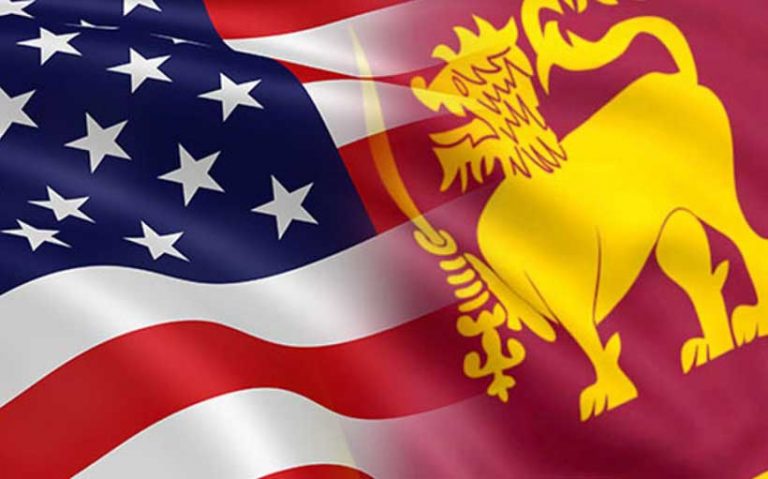
May 25, Colombo (LNW): Sri Lanka is once again gearing up for high-level trade talks in Washington, D.C., after receiving an invitation from the U.S. Trade Representative’s office. 

The meeting, part of a continued bilateral initiative, is aimed at deepening trade relations and exploring tariff-related cooperation. However, despite frequent interactions, Sri Lanka continues to lack the strategic discipline required to secure favorable trade outcomes.

For Sri Lanka, as calculated using 2024 data, 95.6% of US imports are subject to reciprocal tariffs, with the 90-day pause, standing currently as a 10% global tariff. In addition, 4.2% of imports from Sri Lanka are subject to the tariffs on steel, aluminium, and auto parts imposed under Section 232.

However, 0.2% of its imports are exempted from the new tariff measures. These exemptions were made by issuing Annexe-II of the US Executive Order on the reciprocal tariffs and a notice issued by the US Customs and Border Protection (CBP) on April 12.

Sri Lanka’s exports will be subjected to an additional 25 per cent of the value of the steel and aluminium content under the 2025 Section 232 tariffs.

The newly added aluminium derivative products account for USD 28.5 Mn in US imports from Sri Lanka, across 27 products. There are USD 80.78 Mn imports under 20 products from Sri Lanka, which are categorised as steel derivatives under the Section 232 Steel and Aluminium tariff proclamation by the US.

One main challenge of the new US tariff structure is the additional reporting requirements for exporters. Notably, the stipulated tariffs will be calculated for the steel or aluminium value of the products, which are exempt from reciprocal tariffs.

The upcoming talks build on earlier virtual sessions and are positioned as an opportunity to press for U.S. tariff relief. Yet this is not the first time Sri Lanka has found itself in this position—and previous efforts have largely fallen short. 

Analysts point to a recurring pattern of weak preparation, late-stage strategy formulation, and unclear national objectives, all of which diminish the country’s negotiating power.

President Anura Kumara Dissanayake has taken a hands-on approach by convening a key meeting with senior officials to prepare for the Washington trip. 

The delegation includes representatives from trade, finance, foreign affairs, the Attorney General’s office, and the Central Bank. Despite the involvement of top-level personnel, Sri Lanka has struggled to make a persuasive economic case to U.S. negotiators in past rounds, mainly due to inconsistent messaging and limited follow-through.

Sri Lanka’s inability to use the World Trade Organization (WTO) mechanisms effectively, and its slow implementation of trade facilitation reforms, further erodes its position. 

Measures like customs simplification and bureaucratic streamlining are essential, yet have not been prioritized. Meanwhile, the broader tools of economic diplomacy—such as alliance-building and mutual economic storytelling—remain underutilized.

If Sri Lanka hopes to gain real benefits from this meeting, it must show up with more than good intentions. It needs a coherent strategy, strong data, and skilled negotiators who can argue the case for tariff concessions and trade facilitation with precision and confidence. Without that, these talks may end like so many before them—with little to show, and much to regret.

Nepalese Billionaire Binod Chaudhary Deepens Marriott Partnership With Indian Hotels Venture

0

CG Hospitality—controlled by Nepalese billionaire Binod Chaudhary—is collaborating with Marriott International to expand its presence across India as it seeks to tap into the tourism boom across the country.

Under the deal announced late Thursday, Marriott and CG Hospitality’s Concept Hospitality, the hotel management company behind The Fern chain of hotels, have agreed to develop 380 new hotels and resorts across India over the next five years. The Fern currently operates over 120 properties in the country.

“With this partnership, we’re aiming to grow The Fern to 500 hotels by 2030, potentially making it the largest brand in its segment in India, while expanding CG Hospitality’s global footprint to 650 hotels,” said Rahul Chaudhary, managing director & CEO of CG Corp Global and CG Hospitality.

The deal, which includes a reported $15 million investment by Marriott into Concept Hospitality, also marks the global debut of Marriott’s new midscale and upscale lodging brand, Series by Marriott. The Fern’s portfolio will also complement Marriott’s existing 158 properties that it manages in India under various brands.

“This deal will significantly strengthen Marriott’s leadership in India, a key growth market,” said Anthony Capuano, president and CEO of Marriott International. Marriott expects India to become its third-largest market after the U.S. and China within the next few years, up from fifth place currently.

Chaudhary’s CG Hospitality currently manages 195 hotels, resorts, and wellness destinations across 12 countries through brands such as Taj, Taj Safari, and Vivanta. The company also recently agreed to include The Farm at San Benito in Batangas, south of Manila, as part of Marriott’s Autograph Collection. The 70-hectare rebranded luxury wellness resort aims to open in the third quarter of this year. Chaudhary also wants to replicate the wellness resort concept in India.

Besides his interest in hotels, Chaudhary also holds stakes in Nepal-based privately owned Nabil Bank and CG Foods, maker of Wai Wai instant noodles. With a net worth of $2 billion, Chaudhary is Nepal’s sole billionaire.

Source: Forbes

List of elected LG members sent for gazette publication

0

May 25, Colombo (LNW): The list of elected members in the 2025 Local Government Election has been sent to the Government Printer for publication, the Election Commission said.

According to Commission Chief R.M.A.L. Ratnayake, the official gazette in this regard will be printed.

He added that that additional lists from other local authorities will be gazetted in the order in which they are received.

Individuals arrested over forged passports linked to notorious fugitive abroad

0

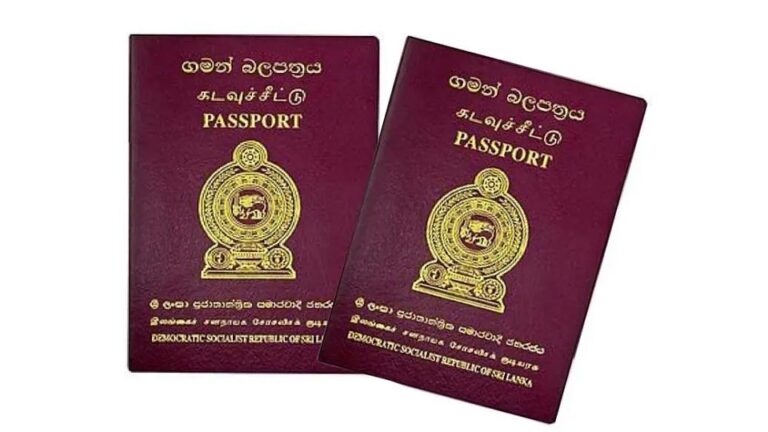
May 25, Colombo (LNW): Two individuals have been taken into custody over their suspected involvement in fabricating multiple forged passports for an internationally wanted figure linked to organised criminal activity.

The arrests are part of a broader investigation by the Criminal Investigation Department’s specialised unit tackling financial fraud, maritime crime and smuggling operations.

The suspects, aged 32 and 51, are residents of Maligawatta and Eheliyagoda respectively. Both operate photo studios in Colombo’s suburbs—one in Kohuwala and the other in Battaramulla. Authorities believe the pair played a key role in helping an individual known as Mandinu Padmasiri Perera, infamously dubbed “Kelehelbaddara Padme”, to acquire fraudulent travel documents while residing overseas.

Investigators revealed that the suspects acquired photographic images of the fugitive through encrypted messaging platforms such as WhatsApp. The images were digitally manipulated before being submitted to the Department of Immigration and Emigration, alongside falsified personal data.

These actions reportedly facilitated the issuance of three separate passports, two of which were issued under fictitious identities in 2025.

The figure at the centre of the case, Padmasiri Perera, originally departed the country in 2021 using a valid passport obtained in 2014. After its expiry, he is believed to have acquired a fresh passport through the one-day express service in early 2024—despite being physically overseas at the time.

Authorities now suspect this was done through deceptive means, with intermediaries submitting forged documents on his behalf.

The two suspects were brought before the Colombo Magistrate’s Court on 23 May and have been ordered into remand custody until May 29. The CID’s specialised unit is continuing its investigation into how such an operation was able to bypass stringent immigration controls, and whether further accomplices, including insiders within official departments, may have aided the scheme.

Health Ministry vows to restore steady flow of medicines amid procurement missteps

0

May 25, Colombo (LNW): The country’s ongoing pharmaceutical shortages are being attributed to a series of delayed procurement decisions made last year, a situation the health authorities now admit has had far-reaching consequences.

Speaking at a public engagement in Colombo, Health Minister Dr Nalinda Jayatissa shed light on the complexities behind the shortfall of vital medicines and outlined the remedial steps currently being undertaken.

The problem stems from a significant lapse in planning and execution during 2024, according to the Minister. Despite Sri Lanka’s annual dependence on the importation of hundreds of essential drugs, tender procedures were initiated for only 67 types of medicines in the first half of that year.

This delay has reverberated through the public health system, contributing to a worrying decline in drug availability across hospitals and clinics.

By contrast, he noted that the first five months of 2025 have seen a marked acceleration in procurement efforts. Tender processes have now been initiated for 233 medicinal products, many of which had been long overlooked or delayed in previous cycles.

The State Pharmaceuticals Corporation (SPC), responsible for overseeing drug supply to the public sector, has already finalised procurement for these, indicating a more proactive approach going forward.

Dr Jayatissa provided further insight into the scale of the task, revealing that approximately 65 per cent of medicines used in state-run hospitals are sourced from abroad. He stressed the intricate nature of pharmaceutical logistics, explaining that from planning to delivery, the entire cycle can span nearly nine months due to the need for tendering, quality assurance, and regulatory checks.

Looking ahead to 2026, the Health Minister outlined an ambitious procurement plan. Of the 450 varieties of medicines earmarked for that year, procedures for 435 have already commenced. Procurement has been completed for 418, with 325 currently under final evaluation, signalling significant progress in planning.

In a move to bolster local involvement, the Ministry has engaged in direct consultations with domestic pharmaceutical manufacturers and importers. These discussions included setting clear production and supply targets, with deadlines to ensure accountability.

Companies unable to meet these demands may see the state exploring bilateral arrangements with foreign governments to maintain uninterrupted supply.

Minister Jayatissa acknowledged the public’s frustration with recent shortages but emphasised that the measures now in place represent the most viable strategy for long-term stabilisation of drug availability.

He reaffirmed his Ministry’s commitment to ensuring that citizens have reliable access to safe, high-quality medicines, and called for continued cooperation from all stakeholders in the sector.

Mosquito-borne illnesses on the rise as public health concerns grow

0

May 25, Colombo (LNW): The steady increase in mosquito-borne illnesses such as dengue and chikungunya is becoming a growing public health concern in Sri Lanka, according to health authorities.

Deputy Minister of Health Dr Hansaka Wijemuni has warned that both diseases are showing an upward trend and are now developing into significant threats to the country’s health landscape.

Addressing the media, Dr Wijemuni urged members of the public to take early symptoms seriously—particularly unexplained fevers—and to seek medical attention without delay.

He emphasised that prompt diagnosis and treatment are essential not only for patient safety but also for controlling the broader spread of these vector-borne illnesses.

Both dengue and chikungunya are spread by the Aedes mosquito and share overlapping symptoms such as fever, rash and joint pain. The health ministry has called on local authorities to intensify vector control measures and for communities to be vigilant in managing breeding grounds such as stagnant water and open containers.

The Deputy Minister also commented on the mounting concerns over drug shortages in public hospitals. Whilst recent reports have cited a shortfall of up to 180 essential medicines, Dr Wijemuni clarified that the actual figure is closer to 45 items currently in limited supply.

He acknowledged the challenges posed by global supply chain disruptions and economic constraints but assured the public that efforts are being made to replenish stocks and minimise impact on patients.

Amidst growing anxiety amongst healthcare professionals and patients, the Ministry of Health is under pressure to respond effectively to both the disease outbreak and the availability of necessary treatments.

Tourist arrivals near one million mark as Sri Lanka sees steady influx in May

0

May 25, Colombo (LNW): Sri Lanka has welcomed nearly 92,000 international visitors so far in the month of May, bringing the total number of arrivals in 2025 to just under one million, according to the latest figures published by the Sri Lanka Tourism Development Authority (SLTDA).

The data reveals that 91,785 tourists had entered the country by mid-May, with travellers from India making up the largest contingent. A total of 31,635 Indian nationals arrived during this period, representing approximately 34.5 per cent of all arrivals for the month. This continued dominance by India in the tourism sector reflects the close cultural, regional and travel ties between the two countries.

Visitors from the United Kingdom comprised the second-highest group for May, with 6,195 arrivals, followed closely by 6,043 tourists from China. Germany contributed 5,526 tourists, while 4,693 Bangladeshi nationals were also recorded among the recent influx.

With the addition of May’s figures, the cumulative total of international tourist arrivals in Sri Lanka for 2025 has reached 988,669—placing the country on track to surpass the one-million milestone well ahead of mid-year projections.

India remains the leading source market for the year with a total of 188,694 visitors since January. Russia follows in second place with 109,840 tourists, while the United Kingdom ranks third, contributing 93,248 travellers.

Tourism authorities have welcomed the surge in arrivals, crediting ongoing promotional efforts, improved international air connectivity, and increased regional travel as key factors.

The SLTDA continues to emphasise sustainable tourism practices and infrastructure development to support the growing demand.