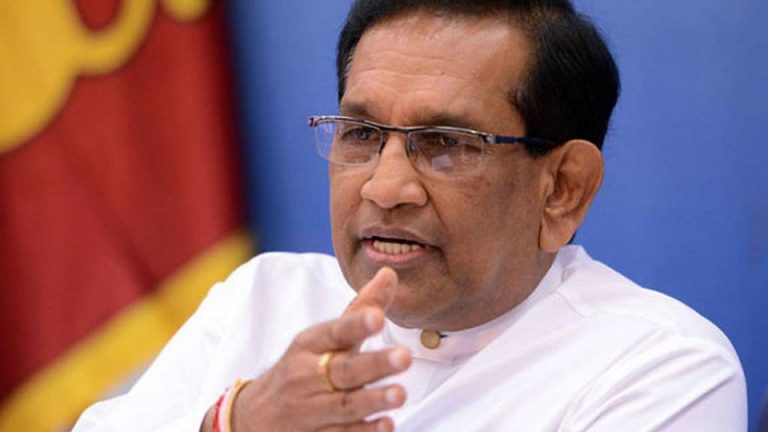
July 14, Colombo (LNW): Former minister Dr Rajitha Senaratne has petitioned the Colombo Magistrate’s Court for anticipatory bail, aiming to pre-empt a potential arrest in connection with a high-profile investigation being conducted by the Commission to Investigate Allegations of Bribery or Corruption (CIABOC).
The application follows claims made in court that Senaratne has deliberately avoided arrest over his alleged involvement in a controversial sand mining transaction, which reportedly led to a financial loss of Rs. 26.2 million to the state.
According to commission officials, the former minister has been untraceable in recent days—allegedly switching off his mobile devices, vacating his known residence, and disregarding repeated legal summons.
Adding to the controversy, a medical certificate produced on Senaratne’s behalf by his legal counsel was dismissed by authorities as inadmissible, raising further questions about his intent to comply with the legal process.
Officials representing the Bribery Commission had initially moved to obtain an arrest warrant. However, the magistrate presiding over the matter advised that such a request could not proceed without the requisite legal documentation.
The court subsequently reminded the commission that it possesses the statutory authority to detain individuals under investigation and directed it to take appropriate action within the scope of the law.
July 14, Colombo (LNW): The Department of Meteorology has issued a high-level weather warning for coastal regions, cautioning of hazardous maritime conditions due to intensifying winds and turbulent seas.
The red alert specifically covers sea areas stretching from Chilaw to Mannar via Puttalam, as well as from Galle to Pottuvil via Hambantota—regions that are expected to experience particularly severe conditions over the next 24 hours.
According to forecasts, wind speeds in these coastal belts could reach up to 50 to 60 miles per hour, creating dangerous conditions for maritime activities. The seas are expected to become rough to very rough, with the added risk of swell waves rising between 2.5 to 3.0 metres in offshore zones spanning from Puttalam to Pottuvil, including the waters off Colombo, Galle and Hambantota.
As a result, the authorities have strongly advised fishing vessels and small craft to avoid setting out from ports located in the affected areas, particularly between Galle and Pottuvil via Matara and Hambantota. Communities that rely on fishing for their livelihoods have been urged to exercise maximum caution and monitor official updates.
In regions from Galle to Puttalam via Colombo, where fishing and naval operations are more frequent, the Meteorological Department has called for heightened vigilance. Mariners operating in these zones are advised to stay informed through regular weather bulletins and cooperate with local safety guidelines to prevent potential accidents at sea.
Officials warn that sudden changes in weather patterns remain a possibility and have urged both coastal residents and those planning to travel by sea to remain alert.
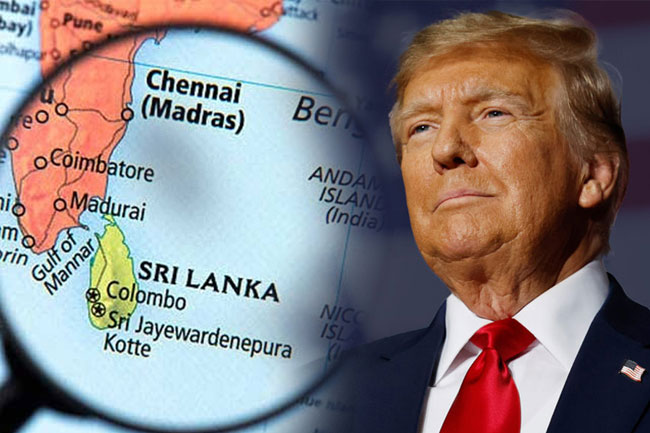
July 14, Colombo (LNW): In a bid to cushion the impact of the United States’ recently announced 30% tariff hike, the Sri Lankan government is set to roll out a new National Export Strategy (NES) aimed at restructuring and diversifying the country’s narrow export base, official sources revealed.
The US tariff hike—expected to significantly affect Sri Lanka’s already vulnerable export economy—comes at a time when the country’s trade portfolio remains largely undiversified and heavily reliant on a few sectors and markets. Analysts say the lack of export diversification has plagued Sri Lanka’s trade sector for decades, with little change in export composition since the mid-1990s.
In contrast, countries like Vietnam and Thailand have successfully integrated into global production networks and significantly diversified their exports. Recognizing this gap, Sri Lanka’s 2025 budget speech proposed the formulation of a National Export Development Plan for 2025–2029.
While details of the plan remain under wraps, policymakers are drawing lessons from past efforts to ensure the new strategy is both actionable and politically sustainable.
A key focus will be on ensuring bipartisan support to avoid disruptions due to political changes—a factor that undermined the previous NES (2018–2022), which, despite being developed with the support of the International Trade Centre, faced delays and poor implementation due to shifting political priorities and bureaucratic inertia.
Finance Ministry officials stressed that the upcoming strategy will not require starting from scratch. “Many components of the previous NES are still valid and can be reactivated,” a senior official said. “Our goal now is to ensure that implementation is evidence-based, continuous, and delinked from political cycles.”
The upcoming export strategy will also emphasize broad stakeholder participation, involving industry players, provincial representatives, and international experts. This inclusive approach is expected to ensure that the strategy aligns with both global market realities and local business needs.
The government is also set to launch multiparty discussions on the long-term implications of the US tariff hike, in an effort to formulate a unified national response that transcends immediate political agendas.
Among the sector-specific strategies under consideration is a renewed push for the IT and Business Process Management (IT-BPM) sector, which had been part of the 2018–2022 NES. This approach includes creating a business-friendly environment and fostering public-private partnerships to support high-potential firms through targeted financing and market access programs.
The new plan will also place a strong emphasis on innovation and support for small and emerging exporters through mechanisms like the Export Market Access Support Program. These targeted initiatives are expected to boost Sri Lanka’s global competitiveness and build resilience against external shocks like the US tariff increase.
As Sri Lanka navigates this critical economic juncture, the success of the new export strategy could prove pivotal in shaping the country’s long-term trade and economic trajectory.
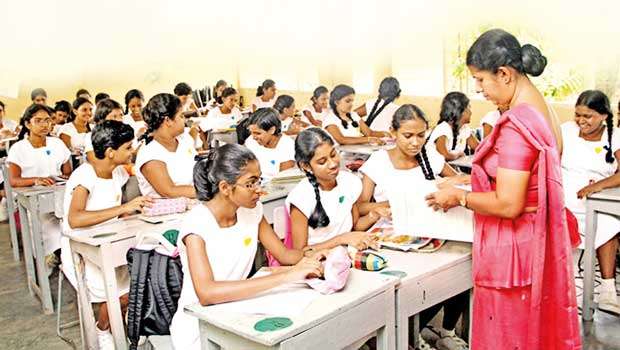
July 14, Colombo (LNW): Sweeping changes are on the horizon for Sri Lanka’s school system, with the Ministry of Education confirming a reduction in the number of daily classroom periods from eight to seven, effective from January 01 next year.
As part of the restructuring, each period will be extended to 50 minutes, prompting a comprehensive overhaul of existing school timetables across the country.
Education Ministry Secretary Nalaka Kaluwewa outlined the reforms during a high-level briefing with education officials held at the North Central Provincial Council last week. The session marked the first in a series of awareness programmes intended to prepare school administrators and educators at provincial, zonal, and divisional levels for the ambitious overhaul of the national curriculum.
Kaluwewa stressed that the reduction in periods is not a cutback in content but a recalibration designed to promote more meaningful learning experiences within each session. The move, he said, aims to ease the pressure of fragmented timetables and improve the overall quality of instruction.
In preparation for the full-scale launch of curriculum reforms in 2026, special attention is being directed toward grades 1 and 6, which will serve as the starting points for implementation. To that end, an extensive training initiative is being rolled out to equip over 100,000 teachers with updated pedagogical tools and methodologies suitable for the reformed system.
This training is being led collaboratively by the Ministry of Education, the National Institute of Education, and the Provincial Councils.
July 14, Colombo (LNW): Sri Lanka has witnessed a disturbing rise in road-related fatalities during the first half of 2025, with official police data revealing a total of 1,274 fatal accidents that claimed 1,351 lives between January and July.
This marks a significant year-on-year increase, with 129 more lives lost and 108 additional fatal incidents compared to the same period in 2024.
The figures paint a troubling picture not only in terms of fatal outcomes but also broader road safety. In the first six months of the year, authorities recorded more than 2,600 serious accidents, 4,642 minor collisions, and 2,018 cases of property damage stemming from road-related incidents.
The most devastating incident so far occurred in May, when a passenger bus travelling along the Nuwara Eliya–Gampola main road veered off course at Gerandi Ella in Ramboda, plunging down a steep incline.
The crash left 22 people dead and over 30 others seriously injured, shocking the nation and prompting urgent calls for action.
In the aftermath of the Ramboda tragedy, law enforcement authorities moved swiftly. A special committee was tasked with investigating the root causes of the crash, and their findings led Police Headquarters to issue a directive holding police leadership accountable.
Officers-in-Charge (OICs) of police and traffic units across the country now face disciplinary measures if they fail to identify, report, and address hazardous road zones within their jurisdictions.
The Acting Inspector General of Police has reinforced this directive, instructing all 607 police divisions to coordinate closely with the Road Development Authority (RDA) and local governing bodies. The focus, he said, must shift from reactive policing to proactive prevention, particularly in regions known for frequent or severe traffic incidents.
Authorities have so far identified 779 high-risk locations across the national road network. Police confirm that a detailed set of safety recommendations has already been handed over to the RDA, aimed at addressing these danger zones through infrastructure improvements, better signage, and stricter enforcement of road laws.
Police Headquarters has made it clear that further negligence will not be tolerated. Divisions failing to implement safety measures or respond adequately to known risks may face serious internal consequences.
July 14, Colombo (LNW): New Commissioner General takes charge with plans to recover missed revenue and boost digitalisation
The Sri Lanka Excise Department has exceeded its revenue collection target for the first half of 2025, recording Rs. 120.5 billion — 102.6% of the projection set by the Ministry of Finance. This milestone comes at a time of transition in leadership, with retired Sri Lanka Navy Commodore M.B.N.A. Premarathne assuming duties as the new Commissioner General on Friday, July 11.
This revenue achievement marks a positive continuation of the department’s rising contribution to state finances in recent years. In 2023, the department collected Rs. 226.7 billion, up from Rs. 178.6 billion in 2022 and Rs. 170.3 billion in 2021 — reflecting consistent growth and improved collection efficiency.
At the official ceremony held to mark his assumption of duties, Premarathne pledged to align the Excise Department’s operations with the government’s overarching national priorities, including poverty alleviation, digitalisation, and the “Clean Sri Lanka” initiative. He emphasised the department’s vital role as a key state revenue generator and acknowledged longstanding gaps in revenue collection.
“There are areas where we have missed out on potential revenue for years. We must collectively act to recover these losses and strengthen our overall performance,” he said, underlining the need for renewed collaboration and efficiency across all divisions.
Premarathne also stressed the importance of modernising the department through digital tools and automation to enhance transparency and reduce inefficiencies. The Excise Department has already taken initial steps in this direction, aligning with the government’s broader public sector digital transformation agenda.
In addition to focusing on revenue optimisation, the new Commissioner General committed to fostering a disciplined, rule-abiding, and transparent institutional culture. “We must become a department that our staff can take pride in and that earns the respect of the public,” he noted.
The Cabinet of Ministers approved Premarathne’s appointment earlier this week, following the scheduled retirement of U.L. Udaya Kumara Perera, a Special Grade Officer of the Sri Lanka Inland Revenue Service, who had been serving as the Commissioner General.
As the Excise Department continues to face challenges such as illicit alcohol trade, enforcement issues, and loopholes in taxation, the new leadership brings both a mandate and an opportunity to drive institutional reform, broaden the revenue base, and recover missed dues — all while enhancing public trust.
July 14, Colombo (LNW): The Central Bank of Sri Lanka has launched a countrywide initiative aimed at educating the public on the dangers of illegal pyramid schemes.
The campaign, which begins today and runs until July 18, forms part of a broader effort to protect citizens from financial exploitation and to uphold confidence in the nation’s economic system.
Organised by the Financial Consumer Relations Department of the Central Bank, the awareness week is being held under the slogan “Pyramid is a trap – don’t get into the wrong track”.
The programme is designed to alert the public to the deceptive nature of such schemes, which often lure victims with promises of quick profits and guaranteed returns, only to collapse, leaving participants with substantial financial losses.
A central feature of the campaign is its grassroots reach. Educational sessions and outreach activities are set to take place across more than 6,000 schools and over 14,000 Grama Niladhari divisions, ensuring communities in both urban and rural areas are informed.
Target audiences include students and teachers, members of the armed forces, police officers, civil defence personnel, government workers, and the general public.
Throughout the week, the initiative will focus on key messages including the legal restrictions on pyramid operations, how these schemes function, the risks involved, and the personal stories of those who have been misled by them.
The Central Bank hopes that real-life case studies will serve as a sobering reminder of the emotional and financial toll these scams can take.
To ensure widespread awareness, a comprehensive media strategy is being rolled out. This includes print media notices, social media outreach, televised discussions, radio segments, online seminars, posters in public spaces, and community events.
These efforts aim to make the information accessible to all segments of society, regardless of age, education, or location.
The Central Bank has urged the public to actively engage with the campaign and take its messages to heart. It reiterated that safeguarding individuals from financial fraud is not only about enforcement, but also about empowerment through education.
July 14, Colombo (LNW): Former Cabinet Minister Duminda Dissanayake, who was recently taken into custody following the discovery of a gold-plated T-56 assault rifle at a residential complex in Havelock Town, Colombo, has been released on bail under stringent conditions.
The arrest, which drew significant media attention due to the high-profile nature of the individual involved and the unusual nature of the weapon, came after law enforcement authorities uncovered the firearm during a raid at an upscale apartment.
Following his arrest, Dissanayake was remanded pending further inquiries. Following bail, he was subject to a set of strict conditions aimed at ensuring his cooperation with the ongoing investigation.
July 14, Colombo (LNW): Showers will occur at times in the Western and Sabaragamuwa provinces and in Nuwara-Eliya, Kandy, Galle and Matara districts, the Department of Meteorology said in its daily weather forecast today (14).
Several spells of showers may occur in the North-western province.
Showers or thundershowers may occur at a few places in Uva and Eastern provinces during the afternoon or night.
Strong winds of about (40-50) kmph can be expected at times over Western slopes of the central hills and in Western, Sabaragamuwa, Southern, North-western and North-central provinces.
The general public is kindly requested to take adequate precautions to minimise damages caused by temporary localised strong winds and lightning during thundershowers.
Marine Weather:
Condition of Rain: Showers will occur at several places in the sea areas off the coast extending from Colombo to Matara via Galle.
Winds: Winds will be Westerly to South-westerly and wind speed will be (30-40) kmph.
Wind speed can increase up to (50-60) kmph at times in the sea areas off the coast extending from Chilaw to Mannar via Puttalam and from Galle to Pottuvil via Hambantota.
Wind speed can increase up to 50 kmph at times in the sea areas off the coast extending from Chilaw to Galle via Colombo and from Manna to Vakarai via Kankasanthurai and Trincomalee.
State of Sea: The sea areas off the coast extending from Chilaw to Mannar via Puttalam and from Galle to Pottuvil via Hambantota will be rough or very rough at times.
The sea areas off the coast extending from Chilaw to Galle via Colombo and from Manna to Vakarai via Kankasanthurai and Trincomalee may be fairly rough to rough at times.
The wave height (about 2.5 – 3.0 m) may increase in the sea areas off the coast extending from Puttalam to Pottuvil via Colombo, Galle and Hambantota. Therefore, there is a possibility that nearshore sea areas extending from Puttalam to Pottuvil via Colombo, Galle and Hambantota, may experience surges due to sea waves.
Naval and fishing communities are requested to be vigilant in this regard.
July 14, Colombo (LNW): A luxury casino slated to open within Colombo’s high-profile “City of Dreams” complex has drawn national attention—not just for its glitz and glamour, but also due to a growing political storm over its licensing and taxation.
The upcoming launch has captivated public interest for two major reasons. Firstly, international film icon and Bollywood megastar Shah Rukh Khan aka “King Khan” is expected to grace the opening ceremony, marking his first visit to Sri Lanka in two decades. His presence has sparked significant excitement, with fans and media outlets abuzz in anticipation of the event.
Secondly, and far more critically, the casino’s legitimacy has come under scrutiny following revelations about its licensing and possible preferential tax treatment. Political observers and legal experts have raised concerns about how approval was granted for the establishment—despite a prior ban introduced in 2015.
During his presidency, Maithripala Sirisena moved to halt the development of casinos under certain major investment projects, cancelling previously granted approvals to several companies, including Waterfront Properties, Lake Leisure Holdings, and Queensbury Leisure Limited.
His administration’s decision was formally documented in a cabinet paper that barred the operation of casinos at the “City of Dreams” site.
However, nearly a decade later, the green light appears to have been given once more—this time to a single entity. The questions now being raised are: who reversed the earlier decision, on what grounds, and through what mechanism was this approval reissued?
Whilst it is our strong belief that there should be no fundamental objection to regulated casino operations—especially given their potential to boost tourism and foreign exchange earnings—concerns have emerged over alleged irregularities surrounding taxation. According to multiple sources, the casino linked to this project may have received substantial tax concessions in contravention of Sri Lanka’s existing legal framework.
Under current laws, enterprises involved in gambling, alcohol, and tobacco are subject to high taxation, with corporate income tax for such sectors standing at 45 per cent. These industries are also ineligible for investment-related tax incentives. Yet, speculation is rife that the casino operator, which is backed by Hong Kong-based Melco Resorts & Entertainment Ltd., may have been granted a questionable exemption from this tax burden.
If these reports are accurate, it would raise serious questions about regulatory oversight, transparency, and the possible misuse of discretion in granting concessions outside legal provisions. Political sources suggest that legal action is being considered by various stakeholders to challenge the move and demand accountability.
Further developments are expected in the coming weeks…