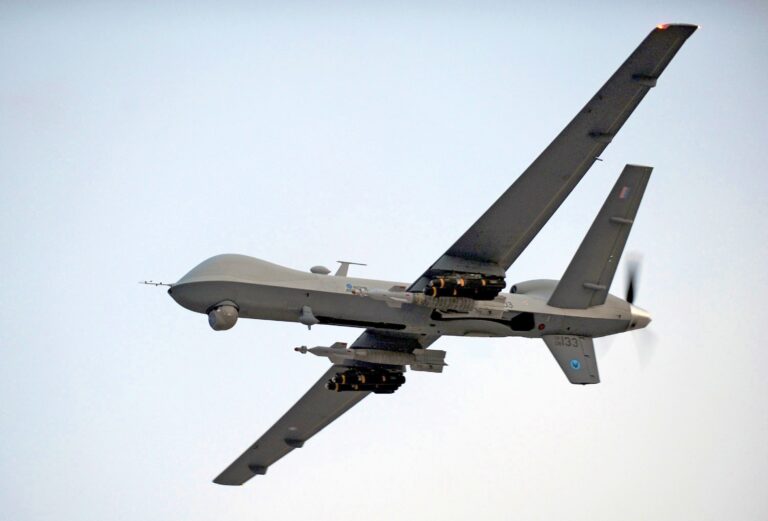
- Drones would have made the LTTE deadlier
- Sri Lanka must invest in drones, cyber-tech and awareness programmes
 It’s important to approach hypothetical scenarios with careful consideration, especially when discussing sensitive historical events and their potential alternate outcomes. Predicting the exact trajectory of a conflict under different circumstances is inherently complex. However, we can analyse the potential impact of drone technology on a hypothetical prolonged conflict between the Sri Lankan armed forces and the LTTE, assuming the conflict continued past 2009 into the present day.
The year is 2025. For sixteen long years, the echoes of war have continued to reverberate across Sri Lanka. The Liberation Tigers of Tamil Eelam (LTTE), far from being a distant memory, remain a formidable force, their red and yellow flag still flying defiantly over swathes of the northern and eastern provinces. The Sri Lankan armed forces, once on the cusp of a decisive victory in 2009, find themselves locked in a brutal stalemate, their conventional superiority increasingly nullified by a silent, deadly revolution in warfare: drone technology.
Had the Sri Lankan military not delivered the crushing blow to the LTTE in May 2009, ending a conflict that spanned nearly three decades, the narrative of the war would undoubtedly be starkly different today. The world of military technology has undergone a profound transformation since then, and the proliferation of affordable, sophisticated drone technology would have fundamentally reshaped the battlefield, potentially tipping the scales in favour of a well-adapted, insurgent force like the LTTE.
In 2009, drone technology, while nascent, was already demonstrating its potential in theatres like Afghanistan and Iraq. However, its widespread availability and ease of use were still limited. Fast forward to 2025, and the landscape is unrecognisable. Commercial drones, once toys for hobbyists have evolved into highly capable platforms. Equipped with high-resolution cameras, thermal imaging, and even the ability to carry small payloads, they offer unprecedented surveillance, reconnaissance, and even strike capabilities to non-state actors. The cost of entry has plummeted, making them accessible even to groups with limited budgets.
For the LTTE, a force historically known for its adaptability and willingness to innovate, the advent of this technology would have been a game-changer. Imagine a scenario where, instead of relying solely on human intelligence and limited aerial assets, LTTE commanders had a constant, real-time overhead view of Sri Lankan military positions. Swarms of modified, off-the-shelf drones, for military use, could have provided invaluable intelligence on troop movements, supply lines, and defensive fortifications. This granular understanding of the battlefield would have allowed for more precise and devastating ambushes, undermining the Sri Lankan military’s operational effectiveness and inflicting higher casualties.
Beyond mere reconnaissance, the true disruptive potential lies in weaponised drones. While replicating the sophisticated UCAVs of major powers might be beyond the LTTE’s capabilities, the concept of ‘attrition warfare’ takes on a new dimension with cheap, disposable drones carrying improvised explosive devices. Small, agile quadcopters, difficult to detect and intercept, could be used to harass and demoralise troops, target vulnerable supply trucks, or even carry out precision strikes against high-value targets like command centres or VIP convoys. The psychological impact of an unseen, buzzing threat constantly overhead would have been immense, eroding troop morale and creating an atmosphere of perpetual unease.
Furthermore, the LTTE’s historical proficiency in naval operations, particularly their use of suicide boats, could have evolved dramatically with drone technology. Unmanned surface vessels (USVs) or even aerial drones capable of dropping mines or delivering explosives could have posed an even greater threat to the Sri Lankan Navy, which played a crucial role in interdicting LTTE arms shipments in the latter stages of the war. Imagine USVs, controlled remotely, attempting to breach naval blockades or launch kamikaze attacks on larger vessels, forcing the Navy to dedicate significant resources to counter a multitude of agile and difficult-to-detect threats.
The Sri Lankan armed forces, designed and trained for conventional ground combat and counter-insurgency operations against a conventionally armed foe, would have faced an unprecedented challenge. Their traditional strengths—superior firepower, armoured vehicles, and air support—would have been partially negated by the asymmetric nature of drone warfare. Deploying expensive fighter jets or attack helicopters against swarms of cheap, commercially available drones would be economically unviable and tactically inefficient. Ground troops would find themselves constantly exposed to overhead surveillance, their movements tracked, and their positions vulnerable to sudden, localised drone attacks.
Counter-drone technology, while rapidly developing, still lags behind the proliferation of drone capabilities. Jamming signals, spoofing GPS, or employing directed energy weapons against a multitude of targets simultaneously presents significant logistical and technological hurdles, especially for a developing nation like Sri Lanka. The sheer volume of potential drone threats would overwhelm traditional air defence systems, designed to counter larger, more sophisticated aerial threats. Investing in and deploying effective counter-drone measures on a national scale would have diverted significant resources, potentially crippling other vital military operations and straining an already burdened national economy.
The economic implications for Sri Lanka would have been dire. A protracted war, fuelled by the LTTE’s adoption of drone technology, would have continued to cripple the nation’s tourism industry, deter foreign investment, and drain national coffers. The constant threat of drone attacks on infrastructure, such as power plants, ports, or vital transportation hubs, could have further destabilised the economy and created widespread panic among the populace. The human cost, already immense by 2009, would have continued to mount, with casualties on both sides and a civilian population trapped in a perpetual cycle of violence.
Moreover, the international dimension would have become increasingly complex. While the availability of commercial drone technology blurs the lines of accountability and supply. It would be exceedingly difficult to track the acquisition and modification of these readily available devices. The narrative of the conflict might also have shifted, with the LTTE portraying itself as a technologically advanced, resilient force, capable of challenging a conventional military, potentially garnering a new wave of international sympathy or at least prolonging the conflict through political pressure.
The decision to decisively crush the LTTE in 2009, while controversial to some, appears, in hindsight, to have spared Sri Lanka an even more harrowing and protracted conflict. The rapid advancement and proliferation of drone technology in the years since would have provided the LTTE with a revolutionary set of tools, capable of transforming their insurgency from a conventional guerrilla war into a far more complex and dangerous asymmetric conflict. The Sri Lankan armed forces, while formidable in 2009, would have been forced to adapt to an entirely new paradigm of warfare, one where their traditional advantages might have been significantly eroded. The image of the Sri Lankan military losing due to drone technology isn’t a far-fetched dystopian fantasy; it’s a plausible counterfactual, a testament to the ever-evolving nature of modern warfare and the profound impact of technological innovation on the battlefield. The skies above Sri Lanka had the war continued, would have become a new, deadly front, forever changing the course of the nation’s history.
Recommendations for the Sri Lankan Armed Forces in the Age Of Drones
Given the transformative impact of drone technology on modern warfare and understanding the hypothetical scenario outlined above, the Sri Lankan armed forces must proactively adapt to this evolving threat landscape. Here are several key recommendations:
· Invest Heavily in Counter-UAS (C-UAS) Capabilities: This is paramount. Sri Lanka needs a multi-layered C-UAS strategy.
· Detection Systems: Advanced radar, acoustic sensors, and RF (radio frequency) detection systems capable of identifying small, low-flying, and fast-moving drones.
· Soft Kill Measures: Electronic warfare (EW) jammers disrupt drone control signals and GPS navigation, forcing drones to land or crash. Cyber capabilities to potentially hack into and take control of enemy drones.
· Hard Kill Measures: Anti-drone guns (e.g., directed energy weapons like lasers, and specialised projectiles), net guns, and even dedicated counter-drone UAVs designed to intercept and neutralise hostile drones.
· Training: Rigorous and continuous training for personnel in identifying, tracking, and neutralising drone threats across all units, from frontline troops to specialised air defence teams.
· Develop Indigenous Drone Capabilities and Doctrine: The best defence is often a good offence. Sri Lanka should invest in developing its own drone technology for:
· Reconnaissance and Surveillance: To enhance situational awareness, border security, and intelligence gathering.
· Targeting and Precision Strikes: For surgical operations with minimised collateral damage.
· Logistics and Support: Drones can be used for delivering supplies to remote areas or evacuating casualties.
· Swarm Technology: Exploring the potential of coordinated drone swarms for both offensive and defensive purposes.
· Doctrine Development: Creating comprehensive doctrines for integrating drones into all aspects of military operations, from special forces to conventional units.
· Enhance Cyber Warfare and Intelligence Gathering: Understanding the adversary’s drone capabilities, acquisition networks, and operational methods requires robust cyber intelligence.
Investing in cyber warfare capabilities will be crucial to:
· Disrupting Supply Chains: Identifying and interdicting the flow of drone components to potential adversaries.
· Exploiting Vulnerabilities: Finding weaknesses in adversary drone systems and control mechanisms.
· Predicting Threats: Analysing open-source intelligence and technical data to anticipate future drone-related challenges.
· Foster Research and Development (R&D) and Public-Private Partnerships: The drone landscape is evolving rapidly. Sri Lanka must prioritise R&D in drone technology and C-UAS solutions, collaborating with local universities, technology companies, and international partners to stay ahead of the curve. This includes exploring AI-driven solutions for autonomous drone operations and counter-drone systems.
· Strengthen International Cooperation and Information Sharing: Engaging with nations that have significant experience in drone warfare and counter-drone operations can provide invaluable insights, training opportunities, and access to advanced technologies. Sharing intelligence on emerging drone threats and best practices will be vital.
· Public Awareness and Civil-Military Cooperation: Educating the public about the dangers of unauthorised drone use and establishing clear reporting mechanisms for suspicious drone activity will be crucial for national security. This can help prevent the acquisition of drones by non-state actors and enhance early warning systems.
The hypothetical scenario of a prolonged conflict marked by widespread drone usage underscores a critical lesson: military advantage is not static. While Sri Lanka achieved a decisive victory in 2009 through conventional means, the future of warfare demands a constant re-evaluation of threats and a proactive investment in emerging technologies. By embracing innovation, developing robust counter-drone capabilities, and fostering strategic partnerships, the Sri Lankan armed forces can ensure they are prepared for the challenges of 21st-century warfare, preventing any future adversary from leveraging the unseen threat of drones to undermine national security.
High Time for Sri Lankan Armed Forces To Act
The proliferation of cheaply available drones poses a significant and evolving threat to Sri Lanka’s national security. These easily acquired and modified devices can be weaponised for surveillance, reconnaissance, or direct attacks, bypassing traditional security measures. The Sri Lankan armed forces must urgently invest in advanced counter-drone technologies, including detection, tracking, and neutralisation systems. This proactive approach, coupled with enhanced intelligence gathering and inter-agency coordination, is crucial. Without immediate action to visualise and mitigate this growing threat, Sri Lanka remains vulnerable to devastating incidents, making preventative and preemptive measures paramount to safeguarding its people and critical infrastructure.
The writer is an Infantry officer who served the Sri Lanka Army for over 36 years, a former Security Forces Commander of the Wanni Region and Eastern Province, and he holds a PhD in economics. He can be reached at: [email protected]