Home Blog Page 489

Sri Lanka sees surge in tourist arrivals with nearly 175,000 visitors in April

0

May 04, Colombo (LNW): Sri Lanka’s tourism industry has continued its upward trajectory, welcoming 174,608 international visitors in April 2025, according to new data released by the Sri Lanka Tourism Development Authority (SLTDA).

This figure represents a notable 17.3 per cent increase compared to March 2024, reflecting growing confidence in the country’s appeal as a travel destination.

The latest figures bring the total number of tourist arrivals for the first four months of 2025 to 896,884, signalling steady progress toward recovery following years of disruption caused by the global pandemic and subsequent economic challenges.

Industry stakeholders have welcomed the positive momentum, noting that enhanced marketing efforts, improved infrastructure, and the stabilising political climate have all contributed to the increase in arrivals.

India maintained its position as Sri Lanka’s largest source market in April, accounting for 22.2 per cent of all arrivals, with 38,744 Indian nationals travelling to the island.

The close proximity, cultural ties, and expansion of air connectivity have played a key role in drawing Indian tourists, who continue to explore both coastal and cultural attractions across the country.

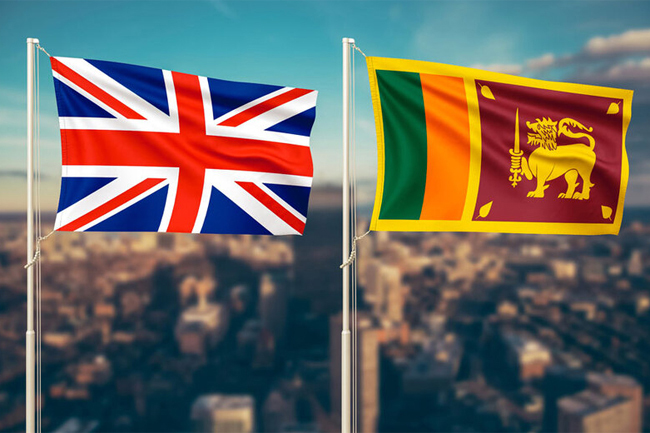
The United Kingdom followed as the second-largest source market, with 17,348 arrivals, while Russia contributed 13,525 tourists. Germany accounted for 11,654 visitors, and Australia sent 10,744 travellers to Sri Lanka in April alone.

These figures underline the diverse appeal Sri Lanka continues to hold across key markets in Europe and the Asia-Pacific region.

Tourism operators have reported a noticeable uptick in bookings and travel-related activity, particularly in heritage zones such as Anuradhapura and Sigiriya, as well as beach destinations like Galle and Trincomalee.

The country’s positioning as a year-round destination with offerings ranging from wellness retreats to adventure tourism has further enhanced its reputation among international travellers seeking varied experiences.

Despite the promising numbers, industry experts caution that continued investment in safety, service standards, and environmental sustainability is crucial to ensuring long-term growth.

Additionally, maintaining political stability and enhancing visitor confidence will remain critical as Sri Lanka competes with regional tourism hubs.

Looking ahead, tourism authorities are optimistic that the momentum seen in the first quarter will carry through the rest of the year. Several international roadshows, digital campaigns, and bilateral tourism partnerships are planned in the coming months to tap into emerging markets and encourage repeat visits.

New anti-bribery drive targets endemic corruption at Motor Traffic Department

0

May 04, Colombo (LNW): A major push to eliminate entrenched corruption within Sri Lanka’s Department of Motor Traffic (DMT) has been unveiled, as Transport Minister Bimal Rathnayake announced sweeping measures aimed at restoring public trust in the institution.

The campaign, framed as a zero-tolerance approach to bribery, signals a determined move by the government to tackle one of the most persistent complaints from citizens seeking routine services such as licensing and vehicle registration.

Central to the initiative is the rapid installation of closed-circuit television (CCTV) systems throughout DMT premises. These surveillance measures, expected to be in place within the coming weeks, are intended to deter illicit transactions between the public and staff, while also providing evidence should misconduct occur.

The minister, addressing the public via social media, urged citizens and honest civil servants alike to unite in rooting out what he described as a “cancer” afflicting the institution.

Corruption at the DMT has long been a topic of public frustration, with many accusing officials of demanding under-the-table payments to expedite services that should be delivered freely and fairly.

From issuing driver’s licences to transferring vehicle ownership, routine procedures have reportedly become rife with informal charges, leaving those unwilling to pay at the mercy of endless bureaucratic delays.

By initiating this crackdown, authorities hope to disrupt these entrenched practices and set a new standard for transparency in public service delivery. The minister further noted that this is not merely a cosmetic gesture, but part of a larger institutional reform agenda that includes staff training, internal auditing, and community engagement.

Public response to the announcement has been cautiously optimistic. Advocacy groups and watchdog organisations have welcomed the intervention but remain sceptical about its long-term impact, noting that similar promises in the past have faltered due to weak enforcement and lack of accountability mechanisms.

Some have called for independent oversight to ensure that the surveillance infrastructure is not misused and that real offenders are brought to justice.

The initiative also comes at a time when the government is under pressure to demonstrate tangible improvements in public administration and curb the perception of impunity within state institutions.

With the DMT being one of the most heavily accessed government departments, success here could serve as a model for broader reform across other sectors.

Minister Rathnayake expressed confidence that, with public cooperation and firm political resolve, meaningful change could be achieved within months. He emphasised that citizens themselves play a key role in the transformation, encouraging them to report any misconduct and to refuse participation in corrupt practices, even when faced with inconvenience.

Police launch probe into university tragedy amid public rage against ragging

0

By: Isuru Parakrama

May 04, Colombo (LNW): Sri Lankan police have initiated a formal inquiry into the tragic death of a student from Sabaragamuwa University, following growing concerns that systemic ragging may have played a role in the incident.

The student, whose untimely death was initially reported as a case of suicide, has sparked outrage and renewed national scrutiny over the continued presence of abusive initiation practices within university campuses.

Acting on directives from the Acting Inspector General of Police, the Criminal Investigation Department (CID) has taken over the investigation. As of now, authorities have reportedly recorded statements from at least 20 students, with investigators attempting to establish a clear timeline of events leading up to the student’s death.

Whilst the exact circumstances remain under investigation, preliminary reports suggest that the student may have been subjected to psychological distress stemming from hazing or harassment.

The Ministry of Higher Education has also launched an independent administrative inquiry to assess whether the institution failed to take necessary steps to prevent or intervene in cases of ragging.

Officials have pledged full cooperation with law enforcement and vowed to take disciplinary action should any staff or students be found complicit, either through participation or negligence.

According to students at the university, concerns about ragging have persisted despite past efforts to clamp down on such practices. Whilst orientation rituals have long been a part of campus life in many local institutions, critics argue that some of these activities have evolved into sustained acts of bullying and abuse, often targeting first-year students.

Human rights groups and student unions have condemned the incident, calling for urgent reform and stronger protections for vulnerable undergraduates.

The incident has reignited public calls for a comprehensive review of anti-ragging policies, which, though enshrined in law, are often seen as inadequately enforced. Several lawmakers have expressed concern that many universities have become breeding grounds for unchecked student hierarchies and toxic peer control, often with little accountability.

Authorities are now examining whether any senior students coerced the deceased into acts that may have contributed to mental trauma. Forensic and digital evidence is also being reviewed to understand the social dynamics and possible abuse that the student might have endured.

Prime suspect in Club Wasantha killing returned to Sri Lanka from Eastern Europe

0

May 04, Colombo (LNW): A man believed to be at the centre of a high-profile contract killing has been extradited to Sri Lanka, following his arrest in Eastern Europe.

Sujeewa Ruwan, widely known by his alias ‘Loku Pattie’, was repatriated from Belarus under tight security arrangements led by the Criminal Investigation Department (CID), according to police sources.

Ruwan is suspected of being a principal figure behind the assassination of ‘Club Wasantha’, whose real name was Wasantha Perera.

The fatal shooting occurred in May 2024 and sent shockwaves across the island, drawing renewed attention to organised criminal networks that continue to operate both within Sri Lanka and transnationally.

Following months of international coordination, law enforcement officials succeeded in tracking down and detaining Ruwan in Belarus earlier this year. His return marks a significant development in the investigation, which had so far yielded limited leads amid fears that key suspects had fled abroad.

According to senior police officials, Ruwan is thought to have not only been involved in orchestrating the murder but also may possess crucial information about the funding and logistics behind the hit.

Authorities believe the killing was the result of an escalating power struggle within the island’s underworld, possibly linked to rivalries over territory, illicit trade, and longstanding vendettas.

The CID is preparing to interrogate the suspect in the coming days, with a special investigative team tasked with mapping the broader network of individuals who may have assisted or benefited from the assassination.

The victim, Club Wasantha, was no stranger to notoriety, having built a name for himself as both a nightclub owner and a shadowy figure in the criminal underworld. His murder reignited public concern about the nexus between crime, money laundering, and local political protection rackets.

The authorities have remained largely tight-lipped about the precise nature of Ruwan’s extradition, though sources suggest that Interpol cooperation and bilateral assistance from Belarusian officials played a key role in securing his deportation.

With Ruwan now in custody, investigators hope to uncover further details about the motives, financial backers, and potential co-conspirators behind the killing. Security around the suspect remains high, with intelligence reports indicating that individuals connected to the crime may attempt to interfere with the investigation or silence witnesses.

This development has also prompted renewed calls for the government to take stronger action against transnational criminal networks and to invest in more robust mechanisms for international cooperation in criminal justice.

More updates are expected as the interrogation of the suspect proceeds in the days ahead.

President AKD embarks on visit to Vietnam amid strengthening bilateral ties

0

By: Isuru Parakrama

May 04, Colombo (LNW): President Anura Kumara Dissanayake has arrived in Hanoi on the morning of May 04, embarking on a significant state visit to Vietnam that also includes participation in the 20th United Nations Day of Vesak commemorations.

The visit, taking place from May 04 to 06, comes at the invitation of Vietnamese President Luong Cuong and is being closely watched as a key moment in the evolving partnership between the two nations.

Upon his arrival at Noi Bai International Airport, President Dissanayake and his accompanying delegation were received with a formal welcome by Vietnamese dignitaries including Deputy Minister of Foreign Affairs Nguyen Manh Cuong, Deputy Minister of Ethnic and Religious Affairs Nong Thi Ha, Vietnam’s envoy to Sri Lanka Trinh Thi Tam, and Sri Lanka’s Ambassador in Hanoi, Poshitha Wewala.

This trip holds particular historical significance. It marks the first visit by a Sri Lankan head of state to Vietnam in over a decade and a half, with the last such visit occurring in 2009.

For President Dissanayake, who assumed office in September 2024, this journey symbolises his administration’s commitment to elevating Sri Lanka’s diplomatic engagement across Asia, especially with nations that have demonstrated sustained economic success and strategic independence.

Vietnam and Sri Lanka formally established diplomatic relations in July 1970. Since then, the two countries have cultivated a relationship marked by mutual respect, ideological affinity, and cooperation in numerous spheres.

Vietnam, in particular, is admired in Sri Lankan political circles for its post-war economic transformation, with many in Colombo viewing it as a potential blueprint for development in the Global South.

Sri Lanka’s recognition of Vietnam’s status as a full market economy underscores this respect.

In comments to the Vietnamese press ahead of the visit, Ambassador Trinh Thi Tam described the occasion as a valuable opportunity for both countries to reflect on their shared history and chart a course for future cooperation.

She highlighted that the visit falls during the celebration of the 55th anniversary of diplomatic ties, making it a timely moment to reinvigorate bilateral dialogue.

The state visit encompasses a broad array of engagements spanning politics, economic cooperation, and cultural exchange. High-level talks between the two presidents, as well as discussions with Vietnam’s Prime Minister and senior Communist Party officials, are set to form the backbone of the trip.

A series of agreements and memoranda of understanding are expected to be signed, laying the foundation for a more structured and mutually beneficial partnership.

A cultural highlight of President Dissanayake’s itinerary is his participation as Chief Guest and keynote speaker at the Vesak 2025 celebrations in Ho Chi Minh City. The United Nations Day of Vesak, an internationally recognised observance of the Buddha’s birth, enlightenment and passing, is particularly resonant for both Sri Lanka and Vietnam, given their deeply rooted Buddhist traditions.

The event is expected to draw religious leaders, scholars, and dignitaries from across the world, providing a platform for interfaith dialogue and spiritual diplomacy.

Dissanayake is accompanied by a high-level delegation including Foreign Minister Vijitha Herath and senior government officials, signifying the importance Colombo attaches to the visit.

Both sides have expressed confidence that the visit will usher in a new chapter of bilateral cooperation, with broader ambitions of promoting peace, economic connectivity, and sustainable development across the region.

Election campaigning ceases: Silence period begins

0

May 04, Colombo (LNW): With the local government elections scheduled for May 06, 2025, the campaign period officially came to an end at midnight on May 03, ushering in a legally mandated ‘silence period’.

This interval, intended to preserve the integrity of the electoral process, bars all forms of canvassing and political promotion until the conclusion of voting.

According to the Election Commission, all candidates and political entities have been explicitly instructed to refrain from any form of campaigning during this cooling-off period.

Commissioner General of Elections, Saman Sri Ratnayake, reaffirmed that the rules are non-negotiable and will be applied uniformly across the island.

Law enforcement has also stepped in to bolster compliance. The Police Department, through its media spokesperson Senior Superintendent of Police Buddhika Manatunga, announced that any individual or group found violating the campaign ban—such as by displaying posters, banners or other promotional materials—will be subject to immediate legal action.

The police have begun deploying personnel to monitor adherence, with more than 65,000 officers assigned to election-related duties.

As the nation prepares for one of its most extensive grassroots electoral exercises, polling will be held to elect representatives to 339 local government bodies across the country.

Balloting will take place on Tuesday (06) from 7 a.m. to 4 p.m., offering over 17 million eligible citizens the opportunity to cast their vote.

This year’s local government election has drawn considerable attention due to its scale and diversity of candidates. A staggering 75,589 contenders representing various political parties and independent groups are in the fray, making it one of the most contested local elections in recent memory.

To ensure transparency and fairness in the process, the independent election monitoring body People’s Action for Free and Fair Elections (PAFFREL) has announced the deployment of approximately 3,000 observers.

These individuals will be stationed across multiple regions to monitor polling stations, assess the conduct of election officials, and report any irregularities or incidents of concern.

Executive Director Rohana Hettiarachchi confirmed that PAFFREL’s efforts are aimed at enhancing public confidence in the democratic process and ensuring that electoral standards are upheld.

Showers, thundershowers continue to occur across island: Heavy falls above 50 mm expected (May 04)

0

May 04, Colombo (LNW): The Intertropical Convergence Zone (where winds from the Northern Hemisphere and Southern Hemisphere converge) further affects the island’s weather, and showers or thundershowers, therefore, will occur at several places in Western, Sabaragamuwa, Central, Southern and Uva provinces after 1.00 p.m., the Department of Meteorology said in its daily weather forecast today (04).

Fairly heavy falls above 50 mm are likely at some places in Sabaragamuwa, Central, Southern and Uva provinces and in Ampara district.

Showers or thundershowers may occur at a few places elsewhere of the island during the afternoon or night.

Showers or thundershowers may occur at a few places in Western province and in Galle and Matara districts in the morning too.

The general public is kindly requested to take adequate precautions to minimise damages caused by temporary localised strong winds and lightning during thundershowers.

Misty conditions can be expected at some places in Central and Uva provinces and in Ampara and Polonnaruwa districts during the morning.

Condition of Rain:
Showers or thundershowers will occur at several places in the sea areasoff the coast extending from Puttalam to Hambantota via Colombo and Galle. Showers or thundershowers will occur at a few places over the other sea areas around the island during the afternoon or night.
Winds:
Winds will be south-westerly and wind speed will be (25-35)kmph. Wind speed can increase up to 45 kmph at times in the sea areas off the coast extending from  Puttalam  to Kankasanthurai via Mannarand from Matara to  Pottuvil via Hambantota.
State of Sea:
The sea areas off the coast extending from Puttalam to Kankasanthurai via Mannar and from Matara to Pottuvil via Hambantota will be fairly rough at times. The other sea areas around the island can beslight to moderate.  Temporarily strong gusty winds and very rough seas can be expected during thundershowers.

Red Wall Crumbles: How Labour Lost Ground to Reform UK

0

By: Isuru Parakrama

May 03, World (LNW): In a stunning turn of events, the UK Labour Party has suffered significant losses to Reform UK in the recent elections, signalling a seismic shift in the nation’s political landscape.

Reform UK, under the leadership of Nigel Farage, capitalised on widespread public disillusionment, securing over 600 council seats, multiple mayoralties, and a pivotal parliamentary seat in Runcorn & Helsby—traditionally a Labour stronghold.

Several factors contributed to Labour’s decline. Firstly, the party’s policies on welfare reforms, winter fuel cuts, and national insurance increases alienated many of its traditional working-class supporters.

Ros Jones, Labour’s mayor in Doncaster, narrowly retained her position and openly criticised these policies, reflecting internal dissent within the party.

Secondly, Reform UK’s clear stance on immigration resonated with voters concerned about national security and cultural identity. Farage’s promise to tighten immigration controls and reduce local government spending on climate and diversity initiatives appealed to those feeling left behind by globalisation and rapid social changes.

Moreover, Labour’s perceived detachment from grassroots issues allowed Reform UK to position itself as the voice of the ordinary citizen. Farage’s populist messaging and emphasis on reindustrialising the UK struck a chord with communities yearning for economic revitalisation.

This approach enabled Reform UK to make significant inroads in areas like Lincolnshire and East Yorkshire, traditionally Labour territories.

The electoral system also played a role. The first-past-the-post mechanism disproportionately favoured parties with concentrated support. Whilst Labour secured a parliamentary majority with just 34 per cent of the vote, Reform UK’s 14.3 per cent translated into only five seats, highlighting systemic disparities that may have further eroded public trust in established parties.

Additionally, Labour’s handling of international issues, notably the Israel-Gaza conflict, led to significant losses in constituencies with large Muslim populations. Keir Starmer’s comments on Israel’s actions were met with backlash, resulting in diminished support in areas like Ilford North.

In summary, Labour’s electoral setbacks can be attributed to policy decisions that alienated core supporters, failure to address pressing local concerns, and a political system that magnified public discontent. Reform UK’s rise reflects a broader demand for change, challenging the traditional two-party dominance and reshaping the UK’s political future.

Photo: BBC

Sources:

https://www.thetimes.co.uk/article/reform-uk-has-cemented-itself-as-a-political-force-ht0qmv6n9
https://www.thesun.co.uk/news/34775397/nigel-farage-mocks-critics-reform-uk/
https://www.bbc.com/news/articles/c1k410w11r3o
https://www.bbc.com/news/articles/cd6j8e38p79o
https://news.sky.com/video/watch-key-moments-from-local-elections-as-nigel-farages-reform-uk-wins-big-13360199

Prince Harry tells BBC he wants ‘reconciliation’ with Royal Family

0

The Duke of Sussex has told the BBC he “would love a reconciliation” with the Royal Family, in an emotional interview in which he said he was “devastated” at losing a legal challenge over his security in the UK.

Prince Harry said the King “won’t speak to me because of this security stuff”, but that he did not want to fight anymore and did “not know how much longer my father has”.

The prince spoke to BBC News in California after losing an appeal over the levels of security he and his family are entitled to while in the UK.

Buckingham Palace said: “All of these issues have been examined repeatedly and meticulously by the courts, with the same conclusion reached on each occasion.”

After Friday’s court ruling, the prince said: “I can’t see a world in which I would bring my wife and children back to the UK at this point.”

“There have been so many disagreements between myself and some of my family,” he added, but had now “forgiven” them.

“I would love reconciliation with my family. There’s no point continuing to fight any more, life is precious,” said Prince Harry, who said the dispute over his security had “always been the sticking point”.

The prince had wanted to overturn changes to his security that were introduced in 2020 as he stepped down as a working royal and moved to the United States.

Saying that he felt “let down”, he described his court defeat as a “good old fashioned establishment stitch up” and blamed the Royal Household for influencing the decision to reduce his security.

Asked whether he had asked the King to intervene in the dispute over security, Prince Harry said: “I never asked him to intervene – I asked him to step out of the way and let the experts do their jobs.”

The prince said his treatment during the process of deciding his security had “uncovered my worst fears”.

He said of the decision: “I’m devastated – not so much as devastated with the loss that I am about the people behind the decision, feeling as though this is okay. Is it a win for them?”

He continued: “I’m sure there are some people out there, probably most likely the people that wish me harm, [who] consider this a huge win.”

Prince Harry said the decision to remove his automatic security entitlement impacts him “every single day”, and has left him in a position where he can only safely return to the UK if invited by the Royal Family – as he would get sufficient security in those circumstances.

Getty Images The Duke and Duchess of Sussex walk out of a door. The duchess is waving and smiling. Prince Harry is wearing a white shirt and a black blazer and trousers. Meghan is wearing a white shirt and a beige blazer and trousers. Prince Harry has ginger hair, a ginger beard, and blue eyes. Meghan has long brown hair and brown eyes.
The Duke and Duchess of Sussex, pictured in April, have been living in the US since 2020

The prince said changes to his security status in 2020 had impacted not just him, but his wife and, later, his children too.

He went on to say: “Everybody knew that they were putting us at risk in 2020 and they hoped that me knowing that risk would force us to come back.

“But then when you realise that didn’t work, do you not want to keep us safe?

“Whether you’re the government, the Royal Household, whether you’re my dad, my family – despite all of our differences, do you not want to just ensure our safety?”

Asked whether he missed the UK, he added: “I love my country, I always have done, despite what some people in that country have done… and I think that it’s really quite sad that I won’t be able to show my children my homeland.”

Prince Harry said he would not be seeking a further legal challenge, saying Friday’s ruling had “proven that there was no way to win this through the courts”.

“I wish someone had told me that beforehand,” he said, adding that the ruling had been a “surprise”.

He continued: “This, at the heart of it, is a family dispute, and it makes me really, really sad that we’re sitting here today, five years later, where a decision that was made most likely, in fact I know, to keep us under the roof.”

Harry’s emotional avalanche hits the Royal Family

Prince Harry spoke to the BBC shortly after losing his latest legal challenge against the UK government over the level of security he and his family are entitled to when visiting.

The Court of Appeal dismissed the prince’s case, which hinged on how an official committee made the decision to remove his eligibility for automatic, full-scale protection in line with what other senior royals receive.

On Friday, the court ruled that Prince Harry had made “powerful” arguments about the level of threat he and his family face, but said his “sense of grievance” did not “translate into a legal argument”.

His legal complaint centred around a committee called the Protection of Royalty and Public Figures (Ravec), which authorises security for senior royals on behalf of the Home Office, and was chaired at the time by Sir Richard Mottram.

Under the committee’s regulations, Prince Harry argued, his case should have been put before Ravec’s Risk Management Board (RMB), which would have assessed the threats to his and family’s security – but that did not happen.

On Friday, senior judges said the committee had diverged from policy when making its 2020 decision over the prince’s security, but concluded it had been “sensible” to do so because of the complexity of his circumstances.

Prince Harry sat opposite Nada Tawfik
Prince Harry spoke to BBC News in California following Friday’s Court of Appeal ruling in the UK

Prince Harry said his “jaw hit the floor” when he found out a representative of the Royal Household sat on the Ravec committee, and claimed Friday’s ruling had proved its decision-making process was more influenced by the Royal Household than by legal constraints.

He claimed there had been “interference” by the Royal Household in the 2020 decision, which he said resulted in his status as the most at-risk royal being downgraded to the least at risk “overnight”.

“So one does question how that is even possible and also the motive behind that at the time,” he added.

Prince Harry called on UK Prime Minister Sir Keir Starmer and Home Secretary Yvette Cooper to intervene in his security case, and to overhaul how the Ravec committee operates.

In a statement released later on Friday, the prince said he would write to Cooper to “ask her to urgently examine the matter and review the Ravec process”.

BBC

Suspect in Dan Priyasad’s Murder Arrested in Colombo

0

The suspect believed to be the gunman in the murder of political activist Dan Priyasad has been arrested by police in the Cinnamon Gardens area of Colombo.

Dan Priyasad, the convenor of the “Nawa Sinhale National Movement,” was shot on the evening of Tuesday, April 22, at the ‘Laksanda Sevana’ Housing Complex in Wellampitiya. He was rushed to the Colombo National Hospital with gunshot wounds but succumbed to his injuries shortly after admission.

According to reports, Priyasad was shot four times—twice in the chest and twice in the shoulder. Another individual who sustained minor injuries during the shooting is currently receiving treatment at hospital.

The attack was carried out by two individuals on a motorcycle who used a pistol to fire multiple shots before fleeing the scene. Investigations into the motive and any broader connections behind the shooting are ongoing.