Home Blog Page 511

Minister Jayatissa Clarifies Misconceptions About ‘Clean Sri Lanka’ Initiative

0

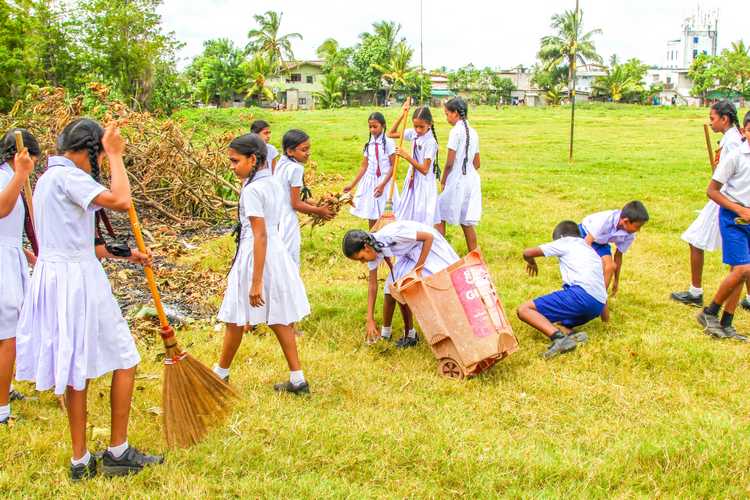
Health and Media Minister Dr. Nalinda Jayatissa has refuted claims that roadside businesses are prohibited under the ‘Clean Sri Lanka’ initiative, labeling such reports as false. Addressing a press conference at the Government Information Department yesterday (3), the Minister stressed that the initiative is neither an enforcement nor a litigation programme and that no law related to it has been passed in Parliament.

“There are no instructions to arrest individuals or file lawsuits under the ‘Clean Sri Lanka’ programme,” Dr. Jayatissa clarified, dispelling concerns and misinformation surrounding the initiative’s objectives and implementation.

The Minister emphasized that the ‘Clean Sri Lanka’ initiative, launched under the President’s leadership, is a collaborative effort involving multiple government agencies. Its aim is to transform Sri Lanka into a prosperous nation with happy citizens, enhancing its environmental, social, and moral standing globally.

“This programme is a scientifically designed, long-term plan to address the country’s challenges and rebuild its reputation,” Dr. Jayatissa said, explaining that it is not a short-term or superficial project but a sustainable effort to elevate Sri Lanka’s social and environmental standards.

The Minister called on all citizens to actively participate in the initiative, underscoring its importance in shaping a better future for the country. He highlighted the government’s engagement with state officials and the public to ensure the programme’s success, emphasizing its role in creating a positive transformation across all sectors of society.

Government Fully Committed to Media Freedom: Minister Jayatissa

0

Health and Media Minister Dr. Nalinda Jayatissa reaffirmed the government’s unwavering commitment to protecting media freedom in Sri Lanka. Speaking at a special media briefing at the Government Information Department yesterday (3), the Minister highlighted that the current administration provides journalists with the broadest opportunities to inform the public and has no intention of imposing restrictions on press freedom.

Dr. Jayatissa underscored the government’s dedication to upholding freedom of speech and democracy at the highest level. However, he cautioned against the misuse of media platforms for harmful purposes, such as spreading hatred or advancing personal, business, or political agendas.

“The government reserves the right to take necessary action in such instances to safeguard public interests,” he said, emphasizing that the safety and well-being of the Sri Lankan people remain the administration’s foremost priority.

He also stressed the importance of national unity, territorial integrity, and social harmony. Any attempts to destabilize the nation, particularly through the dissemination of false or distorted news, would be addressed with legal measures to ensure national stability.

“At a time when the country is beginning to recover, any effort to destabilize the nation is a betrayal,” Minister Jayatissa remarked, urging responsible media practices to support Sri Lanka’s path to recovery.

Sri Lanka Monitoring Virus Outbreak in China

0

The Health Ministry’s Epidemiology Unit announced that it is closely monitoring reports of a virus outbreak in China. The Ministry stated that initial information was received yesterday (3), and further updates will be provided to the media following a comprehensive investigation.

International reports indicate the emergence of multiple viruses in China, five years after the onset of the COVID-19 pandemic. Among the diseases spreading is the Human Metapneumovirus (HMPV), with COVID-19 cases continuing to be reported alongside a widespread circulation of influenza viruses.

The situation in China appears to be escalating, with hospitals reportedly overwhelmed by the influx of patients. Social media platforms are filled with accounts and visuals of the crisis, underscoring the severity of the outbreak.

Sri Lanka’s health authorities are expected to evaluate the developments and take necessary precautions to mitigate potential risks. Further updates will be shared as more information becomes available.

Minister Jayatissa Clarifies Remarks on Donations to Cancer Hospital

0

Health and Media Minister Dr. Nalinda Jayatissa clarified remarks made during his speech at the opening of the Pediatric Bone Marrow Transplant Unit at the National Cancer Hospital, Maharagama. Speaking at a media conference held at the Government Information Department yesterday, the Minister stressed that his comments were misinterpreted and reaffirmed his appreciation for public contributions to the health sector.

He emphasized that he did not refuse any donations made by the public to the cancer hospital and highlighted the importance of conducting health sector development activities systematically. He expressed gratitude for the financial contributions of the Ruhunu Maha Kataragama Devalaya and the Sri Lanka Air Force’s assistance in constructing the new unit, describing the bone marrow transplant unit as a vital addition to the hospital.

Dr. Jayatissa outlined the government’s intention to create a structured framework for accepting and utilizing donations from local philanthropists and international organizations. He stated that while contributions are often made with good intentions, they can create long-term challenges if not integrated into the broader national healthcare strategy.

He cited examples of hospitals built through public donations that later faced shortages of doctors and equipment, leading to public dissatisfaction. He also noted instances where political pressures led to the upgrading of hospitals in ways that did not align with national healthcare priorities.

The Minister stressed that donations made for political or personal agendas would no longer be accepted. He emphasized that integrating contributions into the national development plan would improve coordination, prioritize genuine needs, and support sustainable healthcare improvements.

Dr. Jayatissa reaffirmed the government’s commitment to enhancing healthcare services for all citizens through systematic development, ensuring resources are effectively allocated to benefit the entire population.

WEATHER FORECAST FOR 04 JANUARY 2025

0

A few showers will occur in Uva province.  

Showers or thundershowers will occur at several places in Western, Sabaragamuwa and Central provinces and in Galle and Matara districts during the afternoon or night.

Heavy showers about 100 mm can be expected at some places.

Fairly strong winds of (30-40) kmph can be expected at times over Northern, Eastern, North-central and North-western provinces and in Hambantota district.

Misty conditions can be expected at some places in Western, Sabaragamuwa and Central provinces and in Galle and Matara districts during the morning.

The general public is kindly requested to take adequate precautions to minimize damages caused by temporary localized strong winds and lightning during thundershowers.

There are those who are on both corners fire in connection with the election of Rugby – some even ignite flames to both sides

0

January 02, (LNW) Colombo:

Those who have been in the administration of Rugby for a long

time, who have subjected the country to fines, and who have owed

the administration of Rugby a debt, have stopped their activities

by properly and improperly maintaining power at home and

abroad, relying on politicians and high-ranking officials of the

Ministry, and obstructing the administration of Rugby, and are

preparing to go for a new election in accordance with the order of

the court and under the guidance of the new Minister and Deputy

Minister.

There are reports of attempts to halt this election through the

influence of a prominent figure in sports, involving the President

and the Prime Minister. It is also reported that there is an attempt

to go to court against this election, which is being held in

accordance with a court order.

Those who acted improperly during the candidate selection

process for this election, starting with the operations of the

provincial associations, are now witnessing their actions return to

them like a boomerang. In particular, an individual who advised

and complained to Minister Roshan Ranasinghe, arguing that two

provincial associations should be permanently banned based on

non-payment of membership fees, has been prevented from

assuming the position of chairman due to the non-payment of

membership fees by the provincial associations that had finalised

those nominations. It is a tragedy that someone who was the

loudest critic, insisting that such situations should not be

accepted, is now unable to run for the presidency for the very

same reason.

It is also unthinkable that several provincial associations would

endorse him after he vehemently advocated for the

disenfranchisement of such associations. This raises serious

questions about the conscience of those associations in principle.

While it may be their wish, it is a mistake not to have established

the necessary foundation to make it legally valid.

Similarly, a businessman involved in sports who attempted to run

for the position of Vice President from the Western Province was

also not qualified, even within the Western Province itself.

Currently, when expressing interest or disapproval for these

nominations, there is a tendency to focus more on whether the

individuals are suitable, rather than the standing of the sports

clubs, especially in light of the situation in the Western Province.

Members of certain groups may receive one or two votes, or only

a handful of votes, while other individuals affiliated with the same

groups may secure a significantly higher number of votes.

What led to the prolonged instability in rugby

administration over the years?

That is clearly because the culprits have not been punished. Not

only the administration, but also the sports clubs, which

sometimes face difficulties in functioning properly, as well as the

rise of the entire rugby game, has been halted due to the failure of

the administration and the Sports Ministry to take action against

the culprits. The funds sent by World Rugby to improve the

conditions of sports unions and clubs across the provinces are

instead being used to pay fines for mistakes made by officials.

The same officials who made the mistakes are now informing

World Rugby to deduct those fines annually as installments from

the funds sent for development.

Subsequently, due to various political considerations and other

factors, those who depleted rugby’s funds have driven it into debt.

It was hoped that with Sports Minister Namal Rajapaksa, a former

rugby captain, taking office, rugby would rise to new heights.

However, instead of progress, something entirely different

unfolded at that moment.

A friend of his, an incompetent individual, considering his

connections with Asia and with the support of the Asia President,

appointed an advisory committee to oversee the rugby

administration in Sri Lanka and appointed him as its head. Also,

the sponsorship of domestic rugby was taken to the Asian level

and there was no sponsor for domestic rugby. However, Rizly

Illyas, who led the administration, resolved all those problems

and found a main sponsor as well as other sponsors, both local

and foreign, and took rugby forward, which was thought to be

falling on its knees in front of ministers and Asia.

It was during that time that the Sri Lankan president personally

used an internet phone to blame the President of Asia for the

illegal and unethical interference in Sri Lankan rugby. Taking

advantage of this, the Asia President started throwing stones at

Sri Lanka Rugby while Sri Lankan officials were present. The Sri

Lankan people, politicians and officials in the ministries did not

press charges or pressure the person who fought for the

independence of Sri Lanka Rugby but gave them the stones he

was throwing.

The current lack of a proper rugby program and administration is

a result of the increasing number of rugby courts being influenced

by political and government officials in Sri Lanka, who have

allied with the President of Asia, disregarding the local rugby

scene and its independence. Additionally, it is fueled by

unsuccessful individuals, unable to secure power in rugby

elections, who are now attempting to gain positions through the

political power granted by law.

This is the moment to resolve that situation. If we are to amend

the constitution now, rather than acting as subservient to Asia or

the international community, there are several key factors that

must be carefully considered. There should be an analysis tailored

to the country’s situation, alongside an agreement with World

Rugby’s vision. These actions should be carried out through

extensive information exchanges with World Rugby and repeated

discussions.

Holding of office election

It will not be difficult for those who should hold power under the

current constitution to do so once they are democratically elected.

The necessary environment is being created for this. The election

committee will be composed of two esteemed retired Supreme

Court judges. With that representation, five people with a broad

understanding of sports law have been selected by the legal group,

considering everything, to compete for the office.

Except for the two positions of president, the appointments to

other positions will be made without competition. Any objections

must be submitted by January 7th and should be presented in the

proper order.

Possibility of objections

These decisions are shaped by the indecision of those who are

expected to retain power regardless. Those who have clung to

power through alternative means for years, obstructing elections,

are now attempting to block the opportunity for a group to assume

power through a clear constitutional process. Those who failed to

even properly run for office are challenging the Election

Committee, which consists of two retired Supreme Court judges,

and are dragging the leg of the election that is set to be held after

many years.

Priyantha Ekanayake, who is currently nominated to the National

Sports Council, is aware of the situation and the fact that Sri

Lanka Rugby is going astray due to the lack of elections. Given

that Priyantha has many connections and friends within the rugby

community, he may seek their assistance in reaching key figures

such as the President and Prime Minister. Since his responsibility

is not to protect his friends, it is likely think that, as someone

committed to justice in sports, he will intervene to provide

opportunities for individuals who have failed to address these

issues, or for businessmen who are not entitled to the powers

granted by the Sports Act.

He is also well aware of the recent history of rugby in Sri Lanka.

He understands not only the actions of politicians and high-

ranking officials, but also the role of individuals who have driven

rugby into problematic situations, leading to debt. This has

happened because the rugby administration and the Sports

Ministry have failed to take action. Furthermore, these same

individuals hold positions internationally and are obstructing the

independence of rugby in Sri Lanka. Therefore, it is crucial to

fully understand the constitutional and independent position that

a rugby administration, driven by great passion, holds, as well as

the far-reaching impacts on the independence of the rugby game

within the country.

However, the appointed administration must take legal action

against those who have obstructed the establishment of rugby as

a passion in Sri Lanka and have tarnished its reputation. It is also

essential to address how the debt arose, and if those responsible

for it cannot present accurate and reasonable explanations

regarding the expenses.

We are concerned about those who attempt to run for office, fail,

and then resort to legal means to block others. It is unlikely that

the judiciary or politics, with their broad understanding of the

situation, will allow this power struggle to escalate.

Let’s wait and see, however. Let’s hope that the establishment of

a new administration will proceed without obstacles,

demonstrating the personality of the local rugby game..!

Sri Lanka’s construction sector   expands by over 7 percent in 2024

0

Sri Lanka’s construction sector expanded by 7.3% in 2024, following a 21.8% decline in 2023. This is due to a number of factors, including: Increased investment, improved external demand and Gross fixed capital formation.

The construction industry in Sri Lanka was poised to post a 10-14% growth in 2024 if the IMF program continues unhindered, CEO, Director General of the Chamber of Construction Industry of Sri Lanka (CCISL) opined at the BuildSL Exhibition launch held in Colombo

The government’s 2024 budget includes increased allocations for the Ministry of Transport and Highways, the Ministry of Education, and the Ministry of Health.: There is an increase in demand for the country’s construction industry.

Gross fixed capital formationis grew by 16% year-on-year in the first six months of 2024.The Purchasing Managers’ Index (PMI) for the construction industry in Sri Lanka also indicates a number of trends in the sector:

In October 2024 the PMI rebounded, with a Total Activity Index value of 54.3. This was due to the resolution of election-related uncertainties.

In November 2024 the PMI expanded, but at a slower pace, with a Total Activity Index value of 51.4. Some respondents noted that weather conditions disrupted their work.

Sri Lanka’s construction sector expanded at a slower rate in November registering an index value of 51.4, from 54.3 in October, hampered by severe weather conditions disrupting scheduled work, according to a Purchasing Managers Index compiled by the central bank.

“Several respondents mentioned that the severe weather conditions that prevailed during the month somewhat disrupted their scheduled work,” the statement said.

All the sub-indices, except for Suppliers’ Delivery Time, remained either on the neutral threshold or below in November.

Employment decreased on a month-on-month basis in November. “Firms remain cautious about expanding their workforce, as reflected by the continuous decline in the Employment index.”

New orders index declined, down at 47.2 in November from 54.3 in October, due to a delay in the tender evaluation process.

“Many survey respondents highlighted a slowdown in the tender evaluation process of construction projects towards the end of the year, leading to a decline in the New Orders index in November.”

Quantity of Purchases index remained neutral during the month, 50.0 in November from 51.4 in October, indicating that the material purchases stayed at a similar level as in the previous month.

Suppliers’ Delivery Time further lengthened during the month, registering 51.5 in November from 51.4 in October.

The outlook for construction activities for the next three months remains positive, according to the statement, as most firms are optimistic about the future availability of projects from January and favourable weather conditions.

SL Government Tackles Salt Shortage with Imports amid Production Challenges

0

The Sri Lankan government has initiated tenders to import 30,000 metric tonnes of salt, aiming to address the country’s salt shortage.

The importation will occur in two phases: 20,000 metric tonnes in the first phase and 10,000 in the second. The Ministry of Industries will oversee distribution, with the imported salt designated solely for industrial purposes.

Sri Lanka’s salt industry, led by Lanka Salt Limited, typically produces 135,000–140,000 metric tonnes annually, meeting 60–65% of domestic demand.

The company’s flagship product, branded as “Lak Lunu,” accounts for approximately Rs. 1,500 million in annual revenue.

 However, reports indicate a 40% decline in salt production over the past two years, attributed to adverse weather conditions and halted production at the Hambantota saltern in 2023.

The production stoppage at Hambantota was linked to its ranking as a loss-making enterprise and plans by the previous government to privatize the saltern.

Although existing stocks of Lak Lunu salt sustained the market temporarily, the factory now primarily holds industrial-grade salt, unsuitable for food consumption.

Recent practices of washing and crushing industrial salt for sale as table salt have raised health concerns due to impurities like dust and shells.

Investigations revealed that the Hambantota saltern’s ISO 20000 certification was removed following contamination issues. Employees have urged the Sri Lanka Standards Institution and Consumer Affairs Authority to address these quality lapses.

Amid these challenges, the government has also approved the import of 35,000 metric tonnes of salt from India. Meanwhile, development activities for the Jaffna salt pans are set to commence by mid-January, with production expected by March 2025.

The combination of halted local production, adverse weather, and questionable practices has created a critical shortage, compelling authorities to resort to imports to stabilize the market and ensure quality standards.

The Hambantota Saltern, which should ideally supply Sri Lanka’s salt needs, now faces challenges, prompting the decision to import salt. Domestic salt production is expected to recover in six months, but the shortage may last until April or May 2025.

 Even with resumed production, potential disruptions like rain or disasters could delay recovery further, making salt imports from India necessary. However, practical issues are complicating the importation process.

 Introducing advanced technologies in salt production could improve both yield and quality. Yet, inefficiencies under the Hambantota Saltern’s previous management have hindered such upgrades.

 For instance, salt from the Kolangala area often contains shellfish impurities. Proposals to address this problem were ignored, raising concerns about the industry’s future.

 Under President Gotabaya Rajapaksa’s tenure, salt imports were halted, and the Hambantota Saltern became the main supplier for private companies and industries, initially meeting targets. 

However, production has since declined, creating a severe salt shortage. While importing salt from India might ease the crisis, it remains uncertain if imports alone can fully address the country’s needs. 

This situation underscores the need for reforms in local salt production to ensure long-term sustainability.

India Grants Financial Aid for Karainagar Boatyard Revival in SriLanka 

0

India has pledged Sri Lankan Rupees 290 million to revitalize the Karainagar Boatyard in the Northern Province, as announced by the Indian High Commission. 

This development project, in collaboration with Cey-Nor Foundation Ltd., aims to enhance the island nation’s fisheries sector while creating job opportunities and boosting livelihoods for local communities.

A MoU formalizing this agreement was signed on December 16 by Indian High Commissioner Santosh Jha and Sri Lanka’s then High Commissioner to India, Kshenuka Dhireni Senewiratne. The initiative includes extensive civil works and the installation of advanced machinery and equipment, ensuring the facility’s full operational capacity.

Once completed, the revamped boatyard will not only improve the quality and supply of fisheries products but also stimulate economic growth in the area. Small businesses surrounding the boatyard are expected to benefit, contributing to sustainable development.

India’s development assistance portfolio in Sri Lanka exceeds $5 billion, reflecting a strong commitment to people-centric projects. In the Northern Province,

India has previously undertaken significant initiatives, including the construction and renovation of over 41,000 homes, establishing a Cultural Centre in Jaffna, and dredging operations at Kankesanthurai Port.

Other efforts have included repairs to schools and hospitals, restoration of the Thiruketeeswaram Temple, and provision of essential tools and equipment to the fishing and agricultural communities.

The Karainagar Boatyard, established in 1967 with Norwegian support, was once a leader in fiberglass boat production.

However, operations ceased in 1990 due to challenging circumstances. In 2016, Rs. 350 million was allocated for its renovation, but financial constraints left critical tasks incomplete. India’s latest financial grant seeks to address these gaps, completing the facility’s restoration.

The project has received all necessary approvals, including clearance from Sri Lanka’s Attorney General and Foreign Affairs Ministry.

It has also been endorsed by the National Planning Department and Foreign Resources Department, highlighting its importance to the nation’s maritime sector.

Former Fisheries Minister Douglas Devananda’s proposal for the renovation garnered Cabinet approval, paving the way for progress. With India’s support, the project aims to bring renewed vitality to the Karainagar Boatyard, reaffirming its legacy and fostering economic resilience in the region.

Sri Lanka Opens First Pediatric Bone Marrow and Blood Cell Transplant Unit at Apeksha Hospital

0

The Apeksha Hospital in Maharagama inaugurated the country’s first dedicated unit for bone marrow and blood cell transplantation for children with cancer. This landmark achievement, unveiled yesterday, was made possible by the generous donations of devotees from the Ruhunu Maha Kataragama Devalaya.

The new unit, equipped to treat four children simultaneously, offers life-saving care for young cancer patients. Previously, such treatments required families to seek medical assistance abroad at exorbitant costs.

The construction of this advanced medical facility was funded by contributions from devotees at the Kataragama Maha Devalaya, with the building process handled by the Sri Lanka Air Force.

Venerable Kobawaka Dhamminda Thero, Chief Incumbent of the Kirivehera Temple, expressed deep gratitude to the public, remarking, “The funds donated by devotees to seek blessings from the Kataragama deity have now materialized into this hospital. This initiative represents the collective goodwill of hundreds of thousands of people.”

Dishan Gunasekara, Basnayake Nilame of the Kataragama Devalaya, highlighted the temple’s financial growth and its commitment to community welfare. He shared that the temple’s annual income has grown from 50 million rupees to over 400 million rupees, enabling significant philanthropic ventures. Gunasekara added that ongoing construction of a 44-bed complex at the Kataragama Hospital, already 80% complete, demonstrates their commitment to healthcare advancement.

Health Minister Dr. Nalinda Jayatissa lauded this initiative as part of a broader national healthcare strategy. “This year’s budget allocates the highest amount ever for the Ministry of Health. Our hospitals are integral to the national plan, which envisions transformative healthcare outcomes over the next twenty years.”

The unit is housed within the recently inaugurated four-story pediatric ward, also funded by donations from the Kataragama Maha Devalaya. This modern facility, inaugurated in September last year, underscores the potential of collaborative efforts in healthcare development, offering new hope for Sri Lanka’s young cancer patients.